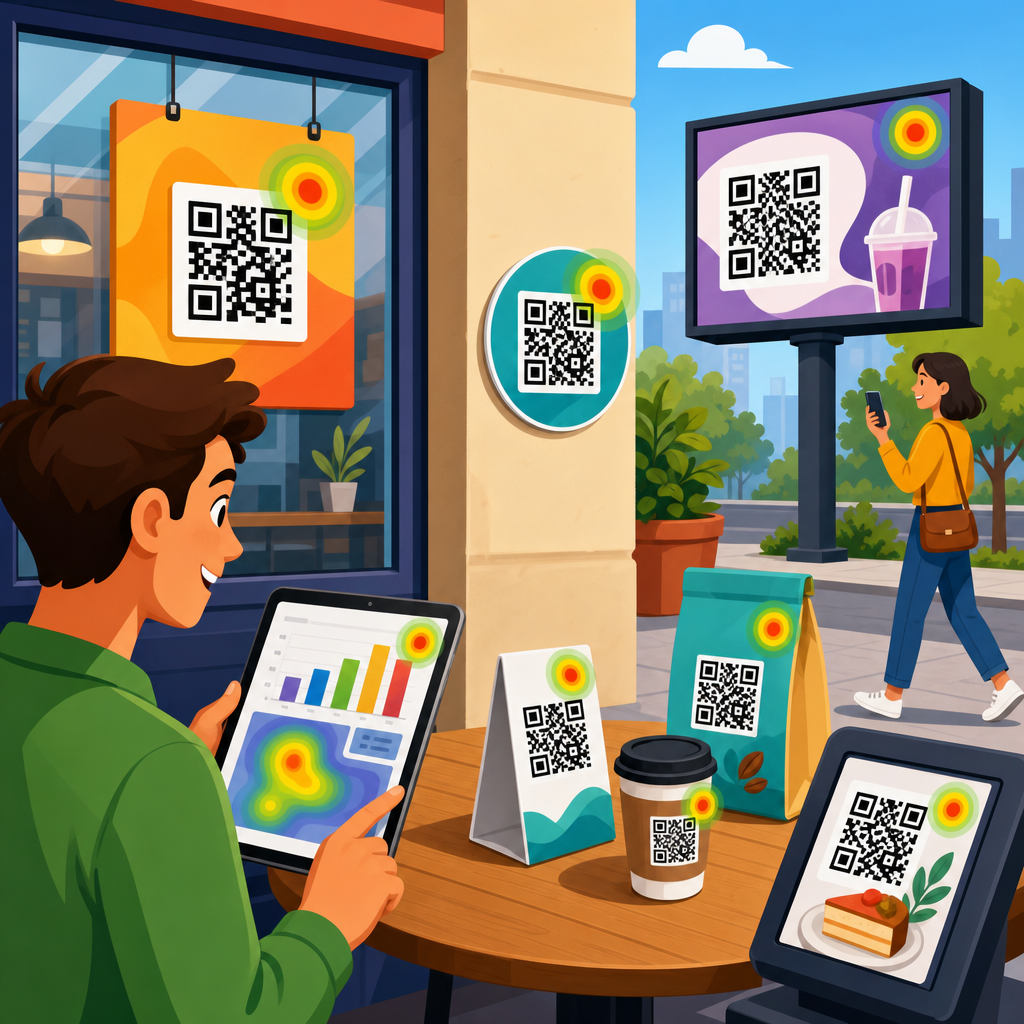
Offline attribution using QR codes gives marketers a practical way to connect print, packaging, events, direct mail, retail signage, and out-of-home media to measurable digital behavior. In simple terms, offline attribution is the process of identifying which physical touchpoint influenced a visit, lead, sale, or other online action. A QR code acts as the bridge: someone scans with a phone, lands on a tracked destination, and the business can associate that response with a specific campaign, location, audience, or asset. I have implemented these programs across retail, healthcare, events, and franchise networks, and the pattern is consistent: when offline media is tagged correctly, teams stop guessing which physical placements work and start reallocating budget based on evidence.
This matters because offline channels still drive demand, but they are often judged with incomplete data. A brochure may influence a high-value sale weeks later. A product insert may trigger repeat purchases that never get credited. A store window sign may generate mobile traffic that appears as direct or organic unless the handoff is structured. QR codes improve that handoff by creating a deliberate, scannable entry point into digital analytics. They are not perfect, and they do not solve every identity or privacy challenge, but they are the most accessible attribution mechanism available for many offline campaigns. Nearly every smartphone camera now supports native scanning, dynamic QR platforms allow destination changes without reprinting, and analytics tools can capture campaign, device, geography, and on-site behavior with far more granularity than traditional vanity URLs or phone numbers.
As the hub for offline-to-online integration within QR code marketing strategy, this article explains the core components of a dependable measurement system. It defines what can and cannot be attributed, shows how to structure campaigns for reliable reporting, and outlines where this approach fits alongside point-of-sale data, CRM records, web analytics, and marketing automation. If you need to evaluate trade show signage, direct mail, restaurant table tents, product packaging, window clings, billboards, or in-store displays, the fundamentals are the same: make the scan easy, track the source cleanly, send visitors to a relevant landing page, and connect the resulting session to a business outcome. Done well, offline attribution using QR codes turns physical marketing from a fuzzy awareness play into a measurable acquisition and retention channel.
How Offline Attribution Using QR Codes Works
The mechanism is straightforward. A unique QR code encodes a URL, usually a short redirect link controlled by a QR management platform or your own redirect service. When a person scans, that redirect appends tracking parameters such as source, medium, campaign, content, location, store, sales rep, or creative version. The visitor then reaches a landing page where analytics systems like Google Analytics 4, Adobe Analytics, Matomo, or a custom data layer record the session. If the visitor submits a form, starts a checkout, redeems an offer, calls from the page, downloads an app, or signs in, that event can be tied back to the originating code. The attribution path is stronger when the conversion happens immediately, but even delayed conversions can be associated through first-party cookies, user IDs, promo codes, or CRM stitching.
Dynamic codes are essential for serious attribution. A static code points directly to a fixed URL and is useful for simple cases, but it limits control. A dynamic code points to a redirect that you own or manage, allowing you to update the destination, add UTM parameters, activate georouting, pause campaigns, and inspect scan logs. For example, a retailer can place one code on a window poster in Chicago and another on a shelf talker in Dallas. Both can route to the same promotion page, yet analytics will still distinguish location, placement, and creative. This matters when different stores, franchisees, or media vendors need separate performance reporting. It also helps when a campaign changes mid-flight and you need to send scanners to a new offer without replacing printed materials.
Attribution quality depends on disciplined taxonomy. If naming conventions are sloppy, reports become unusable. I recommend standard fields for channel, format, placement, region, asset ID, date range, and offer. A direct mail campaign might use source=directmail, medium=print, campaign=spring-renewal, content=mailer-a, and term=zip-60611. A stadium sign might use source=event, medium=ooh, campaign=home-opener, content=section-112-led. The exact parameters can vary, but the principle does not: each code should answer who saw it, where it appeared, what message it carried, and which business objective it served. That structure makes downstream analysis possible in dashboards, CRM attribution reports, and media planning reviews.
Best Use Cases Across Offline-to-Online Integration
QR code attribution performs best where the user has both motive and time to scan. Packaging inserts, restaurant menus, product labels, in-store displays, direct mail, catalogs, conference booths, receipts, and posters in waiting areas are strong candidates because the audience is already engaged. In one retail rollout I managed, shelf signage linked shoppers to comparison guides and warranty registration pages. Scan rates were modest, but the visitors converted at a higher rate than paid social traffic because intent was stronger. In another case, a healthcare provider used QR codes on appointment reminder cards to route patients to digital intake forms. That reduced front-desk bottlenecks while giving the marketing team reliable attribution for print materials distributed by clinic location.
Events are especially valuable because they compress interest and action into a short window. Booth panels, lanyards, speaker slides, and handouts can each have distinct codes. Instead of sending all attendees to a generic homepage, you can route them to role-specific pages, gated assets, meeting schedulers, or demo requests. The resulting scans reveal which session topics attracted engagement and which booth zones produced qualified leads. Restaurants use codes on table tents for loyalty enrollment, while real estate teams place them on yard signs for property pages that capture inquiry forms and preferred viewing times. Franchises often assign unique codes by location to measure footfall campaigns and local operator compliance. These are not niche examples; they are common operational uses where a physical asset triggers a digital event that can be captured immediately and acted on.
There are weaker use cases too. Highway billboards, fast-moving transit placements, and formats viewed from long distance often underperform because scanning requires time, safety, and stable camera framing. In those cases, a memorable short URL or search prompt may complement the code, but the code should not be the only response path. Likewise, if the destination page is not mobile optimized or loads slowly, the scan may never become a useful session. Attribution begins with the code, but value comes from the entire journey after the scan.
Building a Measurement Framework That Holds Up
A reliable framework starts before design and print. Define the conversion hierarchy first: primary actions such as purchase, form completion, appointment booking, or account creation; secondary actions such as video views, store locator usage, coupon saves, and product page depth; and diagnostic metrics such as scans, sessions, bounce rate, and landing-page speed. Then decide which systems will store truth. For revenue, that may be ecommerce or POS. For leads, it may be Salesforce or HubSpot. For traffic quality, it may be GA4. QR code data should feed these systems rather than live in isolation inside a code generator dashboard.
| Measurement Layer | What It Captures | Recommended Tools | Common Pitfall |
|---|---|---|---|
| Scan data | Time, device, approximate location, code ID | QR platform, redirect logs | Treating scans as conversions |
| Session data | Landing page visits, engagement, traffic source | GA4, Adobe Analytics, Matomo | Broken or inconsistent UTM parameters |
| Lead data | Form fills, meeting bookings, qualified status | HubSpot, Marketo, Salesforce | No campaign field mapping |
| Revenue data | Orders, repeat purchases, average order value | Ecommerce platform, POS, CRM | Failure to connect online and offline purchases |
Redirect governance is another nonnegotiable. Use 301 or 302 logic intentionally, maintain HTTPS everywhere, and test on iOS and Android native camera apps as well as common in-app browsers. Branded short domains improve trust and readability, but they require domain management discipline and certificate monitoring. If a code points to a third-party shortener that later expires, attribution disappears overnight. I have seen this happen after agency transitions. Own the redirect infrastructure or have a clear service-level agreement with the vendor. Also define retention periods for scan logs and align them with your privacy policy.
Linking scans to outcomes usually requires multiple identifiers. A simple ecommerce flow can rely on campaign parameters and purchase events. More complex journeys need form hidden fields, coupon codes, customer IDs, hashed email matching, or CRM campaign membership. For a direct mail mortgage campaign, for instance, the QR code can prefill a branch ID and loan offer type on the landing page. When the lead enters the CRM, those fields persist through application and funded loan reporting. That is the difference between counting scans and proving business impact.
Design, Placement, and Landing Page Factors That Change Performance
Most attribution failures are practical, not technical. The code is too small, printed on reflective material, placed where glare blocks scanning, or paired with vague copy that gives no reason to act. A dependable standard is at least 2 x 2 centimeters for close-range print, larger for posters and displays, with strong contrast and quiet zone padding. Error correction helps with damaged surfaces, but decorative styling should never compromise readability. Before production, test across different phones, lighting conditions, and distances. If employees need three tries in the office, customers will abandon in the field.
The instruction next to the code matters as much as the symbol itself. “Scan for details” is weak. “Scan to compare plans,” “Scan for today’s menu,” or “Scan to book a demo in 30 seconds” tells the user what happens next. Incentives can lift response, but relevance often beats discounting. On product packaging, recipe ideas or setup guides can outperform a generic coupon because they match the moment of use. In B2B events, a QR code leading directly to presentation slides or a pricing request form usually outperforms a homepage link because it removes navigation friction.
Landing pages should continue the promise of the physical asset. If a flyer advertises a local service, the landing page should reflect that location, offer, and audience immediately above the fold. Fast load speed is critical because scanners are often on mobile data. Keep forms short, preserve tracking parameters through each step, and configure event tracking for taps, scroll depth, downloads, and call clicks. If app download is the goal, use deferred deep linking where appropriate. If store visits matter, integrate map directions and click-to-call. Every extra second or field weakens attribution because the user’s initial intent decays quickly after the scan.
Limitations, Privacy, and How to Interpret Results Honestly
QR codes improve offline attribution, but they do not create perfect visibility. Not every exposed person scans, and not every scanner converts on the same device. Some people see a poster, remember the brand, and visit later through search. Others scan in a privacy-restricted browser that limits storage. Apple and Android policies, consent requirements, ad blockers, and cross-device behavior all reduce determinism. That means scan-based reporting should be interpreted as directional evidence of response, not as a census of total influence. For planning, this is still valuable. Relative performance between placements, messages, and markets can guide budget decisions even when some assisted conversions remain unattributed.
Privacy compliance must be built in from the start. If scans lead to forms, SMS enrollment, app installs, or account creation, your consent language and data handling need to match applicable rules such as GDPR, CCPA, HIPAA contexts, or sector-specific standards. Avoid embedding personal data directly in the QR code itself. Put identifiers in secure backend logic, not in visible URLs that can be shared or manipulated. If geolocation is collected, be clear about precision and purpose. Short-term convenience is never worth long-term trust damage or regulatory risk.
The best reporting combines hard metrics with operational context. Compare scan-through rate, landing-page engagement, lead quality, and downstream revenue by asset type. Review variables such as store staffing, event attendance, seasonality, and offer strength before making conclusions. A low scan count on premium packaging may still be profitable if repeat purchase rate is high. A high-scan trade show activation may disappoint if sales acceptance is poor. Honest interpretation prevents teams from optimizing for vanity metrics and keeps focus on business outcomes.
How to Scale a Hub Strategy for Offline-to-Online Integration
As a hub topic, offline attribution using QR codes should organize connected practices rather than stand alone. The most useful supporting articles typically cover dynamic versus static QR codes, UTM governance, QR code design standards, direct mail measurement, event lead capture, packaging engagement, retail signage analytics, CRM integration, and compliance considerations. Internally, those pages should link back to this hub and to each other using consistent language around offline-to-online integration, campaign measurement, and QR code strategy. That structure helps teams find the exact implementation guidance they need while preserving a central reference for principles, definitions, and decision criteria.
Operationally, scaling means standardizing templates and ownership. Create naming conventions, landing-page modules, redirect rules, QA checklists, and dashboard views that every region or department can reuse. Train creative teams on print-safe code sizing, train analysts on campaign taxonomy, and train sales or field staff on where and why each code is deployed. In mature programs, every physical asset receives an ID, every QR destination is documented, and every reporting cadence includes a scan-to-conversion review. That may sound rigorous, but it is what separates isolated experiments from a durable channel.
The main benefit is clarity. Offline attribution using QR codes gives physical marketing a measurable path into digital analytics, CRM reporting, and revenue analysis. It does not replace judgment, brand building, or other attribution methods, but it closes a major visibility gap. Start with one high-intent use case, define your taxonomy, use dynamic redirects, test the full mobile journey, and connect campaign data to outcomes that matter. Then expand across print, packaging, stores, and events with the same framework. If your business invests in offline media, now is the time to make every scan count.
Frequently Asked Questions
What is offline attribution using QR codes, and why does it matter for marketers?
Offline attribution using QR codes is the process of connecting a physical marketing touchpoint to a measurable digital action. In practice, that means placing a unique QR code on something like direct mail, product packaging, in-store signage, event materials, print ads, or out-of-home media, then tracking what happens after someone scans it. When the scan leads to a dedicated landing page or tracked destination, marketers can see which offline placement influenced a website visit, form submission, purchase, booking, or other conversion event.
This matters because offline marketing has traditionally been harder to measure than digital campaigns. A billboard may drive awareness, or a flyer may influence a purchase, but without a reliable bridge between the physical world and online behavior, it is difficult to prove impact. QR codes solve much of that problem by creating a direct, scannable path from the offline experience to a digital environment where analytics can be captured. That gives teams better visibility into campaign performance, audience engagement, and return on ad spend.
For marketers, the value goes beyond simple scan counts. A well-implemented offline attribution setup can show which location, creative version, audience segment, or distribution channel performs best. It can also help answer practical business questions, such as whether event signage outperforms direct mail, whether one store placement drives more qualified traffic than another, or whether regional print campaigns are generating leads at an acceptable cost. In short, QR-based offline attribution turns physical media from a largely unmeasurable tactic into a channel with trackable outcomes and clearer optimization opportunities.
How do QR codes actually track offline campaign performance?
QR codes track offline campaign performance by sending users to a unique URL that contains identifying information about the source of the scan. That destination might include UTM parameters, custom tracking IDs, campaign names, location labels, product references, or creative version tags. Once the person lands on the page, analytics platforms such as Google Analytics, CRM systems, marketing automation tools, or e-commerce reporting software can capture the visit and associate it with the specific QR code that was scanned.
For example, a business could create one QR code for a tradeshow booth, another for retail shelf signage, and another for a postcard campaign. All three codes may lead to similar content, but each would use a distinct tracked URL. That setup makes it possible to compare results across placements instead of lumping every scan into one undifferentiated traffic source. The marketer can then analyze not only scans, but also downstream behavior such as time on page, add-to-cart actions, lead form completions, appointments scheduled, coupon redemptions, and completed sales.
The strongest implementations often use dynamic QR codes rather than static ones. A dynamic code allows the destination URL to be updated without changing the printed code itself, which is especially useful when campaigns evolve or when tracking needs to be refined after launch. Combined with analytics, conversion tracking, and CRM integration, this creates a much more complete attribution picture. The QR code does not magically identify every influence in the buyer journey, but it does provide a highly practical and measurable connection between a physical interaction and a digital result.
What offline channels work best with QR code attribution?
QR code attribution works well across a wide range of offline channels, particularly anywhere people have enough time and motivation to scan. Common high-performing use cases include direct mail, brochures, product packaging, event booths, conference badges, point-of-sale displays, shelf talkers, window signage, restaurant table tents, print ads, catalogs, and transit or outdoor advertising. The best channel often depends on context: how visible the code is, how easy it is to scan, and whether the audience has a clear reason to engage in that moment.
Direct mail is especially effective because it allows highly controlled audience targeting and easy campaign segmentation. A business can assign separate QR codes by customer list, region, offer, or mailer version to see which combinations generate the most response. Packaging is another strong application because it reaches people at a moment of product interaction, making it useful for onboarding, reviews, loyalty signups, reorder flows, and upsell offers. Events also benefit significantly from QR attribution because booths, handouts, and banners can quickly capture interest and route attendees into lead forms, demo scheduling pages, or follow-up sequences.
Retail and out-of-home placements can also be effective, though they require more attention to placement, scanability, and user intent. A QR code on a poster in a busy transit station may generate awareness but fewer conversions if the landing page is not optimized for immediate mobile action. By contrast, an in-store sign with a promotion or product comparison may drive stronger measurable engagement. The most successful channels are usually those where the code is easy to spot, simple to scan, and paired with a compelling call to action that gives people a reason to take the next step right away.
What are the best practices for setting up QR codes for accurate offline attribution?
Accurate offline attribution starts with campaign structure. Each QR code should correspond to a clearly defined source, such as a specific mail piece, store location, event, packaging variant, or creative asset. The destination URLs should use consistent naming conventions and tracking parameters so reporting stays clean and comparable across campaigns. If teams use UTMs, CRM fields, coupon codes, or internal campaign IDs, those elements should be standardized from the beginning. Without that discipline, the data becomes fragmented and much harder to trust.
Landing page strategy is just as important as the code itself. The page should be mobile-friendly, fast-loading, and aligned with the user’s context. Someone scanning from packaging may want product details or support information, while someone scanning from a direct mail offer may be ready to claim a discount or book a consultation. Matching the page experience to the offline touchpoint increases conversions and improves the quality of attribution data. It is also smart to connect the landing page to conversion tracking tools, CRM workflows, and any revenue reporting systems needed to measure outcomes beyond the initial scan.
From a technical and design standpoint, marketers should use high-contrast QR codes, test them on multiple devices, and make sure they are large enough to scan comfortably at the intended distance. Placement matters: codes should not be hidden, distorted, or printed where glare, folds, or curved surfaces interfere with scanning. A clear call to action is essential, because people are much more likely to scan when they know what they will get, such as “See pricing,” “Claim your offer,” “Watch the demo,” or “Register now.” Finally, using dynamic QR codes adds flexibility and gives teams the ability to update destinations, fix errors, or refine tracking after materials are already in circulation.
What are the limitations of offline attribution with QR codes, and how can businesses improve results?
QR code attribution is practical and powerful, but it is not perfect. One limitation is that it primarily measures people who choose to scan, which means it may undercount the broader influence of the offline channel. A customer could see a print ad, remember the brand, and later visit the website directly without scanning the code. In that case, the offline touchpoint still mattered, but the QR system would not receive full credit. This is why QR attribution should be viewed as a strong measurement method, not as a complete record of every offline influence.
Another limitation is that poor execution can reduce both scan volume and data quality. If the code is hard to find, difficult to scan, paired with a weak offer, or linked to a slow mobile page, response rates will suffer. Attribution can also become muddy when users share links, switch devices, or convert later through another channel. In addition, privacy controls, browser behavior, and analytics configuration can affect how reliably visits and conversions are recorded. Businesses should account for these realities when interpreting results and avoid making decisions based solely on raw scan totals.
To improve performance, businesses should combine QR tracking with broader campaign measurement methods. That might include dedicated landing pages, unique promo codes, call tracking, post-purchase surveys, CRM source fields, geo-based analysis, or media mix evaluation. Running A/B tests on creative, offers, and placements can also reveal what increases both scan rate and conversion rate. Most importantly, teams should focus on the full journey after the scan, not just the scan itself. When the QR code, landing page, analytics setup, and conversion path are all aligned, offline attribution becomes much more reliable and much more useful for making smarter marketing decisions.