QR code marketing strategy succeeds when every scan has a purpose, a measurable destination, and a clear next step for the customer. A QR code is a two-dimensional barcode that opens digital content when scanned with a smartphone camera, while conversion means the action you actually want: a purchase, form fill, app download, booking, coupon redemption, or qualified lead. I have built QR programs for retail counters, direct mail, packaging, trade shows, restaurant tables, and field sales teams, and the pattern is consistent: brands that treat QR codes as campaign infrastructure outperform brands that treat them as decoration. That distinction matters because QR codes connect offline attention to digital action faster than any printed URL, and they work across channels customers already use every day.
Interest in QR surged globally during contactless commerce, but adoption stayed high because the customer habit stuck. Today, smartphone cameras natively recognize QR codes on iPhone and Android devices, removing the old friction of downloading a separate scanner app. That simple change turned QR from a novelty into a reliable conversion tool. For marketers, the value is practical. QR codes compress a complicated path into one scan, reduce typing errors, support attribution, and let a physical asset such as packaging or signage behave like clickable media. When combined with dynamic links, UTM parameters, and landing pages built for intent, QR code marketing strategies become measurable growth systems rather than one-off tactics.
This hub article explains how to build a QR code marketing strategy that converts across awareness, consideration, and purchase stages. It covers goal setting, channel selection, creative standards, landing-page design, analytics, testing, compliance, and the most common mistakes. It also addresses the questions teams usually ask first: where should QR codes be used, what type of content should they open, how do you track performance, and what conversion rates are realistic. The central rule is straightforward. A high-performing QR campaign aligns the code, the context, the offer, and the destination so tightly that scanning feels like the obvious next action. When those four elements match, conversion improves because the user experiences continuity instead of friction.
Start With Conversion Goals, Not the Code
The first step in any QR code marketing strategy is defining the conversion event before you generate a single code. Too many teams begin with placement ideas such as posters, flyers, menus, or product labels, then choose a destination later. That reverses the logic. Start by identifying the business outcome and the audience segment. A restaurant may want first-party customer data through loyalty sign-ups. A consumer packaged goods brand may want post-purchase education that reduces returns. A B2B software company at a trade show may want meeting bookings from high-intent prospects. Each goal demands a different landing experience, data setup, and success metric.
I usually map QR campaigns to a simple funnel: discover, evaluate, convert, retain. At the discover stage, a scan might open a short brand story, product explainer, or store locator. At the evaluate stage, the destination could be a comparison page, case study, ingredients breakdown, or video demo. At the convert stage, the code should open the shortest possible path to checkout, reservation, quote request, or coupon wallet save. At the retain stage, it can lead to setup instructions, warranty registration, reorder pages, or referral rewards. This funnel approach stops teams from sending every user to the homepage, which is still one of the most expensive QR mistakes because it wastes intent.
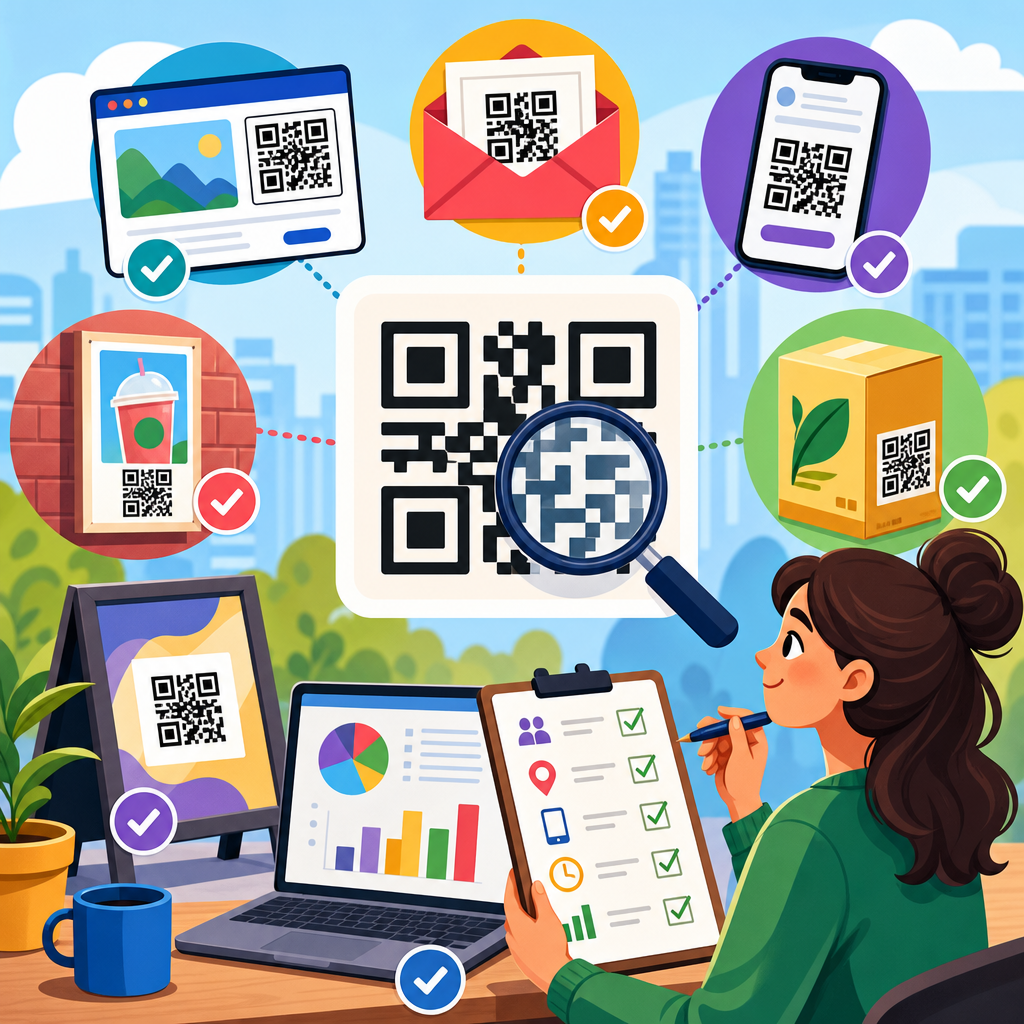
Set measurable key performance indicators from the outset. At minimum, track scan volume, unique scanners, scan-through rate by placement, landing-page engagement, and conversion rate. For physical media, also estimate exposure counts so you can calculate response rate by asset. If the code appears on packaging, compare scans per thousand units sold. If it appears on direct mail, compare scans per thousand pieces delivered. If it appears on in-store signage, compare scans by store traffic. These denominator metrics matter because raw scan counts can look healthy while actual response is weak. A QR code marketing strategy converts when performance is measured against opportunity, not only activity.
Choose the Right QR Code Type and Technical Setup
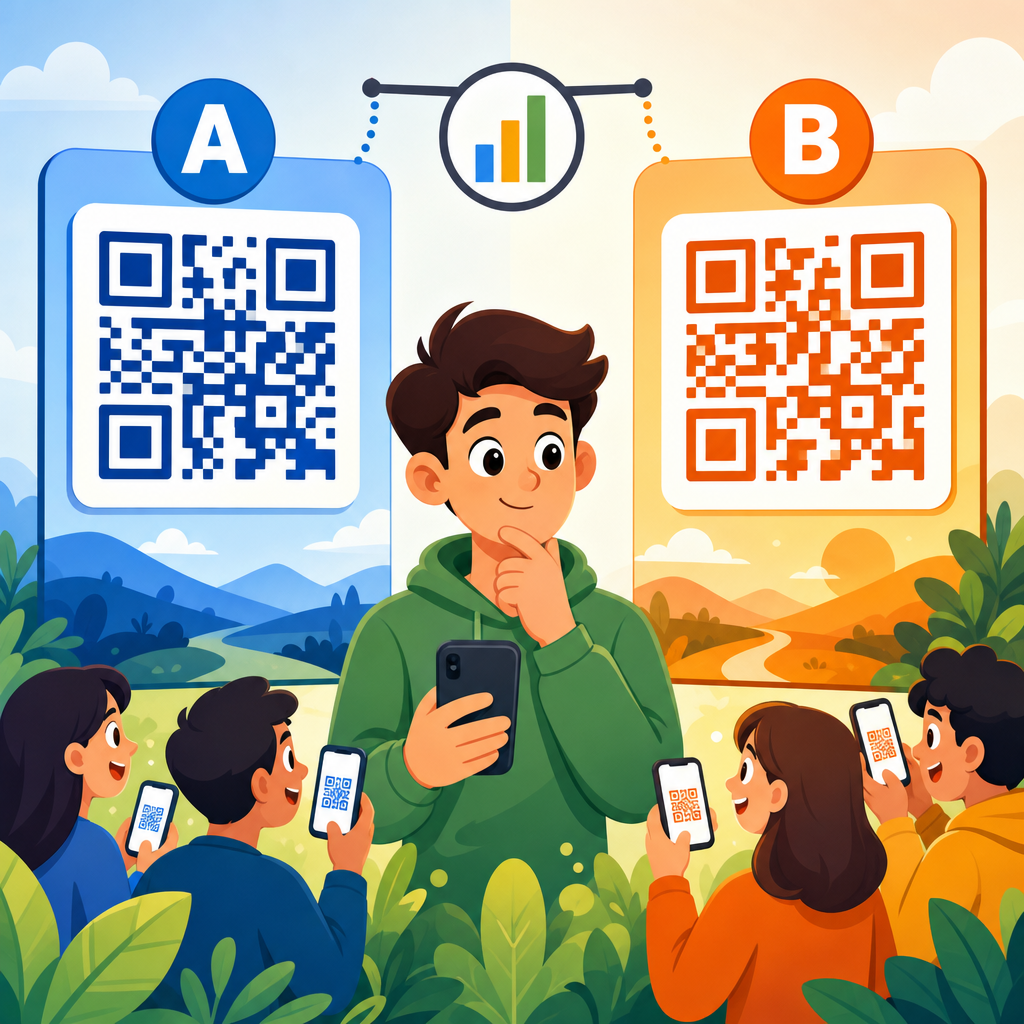
Dynamic QR codes are the default choice for serious marketing because they let you change the destination URL after printing and preserve the original asset. Static QR codes hard-code one destination and are acceptable only for permanent content that will never change, such as a long-term Wi-Fi access page or a simple contact card. In every commercial campaign I have managed, dynamic codes produced better operational results because they support redirects, A/B testing, geotargeting, campaign pauses, and corrected destinations without reprinting. They also make analytics possible at the code level, which is essential if you want to compare placements or creative versions.
Use a reputable QR platform that supports custom domains, SSL, exportable scan data, and integration with analytics tools. Popular options include Bitly, QR Code Generator PRO, Beaconstac, Flowcode, and Uniqode. The platform matters less than the measurement architecture behind it. Every destination link should include UTM parameters for source, medium, campaign, content, and, when useful, term or audience. That allows Google Analytics 4, Adobe Analytics, or your CRM to separate scans from direct traffic and attribute downstream conversions correctly. If your sales cycle is longer, pass identifiers into HubSpot, Salesforce, or Marketo so offline scan intent can be tied to pipeline and revenue.
Technical quality affects conversion more than many teams expect. The code must have enough contrast, quiet zone padding, and print resolution to scan quickly under real conditions, not just on a designer’s screen. Dark code on a light background is still the safest standard. Keep the error correction level appropriate if adding a logo, and test across devices, distances, glare conditions, and weak connectivity. I also recommend mobile-first redirects that detect the device and open the best destination, such as an app deep link for existing app users and a web fallback for everyone else. The right setup reduces failed scans, slow loads, and broken sessions, all of which silently cut conversion.
Match the Placement to the User’s Immediate Intent
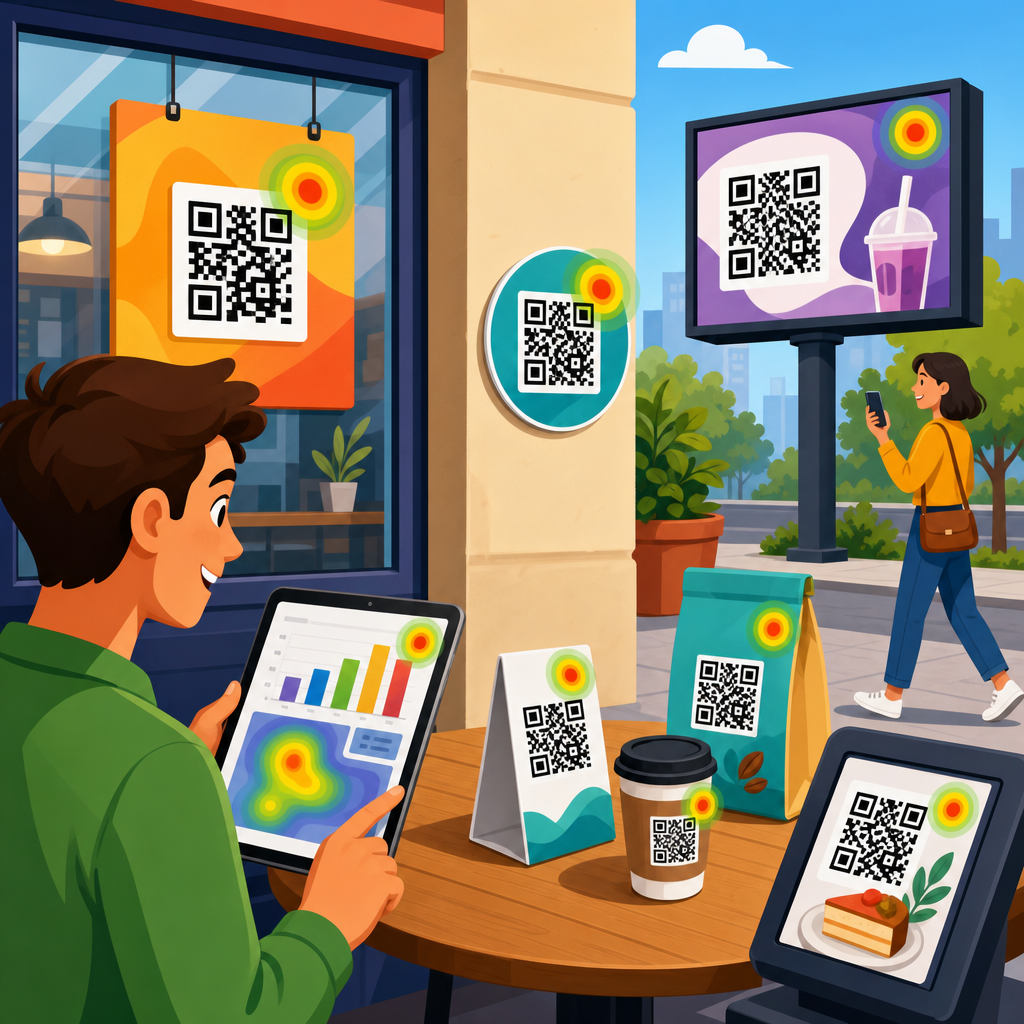
Placement determines intent, and intent determines what content will convert. A QR code on product packaging reaches a customer who has already bought or is considering repeat purchase, so use it for tutorials, recipes, refill offers, loyalty enrollment, or review requests. A code on a street poster reaches a lower-intent audience in motion, so the offer must be immediate and easy to complete, such as claiming an event ticket, opening directions, or saving a promo code. A code at a conference booth reaches people with higher informational intent, making it ideal for lead capture, product demos, spec sheets, or calendar booking. Context changes everything.
Retail provides one of the clearest examples. A shelf talker beside a premium skincare item can link to dermatologist-backed ingredient explanations, before-and-after demonstrations, and a first-purchase coupon. The same product’s packaging can later use a different QR code that opens application instructions and cross-sell recommendations. Both codes support the same brand, but they solve different customer questions at different moments. In hospitality, table tents can drive ordering, reviews, loyalty, or private event inquiries, but trying to do all four with one code usually underperforms. Assign one core job to each placement and build around that job.
Use this planning framework when selecting placements and destinations:
| Placement | Typical user intent | Best destination | Primary KPI |
|---|---|---|---|
| Product packaging | Usage, support, repeat purchase | How-to page, reorder page, loyalty signup | Repeat conversion rate |
| Direct mail | Offer evaluation | Personalized landing page with promo | Scan-to-lead rate |
| In-store signage | Product research | Comparison page, coupon, reviews | Scan-through rate |
| Event booth | High-intent information gathering | Demo booking, spec sheet, lead form | Qualified meetings booked |
| Restaurant table | Immediate transaction | Menu, payment, loyalty, feedback | Order completion rate |
Create Offers and Landing Pages Built for Mobile Conversion
The QR code itself does not convert; the offer and destination do. Every landing page should answer the user’s first question within seconds: what do I get if I scan? If the answer is unclear, bounce rates rise. Strong QR offers are specific and immediate. Examples include “Get 15% off today,” “Watch the 30-second setup,” “Book a free fitting,” “See ingredients and allergen info,” or “Save your spot.” Generic prompts such as “Learn more” work only when the surrounding context already carries strong intent. Even then, a concrete value proposition usually converts better.
Design the destination for one-handed mobile use. Keep headlines short, forms minimal, buttons large, and page speed fast. Avoid forcing users through desktop-style navigation after a scan; that adds friction at the exact moment their intent is highest. If lead capture is required, ask only for the data you truly need. In B2C campaigns, email alone can be enough for coupon delivery or loyalty enrollment. In B2B event campaigns, name, company, and work email may suffice before routing the lead to a calendar step. Progressive profiling can collect more details later. The first conversion should feel easy, not administrative.
Personalization improves QR landing-page performance when it reflects channel context. For direct mail, use personalized URLs or prefilled forms tied to the recipient segment. For in-store signage, localize inventory, store hours, and offers. For packaging, tailor the destination by SKU so the content matches the exact product in hand. Consumer brands often see strong performance from post-purchase QR experiences that include registration, care instructions, and replenishment reminders. B2B companies often gain more from QR pages that bundle a short explainer video, trust signals such as client logos, and an immediate scheduling option. In both cases, continuity between scan context and page message is the main driver of conversion.
Track, Test, and Optimize Like a Performance Channel
High-converting QR code marketing strategies are managed like paid media, even when the placements are offline. That means structured naming conventions, controlled experiments, and routine reporting. Use separate dynamic codes for each placement, creative version, store, or audience segment you want to evaluate. If one code appears everywhere, you lose the ability to learn which asset drove the scan and which environment produced the conversion. I prefer a taxonomy that includes channel, location, audience, offer, and date, then mirrors that structure in UTM tagging and dashboard filters.
Testing should focus on the variables that materially change user behavior. The most important are call-to-action copy, offer type, placement height, destination format, and visual prominence. For example, a countertop sign that says “Scan for 10% off today” will usually outperform “Scan to explore” because the benefit is explicit. A packaging code near assembly instructions often outperforms one hidden on the bottom panel because visibility and relevance are higher. A short video demo may outperform a text-heavy FAQ when the customer needs confidence quickly. Run tests long enough to account for traffic patterns, then compare not just scans but end conversions and revenue.
Benchmarks vary by industry and placement, so avoid universal promises. A trade show QR code may produce a lower scan rate than a restaurant table QR, yet a much higher lead value. Packaging scans are often modest as a percentage of units sold, but the downstream value can be excellent if they increase repeat orders or reduce support costs. The right question is not “What is a good QR conversion rate?” but “Does this code produce profitable customer action relative to its distribution cost and audience exposure?” That framing keeps optimization aligned with business value.
Protect Trust, Accessibility, and Brand Safety
Trust is a conversion variable, not a legal afterthought. Users scan when they believe the destination is legitimate and worthwhile, so visible branding around the code helps. Place the brand name, clear CTA, and a brief description near the code rather than expecting the symbol alone to persuade. Use your branded domain in previews and redirects when possible. If the campaign collects personal data, state what will happen next, especially for SMS, email, or loyalty enrollment. Compliance requirements differ by region and industry, but transparency consistently improves completion rates because it reduces uncertainty.
Accessibility also matters. The code should be large enough to scan without forcing awkward movement, and the surrounding text should explain the same action for users who cannot or prefer not to scan. In practical terms, that means offering a short URL beneath the code on print materials and avoiding color combinations that fail contrast standards. For public installations, consider mounting height, lighting, and crowd flow. For older audiences, plain instructions such as “Open your camera and point it here” still help. These details seem small, but they remove friction for real users in real environments.
Finally, avoid the patterns that damage performance and credibility. Do not send scans to a generic homepage. Do not print static codes for time-sensitive campaigns. Do not hide the value proposition. Do not use tiny codes on reflective surfaces without testing. Do not overload one QR code with too many goals. And do not ignore post-scan experience. I have seen beautifully designed retail displays fail because the landing page loaded slowly on mobile data or asked for eight form fields before revealing the offer. Conversion is won or lost in execution.
Build a Repeatable Hub-and-Spoke QR Program
A QR code marketing strategy that converts is built on alignment: the right goal, the right placement, the right destination, and the right measurement. When those pieces work together, QR codes do more than generate scans. They connect offline media to digital outcomes, reveal intent that would otherwise stay invisible, and create efficient customer journeys from curiosity to action. Dynamic codes, mobile-first landing pages, explicit offers, and disciplined analytics are the nonnegotiables. Everything else, from design style to channel mix, should support those fundamentals.
As a hub for QR code marketing strategies, this page should guide your broader program planning. From here, the natural next steps are deeper playbooks for packaging QR codes, direct mail QR campaigns, retail signage optimization, event lead capture, restaurant QR operations, QR analytics setup, and landing-page testing. Treat each use case as a spoke connected to one strategic center: every code must earn its place by solving a customer need and moving a measurable business metric. That mindset turns scattered QR experiments into a coherent system.
If you are building or rebuilding your program, start small and structured. Choose one high-intent use case, deploy dynamic codes, create a dedicated mobile landing page, tag everything, and review results weekly. Then expand to additional placements once you can prove what converts. QR codes reward precision. Give people a clear reason to scan, make the next step effortless, and measure what happens after the scan. Do that consistently, and your QR code marketing strategy will convert with far more reliability than most brands expect.
Frequently Asked Questions
What makes a QR code marketing strategy actually convert instead of just generating scans?
A QR code marketing strategy converts when the scan is tied to a specific business outcome rather than a generic digital destination. In practice, that means every QR code should answer three questions before it is deployed: why will someone scan it, where exactly will it send them, and what action should they take next. Too many campaigns fail because the code leads to a homepage, an unoptimized PDF, or a broad landing page with no clear offer. Scans alone do not create revenue. Conversions happen when the post-scan experience is aligned with intent and friction is removed from the path forward.
The strongest QR campaigns start with the context of the scan. A customer scanning from product packaging has different needs than someone scanning from a trade show booth, restaurant table, direct mail piece, or retail counter display. If the user is standing in-store, the destination should support a fast action such as claiming an offer, viewing a product comparison, joining a loyalty program, or accessing inventory details. If the user is scanning from a sales flyer or field rep leave-behind, the landing page may need a quote request form, appointment booking option, case study, or product demo. Conversion improves when the message, timing, and destination match the real-world moment in which the scan happens.
Offer clarity is equally important. People need an immediate reason to engage, so the call to action near the code should be explicit. “Scan to save 15%,” “Scan to book a demo,” or “Scan to see today’s menu and order” performs better than simply placing a code with no explanation. Once the user lands on the page, the page should continue the same promise with a strong headline, concise supporting copy, visible trust signals, and one primary action. If the page loads slowly, asks for too much information, or forces users to search for what was promised, conversion rates drop quickly.
Measurement is what turns a QR tactic into a true strategy. A converting QR program uses unique destinations, campaign parameters, and reporting to connect scans to outcomes such as purchases, coupon redemptions, leads, bookings, or app installs. With that structure in place, you can compare placements, offers, formats, and audiences and keep improving performance. In other words, a QR code strategy converts when the entire experience is intentional from scan trigger to final action, and when results are measurable enough to optimize over time.
Where should businesses use QR codes in order to get the highest conversion rates?
The best placement for a QR code depends on where customer attention is strongest and where the next step can happen naturally. High-converting placements usually share a few characteristics: the customer has a clear reason to engage, the code is easy to see and scan, and the destination solves an immediate need. That is why QR codes often perform well on retail counters, product packaging, direct mail, restaurant tables, event signage, trade show displays, print ads, vehicle graphics, and sales collateral used by field teams. These are environments where the user is already interacting with your brand and is primed for a next step.
In retail environments, counter cards, shelf talkers, and point-of-purchase displays can work especially well because shoppers are already making a decision. A QR code can bridge the gap between interest and action by linking to reviews, product demos, limited-time discounts, or loyalty sign-up pages. On packaging, QR codes are effective because they create ongoing engagement after the sale. Customers can scan for setup instructions, product registration, how-to content, refill ordering, subscription options, or referral incentives. This makes packaging one of the most overlooked channels for both retention and repeat conversion.
Direct mail is another strong use case because it combines physical attention with digital response. A well-designed mailer with a compelling offer and a highly relevant landing page can drive leads, bookings, or purchases without forcing the recipient to type a URL. Trade shows and events are ideal for QR codes when the objective is lead capture, meeting scheduling, brochure access, or post-event follow-up. Instead of handing out materials that get lost, you can route attendees to a focused mobile page that captures data and qualifies interest immediately. Restaurants can use table tents, receipts, and window signage to drive menu views, ordering, loyalty enrollment, reviews, and promotional redemptions.
The highest conversion rates usually come from testing placements against intent rather than assuming one location is universally best. A code on a poster in a busy walkway may get visibility but low action if the user cannot stop to engage. A code in a slower, more intentional environment may generate fewer scans but better conversion quality. The right approach is to match placement to customer mindset, use a specific call to action, and track each location separately. That is how you identify the placements that produce not just traffic, but real business outcomes.
What should happen after someone scans a QR code to maximize conversions?
The moment after the scan is where most QR campaigns win or lose. The landing experience should feel like a seamless continuation of the message that prompted the scan. If a customer scans for a coupon, they should land directly on the offer, not a homepage. If they scan for a demo, they should see a simple booking page, not a generic product overview. Relevance and continuity matter because mobile users make fast decisions. If the destination does not immediately confirm that they are in the right place, many will leave before taking action.
To maximize conversions, the post-scan page should be mobile-first, fast-loading, and singular in purpose. Remove unnecessary navigation when possible, keep forms short, and place the main call to action above the fold. The content should answer the basic questions quickly: what is this, why does it matter, and what should I do next? Strong pages often include a clear headline, concise supporting copy, product or offer visuals, proof elements such as testimonials or ratings, and one dominant conversion action. If there are multiple possible actions, prioritize one primary goal and keep secondary options visually subordinate.
The destination should also reflect the user’s level of intent. For warmer audiences, such as in-store shoppers or event attendees, a more direct action like “buy now,” “claim offer,” or “book today” can work well. For colder audiences, such as those scanning from broad awareness campaigns, softer conversions such as “learn more,” “watch a short demo,” or “get pricing” may perform better. The key is to avoid making users work too hard. Every extra step reduces completion rates, especially on mobile devices.
Finally, maximize conversion by building in follow-through. If the action is a form fill, trigger an immediate confirmation and next step. If it is a coupon redemption, make the process simple for both customer and staff. If it is a sales lead, route the lead into the correct follow-up workflow. If it is an app download, explain the benefit before sending users to the app store. A QR code is only the doorway. Conversion depends on what happens after the scan, and the best strategies treat the destination as carefully as the code itself.
How do you track and measure the success of a QR code marketing strategy?
Measuring a QR code marketing strategy starts with defining success in business terms, not just scan volume. Scans are useful as an engagement metric, but they are only the top of the funnel. What really matters is whether those scans lead to the actions you care about, such as purchases, form submissions, booked appointments, app installs, coupon redemptions, qualified leads, or repeat orders. Before launching a campaign, decide exactly what conversion means for that use case and make sure the destination and analytics setup are designed to capture it accurately.
A practical measurement framework includes unique QR codes by channel, placement, audience, or offer so you can compare performance at a granular level. A code on product packaging should not point to the exact same untagged destination as a code on a trade show banner if you want meaningful reporting. Use dedicated landing pages or campaign parameters to identify where each scan originated. This allows you to evaluate not only total scans, but also conversion rate, cost per conversion, lead quality, revenue per scan, and performance by source. Dynamic QR codes are especially useful because they can be updated without reprinting materials and often provide scan-level reporting such as time, device, and location trends.
You should also monitor what happens after the landing page loads. Web analytics can show bounce rate, time on page, form starts, form completions, checkout progression, and other behavioral signals. This helps identify whether a problem is with the QR code placement, the offer, or the destination itself. For example, if scans are high but conversions are weak, the issue may be poor message match, a slow page, too many form fields, or an offer that is not compelling enough. If scans are low, the problem may be visibility, incentive clarity, or placement context.
The most mature QR programs connect scan data to downstream systems such as CRM, e-commerce, booking platforms, POS redemption data, or marketing automation. That is how you move from tactical reporting to strategic insight. You can see which placements generate actual revenue, which campaigns produce qualified leads, and which audiences are worth expanding. Once measurement is in place, optimization becomes much easier. You can test calls to action, page formats, incentive levels, and physical placements and make decisions based on conversion performance rather than guesswork.