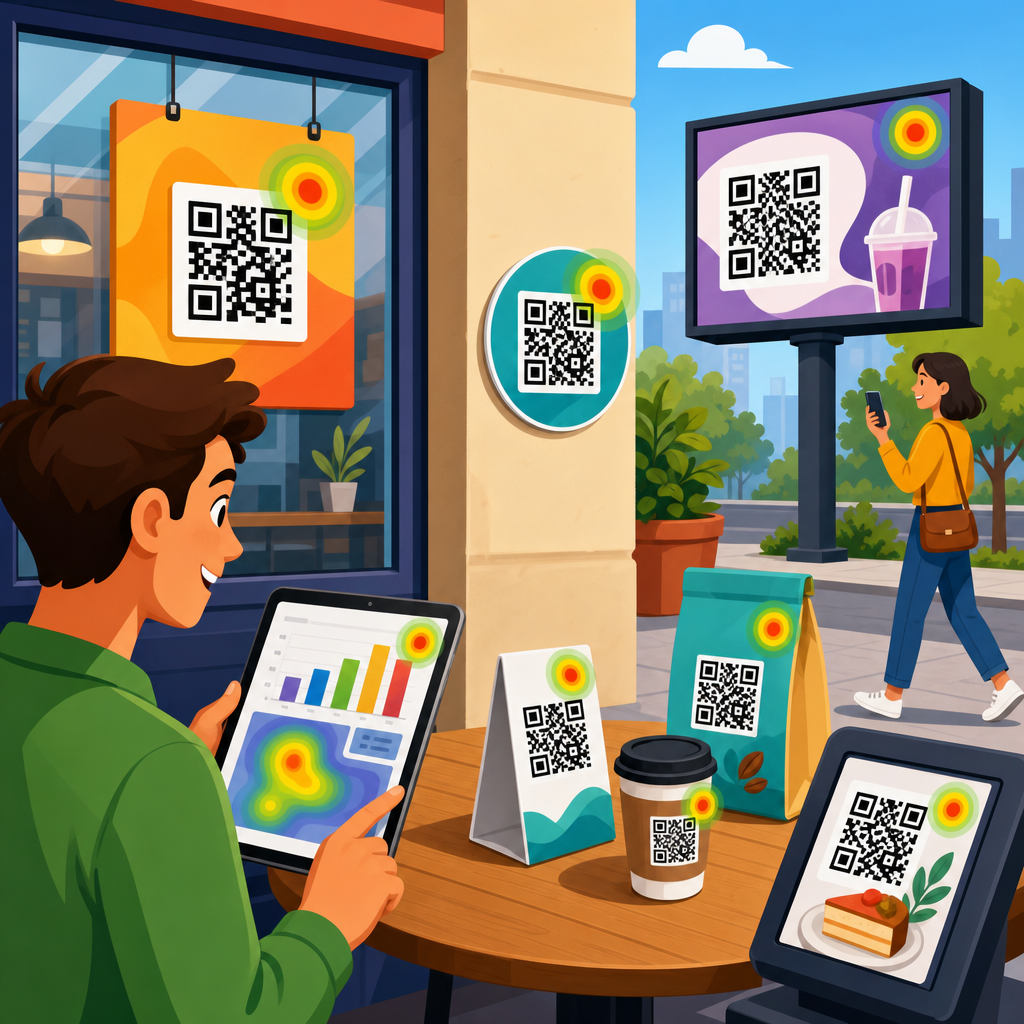
QR codes have become one of the most practical tools for omnichannel attribution because they connect physical touchpoints to measurable digital actions with almost no friction for the customer. Omnichannel attribution is the process of assigning credit to the marketing interactions that influence a conversion across channels such as print, direct mail, retail signage, packaging, events, email, paid social, and landing pages. Offline-to-online integration means turning an untrackable physical impression into a digital session, lead, sale, or downstream customer action that can be analyzed alongside web and app data. I have implemented QR code measurement programs for retail campaigns, direct mail drops, trade show follow-up, and product packaging, and the difference between a decorative code and a properly attributed code is substantial. A smart setup reveals which creative, location, audience, and offer drove behavior. A weak setup only counts scans. For brands investing in stores, out-of-home, catalogs, inserts, and field marketing, that gap affects budgeting, campaign planning, and revenue reporting. This hub explains how to use QR codes for omnichannel attribution, what to track, which systems to connect, and where the method works best.
At a basic level, a QR code is simply a machine-readable shortcut to a URL, app deep link, file, payment flow, or structured action. The marketing value comes from the destination design and the measurement framework behind it. If the code sends every user to the same generic homepage, attribution will be incomplete. If the code uses campaign-specific URLs, UTM parameters, first-party analytics, CRM integration, and conversion events, it becomes a high-signal bridge between offline media and digital analytics. This matters even more now that privacy changes have reduced visibility in some ad platforms. A QR code does not solve every attribution problem, but it gives marketers a deterministic identifier for the entry point. When paired with consented customer data, coupon codes, call tracking, or point-of-sale matching, it can support far more reliable channel analysis than modeled estimates alone. The goal is not just to know that a scan happened. The goal is to know which offline asset influenced a meaningful business outcome and how that touchpoint assisted the broader customer journey.
Why QR codes are effective for offline-to-online integration
QR codes work because they reduce the effort required to move from a physical moment to a digital environment. Instead of typing a URL from a poster or mailer, a customer opens the phone camera and lands instantly on the intended experience. That speed matters. In field tests I have run for retail windows and event booths, shorter paths consistently improved session starts and form completions. The code also creates a natural measurement checkpoint. Each placement can point to a distinct URL or parameter set, making it possible to compare a shelf talker in one region against packaging in another, or a trade show handout against a print ad. This is what makes QR codes useful for omnichannel attribution rather than simple engagement reporting. They identify the source touchpoint with far more precision than vanity URLs or general brand search lift. They also fit customer behavior. Smartphone camera scanning is built into iOS and Android, so adoption barriers are lower than they were a decade ago, especially after widespread restaurant menu and payment use normalized scanning behavior.
Another advantage is flexibility. Static codes can point to permanent destinations, while dynamic codes can redirect without changing the printed asset. Dynamic platforms from Bitly, QR Code Generator Pro, Flowcode, Beaconstac, and Uniqode allow destination changes, scan analytics, geolocation summaries, and bulk creation. That is useful when an offer changes after print production, inventory runs low, or regional pages need to be swapped. However, raw platform scan counts should not be treated as your source of truth for performance. Scans can overcount repeat opens and underrepresent final business impact. The authoritative record should live in your analytics stack, typically GA4, Adobe Analytics, a customer data platform, and the CRM or commerce system where conversions are recorded. The QR platform is the dispatch layer; your attribution model should rely on the connected downstream events.
How to structure QR code attribution correctly
The foundation of QR code attribution is a disciplined naming convention. Every code should identify campaign, channel, placement, creative, audience, geography, and date range in a consistent way. A direct mail postcard might use parameters such as utm_source=directmail, utm_medium=print, utm_campaign=spring_refinance, utm_content=version_a, and an internal placement ID tied to the specific list segment. An in-store sign might instead use utm_source=retail, utm_medium=store_signage, utm_campaign=summer_launch, and a store identifier. Those fields should map to the reporting dimensions your team already uses. If the QR taxonomy does not align with paid media, email, and web campaigns, omnichannel comparisons become messy and trust in the data drops quickly.
Landing page design is equally important. The page must match the context of the scan. Someone scanning product packaging expects product support, registration, recipes, replenishment, or loyalty enrollment, not a generic homepage. Someone scanning an event badge card expects session slides, a demo booking, or a lead form with minimal friction. I recommend message match between the printed call to action and the first screen after scan, plus server-side event tagging where possible. Capture page_view, session_start, scroll, click, add_to_cart, lead_submit, purchase, and any micro-conversions relevant to the objective. When identities can be joined lawfully, connect the visit to CRM records through forms, login, loyalty ID, or order data. That is what lets you move from scan attribution to revenue attribution.
| Use case | Recommended destination | Primary KPI | Attribution note |
|---|---|---|---|
| Direct mail | Dedicated landing page with prefilled offer context | Lead form completion | Track by list, creative, and drop date |
| Retail signage | Product page or store-specific offer page | Add to cart or coupon redemption | Tie to store ID and inventory region |
| Packaging | Registration, support, loyalty, or reorder flow | Account creation or repeat purchase | Useful for post-purchase lifecycle attribution |
| Events | Demo scheduler or content hub | Meeting booked | Segment by booth zone or session source |
Which metrics matter beyond scan volume
Many teams stop at scan counts because the number is easy to access, but scan volume alone is a weak proxy for campaign success. The better way to measure QR codes for omnichannel attribution is to track a progression of metrics. Start with scans and unique visitors to understand reach. Then evaluate engagement metrics such as bounce rate, engaged sessions, time to first action, and content consumption. Most importantly, measure conversion outcomes tied to the campaign objective: leads generated, appointments booked, accounts created, transactions completed, average order value, coupon redemption, or influenced pipeline. In B2B, I often add opportunity creation and stage progression. In retail, I look for store locator use, add-to-cart rate, and matched sales where digital and point-of-sale systems can be reconciled.
Incrementality also matters. A QR code may capture demand that would have happened anyway, especially for strong brands with loyal audiences. To estimate lift, compare markets, stores, or mail segments with and without the QR-enabled treatment, or rotate different calls to action and measure conversion rate differences. Coupon codes and promo IDs can strengthen the offline-to-online link when used carefully. For example, a catalog QR code leading to a product bundle page may include a unique promotion code redeemable online or in store. That creates a second verification layer. Multi-touch attribution should then evaluate whether the QR scan was first touch, assisting touch, or last touch. In GA4, path exploration and conversion paths help show where the scan sits within the journey. In the CRM, campaign influence models can connect the scan-origin session to later pipeline and revenue.
Best practices for campaign execution and analytics integration
Execution quality has a direct effect on attribution quality. Use a QR code size that fits the viewing distance, maintain strong contrast, leave sufficient quiet zone around the code, and test under real lighting conditions. A code on a storefront window may scan well in the office but fail in glare at noon. Place a clear call to action next to the code, such as “Scan to book a demo,” “Scan for ingredients and recipes,” or “Scan to activate your warranty.” Generic prompts like “Learn more” usually underperform because they do not explain the value exchange. I also recommend using a short branded domain for redirects when possible. It improves trust and makes fallback URLs cleaner for users who prefer manual typing.
On the analytics side, connect the QR landing experience to your broader measurement stack. In GA4, create standardized campaign dimensions and mark key events as conversions. In Google Tag Manager or server-side tagging, preserve parameters across page flows and checkout. In Salesforce, HubSpot, Microsoft Dynamics, or another CRM, map campaign IDs so that form submissions and opportunities can be traced back to the originating QR campaign. For ecommerce brands on Shopify, Adobe Commerce, or BigCommerce, ensure purchase events retain campaign attribution through the session. If your app is part of the journey, use deferred deep linking platforms such as Branch or AppsFlyer so a QR code can send existing users into the app while routing new users through installation and back to the intended content. These details are where many programs fail. Without parameter persistence and system mapping, scans appear in reports but business outcomes do not.
Common mistakes, limitations, and how to avoid them
The most common mistake is sending all QR traffic to a homepage. Doing that erases placement-level context and lowers conversion rates because users must navigate on their own. Another mistake is printing static codes too early, before offer terms, destination URLs, and analytics have been finalized. Dynamic codes reduce that risk, but only if governance is strong. I have seen teams overwrite active destinations without documentation, which breaks historical reporting. Maintain a registry of every code, destination, owner, start date, end date, and associated campaign metadata. Treat QR management like any other governed marketing asset.
There are also real limitations. A scan does not prove a sale was caused by the code, and not every customer will use the code even when influenced by the offline asset. Some will search the brand later, visit directly, or convert in store. That is why QR code attribution should be combined with other signals such as lift tests, redemption tracking, loyalty IDs, POS matching, or call tracking. Accessibility matters too. Always provide a readable short URL near the code for users with older devices, poor connectivity, or low vision. Finally, avoid overdesign. Branded QR codes with logos can work well, but aggressive customization can reduce scan reliability. Test every version across multiple phone models before production.
Used well, QR codes give marketers a durable way to connect offline media to digital evidence and make omnichannel attribution more actionable. They help answer practical questions that executives and channel managers ask every quarter: Which store materials actually influenced online revenue? Did the direct mail drop create pipeline or just traffic? Which packaging insert drove loyalty sign-ups after purchase? The strongest programs share the same traits: a clear taxonomy, campaign-specific destinations, robust analytics, CRM and commerce integration, and disciplined testing. As the hub for offline-to-online integration, this topic should guide related work on QR code landing pages, direct mail tracking, retail analytics, event measurement, packaging strategy, and post-purchase engagement. Start with one high-intent use case, instrument it fully, compare results across placements, and expand only after the reporting proves trustworthy. When QR codes are treated as attribution infrastructure rather than decoration, they turn physical marketing from a visibility challenge into a measurable growth channel.
Frequently Asked Questions
What does it mean to use QR codes for omnichannel attribution?
Using QR codes for omnichannel attribution means placing trackable QR codes on physical and digital marketing assets so you can measure how those touchpoints contribute to online actions and conversions. When someone scans a code on direct mail, product packaging, in-store signage, event materials, or print ads, they are sent to a destination URL that can capture campaign data, user behavior, and downstream results. This creates a measurable bridge between offline exposure and online engagement.
In practical terms, QR codes help marketers assign credit to channels that are traditionally difficult to track. Instead of guessing whether a brochure, retail display, or event booth influenced a purchase, you can connect scans to landing page visits, form submissions, purchases, app downloads, or other conversion events. When each QR code is tied to a specific campaign, location, audience segment, or creative variation, attribution becomes much more precise. That allows teams to see not just that a conversion happened, but which touchpoint helped move the customer forward.
This is especially valuable in an omnichannel strategy because customers rarely convert after a single interaction. They may see a package insert, scan a code, browse a landing page, leave, later click a retargeting ad, and finally purchase through email or branded search. QR codes give you a reliable starting point for tracking that journey, making them one of the most efficient tools for linking physical marketing investments to digital performance data.
How should QR codes be set up so attribution data is accurate and useful?
Accurate attribution starts with structure. Each QR code should point to a unique URL that includes consistent campaign tracking parameters, such as UTM tags or equivalent analytics identifiers. Those parameters should reflect the source, medium, campaign, content, and if needed, term or placement details. For example, a QR code on a trade show banner should not use the same tracking link as one on product packaging or a postcard. Separate links let you distinguish between channels, locations, creative versions, and audiences.
It is also important to map your naming conventions before launching. Decide how you will label channels like print, direct mail, retail, events, or packaging, and keep those labels standardized across campaigns. If one team uses “direct-mail” and another uses “mailer,” reporting becomes fragmented and harder to interpret. A disciplined taxonomy makes dashboards cleaner and attribution models more trustworthy. Many marketers also use dynamic QR codes so the destination can be updated later without reprinting the code, which is extremely helpful if you need to fix broken links, change landing pages, or refine campaign routing.
Beyond the QR code itself, the destination experience matters. Send users to a dedicated landing page that matches the context of the scan and is optimized for mobile. Make sure analytics platforms, pixel tracking, conversion events, CRM integrations, and if relevant, call tracking or ecommerce reporting are already configured. If your downstream measurement is incomplete, the QR code may generate scans but still fail to produce meaningful attribution insight. The strongest setup connects the initial scan to full-funnel reporting, from engagement to lead quality to revenue.
Where can QR codes be used across the customer journey for better omnichannel measurement?
QR codes can support attribution at nearly every stage of the customer journey because they work in both awareness and conversion-focused environments. At the top of the funnel, they can be placed on billboards, posters, print ads, event signage, store windows, and out-of-home media to capture interest and move people into a measurable digital session. In the middle of the funnel, they can be used in brochures, catalogs, direct mail pieces, product packaging, shelf displays, and trade show materials to drive users to product pages, demos, buyer guides, or lead forms. At the bottom of the funnel, they can support coupon redemption, appointment booking, checkout offers, loyalty enrollment, and post-purchase engagement.
They are especially useful in places where customers already have buying intent but the business lacks visibility. For example, a shopper may notice a QR code next to a product display in a retail environment, scan it to compare options, and later complete a purchase online. A conference attendee may scan a booth code for a downloadable resource and then become a sales-qualified lead weeks later. A customer receiving a package may scan an insert to register a product, activate a warranty, or join a retention program. In each case, the QR code helps convert a physical interaction into a trackable digital signal.
The best use cases align the code with customer motivation. A QR code should offer a clear next step, such as accessing exclusive content, claiming an offer, viewing product details, or continuing a transaction. When QR placements are intentional and context-specific, they improve both attribution and user experience. That combination is what makes QR codes so effective in an omnichannel measurement strategy.
What metrics should be tracked after someone scans a QR code?
The first metric most teams look at is scan volume, but scans alone are not enough for attribution. You should also track landing page visits, engagement rate, bounce rate, time on site, pages viewed, form submissions, add-to-cart actions, purchases, revenue, app installs, phone calls, and any other conversion events that matter to your business model. If the QR code is part of a lead generation campaign, connect scan activity to lead quality metrics such as qualified leads, pipeline created, and closed revenue. If it is tied to ecommerce, connect it to product views, checkout starts, order value, and repeat purchase behavior.
Contextual segmentation is equally important. Analyze performance by channel, campaign, location, store, audience, device type, date range, and creative version. A QR code on packaging may drive lower scan volume than one at an event, but its conversion rate or customer lifetime value could be much higher. Looking only at top-line scan counts can cause marketers to undervalue channels that generate fewer interactions but stronger outcomes. The goal is not simply to know how often a code was scanned, but how much business impact that scan path produced.
Marketers should also pay attention to assisted conversion behavior. A scan may introduce a customer to the brand, even if the final conversion happens later through email, paid search, or direct traffic. Depending on your analytics and attribution model, the QR touchpoint may deserve partial credit rather than all or nothing. Evaluating both direct and assisted outcomes gives a more realistic view of performance and helps justify investment in offline and cross-channel campaigns that influence conversion over time.
What are the most common mistakes to avoid when using QR codes for attribution?
One of the biggest mistakes is using the same QR code everywhere. If a single code is reused across posters, packaging, direct mail, and in-store displays, you lose the ability to tell which touchpoint drove the scan and which channel influenced the conversion. Another common issue is sending every scan to a generic homepage. That creates friction for the user and weakens attribution because the landing experience is not aligned with the source context. Dedicated, relevant landing pages generally perform better and provide cleaner data.
Technical and measurement gaps are also common. Some campaigns launch QR codes without properly configured analytics, broken UTM parameters, missing conversion events, or no CRM integration. In those cases, scans may be visible, but business outcomes remain disconnected from the original touchpoint. Marketers also sometimes overlook mobile optimization, even though most QR scans happen on smartphones. A slow page, confusing form, or poor mobile design can reduce conversions and distort attribution results by making the channel seem less effective than it actually is.
Finally, many teams fail to communicate the value of scanning. A QR code with no explanation or call to action often underperforms. People need a reason to engage, whether that is accessing a discount, viewing product information, downloading a resource, or continuing an experience. Clear labeling, thoughtful placement, consistent tracking standards, and end-to-end measurement discipline are what separate a QR code that simply exists from one that becomes a reliable engine for omnichannel attribution.