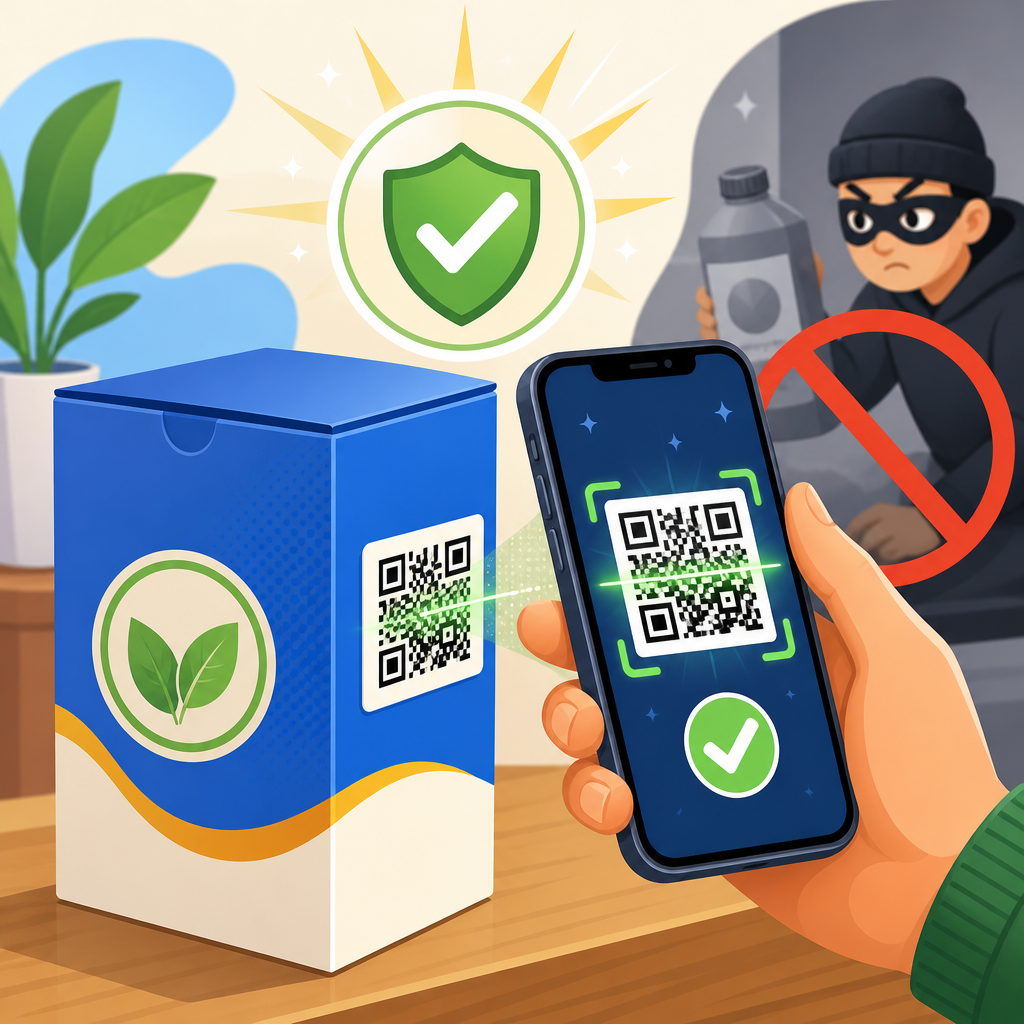
QR codes for anti-counterfeiting in packaging have moved from a niche security feature to a practical requirement for brands that sell through global supply chains. In simple terms, anti-counterfeiting packaging uses scannable identifiers, data systems, and verification rules to help consumers, retailers, inspectors, and brand owners distinguish genuine products from fake ones. A standard QR code is only a visual carrier of information, but when it is connected to serialization, secure databases, tamper evidence, and packaging workflows, it becomes part of a much stronger defense. I have seen this shift firsthand in packaging programs where a code that once linked only to a product page was redesigned to verify item identity, log scan location, and trigger fraud alerts within days of launch.
Counterfeiting affects pharmaceuticals, cosmetics, electronics, luxury goods, food, beverages, and even industrial parts. The Organisation for Economic Co-operation and Development has estimated that counterfeit and pirated goods account for hundreds of billions of dollars in global trade, and the damage extends well beyond lost revenue. Fake medicine can injure patients, counterfeit electrical parts can fail under load, and imitation infant formula or spirits can create immediate safety risks. That is why smart packaging matters. In this context, smart packaging means packs that do more than contain and display a product. They carry data, communicate status, enable traceability, and support authentication across the product lifecycle.
For brands building a smart packaging strategy, QR codes offer a rare mix of low cost, high familiarity, and wide device compatibility. Most consumers already know how to scan them with a phone camera. Most printers can reproduce them reliably when file preparation, quiet zones, and contrast standards are handled correctly. Standards bodies such as GS1 have also accelerated adoption by defining how two-dimensional codes can carry structured product data, including Global Trade Item Numbers, serial numbers, batch details, and expiry dates. The result is a technology that can sit on a folding carton, flexible pouch, label, shrink sleeve, or rigid container and still connect physical packaging to digital verification.
This matters because counterfeit prevention is no longer solved by one overt feature such as a hologram. Fraudsters copy visible elements quickly. Effective protection now layers overt, covert, and digital controls. QR codes are not a silver bullet, but they are often the customer-facing entry point into a larger system that includes variable data printing, secure code generation, scan analytics, and escalation rules. As the hub page for smart packaging, this article explains how QR codes work in anti-counterfeiting packaging, where they fit in the packaging stack, what implementation choices matter, and how brands can connect authentication with traceability, engagement, and compliance.
How QR codes support product authentication in smart packaging
A QR code helps authenticate a product when the code on each package is unique, linked to a trustworthy record, and checked against rules that a counterfeit pack cannot easily reproduce. The weakest version of a packaging QR code is static. It sends every scanner to the same website and carries no item-level identity. That can support marketing, but it does almost nothing for anti-counterfeiting. The stronger version is serialized. Each unit gets its own identifier, often tied to a GTIN plus a random or pseudo-random serial number. When the code is scanned, a verification service checks whether that identifier exists, whether it has already been scanned excessively, whether the scan location is plausible, and whether the pack should still be in circulation.
In real deployments, this process usually has three layers. First, the code resolves to a controlled endpoint rather than exposing raw data logic. Second, the application checks the identifier against a secure database or token service. Third, business rules score the event. For example, a premium skincare product manufactured for France but scanned in bulk for the first time in another region may be flagged for diversion or cloning. A medicine pack that shows fifty scans from different cities within one day may indicate copied artwork with a duplicated code. The authentication outcome then returns a simple message to the user, such as verified, previously scanned, expired, or contact support.
That plain-language response is essential. Consumers will not interpret supply-chain terminology, but they can understand whether a product appears genuine and what steps to take next. The same scan event can also feed richer internal workflows. Brand protection teams can review suspicious clusters, quality teams can investigate batch-level complaints, and commercial teams can identify gray-market movement. This is where smart packaging becomes more than a defensive tool. The QR code creates a digital touchpoint that protects the product while generating actionable intelligence about where, when, and how the package is encountered in the real world.
Core components of an anti-counterfeiting QR code system
Successful anti-counterfeiting packaging depends on system design, not just code placement. At minimum, a brand needs a unique identifier strategy, secure code generation, print quality controls, a scan resolution layer, an authentication database, and an incident response process. In many projects I have worked on, the biggest misunderstanding appears at the beginning: teams assume the QR code image itself is the security feature. It is not. The image is a carrier. Security comes from uniqueness, secrecy where appropriate, and the ability to validate against trusted records.
Identifier design should be intentional. Some programs use random serial numbers with enough entropy to resist guessing. Others use signed tokens or encrypted payloads so the code can be checked for integrity. For regulated categories, the identifier may align with existing serialization requirements. Print quality is equally critical. If the code is unreadable because of low contrast, dot gain, poor substrate choice, or distortion on curved packs, the anti-counterfeiting workflow fails at the first step. ISO/IEC specifications for two-dimensional symbol quality, along with verifier testing during production, are practical safeguards.
Data governance matters just as much as print execution. The destination URL should be controlled by the brand, redirected securely, and monitored for abuse. Authentication records should store issuance date, pack status, batch, market, and scan history. Rules must define what happens after suspicious events are detected. Without that playbook, even excellent scan analytics become passive reporting. The packaging line also needs integration. Variable data printers, vision systems, reject mechanisms, and line software must work together so that only valid, readable codes leave the facility. In short, the smart packaging stack spans prepress, production, software, and post-market monitoring.
Static, dynamic, serialized, and cryptographically protected QR codes
Not all QR codes offer the same level of protection. A static code always resolves the same way and can be copied from one genuine pack to an unlimited number of counterfeit packs. A dynamic code changes its destination behavior through a managed platform, which is useful for campaign control and analytics, but dynamic routing alone does not stop copying. Serialization is the real threshold for anti-counterfeiting. With serialized QR codes, each package carries a distinct identifier that should exist once in the system and follow a defined lifecycle from commissioning to sale and, where relevant, returns or decommissioning.
For higher-risk categories, cryptographic methods add another layer. A code can contain a digitally signed token so that the verification service checks not only whether the identifier exists but whether it was generated by the brand’s private signing process. This reduces the chance that attackers can invent plausible codes at scale. Some programs also pair the visible QR code with covert features such as forensic inks, microtext, guilloches, or physically unclonable markers. That pairing is useful because digital checks work well at consumer and retailer level, while covert features support field investigators, customs officers, and lab-based confirmation.
| QR code approach | How it works | Anti-counterfeiting strength | Best use case |
|---|---|---|---|
| Static | One code used on every pack | Low | Basic product information or campaigns |
| Dynamic | One visible code managed through redirect rules | Low to medium | Analytics and flexible destinations |
| Serialized | Unique code per unit linked to a database record | High | Consumer verification and traceability |
| Serialized plus cryptographic signing | Unique code with integrity validation | Very high | High-risk products and organized fraud threats |
The choice depends on product value, counterfeit prevalence, channel complexity, and budget. A regional beverage brand may begin with serialized labels on limited batches to detect diversion and code cloning. A pharmaceutical manufacturer, by contrast, usually needs unit-level serialization integrated with regulation, tamper evidence, and wholesaler workflows. The important point is that brands should match security architecture to threat level rather than adopting a generic QR code and assuming it provides authentication by default.
Packaging design and production requirements for reliable scanning
Even the best verification platform fails if packages do not scan consistently. Packaging design for anti-counterfeiting QR codes starts with symbol size, error correction level, contrast, substrate behavior, and placement. Dark codes on light backgrounds remain the safest option. Gloss varnishes, metallic foils, extreme curvature, and textured materials can reduce readability if not tested under actual lighting and camera conditions. Quiet zones around the symbol are not optional. When designers crowd a code against graphics, dielines, or folds, mobile scan performance drops sharply.
On press, variable data printing must be synchronized with inspection systems. Thermal inkjet, laser marking, toner, and high-resolution inkjet can all work, but each has tradeoffs in speed, durability, and substrate compatibility. Vision systems should verify code presence, readability, and data matching in real time, with rejects removed automatically. In carton lines, I have seen the most preventable errors come from artwork revisions that change panel dimensions late in the process and accidentally shrink the code below practical scan size. A packaging specification should lock the minimum module size, quiet zone, and acceptable verification grade before production starts.
Placement also influences user trust. A QR code hidden in an awkward seam or under a closure may protect against casual copying, yet if customers cannot find or scan it easily, they will not use it. For many consumer products, the best compromise is a visible code paired with tamper-evident construction or a secondary hidden code for investigations. Smart packaging should feel intentional: the pack explains why scanning matters, what the user will learn, and how the brand handles suspicious results. Clear callouts such as “Scan to verify authenticity” materially increase scan rates compared with unlabeled codes.
Industry applications: pharmaceuticals, cosmetics, luxury, food, and electronics
Different sectors use QR codes for anti-counterfeiting in different ways because the risks differ. In pharmaceuticals, patient safety and regulation are the primary drivers. Unit-level serialization, lot traceability, and tamper evidence are standard expectations in many markets. A medicine pack may use a QR code or Data Matrix to encode product and serial data, while the backend checks status and distribution legitimacy. In cosmetics, direct-to-consumer verification is common because counterfeit skincare and fragrance products frequently appear on marketplaces and social channels. Here, the QR code often combines authentication with ingredient information, usage guidance, and recall support.
Luxury goods use smart packaging to protect both product and brand equity. A handbag box, watch warranty card, or apparel hangtag can carry a serialized QR code that confirms origin, supports resale verification, and records ownership activation. Food and beverage brands often focus on parallel trade, refill fraud, and market-specific labeling. Premium spirits are a strong example: a code on the neck label or closure area can help identify refilled bottles or unauthorized imports when scan patterns conflict with the intended market. Electronics brands use QR-based authentication on retail packs, chargers, components, and accessories because counterfeit batteries, cables, and semiconductors can create safety and performance failures.
Across these categories, the common lesson is that anti-counterfeiting works best when it aligns with existing packaging moments. If a pharmacist already checks a pack before dispensing, add verification there. If a cosmetics customer scans for tutorials after purchase, combine that habit with authenticity confirmation. If a customs inspector needs rapid triage, provide a clear field workflow. Smart packaging succeeds when security fits the real behavior of the people who touch the package, not when it depends on ideal behavior that never happens in practice.
Implementation strategy, analytics, and the future of smart packaging
Brands should implement QR code anti-counterfeiting in stages. Start with a risk assessment: which SKUs are most frequently copied, which markets have the highest exposure, and where can scans realistically occur. Then define the data model, choose the code architecture, validate print performance, and pilot on a limited product family. A pilot should test not just scanning but also exception handling. What happens when the same code is scanned repeatedly in different cities? Who investigates? How quickly can suspicious inventory be isolated? Mature programs treat these questions as operational requirements, not afterthoughts.
Analytics are one of the strongest reasons to invest in smart packaging. Scan data reveals first-scan geography, duplicate events, out-of-market movement, retail activation, and consumer engagement patterns. That intelligence can support brand protection, demand planning, and channel management at the same time. Tools vary by stack, but enterprise teams commonly connect packaging data to serialization platforms, GS1-aligned master data, business intelligence dashboards, and customer service systems. Privacy rules still apply. Brands should collect only the data they need, publish transparent notices, and secure all consumer-facing endpoints.
Looking ahead, smart packaging will become more interconnected. QR codes will increasingly work alongside NFC, computer vision, tamper sensors, and digital product passports. The code will remain important because it is inexpensive, familiar, and universally scannable, but its role will expand from simple redirection to a durable identity layer for the package. The main takeaway is straightforward: QR codes for anti-counterfeiting in packaging are effective when they are serialized, validated, printed well, and backed by a clear response process. If you are building a smart packaging roadmap, begin with one high-risk product line, measure real scan behavior, and scale from evidence rather than assumption.
Frequently Asked Questions
1. How do QR codes help prevent counterfeiting in packaging?
QR codes help prevent counterfeiting when they are used as part of a broader authentication system rather than as a standalone printed graphic. On their own, QR codes are simply machine-readable symbols that store or point to information. The real anti-counterfeiting value comes from connecting each code to product serialization, secure databases, and verification rules that can confirm whether a specific package is genuine. In practice, this means a brand can assign a unique identity to every unit, batch, or shipment and track that identity across manufacturing, distribution, retail, and post-purchase verification.
When a consumer, retailer, or inspector scans the code, the system can check whether that identifier exists, whether it was issued by the brand, whether it has already been scanned in another market, and whether the scan behavior matches expected distribution patterns. For example, if the same serialized code appears in two countries at nearly the same time, the system can flag it as suspicious. This turns packaging into an active verification tool instead of just a passive label.
QR-based anti-counterfeiting also improves visibility across global supply chains. Brand owners can detect diversion, duplication, and unauthorized reproduction earlier because every scan can generate traceability data. That combination of item-level identity, scan history, and backend validation is what makes QR codes useful in anti-counterfeiting packaging. The code is the access point, but the real protection comes from the intelligence behind it.
2. Can a standard QR code be copied, and if so, what makes an anti-counterfeiting QR system secure?
Yes, a standard QR code can absolutely be copied. If a code contains only a static URL or fixed text, a counterfeiter can reproduce it on fake packaging with relative ease. This is one of the most important points for brands to understand: printing a QR code on a package does not automatically create product security. A copied static code may still scan successfully, which can create a false sense of trust unless there is a proper authentication layer behind it.
A secure anti-counterfeiting QR system addresses this risk by using unique serialized identifiers, controlled data generation, and real-time validation. Instead of placing the same code on every package, the brand generates a different code for each unit or label. That code is then registered in a secure database and linked to product details such as manufacturing date, factory, lot number, destination market, and scan status. When someone scans it, the system does not just read the code; it actively checks whether the code is valid, whether it has been used before, and whether the scan context makes sense.
Additional layers can strengthen security even further. These may include one-time authentication logic, cryptographic signatures, tokenized URLs, tamper-evident labels, hidden data elements, and rules that trigger alerts when duplicate or unusual scan patterns appear. Some brands also combine visible QR codes with covert features such as forensic inks or secure printing methods to make duplication harder and investigations more reliable. In short, the security does not come from the visual appearance of the QR code. It comes from uniqueness, backend control, scan intelligence, and the ability to detect and respond to misuse.
3. What is the difference between a regular marketing QR code and a QR code used for anti-counterfeiting packaging?
A regular marketing QR code is usually designed to direct users to a website, campaign page, video, app download, or promotional experience. In many cases, the same code appears on every package, poster, or advertisement in a campaign. Its primary job is engagement. It helps brands connect offline packaging to digital content, but it typically does not identify an individual product unit or verify authenticity.
An anti-counterfeiting QR code serves a very different purpose. It is typically unique to a specific item, carton, or batch and is tied to a structured data record in a secure system. Instead of simply opening a webpage, it can trigger an authentication workflow that checks whether the product identity is legitimate and whether the code’s scan history aligns with expected supply chain movement. This makes it possible to detect suspicious conditions such as duplicate scans, scans from the wrong geography, scans after the product has already been sold, or codes that do not exist in the brand’s database at all.
Another major difference is the importance of data governance. Marketing QR codes often prioritize convenience and broad accessibility, while anti-counterfeiting systems prioritize controlled issuance, traceability, and exception handling. For example, in a secure packaging environment, the code may be generated through a serialization platform, integrated with enterprise resource planning or track-and-trace software, and monitored through dashboards that support compliance, investigations, and enforcement. So while both types of QR codes may look similar to the eye, their business function, technical architecture, and security value are fundamentally different.
4. Who benefits from anti-counterfeiting QR codes in packaging?
Anti-counterfeiting QR codes create value for multiple stakeholders across the product lifecycle. Consumers benefit because they gain a fast, accessible way to check whether a product appears genuine before use or purchase. This is especially important in industries such as pharmaceuticals, cosmetics, electronics, luxury goods, food, and beverages, where counterfeit items can pose health, safety, financial, or reputational risks. A simple scan can increase confidence and provide useful product information at the same time.
Retailers and distributors also benefit because verification tools help them identify suspicious inventory before it reaches customers. In large distribution networks, fake goods can enter through gray channels, unauthorized intermediaries, or mixed shipments. A QR-based verification system can help receiving teams, store personnel, and channel partners confirm authenticity, review product details, and flag irregularities early. That reduces the likelihood of returns, disputes, and damage to the seller’s reputation.
Brand owners may benefit the most strategically because anti-counterfeiting packaging gives them better product traceability, stronger market intelligence, and more actionable enforcement data. By analyzing where, when, and how products are scanned, they can spot unauthorized market activity, identify vulnerable regions, monitor distribution integrity, and support legal or investigative action against counterfeit networks. Regulators and inspectors can benefit as well, since serialized and verifiable packaging can improve auditability and product control. In other words, the value of QR codes in anti-counterfeiting is not limited to consumer interaction; it extends across risk management, operations, compliance, and brand protection.
5. What should brands consider before implementing QR codes for anti-counterfeiting in packaging?
Before implementing QR codes for anti-counterfeiting, brands should start by defining the problem they need to solve. Counterfeiting risk varies widely by product category, price point, channel structure, and geography. Some brands are mainly dealing with fake end products, while others face relabeling, diversion, unauthorized resale, or duplicate packaging. The design of the QR system should match the actual threat model. A simple traceability layer may be enough in one market, while another may require item-level serialization, stronger print security, and active anomaly detection.
Brands should also evaluate the technical foundation of the program. This includes how unique identifiers will be generated, where product records will be stored, how scans will be validated, and how the packaging system will connect to manufacturing and supply chain workflows. Integration matters. If the anti-counterfeiting program is disconnected from production, warehousing, and distribution data, it will be much harder to investigate suspicious scans or prove where product integrity broke down. Scalability matters too, especially for companies managing multiple SKUs, international markets, co-packers, and contract manufacturers.
User experience is another critical factor. Consumers, retailers, and inspectors need clear scan instructions and reliable landing pages that explain the verification result in a simple and credible way. If the response is confusing, slow, or overly technical, adoption may suffer. At the same time, brands should plan for internal processes such as alert handling, incident escalation, channel partner training, and data privacy compliance. A successful anti-counterfeiting QR program is not just about printing codes on packages. It requires secure serialization, operational discipline, cross-functional coordination, and a clear plan for turning scan data into action.