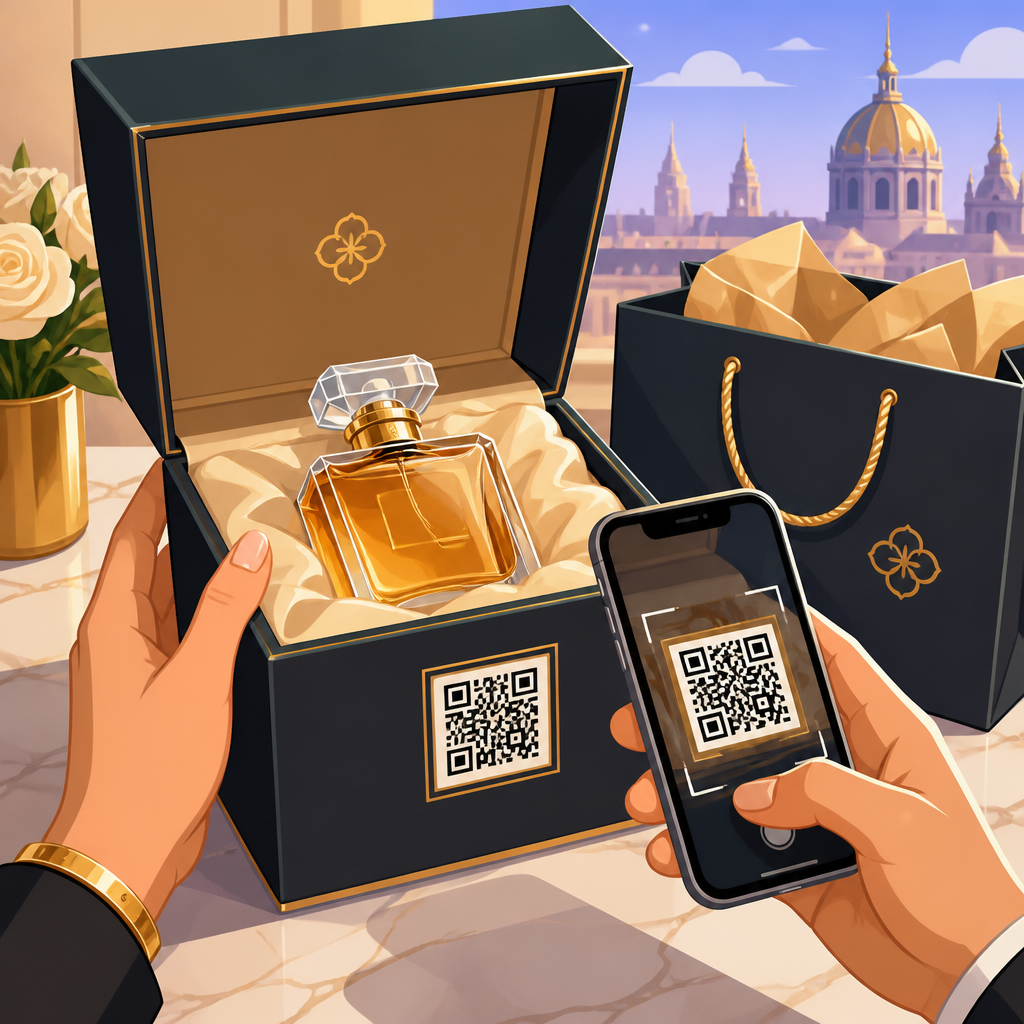
QR codes in luxury product packaging have moved far beyond simple web links, becoming a core part of smart packaging strategy for brands that need to protect margin, prove authenticity, and deepen client relationships after purchase. In practice, smart packaging means physical packaging enhanced with digital functionality, usually through scannable codes, NFC chips, serialized identifiers, or sensor-based features that connect the product to data, content, and services. For luxury brands, the QR code has become the most scalable entry point because it is inexpensive to print, globally understood, smartphone native, and easy to connect with product passports, care instructions, authentication workflows, loyalty experiences, and supply chain records. I have seen packaging teams adopt QR programs first for campaign storytelling, then quickly expand them into anti-counterfeiting, resale enablement, and clienteling once they realize each scan creates measurable first-party insight. That matters because luxury packaging is no longer judged only by materials, finish, and unboxing theater; it is now expected to perform operationally, commercially, and digitally. A premium carton, bottle, dust bag, label, or hangtag can now carry a persistent digital identity. This article explains how QR codes power luxury smart packaging, where they create value, which design and technical decisions matter most, and how brands can structure this packaging layer as the central hub for authentication, storytelling, sustainability, service, and lifecycle engagement.
What smart packaging means in luxury
In luxury, smart packaging is packaging that does more than contain and present a product. It identifies the item, delivers digital content, supports traceability, and extends the client experience beyond the point of sale. QR codes are central because they bridge physical and digital touchpoints with minimal friction. A customer scans the code on a fragrance box, leather goods tag, watch card, or wine label and reaches a brand-controlled destination optimized for mobile. That destination can verify origin, explain craftsmanship, register ownership, unlock concierge support, or present a personalized care plan.
The distinction between a generic marketing QR code and a smart packaging QR code is important. Generic codes often point every user to the same campaign page. Smart packaging codes are usually dynamic, serialized, or linked to a product record. They can identify stock keeping unit, batch, channel, region, or an individual item. In luxury environments, this distinction determines whether the code is merely decorative or genuinely useful. A static code may support a seasonal film, but a serialized code supports authentication, recall management, resale documentation, and ownership transfer.
Luxury brands care because smart packaging strengthens three priorities at once. First, it protects brand equity by helping detect counterfeits and unauthorized diversion. Second, it increases customer lifetime value through post-purchase services and first-party data capture. Third, it supports compliance and sustainability communication as regulators and consumers demand more transparency. European Digital Product Passport discussions, GS1 Digital Link standards, and evolving traceability expectations are pushing packaging toward richer digital identifiers. QR codes are the most practical visible layer in that transition.
Why QR codes fit luxury packaging better than many alternatives
Luxury brands often compare QR codes with NFC, RFID, holograms, and proprietary authentication labels. Each tool has value, but QR codes win on accessibility and deployment speed. Every modern smartphone camera can read them without a special app in most markets. They can be printed on folding cartons, woven labels, care cards, bottle neck tags, rigid boxes, or tamper seals with negligible added unit cost. For limited editions, seasonal runs, and global assortments, that flexibility matters more than technical novelty.
NFC can deliver elegant tap interactions and stronger chip-level uniqueness, but it raises component cost and requires new inlay, converting, and quality control processes. RFID is excellent for inventory visibility and retail operations, yet it is usually invisible to the customer and not ideal as the sole storytelling interface. Holograms can deter basic counterfeiters, but they offer little direct customer utility. A QR code, by contrast, can support both brand theater and hard operations. When paired with serialization and a secure cloud record, it can become the visible front door to an entire smart packaging stack.
Another advantage is creative control. Luxury designers often worry that a QR code will cheapen a premium pack. In reality, well-managed codes can be integrated discreetly through tonal printing, embossed labels, interior reveal placement, neck tags, belly bands, or hidden flap positions. The best executions treat the code as a service cue, not a visual intrusion. Premium spirits, skincare, couture accessories, and watch packaging have all shown that a code can coexist with meticulous finishing when size, contrast, and placement are tested properly.
Core use cases: authentication, storytelling, service, and traceability
The strongest luxury smart packaging programs solve more than one problem. Authentication is usually the first use case. A serialized QR code linked to a secure database can help a customer verify whether an item was produced by the brand, sold through an authorized channel, and activated previously. It will not eliminate sophisticated counterfeiting on its own, but it creates a visible checkpoint and can flag suspicious scan behavior such as impossible geography, duplicate activations, or excessive repeat scans.
Storytelling is the second use case and often the one customers notice first. Scan destinations can explain the atelier process, ingredient sourcing, vineyard provenance, gemstone certification, or the inspiration behind a collection. The key is specificity. Instead of generic brand language, effective pages answer practical questions: Who made this? Where was it assembled? What materials are used? How should it be stored, cleaned, or repaired? In my experience, scan engagement rises when content feels product specific rather than campaign generic.
Service is where many luxury brands unlock the most durable value. A packaging QR code can launch warranty activation, appointment booking, refill instructions, monogramming options, repair intake, style guidance, and local boutique support. For beauty and fragrance, it can explain routine integration, refill systems, and ingredient details. For leather goods, it can provide care intervals and humidity or storage recommendations. For watches and jewelry, it can connect owners to servicing calendars and authenticity records.
Traceability has become the fourth pillar. Clients increasingly expect transparency around origin and environmental claims. A QR-enabled package can present batch data, material certifications, chain of custody highlights, or recyclability instructions tailored by market. This is especially relevant in categories such as premium wine, cosmetics, and fashion, where provenance influences perceived value and where sustainability claims are scrutinized by regulators and informed buyers alike.
How luxury brands structure a smart packaging program
The most effective programs start with a clear data model, not with artwork. Teams should decide what the code represents: a product line, a batch, a market variant, or a unique item. They should also define the scan destination logic. Dynamic QR platforms let brands route users differently by geography, language, device type, campaign date, or authentication status. That flexibility is essential when products move across markets or remain in circulation for years.
Operationally, the stack usually includes a code generation system, product information management, packaging artwork controls, analytics, and a mobile landing environment. Many enterprise teams connect these elements through GS1 identifiers, serialization platforms, and customer data tools. Adobe Experience Manager, Salesforce, SAP, Salsify, and Kezzler are examples of systems that can support parts of this workflow, depending on the brand architecture. The point is not to add software for its own sake; it is to create a durable link between package, product record, and customer interaction.
Governance matters because luxury packaging has long lead times and strict quality standards. Codes need print specifications, error correction settings, minimum size rules, substrate testing, and approval checkpoints. Dark foils, textured papers, varnishes, curved bottles, and metallic inks can all reduce scan reliability. A code that fails under boutique lighting or after abrasion damages trust immediately. That is why packaging engineers should test scans across iPhone and Android devices, camera apps, retail lighting conditions, and normal wear scenarios before launch.
| Program element | Luxury packaging application | Primary business value |
|---|---|---|
| Serialized QR code | Unique ID on box, label, hangtag, or certificate card | Authentication, traceability, item-level analytics |
| Dynamic destination | Localized mobile page based on market or campaign | Content flexibility without reprinting packaging |
| Ownership registration | Post-purchase activation tied to client profile | First-party data, service enrollment, resale history |
| Care and repair portal | Guidance for cleaning, maintenance, and appointments | Higher retention, reduced misuse, stronger loyalty |
| Sustainability disclosure | Material origin, certifications, disposal instructions | Compliance support and transparency credibility |
Authentication and anti-counterfeiting realities
Brands should be realistic about what QR codes can and cannot do against counterfeits. A visible code alone is easy to copy. Real protection comes from combining the code with serialization, secure records, anomaly detection, and packaging design that is difficult to replicate consistently. Some brands pair QR codes with hidden markers, tamper-evident seals, NFC, or forensic print features. That layered approach is more credible than claiming the code itself is counterfeit proof.
A robust authentication flow usually includes three checks. First, the code resolves to a brand-owned domain, not a third-party marketplace or generic short link. Second, the landing page confirms product attributes such as model, color, batch, or production date that a customer can compare with the physical item. Third, the system assesses scan history. If the same identifier appears in multiple countries within implausible timeframes, the brand can flag the item for review. This does not guarantee authenticity, but it improves detection and consumer confidence.
Counterfeit risk is especially acute in handbags, sneakers, watches, cosmetics, and spirits. In premium alcohol, QR smart packaging also helps with gray market diversion and refill fraud. A bottle code can be checked at import, at retail, and by the end customer. In cosmetics, where safety matters as much as prestige, packaging codes can direct buyers to ingredient lists, expiration guidance, and recall notices. Those practical functions build trust in ways that purely decorative anti-counterfeit features cannot.
Design, user experience, and the premium feel
The best luxury QR experiences feel intentional from package to landing page. On pack, the code should have a clear invitation such as Verify your product, Discover its story, or Access care and services. Ambiguous prompts reduce scans. Placement should align with the expected moment of use: exterior for pre-purchase education, interior for post-purchase service, or certificate card for authentication and ownership registration. Copywriting matters because customers scan when they understand the reward immediately.
The mobile experience must load quickly, respect the brand aesthetic, and answer the next question without making the customer hunt. If the scan opens a bloated homepage, the packaging has failed. Luxury users expect a destination tailored to the exact product they hold. Rich media can work well, but it should not delay the first useful answer. In usability testing, concise modules such as authenticity status, craftsmanship story, care guide, and service options usually outperform long scrolling narratives.
Accessibility is also part of premium execution. Text contrast, readable type, multilingual support, and screen-reader-friendly structure improve reach and reduce frustration. Global luxury brands cannot assume a single language or a perfect data connection. Progressive page design, compressed media, and localized content are practical necessities. The premium feel comes from smoothness and relevance, not from visual excess.
Measurement, compliance, and the future of luxury smart packaging
Smart packaging should be measured like any other strategic channel. Useful metrics include scan rate by market, authenticated registrations, repeat scans, service conversions, time to first scan, suspicious scan patterns, and content completion by product category. These signals help teams refine placement, messaging, and post-purchase journeys. A fragrance launch may show high first-week scan volume from storytelling, while a leather goods line may see lower volume but stronger service conversion over time. Both outcomes can be valuable if they map to category goals.
Privacy and compliance deserve equal attention. If a scan experience collects personal data for warranty, loyalty, or clienteling, brands need lawful consent flows, transparent notices, and retention controls aligned with regulations such as GDPR and CCPA. Packaging teams often underestimate this because the trigger is physical, but the data practices are digital. Domain governance, certificate security, and redirect management also matter. A hijacked or expired link on premium packaging is not a minor error; it undermines trust at the moment of brand contact.
Looking ahead, QR codes will increasingly anchor digital product passports, resale records, refill ecosystems, and omnichannel service models. As luxury brands invest in circularity, a persistent package-to-product identifier becomes more valuable, not less. It can document repairs, authenticate secondhand transfers, validate refill compatibility, and support end-of-life guidance. That makes QR codes in luxury product packaging more than a trend. They are the practical interface layer for smart packaging at scale. Brands that treat the code as part of product infrastructure, not campaign decoration, gain better data, stronger trust, and more useful packaging. To build this hub well, start with one hero category, serialize intelligently, test relentlessly, and design every scan to deliver a clear customer benefit.
Frequently Asked Questions
How are QR codes used in luxury product packaging beyond linking to a website?
In luxury product packaging, QR codes now serve as a gateway to a much broader smart packaging ecosystem rather than acting as a basic shortcut to a homepage. Brands use them to connect each product or package to unique digital experiences, authenticity records, after-sales services, care instructions, clienteling programs, warranty activation, repair requests, and limited-edition storytelling. In many cases, the QR code is tied to a serialized identity, which means each individual item can carry its own digital record instead of sharing the same generic landing page as every other product in a collection.
This shift is especially important for luxury brands because packaging is no longer seen as a static container. It becomes an active touchpoint that can continue the brand relationship after purchase. A customer might scan a code on a fragrance box to verify authenticity, access exclusive editorial content, register ownership, receive refill information, or unlock invitations to members-only experiences. For leather goods, watches, jewelry, apparel, and cosmetics, the code can also provide product provenance, material details, artisan narratives, and guidance on long-term care.
From a business standpoint, this makes QR-enabled packaging valuable across several functions at once: brand protection, customer engagement, data collection, service delivery, and retention. That is why QR codes have become a core component of smart packaging strategy in luxury. They create a practical digital bridge between the physical product and the brand’s service layer, helping companies protect margins, strengthen trust, and extend the customer experience well beyond the point of sale.
Can QR codes in luxury packaging help fight counterfeiting and prove authenticity?
Yes, and this is one of the most significant reasons luxury brands are investing in QR-based smart packaging. Counterfeiting damages revenue, weakens brand equity, creates service issues, and erodes customer trust. A QR code can help address these risks when it is part of a secure, serialized authentication system. Instead of using one public code across thousands of boxes, brands can assign unique identifiers to individual products, packages, or both. When scanned, that code can check against a secure database and confirm whether the item’s identity matches legitimate production and distribution records.
The value comes from the system behind the code, not just the code itself. A visible QR symbol on its own is easy to copy, so luxury brands typically strengthen it with serialization, encrypted data structures, scan logic, tamper-evident packaging design, batch controls, and sometimes complementary technologies such as NFC or secure cloud-based product passports. This layered approach can flag duplicate scans, impossible scan locations, invalid identifiers, or unusual post-sale activity that may indicate diversion or counterfeit circulation.
For the customer, the experience can be simple and reassuring: scan the packaging and receive a clear authenticity confirmation along with product information and brand services. For the brand, every scan can also generate intelligence about where products are being scanned, whether they appear in expected channels, and how authentication behavior changes over time. In luxury markets where trust and exclusivity matter deeply, QR-enabled authentication can become both a protective measure and a premium service feature.
What benefits do QR codes in luxury product packaging offer after the sale?
Post-purchase engagement is where QR codes often deliver some of their strongest long-term value. In luxury, the sale is rarely the end of the relationship. Customers expect ongoing service, brand recognition, and a sense of continuity with the house they purchased from. A QR code on packaging can support that by giving buyers immediate access to services that are useful, relevant, and elevated in tone. This may include warranty registration, care tutorials, cleaning recommendations, alteration or repair requests, authenticity rechecks, refill programs, and direct contact with concierge-style support.
These post-sale interactions help luxury brands do more than provide convenience. They create reasons for the customer to return to owned digital channels after purchase, which is strategically important in a market where direct relationships are highly valuable. Instead of relying only on retail partners or one-time transactions, brands can use QR-enabled packaging to build a richer understanding of customer behavior, product ownership, service needs, and loyalty patterns. That data can inform clienteling, retention programs, and personalized communication.
There is also a strong storytelling advantage. A scan can unlock behind-the-scenes content about craftsmanship, sourcing, design inspiration, or collection history, reinforcing the product’s emotional and cultural value. This is particularly effective in luxury because customers are not just buying utility; they are buying heritage, artistry, and belonging. When QR codes are thoughtfully integrated into packaging, they can extend the premium experience into ownership, service, and brand community in a way that feels both modern and personal.
Are QR codes compatible with the premium look and feel expected in luxury packaging?
Yes, provided they are integrated with care. One of the most common concerns luxury brands have is whether a QR code will disrupt visual elegance or make packaging feel overly commercial. In practice, a QR code can absolutely coexist with premium packaging design when it is treated as a deliberate design element rather than an afterthought. Brands can control placement, scale, print finish, contrast, surrounding whitespace, and messaging so the code feels discreet, intentional, and aligned with the broader packaging system.
Luxury packaging often depends on restraint, material quality, and tactile detail, so the QR implementation should follow the same principles. A code may be positioned inside the box, beneath a flap, on an insert card, under a label, or within a protected area that encourages discovery. Some brands pair the code with concise invitation language that frames the scan as part of an exclusive service experience rather than a mass-market call to action. Others combine the code with embossed, foiled, or otherwise refined print treatments while still preserving scan reliability.
The key is balancing aesthetics with usability. If the code is too hidden, too stylized, or too low-contrast, customers may not scan it successfully. If it is too prominent or poorly integrated, it can undermine the luxury presentation. The best executions maintain brand codes while making the digital function easy to understand and use. When designed well, the QR code does not cheapen the packaging; it enhances it by adding intelligence, utility, and a sense of modern exclusivity.
What should luxury brands consider when implementing QR codes in packaging at scale?
Successful implementation requires more than printing a scannable symbol on a box. Luxury brands need to begin with clear strategic goals: Are they trying to reduce counterfeiting, improve traceability, activate after-sales services, support circularity, increase direct customer engagement, or all of the above? Those objectives will shape the technical and operational design of the program, including whether codes should be static or dynamic, generic or serialized, package-level or item-level, and whether they should integrate with CRM, ERP, authentication platforms, retail systems, or digital product passport initiatives.
Brands also need to think carefully about the customer experience. The scan destination should be mobile-optimized, fast, secure, and aligned with luxury brand standards. The value exchange must be obvious. If customers scan and find generic content or a poor interface, adoption will suffer. If they receive meaningful benefits such as authentication, ownership registration, concierge access, or exclusive product content, the scan becomes worthwhile. Packaging copy, staff training, and channel consistency all matter in encouraging usage and setting expectations.
Operationally, scalability depends on governance and data quality. Serialized QR programs require rigorous control over identifier generation, printing accuracy, packaging line integration, database management, and scan event monitoring. Security policies should account for cloning risks, fraud patterns, and privacy compliance. Brands should also define who owns the program internally, whether across packaging, digital, supply chain, retail, compliance, or customer service. When these pieces are coordinated, QR-enabled smart packaging can move from a small innovation project to a durable business capability that supports protection, performance, and premium customer experience at scale.