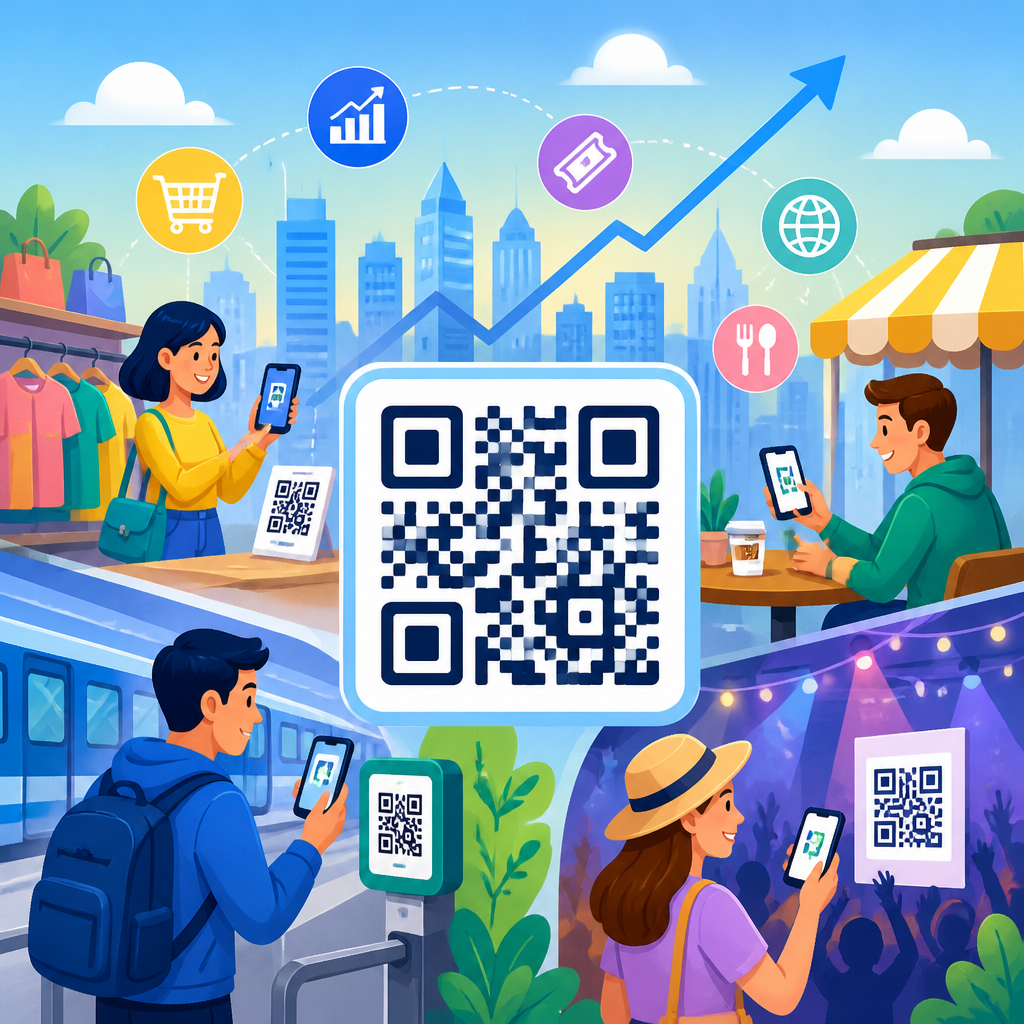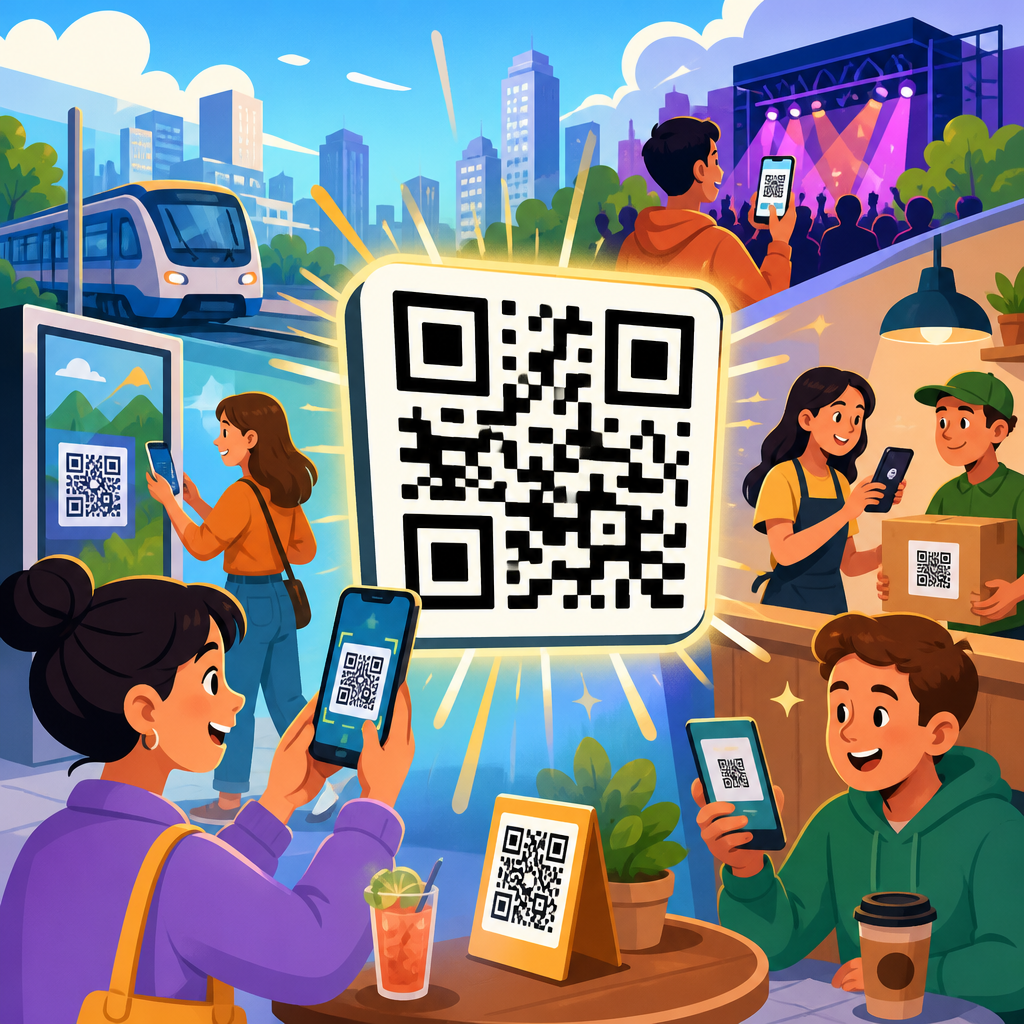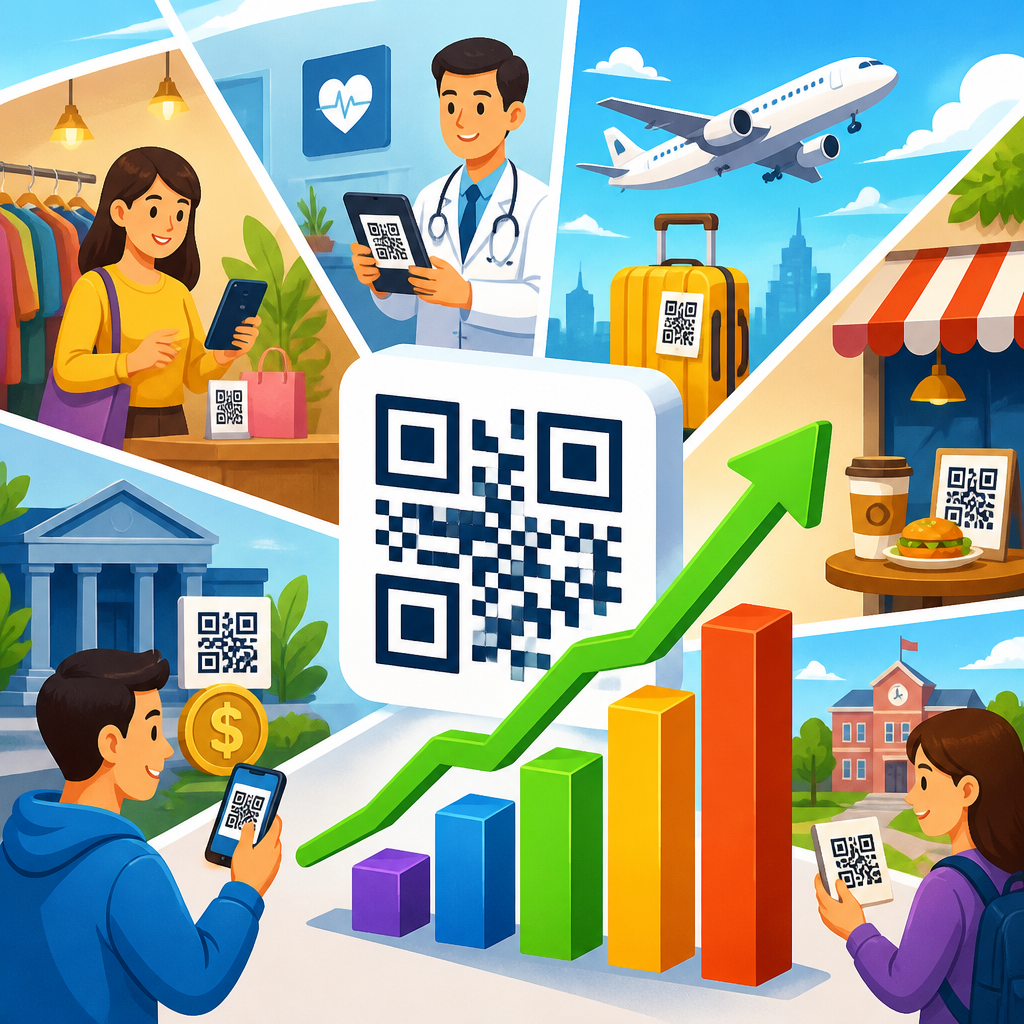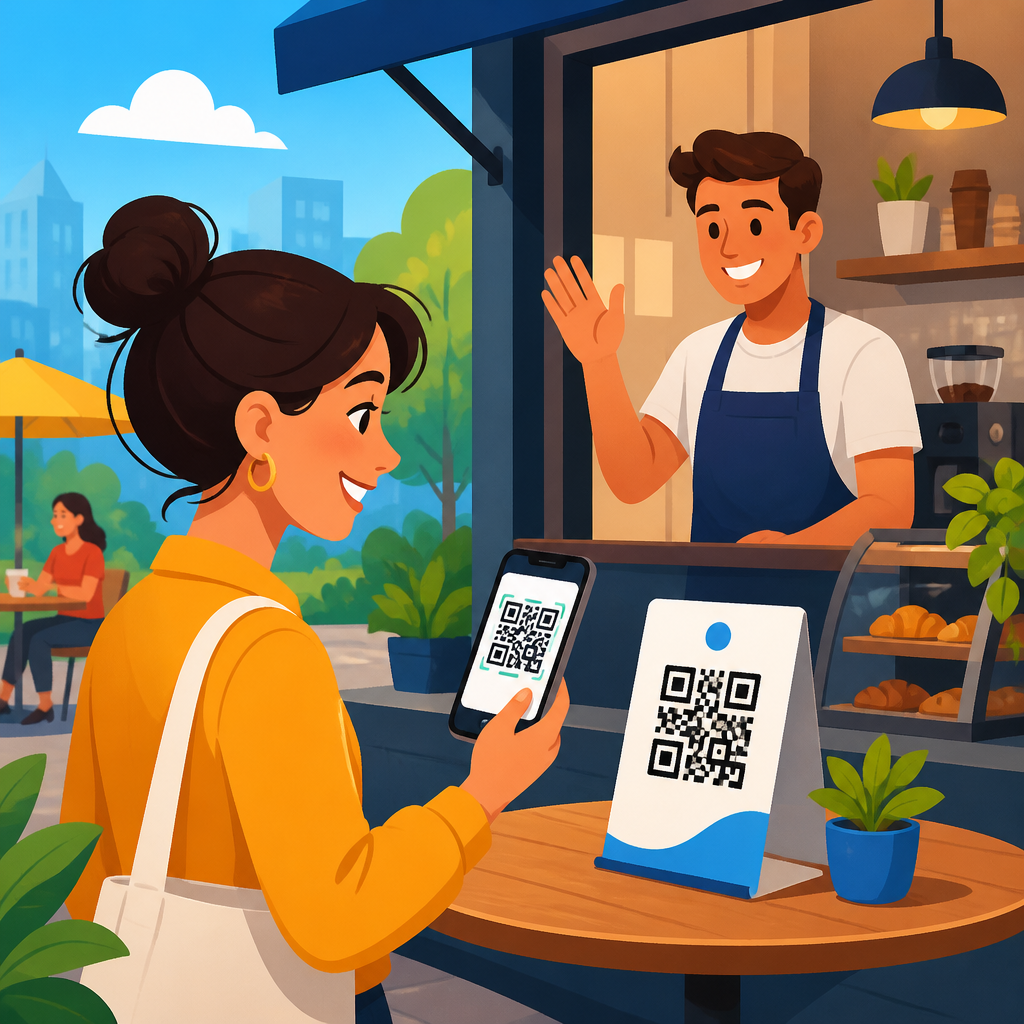
QR codes have moved from niche utility to everyday infrastructure, powering contactless experiences in payments, menus, tickets, healthcare, logistics, and marketing across nearly every major market. A QR code, or Quick Response code, is a two-dimensional matrix barcode that stores data such as a URL, payment token, product identifier, or authentication string, then delivers that data instantly when scanned by a smartphone camera or dedicated reader. Contactless experiences are interactions completed without handing over cash, touching shared screens, or exchanging paper, which makes them faster, more traceable, and often more convenient for both businesses and consumers. I have worked with QR deployments in retail and event operations, and the most important lesson is simple: adoption rises when scanning removes friction at a precise moment, not when a code is added as decoration. That is why global QR code adoption trends matter. They reveal how changes in mobile operating systems, digital payment rails, public health behavior, and customer expectations have turned a once overlooked technology into a core layer of modern commerce and service delivery.
The current wave of QR code growth is not a single trend but the convergence of several forces. Smartphone cameras now recognize codes natively on iOS and Android, removing the need for separate apps in many cases. Payment ecosystems such as Alipay, WeChat Pay, Paytm, Pix, and UPI taught millions of users that scanning can be as routine as tapping a card. Restaurants, transit networks, airlines, hospitals, and manufacturers discovered that a printed square can connect physical spaces to live digital content at almost no marginal cost. At the same time, dynamic QR code platforms made it possible to update destinations, track scans, segment campaigns, and manage security after printing. As a hub for global QR code adoption trends, this article explains where growth is happening, which industries are leading, what technical and operational factors shape results, and how organizations should plan the next generation of contactless experiences.
Why QR codes became the default bridge between physical and digital
QR codes solved a stubborn problem better than older tools: how to move a person from an offline moment to the exact digital action they need in seconds. NFC can be elegant, but it depends on hardware support, placement, and user awareness. Short links work, but typing them is tedious and error prone. Dedicated apps can be powerful, yet app download friction kills conversion. In deployment after deployment, I have seen QR codes win because they are cheap to print, easy to distribute, and flexible enough to support payments, forms, check-ins, authentication, and content delivery. A code on a counter card can launch a menu; a code on packaging can verify authenticity; a code on a shipment can update chain-of-custody records.
The pandemic accelerated adoption, but it did not create the underlying value. Shared surfaces became a health concern, so digital menus, self check-in, telehealth intake, and mobile payment options spread quickly. However, usage persisted after restrictions eased because many experiences were objectively better. A hotel guest could bypass the front desk. A concert attendee could store a ticket in a wallet and scan at entry. A patient could complete pre-visit forms from home. Contactless experiences succeeded where they reduced waiting, eliminated paper handling, and created a record that businesses could analyze. The result was a broad normalization of scanning behavior, especially among consumers who had previously used QR codes rarely or never.
Regional patterns in global QR code adoption trends
Global QR code adoption is uneven, and understanding regional context is essential. China established the modern benchmark early, with QR payments becoming mainstream through super apps that integrated messaging, wallets, merchant tools, and peer-to-peer transfers. In practice, this meant street vendors, luxury retailers, and public utilities could all accept the same consumer behavior: scan and pay. India followed a different path but reached similar scale through UPI, where interoperable payment rails allowed banks and apps to support QR acceptance widely, from organized retail to small kirana stores. Brazil’s Pix system then showed how central bank backed instant payments could stimulate QR transactions at national scale, especially for small businesses seeking lower acceptance costs than cards.
North America and Western Europe adopted QR codes more gradually, often outside payments first. Restaurants used menu codes, airlines expanded mobile boarding passes, and retailers connected shelf displays to product information or promotions. Payments grew as wallets, banking apps, and merchant apps improved scanning flows, but card infrastructure remained strong, so QR often complemented rather than replaced tap-to-pay. In Southeast Asia, QR codes became deeply embedded in daily commerce due to high smartphone penetration, fragmented merchant bases, and the appeal of low-cost acceptance for microbusinesses. Africa presents a mixed picture: mobile money ecosystems in countries such as Kenya create favorable conditions, while connectivity, device capability, and interoperability vary by market. The broad lesson is clear: QR adoption rises fastest where it aligns with existing payment rails, affordable smartphones, and a genuine need to digitize informal or paper-based interactions.
Industries leading contactless transformation
Payments remain the most visible use case, but the strongest growth often comes from industry-specific workflows. Hospitality is a prime example. Restaurants used QR menus first as a safety measure, then expanded them into ordering, upselling, and bill settlement. Hotels added codes for digital directories, room service, spa bookings, and late checkout offers, reducing print costs while improving guest convenience. In events and travel, QR codes transformed ticketing and access control. A dynamic code tied to an attendee profile can be validated in real time, reducing fraud and speeding entry lines. Airlines and rail operators use similar flows for boarding and station access, often integrating wallet passes and identity checks.
Healthcare has adopted QR codes for patient intake, medication information, specimen tracking, and equipment management. In clinics I have supported indirectly through technology partners, the most immediate gain came from reducing clipboard bottlenecks: patients scan, complete forms on their own devices, and arrive with verified records. Manufacturing and logistics use QR codes differently, emphasizing traceability over consumer convenience. Codes on components, pallets, or finished goods can encode batch data, serial numbers, inspection status, and destination routing. In retail and consumer packaged goods, brands increasingly use codes for product storytelling, loyalty enrollment, warranty registration, and anti-counterfeit verification. These examples show why the rise of contactless experiences is broader than payments alone: QR codes are becoming a common interaction layer across operations, marketing, and service delivery.
What successful deployments have in common
Organizations often ask which format or campaign type performs best. The answer is that results depend less on the graphic itself than on the system around it. The highest-performing QR deployments share several traits: clear intent, visible placement, mobile-optimized destinations, fast load times, and measurable outcomes. A code should answer one obvious user question. Scan to pay. Scan to check in. Scan to see ingredients. Scan to track your parcel. When a code asks users to make a decision after scanning, conversion drops. Dynamic QR management also matters because destinations change. Menus update, event instructions evolve, and promotions expire. Static codes still have value for simple permanent links, but dynamic infrastructure is now the standard for business-critical contactless experiences.
| Deployment factor | Best practice | Why it affects adoption |
|---|---|---|
| Placement | Position at eye level or point of decision | Reduces hesitation and increases scan likelihood |
| Destination | Send users to a fast mobile page or native payment flow | Prevents abandonment after scan |
| Code type | Use dynamic codes for campaigns and changing content | Allows updates, analytics, and lifecycle management |
| Call to action | State the benefit in plain language | Explains why scanning is worth the effort |
| Security | Use branded domains and monitor redirects | Builds trust and reduces phishing risk |
| Measurement | Track scans, completions, device types, and location | Shows whether usage turns into business value |
Technology shifts shaping the next wave of growth
Several technical changes are pushing QR adoption beyond basic scans. First, camera-level recognition in smartphones removed one of the biggest barriers to entry. Second, digital wallets and banking apps now support more seamless handoffs from scan to authentication to payment confirmation. Third, dynamic QR platforms provide enterprise controls such as role-based access, expiration rules, API integration, and real-time analytics. These features matter when codes are tied to regulated workflows, multi-location operations, or large campaigns. Standards work is also important. GS1 Digital Link is giving brands a more structured way to connect product identifiers with web content, traceability, and post-purchase experiences, especially as industries prepare for richer package-level data.
Security is becoming more sophisticated as adoption grows. Malicious sticker overlays, deceptive redirects, and fake payment codes are real risks, particularly in high-traffic environments. The best defenses are operational and technical: use tamper-evident placement, print recognizable branding, prefer managed dynamic codes, and educate users to verify domains before submitting data. Accessibility deserves equal attention. A contactless journey fails if text is too small, contrast is poor, or the destination is unusable with assistive technologies. Reliable deployments follow basic mobile usability standards and account for low bandwidth conditions. The future of QR codes is not just more scans. It is more trustworthy, standardized, and integrated scanning tied directly to identity, inventory, loyalty, and payment systems.
How businesses should measure QR code performance globally
Scan counts alone are a weak metric. They indicate curiosity, not outcomes. Mature teams measure the entire funnel: impressions, scans, landing-page engagement, task completion, payment success, repeat use, and downstream revenue or cost savings. For a restaurant, the key metric may be table turn time or average order value from digital upsells. For a hospital, it may be shorter intake times or fewer registration errors. For a manufacturer, it may be reduced recall resolution time through better batch traceability. In my experience, the most useful reporting pairs QR events with operational data from POS, CRM, ticketing, or ERP systems. That is how a code stops being a novelty and becomes a measurable business asset.
Global comparison requires nuance because user behavior differs by market. In China or India, customers may already trust scan-to-pay flows and complete them quickly. In the United States or Germany, users may scan readily for information but still prefer cards for payment. Device mix matters too. Entry-level Android phones on slower networks may struggle with heavy landing pages, depressing conversions in price-sensitive regions. Privacy regulation also affects analytics design. Teams operating across Europe must align tracking with GDPR principles, while healthcare and finance deployments may face stricter data handling rules. The practical approach is to benchmark by region, channel, and use case, then optimize creative, placement, and destination design locally rather than assuming one global template will perform everywhere.
The strategic outlook for global QR code adoption trends
QR codes will remain central to contactless experiences because they solve a universal interface problem: connecting people, products, and places to the right digital action with minimal hardware and almost no training. Their role will expand as packaging, identity, payments, and service interactions become more data-rich and personalized. Brands are moving from one-off campaign codes to governed QR portfolios spanning packaging, storefronts, receipts, direct mail, and after-sales support. Public sector agencies are using codes for citizen services, transit updates, and document verification. Education providers are linking printed materials to live resources and attendance workflows. The technology is mature, but the strategy around it is becoming more sophisticated.
For organizations building within QR Code Trends and Innovations, the priority is not merely generating codes. It is designing trustworthy, measurable, region-aware journeys that genuinely improve the user experience. Focus on the moment of need, match the code to a single clear action, and support it with fast mobile content, secure infrastructure, and analytics tied to business outcomes. That is the pattern behind global QR code adoption trends, and it explains the rise of contactless experiences across industries and markets. If you are planning your next program, audit your current touchpoints, identify the friction customers face, and deploy QR codes where scanning saves time, reduces effort, or increases confidence. Start there, measure rigorously, and scale what proves useful.
Frequently Asked Questions
What is a QR code, and why has it become so important for contactless experiences?
A QR code, short for Quick Response code, is a two-dimensional barcode designed to store and quickly transmit information when scanned. Unlike traditional one-dimensional barcodes, QR codes can hold much more data, including website URLs, payment credentials, ticket details, product IDs, Wi-Fi login information, authentication strings, and location-specific instructions. When a user points a smartphone camera or scanning app at the code, the device instantly interprets the data and launches the intended action, such as opening a payment screen, displaying a digital menu, validating an event ticket, or checking in for an appointment.
The reason QR codes have become central to contactless experiences is simple: they remove friction from physical-world interactions without requiring specialized hardware for the user. Most people already carry a smartphone, and most modern phones can scan QR codes natively through the camera. That means businesses can create low-cost, scalable digital touchpoints almost anywhere: on tables in restaurants, signs in retail stores, labels on packages, hospital forms, transportation terminals, and product packaging.
QR codes also fit the core promise of contactless interaction. They reduce shared touchpoints, speed up transactions, and connect offline environments with digital systems in seconds. Instead of handing over cash, touching a kiosk, or exchanging paper tickets, users can scan and complete tasks on their own devices. This combination of convenience, cost efficiency, and universal accessibility has helped move QR codes from a niche tool into everyday infrastructure across payments, healthcare, logistics, hospitality, travel, and marketing.
How do QR codes improve customer experiences in industries like payments, dining, travel, and healthcare?
QR codes improve customer experiences by making common interactions faster, more convenient, and more self-directed. In payments, they allow users to scan a code at checkout and complete a transaction through a banking app, mobile wallet, or merchant payment portal. This reduces the need for cash handling, card swipes, or terminal contact, while often speeding up the checkout process. In many markets, especially across Asia, QR-based payments have become a foundational layer of digital commerce because they work for both large retailers and small merchants with minimal setup costs.
In dining, QR codes have transformed how menus and ordering systems work. Instead of waiting for a printed menu or touching a shared tablet, guests can scan a code at the table to browse dishes, see pricing, review allergy information, and sometimes place and pay for the order directly from their phone. This creates a more flexible experience for diners and can also help restaurants update items in real time without reprinting physical materials.
In travel and events, QR codes streamline ticketing, boarding, access control, and identity verification. A traveler can receive a QR code digitally, store it on a mobile device, and present it for fast scanning at a gate or checkpoint. This reduces paper use, shortens queues, and makes it easier to update or validate ticket information dynamically. Similarly, event organizers can use QR codes to manage entry, prevent duplication, and collect attendance data efficiently.
In healthcare, QR codes support safer and more organized workflows. Patients may scan a code to complete intake forms, access appointment details, navigate hospital departments, verify prescriptions, or retrieve lab instructions. Providers can also use QR systems for asset tracking, specimen identification, medication management, and secure links to patient-facing resources. Across all of these sectors, the customer benefit is the same: fewer delays, fewer unnecessary physical steps, and a smoother transition between physical environments and digital services.
Are QR codes secure, and what risks should businesses and consumers be aware of?
QR codes themselves are not inherently dangerous, but like any digital gateway, they can be used safely or exploited irresponsibly. A QR code is simply a method of encoding data. The real security question depends on what the code points to or what process it triggers. For example, a QR code that opens a verified payment screen from a trusted merchant can be perfectly safe, while a QR code that redirects users to a phishing site, fake login page, or malicious download can create serious risk.
One of the most common threats is QR code tampering. In public places, attackers may place a fraudulent sticker over a legitimate code to redirect users to a fake destination. This is particularly concerning in payment environments, parking meters, restaurant tables, and posters where users scan quickly without closely inspecting the source. There is also the broader issue of user trust: many people scan codes automatically, which makes it important for organizations to clearly identify the destination, explain the intended action, and use secure, recognizable domains.
Businesses can reduce risk by using dynamic QR code management platforms, HTTPS-secured destinations, domain verification, anti-tamper placement strategies, and branded landing pages. They should also regularly inspect physical codes in public-facing spaces and monitor scan activity for unusual behavior. If the QR code is used for payments, authentication, or access control, the connected workflow should include strong backend security, not just reliance on the code itself.
Consumers can protect themselves by checking whether the code appears altered, previewing links before opening them when possible, avoiding codes from suspicious or unverified sources, and being cautious about entering passwords or payment details after a scan. In short, QR codes are a highly effective technology, but they should be treated with the same level of digital awareness users apply to links in emails or text messages. The convenience is real, but so is the need for basic security hygiene.
What is driving the global rise of QR codes across so many different markets?
The rise of QR codes is being driven by a rare combination of technological readiness, economic efficiency, and behavioral change. First, smartphone penetration has reached a point in many markets where scanning a QR code is natural and immediate. Users no longer need a dedicated app in most cases, because phone cameras and mobile operating systems now recognize QR codes natively. That removed one of the biggest historical barriers to adoption.
Second, QR codes are inexpensive to deploy. A business does not need to install complex hardware to start using them. A printed sign, label, receipt, package insert, table card, or screen display can become a digital interaction point instantly. This low cost has made QR systems attractive not only to large enterprises but also to small businesses, independent merchants, healthcare providers, schools, transit systems, and public agencies.
Third, consumer expectations have changed. People increasingly want speed, autonomy, and minimal friction in physical environments. They are comfortable using their phones to pay, browse information, check in, verify identity, and complete transactions. QR codes support that behavior by acting as a bridge between offline objects and online systems. In many cases, they also support multilingual communication, personalized experiences, and real-time content updates, which are difficult to achieve with static printed materials alone.
Another major factor is versatility. QR codes are not tied to one industry or one use case. The same underlying technology can support payments in a café, shipment tracking in a warehouse, medicine verification in a clinic, digital manuals on a product box, loyalty enrollment in a retail store, or campaign attribution in marketing. That flexibility has helped QR codes become part of everyday infrastructure rather than a trend limited to a single moment or sector. Their growth reflects not just temporary convenience, but a broader digital transformation in how people move through physical spaces and access services.
How can businesses use QR codes effectively without creating a poor or confusing user experience?
To use QR codes effectively, businesses need to think beyond the code itself and focus on the full customer journey. A QR code should always have a clear purpose and a clear value proposition. Users should know exactly why they are scanning it and what will happen next. For example, a table tent that says “Scan to view the menu and order” is far more effective than a code placed with no explanation. The action should feel intuitive, useful, and immediate.
Placement matters as well. Codes should be easy to find, easy to scan, and displayed at a practical size with enough contrast and lighting. A code that is too small, distorted, poorly printed, or placed on a reflective surface creates frustration and undermines trust. Businesses should also test codes across different phone models, screen sizes, and network conditions to ensure the experience works reliably for real users, not just in ideal conditions.
The destination experience is equally important. After scanning, the user should land on a mobile-optimized page that loads quickly and matches the promise of the code. If the QR code is used for payments, the checkout flow should be simple and secure. If it is used for information access, the content should be relevant, readable, and up to date. If it supports authentication or ticketing, validation should happen quickly with clear confirmation messaging. A smooth post-scan experience is what turns a QR code from a novelty into a genuinely useful contactless tool.
Businesses should also avoid overusing QR codes where they do not add value. If a simple printed instruction works better, forcing a scan can feel unnecessary. Accessibility should be considered too, including alternatives for users without smartphones, low digital confidence, or limited connectivity. The best QR deployments are the ones that reduce friction rather than introduce it. When designed thoughtfully, QR codes can improve efficiency, capture useful engagement data, and strengthen the connection between physical spaces and digital services without making the experience feel complicated.