QR code tracking for multi-channel campaigns turns a simple scan into measurable marketing intelligence. A QR code is a scannable matrix barcode that sends a user to a digital destination, while tracking is the practice of capturing what happened before and after that scan: where it appeared, when it was used, which device opened it, and whether the visitor completed a desired action. In modern campaign planning, those details matter because brands rarely operate in one place. They run direct mail, in-store signage, product packaging, out-of-home placements, email, paid social, events, and sales collateral at the same time. Without a reliable measurement framework, teams can see traffic but cannot explain which touchpoint created it.
In my own campaign work, the most common mistake is treating every QR code as a generic shortcut to a homepage. That wastes one of the format’s biggest advantages: attribution. A properly structured QR code can identify channel, creative variant, audience segment, geography, and offer, then pass that information into analytics and customer relationship systems. Instead of asking whether QR codes work, marketers can answer sharper questions. Did the shelf talker in Chicago outperform the printed catalog in Dallas? Did the trade show badge drive more demo requests than the booth banner? Did packaging scans lead to repeat purchases, support article views, or app downloads?
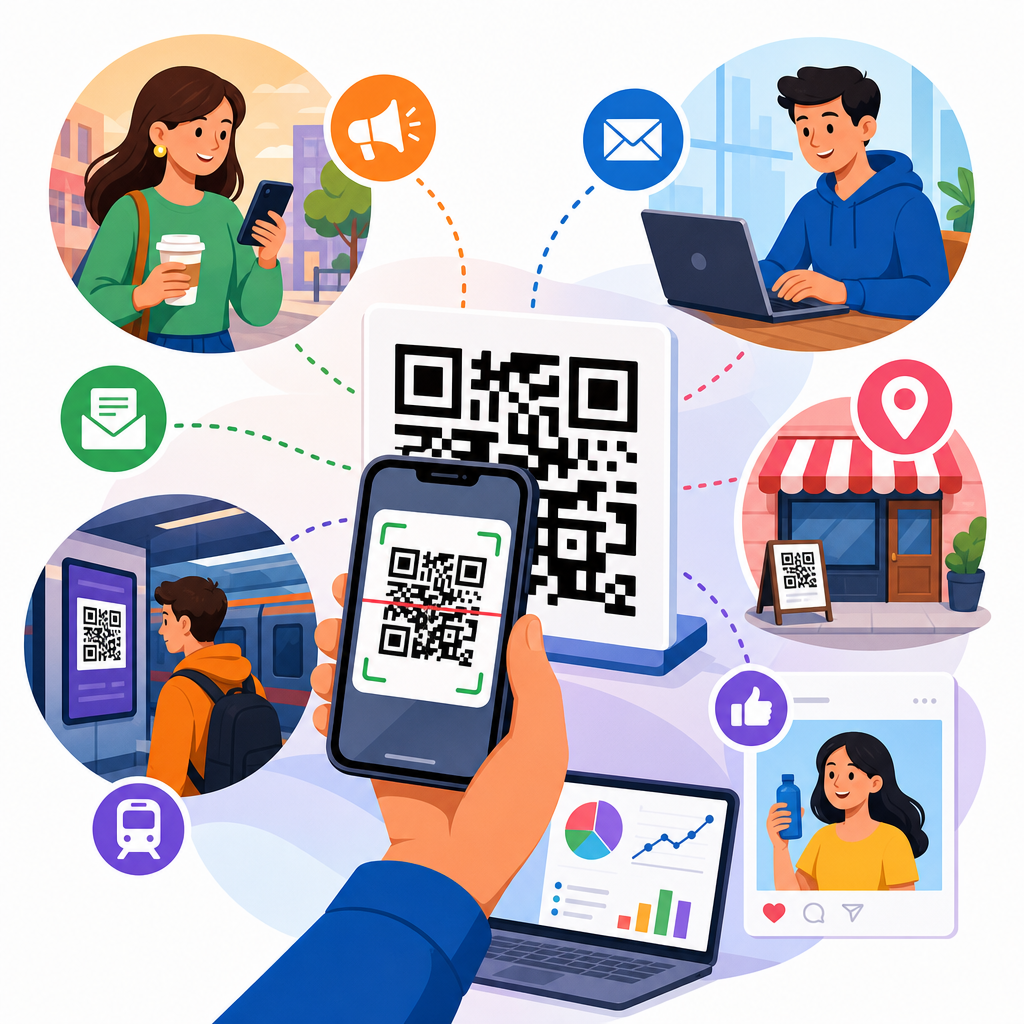
This matters because multi-channel campaigns create fragmented user journeys. A customer may first notice a billboard, later scan a QR code on a brochure, return through a paid search ad, and finally buy after receiving an email reminder. Tracking QR codes does not solve every attribution challenge, but it improves visibility at a crucial moment: the bridge between offline intent and online behavior. It gives marketers a timestamped, trackable interaction that can be tied to sessions, conversions, and revenue. When implemented well, it also supports testing, budget allocation, regional optimization, and lifecycle analysis.
To use QR code tracking effectively, marketers need a hub-level understanding of the entire analytics stack. That includes code generation, destination URLs, campaign parameters, redirect logic, analytics configuration, consent and privacy controls, conversion definitions, reporting design, and operational governance. This article covers that full tracking and analytics foundation for QR code marketing strategy. It explains what to measure, how to structure links, which tools to use, how to compare channels, where attribution breaks, and how to build reports that help teams make better decisions. If QR codes are appearing across several campaign touchpoints, this is the measurement playbook that keeps the data useful.
What QR code tracking measures across channels
QR code tracking measures two linked events: the scan interaction and the on-site behavior that follows. Some platforms report scans as the number of times the code image was decoded. Others report visits after redirect. That difference is important. A scan may fail if the destination is slow, blocked, or abandoned before page load. A visit may occur more than once if users share the landing page after scanning. In reporting, I separate scan volume, unique visitors, engaged sessions, and conversions so teams do not confuse reach with performance.
For multi-channel campaigns, the core dimensions are channel, placement, creative, audience, geography, device, date, and offer. A printed flyer in retail is a different placement from a QR code embedded in a webinar slide. A menu insert with a loyalty incentive is a different creative from packaging that links to usage instructions. Tracking should preserve these differences. The purpose is not merely counting scans; it is identifying which real-world touchpoint produced meaningful downstream actions such as purchases, appointments, lead forms, app installs, coupon redemptions, or support deflection.
Useful QR code analytics also capture quality signals. In web analytics, that means engagement rate, average engagement time, scroll depth, product views, add-to-cart events, checkout starts, and conversion completion. In CRM systems, it may include lead status progression, pipeline value, or account creation. In support environments, it could mean article completion or reduced call-center contact. Good tracking answers direct questions: Which channel creates the lowest cost per qualified lead? Which store display generates the highest repeat-visit rate? Which event asset drives the best post-scan conversion rate within seven days?
Build the measurement foundation before generating codes
The strongest QR analytics programs start with campaign taxonomy, not artwork. Before generating a single code, define naming conventions for source, medium, campaign, content, term, region, and variant. UTM parameters remain the standard way to pass campaign context into Google Analytics 4, Adobe Analytics, and many marketing automation tools. For example, a URL for a trade show handout might include source=event, medium=print, campaign=spring_launch, content=handout_a, and region=us_west. When this taxonomy is applied consistently, reports become comparable across every channel that uses a code.
Dynamic QR codes are usually the right choice for multi-channel tracking because they route users through a managed short URL or redirect service before sending them to the final destination. That redirect layer makes it possible to update destinations without reprinting assets, append tracking parameters centrally, and collect scan-level metadata such as time, location estimate, and device type. Static QR codes are useful for permanent destinations with no expected change, but they are less flexible and can create long-term reporting blind spots if campaign needs evolve.
Landing page design is part of measurement, not just user experience. Each QR code should point to a purpose-built page or at least a destination that matches the user’s context. A code on product packaging should not dump visitors on a generic category page if the real intent is activation, instruction, warranty registration, or replenishment. Message match improves conversion rate and makes analytics cleaner because the user’s intent is less ambiguous. In practice, tighter destination alignment often lifts post-scan conversion more than increasing scan volume alone.
Recommended tracking architecture and tools
A dependable tracking architecture has four layers: the QR platform, the redirect or link management layer, the analytics platform, and the conversion system. QR platforms such as Bitly, Flowcode, Beaconstac, QR Code Generator Pro, or Uniqode can generate dynamic codes and provide basic scan reporting. Redirect management can be handled inside those tools or through a branded short domain managed by your organization. Analytics commonly runs through Google Analytics 4, Adobe Analytics, Matomo, or Snowplow. Conversion systems may include Shopify, Salesforce, HubSpot, Marketo, Segment, or a custom data warehouse.
In my experience, the biggest performance gains come from using a branded short domain and server-side governance. A branded domain increases trust, improves click-through after scan, and reduces the chance that security filters or cautious users reject the destination. It also gives the marketing team control over redirects, expiration logic, and channel naming. If campaign URLs are built manually by different teams, errors multiply fast. Centralized templates, naming rules, and QA checklists prevent duplicate parameters, broken redirects, and reporting fragmentation.
| Tracking Layer | Primary Purpose | Common Tools | Key Data Captured |
|---|---|---|---|
| QR generation | Create static or dynamic codes | Flowcode, Beaconstac, Uniqode | Code ID, scan count, device type |
| Redirect management | Route users and append parameters | Bitly, branded short domain, Rebrandly | Destination, timestamp, location estimate |
| Behavior analytics | Measure on-site engagement | Google Analytics 4, Adobe Analytics | Sessions, events, conversions, revenue |
| Business outcomes | Tie scans to leads or sales | HubSpot, Salesforce, Shopify | Lead quality, purchases, pipeline value |
When choosing tools, look beyond dashboards. The critical questions are whether the platform supports first-party domains, API access, parameter templates, bulk creation, role permissions, and exportable raw data. Enterprise teams often need scheduled feeds into BigQuery, Snowflake, or another warehouse so QR performance can be joined with media cost, CRM activity, and store-level sales. If the platform only shows top-line scans in a vendor interface, it will become a dead end once the campaign portfolio grows.
Channel-specific tracking strategies that produce cleaner attribution
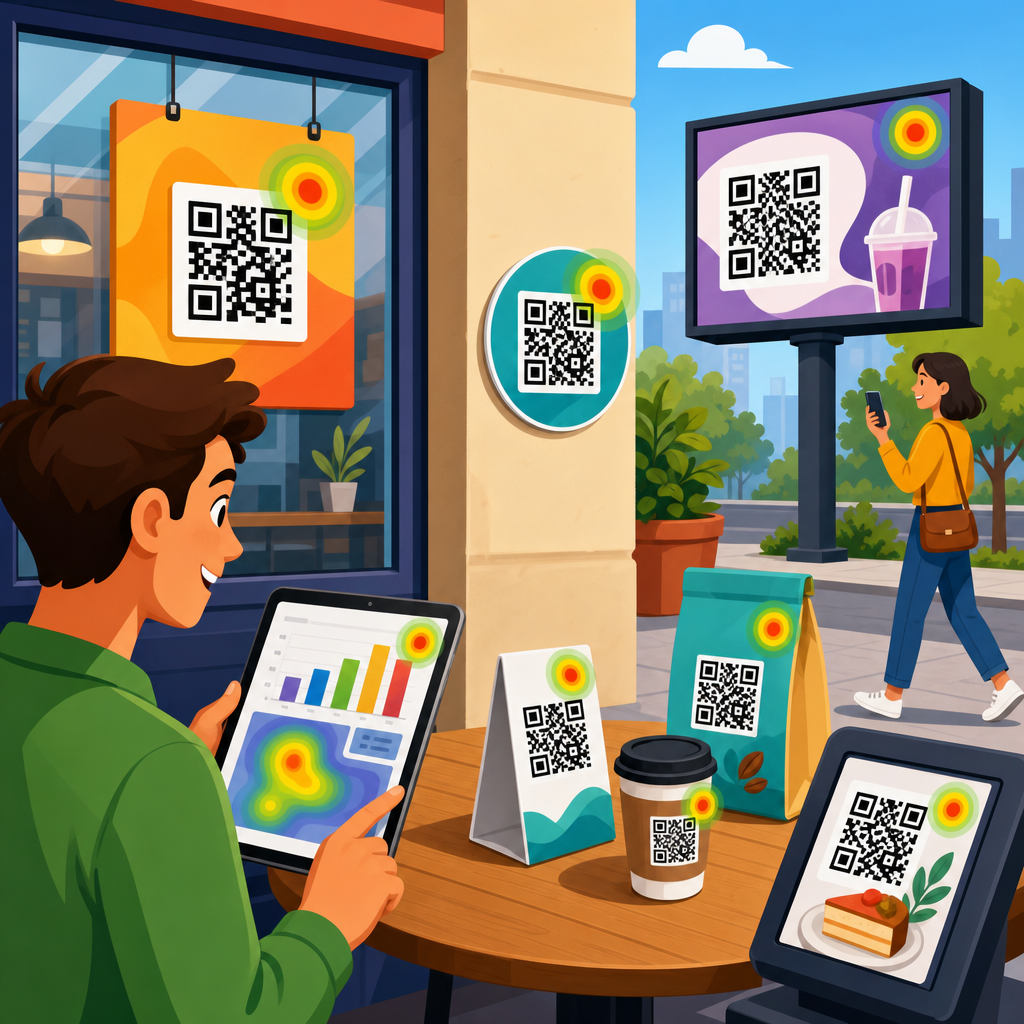
Each channel needs its own tracking strategy because user intent and scan conditions differ. Direct mail codes often perform best when each drop, audience segment, and offer version gets a unique code. That allows response analysis by list quality and creative. In-store signage should typically separate store, fixture, and campaign wave so regional managers can compare locations. Packaging can require even finer logic: one code for onboarding, another for recipes, another for refill subscriptions. Using one universal code for all packaging hides opportunities to improve retention and support.
Event environments deserve especially careful setup. A QR code on a booth wall attracts different intent from a code on a speaker slide or attendee badge. The booth visitor may want a product demo, while the session attendee may want the presentation deck. Give each placement its own destination and conversion path. At one conference rollout I managed, separating booth, handout, and breakout-session codes revealed that the handout had fewer scans but produced nearly twice the qualified lead rate. That insight changed the next event’s budget allocation.
Email and paid social also benefit from QR-specific logic, even though they are already digital. Marketers sometimes place QR codes inside emails for cross-device behavior, such as moving a user from desktop inbox to mobile app download. In paid social, QR codes can support in-store redemption or offline continuation from digital impressions. Track these as distinct placements rather than folding them into standard click traffic. The user behavior is different, the device path is different, and the conversion lag can be different. Clean separation prevents misleading channel comparisons.
How to report on QR code performance meaningfully
Meaningful reporting starts with the right KPIs. Scan count alone is a vanity metric if it is not connected to outcomes. The best dashboard for QR code tracking includes scan volume, unique scanners if available, visit rate after scan, engagement rate, conversion rate, revenue or lead value, and cost per outcome. For offline channels, I also recommend reporting conversion lag, since users may scan now and convert later. A same-day lens can undervalue print, packaging, and event traffic that converts after additional consideration.
Segmentation is where insights emerge. Break performance by channel, placement, creative, offer, location, device operating system, and time window. A restaurant chain, for example, may learn that table-tent codes drive lunch loyalty signups, while window decals drive dinner menu views. A manufacturer may find that product-box codes are strongest for installation videos on Android, while insert-card codes are stronger for warranty registration on iPhone. These are not cosmetic differences. They affect landing page priorities, staffing, media mix, and customer support planning.
Attribution should be handled with discipline. QR code scans often introduce a user but do not finish the journey. In GA4, compare first user source/medium, session source/medium, and assisted conversion paths when possible. In CRM reporting, measure both sourced and influenced pipeline. If a printed code initiates a lead who later returns through branded search, the scan still created value. Last-click reporting understates that. At the same time, avoid claiming full credit when multiple touches were clearly involved. Balanced attribution earns trust and improves planning.
Common pitfalls, privacy requirements, and optimization tactics
The most common tracking failures are operational. Teams reuse the same code across unrelated channels, forget parameters, change destinations without updating documentation, or launch pages that are not mobile optimized. QR scans are overwhelmingly mobile, so page speed, form length, and tap targets directly affect measured performance. Another frequent issue is poor print execution. Low contrast, reflective surfaces, tiny code sizes, and awkward placement reduce scan reliability. Analytics cannot fix a code that is physically hard to use.
Privacy and compliance matter because QR programs often bridge offline contexts and personal data. If the post-scan destination sets cookies, collects form submissions, or personalizes content, the experience must align with regional requirements such as GDPR, CCPA, and industry-specific policies. Do not infer precision location from a scan unless the user has explicitly granted it through the device or app context. Aggregate location reporting from IP or platform estimates is usually sufficient for campaign analysis. Consent mode and data retention settings should match the rest of the marketing stack.
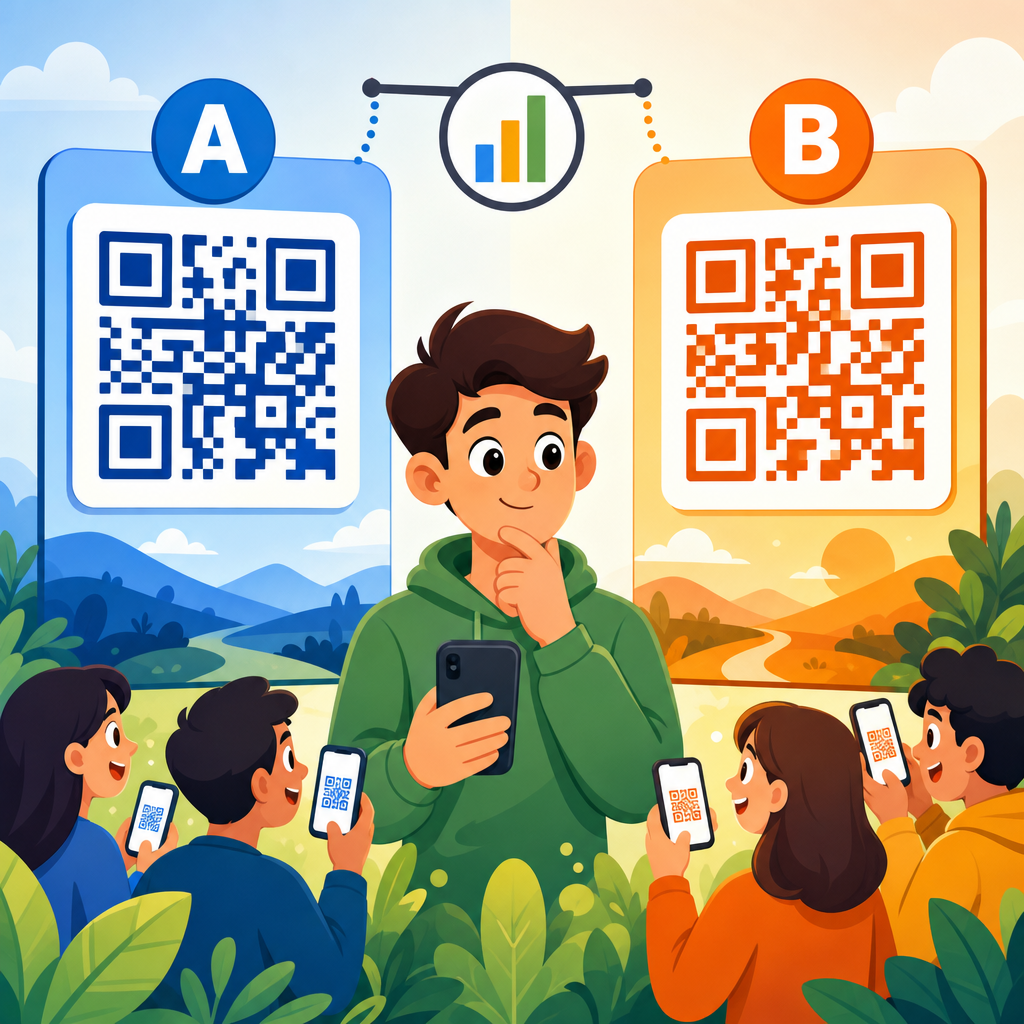
Optimization works best when it is systematic. Test one variable at a time: call-to-action text near the code, incentive strength, landing page headline, form length, or destination type. Compare scan rate separately from conversion rate so you can distinguish creative appeal from landing page effectiveness. Monitor broken links and redirect latency weekly. Audit taxonomy monthly. Review whether each active code still maps to a defined business objective. For teams building a durable QR code marketing strategy, the advantage is simple: better tracking produces better decisions. Start with a naming framework, use dynamic codes, connect scans to downstream conversions, and treat every placement as a measurable experiment. Then expand your reporting hub so each future campaign inherits clean data and clearer attribution.
Frequently Asked Questions
1. What does QR code tracking mean in a multi-channel campaign?
QR code tracking in a multi-channel campaign means measuring not only that someone scanned a code, but also understanding the broader marketing context around that scan. A QR code itself is simply a scannable bridge between an offline or online touchpoint and a digital destination, such as a landing page, product page, app download, lead form, video, or coupon. Tracking adds the intelligence layer. It helps marketers identify where the code was placed, when it was scanned, what type of device was used, and whether the visitor went on to complete a valuable action like making a purchase, filling out a form, booking a demo, or subscribing to a list.
In a multi-channel environment, this becomes especially important because the same campaign often appears across print ads, direct mail, product packaging, retail displays, out-of-home signage, event materials, email, and social media. Without tracking, every scan looks the same. With proper tracking in place, each QR code can be tied to a specific source, placement, audience segment, creative variation, or campaign phase. That gives marketers the ability to compare performance across channels instead of relying on guesswork.
For example, a brand might use one QR code on a postcard, another on in-store signage, and a third in a magazine ad, all leading to related but trackable destinations. By reviewing the data, the team can see which channel generated the most scans, which one delivered the highest conversion rate, and which audience responded at the most valuable times. This turns the QR code from a convenience feature into a measurable attribution tool that supports smarter budget allocation, stronger creative decisions, and clearer reporting on campaign effectiveness.
2. What metrics should marketers track after someone scans a QR code?
The most useful QR code metrics go beyond basic scan volume. Total scans are a starting point, but they do not tell the full story. Marketers should track unique scans to estimate how many distinct users engaged, scan time and date to understand response patterns, and location data when available to identify regional or venue-specific performance. Device and operating system data are also valuable because they reveal how users are accessing the destination and whether the landing experience should be optimized differently for iPhone, Android, tablet, or desktop follow-up behavior.
Just as important are destination and conversion metrics. Once someone scans the code, marketers should measure what happens next. That includes page views, bounce rate, time on page, click-through to deeper content, form submissions, downloads, purchases, appointment bookings, coupon redemptions, or any other campaign goal. These post-scan actions are what connect QR engagement to business results. A code with fewer scans but a higher conversion rate may be more valuable than one with heavy traffic and little downstream action.
In multi-channel campaigns, source-level segmentation is critical. Each QR code should ideally be tied to campaign parameters that identify the channel, placement, creative version, product line, audience segment, and time period. This allows a marketer to answer practical questions such as whether direct mail produced stronger conversion intent than retail signage, whether one design outperformed another, or whether scans increased after a social promotion boosted awareness. When these data points are viewed together, QR code tracking becomes a reliable performance measurement system rather than a simple activity count.
3. How can businesses use QR codes to compare performance across multiple marketing channels?
The most effective approach is to assign distinct, trackable QR codes to each channel, placement, or campaign variation instead of reusing one generic code everywhere. This creates a clear measurement framework. A business might generate separate codes for a flyer, brochure, point-of-sale display, packaging insert, event booth, billboard, and postcard mailer. Even if all codes lead to the same core landing page, they should include tracking parameters or route through analytics-enabled links so the source of each scan is preserved.
This structure allows side-by-side comparison of channels based on meaningful performance indicators. For example, a retail display may generate a high number of scans because it reaches heavy foot traffic, while direct mail may produce fewer scans but stronger conversion rates because the audience is more targeted. Event signage may drive immediate engagement during a short time window, while product packaging may generate delayed scans long after purchase. Each channel behaves differently, and QR tracking helps marketers understand those differences with evidence.
Businesses can also compare creative and operational factors within each channel. They can test different calls to action, design treatments, offers, landing pages, or placements and see which combinations produce the best results. A code placed on the front of a mail piece may outperform one hidden inside. A “Scan to claim your offer” message may work better than “Learn more.” A shorter form on mobile may increase completion rates. These insights are valuable because they improve not just reporting, but campaign execution. Over time, QR code tracking helps teams identify where to invest more, what to optimize, and how channels work together across the customer journey.
4. What tools and setup are needed for accurate QR code tracking?
Accurate QR code tracking usually requires a combination of QR code generation, URL structuring, analytics configuration, and conversion measurement. At the most basic level, marketers need a QR code generator that supports dynamic codes or editable destinations. Dynamic QR codes are especially useful because they allow the destination URL to be updated without changing the printed code, and they often provide built-in scan reporting. This is a major advantage for multi-channel campaigns where assets are distributed widely and may stay in circulation for weeks or months.
Beyond the code itself, the destination URLs should include clear campaign tracking parameters so analytics platforms can identify the traffic source accurately. Many teams use standard URL tagging conventions to classify channel, medium, campaign name, placement, and creative variation. This makes it easier to analyze QR traffic inside web analytics tools and compare it with performance from email, paid social, search, or display campaigns. If the goal is lead generation or sales, conversion events should also be set up properly in the analytics and CRM stack so scans can be connected to revenue-driving outcomes.
Landing page readiness is another essential part of the setup. Because QR codes are primarily scanned on mobile devices, the destination should load quickly, display cleanly on smaller screens, and guide the visitor toward a single clear next step. If the experience is slow or confusing, scan data may look healthy while business outcomes remain weak. Many organizations also connect QR performance with marketing automation, e-commerce tracking, call tracking, or point-of-sale systems to create a fuller attribution picture. In short, the strongest setup combines reliable scan data, clean campaign tagging, mobile-friendly destination design, and conversion measurement that reflects real business objectives.
5. What are the biggest mistakes to avoid when tracking QR codes in multi-channel campaigns?
One of the most common mistakes is using the same QR code everywhere and expecting meaningful channel-level insight. If a single code appears on packaging, posters, direct mail, and event materials, the marketer loses the ability to separate performance by source. Another frequent issue is focusing only on scan counts. A high number of scans may look impressive, but if those visitors do not engage or convert, the campaign may not be performing well. Good measurement always connects scanning behavior to post-scan outcomes.
Another mistake is sending users to a poor mobile experience. Because QR engagement usually starts on a phone, a slow-loading page, long form, awkward navigation, or irrelevant destination will quickly reduce conversions. Marketers also undermine tracking when they fail to use consistent naming conventions, campaign parameters, or reporting definitions. If teams label channels inconsistently, compare mismatched date ranges, or overlook duplicate traffic patterns, the data becomes harder to trust. Clean governance matters just as much as the technology itself.
Privacy and user expectations should not be ignored either. Businesses should be transparent about data collection practices and avoid gathering more information than needed. At the strategic level, another major mistake is treating QR codes as an isolated tactic instead of part of a broader campaign system. The strongest results come when QR code tracking is integrated with channel planning, creative testing, analytics, CRM reporting, and conversion optimization. When done well, QR tracking does not just show that someone scanned a code. It reveals how different touchpoints contribute to engagement, lead generation, and sales across the entire multi-channel campaign.