QR code placement can determine whether a campaign gets scanned hundreds of times or ignored completely. In practice, most failures are not caused by bad code generation but by putting a perfectly functional code in the wrong physical or digital context. QR code placement means choosing the exact location, height, surface, surrounding design, and user environment that make scanning fast, obvious, and worthwhile. For businesses, this matters because every scan sits at the intersection of attention, intent, and convenience. If the code is hard to notice, difficult to reach, distorted by materials, or disconnected from the customer journey, conversion drops immediately. I have audited restaurant menus, retail shelf tags, trade show walls, direct mail pieces, product packaging, and vehicle decals, and the same pattern appears repeatedly: placement decisions drive performance more than minor visual styling changes. Good placement supports usability, brand trust, and measurable outcomes such as lead capture, menu access, payment completion, review generation, app downloads, and product education. This guide explains where QR codes work best, what conditions affect scan success, how distance and viewing angle change readability, and how businesses should match placement to intent. It also serves as the central reference point for deeper articles on signage, packaging, labels, print pieces, materials, and testing methods across the broader QR code design, printing, and materials topic.
Start with user intent and scan context
The first rule of QR code placement is simple: place the code where the user already has a reason to act. A QR code is not a decoration. It is a bridge between a physical touchpoint and a digital task. If the task is ordering, place it at the decision point. If the task is payment, place it where the bill is reviewed. If the task is product education, place it where the item is held, compared, or unboxed. In stores, shelf-edge QR codes often outperform poster placements because shoppers are already evaluating a product. In restaurants, table tents and menu covers usually beat wall graphics because the diner is seated, phone in hand, and looking for menu details or payment options. In trade shows, booth counters and badge-backed materials work better than high backwalls because visitors can scan without stepping away from traffic.
Context also determines the amount of friction a user will tolerate. A commuter may scan a transit poster only if the landing page opens instantly and the code is visible from a standing distance. A warehouse employee can scan a larger operational code placed at eye level even in dim light because the task is mandatory and repetitive. A shopper on a crowded aisle will not crouch to scan a code placed near the floor unless the value is unusually strong. Businesses should map the scan moment to the customer journey: awareness, evaluation, transaction, support, or loyalty. This avoids a common error I see in audits, where the same QR code artwork gets reused across multiple placements without regard for why someone would scan there.
In practical terms, ask four questions before fixing placement. What action should happen after the scan. When is the customer most motivated to take that action. What posture is the customer in, such as walking, sitting, browsing, driving past, or holding the product. What environmental constraints exist, including glare, weather, low light, crowding, and line of sight. Those answers should guide placement before you think about color, frames, or decorative treatments.
Physical placement fundamentals: height, distance, angle, and size
Effective QR code placement depends on scan mechanics as much as design. Smartphone cameras need enough module detail, stable framing, and acceptable lighting to decode quickly. As a working guideline, the farther away the user stands, the larger the QR code must be. A useful field rule is roughly one unit of code width for every ten units of scanning distance, though testing should always confirm the final result. A code intended to scan from one foot away can be relatively small on packaging or tabletop print. A code meant to scan from six to ten feet away, such as on a retail sign or lobby display, needs significantly more physical space and stronger contrast.
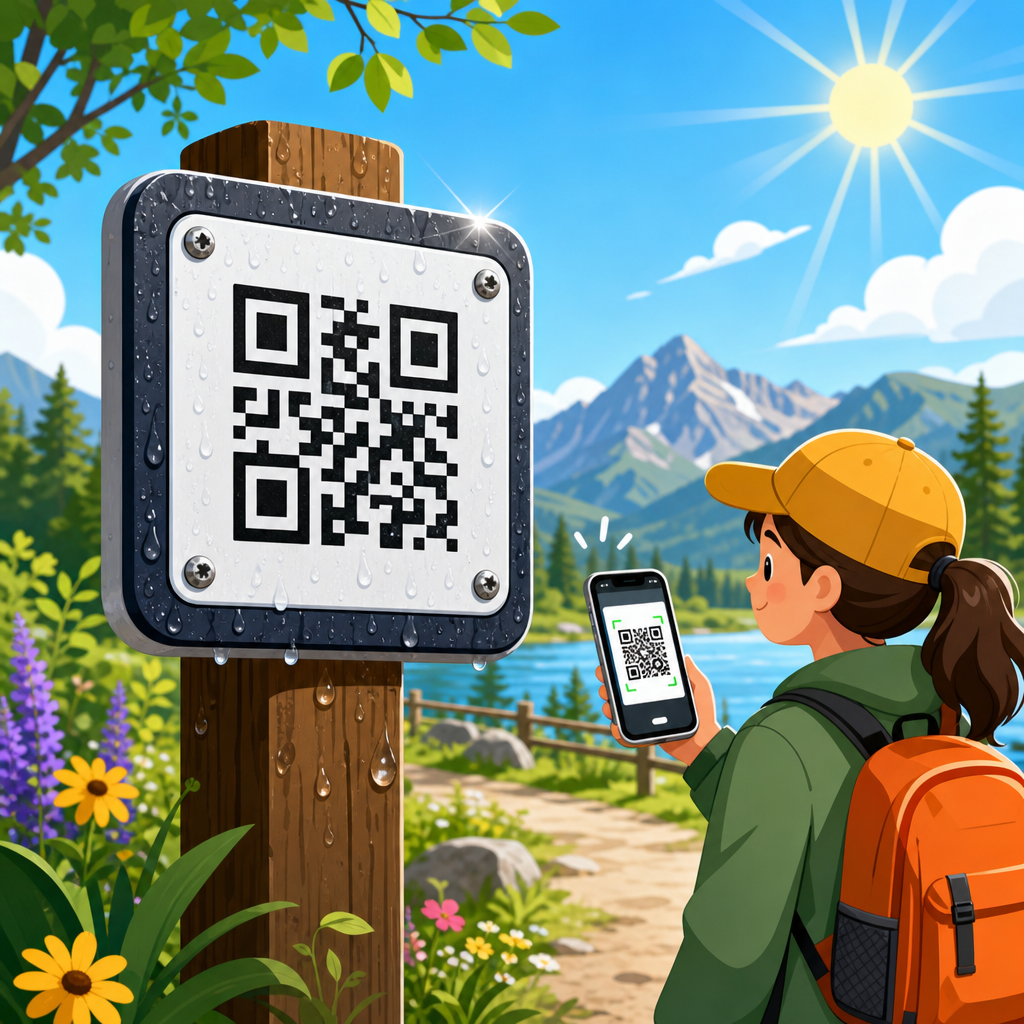
Height matters because it affects comfort and dwell time. For standing adults, chest to eye level is usually the easiest scan zone for posters, windows, and indoor signs. For seated use, tabletop surfaces, tent cards, and check presenters work well because the phone naturally points downward. Codes placed too high cause arm extension and camera shake. Codes placed too low require bending or awkward positioning, which reduces scan completion. On shelves, front-facing placement near product information performs better than placement wrapped around the side panel, where the user must twist the item or block aisle traffic.
Angle is another overlooked factor. The flattest possible viewing angle delivers the best results. Curved bottles, folded cartons, and uneven substrates can warp the pattern enough to slow recognition, especially with smaller codes. I have seen glossy beverage labels scan inconsistently because the code crossed a seam and reflected overhead lighting. Repositioning the code to a flatter panel improved performance without changing the URL or design. Outdoor placements add more complexity. Window decals can suffer from reflections, while metal signs can create glare at certain sun angles. In those cases, matte finishes, anti-glare laminates, or a slight shift in position often have a bigger impact than increasing code size alone.
Best placement by business use case
Different business environments call for different QR code placement strategies. The strongest placements align with the customer’s immediate goal and the physical reality of the setting. The table below summarizes common use cases and the placements that usually perform best.
| Use case | Recommended placement | Why it works | Common mistake |
|---|---|---|---|
| Restaurant menus | Table tents, menu covers, check presenters | Guests are seated, focused, and ready to browse or pay | Placing one code only at the entrance |
| Retail product education | Shelf-edge tags, wobblers, front-facing packaging panels | Shoppers compare items at the shelf | Hiding the code on side or bottom panels |
| Direct mail | Near headline, offer block, or response section | Supports immediate action while attention is high | Burying the code near legal copy |
| Events and trade shows | Booth counters, handouts, badges, demo stations | Visitors can scan without stopping traffic | Putting codes high on backdrop walls |
| Payments | Checkout counters, receipts, invoice corners, table bills | Matches transaction intent exactly | Combining payment and marketing scans in one code |
| Support and setup | Packaging inserts, device labels, quick-start guides | Users need help at the moment of unboxing | Printing too small on reflective materials |
For restaurants, I recommend at least two placements for high-traffic dining rooms: one on-table code for browsing or ordering and one on the check presenter for payment or reviews. For retail packaging, prioritize the panel a shopper sees while holding the item naturally. For mailers, place the code close to the offer and repeat the benefit in plain language, such as “Scan to schedule” or “Scan for ingredients and reviews.” For service businesses, vehicles can work for awareness, but only when the vehicle is parked. A moving vehicle is branding space, not practical scan space. That distinction matters because many businesses overestimate the utility of drive-by scanning.
Materials, surfaces, and environmental constraints
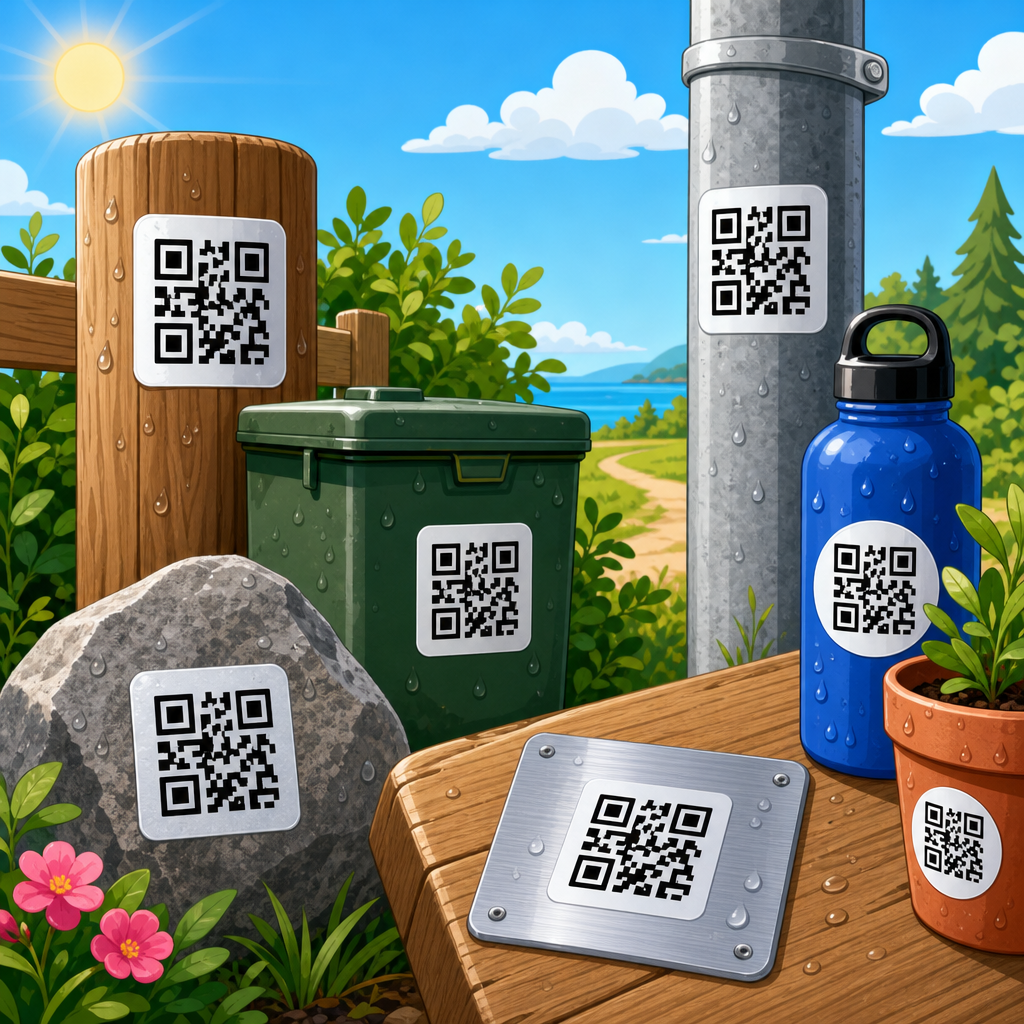
Even perfect placement can fail on the wrong material. Surfaces affect contrast, distortion, durability, and reflection. Matte paper, rigid board, and flat labels are generally forgiving. Gloss laminates, metallic inks, textured stock, clear decals on glass, and curved shrink sleeves require more caution. The QR code itself should remain high contrast, preferably dark modules on a light background, because smartphone decoders still perform best with strong luminance separation. Reversed treatments can work, but they narrow the safety margin in poor light or on low-quality phone cameras.
Indoor lighting is often underestimated. Restaurant ambient lighting can be warm and dim, while retail overhead fixtures can create harsh reflections. Warehouses and manufacturing spaces may have patchy illumination. In these settings, placement should favor areas with predictable light and minimal shine. Outdoor installations must account for rain, fading, abrasion, and long-term adhesive performance. A QR code on a sidewalk sign may scan well on day one but degrade after weather exposure, especially if abrasion softens edges or dirt accumulates in low-contrast designs. UV-resistant inks, weather-rated laminates, and durable substrates help, but they do not fix poor line of sight or bad height.
Glass is especially tricky because it introduces reflections from both sides. If a code is applied to a storefront window, test scans at different times of day from the actual customer approach path. I have seen entrance decals become unreadable in late afternoon because passing traffic and sun glare overlapped directly with the code. Moving the decal a few feet, increasing quiet space around the symbol, and switching from gloss to matte resolved the issue. On packaging, avoid placing the code over seams, folds, perforations, embossing, or variable data zones. A technically valid code can still become unreliable when the printed surface changes shape after filling, sealing, or shipping.
Design support around the placement
Placement and design must work together. A QR code should never appear isolated without instruction, especially in environments crowded with visual signals. The surrounding copy should tell users exactly what they get by scanning. Specific calls to action consistently outperform generic labels. “Scan to view installation video,” “Scan for allergy information,” and “Scan to reorder in 30 seconds” set clear expectations and increase intent. Placement near relevant content matters too. A code for product specifications belongs near the product name, features, or comparison data, not in a disconnected footer corner.
Quiet space is critical. The empty margin around the code helps scanners distinguish the symbol from nearby graphics. In practice, I avoid surrounding QR codes with busy patterns, tight borders, or competing icons. Brand customization can be effective, but not if it compromises module clarity, finder patterns, or contrast. Logos embedded in the center should be tested at production size on final materials, not just reviewed on a design mockup. The same goes for color choices. Deep brand colors can work well if the contrast remains strong, but pale tints and gradients often reduce reliability, especially when printed on textured stock.
Redundancy can be smart when the environment is complex. In a hotel lobby, one QR code on a front desk sign may not be enough; additional placements in elevator zones, room key sleeves, or in-room guides can capture different moments of need. However, do not place multiple codes with different destinations too close together. That creates hesitation and accidental scans. If several digital actions are needed, use one destination page with clear choices rather than a cluster of competing codes on the same sign or package.
Testing, analytics, and continuous improvement
No QR code placement strategy is complete without field testing. Before full production, test with multiple phones, camera apps, operating systems, and real lighting conditions. Scan from the expected distance, while standing where a customer would stand, and under the time pressure that actually exists. A code that scans after three seconds in a quiet office may fail in a live store aisle where users give it one second before abandoning. I recommend checking first-scan success rate, time to scan, landing-page load speed, and post-scan conversion. Those metrics reveal whether the placement is doing its job.
Dynamic QR codes provide stronger measurement because they allow destination changes and campaign-level tracking without reprinting. Use analytics to compare placements by channel, device type, time of day, or location. If a tabletop restaurant code gets many scans but low order completion, the issue may be the landing page, not the placement. If a shelf tag receives almost no scans despite strong product interest, placement, visibility, or call-to-action is the likely problem. UTM parameters, event tracking in analytics platforms, and dashboard tools from QR management software make these comparisons straightforward.
Regular review matters because environments change. Store layouts shift, menu formats evolve, packaging is resized, and seasonal displays alter sightlines. I have seen an effective counter QR code lose performance after a new acrylic display introduced glare and blocked approach angles. The code itself did not change; the environment did. Businesses should audit placements quarterly for high-value touchpoints and after any significant print, fixture, or packaging update. Treat QR code placement as an operational discipline, not a one-time design task.
Strong QR code placement turns curiosity into action by removing friction at the exact moment a customer is ready to engage. The essentials are consistent across industries: match the code to user intent, place it at a comfortable scanning height, size it for the real viewing distance, protect it from glare and distortion, support it with clear copy, and validate it in the live environment. Businesses that follow these principles get better scan rates, better conversions, and fewer wasted print runs. As the hub for QR code placement within the wider QR code design, printing, and materials topic, this guide establishes the core standards every business should use before moving into specialized articles on packaging panels, window decals, shelf tags, menu systems, event signage, label materials, and print testing. Review your current placements, identify one high-intent customer moment, and improve that scan experience first. Small location changes often produce the fastest measurable gains.
Frequently Asked Questions
Why is QR code placement so important for business results?
QR code placement directly affects whether people notice the code, understand why they should scan it, and can successfully complete the scan without friction. A QR code may be technically perfect, but if it is placed too high, too low, on a reflective surface, in poor lighting, or in an environment where people are moving too quickly, response rates can drop sharply. In real business settings, scanning is a fast decision made in a few seconds. Customers ask themselves, often subconsciously, whether the code is easy to access, whether the value is clear, and whether the effort is worth it.
For businesses, this matters because every scan represents a moment where attention, context, and intent meet. A code on product packaging may work well if it is visible during handling and paired with a clear call to action such as product details, setup instructions, or a discount. The same code could underperform if hidden near a seam, wrapped around a curve, or printed too small to read from a normal viewing distance. Placement determines usability, and usability determines conversion.
Good placement also protects marketing investment. If a business spends money on signage, packaging, direct mail, event displays, menus, or in-store promotions, the QR code should support the goal of that asset rather than behave like an afterthought. Effective placement makes the code feel natural in the customer journey, while poor placement creates hesitation and missed opportunities. In short, placement is not just a design detail. It is a performance factor.
Where should businesses place QR codes to get the highest scan rates?
The best location depends on the customer’s environment, level of attention, and ability to stop long enough to scan. In general, QR codes perform best when they are placed where people naturally pause and where the benefit of scanning is obvious. This includes product packaging panels that customers already inspect, table tents in restaurants, checkout counters, storefront windows at pedestrian level, posters in waiting areas, trade show booths, direct mail pieces, receipts, and printed inserts inside shipped orders. In digital settings, codes can also work well in presentations, on event screens, and in printed handouts that support a live interaction.
High scan rates usually come from placements that match physical behavior. If customers are standing, the code should be positioned within easy eye level and reachable camera angle. If they are sitting, such as at a table or in a waiting room, the code should be visible without requiring awkward movement. If they are walking, the code must be large, quickly understandable, and placed where there is enough time to react. A code on a roadside billboard, for example, may be highly visible but impractical and unsafe to scan. A code on a poster near a queue line or lobby area is often far more effective because people have time to engage.
Businesses should also think in terms of intent. Put QR codes at the point where a customer is most likely to want the next step. On packaging, that might be where they look for instructions or ingredients. In a store, it might be beside a featured display where they want reviews, product specs, or loyalty rewards. On printed marketing materials, it should sit near the headline or offer, not buried in the corner. The strongest placements combine visibility, convenience, and relevance in the moment the customer is ready to act.
What are the most common QR code placement mistakes businesses should avoid?
One of the biggest mistakes is placing a QR code where it is technically visible but functionally inconvenient. This includes codes printed too small, mounted too high on walls, placed too close to edges or folds, wrapped around curved packaging, or positioned on reflective, glossy, or textured materials that interfere with scanning. Another common problem is poor contrast. Light gray codes on white backgrounds, or busy patterns surrounding the code, make recognition harder for phone cameras and slower for users.
Businesses also frequently underestimate environmental conditions. Low lighting, glare from windows or overhead fixtures, weather exposure, and crowded visual surroundings can all reduce scan success. A code may look fine on a design proof yet fail in a real-world setting because sunlight washes it out or people cannot get close enough. Placement should always be tested in the actual environment where customers will use it, not only on a screen or in a studio mockup.
Another major mistake is failing to provide context. Many businesses place a QR code with no explanation, assuming people will scan automatically. In reality, most users need a reason. A short prompt such as “Scan to view the menu,” “Scan for installation help,” or “Scan to claim today’s offer” can significantly improve engagement because it removes uncertainty. Finally, some businesses place multiple QR codes too close together, which creates confusion about which one to scan. Clear spacing, a single purpose, and a direct call to action usually outperform cluttered layouts.
How high, how large, and how visible should a QR code be?
A useful rule is to place the code at a height and distance that match how customers naturally approach the surface. For most in-store signage, posters, counters, product displays, and printed materials, the code should sit within comfortable viewing range, usually around eye level or slightly below for standing users, and lower for seated environments such as tables. The goal is to let someone notice the code, understand the offer, and scan it without stretching, crouching, or stepping into an awkward position.
Size should be based on expected scanning distance. Small codes can work well on packaging, business cards, labels, and direct mail when users hold the item in their hands. Larger codes are needed for wall signs, windows, event graphics, and displays viewed from several feet away. If the code is intended to be scanned from across a room, it must be scaled accordingly and surrounded by enough clear space so phone cameras can isolate it quickly. As a practical standard, businesses should test the code using multiple phone models from the real-world distances customers will likely use.
Visibility is about more than size. The code needs strong contrast, a clean background, enough white space around it, and placement that does not compete with visual clutter. It should not be hidden in the footer, squeezed into a crowded corner, or placed over images that make the shape harder to recognize. Visibility also includes message hierarchy. The call to action should be close enough that users immediately connect the scan with its benefit. When size, height, contrast, and surrounding design all support quick recognition, scan performance improves significantly.
How can businesses test and optimize QR code placement before launching a campaign?
The most effective approach is to treat QR code placement as something that should be tested in context, not assumed. Start by creating a few placement variations that differ by location, size, call to action, and surrounding design. Then review each version in the real environment where customers will encounter it. Check visibility in daylight and artificial light, confirm there is enough room for a customer to stand and scan, and test from different angles and distances using several smartphone models. This simple field testing often reveals issues that are not obvious in a design file.
Businesses should also observe customer behavior whenever possible. If the code is in a store, at an event, on packaging, or in a restaurant, watch whether people notice it, hesitate, ask questions, or ignore it. Those behaviors can indicate whether the code is too hidden, unclear, or inconvenient. Scan analytics can then validate the observation. By tracking scans by location, campaign asset, or time period, businesses can compare performance across placements and identify which environments generate the strongest engagement.
Optimization should focus on both scan success and business outcome. A placement that gets many scans but low conversions may be attracting curiosity without enough relevance. A placement with fewer scans but stronger conversion may be closer to the right decision point in the customer journey. Businesses should refine placement based on what happens after the scan as well as the scan count itself. Strong testing includes adjusting the height, resizing the code, simplifying nearby design, improving the call to action, and moving the code closer to where customer intent is highest. Over time, these small changes can make a major difference in campaign performance.