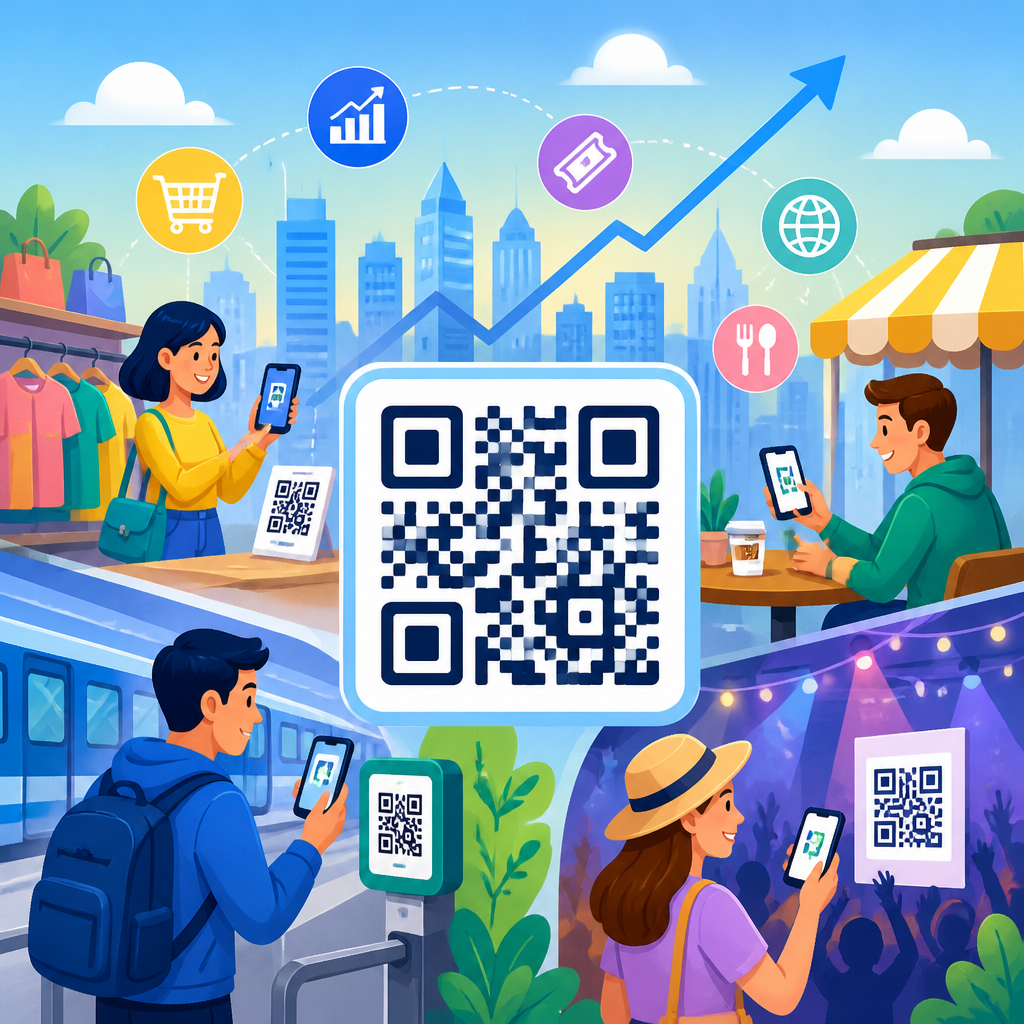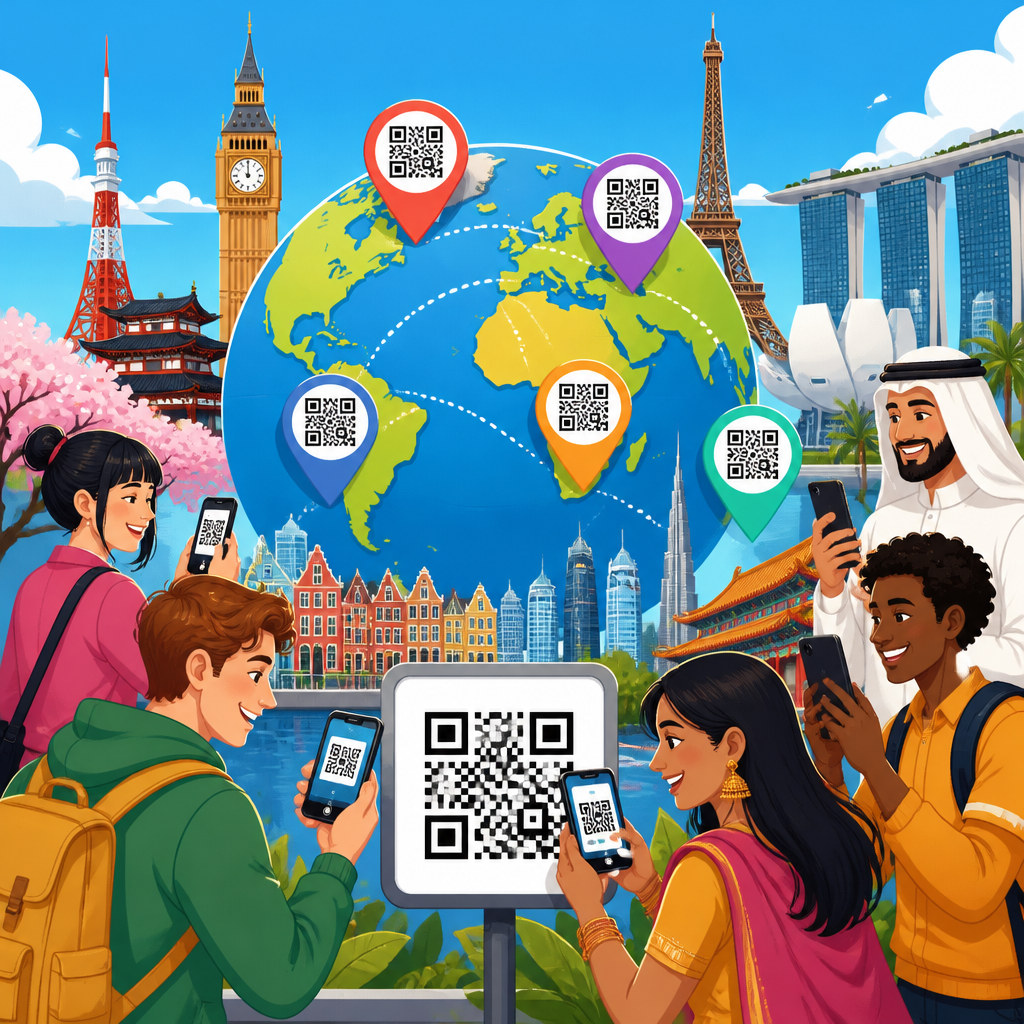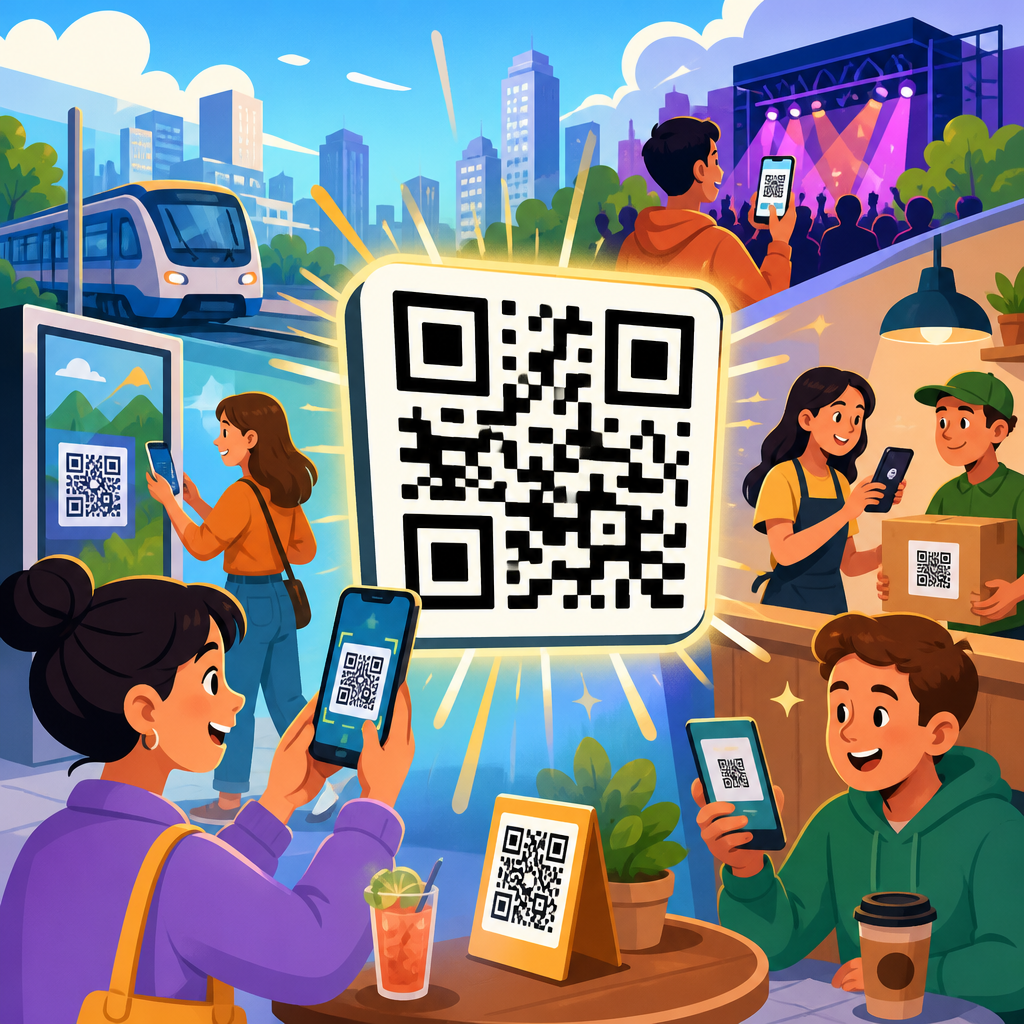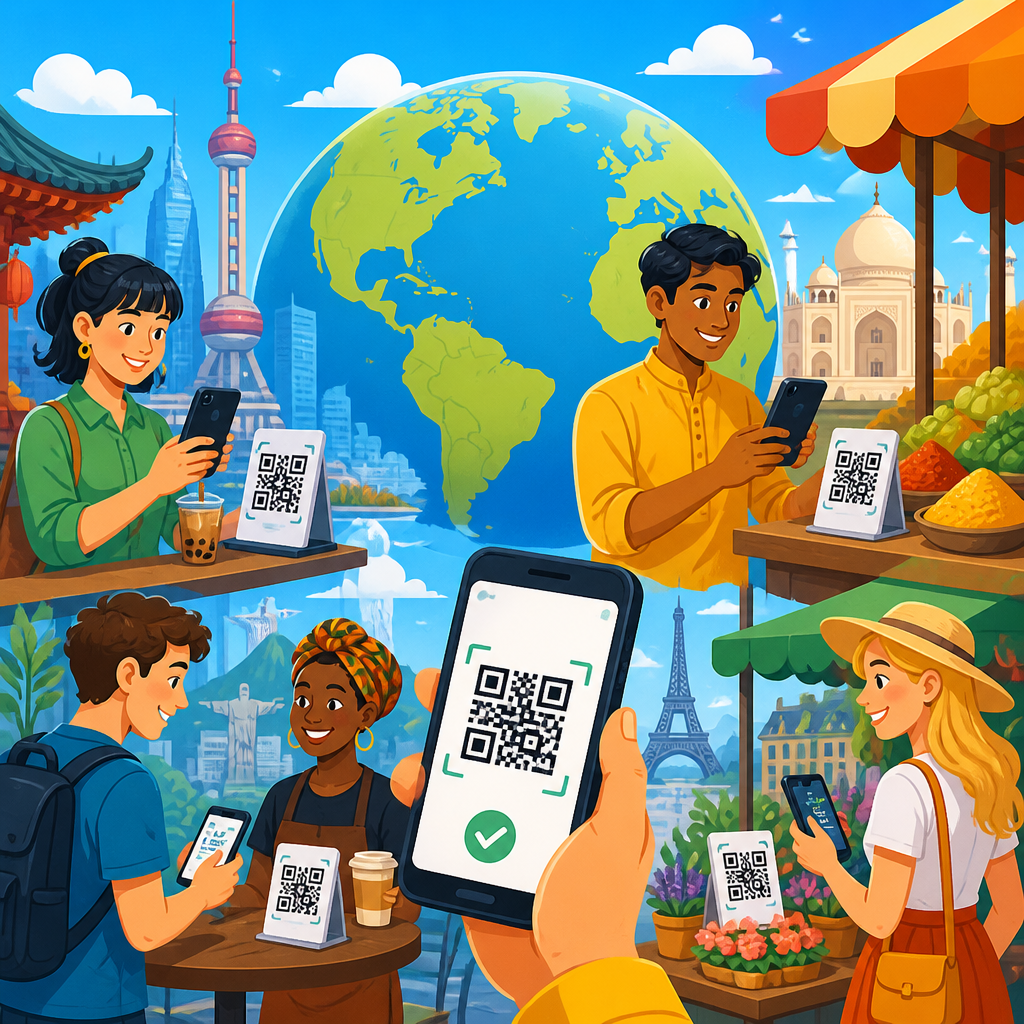
QR code payments have moved from a niche convenience to a mainstream payment rail used daily in street markets, chain stores, taxis, hospitals, government offices, and cross-border tourism corridors. A QR code payment is a transaction initiated when a customer or merchant scans a two-dimensional barcode that contains payment information, such as a merchant identifier, transaction amount, or a link to a payment request. In practice, the model usually works in one of two ways: customer-presented codes generated inside a banking or wallet app, or merchant-presented codes printed at the point of sale and scanned by the buyer. Both models reduce hardware costs, widen acceptance, and give payment providers a fast path to digitizing cash-heavy economies.
I have worked with merchants adopting digital checkout tools, and QR code payments consistently solve the same three operational problems: expensive terminal deployment, low card acceptance among small businesses, and friction in person-to-person transfers. Their importance goes beyond convenience. They expand financial access for micro-merchants, support instant account-to-account transfers, create auditable digital records, and help governments push formalization without forcing every seller to buy a card reader. For readers exploring QR codes in payments, this hub explains how the systems work, why adoption varies by region, what standards matter, where the model performs best, and which risks businesses must address before rolling out QR acceptance at scale.
How QR Code Payments Work in Practice
At a technical level, QR code payments encode data that a payment app can parse and convert into an authorization flow. Static QR codes usually contain a merchant account or wallet identifier and remain unchanged across transactions. They are cheap to deploy and common among market stalls, independent cafés, and donation-based organizations, but they require the customer to enter the amount unless the app supports invoice retrieval. Dynamic QR codes are generated for a specific transaction, often by a point-of-sale system, and can embed the amount, invoice reference, tax details, and expiry timestamp. In my experience, dynamic codes sharply reduce cashier errors and simplify reconciliation because each payment maps back to a specific order.
The payment itself can ride on different rails. In many markets, the scan launches an instant bank transfer over domestic real-time payment infrastructure. In others, the scan triggers a wallet-to-wallet transfer maintained by a large platform operator. Some schemes also support card funding in the background, but the front-end customer experience still feels like a direct QR payment. Confirmation can be immediate on the customer device, merchant app, backend dashboard, or all three. The strongest implementations combine visual confirmation, a server-side webhook, and receipt generation. That matters because a weak confirmation flow is where disputes, fake screenshots, and operational confusion tend to begin.
Why QR Code Payments Grew Faster Than Card Terminals in Many Markets
QR code payments spread rapidly because they fit markets where smartphone penetration outpaced card terminal penetration. A printed code costs almost nothing, onboarding can happen through a bank or payment service provider in hours, and small merchants avoid terminal rental, paper roll dependency, and maintenance calls. For the payer, the experience feels familiar because it uses the banking or wallet app already installed on the phone. During rollout projects, I have seen merchants accept digital payments for the first time using nothing more than a laminated counter card and a settlement-linked account. That is a fundamentally different cost structure from traditional acquiring.
Public health concerns during the pandemic accelerated adoption, but the underlying economics mattered more. Governments and central banks in countries such as India, Brazil, Thailand, and Singapore backed fast-payment systems that made low-value digital transfers practical. Payment networks and fintech firms then used QR codes as the acceptance layer on top of those rails. The result was a merchant payment method that scaled from formal retail to informal commerce. Network effects amplified growth: once consumers were trained to scan for peer-to-peer transfers, bill payments, transit top-ups, and food delivery, using the same motion at a physical checkout became natural rather than novel.
Regional Adoption Patterns Around the World
Asia remains the most visible example of QR-led payment behavior. In China, Alipay and WeChat Pay normalized wallet-based QR transactions across urban and rural commerce, from supermarket chains to fruit vendors. India built a different model around UPI, where interoperable bank-linked apps such as PhonePe, Google Pay, and Paytm use QR acceptance tied to instant account-to-account transfers. Southeast Asia has also moved quickly. Thailand’s PromptPay, Singapore’s SGQR, Malaysia’s DuitNow QR, Indonesia’s QRIS, and the Philippines’ QR Ph all reflect a regional push toward standardized, interoperable QR frameworks that reduce fragmentation and support domestic transfers at low cost.
Latin America offers another important pattern: QR code payments expanded where instant payment infrastructure lowered transfer friction. Brazil’s Pix changed the market by making real-time transfers simple for consumers and inexpensive for merchants, while printed and dynamic QR codes gave physical retailers a practical checkout method. Argentina, Colombia, and Mexico have also seen wallet and bank-led QR growth, though competitive structures differ by country. In Europe and North America, adoption has been more uneven because card acceptance was already widespread. Even so, QR payments are gaining ground in specific use cases such as hospitality, parking, transit, event venues, restaurant bill settlement, and cross-border tourist payments.
Standards, Interoperability, and the Role of Regulation
Not all QR code payments are equal. The difference between a fragmented market and a scalable ecosystem usually comes down to standards and governance. EMVCo’s QR Code Specifications created a common framework for merchant-presented and consumer-presented QR payments, helping providers structure data elements consistently. Domestic schemes then adapt those principles to local payment rails, compliance rules, and settlement models. When standards are weak, merchants end up displaying several competing QR codes, which clutters checkout and confuses consumers. When standards are strong, one code can accept payments from multiple banks and wallets, improving conversion and reducing operational friction.
Regulation often determines whether QR payments become a universal utility or remain a siloed feature. Central banks and payment authorities influence licensing, settlement timing, dispute rules, customer authentication, and interoperability mandates. India’s support for interoperable QR under UPI and Brazil’s support for Pix are strong examples of policy shaping market outcomes. Singapore’s SGQR consolidated multiple schemes into a single label, simplifying acceptance for merchants. Regulators also affect merchant economics through interchange treatment, wallet funding rules, and know-your-customer requirements. Businesses evaluating QR codes in payments should always look beyond the code itself and study the governing payment rail, because that is where cost, reversibility, and risk are truly defined.
Business Benefits, Limitations, and Common Deployment Models
For merchants, the primary benefit of QR code payments is low-cost acceptance with fast onboarding. Small sellers can start with static codes, while larger retailers can integrate dynamic codes into existing POS and enterprise resource planning systems. Restaurants use table codes for order-ahead and bill splitting. Utilities and insurers place dynamic codes on invoices to improve collections. Charities use QR codes at events because they work on posters, badges, and printed programs. I have also seen field-service companies use technician-generated payment QR links to get paid on site without carrying portable terminals. The format is flexible because the code is simply a visual trigger for a digital payment instruction.
There are limitations. Static codes can create reconciliation problems if multiple staff share one receiving account without reference tagging. Consumer trust may suffer if fake stickers are placed over merchant codes. Some users still prefer contactless cards because tapping feels faster than unlocking an app, opening a scanner, and confirming the amount. Network dependence can also be a constraint in low-connectivity settings unless the scheme supports robust retry and delayed confirmation logic. Merchant training matters more than many teams expect. Checkout staff must know how to verify settlement status properly, not rely on a screenshot. Those practical controls often determine whether the customer experience feels seamless or risky.
| Model | Best Use Case | Strength | Main Limitation |
|---|---|---|---|
| Static merchant-presented QR | Micro-merchants, market stalls, donations | Lowest setup cost | Manual amount entry and weaker reconciliation |
| Dynamic merchant-presented QR | Retail POS, restaurants, bill payments | Transaction-specific data and cleaner reporting | Requires software integration |
| Customer-presented QR | Loyalty-linked apps, transit, closed-loop wallets | Fast identity and payment in one scan | Merchant scanner hardware or app needed |
Security, Fraud Prevention, and Operational Controls
QR code payments are not inherently insecure, but they concentrate risk in data integrity, user behavior, and merchant process design. The most common fraud issue is code substitution, where a criminal replaces a merchant’s printed code with one that routes funds elsewhere. Dynamic QR generated inside a secure checkout flow largely prevents that attack, which is one reason larger merchants prefer it. Phishing can also occur when malicious codes redirect users to fake payment pages. Mature payment apps reduce this risk by clearly identifying the payee name before confirmation and by keeping the payment flow inside the banking or wallet application rather than a browser.
Merchants should apply the same control discipline used for any digital payment method. That includes daily reconciliation, role-based access for refund and settlement functions, audit trails, staff training on dispute handling, and visible tamper checks for printed materials. Providers should support signed payloads, encrypted transport, webhook verification, and real-time transaction status APIs. Customer education matters too: users should confirm the recipient name, avoid scanning random codes in public places, and never rely on social pressure to complete a transfer before reviewing the amount. In every market I have worked in, the safest QR payment programs are the ones that combine user-interface clarity with boring but rigorous back-office controls.
What Comes Next for QR Codes in Payments
The future of QR code payments is less about the code itself and more about convergence across instant payments, identity, loyalty, and cross-border commerce. Regional payment linkages are already allowing travelers to use familiar apps abroad, especially in parts of Asia where domestic fast-payment systems are being connected. Request-to-pay overlays, e-receipts, digital invoicing, and tokenized merchant identity will make QR checkout more structured and easier to reconcile. Offline-capable designs may also improve resilience in transit and rural settings. For platforms, the next major opportunity is combining QR acceptance with customer relationship tools, such as rewards, subscriptions, and verified digital receipts.
Businesses evaluating this space should treat QR payments as a strategic acceptance channel, not a novelty feature. The strongest approach is to map customer behavior, transaction size, settlement needs, and fraud exposure before choosing between static, dynamic, or customer-presented models. Then align that choice with local payment rails, interoperability standards, and operational controls. Around the world, QR codes in payments have proven that low-cost acceptance can scale when infrastructure, regulation, and user habits align. If you are building content or commerce around digital payments, use this hub as your starting point and explore each subtopic in depth to identify the model that fits your market, customers, and growth goals.
Frequently Asked Questions
What is a QR code payment, and how does it actually work in everyday transactions?
A QR code payment is a digital payment method that uses a two-dimensional barcode to initiate a transaction between a customer and a business. Instead of swiping a card or handing over cash, one side scans a QR code and the payment details are pulled into a mobile app or wallet for approval. The code may contain a merchant ID, a payment address, a transaction amount, an order reference, or a secure link to a payment request. Once the customer confirms the details, the payment is processed through the underlying banking or wallet network and both parties receive confirmation.
In daily use, QR payments usually follow one of two models. In a customer-presented flow, the shopper opens a payment app that generates a personal QR code, and the merchant scans it to collect payment. In a merchant-presented flow, the store displays a QR code at the counter, on a receipt, on a vending machine, or even on a taxi seatback, and the customer scans it with their phone to pay. Some QR codes are static, meaning the same code is used repeatedly and the payer enters the amount manually. Others are dynamic, meaning a fresh code is generated for each transaction and already includes the exact amount and order information.
What makes QR code payments so practical worldwide is their flexibility. They work in formal retail chains, small market stalls, clinics, public transit systems, government service counters, and peer-to-peer settings because they require less hardware than many card-based systems. A printed sign can be enough for a merchant to start accepting digital payments. That low barrier to entry is one reason QR payments have expanded from a convenience feature into a mainstream payment rail across many economies.
Why have QR code payments become so popular in different countries and industries?
QR code payments have spread quickly because they solve real-world payment challenges at relatively low cost. For merchants, especially small businesses, they can reduce the need for expensive point-of-sale terminals and simplify acceptance. For consumers, they offer speed, familiarity, and the convenience of paying directly from a banking app, super app, or digital wallet they already use every day. In many markets, QR payments gained traction because they fit naturally into mobile-first consumer behavior, where people use a single phone for messaging, shopping, transport, and finance.
Another reason for their popularity is that QR systems are adaptable across sectors. Street vendors can use a laminated code, while large retailers can integrate dynamic QR codes into checkout systems. Taxis can place a code in the back seat, hospitals can attach codes to billing desks, and government offices can use them for service fees and tax collections. This broad usability has made QR payments valuable not only in advanced urban environments but also in areas where traditional payment infrastructure is limited or unevenly distributed.
Policy and ecosystem design have also played a major role. In some countries, central banks, domestic payment networks, or industry groups created interoperable QR standards that allow one app to pay many different merchants. That removes friction and helps adoption scale faster. In tourism-heavy regions, QR payment acceptance has become even more important because visitors increasingly expect fast, contactless payment options. As a result, QR payments are no longer just a local convenience; in many places they now support everyday commerce, financial inclusion, and even cross-border consumer spending.
Are QR code payments safe, and what risks should consumers and merchants watch for?
QR code payments can be very secure, but like any payment method, their safety depends on the design of the system and the habits of the people using it. Reputable QR payment platforms usually rely on encrypted connections, app-based authentication, tokenization in some cases, transaction notifications, and bank or wallet security controls such as biometrics, PINs, or multi-factor authentication. Dynamic QR codes can add an extra layer of control because they are generated per transaction and often include precise payment details, which reduces the chance of manual entry errors.
The main risks tend to come from fraud and human error rather than from the QR format itself. One known scam involves replacing a legitimate merchant’s QR code with a fake one that redirects the payer to a fraudster’s account. Another risk is phishing, where a QR code leads a user to a fake payment page or malicious website. Consumers should always verify the merchant name, amount, and app prompts before approving payment. Merchants should inspect displayed codes regularly, use tamper-resistant signage when possible, and prefer trusted payment providers that offer confirmation tools and monitoring.
Best practice is simple but important. Customers should scan codes only from trusted sources, avoid paying through random screenshots or unofficial messages, and confirm that the payment app shows the right recipient. Merchants should reconcile payments daily, train staff to recognize suspicious activity, and use dynamic codes for higher-value transactions whenever possible. When implemented carefully, QR payments are not inherently less secure than other digital payment methods. In fact, in many well-regulated markets, they are a reliable and well-understood part of the payments ecosystem.
How do QR code payments differ from card payments, NFC tap-to-pay, and other digital payment methods?
QR code payments differ mainly in how the transaction is initiated and what infrastructure is required. With card payments, a customer usually taps, inserts, or swipes a card at a terminal connected to card networks. With NFC mobile payments, such as tap-to-pay wallets, the phone communicates wirelessly with a compatible payment terminal at close range. QR payments, by contrast, use a camera and a barcode image, which means they can work without specialized contactless hardware on the merchant side. In many cases, that makes them cheaper and easier to deploy.
From a user experience standpoint, each method has strengths. NFC tap-to-pay is often fastest in highly developed retail settings because it requires only a brief tap. QR payments may take a few more seconds because the user opens an app and scans a code or presents one to be scanned. However, QR payments can be more versatile in environments where merchants do not have modern terminals, where payments are initiated remotely, or where the transaction must link directly to a local banking app or wallet ecosystem. They are also useful for invoices, table service, transit tickets, donations, and person-to-person transfers.
On the back end, QR payments may ride on very different rails depending on the country. Some are wallet-based, some connect directly to bank account transfer systems, and others are layered onto domestic instant payment networks. That is why the economics, settlement times, acceptance footprint, and user protections can vary widely from one market to another. Rather than replacing every other payment method, QR payments have become one of several important tools in the global payments mix, especially where affordability, accessibility, and interoperability matter most.
What does the future look like for QR code payments, especially in cross-border travel and global commerce?
The future of QR code payments is likely to be shaped by interoperability, instant payments, and broader cross-border acceptance. In many countries, QR schemes are moving beyond isolated wallet systems and becoming linked to national real-time payment infrastructure. That shift matters because it can make payments cheaper, faster, and more universally accepted across banks, apps, and merchant categories. As standards improve, consumers may not need to think much about which app or bank the merchant uses; they will simply scan and pay through a familiar interface.
Cross-border travel is one of the most important growth areas. Tourists increasingly expect to use the same phone-based payment habits abroad that they use at home. In response, payment providers and regional networks are building QR acceptance corridors that allow travelers to scan local merchant codes using participating foreign apps. That can reduce friction in airports, hotels, restaurants, taxis, and tourist attractions, while also helping merchants serve international visitors without installing complex new hardware. For destinations that depend on tourism, interoperable QR payments can improve the visitor experience and support local businesses at the same time.
Looking ahead, QR payments are also likely to play a larger role in omnichannel commerce, bill payments, public services, and small-business digitization. They may be combined with loyalty programs, digital receipts, e-invoicing, and identity verification flows. In emerging and developed markets alike, the long-term importance of QR payments is not just that they are convenient. It is that they offer a flexible bridge between physical commerce and digital financial systems. That makes them especially valuable in a world where consumers, merchants, banks, and governments all want payment tools that are accessible, scalable, and easy to use.