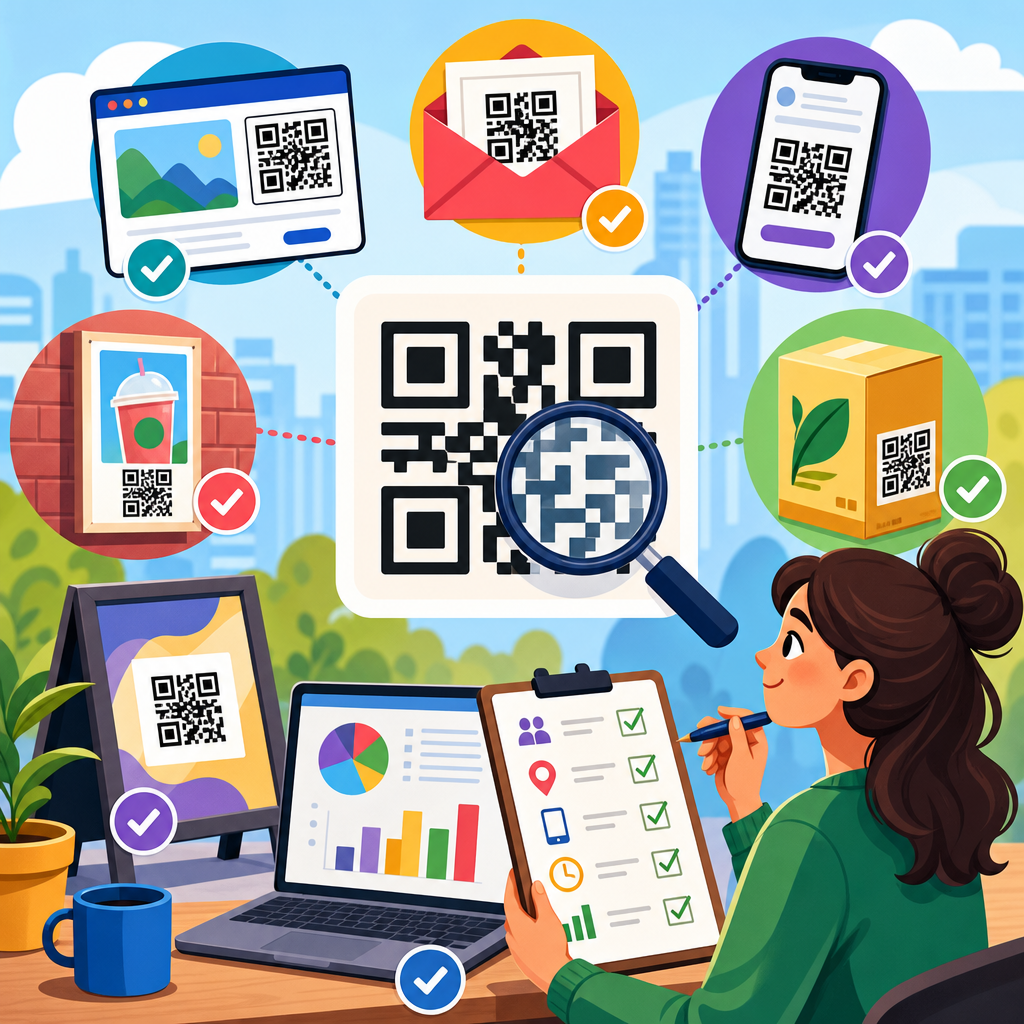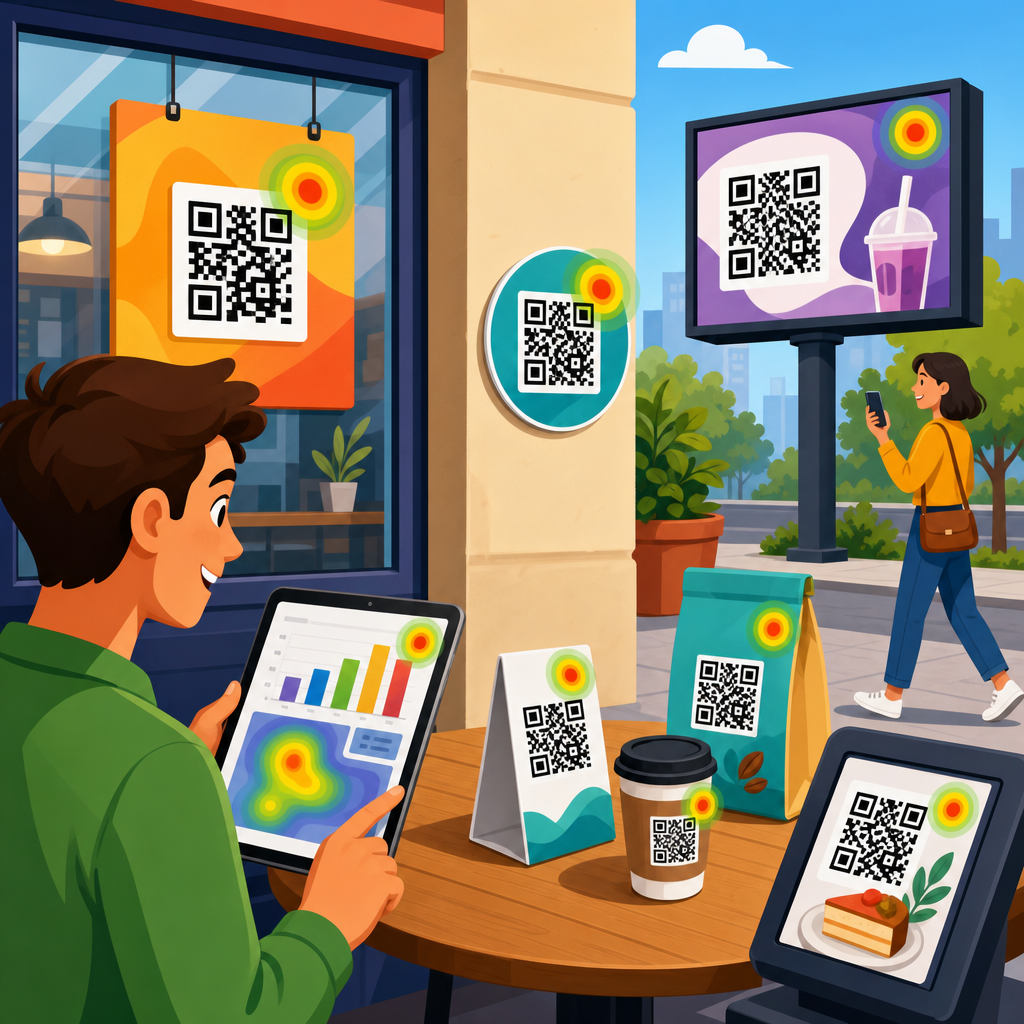
QR code optimization for mobile users is the practice of designing, placing, tracking, and refining QR experiences so people can scan quickly, load the right page instantly, and complete a desired action without friction. In the context of QR code marketing and strategy, conversion optimization means more than increasing scan volume. It means improving the full path from first glance to completed form, redeemed offer, booked appointment, downloaded app, or finished purchase. I have worked on QR campaigns for retail packaging, event signage, restaurant menus, direct mail, and field sales materials, and the pattern is consistent: most failures happen after the scan, not during it.
A QR code is simply a machine-readable matrix barcode that stores a URL or other data. Mobile users access it with a smartphone camera or scanning app, then land on a digital destination. A conversion is the measurable outcome that matters to the business. The optimization challenge is that mobile users are impatient, distracted, and often scanning in poor light, on weak networks, or while walking. Small usability mistakes can cut response sharply. A code printed too small, a landing page that shifts layout, or a form that asks for twelve fields instead of three can waste expensive traffic generated from packaging, posters, or print.
This matters because QR codes bridge offline attention and online action. They can connect store shelves to product education, invoices to payment pages, and business cards to calendar bookings. Unlike many digital channels, QR interactions start in the physical world, where context strongly shapes intent. Someone scanning a menu wants speed. Someone scanning a product label wants reassurance or instructions. Someone scanning a conference badge may want networking details. Optimizing for mobile users means matching that intent with fast load times, clear messaging, and an obvious next step. When those elements align, QR codes become reliable conversion assets rather than decorative squares.
Start with scanability and context
The first layer of conversion optimization is making sure the code is easy to notice and easy to scan. High contrast remains the baseline standard: dark modules on a light background outperform stylized combinations, especially under glare. Error correction can protect readability when a logo is placed in the center, but pushing branding too far lowers reliability. In production, I use generous quiet zones, test across iPhone and Android devices, and avoid printing below the practical minimum size for expected scanning distance. A common field rule is roughly one inch of code size for every ten inches of scanning distance, then validate with real devices rather than trusting design comps.
Placement matters as much as code design. A QR code on a shelf talker should sit where a shopper can pause without blocking traffic. On product packaging, it should not wrap around a curved edge that distorts the pattern. On outdoor posters, it must account for sun, rain, and the fact that many users will scan from several feet away. Context also shapes motivation, so nearby copy should answer the immediate question: why scan now. Specific calls to action such as “See installation steps,” “Claim 10% off today,” or “Check live inventory” outperform generic instructions like “Scan me.” Users convert when the value proposition is explicit before they open the camera.
Technical setup influences outcomes too. Dynamic QR codes are usually better than static codes for conversion work because they let teams update destinations, segment traffic, and measure scans without reprinting materials. A dynamic code can route users by device type, language, location, or campaign source. That flexibility is essential when the same printed asset remains in market for months. For example, a restaurant can switch a menu code from a PDF to a faster mobile web menu without replacing table tents. A retailer can change a packaging code from a broad homepage to a targeted support article when post-purchase questions spike.
Build mobile landing pages that finish the job
After the scan, the landing page determines whether interest turns into action. The highest-converting QR destinations are built for mobile first, not squeezed versions of desktop pages. Core Web Vitals are not abstract metrics here; they directly affect drop-off. Largest Contentful Paint should feel near-instant on cellular connections, Interaction to Next Paint should remain responsive, and cumulative layout shift should be minimal so buttons do not jump under the user’s thumb. Compress images, defer noncritical scripts, and keep the first screen focused on one primary action. Every extra second and every distracting element lowers completion rates.
Message match is the next priority. The headline on the landing page should continue the promise made beside the QR code. If a mailer says “Book your free roof inspection,” the destination should open with that exact offer, not a generic home page about construction services. I have seen conversion rates double simply by replacing homepage traffic with dedicated QR landing pages that kept the same wording and imagery from the printed piece. Continuity reduces cognitive load. The user should feel they arrived in the right place immediately, with no need to hunt through navigation or guess what happens next.
Mobile UX details have outsized impact. Buttons need ample tap targets, forms should use the correct input types, and autofill should be supported wherever possible. If the conversion action is a phone call, click-to-call must be prominent. If the goal is downloading an app, deep linking to the right app store matters. If the offer requires a coupon code, auto-apply it. Eliminate optional fields, multi-column layouts, and pop-ups that obscure content. For local businesses, integrating maps, store hours, and inventory indicators can shorten the path from scan to visit. Friction removed on a small screen often translates into measurable lift.
Align the conversion goal with user intent
Not every QR scan should be pushed toward the same outcome. The best conversion optimization begins by identifying the likely intent at the moment of scan. On-pack codes scanned after purchase usually perform best when they lead to onboarding, setup videos, warranty registration, or care instructions. Codes on in-store signage often support comparison, reviews, promotions, or stock checks. Event codes can drive agenda saves, lead capture, or booth demos. Matching the CTA to context raises both conversions and customer satisfaction because the experience solves the question the user actually has at that moment.
A practical way to structure this is to assign one primary conversion per QR placement and one secondary action for users who are not ready. A cosmetic product label may prioritize “Find your shade” while offering “See ingredients” as a secondary path. A B2B trade show booth may prioritize “Book a live demo” with “Download the spec sheet” as a lower-commitment option. This approach prevents muddled landing pages that try to serve every audience at once. In campaign reviews, I usually find that pages with a single dominant CTA outperform broad resource hubs when the traffic source is a specific physical prompt.
Offer design also matters. Mobile users respond well to immediate utility, exclusive access, and time-bounded value. The most effective QR offers I have tested include instant coupons, quick-start guides, limited event perks, and personalized product selectors. Weak offers include vague newsletters, generic “learn more” prompts, or long gated ebooks. If lead generation is the goal, ask only for information required to continue the conversation. A flooring contractor may capture name, ZIP code, and project timing, then gather room dimensions later. Progressive profiling consistently converts better than demanding a full intake form during the first mobile interaction.
Measure what happens after the scan
Teams often celebrate scan counts while missing the true performance story. Conversion optimization requires measurement from scan to business result. That starts with campaign taxonomy. Use unique dynamic codes or distinct UTM parameters for each placement, creative version, geography, and offer. A poster in a subway station should not share the same destination identifier as a product insert or a sales one-pager. Granular naming conventions make it possible to compare environments and understand which offline touchpoints create valuable traffic instead of just curious traffic.
Analytics should connect scan sessions to meaningful downstream events. In GA4, define conversions such as form_submit, purchase, call_click, coupon_redeem, account_signup, or appointment_booked. Pair web analytics with a tag manager, CRM data, call tracking, and commerce data where available. If you use platforms such as Bitly, QR Code Generator PRO, Beaconstac, or Scanova, pull scan timestamps, devices, and location data into reporting alongside landing-page metrics. The objective is to see where drop-off occurs: scan-to-load, load-to-engagement, engagement-to-submit, and submit-to-qualified outcome. Without that chain, optimization becomes guesswork.
| Metric | What it reveals | Optimization response |
|---|---|---|
| Scan rate by placement | Whether the code is visible and compelling | Adjust size, placement, surrounding copy, or incentive |
| Landing page bounce rate | Whether the destination matches expectation | Improve message match, speed, and first-screen clarity |
| Form completion rate | Whether the action is too demanding on mobile | Reduce fields, enable autofill, shorten steps |
| Revenue or lead quality | Whether conversions are commercially useful | Refine audience targeting, offer, and follow-up workflow |
Testing should be continuous, but disciplined. Change one major variable at a time where possible: CTA copy, offer framing, page length, hero image, or form depth. Because QR campaigns often involve physical media, testing windows may be longer than pure digital tests. Even so, useful comparisons are possible with dynamic routing, regional splits, or time-based variants. For example, a home services brand can rotate two landing pages behind the same mailer code and measure booked appointments. The winning version then becomes the permanent destination. This method preserves print investment while still allowing iterative gains.
Reduce mobile friction across devices and environments
Mobile users scan in imperfect conditions, so reliability requires defensive design. Test on current and older phones, both operating systems, multiple browsers, and low-bandwidth networks. Camera behavior differs across devices. Some open links in an embedded browser, some in the default browser, and some present extra confirmation steps. If your flow depends on cookies, location permissions, or complex JavaScript, you need to know how those factors behave in real scanning conditions. In audits, I routinely test indoors, outdoors, under fluorescent light, and with cracked screens, because actual customers do not interact in lab conditions.
Accessibility is another conversion lever. Clear color contrast, readable type, descriptive headings, and straightforward language help every user, especially in fast mobile sessions. Avoid tiny legal text that pushes the CTA below the fold. Use labels above fields, not placeholder-only forms. If the destination includes video instructions, provide captions and a text summary. For restaurants, healthcare providers, and public services, multilingual QR destinations can materially improve completion rates where diverse audiences are expected. Accessibility work is not separate from performance marketing. It increases the number of people who can understand and complete the intended action.
Security and trust signals deserve attention because many users are cautious about unknown QR codes. Branded domains, HTTPS, familiar logos, concise privacy language, and visible contact details all improve confidence. Suspicion rises when a code sends users to a generic shortener or an unrelated domain. For payments, registrations, and sensitive forms, the destination should explain exactly what information is needed and why. This is especially important in healthcare, finance, and education. A trustworthy experience does not merely protect the brand; it directly improves conversion by reducing hesitation at the moment users are deciding whether to proceed.
Use QR codes as a conversion hub within a broader strategy
As a sub-pillar within QR code marketing and strategy, conversion optimization works best when it connects to adjacent efforts rather than standing alone. QR destinations should support email capture, CRM enrichment, retargeting audiences, sales enablement, and customer success content. A code on packaging can trigger a post-purchase education sequence. A code on direct mail can sync with regional sales teams for follow-up. A code in a showroom can move shoppers into saved carts or financing flows. The point is to treat QR scans as intentional first-party interactions that can inform the next message, not one-off curiosities.
Internal content architecture matters too. This hub topic naturally connects to deeper articles on dynamic versus static QR codes, QR code design best practices, mobile landing page optimization, QR analytics, retail QR strategy, direct mail QR campaigns, restaurant QR menus, and QR code testing methods. Those related resources strengthen topical depth and help teams build a repeatable program rather than isolated experiments. In my experience, organizations get the best results when they standardize naming conventions, page templates, CTA frameworks, and reporting dashboards so each new QR campaign starts from proven components instead of reinventing the workflow.
The central lesson is simple: QR code optimization for mobile users succeeds when the offline prompt, scan experience, landing page, and conversion path are designed as one system. Strong scanability gets attention, clear context earns the scan, fast mobile pages keep interest, and precise measurement shows what to improve next. Businesses that apply this discipline turn QR codes into accountable conversion channels across packaging, print, events, retail, and service environments. Review your current QR touchpoints, map the mobile journey from scan to outcome, and optimize the weakest step first. That is where the fastest gains usually appear.
Frequently Asked Questions
What does QR code optimization for mobile users actually mean?
QR code optimization for mobile users means improving every step between the moment someone sees a code and the moment they complete the intended action on their phone. It starts with the code itself, including size, contrast, error correction, placement, and scan reliability, but it does not stop there. A successful QR experience also depends on what happens after the scan: how fast the landing page loads, whether the page is mobile-friendly, whether the message matches what the user expected, and how easy it is to finish the task.
In practical terms, optimization is about reducing friction. If a user scans a QR code on a poster, package, table tent, or direct mail piece, they should reach a page that loads quickly, displays properly on a small screen, and immediately explains what to do next. That next step might be redeeming an offer, booking an appointment, downloading an app, joining a loyalty program, filling out a form, or completing a purchase. If the experience feels slow, confusing, cluttered, or irrelevant, scans may happen but conversions will suffer.
That is why optimization in QR code marketing should be viewed as a full-funnel process, not just a scan-generation tactic. High scan volume can look impressive, but the stronger metric is how many users actually complete the desired outcome. The best QR code strategies are built around intent, context, speed, usability, and measurement. When those elements are aligned, mobile users scan with confidence and move through the journey with minimal effort.
What makes a QR code easier for mobile users to scan successfully?
Several design and placement factors have a direct impact on whether mobile users can scan a QR code quickly and reliably. First, the code must be large enough for the environment in which it appears. A code on product packaging can be smaller than one on a storefront window or billboard, because users stand much closer in the first case. If the code is too small relative to viewing distance, users may struggle to focus their camera or capture the pattern accurately.
Contrast is also essential. A dark code on a light background is usually the safest choice because it improves readability across a wide range of phone cameras and lighting conditions. Low-contrast combinations, glossy surfaces, busy backgrounds, and distorted shapes can reduce scan success. It is also important to preserve the required quiet zone, which is the empty space around the QR code that helps devices distinguish it from surrounding visual elements. Crowding the code with text, borders, or graphics can make scanning less reliable.
Placement matters just as much as design. The code should be positioned where people can comfortably notice it and physically scan it without awkward movement. If users must step back too far, bend down, reach above eye level, or deal with glare from sunlight or indoor lighting, the scan rate will drop. Clear instructions can help as well. A short call to action such as “Scan to book now,” “Scan for 20% off,” or “Scan to see the menu” gives people a reason to engage and sets expectations before they open their camera.
Testing is the final piece. A QR code should be tested on multiple phone models, screen sizes, and operating systems, in both ideal and real-world lighting conditions. It should also be tested from the expected scanning distance and angle. Small technical details can have a major effect on performance, so a code that looks fine in a design file should never be assumed to work well in the field without verification.
How can I improve conversions after someone scans a QR code?
Improving post-scan conversions starts with message match. The landing page should immediately reflect the promise made near the QR code. If the sign says “Scan to claim your free sample,” the destination page should open directly to that offer, not a generic homepage. Mobile users make rapid decisions, and any disconnect between expectation and destination increases abandonment. The value proposition needs to be obvious within seconds.
Speed is another major factor. Mobile users often scan QR codes while they are standing in a store, sitting in a restaurant, walking past signage, or multitasking during the day. They are not always in a patient, research-oriented mindset. A slow-loading page can end the interaction before it begins. Pages tied to QR campaigns should be lightweight, fast, and designed specifically for mobile performance. Compressing images, limiting unnecessary scripts, and prioritizing above-the-fold content can make a meaningful difference.
The user interface should also be simplified for small screens. Keep forms short, minimize typing, use large tap targets, and remove distractions that pull attention away from the primary action. If the goal is to generate leads, only ask for the information that is truly necessary. If the goal is a purchase or appointment booking, reduce the number of steps and make the process feel straightforward. Mobile optimization is not just about responsive layout; it is about reducing effort.
Strong conversion optimization also depends on context. Someone scanning a QR code on product packaging may want ingredient details, support information, or a reorder path. Someone scanning a code in a retail display may be more motivated by reviews, inventory, pricing, or a limited-time promotion. The experience should fit the moment. When brands align the destination page with the user’s likely intent and environment, conversion rates improve naturally because the interaction feels relevant and timely.
What should I track to measure QR code performance accurately?
To measure QR code performance accurately, you need to look beyond total scans. Scan count is useful as a top-level engagement metric, but it does not reveal whether the campaign is effective. The more meaningful approach is to track the entire journey from scan to completion. That includes scans, unique users, landing page visits, bounce rate, time on page, click-through rate, form starts, form completions, purchases, bookings, downloads, and any other conversion event tied to the campaign goal.
It is also important to understand where and how people are scanning. Dynamic QR codes are especially valuable because they allow destination URLs to be updated without reprinting the code, and they often support richer analytics. With proper tracking parameters in place, you can compare performance by location, placement, campaign type, device category, time of day, and audience segment. For example, the same QR code creative may perform differently on packaging, in-store signage, direct mail, and event displays because the user mindset changes in each environment.
Funnel analysis is one of the most useful ways to interpret results. If scans are strong but conversions are weak, the problem is likely after the scan. That could point to poor mobile page speed, weak copy, a confusing interface, or a call to action that does not feel compelling. If scans are low from the beginning, the issue may be with code visibility, placement, incentive, or audience fit. In other words, measurement should help diagnose where friction occurs, not just summarize campaign activity.
Attribution should also be handled carefully. QR codes often connect offline touchpoints to digital outcomes, which makes them extremely useful in marketing strategy. When tracked properly, they can help quantify the impact of print, packaging, outdoor media, in-person events, and point-of-sale materials. The key is to define success before launch and ensure that analytics systems are configured to capture both the initial interaction and the downstream business result.
What are the most common mistakes to avoid when optimizing QR codes for mobile users?
One of the most common mistakes is focusing only on the QR code graphic and ignoring the mobile destination. A code can scan perfectly and still fail as a marketing tool if it sends users to a slow, generic, or poorly designed page. Another frequent issue is using a vague or nonexistent call to action. People are far more likely to scan when they know exactly what they will get, whether that is a discount, menu, video, coupon, app download, product details, or appointment scheduler.
Brands also often underestimate environmental factors. Poor placement, insufficient size, glare, cluttered backgrounds, and awkward scanning angles can reduce engagement dramatically. A QR code on a moving vehicle, behind reflective glass, too close to the floor, or placed where users do not have time to react is unlikely to perform well. Optimization requires thinking about how real people encounter the code in a real setting, not just how it appears in a design proof.
Another major mistake is overcomplicating the post-scan experience. Long forms, pop-ups, unnecessary navigation, auto-playing media, and pages that are not built for mobile all create friction. If the goal is quick action, the path should be direct and intuitive. Many underperforming QR campaigns are not failing because users are uninterested; they are failing because the process becomes frustrating after initial engagement.
Finally, failing to test and iterate is a costly oversight. QR code optimization is not a one-time setup. Different headlines, incentives, placements, landing page versions, and calls to action can produce very different outcomes. The most effective marketers treat QR campaigns as measurable systems that can be refined over time. By testing the physical presentation and the mobile experience together, you can move beyond basic scan activity and create QR interactions that consistently convert.