QR codes are easy to generate, cheap to print, and now familiar to almost every smartphone user, but scans alone do not create revenue. Leads do. If your campaign stops at getting someone to open a link, you are measuring attention instead of conversion. Turning QR code scans into leads means designing every step after the scan so a person moves from curiosity to contact, with as little friction as possible and with a clear reason to act.
In practical terms, a lead is a person who gives you identifiable contact information or signals purchase intent strongly enough to justify follow-up. That might be an email signup, a demo request, a quote form, a booked consultation, a gated download, a text opt-in, or a loyalty enrollment tied to consent. Conversion optimization is the discipline of increasing the percentage of scanners who complete that action. I have worked on QR campaigns for retail packaging, trade show booths, restaurant table tents, direct mail, and field sales leave-behinds, and the pattern is consistent: the code itself rarely causes failure. The landing experience, offer quality, and tracking setup do.
This matters because QR traffic is high intent but fragile. A person scanning from packaging or signage is often in a real-world context with limited time, variable connectivity, and many distractions. They may be standing in a store aisle, walking through an event hall, or holding a coffee in one hand. If the page loads slowly, asks for too much information, or hides the value proposition, the opportunity disappears immediately. When the experience is tuned well, though, QR traffic can outperform many digital channels because the user has already taken a physical action that signals interest.
To turn QR code scans into leads reliably, you need a system: the right placement and call to action before the scan, a dedicated mobile landing page after the scan, a compelling offer, a form that matches buyer intent, and analytics that connect offline source to downstream results. The sections below cover how to build that system, what metrics to watch, and how to improve conversion rates using real-world methods that work across print, packaging, out-of-home, events, and local promotions.
Start with scanner intent, not the code
The best QR lead generation campaigns begin by identifying why someone would scan in that exact moment. Context determines intent. A person scanning a code on product packaging may want instructions, warranty registration, recipes, product comparison, or a discount on the next purchase. A person scanning at a conference booth may want slides, a demo, pricing, or a case study. A diner scanning a tabletop sign may want a loyalty perk or a contest entry. Treating all scans the same is one of the fastest ways to depress conversion rates.
I map QR placements to one primary user question and one primary business goal. For example, on a home services postcard, the user question is often “Can I trust this company and what will it cost?” The business goal is a booked estimate. That pairing suggests a landing page with trust signals, service-area confirmation, fast scheduling, and a short form. On a CPG package, the user question may be “How do I get more value from this product?” The business goal could be email capture for retention. That suggests how-to content, bonus recipes, or warranty plus newsletter signup. The lead magnet should fit the physical moment.
Your call to action printed next to the code must answer “why scan now” in plain language. “Scan to learn more” is weak because it asks the user to spend effort without promising a payoff. Better examples include “Scan for 15% off your first order,” “Scan to book a free 10-minute demo,” “Scan for the installation guide and warranty registration,” or “Scan to compare plans in under a minute.” Specificity improves scan quality, not just scan volume, because it pre-qualifies intent before the person ever reaches your page.
Build a mobile landing page engineered for conversion
Most QR scans happen on mobile devices, so the destination page must be designed mobile-first. That means fast load times, legible type, compressed images, visible form fields, tap-friendly buttons, and a page structure that surfaces the key message immediately. I aim for a landing page that makes the offer understandable within three seconds. A clear headline, one supporting benefit statement, one proof element, and one primary call to action usually outperform pages overloaded with navigation, long image carousels, or generic brand copy.
Dedicated landing pages convert better than sending scans to your homepage because they preserve message match. If the printed code promises a coupon, the first thing the user should see is the coupon. If the code offers a demo, the page should open directly to demo details and booking. I generally remove unnecessary site navigation on QR pages, especially for campaign traffic, because every extra path lowers completion. If you need brand reassurance, use concise trust badges, review excerpts, recognizable customer logos, or a short “how it works” module rather than broad navigation that invites wandering.
Form design should match commitment level. For top-of-funnel offers like a checklist or discount, ask for minimal information: often email alone, or email plus first name. For high-intent offers like a quote request, ask only what your sales process truly needs for the next step. Long forms can qualify leads, but they should be used intentionally. In testing, I have repeatedly seen QR campaigns improve when forms are reduced from seven or eight fields to three or four, especially when the user is standing in a store or event environment and cannot complete a long submission comfortably.
Use progressive profiling if your CRM supports it. Capture a small amount of data on first contact, then enrich later through follow-up forms, email clicks, or sales conversations. Tools such as HubSpot, Marketo, Salesforce Account Engagement, and Klaviyo can handle source attribution, hidden fields, and segmentation so you know which QR placement produced each lead. This is how you prevent offline media from becoming an analytics blind spot.
Create offers people actually exchange contact data for
A QR code becomes a lead engine when the value offered after the scan is strong enough to justify sharing information. Discounts work, but they are not always the best option. The right incentive depends on sales cycle length, purchase complexity, and customer urgency. In B2B, calculators, benchmark reports, sample packs, consultations, and implementation guides often outperform generic ebooks because they are closer to a buying decision. In local services, instant estimates, appointment priority, and seasonal service reminders can convert better than percentage-off coupons. In consumer products, loyalty enrollment, recipes, refill reminders, and exclusive bundles often drive stronger repeat engagement than one-time contests.
Good offers have three traits. First, they solve an immediate problem. Second, they are easy to understand quickly. Third, they feel proportionate to the information requested. If you ask for a phone number, company name, and role title, the user should receive something with real practical value, not a vague promise of updates. I advise clients to write the exchange explicitly: “Enter your email to get the maintenance checklist” is clearer than “Join our list.” Transparency increases completion and reduces low-quality leads gathered through confusion rather than intent.
Placement-specific incentives also matter. A warehouse distributor may place one code on packaging for reorder reminders and another on a trade show banner for a live demo. Those should not point to the same page. The offer should reflect the stage of awareness implied by the placement. When you align incentive, context, and follow-up, lead quality improves because the scanner’s next action feels like a natural continuation of why they scanned.
| QR placement | Likely scanner intent | Best lead offer | Primary conversion metric |
|---|---|---|---|
| Product packaging | Usage help or added value | Warranty registration, tips, loyalty signup | Form completion rate |
| Direct mail | Evaluate service quickly | Instant quote or scheduled consultation | Booked appointments |
| Trade show booth | Collect information fast | Demo request or case study bundle | Qualified leads |
| Retail signage | Compare or save money | Coupon, product finder, SMS signup | Offer redemption rate |
Track the full path from scan to sales outcome
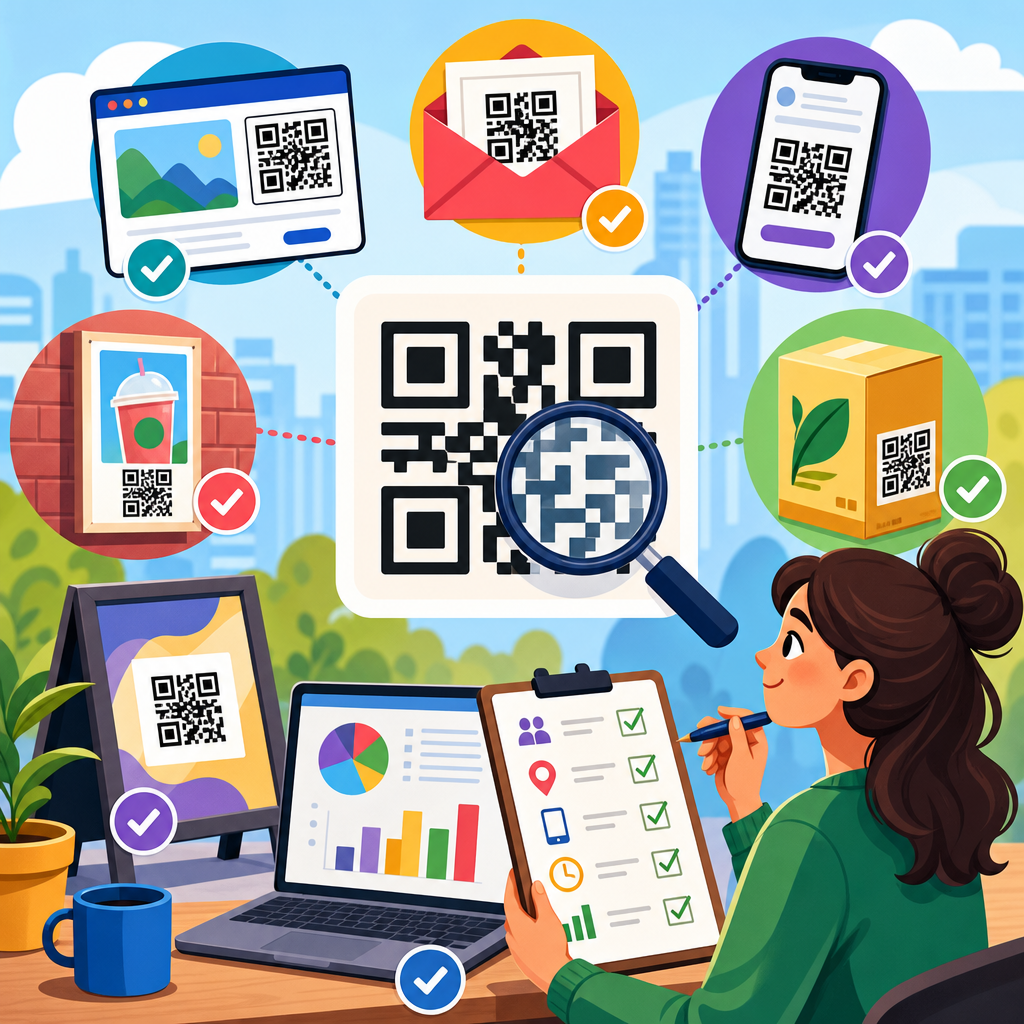
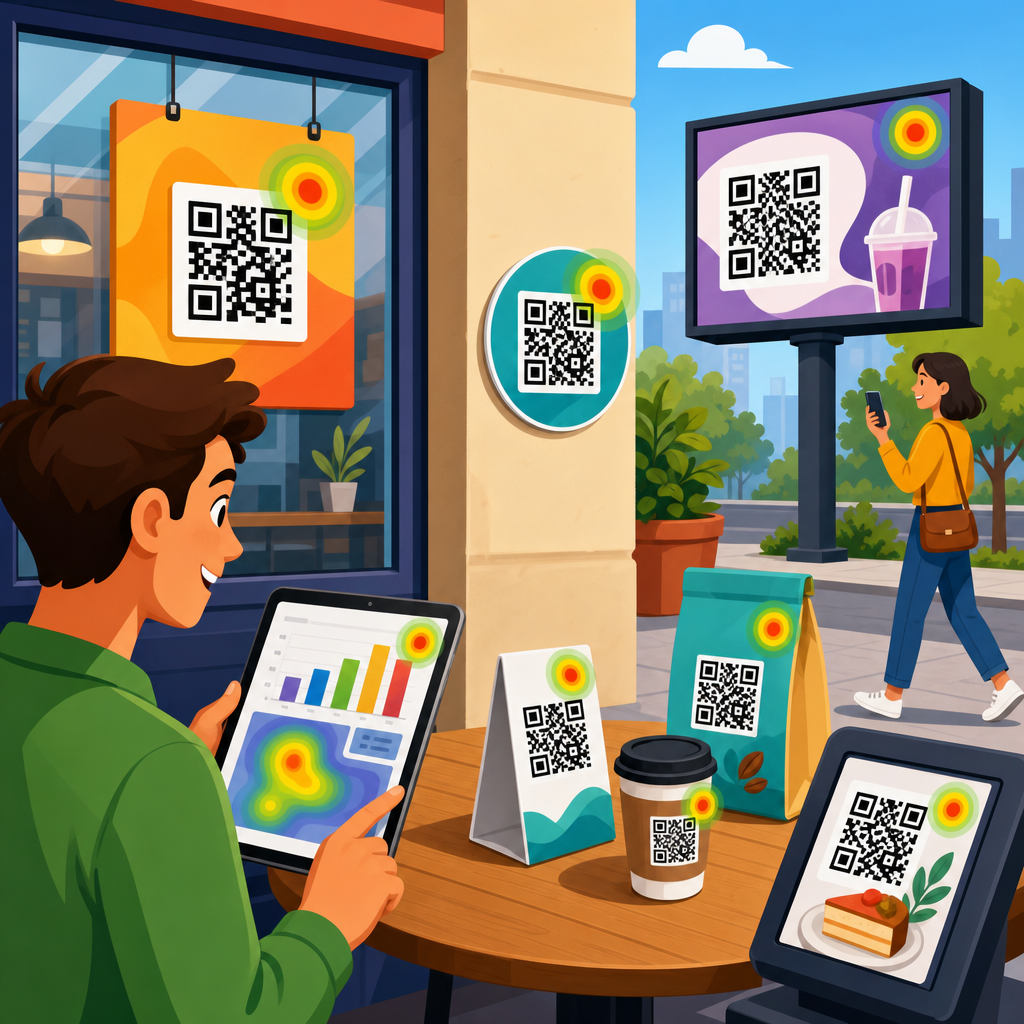
If you cannot connect scans to leads and leads to revenue, you cannot optimize intelligently. At minimum, every QR campaign should use a dynamic QR code platform or redirect structure that lets you update destinations and assign distinct URLs to each placement, creative version, geography, or partner. Add UTM parameters consistently, and pass them into your analytics and CRM using hidden form fields. Google Analytics 4 can capture sessions and conversions, but the CRM is where offline source value becomes visible over time.
I recommend naming conventions that answer four questions: where the code appeared, what creative was used, what audience saw it, and what offer was presented. For example, a URL structure can distinguish store_window_spring_offerA from package_insert_loyalty_offerB. Without this discipline, successful and unsuccessful placements blend together, and teams make decisions based on anecdotes instead of evidence.
Beyond scans, watch the metrics that reveal conversion health. Scan-through rate shows whether the call to action and placement attract interest. Landing page bounce rate indicates whether message match and load speed are adequate. Form start rate reveals whether the offer is appealing. Form completion rate shows whether friction is too high. Lead-to-opportunity rate tells you whether the campaign is attracting real buyers or just prize seekers. For ecommerce-adjacent campaigns, assisted conversion value is useful because some QR leads buy later through email or direct traffic rather than immediately.
Attribution will never be perfect, especially when users switch devices or revisit later, but it can be directionally strong. Coupon codes, SMS keywords, calendar booking links, and CRM campaign IDs help close the gap. If sales teams are involved, require disposition fields that indicate whether a lead was qualified, contacted, or closed. This prevents top-of-funnel vanity metrics from masking poor downstream performance.
Reduce friction with trust, speed, and follow-up design
Small obstacles have outsized effects on QR traffic because the user is often in motion. Page speed is the first friction point. Compress media, minimize scripts, use fast hosting, and test on average cellular connections, not office Wi-Fi. Core Web Vitals are not abstract technical scores here; they directly affect whether a scanner waits long enough to see your form. I have seen conversion lift simply by replacing a heavy hero video with a static image and moving secondary content below the fold.
Trust is the second friction point. QR codes can create hesitation because users cannot see the destination before scanning. Reduce that anxiety before and after the scan. Print your brand name near the code, use HTTPS, keep the URL branded if visible, and reassure users on the landing page with recognizable identity elements. Include privacy language near forms, especially when collecting phone numbers for SMS, and follow consent requirements under regulations such as TCPA, GDPR, or CAN-SPAM where applicable. Compliance is not just legal hygiene; it improves conversion by making the exchange feel safe.
Follow-up design is the third friction point because a lead is only valuable if it enters an appropriate nurture path. Immediate confirmation pages should deliver the promised asset and present a logical next step, such as booking a call, claiming a code, or viewing related resources. Email and SMS automation should continue the same message introduced on the printed piece. If the postcard offered a spring HVAC tune-up, the follow-up sequence should not pivot suddenly into generic company news. Consistency preserves intent and improves lead maturation.
Test systematically and use this page as your conversion hub
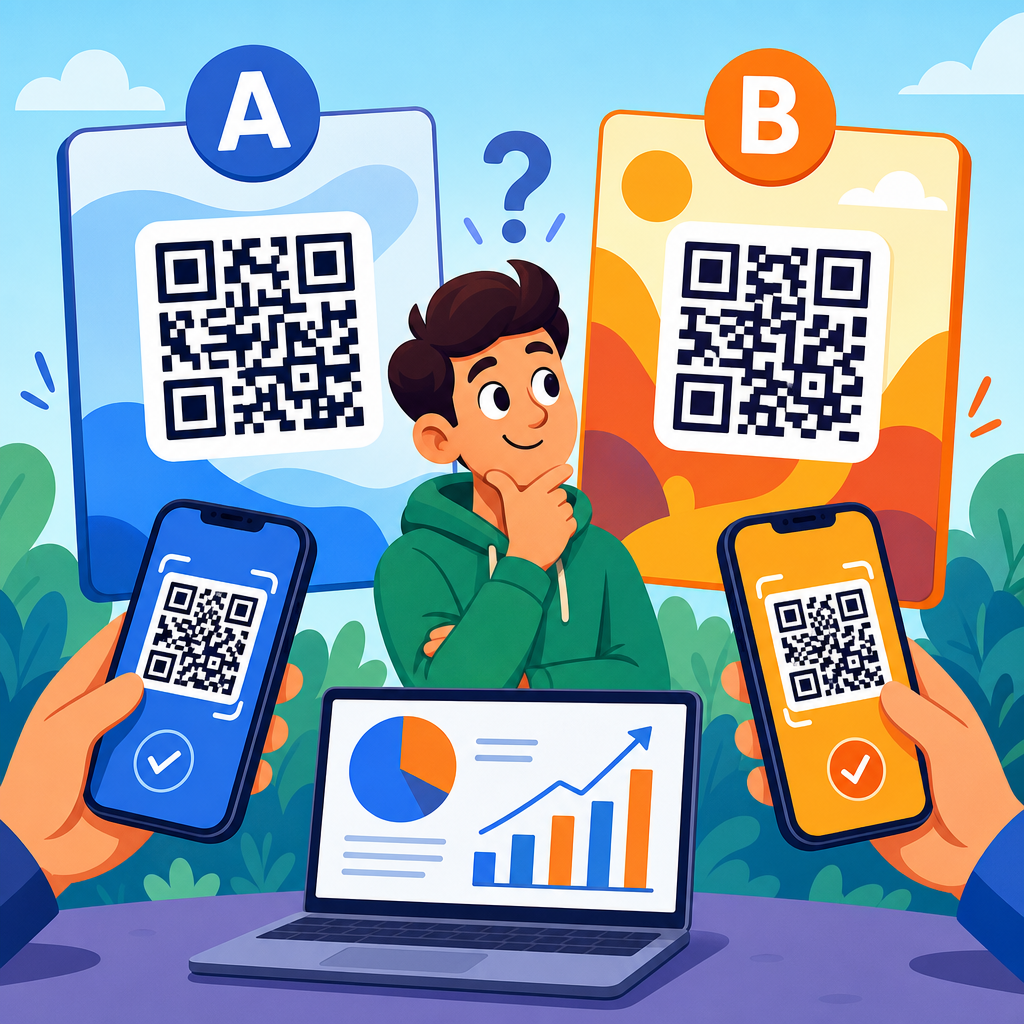
Optimization works best when teams test one variable at a time and document what changed. Start with the biggest levers: the printed call to action, the offer itself, the landing page headline, form length, and confirmation page next step. Then test trust elements, button copy, image choice, and incentive framing. A strong example is comparing “Get 15% off today” against “Scan for your in-store coupon” on retail signage. The first emphasizes value; the second emphasizes immediacy and context. The winner depends on audience and placement, which is why controlled testing matters.
For a sub-pillar hub within QR Code Marketing and Strategy, this page should connect your broader conversion resources into one clear framework. Supporting articles should dive into QR landing page design, dynamic QR tracking, form optimization, coupon redemption strategy, SMS consent, event lead capture, packaging-based retention, and offline attribution models. Internal linking among those pages helps readers move from overview to execution, and it helps search engines understand that this hub is the central guide for QR conversion optimization.
The essential lesson is simple. A QR code does not generate leads by itself. A well-matched offer, a fast mobile page, a low-friction form, accurate attribution, and disciplined follow-up do. When those pieces work together, scans become measurable pipeline instead of disconnected traffic. Audit your current QR journey from printed prompt to CRM record, identify the drop-off point, and improve one stage at a time. That is how to turn QR code scans into leads consistently, profitably, and at scale.
Frequently Asked Questions
What does it actually mean to turn QR code scans into leads?
Turning QR code scans into leads means moving beyond simple engagement metrics and focusing on contact capture and conversion. A scan shows interest, but a lead is created only when someone takes the next meaningful step, such as submitting a form, requesting a quote, booking a demo, joining an email list, downloading a resource, or otherwise sharing identifying information you can use for follow-up. In other words, the scan is the entry point, not the goal.
For a QR code campaign to generate leads, everything after the scan needs to be intentional. The destination page should match the promise made where the code appears, clearly explain the value of taking action, and make the next step extremely easy. If a person scans a code on packaging, signage, direct mail, or an event display and lands on a generic homepage, the path to conversion becomes unclear. If instead they arrive on a focused landing page with one strong offer and a short form, the likelihood of lead capture rises significantly.
The most effective QR code lead systems reduce friction while increasing motivation. That usually means using mobile-friendly landing pages, concise copy, visible trust signals, and a compelling call to action. It can also include incentives such as exclusive pricing, downloadable guides, early access, free consultations, or limited-time offers. The core idea is simple: a QR code creates curiosity, but your landing experience must convert that curiosity into identifiable business opportunity.
What kind of landing page works best after someone scans a QR code?
The best landing page for a QR code campaign is purpose-built, mobile-first, and focused on a single conversion goal. Most QR scans happen on smartphones, so the page needs to load quickly, display cleanly on a small screen, and make the desired action obvious within seconds. Strong QR landing pages avoid clutter, remove unnecessary navigation, and immediately answer three questions: what is this, why should I care, and what should I do next?
A high-converting page usually includes a headline that matches the context of the scan, a short explanation of the offer, a visible benefit-driven call to action, and a form or button placed high on the page. If the user scanned a code from a flyer promising a free estimate, the landing page should repeat that message clearly rather than forcing them to hunt for it. Message match is critical because it reassures people they are in the right place and reduces drop-off.
It also helps to keep the form short and the action low-friction. Ask only for the information you actually need at that stage. In many cases, a name and email address or phone number is enough to qualify a lead without discouraging completion. Adding testimonials, security cues, business credentials, and a brief explanation of what happens next can further increase trust. The overall goal is to make the transition from scan to submission feel effortless, relevant, and worthwhile.
How can I encourage more people to share their contact information after scanning?
People are far more likely to become leads when the value exchange is clear. Asking for contact information without giving a strong reason to provide it usually leads to poor conversion rates. The most effective way to increase submissions is to offer something that feels useful, immediate, and specific to the audience. Depending on the business, that could be a discount, a free sample, a consultation, a downloadable guide, event registration, a product demo, a giveaway entry, or access to exclusive content.
Clarity matters just as much as the offer itself. The QR code placement and the landing page should both communicate exactly what the person gets by taking action. Generic prompts like “Scan here” are much weaker than specific calls such as “Scan to get 10% off,” “Scan to book a free assessment,” or “Scan to download the buyer’s guide.” The more concrete the benefit, the stronger the conversion intent. This is especially important in offline environments, where people often decide in a few seconds whether to continue.
Trust is another major factor. Many users hesitate to share personal information unless they understand how it will be used. You can improve conversion by being transparent about what happens after submission, such as “We’ll email your quote within one business day” or “No spam, just the checklist and occasional tips.” Social proof, recognizable branding, and a professional mobile experience also make a noticeable difference. When the offer is strong, the process is simple, and the expectations are clear, more scans turn into real leads.
What are the biggest mistakes that prevent QR code scans from converting into leads?
One of the most common mistakes is sending traffic to a general homepage instead of a dedicated landing page. A homepage often contains too many choices, too much information, and no obvious next step tied to the scan. This creates confusion and causes interested users to drop off. A QR code campaign works best when the post-scan experience is tightly aligned with the original message and built around one desired action.
Another major issue is friction. Long forms, slow-loading pages, poor mobile design, confusing copy, and weak calls to action all reduce conversions. Since QR code users are typically on mobile devices and often scanning in real-world environments such as stores, events, packaging, or printed materials, they have limited patience. If the page takes too long to load or asks for too much information upfront, the opportunity is often lost immediately. The process has to feel fast and intuitive.
Businesses also undermine results when they focus on scan volume rather than lead quality and follow-up. A high number of scans may look encouraging, but it does not prove revenue potential. If there is no clear lead capture mechanism, no CRM integration, no automated response, and no sales process to nurture the inquiry, the campaign may generate attention without producing business value. Other preventable mistakes include using static codes when trackable dynamic codes would be better, failing to test the experience before launch, and placing codes in contexts where there is no compelling reason to scan. Strong QR campaigns are not just technically functional; they are strategically built for conversion.
How should I track and measure whether my QR code campaign is generating real leads?
To measure whether a QR code campaign is truly working, you need to track the full journey from scan to lead submission and, ideally, from lead to sale. Start by using dynamic QR codes or trackable URLs with campaign parameters so you can identify where scans are coming from. This allows you to compare performance across print ads, packaging, event signage, direct mail, in-store displays, and other placements. Without source tracking, it becomes difficult to understand which QR touchpoints are actually contributing to lead generation.
The next step is to define the conversion event clearly. That could be a completed contact form, a booked appointment, a newsletter signup, a quote request, or another identifiable action that signals sales intent. Once that is set up, monitor metrics such as total scans, landing page visits, bounce rate, form completion rate, cost per lead, and lead quality. Looking only at scans can be misleading because it measures interest, not business impact. A smaller campaign with fewer scans but stronger conversion rates may be more valuable than a high-scan campaign that produces little actionable contact data.
For the most meaningful analysis, connect your QR code campaigns to your CRM or marketing automation platform. That makes it possible to see not only how many leads were captured, but also how many became qualified opportunities and customers. Over time, this lets you refine offers, landing pages, form length, placement strategy, and follow-up timing. The most successful marketers treat QR campaigns as conversion funnels, not novelty tools. When tracking is set up properly, you can move from guessing whether scans matter to proving which scans generate leads and revenue.