QR code marketing works best when every scan leads to a clear, useful next step, and that is why a practical checklist matters more than a clever design. A QR code is a machine-readable matrix barcode that opens a destination such as a landing page, app download, coupon, menu, payment screen, or form when scanned with a smartphone camera. In marketing, the code itself is only the bridge. Success depends on the campaign objective, the placement, the destination experience, the tracking setup, and the follow-up process after the scan. I have used QR codes in retail stores, trade show booths, direct mail, restaurant menus, product packaging, and field sales handouts, and the same pattern appears every time: teams focus on generating the code, then discover too late that the page loads slowly, the offer is vague, or no one can measure results.
A strong QR code marketing checklist prevents those avoidable failures. It aligns creative, analytics, operations, and compliance before materials are printed or distributed. It also helps standardize work across teams, which matters for a sub-pillar hub page like this one because QR code checklists span multiple use cases: launch checklists, print quality checks, analytics checks, event readiness checks, retail signage checks, restaurant menu checks, and campaign optimization checks. The key terms are simple. A static QR code points permanently to one destination and usually cannot be edited after printing. A dynamic QR code uses a short redirect URL so the final destination can be changed and scans can be tracked. Error correction refers to the code’s ability to remain readable even if part of it is damaged or obscured. Scan rate is the percentage of people exposed to the code who actually scan it, while conversion rate measures what happens after the scan. Those definitions matter because the right checklist changes depending on whether your priority is flexibility, durability, attribution, or privacy.
Businesses use QR code marketing because it removes friction between offline attention and digital action. A customer can move from shelf talker to product demo, from postcard to booking page, or from event badge to contact form in seconds. According to long-running usage trends across smartphone platforms, modern mobile cameras recognize QR codes natively, which eliminated the app-download barrier that once limited adoption. But easier scanning has not made execution automatic. Marketers still need a repeatable framework to choose the right destination, size the code correctly, write a compelling call to action, and connect scan data to business outcomes. This hub article provides that framework. Use it as the master QR code marketing checklist for planning, launching, auditing, and improving campaigns across print, packaging, retail, hospitality, events, and direct mail.
Start with strategy, audience, and the right QR code type
The first checklist item is strategic clarity. Before creating any code, define one primary action: buy, book, register, download, review, pay, join, watch, call, or save. If the destination asks users to do several things at once, scan volume may look healthy while conversions stay weak. In practice, the best campaigns match one code to one intent. A store window poster should not send users to a generic homepage when a product collection page or local inventory page is available. A restaurant table tent should not force guests through a full site navigation when a menu, loyalty signup, or payment link is the real goal. The campaign objective determines both the landing page and the success metric.
The second item is audience context. Ask where the scan happens, what the user is doing at that moment, and how much time they have. A commuter seeing a transit ad may only give you ten seconds, so the offer and page must be immediate. A trade show attendee can tolerate a lead form if the value exchange is clear, such as a benchmark report or product spec sheet. In healthcare, real estate, education, and nonprofit campaigns, trust signals become even more important because users are sharing personal information or considering complex decisions. Good checklists force teams to document the audience, environment, device assumptions, and expected bandwidth before creative is finalized.
The third item is code architecture. Use dynamic QR codes for most campaigns because they allow destination changes, campaign pauses, scan analytics, and A/B testing without reprinting materials. Static QR codes still have a place for permanent information such as Wi-Fi access, plain text, or a stable URL on durable packaging, but they are harder to optimize once distributed. Select an established generator or platform with dependable redirects, export options, and analytics integrations. Teams commonly use tools that support UTM parameters, custom domains, and bulk generation for product-level campaigns. If a code will appear on packaging, signage, or menus for months, confirm ownership of the domain and redirect rules so scans do not break during website migrations.
Build a landing experience that converts after the scan
The most common QR code marketing mistake is treating the scan as the conversion. It is not. The scan only starts the user journey, so the destination must be mobile first, fast, and tightly matched to the promise near the code. Every checklist should include page speed, responsive layout, readable typography, compressed images, and a clear primary button above the fold. If a flyer says “Scan for 20% off today,” the user should land on a page that immediately displays the offer, expiration, and redemption steps. Do not make people hunt through a navigation menu or close intrusive pop-ups before they can act.
Message match is critical. When I audit underperforming campaigns, I often find a disconnect between the physical call to action and the digital destination. A product package might say “Scan for assembly help” but open a generic support center. A real estate sign might say “Scan for price and photos” but route to a brokerage homepage. The fix is simple: create dedicated pages for each use case. For events, that may mean one page for agenda downloads, another for booth demos, and another for post-event follow-up. For retail, use pages tied to the exact product, location, or promotion on the sign. Dedicated pages raise relevance, improve attribution, and give analytics cleaner meaning.
Form design deserves its own checklist line. On mobile, fewer fields consistently outperform longer forms unless the lead value is very high. Ask only for what the next step requires. If you are qualifying enterprise leads after a conference session, name, email, company, and a short intent question may be enough. If the goal is coupon redemption or loyalty signup in a store aisle, a phone number or email alone is often sufficient. Add autofill support, clear privacy language, and an instant confirmation state. If the destination is a download, make sure the file opens properly on iOS and Android and that the file size does not punish users on mobile data.
Use production and placement standards that protect scanability
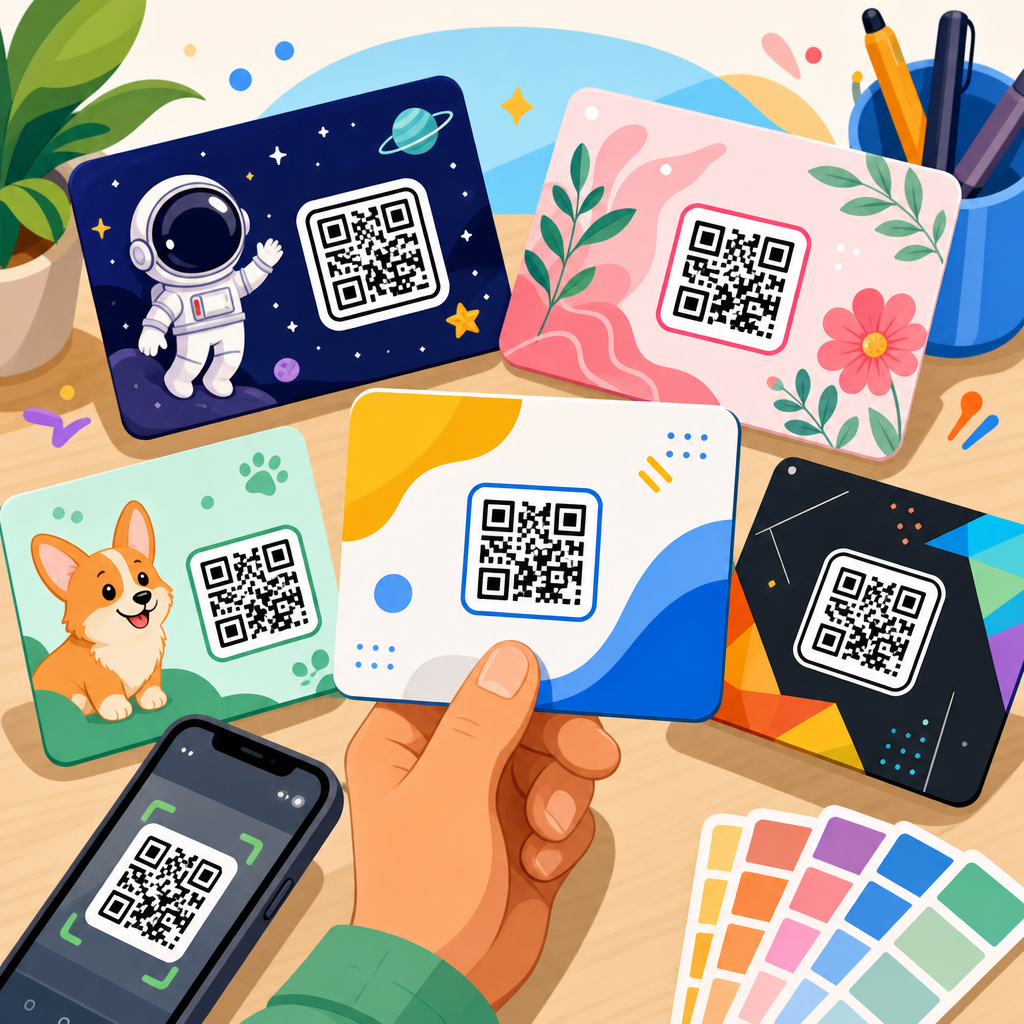
Design quality is not cosmetic; it directly affects scan success. A QR code must maintain adequate contrast, quiet zone spacing, and physical size relative to scan distance. As a practical rule, a code should be large enough for the environment and never crowded by surrounding graphics. Dark code on a light background remains the safest option. Inverted designs, low-contrast palettes, glossy finishes, heavy logo overlays, and distorted shapes may look branded but often reduce readability. Error correction can help when adding a logo, yet it is not a license to push design beyond scanner tolerance.
Placement matters just as much as design. Users need enough time and space to notice, understand, and scan the code safely. A code on a highway billboard is rarely sensible because people cannot scan while driving. A code at a bus shelter, checkout counter, product shelf, hotel lobby, table tent, conference badge, or magazine page is far more realistic. The call to action should answer the user’s first question immediately: why should I scan this? “Scan to compare plans,” “Scan for ingredients,” “Scan to book a demo,” and “Scan for assembly video” are stronger than “Scan me.” Whenever possible, add a fallback short URL for accessibility and for users whose cameras are restricted by workplace policies.
| Checklist area | Best practice | Why it matters |
|---|---|---|
| Code type | Use dynamic codes for campaigns | Allows edits, tracking, and testing after print |
| Landing page | Send users to a dedicated mobile page | Improves relevance and conversion rate |
| Design | Keep high contrast and clear quiet zones | Protects scan reliability across devices |
| Placement | Position where people can scan safely | Raises scan volume and reduces friction |
| Tracking | Add UTM parameters and event goals | Connects scans to sessions and revenue |
| Compliance | Show privacy terms when collecting data | Reduces legal and trust risk |
Testing should happen in the real environment, not only on a designer’s monitor. Print a sample, place it at intended height, and test scans from different phones, camera apps, lighting conditions, and distances. Check matte versus glossy stock, curved packaging, textured surfaces, and transparent labels. In-store fluorescent lighting can expose contrast problems that looked fine in the studio. Outdoor signage introduces glare, weathering, and fading. Restaurants should test codes after repeated cleaning. Packaging teams should test after shrink-wrap and on rounded containers. A launch checklist is incomplete until someone verifies that the printed item scans reliably under normal customer conditions.
Track performance, govern data, and optimize over time
Measurement begins with a naming convention. Every QR code should map to a campaign, channel, placement, location, date range, and intended action. UTM parameters remain the standard way to carry this context into analytics platforms such as Google Analytics 4, Adobe Analytics, or Matomo. In GA4, define events for the action that matters after the scan, such as purchase, form_submit, sign_up, generate_lead, or file_download. If the QR code opens app content, use deferred deep linking where appropriate and confirm attribution logic with your mobile measurement partner. Without that setup, scan counts can look impressive while business impact stays invisible.
Optimization requires reading more than one metric. Scan count shows curiosity, but scan-through rate, bounce rate, time to action, conversion rate, cost per lead, redemption rate, and assisted revenue tell the real story. A direct mail code may earn fewer scans than a retail shelf code yet produce higher order value because the audience is warmer. An event booth code may generate many scans and few qualified leads if staff direct everyone to the same generic page. Use cohort analysis by location, creative version, and offer type to identify the drivers of quality. Dynamic codes let teams redirect traffic to improved pages quickly, which is why they consistently outperform static codes in active campaigns.
Data governance belongs on every checklist. If the destination collects personal data, provide clear consent language, link to the privacy policy, and align form handling with applicable regulations such as GDPR, CCPA, or industry-specific requirements. Be careful with QR codes in healthcare, finance, and education where sensitive data and regulated disclosures are involved. Security also matters for customer trust. Use HTTPS destinations, control redirects, and monitor for broken links or expired domains. Bad actors sometimes place fraudulent stickers over public QR codes to steal payments or credentials. Brands should inspect physical placements regularly and use tamper-evident materials where risk is elevated.
A mature QR code program includes routine optimization cycles. Review campaign data weekly during active launches and monthly for always-on placements. Refresh offers that plateau, rotate creative by audience segment, and retire codes attached to outdated pages. Build internal templates for common use cases such as product packaging, coupons, lead capture, review requests, menu access, and event follow-up. This hub page should anchor those specialized checklist articles because teams benefit from one master standard plus scenario-specific extensions. When your process covers strategy, destination quality, production standards, analytics, and governance, QR code marketing becomes measurable, scalable, and dependable rather than experimental.
QR code marketing succeeds when teams treat the code as one part of a complete customer journey instead of a novelty added at the end of a campaign. The checklist in this guide brings the essentials into one repeatable system: define a single objective, choose the right code type, match the destination to the promise, design for reliable scanning, place the code where people can act safely, track outcomes with disciplined analytics, and protect trust with sound privacy and security practices. Those steps apply across retail, restaurants, packaging, events, direct mail, field sales, and service businesses, which is why a hub page on QR code checklists is so useful.
The biggest benefit of a checklist is consistency. It prevents expensive print errors, weak landing pages, and missing attribution before they reduce campaign performance. It also makes collaboration easier because marketing, design, web, analytics, and compliance teams can work from the same standard. In my experience, the highest-performing QR code campaigns are rarely the flashiest. They are the ones that remove friction, answer the user’s question immediately, and make results visible to the business. A simple shelf sign tied to a fast product page with inventory, reviews, and one clear button can outperform a beautifully branded code that sends traffic to a generic homepage.
Use this article as your master QR code marketing checklist, then build supporting checklists for each channel and use case in your resource library. Audit every existing code against these standards, fix the landing pages that do not match intent, and upgrade static campaign codes to dynamic ones where flexibility matters. If you want better scan rates, cleaner attribution, and more conversions from offline attention, start with the checklist and make it part of every launch.
Frequently Asked Questions
What should be included in a QR code marketing checklist before launching a campaign?
A strong QR code marketing checklist should start with the basics and then move into execution details that directly affect results. First, define the campaign goal clearly. The QR code should support one specific next step, such as visiting a landing page, downloading an app, claiming a coupon, joining a loyalty program, completing a payment, or filling out a lead form. If the goal is vague, the campaign usually underperforms because the user experience becomes unfocused.
Next, confirm that the destination matches the intent of the scan. A person scanning a code from a product package expects something different from someone scanning a code on a trade show banner or restaurant table. The landing page or destination should be mobile-friendly, fast-loading, easy to read, and built around a single primary action. If the experience is cluttered, slow, or confusing, scans will not turn into meaningful conversions.
Your checklist should also include code testing across multiple devices, operating systems, camera apps, and lighting conditions. Verify that the code scans quickly at the intended print size and from the expected scanning distance. Placement matters just as much. Make sure the code appears in a location where users can comfortably stop, scan, and act. For example, a code placed on a moving vehicle is harder to use than one on in-store signage, packaging, direct mail, or event materials.
Finally, include tracking and measurement. Use campaign-specific URLs, UTM parameters, dynamic QR codes when appropriate, and analytics tools to monitor scans, click-through behavior, conversions, and location or time-based performance. Add a clear call to action beside the code so people know exactly why they should scan it. A practical checklist keeps all of these pieces aligned, which is why it often contributes more to success than the visual design of the code alone.
Why is the landing page or destination experience so important in QR code marketing?
The QR code itself does not create marketing success. It simply connects the offline moment to an online action. What happens after the scan is what determines whether the campaign performs well. If users land on a page that is slow, generic, difficult to navigate, or not optimized for mobile, the campaign will lose momentum immediately. In other words, the scan is only the first step; the destination is where the value is delivered.
A good destination experience should feel like a direct continuation of whatever prompted the scan. If the code appears on a flyer offering a discount, the landing page should lead straight to that offer rather than to a homepage where the user has to search for it. If the code is promoting a menu, app install, payment option, event registration, or gated content, the destination should remove friction and make the next action obvious. Relevance and simplicity are critical because QR code users often scan in quick, real-world situations where attention is limited.
It is also important to think in terms of usability. The destination should load quickly on mobile data, display correctly on different screen sizes, use readable text, and present forms that are short and easy to complete. Every extra step increases abandonment. Brands that treat the destination as an afterthought often see plenty of scans but weak conversion rates. Brands that design the full scan-to-action journey usually get stronger results because they respect the user’s time and intent.
From a measurement standpoint, the landing page is where meaningful outcomes can be tracked. You can evaluate bounce rate, engagement, purchases, submissions, downloads, and repeat behavior. That makes the destination experience central not only to performance but also to optimization. If scans are high but conversions are low, the landing page is often the first place to investigate.
How can you track and measure the success of a QR code marketing campaign?
Effective measurement starts by deciding what success means for the campaign. In some cases, that will be total scans. In others, it may be completed purchases, form submissions, app installs, coupon redemptions, menu views, appointment bookings, or payment completions. A QR code campaign should always be tied to one or more concrete metrics so performance can be evaluated beyond simple curiosity or engagement.
One of the best ways to track performance is by using unique campaign URLs with UTM parameters. These parameters allow you to see where traffic came from inside analytics platforms and help separate one QR placement from another. For example, you can create different codes for packaging, posters, direct mail, in-store displays, or event booths, then compare which channel drives the most valuable behavior. Dynamic QR codes are especially useful because they allow you to change the destination without reprinting the code and often provide additional scan analytics such as time, device type, and location.
To measure true marketing impact, connect scan data with downstream metrics. A high scan rate is encouraging, but it does not automatically mean the campaign is successful. You also want to know whether users stayed on the page, clicked the primary button, completed a form, redeemed an offer, or converted into customers. This is where event tracking, conversion goals, CRM integration, and ecommerce analytics become valuable. When possible, build a reporting framework that shows the full path from scan to outcome.
It is also smart to benchmark and test. Compare performance across placements, calls to action, landing page variations, and audience segments. A code with “Scan to Save 20%” may perform differently from one that says “Scan to See Today’s Offer.” Small wording or placement changes can have a major effect on scan behavior. Good measurement turns QR code marketing from a one-time tactic into an optimization channel that becomes more efficient over time.
What are the most common mistakes that reduce QR code campaign performance?
One of the most common mistakes is using a QR code without a clear reason for the user to scan it. Many campaigns assume that curiosity is enough, but most people need a compelling benefit. If there is no obvious value, such as access to a discount, useful information, fast checkout, exclusive content, or a simpler process, scan rates tend to stay low. This is why the call to action matters so much. People should understand what they will get before they point their camera at the code.
Another frequent problem is sending users to a poor destination. A homepage, a desktop-only page, a long and confusing form, or an irrelevant piece of content often kills momentum. Users expect convenience. If the scan creates extra work instead of reducing it, the campaign misses its purpose. Marketers also make the mistake of not testing the full experience from the user’s perspective, including scan speed, mobile layout, page load time, button functionality, and analytics tracking.
Placement errors are also common. A code can be technically correct but practically unusable if it is too small, printed with low contrast, placed in dim lighting, positioned too high, or displayed where people cannot safely stop and scan. In print environments, size and distance matter. In public settings, accessibility and convenience matter. The best-performing QR campaigns are easy to notice and easy to use in the real world.
Finally, many campaigns fail because they are not measured properly. Without campaign tagging, separate codes by placement, or conversion tracking, it becomes difficult to know what is working and what should be improved. QR code marketing is often judged too early based on limited data. Avoiding these common mistakes gives marketers a much better chance of turning scans into measurable business results.
Where should QR codes be placed for the best marketing results?
The best placement depends on the campaign objective, audience behavior, and the context in which the scan happens. In general, QR codes perform best where people have enough time, space, and motivation to take immediate action. Product packaging is a strong option because it reaches users at a moment of high relevance. In-store signage also works well when the code adds convenience, such as accessing product details, reviews, inventory, loyalty rewards, or instant discounts. Direct mail can be effective too because it bridges print and digital in a very measurable way.
Event materials are another valuable placement opportunity. Booth graphics, name badges, brochures, presentation slides, and handouts can all support lead capture, content downloads, schedule access, or demo requests. Restaurants and hospitality businesses often use QR codes on tables, menus, receipts, room materials, and service displays because users are already primed for fast mobile interaction. Payment screens and self-service experiences are also natural fits when speed and simplicity are priorities.
What matters most is situational fit. The placement should make the scan feel helpful and intuitive, not forced. A code on a poster in a busy walkway may generate fewer successful interactions than one at a checkout counter, waiting area, product shelf, or tabletop where users can pause. The surrounding message should support the action by clearly explaining the benefit of scanning. Good placement combines visibility, usability, and relevance.
It is also wise to test multiple placements instead of assuming one location will outperform all others. Separate codes for different physical touchpoints can reveal where engagement and conversion are strongest. Over time, this helps marketers identify which environments create the best scan-to-action flow and where adjustments are needed. In QR code marketing, the location is not just a distribution choice; it is part of the user experience and a major driver of campaign success.