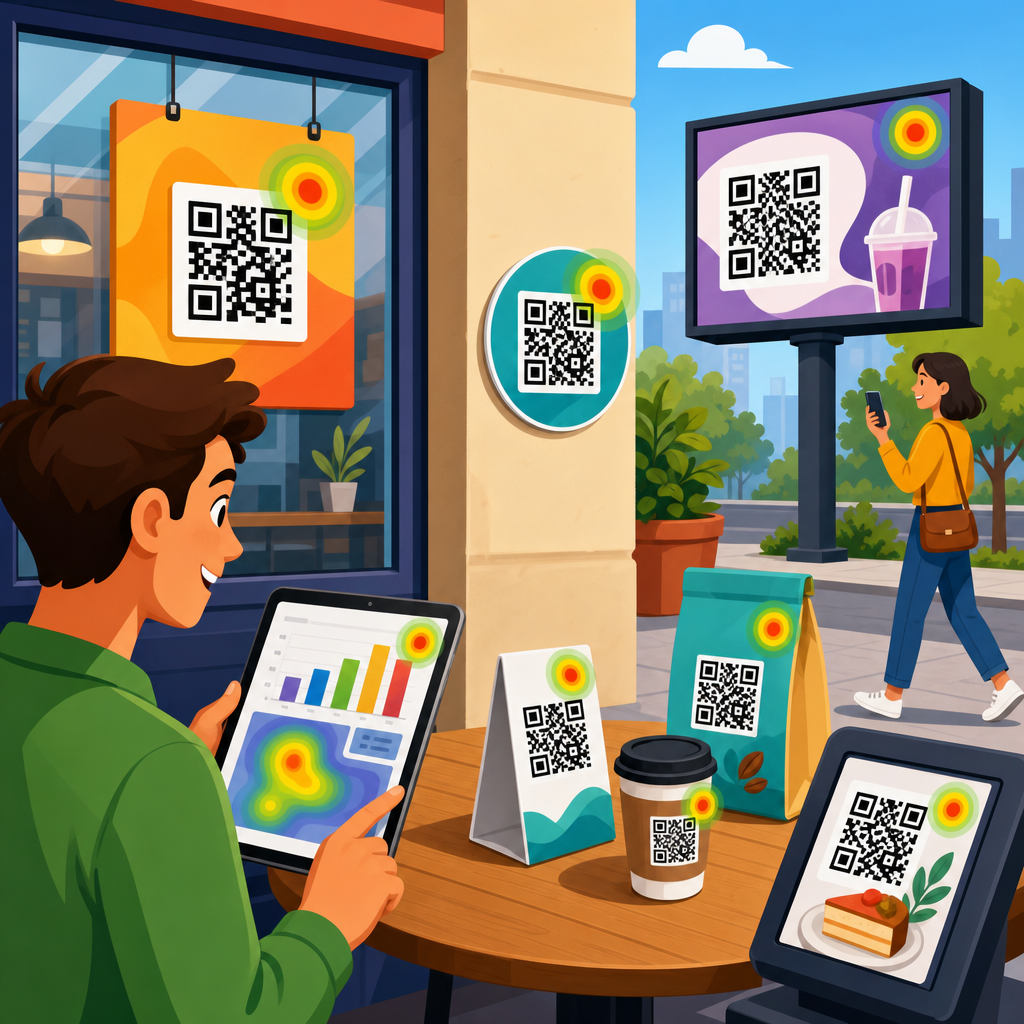
QR code experimentation for growth marketing turns a simple scan into a measurable acquisition event, letting teams test creative, placement, incentives, and post-scan journeys with the same rigor they apply to landing pages and paid ads. A QR code is a machine-readable matrix barcode that opens a destination such as a website, app deep link, coupon, menu, lead form, or payment page when scanned with a smartphone camera. A/B testing QR codes means comparing two or more versions of a code experience to determine which variant produces better outcomes, usually measured through scan rate, click-through rate, conversion rate, revenue per visitor, or customer retention. For growth marketers, that matters because QR campaigns bridge offline attention and digital action across packaging, direct mail, retail signage, events, out-of-home media, and product inserts. I have seen campaigns fail not because the offer was weak, but because the code was too small, the call to action was vague, or the destination page ignored mobile friction. Experimentation fixes those hidden losses. It transforms QR codes from tactical add-ons into a disciplined testing channel that can improve unit economics, attribution quality, and customer experience across the full funnel.
The strongest QR testing programs start with clear definitions and a realistic view of what can and cannot be measured. Static QR codes permanently encode one destination, while dynamic QR codes route through a redirect layer that can be updated and tracked after printing. In practice, dynamic codes are the foundation for serious experimentation because they support segmentation, redirect changes, and event logging without reprinting every asset. Teams also need to distinguish scan rate from downstream conversion. A poster in a transit station might generate many scans but few purchases because users are commuting with low intent, while a QR code on product packaging might produce fewer scans but higher subscription starts because the audience already owns the product. Understanding these distinctions prevents bad conclusions. The goal is not simply more scans. The goal is profitable behavior after the scan. That is why effective QR code experimentation combines strong hypothesis design, clean tracking, and mobile-first landing experiences that reduce latency, form friction, and message mismatch.
Why A/B Testing QR Codes Works in Growth Marketing
A/B testing QR codes works because the format sits at the intersection of intent, context, and convenience. Unlike a typed URL, a QR code removes manual entry and compresses the path from awareness to action into a single gesture. That speed makes small changes disproportionately important. When I audit underperforming campaigns, the biggest gains often come from practical adjustments: increasing code size from 0.8 inches to 1.25 inches on mailers, raising contrast, moving the code above the fold, or replacing “Scan me” with a benefit-driven prompt such as “Scan for 15% off your first order.” Each change influences whether a person notices the code, trusts it, scans it, and completes the next step.
Growth teams benefit because QR tests can answer questions that standard web experiments cannot. You can compare in-store shelf talkers versus package inserts, event badges versus booth signage, or restaurant table tents versus window decals. You can test whether a discount, educational content, loyalty enrollment, or product tutorial creates more valuable customers. You can also use QR codes to attribute offline media. For example, a retailer can give every store region a distinct dynamic code, then compare scan-to-purchase rates by geography, staff training quality, and creative execution. This moves offline marketing closer to the accountability marketers expect from paid search and lifecycle email.
What to Test: The Variables That Change Results
The most productive QR experiments isolate variables that influence both scanning behavior and post-scan performance. Start with the physical asset. Size matters, especially at distance. A code on packaging viewed from twelve inches can be smaller than a code on a storefront window viewed from six feet away. Error correction level also matters because adding logos or styling can reduce readability if contrast or quiet zones are compromised. Color is another variable. Black on white remains the safest option, while low-contrast brand treatments often hurt scan success, particularly in dim retail environments. Placement changes visibility and approach angle. A code hidden near legal copy will usually underperform the same code placed near the primary value proposition.
Then test messaging. The call to action should state the reward, not the mechanic. “Scan to compare plans” beats “Scan here.” Incentive framing changes results too. Percentage discounts may outperform dollar discounts on low-priced products, while free shipping may win for higher average order values. Urgency language can increase scanning, but false scarcity damages trust and repeat behavior. The destination experience deserves equal attention. Deep linking users directly into an app screen can outperform a mobile web page for existing customers, while first-time visitors may convert better on a lightweight landing page that explains the value before asking for a download. Form length, autofill, payment options, and page speed all influence final conversion, so a QR code test should not stop at the scan.
Measurement and Attribution Setup
Reliable QR code experimentation depends on disciplined measurement. Use dynamic QR codes tied to unique campaign parameters so every scan can be traced to a source, asset, location, date range, and variant. In most stacks, that means a redirect platform combined with analytics tools such as Google Analytics 4, Adobe Analytics, Mixpanel, or Amplitude. Standardize UTM parameters for source, medium, campaign, content, and term equivalents if needed. If conversions happen in an app, pass identifiers into your mobile measurement partner or product analytics platform. If purchases happen in store, connect the scan event to loyalty IDs, coupon redemptions, POS data, or customer service codes so offline revenue is not lost in reporting.
Marketers also need to define the primary metric before launch. For upper-funnel campaigns, scan rate per impression may be appropriate. For acquisition, use completed signup rate, cost per acquired customer, or revenue per scan. For retention plays such as packaging inserts, track repeat purchase rate, subscription activation, or feature adoption. Statistical discipline matters. Do not call a winner after a day because one location had heavier foot traffic. Run tests long enough to capture daypart and weekday effects, and segment by environment when necessary. A code in a bright airport concourse behaves differently from one in a dim bar. Clean attribution does not eliminate context; it reveals it.
| Test area | Variant A | Variant B | Primary metric | Common insight |
|---|---|---|---|---|
| Call to action | Scan to learn more | Scan for 15% off | Scan-to-conversion rate | Specific value usually beats generic language |
| Placement | Bottom-right on poster | Centered under headline | Scan rate per impression | Higher visual prominence lifts scans |
| Destination | Mobile landing page | App deep link | Revenue per scan | Existing users prefer deep links; new users need context |
| Incentive | 10% off | Free shipping | Average order value | Offer type influences both conversion and margin |
Designing Valid Experiments Across Offline and Online Touchpoints
Good QR tests control as many environmental differences as possible. In direct mail, split your audience randomly so each household receives one variant under similar delivery windows. In retail, assign comparable stores by sales volume and foot traffic, then rotate variants if operationally feasible. At events, avoid comparing a morning crowd to an afternoon crowd without adjustment because attendee intent shifts throughout the day. For out-of-home campaigns, placement quality can overwhelm creative differences, so use matched locations or sequential rotation. The cleaner the experimental design, the more confidently you can attribute performance changes to the tested variable rather than to external noise.
Operational details matter more than many teams expect. Print quality should be identical across variants except for the chosen test element. A smudged label, reflective laminate, or curved surface can suppress scanning and contaminate results. Testing multiple variables at once often creates ambiguity. If you change code size, CTA text, and landing page offer in the same test, you may see a lift without knowing which factor caused it. Start with one meaningful variable, then iterate. Once a clear winner emerges, stack the next test. Over time, this builds a learning agenda: visibility first, then messaging, then destination optimization, then audience segmentation. That sequence mirrors how people move from noticing a QR code to becoming a customer.
Landing Pages, Deep Links, and Post-Scan Conversion
The post-scan experience determines whether QR experiments create real growth or just vanity metrics. Every destination should load quickly on mobile networks, present a message that matches the physical context, and ask for the minimum viable action. A QR code on product packaging should not drop users on a generic homepage. It should open a page tailored to the exact product, ideally with setup instructions, accessories, refill options, or loyalty registration. I have repeatedly seen conversion gains simply by removing site navigation from campaign pages and surfacing Apple Pay, Google Pay, Shop Pay, or one-tap email capture near the top of the screen.
Deep links deserve special attention. For known customers with the app installed, a deep link can open directly to account activation, referral claiming, or replenishment checkout, reducing friction substantially. For unknown visitors, deferred deep linking can route to the app store and then preserve context after install. That said, app-first is not always best. If your audience is cold, asking for a download before demonstrating value can depress conversion. A hybrid flow often wins: use a lightweight mobile page to explain the offer, then present download as the second step for users who show intent. The right answer depends on audience familiarity, purchase frequency, and the speed with which users can realize value.
Common Mistakes That Distort QR Test Results
The most common mistake is evaluating scans without measuring business impact. A humorous CTA or oversized code may increase curiosity scans while lowering qualified conversions. Another frequent error is neglecting mobile UX basics. Slow pages, intrusive pop-ups, tiny form fields, and forced account creation can erase gains from even the best physical creative. I also see teams overdesign codes with logos, gradients, or inverted colors that look polished in mockups but scan poorly in real settings. QR readability is a functional requirement, not a design preference. Testing must begin from a technically reliable baseline.
Attribution gaps are another source of bad decisions. If a scan opens a browser but the eventual purchase happens later on desktop or in store, last-click reporting will undervalue the QR code. Use first-party identifiers, coupon codes, CRM stitching, and post-purchase surveys to capture assisted influence. Beware of sample bias as well. Early adopters who scan packaging inserts may be your most engaged customers, so results may not generalize to cold audiences. Finally, do not ignore compliance and trust. If a code leads to a shortened URL with no brand cues, some users will hesitate because QR phishing is now widely understood. Brand the destination clearly and explain where the scan leads before asking people to act.
Building a Repeatable QR Experimentation Program
The best teams treat QR code testing as an ongoing program, not a one-off campaign task. Create a testing backlog organized by funnel stage: visibility, motivation, friction reduction, and monetization. Document every hypothesis, variant, sample window, and outcome in a shared repository. Include photos of placement, print specifications, and environmental notes so future teams understand context. Establish guardrails for code size, contrast ratio, quiet zone, redirect governance, and analytics naming conventions. This reduces preventable errors and makes learnings portable across packaging, retail, field marketing, and lifecycle teams.
As the program matures, connect QR results to broader growth systems. Winning CTA language can inform paid social copy. High-converting landing page layouts can be reused in email and SMS. Packaging insert tests can reveal which education topics reduce returns or increase replenishment, influencing customer success content and merchandising. In other words, QR experimentation is valuable not only because it improves a scan rate, but because it generates customer insight at the moment physical attention becomes digital intent. Start with dynamic codes, clean tracking, one-variable tests, and mobile-first destinations. Then iterate relentlessly. The brands that do this well turn every box, poster, table tent, and store display into a learning asset. Audit your current QR touchpoints, choose one high-traffic placement, and launch a disciplined A/B test this month.
Frequently Asked Questions
What does QR code experimentation mean in growth marketing?
QR code experimentation in growth marketing means treating every scan as a measurable acquisition or engagement event rather than as a passive convenience feature. Instead of placing one static code on packaging, print ads, direct mail, event signage, in-store displays, or product inserts and hoping it performs well, marketers create controlled tests to compare different versions of the experience. That can include testing where the code appears, how it is framed with copy, what incentive is offered, what design or creative surrounds it, which audience sees it, and what happens immediately after the scan.
In practice, the QR code itself is only one part of the experiment. The real optimization opportunity includes the full scan journey: the context before the scan, the user’s motivation at the moment of scanning, the destination they reach, and the action they take next. A team might test whether “Scan to claim 10% off” outperforms “Scan to see how it works,” whether a table tent converts better than a poster, or whether a mobile landing page performs better than a direct deep link into an app. By assigning distinct destinations, parameters, or dynamic QR code variants to each test condition, marketers can attribute scans, visits, sign-ups, purchases, and downstream revenue to specific hypotheses. That makes QR codes a practical channel for structured experimentation, not just an offline-to-online bridge.
What elements of a QR code campaign should be A/B tested?
The strongest QR code tests usually focus on elements that clearly influence user behavior before and after the scan. A good starting point is the call to action. Small wording changes can produce large differences in scan intent because users need an immediate reason to pull out their phone. Testing “Scan to get a free sample,” “Scan to unlock pricing,” and “Scan to join the waitlist” can reveal which value proposition creates the most urgency and relevance. Offer type is another high-impact variable, especially in retail, events, hospitality, and B2B lead generation. Discount, bonus content, exclusive access, contest entry, demo request, and loyalty points all appeal to different motivations.
Placement is equally important. A QR code at eye level near a point of decision often behaves very differently from one placed at the bottom of a flyer or on the back of packaging. Teams should also test format and surrounding creative, including size, contrast, whitespace, instructions, iconography, and whether a branded frame improves trust or distracts from action. Destination experience matters just as much as the physical presentation. Sending users to a generic homepage is rarely optimal when compared with a purpose-built mobile landing page, app deep link, prefilled form, product detail page, payment page, or localized offer page. More advanced teams test timing, segmentation, and context as well, such as different QR experiences by store location, audience cohort, campaign source, or stage of the funnel. The key is to isolate the variable being tested so results can be interpreted with confidence.
How do you measure the success of a QR code experiment?
Success should be measured across the full funnel, not just by raw scan count. Scans are useful because they indicate initial interest, but they do not tell the full performance story. A QR code variant that generates fewer scans may still be superior if it produces more qualified leads, higher conversion rates, better retention, or stronger revenue per visitor. For that reason, the best measurement framework begins with a primary goal tied to business impact, such as email sign-ups, demo bookings, purchases, app installs, subscription starts, or completed payments. Secondary metrics then help diagnose what happened between exposure and outcome, including scan rate, landing page load speed, bounce rate, form completion rate, add-to-cart rate, and cost per acquisition.
Attribution is critical. Each test variant should use unique tracking logic through dynamic QR codes, UTM parameters, campaign IDs, or a measurement platform that connects scan data to on-site and downstream actions. This allows marketers to compare not only who scanned, but what those users did next and how valuable they were over time. Statistical discipline also matters. Teams should define the hypothesis in advance, estimate sample size, avoid ending tests too early, and account for environmental differences such as store traffic, print distribution, or event attendance. If a test spans physical locations or time periods, normalizing for those factors helps prevent misleading conclusions. Ultimately, the best QR code experiment is one that produces actionable learning about user intent, friction points, and conversion performance, not just an isolated spike in scans.
Are dynamic QR codes better than static QR codes for experimentation?
For most growth marketing use cases, dynamic QR codes are significantly better for experimentation because they provide flexibility, measurement, and control after the code has already been distributed. A static QR code points permanently to a single destination, which means any change to the landing page URL, app path, campaign routing, or tracking setup may require reprinting materials. That creates obvious limitations for testing. By contrast, a dynamic QR code uses a redirect layer that allows marketers to update the destination, assign tracking parameters, rotate experiences, and monitor engagement without replacing the printed asset. This is especially valuable in direct mail, packaging, out-of-home media, retail displays, and trade show materials where production costs are high and distribution happens at scale.
Dynamic QR codes also support more advanced experimentation strategies. A team can direct traffic to different landing pages for A/B tests, personalize destinations by geography or device type, pause underperforming experiences, and preserve historical reporting across multiple iterations. They can also recover from operational issues quickly if a landing page breaks or an offer expires. Static QR codes are still useful in limited cases where the destination will never change and tracking requirements are minimal, but they are generally not ideal for serious optimization work. If the goal is to run growth experiments with the same rigor used in digital channels, dynamic QR codes are usually the right foundation because they turn an otherwise fixed offline asset into a manageable and testable acquisition touchpoint.
What are the biggest mistakes marketers make with QR code testing?
One of the most common mistakes is focusing too narrowly on the code itself while ignoring the surrounding user context. A QR code rarely succeeds because it exists; it succeeds because the value exchange is obvious and the next step feels worth taking. Marketers often underperform when they place a code in a low-visibility area, fail to explain why someone should scan, or send users to an irrelevant or slow mobile page. Another major mistake is testing too many variables at once. If the placement, incentive, copy, creative, and landing page all change simultaneously, it becomes difficult to identify what caused the result. Strong experimentation requires clean hypotheses and controlled comparisons.
Measurement errors are another frequent problem. Teams may count scans but fail to connect them to conversions, revenue, or retention. Others use the same QR code across multiple placements and then lose visibility into which context actually drove performance. Technical execution matters as well: poor contrast, tiny code size, low-quality printing, crowded design, and broken mobile experiences all suppress results before the test even begins. Marketers also sometimes ignore channel fit. A QR code that performs well on product packaging may fail on a billboard because scan conditions, user intent, and dwell time are completely different. The best way to avoid these mistakes is to approach QR codes as a complete behavioral system: clear motivation before the scan, low-friction experience during the scan, optimized conversion path after the scan, and reliable analytics throughout. When those pieces are aligned, QR experimentation becomes a repeatable growth lever rather than a one-off tactic.