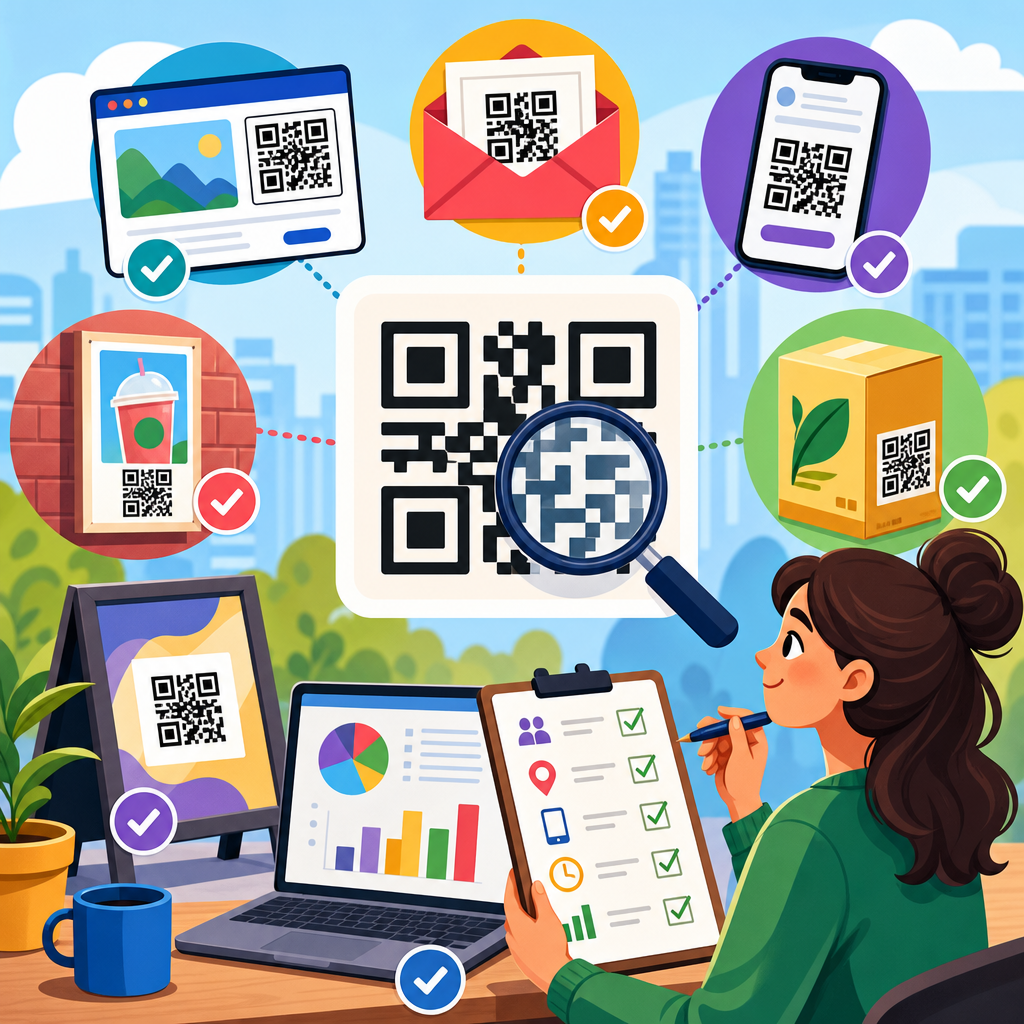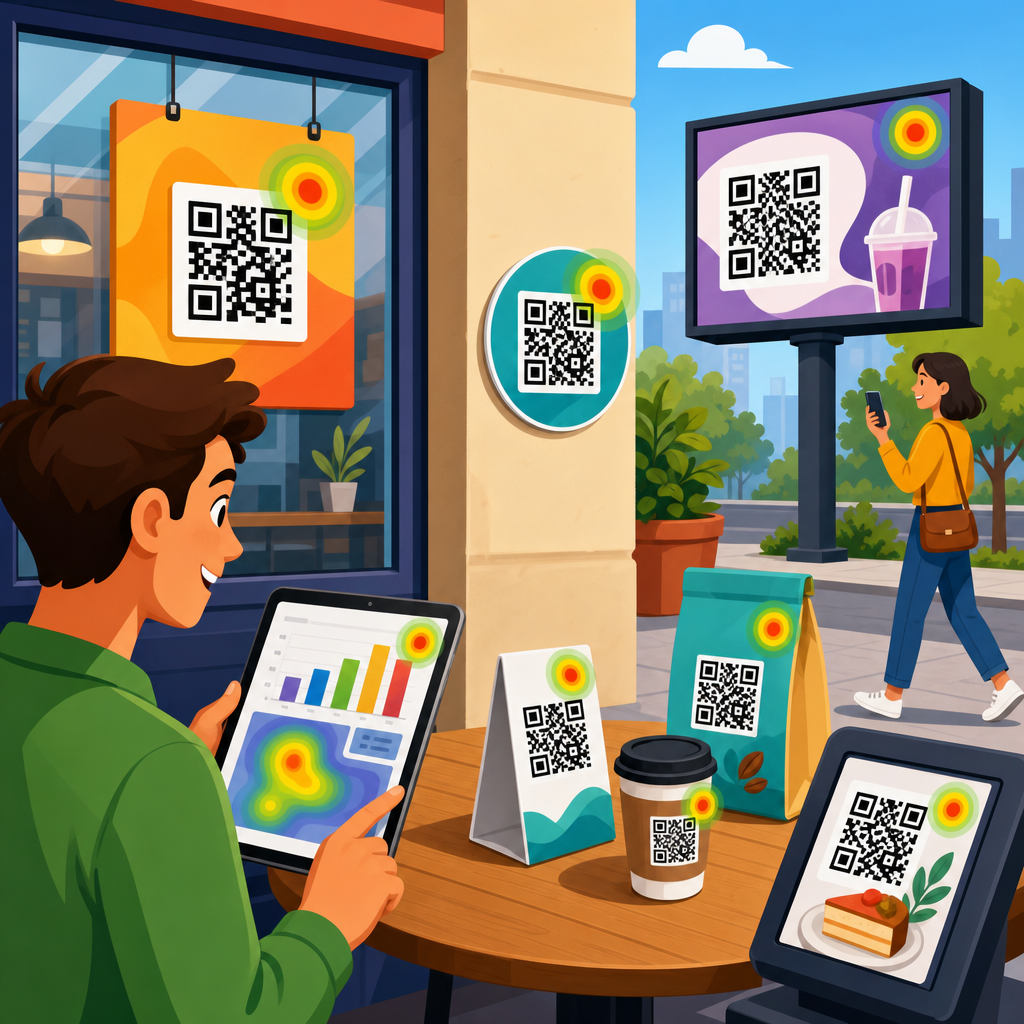
QR code engagement strategies that work start with a simple idea: a scan is not the goal, a meaningful action is. In conversion optimization, that distinction matters because marketers often celebrate scan volume while ignoring what happens next. A QR code is a bridge between physical attention and digital intent, and the quality of that bridge determines whether people subscribe, buy, book, download, or leave within seconds. I have tested QR campaigns on packaging, direct mail, event signage, restaurant tables, retail displays, and field sales materials, and the same pattern appears repeatedly. High-performing codes are tied to a clear audience, a strong value exchange, a fast mobile landing experience, and rigorous measurement.
A QR code, or quick response code, is a two-dimensional barcode that stores a URL or other data and opens instantly through a smartphone camera. Engagement, in this context, means the measurable behavior after the scan: page views, form starts, purchases, coupon redemptions, app installs, repeat visits, and assisted conversions. Conversion optimization is the disciplined process of increasing the percentage of visitors who complete a desired action. For QR code marketing, optimization spans every step in the journey: code placement, creative context, incentive design, mobile usability, page relevance, tracking architecture, and follow-up automation.
This topic matters because QR codes compress decision-making into a few seconds. A person sees the code, interprets the offer, decides whether it is worth scanning, then judges the landing page almost immediately. If any part feels confusing, slow, or irrelevant, the opportunity is lost. Mobile expectations are unforgiving. According to Google research, people form strong impressions about mobile usefulness and ease quickly, and page speed directly affects bounce and conversion behavior. That makes QR code conversion work both a media problem and a user experience problem. Done well, QR codes turn offline moments into attributable revenue. Done poorly, they become decorative squares that generate curiosity without outcomes.
Build campaigns around one intent, one audience, and one action
The strongest QR code campaigns are single-purpose. When a code asks users to do too much, response drops. On a product package, for example, a brand may want shoppers to read sourcing information, join a loyalty club, watch tutorials, and submit a review. In practice, each of those actions has a different motivation and stage of awareness. A better approach is to assign one primary conversion goal to each placement. A post-purchase insert can drive review collection. Shelf signage can drive a coupon or comparison page. Packaging can drive setup instructions or replenishment subscriptions.
Audience specificity matters just as much. A code on event signage reaches people in a hurry, often standing, often multitasking. A code in direct mail reaches a person with more time and privacy. A code on a restaurant table reaches a diner already engaged with the environment. In my campaigns, the conversion lift comes when the offer matches that context. Event attendees respond well to quick actions such as agenda access, lead capture with autofill, or instant prize entry. Packaging scans convert better when the destination reduces friction after purchase, such as assembly help, warranty registration, or reorder links. The principle is consistent: align intent with environment.
Call-to-action language should describe the outcome, not the mechanism. “Scan to save 20% today” outperforms “Scan here.” “See a 30-second demo” is stronger than “Learn more.” Users do not care about scanning for its own sake; they care about what happens after the scan. Specificity also filters low-intent traffic. If the code promises “Check compatibility with your device,” the people who scan are closer to conversion than those responding to a vague invitation.
Design the scan moment to reduce hesitation
Before optimization happens on the landing page, it happens at the scan moment. People need to notice the code, trust it, and understand why it is worth the effort. Size, contrast, placement, and quiet space are practical factors. A code printed too small on a moving bus ad or wrapped around a curved bottle forces awkward scanning angles and lowers completion rates. Standard QR code guidance from generators and print vendors generally recommends high contrast, sufficient white space, and testing across devices before production. Those are not design niceties; they are conversion requirements.
Trust signals are equally important because QR scams have trained some users to be cautious. I have seen response rates improve when brands place the code near recognizable logos, a short branded URL, and a plain-language explanation of the destination. If users know they are going to a secure checkout, a menu, or a registration form on the brand domain, they scan with less hesitation. In regulated sectors such as healthcare or finance, trust language should be even more explicit. State what data is collected and why, especially if the landing page includes forms.
In physical environments, line of sight affects performance. Codes placed where people pause naturally outperform codes placed where they must stop unexpectedly. Think checkout lanes, waiting areas, trade show counters, product endcaps, and table tents. Environmental friction matters too. Low light, glare, reflective surfaces, and crowded graphics all reduce scans. The most reliable rule is to test the code from the exact distance and angle a real person will use, with multiple phone models and average camera quality, not just a flagship device in perfect lighting.
Create landing pages built for immediate mobile conversion
Once the scan happens, the landing page either validates the promise or breaks it. The best QR code landing pages continue the message from the physical trigger with near-perfect scent. If the code says “Claim your free sample,” the first screen should show the sample, explain the next step, and display a simple form or redemption path. Sending users to a generic homepage is one of the most common conversion killers I encounter. It forces visitors to orient themselves, navigate menus, and remember why they scanned in the first place.
Mobile performance is nonnegotiable. Core Web Vitals are useful here because they quantify loading, interactivity, and layout stability. A QR visitor often arrives on cellular data, while walking, standing, or talking. Heavy hero videos, intrusive pop-ups, and long forms depress results quickly. Pages should load fast, keep key content above the fold, and make primary buttons thumb-friendly. Payment and lead forms should use autofill, input masks, and minimal required fields. If location, device, or campaign parameters can prefill context, use them responsibly to reduce effort.
Message hierarchy also drives conversion. Lead with the value proposition, then proof, then action. For example, a fitness studio flyer QR code might land on a page with a headline offering a free first class, a short list of benefits, a few review snippets, and a booking button. That sequence works because it answers the user’s likely questions in order: What do I get? Why should I trust you? What do I do next? Pages that bury the offer under brand storytelling usually underperform because the visitor’s attention window is narrow.
| QR placement | Best landing page goal | High-converting page elements |
|---|---|---|
| Product packaging | Registration, reorder, tutorial | Short headline, product-specific content, one-tap support or buy button |
| Direct mail | Coupon redemption, appointment booking | Offer expiry, personalized code, autofill form, clear terms |
| Retail signage | Compare products, save offer | Side-by-side specs, stock status, wallet pass or SMS reminder |
| Events and trade shows | Lead capture, demo booking | Fast form, calendar integration, social proof, staff attribution |
| Restaurant tables | Order, loyalty signup, review | Large buttons, menu shortcuts, stored payment, incentive for repeat visit |
Measure the full funnel, not just scan volume
Serious conversion optimization requires disciplined measurement. Dynamic QR codes are usually the better choice because they allow destination changes and campaign-level tracking without reprinting the code. I typically configure UTM parameters for source, medium, campaign, placement, and creative variant, then connect results to GA4, a CRM, and where relevant, ad platforms for remarketing. For lead generation, the minimum viable funnel is scans, landing page sessions, form starts, form completions, qualified leads, and closed revenue. For ecommerce, add product views, add-to-cart rate, checkout starts, purchases, and average order value.
Attribution needs care because QR traffic often assists later conversions. A person may scan packaging, research later on desktop, and purchase through email. If you evaluate only last-click revenue, you will undervalue the code. Use channel groupings, path reports, CRM campaign associations, coupon code usage, and where possible, first-party identity capture to understand assisted impact. In retail or hospitality, redemption codes and POS integrations are especially useful because they tie offline placements to real transactions.
A/B testing should focus on the variables with the highest leverage. In my experience, the biggest gains usually come from changing the call to action near the code, improving landing page relevance, shortening forms, and clarifying the incentive. Color changes and decorative redesigns rarely matter as much as marketers hope. Test one major variable at a time when sample sizes are modest. If traffic is high, multivariate approaches can work, but most QR programs benefit more from simple controlled experiments and consistent naming conventions.
Use incentives, urgency, and follow-up without harming trust
Incentives can lift QR code conversion rates dramatically when they match the level of commitment. A scan for a newsletter signup may justify a discount or a downloadable guide. A scan for a premium consultation may require stronger proof and a richer value proposition than a coupon. The incentive should not feel disconnected from the product. Retail discounts, loyalty points, limited-edition content, early access, warranty extension, and useful tools all perform better when they reinforce the brand relationship rather than bribing a one-time click.
Urgency works when it is real. A same-day event offer, an expiring menu special, or a limited registration window gives people a reason to act now. False countdown timers and vague scarcity claims can increase short-term clicks but damage trust and repeat engagement. I have seen better long-term results from transparent deadlines paired with clear next steps. “Register by Friday to secure the workshop rate” is credible. “Only 1 spot left” is risky unless inventory truly updates in real time.
Follow-up is where many QR campaigns leave money on the table. If the initial scan does not convert, remarketing and lifecycle messaging can recover intent. A direct mail scan that starts but abandons a quote form should trigger a reminder if consent exists. A product packaging scan that views tutorials can lead to replenishment emails or loyalty prompts later. The key is to design the code not as an isolated moment but as an entry point into a broader journey with segmentation, automation, and suppression rules that respect user choice.
Common mistakes, governance, and scaling a sub-pillar strategy
The most common QR code conversion mistakes are predictable: sending traffic to a homepage, using static codes for changeable campaigns, ignoring mobile speed, failing to add a visible benefit, printing codes too small, and tracking only scans. Another frequent problem is organizational. Creative, web, analytics, and operations teams work separately, so the code is produced before the landing experience, legal review, or measurement plan is ready. The result is a campaign that launches on time but cannot be optimized because key data or assets are missing.
Governance solves this. Create a standard operating procedure for every QR campaign: objective, audience, offer, CTA, destination URL, redirect ownership, UTM taxonomy, analytics events, CRM mapping, print proofing, device testing, privacy review, and sunset plan. Dynamic code management platforms can help centralize redirects and reporting, but governance matters more than software. Even a strong tool cannot fix inconsistent naming or unclear ownership. If this page functions as a hub within a larger QR code marketing and strategy program, each supporting article should link to a clear execution area such as packaging, direct mail, events, restaurants, analytics, and landing page optimization. That internal structure helps teams find the right guidance quickly and helps search engines understand topical depth.
Scalability comes from reusable templates with room for contextual adaptation. Use proven page modules, form patterns, reporting dashboards, and testing checklists, then tailor the offer and message to each environment. This approach preserves speed without sacrificing relevance. The best QR code engagement strategies that work are not tricks. They are systems that connect physical context, persuasive messaging, mobile usability, clean measurement, and respectful follow-up into a repeatable conversion engine.
QR code engagement strategies that work are built on a straightforward formula: promise something valuable, make the scan effortless, deliver exactly what was promised, and measure what happens afterward. When marketers treat the QR code as a conversion pathway rather than a novelty, performance improves across packaging, retail, events, hospitality, and direct mail. The essentials are clear objectives, audience-context fit, strong calls to action, fast mobile landing pages, trustworthy design, and funnel-level analytics that show both direct and assisted outcomes.
The main benefit of this approach is efficiency. Better QR conversion design turns existing physical touchpoints into accountable digital entry points without adding friction for the customer. Instead of guessing whether print, signage, or packaging influenced revenue, you can connect scans to leads, purchases, repeat orders, and loyalty activity. Just as important, you can identify failure points quickly and improve them through testing. Small changes in offer clarity, page speed, or form length often produce outsized gains because QR interactions are so immediate.
If you manage QR code marketing and strategy, treat this article as your conversion optimization hub and build from it. Audit every live code, map each one to a single intent, fix landing page mismatches, standardize tracking, and create a testing roadmap for your highest-traffic placements. Then expand into supporting workflows for packaging, direct mail, events, analytics, and lifecycle follow-up. Start with one campaign, measure ruthlessly, and scale what proves it can convert.
Frequently Asked Questions
What makes a QR code engagement strategy actually work?
A QR code strategy works when it is designed around the action you want after the scan, not the scan itself. That sounds simple, but it is where many campaigns fail. A high scan count can look impressive in a report, yet still produce weak business results if visitors land on a slow page, see a generic offer, or have no clear reason to continue. Effective QR code engagement starts by defining the desired outcome first, whether that is an email signup, a product purchase, an appointment booking, an app download, or a content view. Once that goal is clear, every part of the experience should support it, from where the code is placed to what message appears next to it to what the landing page asks the user to do.
The best-performing QR campaigns usually share a few traits. They offer immediate relevance, they reduce friction, and they create continuity between the offline moment and the online destination. For example, if someone scans a code on product packaging, they should not be sent to a generic homepage. They should land on a page that clearly relates to that product and offers something useful such as setup guidance, a discount on a refill, reviews, or a loyalty reward. If someone scans from event signage, the destination should match the context of that event, not force them to hunt for the next step. In practical terms, a QR code becomes far more effective when it acts like a well-built bridge between attention and intent rather than a disconnected shortcut to a random digital page.
Where should QR codes be placed to drive higher engagement and conversions?
Placement has a major influence on performance because context shapes motivation. A QR code placed where people already have curiosity, urgency, or buying intent will outperform one placed where attention is weak or the next step feels unclear. High-converting placements often include product packaging, point-of-sale displays, direct mail pieces, event booths, menus, in-store signage, printed inserts, posters in waiting areas, and out-of-home advertising where the value proposition can be understood instantly. The key is not just visibility, but timing. You want the code to appear at a moment when the person naturally wants more information, an incentive, or a convenient way to act.
It is also important to think about physical usability. If the code is on a billboard, users need enough time and distance to scan it safely and realistically. If it is on a shelf tag or table tent, it should be at a height and size that makes scanning effortless. Strong placement also includes surrounding copy that tells people why they should scan. A QR code by itself is a symbol, not a strategy. Adding a short call to action such as “Scan to get 15% off,” “Scan for setup help,” or “Scan to see today’s menu” gives the code purpose. In testing, even small changes in placement and supporting text can significantly improve engagement because they align the offer with the user’s immediate need.
What should happen after someone scans a QR code?
What happens after the scan is the most important part of the entire campaign. The landing experience should feel fast, relevant, and intentional. Users should immediately understand that they are in the right place and know what to do next. That means the page should load quickly, work perfectly on mobile devices, and continue the message promised at the point of scan. If the code offered a coupon, the coupon should appear right away. If the code promised a video demo, the video should be visible without extra navigation. If the campaign goal is lead generation, the form should be short and easy to complete.
A good post-scan experience removes unnecessary decisions. Too many options can lower conversion rates because the visitor loses focus. Instead of sending users to a homepage with multiple menus and competing paths, guide them toward one clear action. Use concise headlines, strong visual hierarchy, trust signals, and a single primary call to action. If possible, personalize the destination based on where the scan happened. A code on packaging might lead to product education and replenishment offers, while a code in direct mail might lead to a personalized landing page with the exact promotion referenced in the piece. This kind of continuity is what turns a scan into measurable engagement and measurable engagement into real business value.
How can marketers measure whether a QR code campaign is successful?
Success should be measured by downstream outcomes, not just scan volume. Scans are useful as a top-of-funnel signal, but they only tell you that someone was curious enough to open the link. They do not tell you whether the campaign generated leads, revenue, signups, bookings, or meaningful content consumption. To evaluate performance properly, marketers should track the full path from scan to conversion. That includes scan rate by placement, landing page engagement, bounce rate, time on page, form completion, purchases, appointment requests, coupon redemptions, and any other action tied to the campaign goal.
Using dynamic QR codes, UTM parameters, event tracking, and conversion analytics makes this much easier. These tools allow you to compare placements, creative versions, calls to action, and landing page variants. For example, you may find that one packaging design generates fewer scans but a higher purchase rate because the messaging attracts more qualified traffic. Or a direct mail QR code may produce fewer total visitors than event signage but deliver better lead quality. That is why the most useful reporting connects offline context to online behavior. Marketers who treat QR codes as conversion assets rather than novelty tools can test, optimize, and improve campaign ROI over time with much greater precision.
What are the most common mistakes that reduce QR code engagement?
One of the biggest mistakes is treating the QR code itself as the campaign. A code is only an access point; it does not create value on its own. When there is no clear benefit to scanning, people ignore it. Another common mistake is sending users to a generic homepage or a page that is poorly optimized for mobile. This creates friction immediately and wastes the intent generated in the physical environment. Slow load times, cluttered design, lengthy forms, weak offers, and vague calls to action are all common reasons why campaigns underperform even when scans look healthy.
Other frequent problems include poor sizing, low contrast, bad placement, and a lack of testing across devices and lighting conditions. If the code is hard to scan, too far away, or visually buried, engagement drops before the digital experience even begins. Marketers also often fail to match the offer to the context. A person scanning from packaging may want support, instructions, or a reorder option, while someone scanning at an event may be more responsive to a giveaway, a schedule, or a demo request. Finally, many teams skip proper measurement and optimization. Without tracking what happens after the scan, it is impossible to know whether the campaign is creating meaningful action. The most effective QR code engagement strategies avoid these pitfalls by keeping the experience simple, relevant, mobile-first, and tightly aligned with a specific conversion goal.