QR code email phishing attacks have moved from a niche trick to a mainstream fraud method, and every security team now needs a clear plan for detecting, preventing, and responding to them. In practice, these attacks blend two familiar ideas: the convenience of a quick-response code and the social engineering of phishing. The result is a scam that slips past old controls because the malicious destination is hidden inside an image rather than shown as text. I have seen this shift firsthand in awareness training and email investigations, where users who would never click a suspicious link will still scan a code with their personal phone. That behavioral gap is why this topic matters. A QR code scam uses a barcode image to send a victim to a phishing page, malware host, fake payment portal, or account takeover flow. Email is a favored delivery channel because it gives attackers room to imitate invoices, multifactor authentication prompts, package notices, human resources forms, and executive requests. Once scanned, the victim often leaves the protected desktop environment and lands on a mobile browser outside corporate filtering. This article explains how QR code scams and fraud work, why they are effective, the common attack patterns, the warning signs, and the controls that materially reduce risk across people, process, and technology.
How QR code email phishing attacks work
A QR code email phishing attack, often called quishing, is an email-based social engineering attack that persuades a user to scan a malicious QR code instead of clicking a conventional hyperlink. The scam usually begins with a message that creates urgency or authority: reset your password, review a secure document, confirm payroll details, or pay an overdue invoice. Instead of exposing a suspicious URL in the message body, the attacker embeds a QR code as a PNG, JPEG, or PDF attachment. The code may lead directly to a credential harvesting page, or it may start with a benign redirector that later forwards the victim to a phishing site.
Attackers favor this method for three reasons. First, some secure email gateways inspect text links more effectively than image-encoded destinations. Optical character recognition and image analysis exist, but coverage varies, and not every mail system expands the QR payload before delivery. Second, the scan action shifts the session to a mobile device, where users have less visibility into the full URL, fewer browser security extensions, and more willingness to complete a quick sign-in. Third, the code itself feels routine. Restaurants, parking meters, login flows, and event tickets normalized scanning behavior, so the attacker borrows a familiar pattern and inserts fraud into it.
In live incidents, the strongest lures mimic existing business processes. Microsoft 365 credential theft pages are common, especially when the email references voicemail, SharePoint documents, or multifactor authentication renewal. Payment fraud is also frequent: a fake vendor invoice instructs the recipient to scan for “secure payment.” Some campaigns target remote workers with QR codes for VPN updates or device enrollment. Others impersonate cloud file-sharing notices and tell the user a document can only be opened on mobile. The mechanics vary, but the objective is consistent: get the victim to act quickly, outside normal scrutiny, and surrender credentials or money.
Common QR code scams and fraud patterns
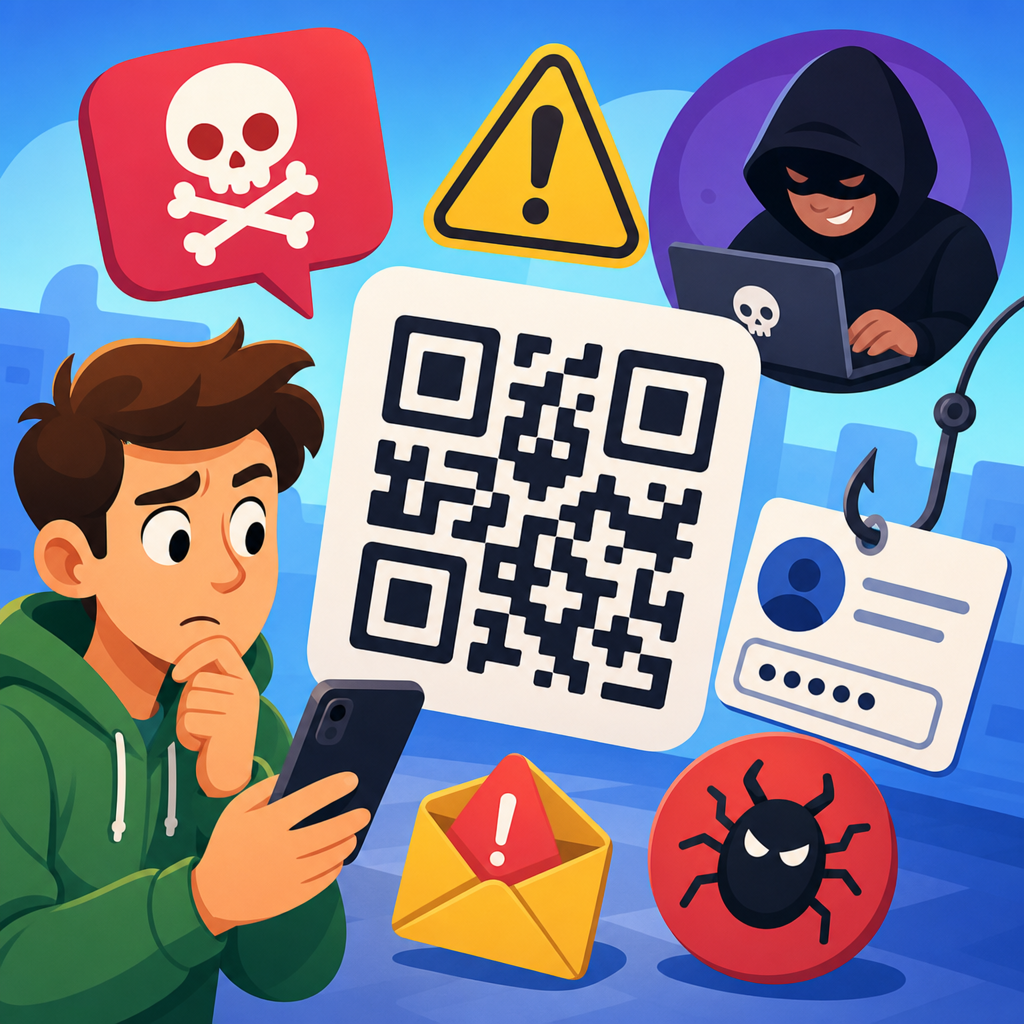
QR code scams extend beyond credential phishing, and understanding the full fraud landscape helps teams build better defenses. The most common pattern is account takeover. A fake sign-in page captures the user’s password and, in advanced campaigns, the attacker proxies the login through an adversary-in-the-middle framework to steal session cookies. Another pattern is payment diversion. The code routes the victim to a counterfeit payment page, a lookalike digital wallet address, or a bank transfer screen with altered beneficiary details. I have also seen gift card fraud, where an executive impersonation email tells staff to buy cards and upload codes through a scanned form.
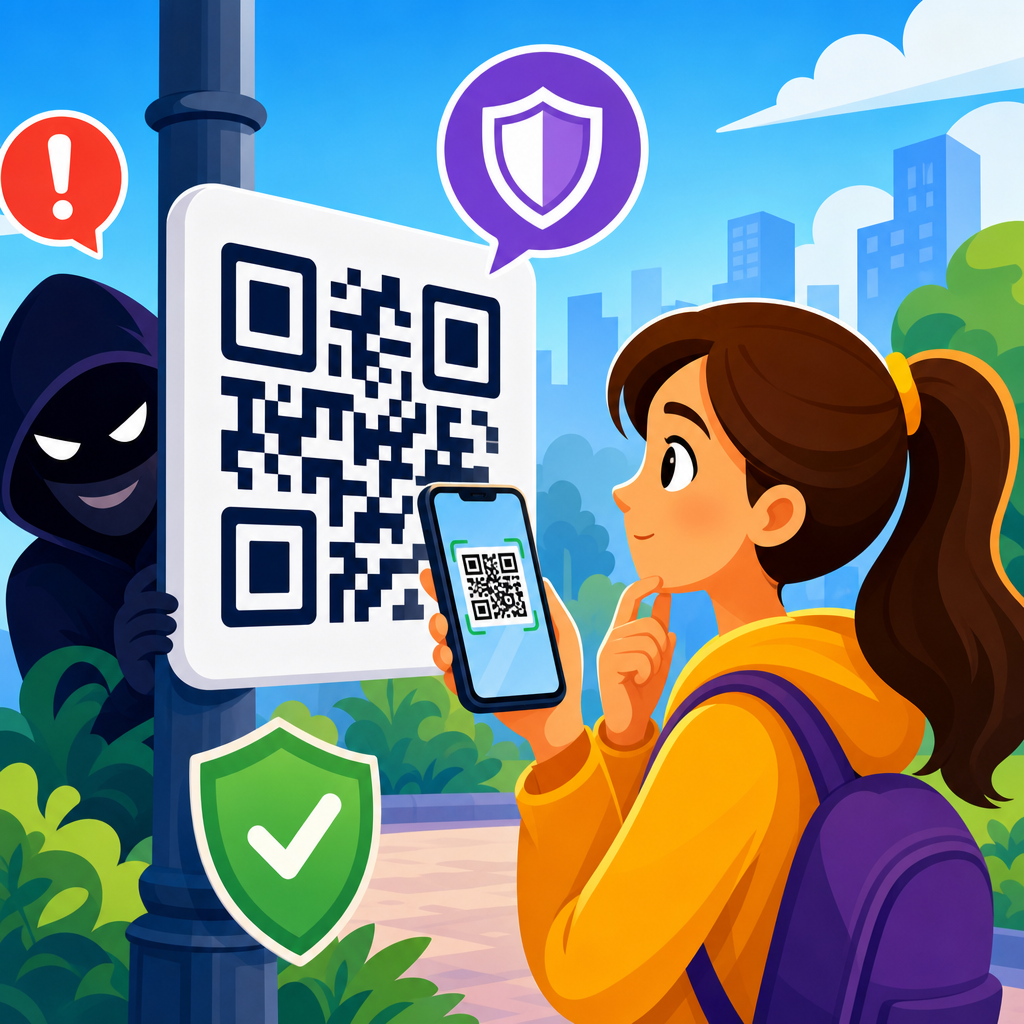
Malware delivery appears less often than credential theft but remains relevant. A QR code may trigger an APK download on Android, promote a fake mobile device management profile, or push the victim to install a “secure viewer” that is actually spyware. Data harvesting is another category. Instead of asking only for a password, the scam gathers full identity records, payment card details, and multifactor seeds. Criminal groups later reuse that information for synthetic identity fraud, business email compromise, or SIM swap attempts. In the physical world, attackers may place malicious stickers over legitimate QR codes on parking machines, restaurant tables, or posters, then reinforce the same campaign through email reminders or support messages.
These scams work best when they align with context. Tax season brings fake government notices. Open enrollment creates health benefits lures. Quarter-end creates invoice pressure. During major conferences, fake event QR codes promise agendas, badges, or Wi-Fi access. Fraud operators study calendars and workflows because relevance improves conversion. That is why a QR code security strategy cannot focus only on the image itself; it must also address impersonation, process abuse, and the business moments when users are most vulnerable.
Why QR code phishing bypasses traditional defenses
Many organizations assume that if email security blocks malicious links, users are protected. QR code email phishing attacks expose the limits of that assumption. The first gap is inspection depth. A secure email gateway may detect a known bad attachment or a malicious sender domain, but the embedded QR code can still evade controls if the image is not decoded and the resulting URL is not detonated in a sandbox. Some platforms now do this well, including Microsoft Defender for Office 365 and several secure email gateways, yet effectiveness depends on configuration, licensing, and update cadence.
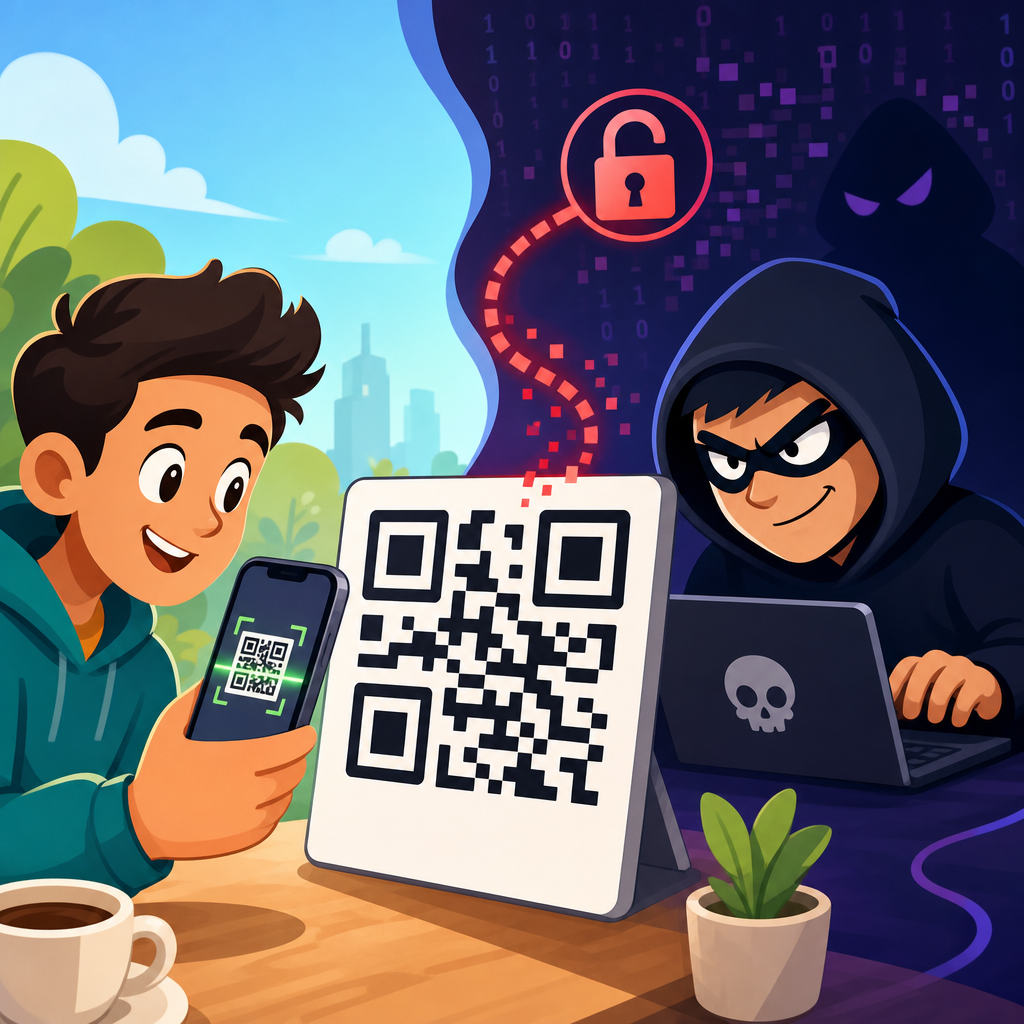
The second gap is device separation. The email arrives on a managed laptop, but the scan occurs on a personal smartphone that may not use the company DNS resolver, mobile threat defense agent, or browser isolation service. That creates a blind spot in logging and containment. The third gap is user psychology. A visible hyperlink invites skepticism because people have been told for years to hover and inspect. A QR code feels indirect, almost safer, even though the destination is hidden until after the scan. Mobile interfaces also truncate URLs, reducing the chance that a victim notices a typo-squatted domain.
Attackers further improve evasion with redirects, geofencing, and conditional logic. The same QR destination may show a harmless page to scanners from a security vendor IP range, while sending real victims to a phishing kit. Some campaigns use CAPTCHA to block automated analysis. Others add cloud-hosted redirectors from trusted platforms before landing on the final domain. Because of these techniques, prevention should combine image decoding, URL reputation, sandboxing, identity protection, and user reporting rather than relying on one control.
Red flags employees and consumers should recognize
The best warning signs are simple and teachable. If an email asks you to scan a QR code to keep your account active, view a secure document, confirm payroll information, or make a payment, treat it as suspicious until verified. Legitimate organizations may use QR codes, but they rarely require urgent scanning for sensitive tasks that could also be handled through an official app or known website. Language such as “scan immediately,” “mobile access only,” or “for security reasons do not reply” is especially concerning because it pushes the victim away from normal verification channels.
Brand inconsistencies matter. Look for display names that do not match the sender domain, signatures missing standard corporate details, logos copied into low-quality templates, or references to departments that use different terminology internally. On mobile, pause before submitting anything. Most camera apps preview the destination domain before opening it. If the domain is misspelled, unusually long, unrelated to the claimed sender, or hidden behind a random shortener, stop. A login page reached by QR code should also be judged by context. If you were not already trying to sign in, a surprise authentication request is a risk signal, not a routine event.
| Scenario | What the email claims | Likely fraud goal | Safer action |
|---|---|---|---|
| Password reset | Scan to keep Microsoft 365 active | Steal credentials or session cookies | Open the official sign-in page manually |
| Invoice payment | Scan for secure vendor checkout | Divert funds to attacker-controlled account | Verify banking details with the vendor by phone |
| HR update | Scan to confirm benefits enrollment | Collect identity and payroll information | Use the known HR portal or intranet link |
| Package delivery | Scan to reschedule or pay a fee | Harvest card details or credentials | Visit the carrier site directly |
Prevention strategies for organizations
Effective prevention starts with mail security, but it cannot end there. Configure your email platform to decode QR codes in message bodies and attachments, extract embedded URLs, and apply time-of-click or time-of-scan reputation checks where supported. Block executable mobile payloads and inspect PDFs and images with sandboxing. DMARC, SPF, and DKIM reduce sender impersonation, especially for executive, vendor, and cloud-service lookalikes. On the identity side, phishing-resistant multifactor authentication makes a measurable difference. FIDO2 security keys and passkeys resist credential replay far better than SMS codes or push approvals.
User training should show realistic examples, not generic warnings. In workshops I run, the most effective lesson is demonstrating how a believable invoice QR code sends a user from Outlook on a laptop to a fake Microsoft login on a phone within seconds. When people see the path, they understand the risk. Pair training with a fast reporting method, such as an email reporting button and a clear mobile help procedure. Policies should also discourage completing sensitive account actions from unsolicited QR codes, even if the email looks internal.
Mobile security deserves explicit investment. Managed devices should use mobile threat defense, safe browsing controls, and conditional access policies that evaluate device health and sign-in risk. DNS filtering can block newly registered or known malicious domains. Browser isolation and secure web gateways help on managed endpoints, while identity protection tools can detect impossible travel, unfamiliar sign-ins, and token theft patterns after the fact. Finally, test controls through simulations and purple-team exercises. If your gateway catches text links but misses image-encoded URLs, that gap should be visible before an attacker exploits it.
What to do if a QR code phishing attack succeeds
Response speed determines impact. If a user scanned a QR code and entered credentials, reset the affected password immediately, revoke active sessions, review multifactor settings, and check for newly registered authentication methods or forwarding rules. In Microsoft 365, investigate sign-in logs, inbox rules, OAuth app consents, and impossible-travel alerts. If the victim approved a payment, contact the bank or card issuer at once, because recall windows are short. Preserve the email, the QR image, the decoded URL, and any redirect chain for forensic analysis and blocking.
Containment should account for the mobile device used in the scan. Review browser history, installed apps, downloaded profiles, and security telemetry if the device is managed. If malware is possible, isolate the device and perform a mobile forensic review. Communications matter too. Alert potentially affected teams, vendors, or customers when appropriate, especially if the scam reused trusted branding or payment instructions. Then close the loop operationally: add detection rules, update awareness content with the exact lure, and tune mail filters to catch similar patterns. The broader lesson is straightforward. QR code email phishing attacks succeed when convenience outruns verification. Organizations that inspect QR destinations, harden identity, secure mobile access, and train users on realistic scenarios reduce both compromise rates and financial loss. If your business uses QR codes anywhere in customer or employee workflows, review those journeys now, document what is legitimate, and make verification simple before the next scam arrives.
Frequently Asked Questions
What is a QR code email phishing attack, and why has it become so common?
A QR code email phishing attack, often called “quishing,” is a scam where the attacker places a QR code inside an email and tricks the recipient into scanning it with a phone or other device. Instead of displaying a suspicious hyperlink in plain text, the email hides the destination inside an image, making it harder for traditional email filters and cautious users to immediately evaluate where the link really goes. Once scanned, the code may send the victim to a fake Microsoft 365 login page, a counterfeit payroll portal, a fraudulent multi-factor authentication prompt, or a malware-hosting website.
These attacks have become common for several practical reasons. First, they exploit user behavior: people are trained to trust QR codes because they are used everywhere in restaurants, offices, invoices, event tickets, and device logins. Second, many legacy security controls were designed to inspect visible links, attachments, and sender reputation, not image-embedded destinations scanned outside the email client. Third, attackers know that mobile devices often have fewer security tools, less URL visibility, and faster, less cautious user decision-making. In other words, quishing succeeds because it combines a familiar convenience tool with classic social engineering and routes the victim around older detection methods.
How do QR code phishing emails usually work in real-world attacks?
In a typical campaign, the attacker sends an email that creates urgency, legitimacy, or both. Common themes include password expiration notices, voicemail alerts, package delivery updates, secure document access requests, invoice approvals, HR policy acknowledgments, and unusual sign-in warnings. The message often claims that the recipient must scan the QR code to continue because the link is “safer,” “mobile optimized,” or required for authentication. That framing is important: it gives the victim a reason to switch from the protected desktop inbox to a less scrutinized mobile environment.
After the scan, the victim is usually redirected through one or more intermediary pages before landing on the final phishing site. Attackers may customize the page with the target company’s logo, use geofencing, device detection, CAPTCHA prompts, or cloud-hosted redirects to evade scanners and sandbox analysis. Some campaigns simply steal usernames and passwords, while more advanced ones collect session cookies, intercept one-time passcodes, or push the victim into approving fraudulent MFA requests. In other cases, the QR code leads to a page that installs malicious mobile configuration profiles, prompts app downloads, or gathers payment information. The mechanics are straightforward, but the attack chain is effective because every step is designed to look ordinary.
What are the main warning signs that an email containing a QR code is malicious?
The strongest warning sign is context that feels slightly off. If an email asks you to scan a code to reset a password, review a document, unlock a mailbox, or validate an account, that alone should trigger caution, especially if the sender has never used that workflow before. Attackers frequently rely on unusual instructions presented as normal procedure. Other red flags include generic greetings, subtle misspellings of brand or domain names, pressure to act immediately, claims that failure to scan will suspend access, and messages that bypass established internal processes. If your organization normally uses a company portal or SSO dashboard, an emailed QR code demanding direct action is suspicious by default.
There are also technical and visual clues. The sender domain may be lookalike, newly registered, or unrelated to the service being referenced. The email may contain minimal text and place most of the content inside an image to reduce textual analysis. Branding may be close but not exact, and the QR code may be accompanied by language such as “scan with your phone to view securely,” “mobile access only,” or “camera verification required.” Even if the email looks polished, the combination of urgency, unfamiliar workflow, and hidden destination is what matters. Security teams should teach users that a clean design does not equal legitimacy, and a QR code should be treated as a link that simply happens to be harder to inspect.
How can organizations prevent and detect QR code email phishing attacks more effectively?
Effective defense requires a layered approach rather than one single product or policy. On the prevention side, security teams should update secure email gateway rules, image analysis capabilities, and phishing detection workflows so they explicitly account for QR codes embedded in messages, attachments, and PDFs. Modern tooling can extract and decode QR code contents for inspection, then detonate or analyze the destination URL just as it would with a standard hyperlink. Organizations should also strengthen domain protection, enforce MFA with phishing-resistant methods where possible, maintain conditional access controls, and reduce reliance on workflows that train employees to authenticate by scanning emailed codes.
User awareness is equally important. Training should move beyond generic phishing examples and specifically explain how quishing works, why mobile devices are targeted, and what employees should do when they receive a code in email. Clear policy helps: for example, staff should know whether IT, HR, finance, or identity teams will ever ask them to scan a QR code from an email. If the answer is “never” or “only through a defined process,” detection improves immediately. On the monitoring side, teams should log phishing reports, inspect identity provider sign-in activity for suspicious mobile-origin authentication attempts, monitor impossible travel and unfamiliar device registrations, and correlate email events with downstream credential abuse. The most effective organizations treat QR codes as an extension of link-based phishing and adapt controls accordingly, rather than viewing them as a separate edge case.
What should a security team do if an employee scans a malicious QR code from an email?
The response should begin with speed and containment. First, determine what the user actually did after scanning the code. Scanning alone is different from entering credentials, approving MFA, downloading an app, or installing a mobile configuration profile. If credentials may have been entered, force a password reset immediately, revoke active sessions, invalidate tokens where supported, and review recent sign-in activity for evidence of account takeover. If MFA was approved or new device enrollment occurred, remove unauthorized devices, reset MFA factors, and verify that no persistence mechanisms were added in the identity platform. If the incident involved a managed mobile device, the endpoint or mobile device management team should assess it for malicious apps, profiles, browser artifacts, and risky permissions.
Next, broaden the investigation beyond the single user. Search the email environment for the original message and any variants, quarantine matching emails, and identify all recipients who may have scanned the code. Pull the decoded QR destination, redirect chain, sender infrastructure, and timestamps into the incident record. If credential harvesting occurred, check for lateral movement, mailbox rule creation, business email compromise activity, suspicious file access, and downstream fraud attempts. Finally, close the loop with communication and improvement: notify affected users, document the attack pattern, update detections, and feed the scenario into future awareness training. A strong response is not just about fixing one compromised account; it is about understanding how the campaign bypassed expectations and making sure the same technique is less effective the next time.