A strong QR code campaign launch checklist prevents the most common failures before a code ever reaches print, packaging, storefront glass, direct mail, or a paid social creative. In practice, QR code campaigns succeed when teams treat the code as a conversion path rather than a decorative square. A launch checklist aligns marketing, design, analytics, compliance, and operations around one question: what should happen after someone scans? That question matters because QR code usage is now normal consumer behavior across retail, events, restaurants, product packaging, real estate, healthcare, and B2B field marketing. Customers expect fast mobile experiences, trustworthy destinations, and offers that make sense in context.
When I build QR workflows for campaigns, I define three core terms upfront. A static QR code points to a fixed destination and cannot be edited after distribution. A dynamic QR code redirects through a managed short URL, allowing destination edits, tracking, and sometimes segmentation without replacing the printed code. A scan conversion is the business action that follows the scan, such as a form submission, coupon redemption, app install, calendar booking, or purchase. Those definitions shape every checklist decision because the code itself is not the goal; measurable action is. If the destination is weak, slow, or mismatched to the placement, even a technically perfect QR code underperforms.
This hub article covers the full QR code checklist process from strategy to post-launch optimization. It is designed for teams building repeatable standards across campaigns, not just a one-off code. You will see how to set objectives, choose the right QR code type, build mobile landing pages, validate design, test tracking, coordinate print production, and monitor results after launch. You will also see where checklists reduce risk: broken links, poor contrast, oversized file compression, weak UTMs, privacy gaps, and staff confusion at the point of use. If you need a dependable framework for QR Code Checklists inside a broader library of QR Code Resources, Templates & Tools, this page gives you the launch sequence that supports every related guide.
Start with campaign objective, audience, and scan context
The first item on any QR code campaign launch checklist is objective clarity. A QR code should support one primary goal, not five competing goals. Common objectives include lead generation, coupon activation, menu access, review collection, product education, event registration, contactless payment, and post-purchase support. Write the objective in operational language: “Increase trade show demo bookings by 15 percent,” “Capture 500 qualified SMS subscribers from in-store displays,” or “Reduce printed manual costs by sending buyers to setup videos.” Specific goals make later checklist items easier because design, copy, destination, and analytics all follow from the intended outcome.
Audience and context come next. A QR code on product packaging is scanned under very different conditions than a QR code in a keynote slide or on a restaurant table tent. Ask where the person is, what device they are using, how much time they have, and what they expect immediately after scanning. In a warehouse aisle, they need speed and clarity. At an event booth, they may accept a short form in exchange for a giveaway. On a moving bus shelter ad, they need an instant landing page with almost no friction. Good checklists force teams to document these use conditions before any creative begins.
Offer relevance is the third planning requirement. The code should answer the implicit question, “Why should I scan this right now?” I have seen campaigns lift scan rate simply by replacing generic calls to action like “Scan me” with specific benefit statements such as “Scan for 10% off today,” “Scan to compare models,” or “Scan to get the installation guide.” The checklist should require visible incentive language near the code and message matching between the physical placement and the destination page. If a shelf talker promotes a rebate, the landing page should open directly to the rebate process, not a generic homepage.
Choose the right QR code setup and destination architecture
Once strategy is clear, decide whether the campaign needs a static or dynamic QR code. Static codes work for permanent information with no future editing needs, such as a Wi-Fi credential or a stable PDF URL, but they are poor choices for campaigns that may change offer dates, geographies, or tracking conventions. Dynamic codes are usually the better launch option because they preserve the printed asset while allowing redirect updates, scan analytics, and destination testing. Platforms such as Bitly, QR Code Generator Pro, Beaconstac, Flowcode, and Uniqode support dynamic management, though features vary by governance, export formats, and data retention.
Destination architecture deserves its own checklist line because many QR campaigns fail after the scan. The best destination is usually a dedicated mobile landing page, not a desktop page squeezed onto a phone screen. Use compressed images, concise headlines, thumb-friendly buttons, and forms with the fewest possible fields. If your campaign requires deeper attribution, add UTM parameters consistently and document naming standards before launch. For larger organizations, create a redirect convention that separates the visible campaign identifier from the final landing page URL. That preserves flexibility, simplifies analytics cleanup, and reduces the risk of broken printed assets when web teams update site structure.
Security and trust signals also belong here. People scan faster when the destination feels expected and credible. Use branded domains where possible, HTTPS everywhere, and landing pages that clearly mirror the brand shown in the physical asset. Avoid unnecessary intermediate pop-ups. If the campaign collects personal data, state the value exchange and link to the privacy notice at the point of collection. In regulated environments such as healthcare or financial services, involve compliance before production. A launch checklist that includes ownership, redirect access, expiration policy, and fallback URLs will save time when campaigns need emergency edits.
Design the QR code for readability, trust, and production quality
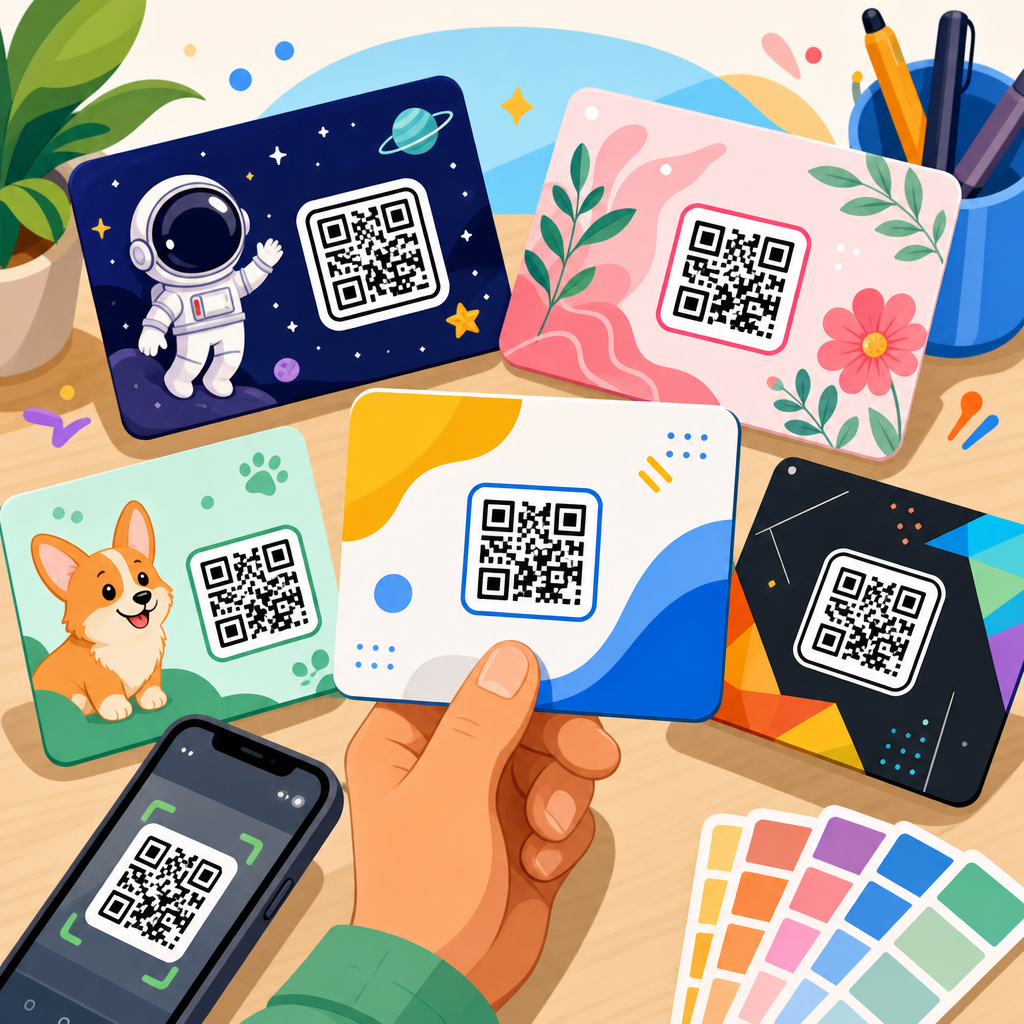
Readable QR design is less about decoration and more about error prevention. Start with sufficient contrast: dark code on a light background remains the safest choice. Maintain a quiet zone around the code, avoid placing it over busy photography, and do not distort the aspect ratio. In print, vector formats such as SVG, EPS, or PDF usually preserve edge sharpness better than low-resolution raster exports. If a brand team wants color styling or a center logo, test aggressively because every aesthetic change can reduce scan reliability. The checklist should specify minimum size by placement distance, approved file formats, and ownership of final signoff.
Calls to action, labels, and surrounding copy influence scan confidence as much as the code image. I recommend pairing each code with one direct instruction and one expected outcome, for example, “Scan to register” and “Takes 30 seconds.” That reduces hesitation. If the scan leads to an app store, say so. If it opens a menu, service request, warranty registration, or payment page, state that plainly. In multilingual environments, add language cues near the code rather than forcing users to guess after landing. The checklist should also require accessibility review, especially for low-vision readability and concise copy that works with mobile screen readers.
Production quality checks matter even when the digital setup is perfect. Printed coatings, reflective surfaces, folds, curved packaging, and placement near seams can all break scan performance. I have seen high-gloss labels on refrigerated products become nearly unscannable under store lighting despite passing on-screen tests. For displays, mount codes at a natural scanning height and angle. For direct mail, keep the code away from perforations and address blocks. For digital placements such as social graphics or presentation slides, ensure enough on-screen size and avoid heavy compression by ad platforms. A checklist that includes physical mockups catches these issues before media spend is committed.
Build testing, analytics, and operational readiness before launch
Testing is the difference between a QR idea and a launch-ready campaign. Every QR code campaign launch checklist should require device testing, browser testing, network testing, and location testing. Scan on iPhone and Android, on current and older devices, over Wi-Fi and cellular, and in the real environments where the code will appear. Test portrait and landscape experiences if the landing page contains video, maps, or payment flows. Confirm that forms submit correctly, confirmation messages fire, CRM routing works, coupon codes apply, and app deep links behave as intended. If any part of the path requires login, challenge whether that friction is necessary.
Analytics setup should answer three layers of questions: did people scan, what did they do next, and did the campaign create business value? Scan data from the QR platform alone is not enough. Connect campaign URLs to web analytics, event tracking, conversion goals, CRM fields, or commerce reporting. In Google Analytics 4, define events for key actions like form_start, form_submit, click_to_call, add_to_cart, or download. In Salesforce, HubSpot, or Marketo, map the source so sales teams can attribute lead quality properly. The checklist should name the source of truth for scans, sessions, conversions, and revenue before launch, not after the reporting meeting goes badly.
| Checklist Area | Required Validation | Why It Matters |
|---|---|---|
| QR Type | Dynamic redirect confirmed, owner assigned | Allows edits without reprinting assets |
| Landing Page | Mobile load speed under three seconds | Reduces abandonment after scan |
| Tracking | UTMs, analytics events, CRM fields tested | Connects scans to conversions and revenue |
| Design | Contrast, quiet zone, minimum size approved | Improves scan reliability across devices |
| Placement | Real-world lighting and distance tested | Prevents context-specific scan failures |
| Compliance | Privacy language and consent flow reviewed | Reduces legal and brand risk |
Operational readiness is the final prelaunch gate. Customer-facing staff should know what the code does, how to explain it, and what to do if a user has trouble scanning. Retail associates, booth teams, field reps, and support agents often determine whether the campaign succeeds in the real world. Include a short internal brief with screenshots of the landing page, expected user path, escalation contact, campaign dates, and FAQs. Confirm inventory timing if codes appear on packaging or inserts, because outdated stock can keep old offers in circulation. Good QR Code Checklists always include rollback plans, redirect edits, and owner responsibilities once the campaign is live.
Launch governance, optimization, and how this hub supports related checklist guides
After launch, monitor the campaign daily at first, then weekly as patterns stabilize. Watch scan volume by placement, time of day, geography, and device when your platform supports that level of detail. Compare scan-through behavior against your original objective. A high scan count with weak conversion usually means the offer, landing page, or form flow needs adjustment. A low scan count with strong conversion suggests visibility or call-to-action problems near the code. Dynamic QR codes allow rapid improvements: swap destinations, localize offers, shorten forms, or test alternate creative without touching the printed asset. Optimization should be planned into the checklist, not treated as an afterthought.
Governance matters most as QR usage spreads across departments. Without standards, organizations end up with duplicate generators, inconsistent branding, missing tracking, and expired destinations that remain on printed materials. Create a central naming convention, access policy, approval workflow, and archive process. Decide which team owns the redirect layer, which team approves landing pages, and how campaign retirement works. If your company manages dozens of codes across retail, events, support, and product documentation, maintain an inventory that records destination, owner, creation date, live status, associated asset, and review cycle. This hub exists to support that operational maturity across the wider QR Code Resources, Templates & Tools library.
The most useful next step is to turn this article into a reusable internal standard. Build a master QR code campaign launch checklist, then adapt it into shorter versions for packaging, in-store signage, direct mail, events, menus, payments, and lead generation. Each sub-guide can inherit the same fundamentals: clear objective, context fit, dynamic management, mobile-first destination, readable design, tested analytics, compliant data capture, and documented ownership. When those elements are in place, QR codes stop being tactical add-ons and become dependable conversion tools. Use this hub to audit your current process, identify gaps, and launch the next QR campaign with fewer errors, better attribution, and stronger results.
Frequently Asked Questions
What should be included in a QR code campaign launch checklist before anything goes live?
A complete QR code campaign launch checklist should cover the full scan journey, not just the code itself. Start with the campaign goal: are you trying to drive purchases, app downloads, event registrations, store visits, form fills, or product education? From there, confirm the destination URL, landing page experience, call to action, analytics setup, creative placement, and operational readiness. The checklist should also include technical validation such as testing the code on multiple devices, verifying that the link resolves correctly, confirming that redirects work, and making sure the page loads quickly on mobile networks. If a scan leads to a poor mobile experience, the campaign can fail even if the code itself works perfectly.
Beyond technical checks, a strong launch checklist should include branding, compliance, and print-readiness reviews. Make sure the QR code is large enough to scan easily, has sufficient contrast, is not visually distorted, and is placed where people can physically access it without awkward angles or poor lighting. Review supporting copy so users know what they will get after scanning. A clear prompt such as “Scan to claim your discount” or “Scan to see product specs” usually performs better than presenting a code with no explanation. Finally, verify ownership across teams: marketing should own messaging, design should own usability and placement, analytics should own tracking, and operations should confirm the live destination can handle traffic and fulfill the promised next step.
Why is the post-scan experience so important in a QR code campaign?
The post-scan experience is where the campaign either converts or loses the user. A QR code is only an access point; it is not the offer, the message, or the conversion. If someone scans and lands on a generic homepage, a desktop-only page, a slow-loading form, or an irrelevant product page, interest drops immediately. That is why the most effective QR code campaigns are built around a defined action path. The user should know why they are scanning before they do it, and once they land, the page should instantly confirm they are in the right place. The headline, offer, and call to action should match the context in which the code was seen.
Teams should think of the scan as a moment of intent. In many cases, the person scanning is already curious enough to take action, which makes the landing experience especially valuable. A focused mobile landing page with minimal distractions, fast load times, concise copy, and a strong next step can significantly improve performance. This is also where campaign measurement becomes meaningful. You can test different landing pages, offers, and calls to action to see what actually increases conversions. In other words, the QR code gets attention, but the destination page creates results. Treating the code as the campaign instead of the entry point is one of the most common launch mistakes.
How do you test a QR code campaign properly before printing or publishing it?
Proper testing should happen in layers. First, confirm that the QR code scans reliably on both iPhone and Android devices, using multiple camera apps and common scanning conditions. Test at different distances, in bright light and lower light, and from the expected placement angle. If the code will appear on packaging, windows, posters, direct mail, or social creative, test samples in realistic environments rather than only on a computer screen. A code that works on a crisp monitor may become much harder to scan once reduced in size, printed on textured material, placed behind reflective glass, or surrounded by busy design elements.
Next, test the destination experience and tracking. Click through every redirect, verify UTM parameters, check analytics events, test form submissions, coupon applications, checkout flows, and confirmation pages. Make sure the page is mobile-friendly, fast, and secure. If dynamic QR codes are being used, confirm that the destination can be updated without breaking reporting. It is also smart to test failure scenarios: what happens if the page is temporarily down, inventory is unavailable, or a regional user reaches the wrong version of the page? A disciplined testing process reduces expensive mistakes, especially for printed assets that cannot be easily corrected after distribution. Once the code is in the field, the cost of a missed detail can be much higher than the cost of testing thoroughly in advance.
What design and placement mistakes most often hurt QR code campaign performance?
The most common design mistake is treating the QR code like a decorative element instead of a functional one. A QR code needs enough size, contrast, quiet space, and visual clarity to scan quickly. If it is too small, placed over a patterned background, printed in low-contrast colors, stretched out of proportion, or surrounded by clutter, scan performance can drop fast. Another frequent issue is weak or missing instruction. People are much more likely to scan when they understand the value immediately. Pairing the code with a direct benefit, a short explanation, and a visible call to action usually improves results more than visual styling alone.
Placement matters just as much as design. A code on storefront glass may become difficult to scan because of glare, reflections, or foot traffic. A code on a poster might be placed too high or too low for comfortable use. A code on product packaging may curve around an edge or sit too close to seams and folds. In direct mail, it may be crowded by other offers. In paid social creative, the image may be compressed or too small for reliable scanning on another device. Good placement means considering how a real person will notice the code, approach it, and use their phone in that moment. If scanning requires awkward positioning, guesswork, or patience, many users will abandon before they ever reach the landing page.
How should teams measure the success of a QR code campaign after launch?
Success should be measured against the campaign objective, not just scan volume. Scans are useful as an engagement signal, but they do not tell the whole story. A high scan count with low conversions may indicate that the offer is weak, the landing page is confusing, or the audience intent is being overestimated. Start by tracking core metrics such as total scans, unique scans, scan-to-visit rate, bounce rate, landing page engagement, form completion, purchase rate, revenue, and cost per conversion where applicable. If the campaign spans multiple placements such as packaging, in-store signage, direct mail, and social, separate tracking should be used so you can compare performance by channel and context.
It is also important to evaluate operational and user-experience metrics. Look at page load speed, device breakdown, geography, time of day, repeat visits, and drop-off points in the conversion path. If a code is dynamic, teams can optimize after launch by updating destinations, changing offers, or refining segmentation without reprinting the asset. Qualitative insight matters too: customer support feedback, store team observations, and usability issues can reveal friction that analytics alone may not explain. The best reporting framework answers a practical question: did the campaign move users from scan to meaningful action efficiently and profitably? If you can answer that with confidence, your QR code checklist did more than prevent errors; it created a measurable path to performance.