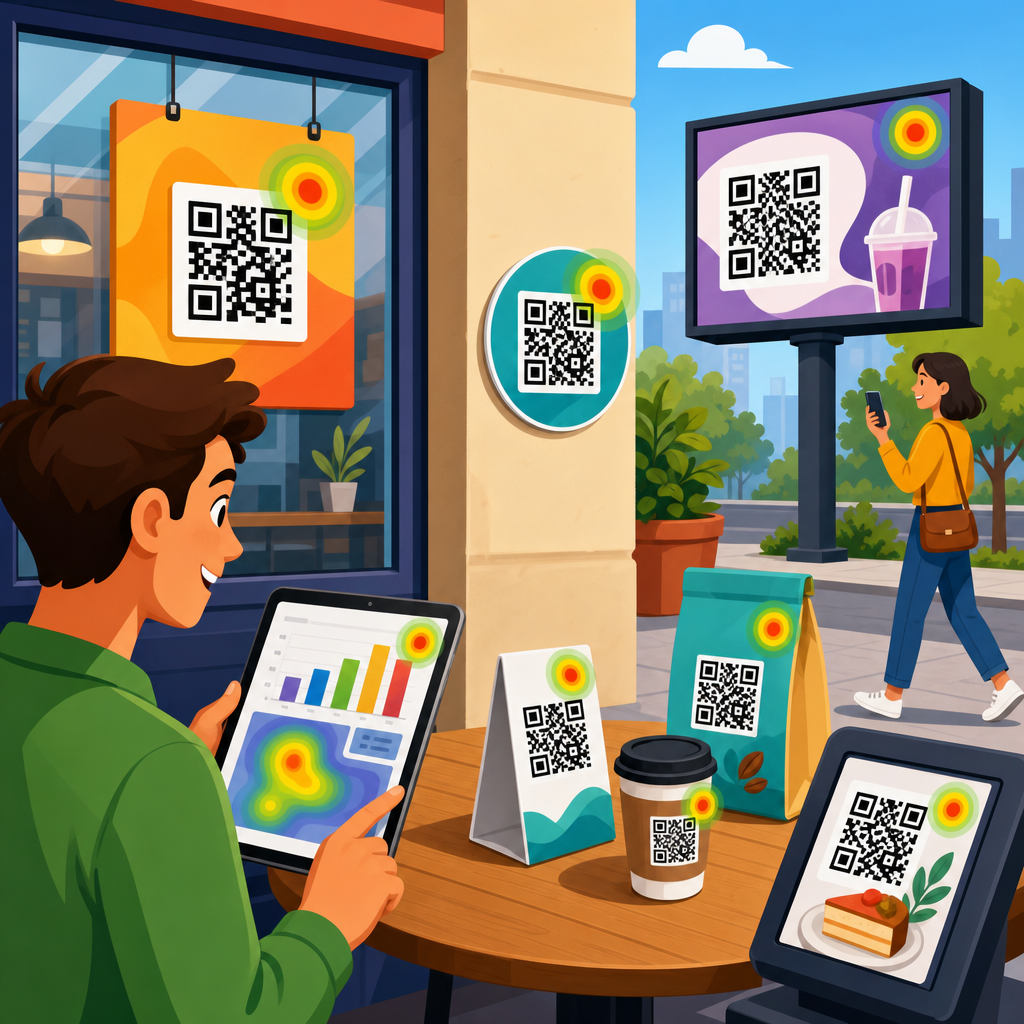
Offline-to-online marketing with QR codes turns a printed surface, package, sign, or in-person touchpoint into a measurable digital entry point. A QR code is a two-dimensional barcode that stores a destination such as a URL, app link, contact card, payment request, coupon, or event registration. In practice, it bridges physical attention and digital action in a single scan. That matters because most buying journeys now span both worlds: a shopper notices a poster, checks reviews on a phone, compares prices later, and converts through email, social, or a product page. When I plan campaigns for stores, events, and field teams, the QR code often becomes the cleanest handoff between those stages because it removes typing friction and creates trackable intent at the exact moment interest appears.
Used well, QR codes improve convenience, attribution, and message continuity. Used poorly, they create dead ends, low trust, and unreadable creative. The difference usually comes down to strategy rather than software. Marketers need to decide what action the scan should trigger, where the code will appear, how the landing page will behave on mobile, and how performance will be measured across channels. This hub article covers the full offline-to-online integration model: campaign design, placement, creative, analytics, compliance, and optimization. It also explains the key distinction between static and dynamic QR codes. A static code points permanently to one destination. A dynamic code routes through a managed short link, so the destination can be updated later and scans can be tracked by source, time, device, and location. For most serious marketing programs, dynamic codes are the operational standard because campaigns change, inventory changes, and attribution matters.
The business case is straightforward. Physical media still creates reach and trust, especially in retail, hospitality, out-of-home advertising, direct mail, packaging, and events. Digital channels still provide richer content, lower-friction conversion, and better reporting. Offline-to-online integration joins the strengths of both. A shelf talker can open a product explainer, a menu insert can launch ordering, a receipt can enroll loyalty, and a trade show banner can book a demo. That is why QR code marketing sits at the center of modern omnichannel strategy: it converts offline attention into online sessions, first-party data, and revenue without asking the customer to remember a URL or search later.
How offline-to-online integration works in a QR code campaign
A strong QR code campaign starts with one job to be done. If the code asks users to browse, subscribe, download, watch, and buy at once, response drops because the value exchange is unclear. I structure campaigns around a single primary conversion and one secondary path. For example, a restaurant table tent might drive the primary action of ordering and the secondary action of joining SMS for future offers. A product package might drive warranty registration first, then invite buyers to setup videos. This sequencing matters because scan intent is immediate and context-specific. Someone standing in a store aisle wants proof, not a newsletter detour.
The operational flow is simple. The user scans the code with a phone camera. The code resolves to a mobile destination, usually through a dynamic redirect. The destination loads quickly, reflects the exact context of the scan, and offers one clear next step. Tracking parameters identify the source asset, campaign, and placement. The user either converts immediately or enters a retargeting or CRM workflow. This allows a flyer, poster, package, insert, business card, receipt, or window cling to behave like a clickable ad unit. The same principle works across B2C and B2B. In retail, a code near a premium product can open comparison content or user reviews. In manufacturing, a code on a booth panel can route to a technical datasheet, spec request form, and sales calendar.
The landing experience carries most of the conversion weight. Marketers often focus on code design but neglect the destination. Mobile-first design is non-negotiable. Core Web Vitals, page speed, readable typography, and a compressed form matter more than decorative branding. If the destination is a PDF, it should open cleanly on mobile or be replaced with an HTML page summarizing key information before the download. If the goal is lead generation, ask only for the fields needed at that stage. When I audit underperforming campaigns, the fix is rarely the code itself. It is usually an unclear CTA, a generic landing page, slow loading time, or a mismatch between what the sign promised and what the phone displays.
Best use cases across retail, events, direct mail, packaging, and local marketing
Retail is the clearest example of offline-to-online integration. Stores can place QR codes on shelf tags, endcaps, fitting rooms, window displays, and receipts. A beauty brand might use a shelf code to open ingredient transparency, before-and-after photos, and shade finder tools. A furniture retailer can place codes on floor models linking to dimensions, delivery windows, and finance options. This does not replace staff; it extends sales assistance when associates are busy. It also shortens the path from consideration to cart by answering objections in the aisle. The most effective retail implementations use page variants by store or region so inventory, pricing, and promotions reflect local reality.
Events are another high-performing environment because attention is concentrated and time is limited. Booth graphics, badges, presentation slides, and handouts can all route to lead capture pages, calendars, demos, or gated assets. I have seen event teams improve lead quality simply by assigning separate dynamic codes to each booth zone. One code on a hero banner captured top-of-funnel interest. Another near the product station routed to a technical walkthrough. A third at the meeting table linked to scheduling. That structure produced cleaner intent signals than one generic event URL and made follow-up more relevant.
Direct mail remains effective when the offer is strong and the scan path is frictionless. Postcards, catalogs, and dimensional mailers can use personalized QR codes tied to audience segments or even individual records. A home services company might send neighborhood mail with one code for instant estimates and another for financing prequalification. A university can print codes by program, reducing the drop-off that happens when a prospect lands on a broad admissions page. Packaging is equally valuable because it reaches verified buyers. Codes can support onboarding, reordering, registration, referrals, care instructions, recipes, or loyalty enrollment. Local businesses can place codes on storefront signs, menus, posters, vehicle wraps, and counter displays to capture demand after hours, collect reviews, or drive map directions and booking.
| Channel | Best QR destination | Primary metric | Practical example |
|---|---|---|---|
| Retail signage | Product page or comparison guide | Assisted conversions | Electronics shelf tag linking to specs and reviews |
| Events | Meeting scheduler or demo page | Qualified leads | Booth panel linking to rep calendar |
| Direct mail | Personalized landing page | Response rate | Postcard linking to local service quote form |
| Packaging | Setup, reorder, or loyalty page | Repeat purchase rate | Coffee bag linking to subscription reorder |
| Local storefront | Booking, menu, or review page | Store visits or bookings | Window decal linking to after-hours reservation form |
Creative, placement, and scanability rules that prevent failure
QR codes succeed or fail in the physical world first. Size, contrast, distance, surface, lighting, and placement determine whether a scan happens at all. The standard rule I use is to match code size to scan distance conservatively rather than creatively. A small code can work on packaging held in hand. It will fail on a street poster viewed from several feet away. Quiet zone matters too: the blank margin around the code must remain clear, or some cameras will struggle. Dark code on a light background is still the safest option. Brand styling is possible, but excessive logo insertion, rounded modules, gradients, or low contrast often reduces reliability. Test on older phones, not just the latest devices.
Placement should align with dwell time and hand availability. A code on a transit shelter may get attention, but users may not have enough time or signal to complete a form. A code at a café table has more dwell time and often better conversion potential. On-pack codes should sit where users naturally look after opening or using the product, not buried in legal copy. On direct mail, the code should appear near a concrete value proposition, not isolated at the bottom as an afterthought. In stores, avoid glossy surfaces and curved placements that distort the pattern. If the code appears on a moving object such as a vehicle, treat it as a branding support asset, not a direct response engine.
The call to action is part of scanability because people need a reason to act. “Scan me” is weak. “Scan to see ingredients,” “Scan for assembly video,” or “Scan to get today’s menu” tells the user what happens next. Good creative also sets expectation for mobile data use, app requirement, or time commitment. If the destination is a two-minute warranty form, say so. If no app is needed, that reassurance can lift scans among less technical audiences. In field tests, the strongest offline creative usually pairs one explicit benefit, one visible code, and one friction-reducing line of copy. Every extra message competes with the scan.
Tracking, attribution, and optimization for measurable ROI
Measurement is where QR code marketing graduates from novelty to infrastructure. Dynamic QR codes should be mapped to a campaign taxonomy before anything is printed. That means consistent naming for channel, asset, location, audience, offer, and date. UTM parameters remain useful for analytics platforms such as Google Analytics 4, while CRM and marketing automation systems can store the source detail for downstream reporting. I recommend a unique code for every meaningful placement, even within the same campaign. A poster in the lobby should not share a code with a poster at the entrance if foot traffic patterns differ. Granularity is what reveals which physical touchpoint actually drives value.
Scan count alone is not enough. Track landing page sessions, engaged sessions, form completion, coupon redemption, call starts, booked meetings, purchases, and repeat actions. In retail and local environments, you may also connect scans to store visit proxies, loyalty sign-ups, or point-of-sale redemption codes. If the code drives app downloads, use deferred deep linking where possible so the user lands in the intended post-install experience. If the code drives leads, measure lead quality by opportunity creation and revenue, not raw volume. This prevents optimization toward curiosity clicks that never convert.
Testing should happen at three levels: physical asset, landing page, and offer. On the physical side, compare size, CTA wording, and placement height. On the digital side, test page headline, form length, hero image, and proof elements such as reviews or guarantees. On the offer side, compare immediate discount versus educational value, or appointment booking versus callback request. The fastest gains usually come from message match. If the sign says “Scan for pricing,” the page should open with pricing or a clear path to it. Attribution always has limits because many customers scan, leave, and convert later on another device or channel. Even so, disciplined QR tracking provides much better offline visibility than vanity URLs or untracked footfall assumptions.
Governance, privacy, and the hub topics every marketer should master next
QR codes introduce operational and compliance responsibilities that marketers should address early. Destination URLs must be governed so expired promotions, broken links, and ownership changes do not leave dead assets in the field. Dynamic QR platforms need role-based access, redirect logs, and domain controls. Branded short domains generally improve trust because users can preview a recognizable link rather than an unfamiliar string. Security matters too. Public awareness of malicious QR codes has increased, so brands should keep destinations on owned domains, avoid bait-and-switch redirects, and use HTTPS everywhere. If a campaign collects personal data, consent language and storage practices must align with applicable regulations such as GDPR, CCPA, and sector-specific rules.
As the hub page for offline-to-online integration, this topic naturally branches into several deeper disciplines. Teams usually need dedicated guidance on QR code landing page design, dynamic versus static code strategy, packaging QR codes, retail signage execution, event lead capture, direct mail personalization, local SEO connections, analytics setup in GA4, CRM attribution, coupon and loyalty workflows, and accessibility. Accessibility deserves emphasis: instructions should be readable, contrast should meet practical standards, and the destination should support screen readers and straightforward navigation. The point of integration is not simply to make something scannable. It is to make it usable for the widest practical audience in the real conditions where the scan occurs.
Offline-to-online marketing with QR codes works because it respects how people actually move between physical environments and mobile decisions. The code is not the strategy; it is the handshake between channels. When the offer is clear, the placement is practical, the page is mobile-first, and the tracking is disciplined, QR codes create measurable bridges from signage, mail, packaging, and events into digital journeys that convert. Start with one use case, assign unique dynamic codes, build a page that answers the exact question behind the scan, and measure beyond scan volume. Then expand into the adjacent subtopics this hub introduces. That approach turns scattered physical media into a connected marketing system that is easier to optimize, easier to attribute, and more useful to customers.
Frequently Asked Questions
What is offline-to-online marketing with QR codes, and why is it so effective?
Offline-to-online marketing with QR codes is the practice of using a scannable code on a physical touchpoint to send someone directly into a digital experience. That touchpoint could be a product package, flyer, direct mail piece, window display, event booth, restaurant table tent, receipt, business card, or outdoor sign. Once scanned with a smartphone camera, the QR code can open a landing page, product page, app store listing, coupon, contact card, registration form, payment screen, video, or review page. The key advantage is that it removes friction. Instead of expecting people to remember a URL, search for a brand later, or manually type in a long web address, a QR code turns immediate interest into immediate action.
This approach is effective because modern customer journeys rarely stay in one channel. Someone may notice a poster in a store, compare options on a phone, read reviews, sign up for an offer, and complete a purchase online later. QR codes help connect those moments into one measurable path. They also improve attribution by giving marketers a clearer way to see which offline assets are generating scans, visits, leads, or sales. In practical terms, that means printed materials become interactive and trackable rather than static. When used well, QR codes help brands capture attention at the point of interest, guide users into a relevant digital experience, and learn which physical placements are actually producing business results.
Where should businesses place QR codes for the best offline-to-online results?
The best QR code placements are the ones that match user intent, context, and convenience. A QR code performs best when it appears at a moment when someone is naturally ready to take the next step. On product packaging, for example, a code can lead to setup instructions, ingredient details, authenticity verification, loyalty enrollment, or reorder options. In retail environments, codes on shelf talkers or window signage can send shoppers to reviews, size charts, product comparisons, or limited-time promotions. In restaurants, they can connect customers to menus, ordering, feedback, or loyalty rewards. At events and trade shows, they can support lead capture, demo bookings, digital brochures, and post-event follow-up.
Placement quality matters just as much as placement type. A QR code should be easy to notice, easy to reach, and easy to scan from a realistic distance and angle. It should also be paired with a clear call to action that tells people exactly what they will get, such as “Scan to claim 15% off,” “Scan to see customer reviews,” or “Scan to book a demo.” That message is important because people are far more likely to scan when the value is obvious. Businesses should also think about environmental factors such as lighting, glare, print contrast, and whether mobile connectivity is available. A well-placed QR code is not just visible; it appears in a context where the next digital action feels natural, useful, and rewarding.
What should a QR code link to in order to improve conversions?
A QR code should link to the most relevant next step for the person scanning it, not simply to a generic homepage. The destination should align with the physical context, the user’s stage in the buying journey, and the promise made near the code. If someone scans a code on product packaging, they may want usage tips, support, refill ordering, or complementary products. If they scan from a direct mail piece, a personalized landing page with a specific offer often works better than a general site page. If they scan at an event, the ideal destination may be a contact form, meeting scheduler, downloadable resource, or live product demo. Relevance is what drives conversion.
High-performing destinations are usually mobile-friendly, fast-loading, and focused on a single action. They reduce distractions and make it easy for users to complete the next step without pinching, zooming, or navigating through multiple pages. Strong destinations often include concise copy, trust signals, a clear headline, and a simple form or checkout flow. Depending on the campaign, businesses may link QR codes to coupon pages, app download screens, lead generation forms, payment requests, feedback surveys, review requests, loyalty signups, or social proof pages. Dynamic QR codes are especially useful because they allow marketers to update the destination later without reprinting the code. That flexibility helps brands test different landing pages, offers, and calls to action over time while preserving the original printed asset.
How can businesses track and measure the success of QR code campaigns?
QR code marketing is valuable not only because it drives action, but because it can be measured with much more precision than traditional offline advertising. Businesses can track scans, scan location, time of scan, device type, and the digital behavior that follows, depending on the platform and analytics setup. The most common approach is to use unique QR codes for different placements, campaigns, regions, stores, product lines, or audience segments. That way, marketers can see whether a poster in one location outperforms another, whether packaging inserts generate more repeat visits than direct mail, or whether event signage leads to qualified leads rather than just raw traffic.
To go deeper, businesses should connect QR code data to landing page analytics, campaign parameters, CRM systems, e-commerce reporting, and conversion tracking. That allows them to evaluate not just scans, but outcomes such as form submissions, purchases, bookings, app installs, coupon redemptions, or repeat visits. Important performance metrics may include scan-through rate, bounce rate, conversion rate, cost per lead, revenue per scan, and lifetime value of users acquired through a QR-enabled touchpoint. Measurement becomes especially powerful when paired with testing. Marketers can compare calls to action, offers, page designs, and placement strategies to improve performance over time. In short, the goal is not merely to count scans, but to understand which offline assets create meaningful digital engagement and business impact.
What are the most common mistakes to avoid when using QR codes in marketing?
One of the biggest mistakes is using a QR code without a clear reason for the customer to scan it. If the value is vague or the destination is unhelpful, response rates will suffer. A QR code should always answer the unspoken question, “What’s in it for me?” Another common problem is linking to a generic homepage instead of a dedicated mobile destination that matches the context of the scan. Businesses also undermine performance when they place codes too small, too high, behind reflective surfaces, in dim lighting, or in areas where people cannot comfortably stop and scan. Even a good offer can fail if the code is physically inconvenient to use.
Technical and strategic issues also matter. Some brands print low-contrast codes, distort them to fit a design, or add too much visual clutter around them, which can hurt scannability. Others forget to test the code across different phones and scanning conditions before launch. From a campaign perspective, failing to use trackable URLs or unique codes means losing the measurement advantage that makes QR marketing so useful. There is also the risk of creating a poor post-scan experience, such as slow pages, long forms, broken links, or non-mobile-friendly layouts. The most effective QR campaigns keep the user journey simple: a visible code, a compelling call to action, a fast and relevant destination, and a clear conversion path. When brands avoid friction at every stage, QR codes become a practical bridge between offline attention and online results.