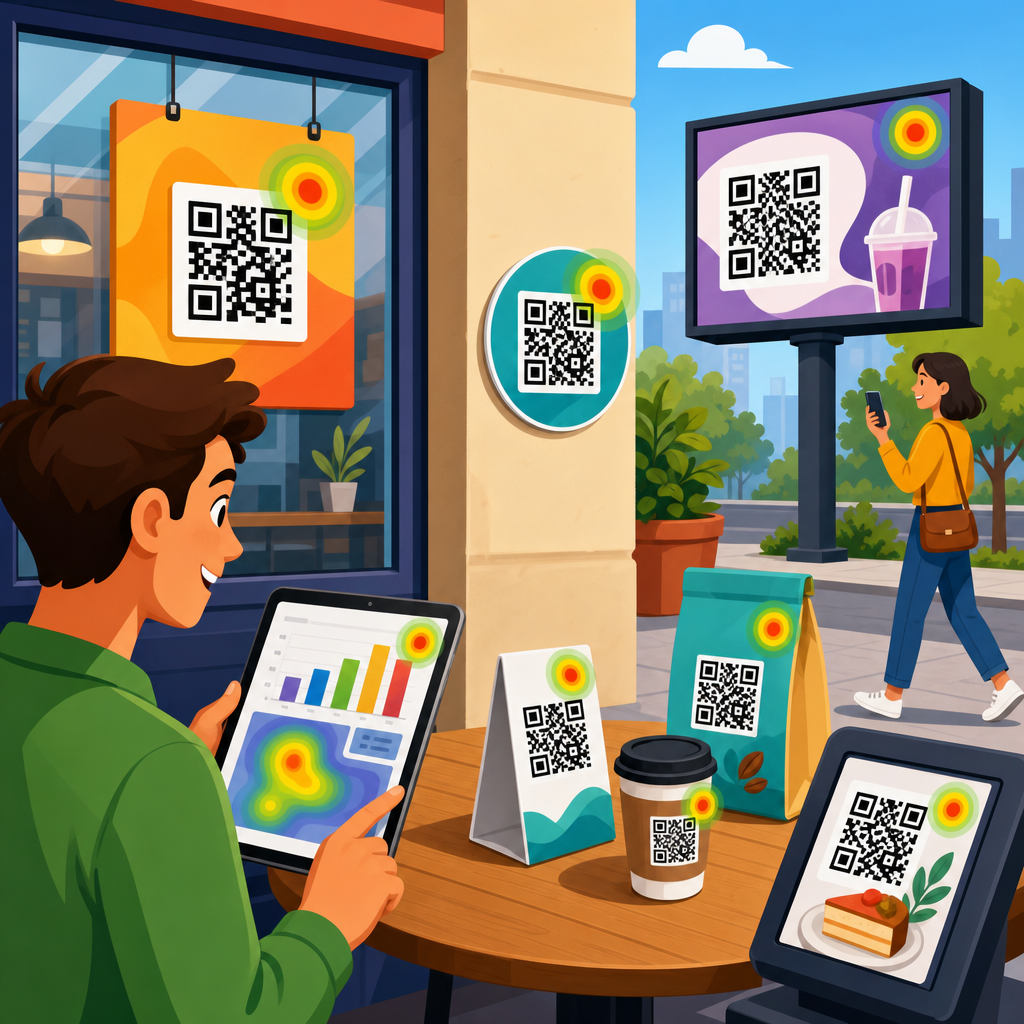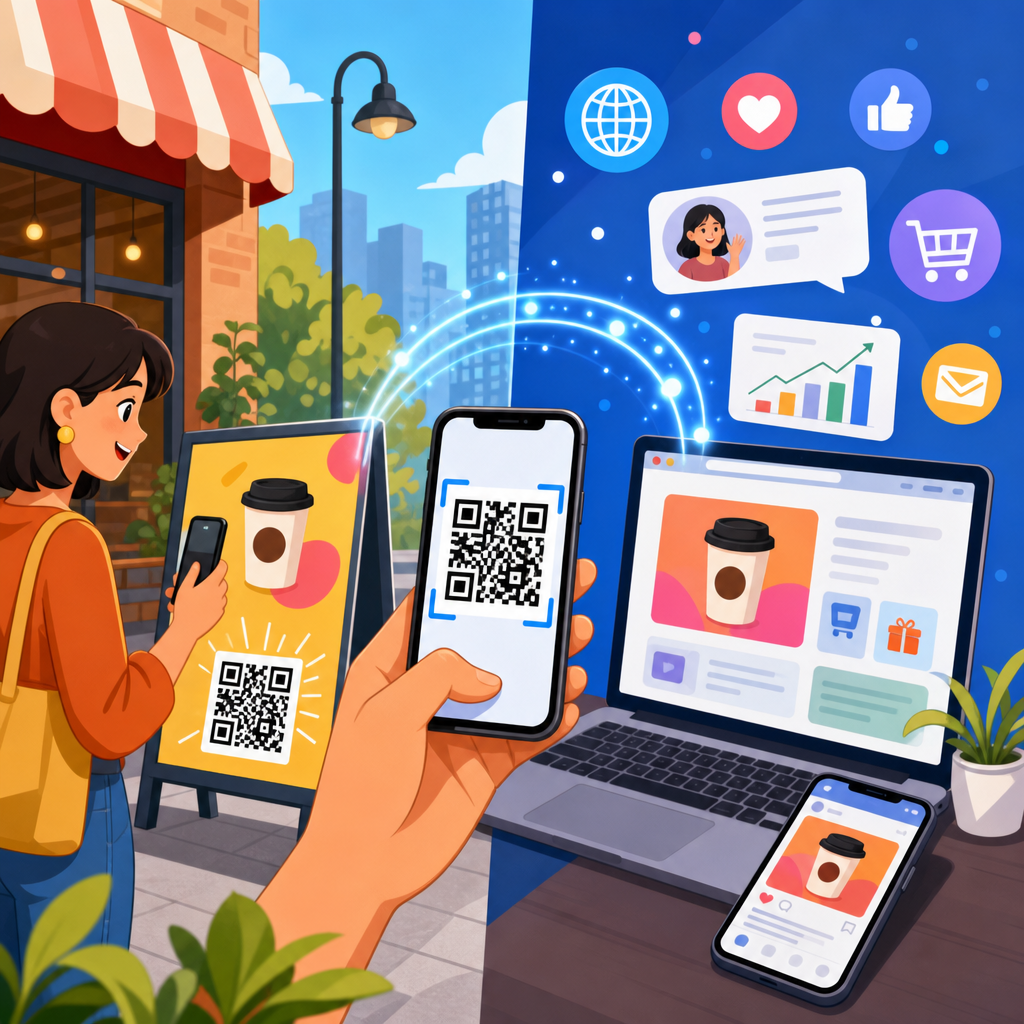
QR codes have become one of the most practical tools for connecting physical marketing with digital customer journeys. In simple terms, a QR code is a scannable two-dimensional barcode that opens a website, app, form, file, payment screen, or other digital destination when a smartphone camera reads it. Offline-to-online integration means using those codes to move someone from a printed, displayed, or in-person touchpoint into a measurable online action. For brands trying to turn attention from packaging, posters, direct mail, retail displays, events, and product inserts into traffic, leads, sales, or support interactions, QR codes solve a longstanding gap in marketing attribution and customer convenience.
I have worked with QR code campaigns across retail, events, restaurant groups, and B2B field marketing, and the consistent lesson is straightforward: QR codes work when they remove friction. A customer standing in a store aisle does not want to type a long URL. An attendee at a trade show does not want to carry brochures back to the hotel. A diner does not want to search manually for a menu, loyalty program, or review page. When a code instantly opens the next step, response rates improve because the action feels natural in the moment.
This matters because modern marketing rarely succeeds in a single channel. A billboard may create awareness, but the conversion often happens on a mobile landing page. Product packaging may trigger curiosity, but the relationship deepens through onboarding emails, how-to videos, and retention offers. Print inserts can influence repeat purchases, but only if they lead buyers somewhere useful. QR codes create that bridge, and unlike many offline tactics, they can be tracked, tested, segmented, and optimized with the same discipline marketers apply to paid search, email, and social campaigns.
They also fit current user behavior. Smartphone camera scanning is now built into iPhone and Android devices, eliminating the app barrier that limited early adoption. During the pandemic, widespread menu and contactless check-in use normalized scanning for mainstream audiences. That habit did not disappear. It expanded into packaging, out-of-home advertising, receipts, window signage, and customer service workflows. As a result, QR code marketing is no longer a novelty. It is infrastructure for connecting offline impressions with digital intent.
What QR codes actually do in offline-to-online marketing
At their best, QR codes convert passive exposure into active engagement. A person sees a physical asset, scans the code, lands on a mobile experience, and takes a next action. That action might be reading product details, downloading an app, claiming an offer, registering for an event, leaving a review, watching setup instructions, joining a loyalty program, or completing a purchase. The code itself is not the strategy. It is the transport layer between channels.
In practice, there are two main code types. Static QR codes point to a fixed destination and cannot be edited after creation. Dynamic QR codes use a short redirect URL, so marketers can change the final destination, monitor scans, add UTM parameters, and often trigger scans by location, device, or time. For campaigns with any meaningful volume or budget, dynamic codes are usually the right choice because they support governance and measurement. They also reduce operational risk. If a landing page changes, the printed code does not become obsolete.
The strongest use cases share one trait: context. A code on product packaging should lead to something relevant to the exact item in hand, such as assembly guidance, refill ordering, ingredient sourcing, warranty registration, or cross-sell recommendations. A code on a store window after hours should offer location information, current inventory, booking, or click-and-collect. A code in direct mail should continue the exact offer or message from the printed piece, not dump users on a generic homepage. Relevance determines scan-to-conversion performance more than the code design itself.
Where QR codes create the most value across channels
Offline-to-online integration works best when marketers map QR codes to moments of intent. Packaging is one of the most powerful examples because it reaches existing buyers at the point of ownership. Consumer packaged goods brands use packaging QR codes to share recipes, sustainability data, loyalty enrollment, and reorder links. Electronics brands use them for setup videos, registration, firmware support, and accessory recommendations. In my experience, post-purchase packaging scans often outperform awareness-stage campaigns because the customer already has commitment and curiosity.
Retail environments are another strong fit. Shelf talkers, endcaps, fitting-room signage, and point-of-sale displays can connect in-store browsing with reviews, product comparisons, expanded assortments, and store apps. This is especially useful when physical shelf space is limited. A furniture retailer, for example, can use QR codes beside display models to open augmented room views, available finishes, financing options, and delivery estimates. The store remains physical, but the consideration journey becomes digitally assisted.
Events and trade shows also benefit because attention is concentrated and time is limited. Booth graphics can route attendees to product demos, lead forms, calendar booking pages, gated reports, and post-event nurture tracks. Speakers can place session-specific codes on presentation slides to distribute resources immediately. Restaurants, hospitality brands, healthcare providers, real estate firms, and nonprofit organizations all use the same logic: scan now, complete the deeper interaction online later.
| Offline touchpoint | Best digital destination | Primary goal |
|---|---|---|
| Product packaging | Onboarding page, how-to video, reorder link | Retention and repeat purchase |
| Direct mail | Offer-specific landing page | Lead generation or sales |
| Store signage | Product details, reviews, inventory lookup | In-store conversion |
| Event booth | Demo booking, lead form, downloadable assets | Qualified pipeline |
| Receipt or invoice | Review request, referral page, loyalty signup | Advocacy and retention |
How to design a QR code campaign that people will actually scan
The first rule is clarity. People scan when they know exactly what they will get. A code with no instruction underperforms a code paired with a direct call to action such as “Scan for installation video,” “Scan to claim 15% off,” or “Scan to see available sizes.” This sounds basic, but in campaign audits I often find beautiful printed assets with no value proposition attached to the code. Users do not scan out of curiosity alone. They scan for utility, savings, speed, or exclusive access.
Placement matters just as much. The code must be easy to notice, physically reachable, and scannable from the expected distance. A poster in a subway station needs larger sizing than a package insert. A billboard requires extreme caution because moving traffic and camera focus create usability issues; in many cases, a short memorable URL is more realistic. Contrast is essential. Dark code on a light background remains the safest choice. Overstyled codes with low contrast, distorted modules, or crowded logos often fail under real lighting conditions.
Destination experience is the second half of performance. Since most scans happen on mobile devices, the landing page must load fast, display clearly on smaller screens, and ask only for the next logical action. If a user scans to download a guide, do not force them through six navigation layers. If they scan for a menu, open the menu directly. If they scan from packaging after purchase, acknowledge the product they own. Every unnecessary click lowers completion rates.
Testing should happen in the physical environment, not just on a desktop preview. Print the code at actual size, place it in realistic lighting, and scan using multiple phone models and camera apps. Test page load speed on cellular data, not office Wi-Fi. Confirm analytics tagging before launch. I have seen campaigns lose weeks of attribution data because UTM structures were inconsistent across print versions. Strong QR code strategy combines creative, operations, and analytics from the beginning.
Measurement, attribution, and optimization for QR code marketing
One reason QR codes are central to offline-to-online integration is that they make physical media measurable. Dynamic QR platforms such as Bitly, QR Code Generator Pro, Beaconstac, Flowcode, and Uniqode provide scan counts, timestamps, device breakdowns, and sometimes geographic data derived from IP signals. When combined with web analytics platforms like Google Analytics 4 and CRM systems such as HubSpot or Salesforce, marketers can follow the path from offline scan to lead, sale, and retention outcome.
Useful metrics depend on campaign goals. For awareness, focus on unique scans, scan rate by placement, and landing page engagement. For lead generation, track form completion rate, qualified lead rate, and pipeline created. For ecommerce, measure add-to-cart rate, conversion rate, average order value, and repeat purchase influenced by post-purchase scans. For customer support, review self-service adoption, reduced call volume, and faster time to resolution. The code is only successful if the business outcome improves, not merely because scans increased.
Attribution requires discipline. Use separate dynamic codes for each asset, location, audience segment, or creative variant that matters. A national retail chain should not use one code for every shelf display if local comparison is important. Likewise, event teams should separate booth graphics, badge handouts, and session slides to understand which interaction produced the best leads. UTM conventions should be documented so offline campaigns appear cleanly in analytics reports. Integrating scan data with CRM records lets teams compare not just volume, but downstream quality.
Optimization follows the same principles used in digital channels. Test call-to-action language, destination type, incentive level, placement height, and surrounding creative. Compare codes that open a product page versus a category page. Test whether an instant coupon outperforms educational content. Review performance by geography and store format. In many programs I have managed, simple message changes around the code delivered bigger gains than redesigning the code itself. The user decides based on perceived value, not technical novelty.
Common mistakes, compliance issues, and strategic limits
The most common mistake is sending every scan to the homepage. That wastes intent and creates friction at the exact moment of interest. Another frequent error is ignoring mobile page speed. If the destination takes several seconds to load on a weak signal, users abandon quickly. Marketers also underestimate the importance of trust. If a code appears without branding, context, or a clear promise, some users hesitate because QR phishing has made people more cautious. Brand cues and plain-language explanations help reduce that concern.
Privacy and compliance deserve attention, especially when scans lead to forms, payments, healthcare information, or regulated products. Teams should disclose data collection clearly and route users to secure HTTPS destinations. In regions governed by GDPR or similar rules, consent handling must match the data being captured. Industries such as financial services, alcohol, pharmaceuticals, and healthcare may require additional disclosures or age gates. Accessibility matters too. Provide a short URL near the code so users who cannot scan still have access.
QR codes also have strategic limits. They are not a replacement for strong messaging, compelling offers, or a reliable mobile experience. They do not magically rescue weak print creative or low-intent placements. Some environments simply do not support scanning well, including high-speed roadside media or areas with poor connectivity. In those cases, near-field communication, SMS keywords, app clips, memorable vanity URLs, or traditional response mechanisms may be more effective. Good marketers choose the bridge that fits the moment rather than forcing a code everywhere.
Building this sub-pillar into a broader QR code marketing strategy
As a hub topic, offline-to-online integration should connect to deeper articles on packaging QR codes, direct mail QR campaigns, event lead capture, restaurant and hospitality use cases, retail signage strategy, QR code analytics, landing page optimization, and QR code design best practices. That structure reflects how real programs are built. Teams usually start with one channel, then standardize governance, measurement, and creative rules across the portfolio. A hub page should therefore define the framework while linking out to implementation guides for each scenario.
The strategic advantage is consistency. When all offline channels use shared naming conventions, dynamic redirect management, campaign tagging, and mobile experience standards, performance improves and reporting becomes trustworthy. Sales teams can compare event scans with direct mail scans. Product marketers can see whether packaging drives more repeat purchases than receipt-based offers. Customer success teams can measure whether setup QR codes reduce support demand. This cross-channel visibility turns QR codes from isolated tactics into a durable marketing system.
QR codes bridge offline and online marketing because they meet customers where attention begins and guide them to where action happens. They shorten the path from awareness to conversion, make physical media measurable, and support better service after the sale. When the offer is clear, the placement is practical, the destination is mobile-first, and tracking is properly structured, QR code marketing delivers real commercial value. If you are building a QR Code Marketing & Strategy program, start by auditing every physical touchpoint where customers ask, “What now?” Then deploy QR experiences that answer that question immediately and measurably.
Frequently Asked Questions
What does it mean for QR codes to bridge offline and online marketing?
QR codes bridge offline and online marketing by creating a direct path from a physical touchpoint to a digital experience. In practice, that means a person can scan a code printed on packaging, a poster, a flyer, a menu, a product display, a business card, or an event sign and instantly land on a website, product page, lead form, booking page, app download, coupon, payment screen, or social profile. Instead of expecting someone to remember a brand name, type in a long URL, or search for a product later, the QR code removes friction and turns interest in the physical world into immediate online action.
This is especially valuable because offline marketing often struggles with attribution. A billboard, brochure, in-store display, or direct mail piece may generate awareness, but it can be difficult to measure exactly what happens next. QR codes solve part of that problem by giving marketers a trackable connection point. When someone scans, brands can see engagement data such as the number of scans, time of day, location trends, device type, and the specific campaign or asset driving the interaction. That makes QR codes one of the most practical tools for connecting physical impressions with digital customer journeys and measurable business outcomes.
Why are QR codes effective for moving customers from print or in-person experiences to digital channels?
QR codes work well because they match modern consumer behavior. Most people already have a smartphone within reach, and built-in camera scanning has made the process quick and familiar. When someone encounters a compelling offer or useful piece of information in an offline setting, a QR code lets them act on that interest immediately. That immediacy matters. The smaller the gap between attention and action, the more likely a conversion becomes.
They are also effective because they reduce effort. A customer does not need to manually enter a web address, search for a brand, or navigate through multiple pages to find the right destination. A scan can take them exactly where the marketer wants them to go, whether that is a limited-time promotion, event registration page, loyalty signup, product tutorial, downloadable guide, review request, or mobile checkout page. This streamlined experience improves response rates and helps brands capture intent while it is still fresh. In many campaigns, the simplicity of scan-and-go can be the difference between passive awareness and meaningful engagement.
What kinds of marketing materials and touchpoints should include QR codes?
QR codes can be used across a wide range of offline assets, and the strongest results usually come from placing them where curiosity, buying intent, or information needs are already high. Common examples include product packaging, retail shelf displays, restaurant menus, direct mail postcards, brochures, catalogs, event badges, trade show booths, outdoor signage, point-of-sale materials, window decals, receipts, and print advertisements. They are also useful in service environments, such as clinics, hotels, real estate offices, and transportation hubs, where people often need instant access to forms, instructions, schedules, or contact information.
The key is to match the code’s destination to the context of the touchpoint. On packaging, a code might lead to setup instructions, warranty registration, or product videos. In a store, it could connect to reviews, product comparisons, or special offers. On a flyer, it may drive registrations or lead generation. At an event, it can support agenda downloads, speaker bios, networking pages, or follow-up content. Effective use is not about placing QR codes everywhere without purpose. It is about positioning them where they add convenience, answer a question, or help the customer take the next logical step in their journey.
How can businesses measure the success of QR code marketing campaigns?
Businesses can measure QR code performance by treating each code as a campaign entry point and tracking what happens after the scan. At a basic level, marketers can monitor total scans, unique scans, scan timing, device usage, and location-based engagement data. More advanced measurement comes from combining QR code analytics with web analytics tools, CRM systems, marketing automation platforms, and conversion tracking. This allows brands to understand not just how many people scanned, but how many completed valuable actions such as submitting a form, making a purchase, booking an appointment, downloading an app, or signing up for a loyalty program.
To improve accuracy, many marketers create unique QR codes for specific channels, placements, or versions of a campaign. For example, one code might appear on in-store signage, another on direct mail, and another at an event booth. This makes it easier to compare performance by source and identify which offline assets generate the strongest digital response. It is also smart to use trackable landing pages, campaign parameters, and clear conversion goals. When set up correctly, QR codes provide a rare advantage in offline marketing: the ability to connect physical exposure to measurable online behavior and use that data to optimize future campaigns.
What are the best practices for using QR codes successfully in offline-to-online marketing?
The most important best practice is to give people a clear reason to scan. A QR code by itself is not a strategy. It needs a strong call to action and a destination that delivers real value. Phrases such as “Scan to shop,” “Scan for a discount,” “Scan to view the menu,” or “Scan to book now” help set expectations and improve response rates. The landing experience should also be mobile-friendly, fast-loading, and directly relevant to the context in which the code appears. If a customer scans from a poster about a sale, they should land on the sale page, not a generic homepage.
Design and usability also matter. The code should be large enough to scan easily, placed in a visible location, and printed with enough contrast to work in real-world conditions. Marketers should test it across devices, lighting situations, and scanning distances before launch. Dynamic QR codes are often preferred because they allow the destination URL to be updated without reprinting the asset, which is useful for time-sensitive campaigns and ongoing optimization. Finally, businesses should think beyond the scan itself. A successful offline-to-online strategy includes the full journey: the trigger that motivates the scan, the digital experience that follows, and the conversion path that turns attention into action, leads, sales, or long-term customer engagement.