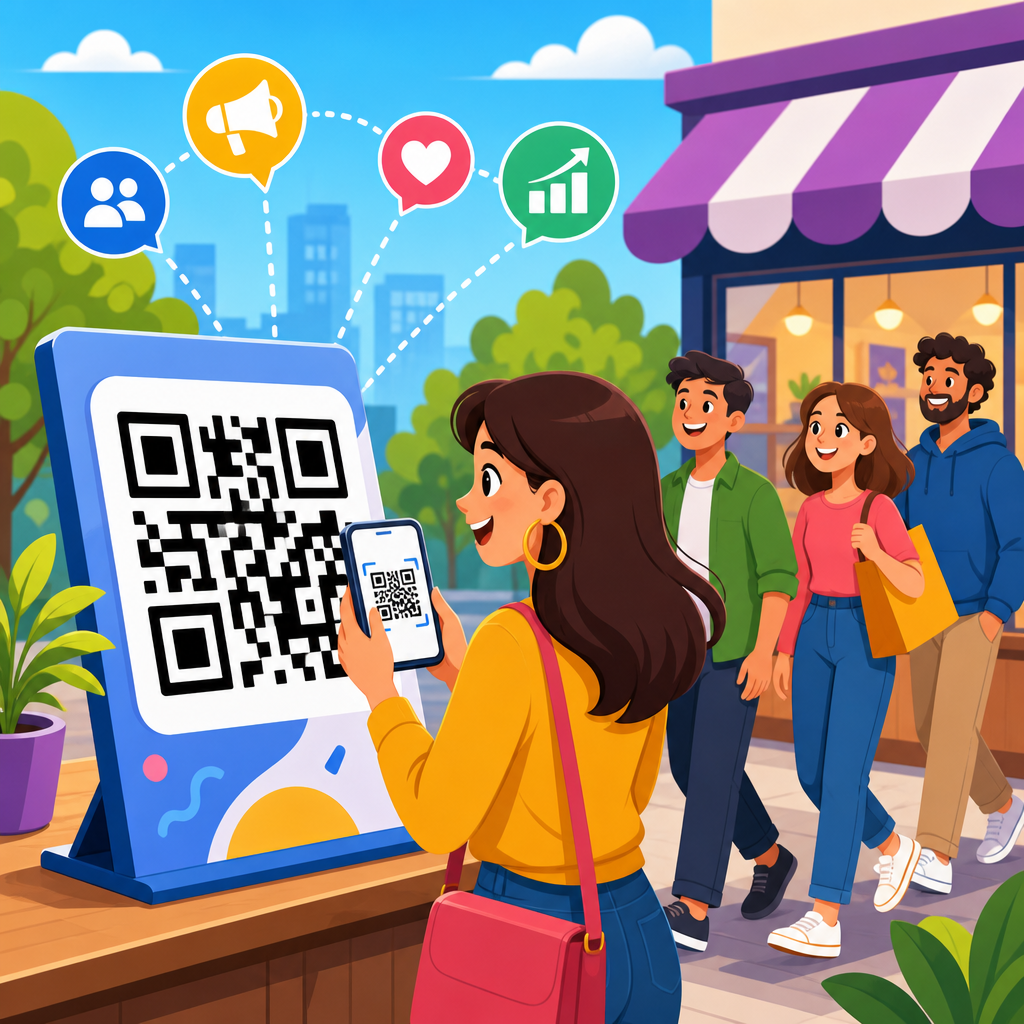
QR codes have become one of the most practical tools for customer acquisition because they connect offline attention to online action in a single scan. A QR code, short for Quick Response code, is a two-dimensional barcode that stores a destination such as a website, app page, coupon, form, menu, or payment link. When a customer scans it with a smartphone camera, the code removes friction from the next step. That matters in acquisition, where every extra tap, search, or form field causes drop-off. I have used QR campaigns across retail, events, restaurants, real estate, and field sales, and the pattern is consistent: when the offer is relevant and the landing experience is fast, scan-driven traffic converts surprisingly well.
Customer acquisition means attracting new prospects, capturing their contact information or intent, and moving them toward a first purchase. QR code marketing strategies support that process by turning packaging, signs, print ads, direct mail, storefront windows, receipts, business cards, and product displays into trackable entry points. Instead of asking someone to remember a URL or search for a brand later, you create an immediate bridge from curiosity to action. This approach matters even more now because smartphone scanning is native on iPhone and Android devices, mobile payment habits are common, and many buyers move between physical and digital touchpoints before they buy.
Used well, QR codes do more than generate traffic. They improve attribution, reduce response time, personalize offers by location or source, and give small businesses a low-cost acquisition channel. Used poorly, they send people to generic homepages, break in low light, or offer no clear reason to scan. The difference is strategy. A strong hub on QR code marketing strategies should answer the core questions: where should codes appear, what should they link to, how do you measure results, and which tactics actually bring in new customers rather than just entertain existing ones.
This guide explains how to use QR codes for customer acquisition from planning to measurement. It covers campaign goals, placement, creative, landing pages, incentives, tracking, and compliance, with examples in plain terms. The objective is simple: help you build QR campaigns that earn more scans, more leads, and more first-time customers.
Start with the acquisition goal, not the code
The most effective QR code marketing strategies begin by defining the exact conversion you want from a new prospect. In practice, that usually means one of five actions: claim an offer, join an email or SMS list, book an appointment, download an app, or complete a first purchase. If you skip that step, the code often points to a general page that creates interest but no measurable acquisition. I have seen businesses print thousands of table tents and flyers with a QR code that simply opens the homepage. Scans looked respectable, but lead volume stayed flat because users still had to figure out what to do next.
Match the campaign to buyer intent. A person scanning a code on a street poster is colder than someone scanning a code on product packaging after handling the item. Cold audiences need a simple value exchange, such as “Scan for 15% off your first order.” Warm audiences can move to higher-intent actions, such as “Scan to book a demo” or “Scan to compare plans.” For B2B acquisition, QR codes at trade shows work best when they unlock a concise lead magnet, case study, or meeting scheduler instead of a broad company overview. For local services, a code on a vehicle wrap or yard sign should open a mobile-first quote form with location autofill and click-to-call options.
Dynamic QR codes are usually the right choice for acquisition because the destination can be changed without reprinting the asset. They also support analytics, UTM parameters, and source-level testing. Static codes have a place for permanent destinations, but they are less flexible for campaigns that evolve. Whether you use Bitly, QR Code Generator, Beaconstac, Flowcode, or a CRM-connected platform, the requirement is the same: every code should map to a single campaign objective and a measurable source.
Choose placements that capture existing attention
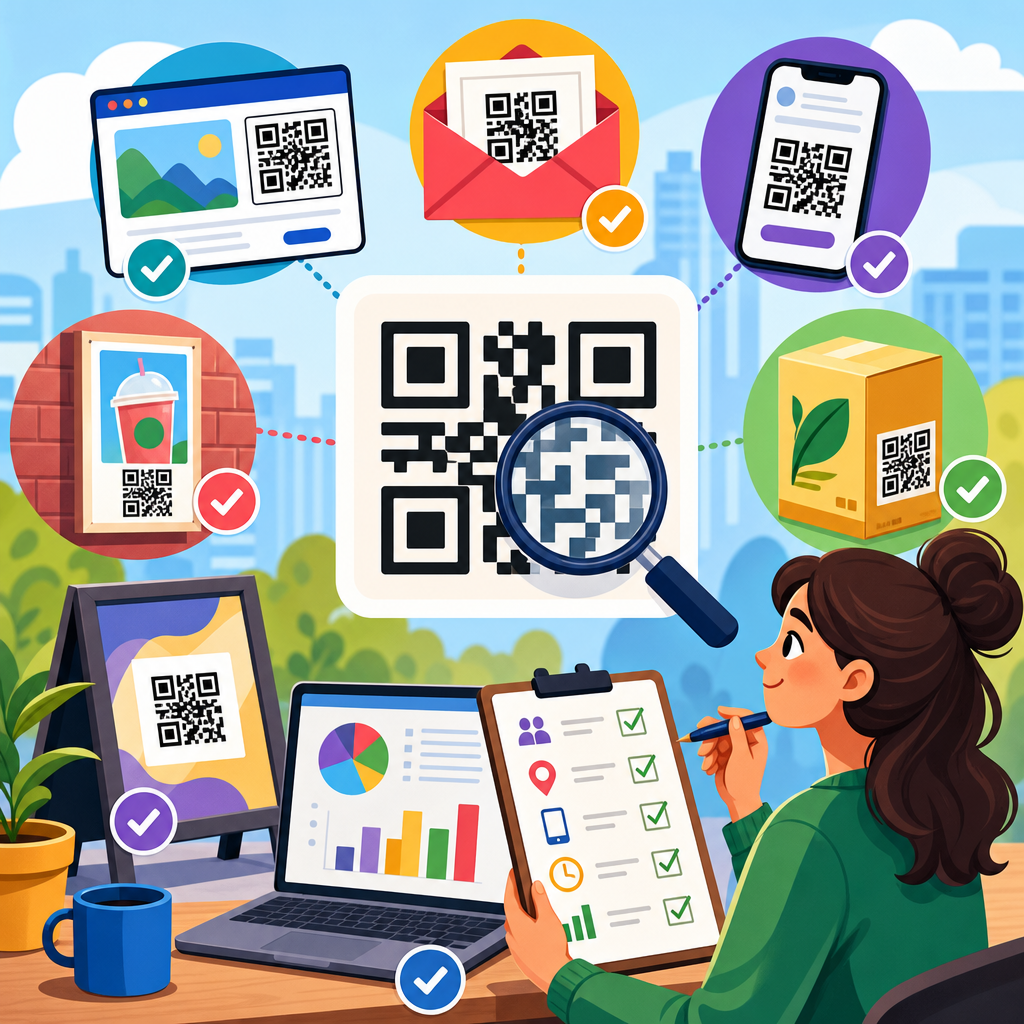
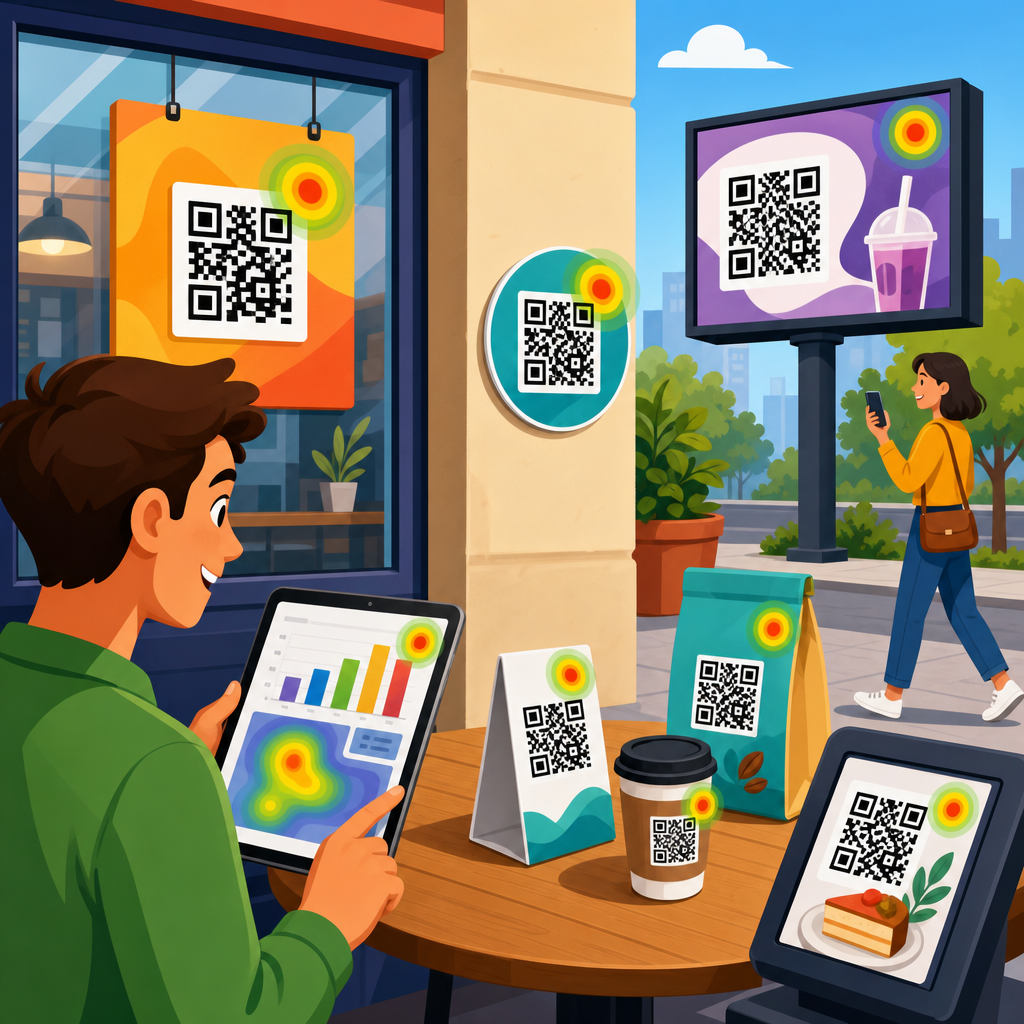
Placement determines whether a QR code gets ignored or scanned. The best locations are places where people already pause, wait, compare, or make decisions. In retail, that includes shelf talkers, endcaps, fitting rooms, window displays, checkout counters, and product packaging. In hospitality, menus, table tents, room cards, key sleeves, and lobby signage perform well because customers are stationary and have their phones in hand. In events, badges, booth graphics, handouts, and stage slides create natural scan moments. Real estate signs, direct mail postcards, takeout bags, and receipts are strong channels because they continue working after the first interaction.
Distance and context matter. A code on a billboard may generate awareness, but scanning from a moving car is unrealistic and unsafe. A code on a storefront window can perform well after hours if the offer is visible and the landing page makes it easy to buy or book immediately. Print size also matters. A common rule is at least 1 inch by 1 inch for close-range use, then scale larger with viewing distance. Maintain strong contrast, preserve the quiet zone around the code, and test in daylight and dim conditions. Decorative customization is fine if scan reliability remains high.
The call to action beside the code is often more important than the code itself. “Scan me” is weak. “Scan for today’s lunch offer,” “Scan to see available units,” or “Scan to get a free skin consultation” gives a concrete reason to act. I recommend treating the surrounding copy like ad copy: specify the benefit, reduce uncertainty, and indicate what happens next. If the destination requires a form, say so. If it opens WhatsApp, mention that. Clear expectations raise scan-through and conversion rates.
Build landing pages that convert first-time visitors
A QR code does not acquire customers on its own; the landing page does. The destination should load fast, match the promise on the sign or package, and ask for only the information needed at that stage. For acquisition, mobile performance is nonnegotiable. Compress images, avoid intrusive pop-ups, keep the headline identical to the call to action, and place the primary action above the fold. If the code promised a coupon, the page should display the coupon immediately. If the code promised a demo, the scheduler should be visible without hunting through navigation.
Message match is where many campaigns fail. A flyer that says “Scan for a free trial” should not send users to a homepage banner where the trial is one option among many. Every extra choice weakens conversion. Social proof helps first-time visitors trust the offer quickly. Use short reviews, review counts, recognizable client logos, warranty details, or a concise explanation of what happens after submission. For local businesses, embedded maps, service areas, and hours reduce hesitation. For ecommerce, showing the specific product collection connected to the code usually outperforms a generic catalog page.
Forms should be progressive. On a cold scan, ask for a minimum set of fields, such as email and first name, then collect more context later. If you need richer qualification, use a two-step flow where the first click secures the lead and the second screen gathers details. Connecting QR landing pages to Klaviyo, HubSpot, Mailchimp, Salesforce, or Shopify lets you trigger follow-up automatically. That follow-up is part of acquisition, not an afterthought. New leads should receive the promised asset, a reminder of the offer deadline, and one clear next step.
Use incentives and offers that justify the scan
People scan when the reward is immediate and specific. The strongest QR code marketing strategies offer clear value: a discount for first purchase, exclusive content, a free sample, a contest entry, a loyalty starter bonus, or a time-saving shortcut such as instant booking. The right incentive depends on margins and buying cycle. Restaurants often win with a same-day offer because purchase can happen now. Higher-ticket services may do better with a free consultation, estimator, or guide because buyers need more evaluation before spending.
Not every incentive should be a discount. Discounts can train customers to wait for deals and compress margins. Content-led acquisition works well when the information solves a real problem. A gym can place a QR code on neighborhood flyers offering a beginner workout plan plus a guest pass. A dental clinic can use direct mail with a code for a new-patient checklist and online scheduling. A SaaS company can place codes at events that open a benchmark report tied to the prospect’s role. The incentive succeeds when it reduces uncertainty or creates a quick win.
| Channel | Best QR Offer | Why It Converts New Customers |
|---|---|---|
| Store window | First-order coupon | Captures after-hours interest and turns foot traffic into immediate action |
| Product packaging | How-to guide plus signup | Uses post-purchase attention to attract household members or gift recipients |
| Direct mail | Personalized landing page | Bridges print to digital with low friction and measurable attribution |
| Event booth | Meeting scheduler or giveaway | Converts in-person curiosity while brand recall is highest |
| Receipt | Referral reward | Turns existing buyers into acquisition partners for new prospects |
Urgency and exclusivity can lift performance, but they must be credible. “Valid this weekend,” “limited to first-time customers,” or “available at this location” sets a useful boundary. False scarcity damages trust. If the campaign targets a regulated industry such as healthcare or finance, ensure the incentive and data collection process comply with applicable rules before launch.
Track scans, leads, and real acquisition cost
Measurement is what separates a novelty from a repeatable acquisition channel. At minimum, track scans, unique visitors, conversion rate, cost per lead, first-purchase rate, and customer acquisition cost by source. Add UTM parameters to every QR destination so analytics platforms can distinguish flyer traffic from packaging traffic or booth traffic from window traffic. In Google Analytics 4, define conversion events for form submissions, purchases, bookings, or calls initiated from the landing page. In your CRM, store the original source so downstream revenue can be tied back to the code placement.
Scan count alone is not success. A poster in a busy station might earn many scans but few qualified leads if the offer is too broad. A niche B2B handout may generate fewer scans yet produce more meetings and revenue. I typically review QR campaigns in three layers. First, acquisition efficiency: scan-to-visit and visit-to-lead rates. Second, sales quality: lead-to-opportunity and lead-to-customer rates. Third, economics: CAC compared with paid social, search, direct mail, or event spend. This prevents teams from celebrating engagement while ignoring profitability.
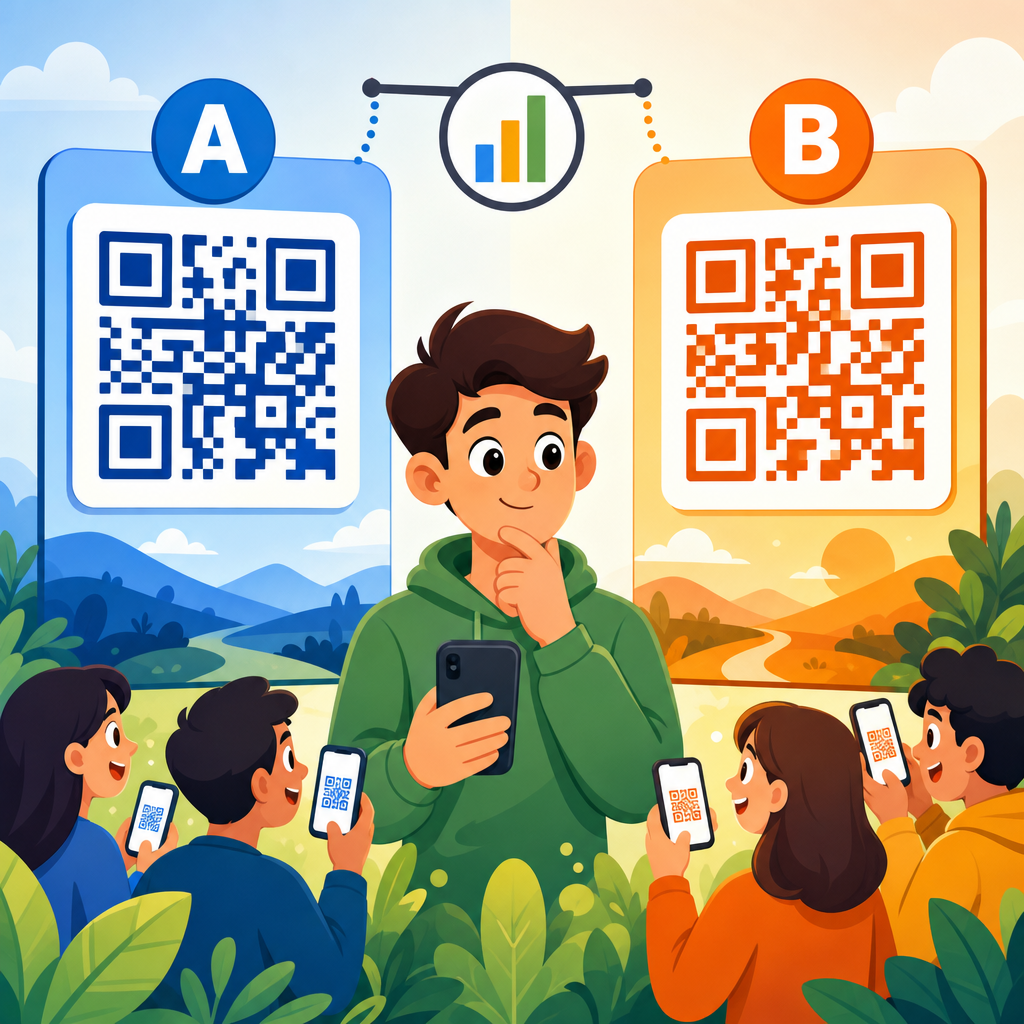
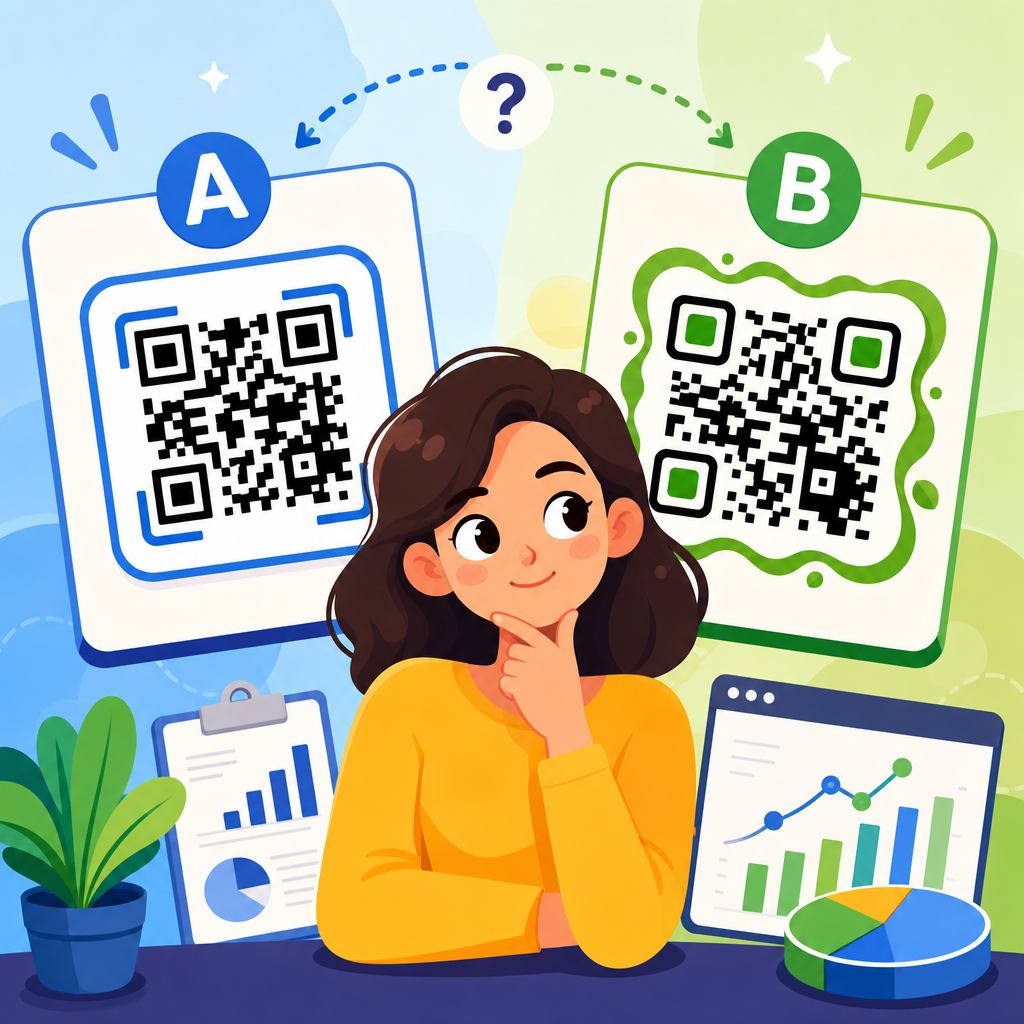
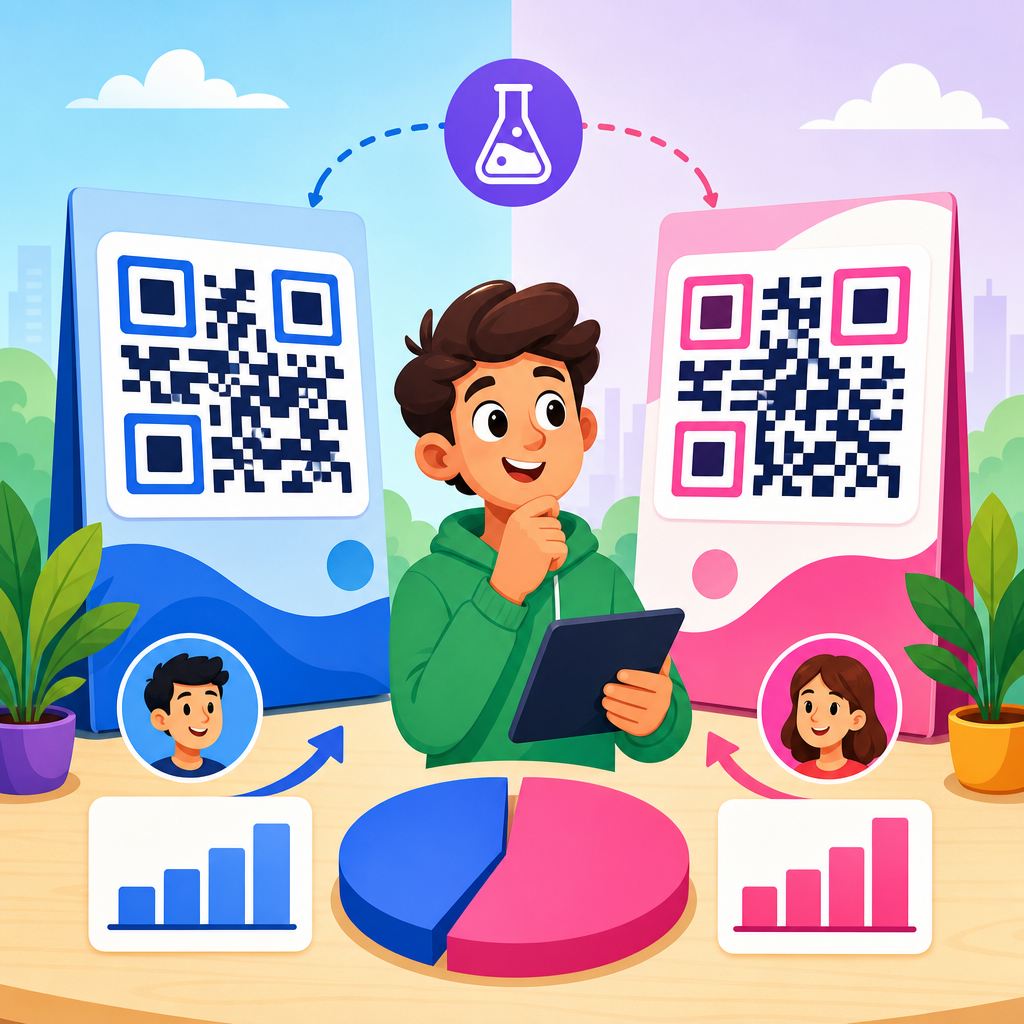
Testing should be continuous. Try different calls to action, offers, landing-page layouts, and placements. A/B tests are easiest with dynamic codes and duplicate creative. You can also segment by location, time window, or audience. One retailer I worked with used separate codes for fitting rooms, window displays, and checkout. Fitting room scans produced the highest email signup rate, but window scans produced the highest first-purchase rate because the offer targeted after-hours buyers ready to order online. Those insights made future placement decisions obvious.
Avoid common mistakes and scale what works
The most common QR acquisition mistakes are predictable: poor mobile pages, vague calls to action, codes placed where scanning is awkward, and no source tracking. Another frequent error is linking every placement to the same destination. Different contexts deserve different pages. A code on a coffee cup sleeve should not behave like a code on a conference banner. Tailor the message, offer, and next step to the moment. Also avoid forcing app downloads unless the app is essential to receiving value; mobile web usually converts better for first contact.
Privacy and accessibility deserve attention. If you collect phone numbers for SMS, obtain explicit consent and explain message frequency. If forms handle sensitive information, use secure pages and trusted processors. For accessibility, do not rely on the code alone. Add a short URL and concise instructions so users have an alternative path. Staff training matters too. In stores and at events, associates should be able to explain what the code does and what the customer receives. Human prompting often doubles response rates when the offer is strong.
Once a campaign proves itself, scale carefully. Expand the winning offer to similar placements, create location-specific codes, and feed learnings into email, paid media, and in-store signage. QR codes work best as part of a broader acquisition system rather than a stand-alone tactic. They shorten the path from attention to intent, make offline marketing measurable, and help businesses capture demand that would otherwise disappear. If you want more customers from the traffic, footfall, packaging, and print you already have, start with one clear offer, one high-intent placement, and one tightly matched landing page, then measure relentlessly and improve from there.
QR codes are effective for customer acquisition because they remove friction at the exact moment a prospect is interested. Instead of hoping someone remembers your brand later, you give them an immediate path to claim an offer, book, buy, or subscribe. The core strategy is straightforward: define one acquisition goal, place codes where attention already exists, create a strong reason to scan, and send visitors to a mobile page built for first-time conversion. When those pieces align, QR codes turn ordinary physical touchpoints into measurable acquisition assets.
The strongest results come from discipline, not novelty. Use dynamic codes, clear calls to action, context-specific landing pages, and analytics that connect scans to revenue. Test offers by channel, compare cost per acquisition against other sources, and keep only what produces qualified customers. Avoid the common traps of generic destinations, weak incentives, and untracked campaigns. In every industry I have seen, the businesses that win with QR code marketing strategies treat the code as the start of a conversion journey, not the campaign itself.
As a hub for QR Code Marketing & Strategy, this topic should guide your next steps across placement, creative, offers, attribution, and optimization. Pick one high-intent location this week, launch a targeted QR offer, and review the numbers after the first hundred scans. That small test will tell you far more than another brainstorm. Then refine, expand, and turn QR codes into a dependable customer acquisition channel.
Frequently Asked Questions
How do QR codes help with customer acquisition?
QR codes help with customer acquisition by turning offline interest into immediate online action. Instead of asking someone to remember a website, type a URL, search for a brand, or download an app later, a QR code lets them move from curiosity to conversion in a single scan. That reduction in friction is important because acquisition often fails when too many steps are placed between attention and action. If a person sees your business on packaging, a flyer, a store window, an event banner, or a direct mail piece, a QR code gives them an instant path to your landing page, sign-up form, offer, booking page, or product catalog.
They are especially effective because they connect physical touchpoints with digital tracking. A business can place different QR codes on different channels and measure which placement drives the most scans, leads, and sales. For example, the code on a trade show display may perform differently from the one on a product insert or street poster. That kind of attribution helps marketers understand what is working and where to invest more budget. In short, QR codes are valuable for acquisition because they remove steps, increase response rates, and make offline campaigns much more measurable.
Where should businesses place QR codes to attract the most new customers?
The best placements are high-visibility moments where customer attention already exists and where scanning feels natural. Strong examples include storefront windows, product packaging, table tents, event booths, print ads, direct mail, receipts, business cards, brochures, point-of-sale displays, delivery inserts, and outdoor signage. In each of these cases, the QR code should appear where the customer can easily notice it, understand why it is there, and scan it without effort. A code placed too low, too small, or in poor lighting will underperform even if the offer is strong.
Placement should always match user intent. If someone is walking past a storefront, the QR code might invite them to claim a first-time discount or browse the menu. If someone has already purchased, a package insert might encourage referral participation, product registration, or email sign-up. At events, a code can lead to a lead capture form, demo scheduling page, or giveaway entry. The key is relevance. Businesses tend to get the best results when the QR code is paired with a clear call to action such as “Scan for 15% off,” “Scan to book a free consultation,” or “Scan to get the app.” A visible benefit gives people a reason to act immediately rather than ignore the code.
What should a QR code link to for the highest conversion rate?
A QR code should link to a destination that is fast, mobile-friendly, and built around a single next step. Because most scans happen on smartphones, the landing experience must load quickly and be easy to navigate on a small screen. In many cases, the best destination is not a homepage but a dedicated landing page tailored to the context of the scan. For example, a QR code on a flyer promoting a free trial should take users directly to a simple trial sign-up page, not to a generic site where they need to search for the offer.
High-converting QR destinations usually have a clear headline, concise value proposition, minimal distractions, and one strong call to action. Depending on the campaign, that action could be joining an email list, redeeming a coupon, booking an appointment, downloading an app, making a purchase, requesting a quote, or submitting a lead form. It also helps to match the message around the QR code with the page itself so users feel continuity. If the printed message says “Scan for 10% off your first order,” the landing page should immediately show that offer. The fewer the surprises and the fewer the required steps, the better the conversion rate will be.
How can businesses track the performance of QR code campaigns?
Businesses can track QR code performance by using unique, campaign-specific codes and connecting them to analytics tools. Rather than using one code for every use case, it is better to create separate QR codes for each channel, location, or audience segment. That makes it easier to identify which placements are generating scans, visits, leads, and sales. For example, separate codes can be created for retail displays, event signage, packaging inserts, direct mail, and social cross-promotion. When each code points to a unique URL or includes tracking parameters, performance becomes much more transparent.
Useful metrics include total scans, unique scans, landing page visits, conversion rate, time of scan, geographic patterns, bounce rate, form completions, coupon redemptions, and downstream revenue. Businesses should also compare scan data against the actual business result, not just traffic volume. A QR code that receives fewer scans but produces more qualified leads may be more valuable than one with high activity and poor conversion. Testing is also important. Marketers can improve results by changing the call to action, offer, design placement, landing page, or incentive, then comparing outcomes over time. When used properly, QR codes become not just a convenience tool but a measurable acquisition channel.
What are the most common mistakes to avoid when using QR codes for customer acquisition?
One of the biggest mistakes is adding a QR code without a compelling reason to scan it. A code by itself does not create action. People need a clear benefit, such as access to a discount, useful information, instant booking, a free resource, or exclusive content. Another common error is sending users to a generic homepage instead of a focused landing page. This adds friction and forces the customer to figure out the next step on their own, which often leads to drop-off. Poor mobile design is another major issue. If the page loads slowly, looks cluttered, or requires too much typing, many potential leads will leave before converting.
Other frequent mistakes include making the QR code too small, placing it where it cannot be scanned easily, using low-contrast colors, failing to test it on different devices, and not tracking results. Some businesses also forget to provide context around the code. A short instruction and benefit statement can dramatically improve response rates. For example, “Scan to claim your welcome offer” performs far better than displaying a code with no explanation. Finally, businesses should avoid overcomplicating the customer journey after the scan. The best acquisition campaigns feel immediate and intuitive. When the path from scan to value is short, clear, and relevant, QR codes become far more effective at generating new customers.