QR code scan rates rise when marketers reduce friction, improve visibility, and connect every code to a clear value exchange. In QR Code Marketing & Strategy, conversion optimization means increasing the percentage of people who notice a code, trust it, scan it, and complete the intended action after the scan. That action might be opening a menu, claiming an offer, registering for an event, downloading an app, joining a loyalty program, or buying a product. I have worked on retail signage, direct mail, packaging, and out-of-home campaigns where small design and placement changes doubled scan volume without increasing media spend. The reason is simple: a QR code is not the offer. It is the bridge. If the bridge looks risky, hard to use, or irrelevant, people ignore it.
Understanding how to increase QR code scan rates matters because QR campaigns are often judged too narrowly. Teams look at total scans and overlook the inputs that determine performance: distance, lighting, size, call to action, landing page speed, analytics setup, and audience intent. A code on a poster in a subway station competes with motion, noise, and seconds of attention. A code on product packaging may be scanned at home with more time but more skepticism. Conversion optimization for QR codes therefore spans both the physical environment and the digital destination. It also requires measurement discipline. Scan rate usually refers to scans divided by impressions or opportunities to scan, while post-scan conversion rate tracks what users do next. Improving one without the other produces misleading wins. The strongest QR strategies optimize the full path from first glance to final conversion.
Start with user intent, context, and a single promised benefit
The fastest way to improve QR code scan rates is to match the code to what the audience already wants in that moment. People do not scan because the technology is novel anymore; they scan because the expected reward is immediate and obvious. On restaurant tables, “View menu” works because diners need the menu now. On packaging, “See how to use this in 30 seconds” often outperforms generic brand language because it answers a practical question. In event marketing, “Skip the line and check in” beats “Learn more” because it removes friction. The most effective call to action states one concrete outcome, uses action verbs, and sets expectations for what happens after the scan.
Context shapes scan likelihood more than many marketers assume. A commuter walking past a transit shelter has different constraints than a shopper standing in an aisle. Distance from the code, dwell time, internet connectivity, and social comfort all matter. I have seen beautifully designed billboard codes underperform simply because users could not safely stop and scan. By contrast, a basic code on an in-store shelf talker can drive strong engagement when it promises a relevant incentive such as ingredient details, customer reviews, or a limited-time coupon. Before launching, answer four operational questions: Who is scanning, what problem are they solving, how much time do they have, and what reward justifies the effort? Those answers determine the right placement, message, and destination.
Optimize code design, size, and placement for fast recognition
QR code design affects both technical readability and human trust. The code must have sufficient contrast, a clean quiet zone, and a size appropriate to viewing distance. A practical rule used in print production is a scanning distance-to-code-size ratio of roughly 10:1, so a code viewed from 20 inches should be about 2 inches wide. For posters and signage, larger is safer because smartphone camera quality, glare, and hand movement vary. Follow ISO/IEC 18004 principles for symbol integrity, and test with multiple devices rather than relying on one flagship phone. Stylized codes can work, but heavy customization reduces error tolerance. If branding elements are added, preserve the finder patterns, maintain contrast, and validate scans after export and after printing.
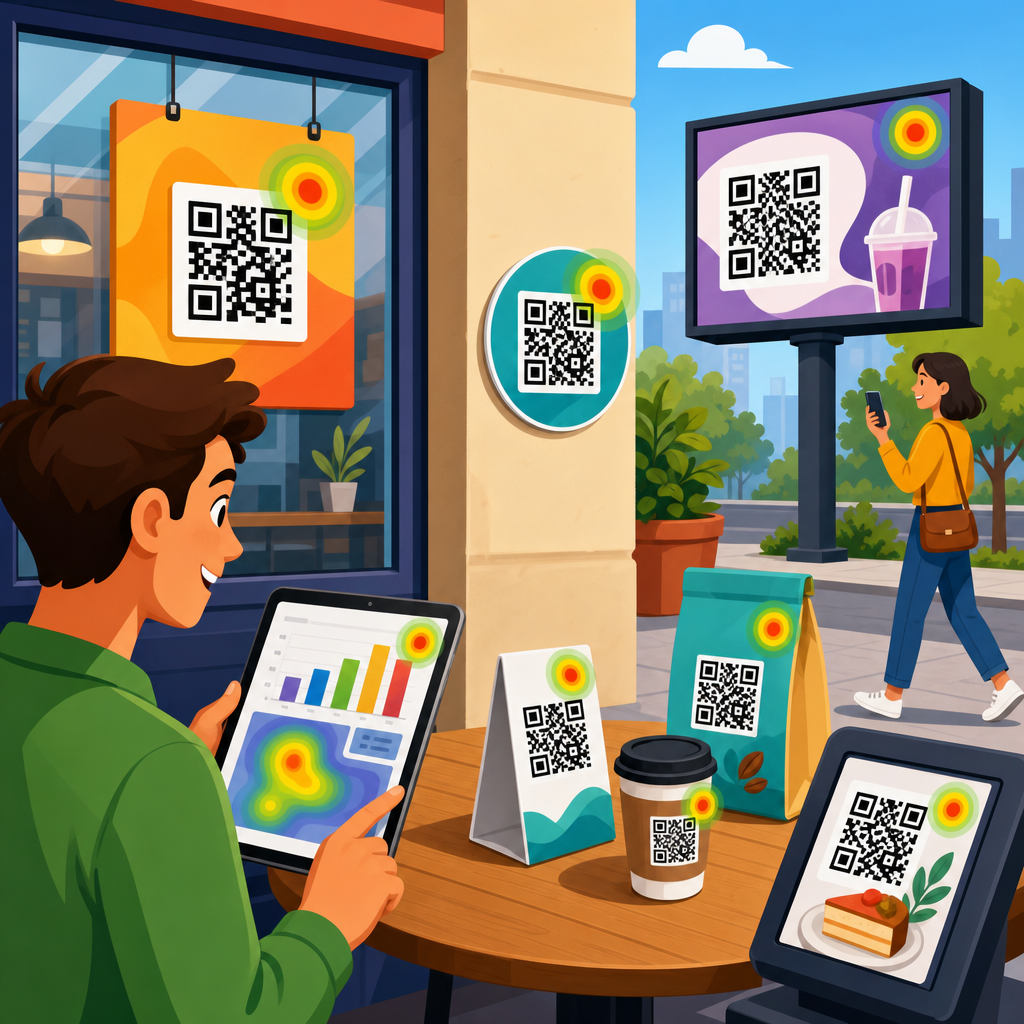
Placement is equally important. Put the code where the eye naturally lands after the headline or product image, not buried in a corner. Keep it on a flat or minimally curved surface. Avoid glossy finishes under harsh light, low-contrast backgrounds, and folds in direct mail pieces that distort the modules. If the code appears on packaging, consider where it will be visible before purchase and after opening. If it appears in a store, make sure the shopper can physically step close enough to scan without blocking traffic. Add short supporting copy near the code that explains value and reassures users that the destination is safe and relevant. A bare code asks for trust without earning it.
| Factor | Recommended practice | Why it increases scan rate |
|---|---|---|
| Call to action | Use one direct promise such as “Scan for 15% off” | Clarifies value immediately and reduces hesitation |
| Code size | Match size to viewing distance; err larger for signage | Improves camera recognition and lowers failed scans |
| Contrast | Dark code on a light background with a clear quiet zone | Boosts readability across devices and lighting conditions |
| Placement | Position near the main message and within easy reach | Shortens the path from attention to action |
| Landing page speed | Load in under three seconds on mobile connections | Prevents abandonment after the scan |
| Tracking | Use dynamic codes with UTM parameters and event logging | Shows which creative and locations actually convert |
Use compelling calls to action and incentives that justify the scan
If you want more scans, give people a reason that feels proportionate to the effort and risk. The strongest calls to action are specific, immediate, and outcome-focused. “Watch the demo,” “Get installation instructions,” “Join the giveaway,” and “Tap into today’s menu” are all stronger than “Scan me.” Generic prompts force the user to guess the benefit, and guessing suppresses action. In my campaign testing, adding a benefit-led line next to the same code often produced larger gains than redesigning the symbol itself. That is because hesitation usually comes from uncertainty, not from inability to scan.
Incentives work best when they fit the buying stage. Near the top of the funnel, educational value often beats discounts, especially for considered purchases. A furniture brand might offer a room visualizer or assembly video. Mid-funnel shoppers may respond to reviews, comparison guides, or stock availability. At the point of purchase, urgency and savings can lift response: “Scan for bundle pricing today” or “Activate warranty in 20 seconds.” Be careful with gimmicks. If the offer feels disconnected from the product or too good to be true, trust drops. Also, tell users what device or app requirements apply. If the scan opens an app store, say so. Clear expectations increase completion rates.
Build mobile landing pages that finish the job after the scan
A high scan rate means little if the landing page leaks conversions. After someone scans, the experience should feel like a continuation of the physical message, not a jarring handoff. Keep visual continuity between the printed asset and the page using the same offer language, imagery, and brand cues. Load speed is critical. Google research has long shown that conversion likelihood falls as mobile page load time increases, and QR traffic is especially sensitive because users have just switched contexts. Compress images, defer nonessential scripts, minimize redirects, and use a mobile-first layout with large tap targets.
The page should support one primary action. If the goal is coupon redemption, show the coupon immediately. If the goal is lead generation, use a short form with autofill support. If the goal is product education, put the video or how-to steps at the top. Remove unnecessary navigation and distractions. For app downloads, use smart routing so iPhone users land in the App Store and Android users land in Google Play. For physical venues with weak connectivity, consider lightweight pages, progressive web app patterns, or even fallback text instructions. A QR code campaign succeeds when the post-scan action feels easy enough to complete in the user’s current environment.
Measure scans accurately and run disciplined conversion tests
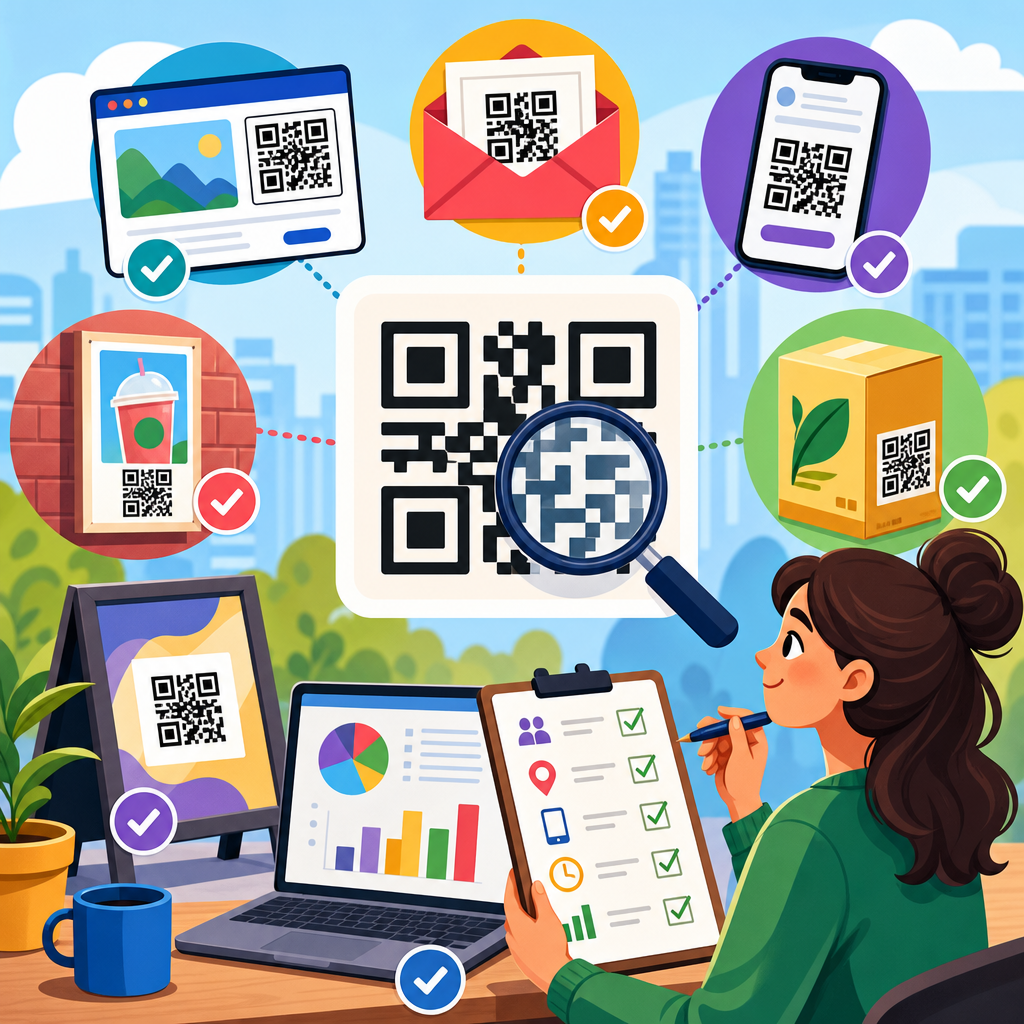
Reliable measurement is the foundation of QR conversion optimization. Use dynamic QR codes so the destination can be updated without reprinting and every scan can be tracked by asset, location, date, and campaign. Append UTM parameters for analytics platforms such as Google Analytics 4, and configure events for key actions like page views, coupon reveals, form submissions, purchases, and app installs. If multiple placements use the same creative, generate separate codes anyway. Without placement-level tracking, you cannot distinguish whether a low scan rate came from weak messaging, poor visibility, or an unqualified audience.
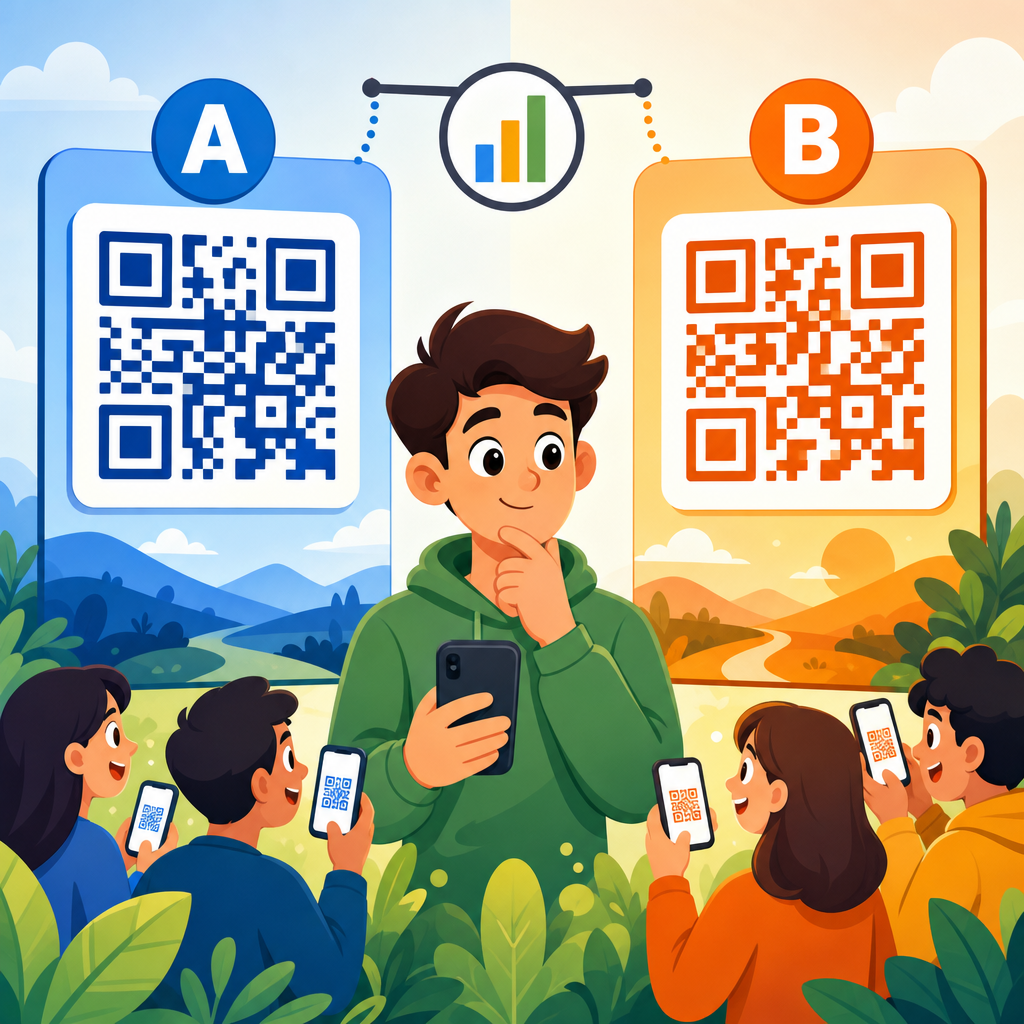
Testing should follow a clear hierarchy. First test variables that change scan probability: offer, call to action, placement, and size. Then test variables that change post-scan conversion: page speed, form length, proof elements, and checkout friction. In stores, I prefer controlled pilots across matched locations rather than changing every site at once. On direct mail, split quantities by audience segment and version. Record environmental details, including lighting, foot traffic, and surrounding creative, because those factors explain results. A good dashboard includes impressions or estimated opportunities to scan, unique scans, repeat scans, scan-to-session rate, bounce rate, primary conversion rate, and revenue per scan. Optimization becomes practical when each stage has a measurable baseline.
Increase trust, accessibility, and channel fit across every touchpoint
Many QR code failures are trust failures. Users worry about malicious links, irrelevant pages, or privacy overreach. Increase confidence by placing the destination brand name near the code, using a branded short domain when appropriate, and explaining exactly what users will get. On packaging, trust can also come from utility: recipe ideas, refill instructions, care guides, or authenticity verification. For B2B materials, a code that opens a product data sheet or a calendaring page performs better when the surrounding copy signals legitimacy and low friction.
Accessibility and channel fit also influence scan rates. Do not make the QR code the only path. Include a short URL or NFC option where practical, and ensure the landing page works with screen readers and keyboard navigation. Think carefully about where QR codes do and do not belong. They are highly effective on packaging, print, point-of-sale displays, menus, trade show signage, and connected TV second-screen prompts. They are weak on moving vehicles, small digital banners viewed on the same phone, or any environment where scanning is awkward. The best conversion optimization choices respect user reality. Audit your current QR placements, tighten the value proposition, test the physical and digital experience end to end, and improve one bottleneck at a time. Higher scan rates follow when the scan is easy, useful, and trustworthy.
Frequently Asked Questions
What are the most effective ways to increase QR code scan rates?
The most effective way to increase QR code scan rates is to reduce friction at every step of the user journey. People need to notice the code, understand why they should scan it, trust that it is safe, and feel confident that the result will be worth their time. That means placement, design, messaging, and landing-page experience all matter. A QR code by itself is rarely enough. High-performing campaigns usually pair the code with a strong call to action, such as “Scan to get 20% off,” “Scan to view the menu,” or “Scan to join the waitlist.” Clear value exchange is one of the biggest drivers of response because it answers the user’s first question: “What do I get if I scan this?”
Visibility is another major factor. Codes should be large enough to scan comfortably, placed where people naturally pause, and printed with sufficient contrast so cameras can recognize them quickly. If someone has to lean in, reposition their phone repeatedly, or guess what the code does, scan rates drop. It also helps to include simple supporting text around the code, such as a short benefit statement, a mobile-friendly URL for backup access, and brand cues that reinforce legitimacy. In real-world marketing environments like retail signage, packaging, event displays, and table tents, even small improvements in readability and clarity can significantly improve engagement.
Finally, what happens after the scan matters just as much as the scan itself. If the destination page loads slowly, is not optimized for mobile, asks for too much information, or does not match the promise made on the sign, users abandon the experience. The best QR campaigns are aligned from end to end: clear promise, easy scan, fast mobile destination, and one obvious next action. When marketers optimize all of these pieces together, scan rates and post-scan conversion rates both improve.
Where should a QR code be placed to get the highest number of scans?
QR code placement should be driven by context, distance, and user intent. The highest-performing placements are usually locations where people have both the time and the motivation to engage. In a retail store, that might be near product displays, shelf talkers, fitting-room signage, checkout counters, or endcaps where shoppers are already considering a purchase. In restaurants, menu boards, table signage, and takeaway packaging often work well because the customer is already looking for information or making a decision. At events, QR codes tend to perform best at entrances, registration desks, presentation screens, badges, booths, and printed collateral where attendees expect to interact.
Physical scanning conditions also matter. A code placed too high, too low, behind glare, on a curved surface, or in a dim area creates unnecessary friction. If the user must stop traffic, crouch down, or stand at an awkward angle to scan, response rates typically fall. The ideal placement makes scanning feel natural and immediate. Marketers should also consider dwell time. A QR code on a subway platform advertisement may need a very concise message because viewers only have a few seconds, while a code on in-store signage can support a more explanatory value proposition because shoppers have more time to read and act.
It is also important to match placement with the intended conversion goal. If the purpose is product education, place the code where customers are comparing options. If the goal is loyalty enrollment, place it where satisfaction is highest, such as after purchase or on packaging after unboxing. If the goal is app downloads, place it where repeat engagement is likely. Strong placement strategy comes from understanding when a person is most likely to want the next step. The best QR code placements do not interrupt the experience; they extend it at the exact moment interest is strongest.
How important is the call to action next to a QR code?
The call to action is extremely important because it gives the QR code meaning. Without context, many people will ignore a code, even if they notice it. A simple visual square does not communicate the outcome, and modern consumers are selective about where they direct their attention. A good call to action removes uncertainty by telling people exactly what will happen when they scan and why it is worth doing. Statements like “Scan to see today’s specials,” “Scan for installation instructions,” or “Scan to claim your free sample” are far more effective than generic language such as “Scan me.” Specificity increases both trust and motivation.
Strong calls to action also help pre-qualify the user. When the messaging is clear, the people who scan are more likely to be genuinely interested in the offer or information being presented. That usually leads to higher-quality traffic and better downstream conversion rates. In contrast, vague or overly clever messaging may generate curiosity but can produce lower intent and more drop-off after the scan. The most effective calls to action are concise, benefit-led, and directly tied to user need. They often pair an action word with a clear reward, such as savings, access, speed, convenience, exclusivity, or useful information.
Supporting language can strengthen performance even further. For example, adding trust cues like “No app required,” “Takes 10 seconds,” or “Official brand page” can reduce hesitation. In some contexts, urgency and exclusivity also help: “Scan before Friday for early access” or “Scan to unlock in-store-only pricing.” The key is to make the next step feel easy, safe, and worthwhile. In QR Code Marketing & Strategy, this is a core principle: conversion improves when the value exchange is explicit and the user understands exactly what they gain from scanning.
What design and technical factors make a QR code easier to scan?
Several design and technical factors directly affect scan performance. First, size matters. A QR code that is too small relative to viewing distance is one of the most common reasons for poor scan rates. People should be able to scan comfortably without excessive zooming, moving closer, or repeated attempts. High contrast is equally important. Dark code elements on a light background generally scan best, while low-contrast color combinations, busy backgrounds, reflections, and decorative effects can interfere with recognition. Brand customization can be useful, but it should never compromise readability.
Print quality and environmental conditions are also critical. Blurry printing, warped placement on curved surfaces, glossy materials that cause glare, and damage from weather or handling can all reduce scan success. Testing the code in the real environment before launch is essential. A code that scans perfectly on a computer screen may perform differently when printed on packaging, displayed outdoors, or viewed under uneven lighting. Marketers should test with multiple phone models, camera apps, and user positions to make sure the experience is reliable across common real-world conditions.
On the technical side, the destination URL should be mobile-friendly, fast-loading, and secure. Dynamic QR codes can be especially valuable because they allow marketers to update destinations, track performance, and run tests without reprinting the code. It is also smart to minimize redirects and make sure the landing page is optimized for the exact post-scan action. If someone scans to redeem an offer, the offer should be immediate and easy to claim. If someone scans for product details, the relevant information should appear right away. The easier the device can read the code and the faster the user gets what was promised, the higher the overall scan and conversion performance will be.
How can marketers measure and improve QR code performance over time?
Improving QR code performance starts with measuring more than just total scans. Marketers should track the full conversion path: impressions or estimated exposure, scan rate, landing-page engagement, completion rate, and final business outcome such as purchases, registrations, redemptions, or sign-ups. Looking only at raw scan counts can be misleading because a campaign may generate many scans but few meaningful actions. The goal is not merely to get people to scan; it is to get the right people to scan and complete the intended action afterward. This is especially important in QR Code Marketing & Strategy, where true optimization means increasing the percentage of users who notice, trust, scan, and convert.
One of the best ways to improve results is to test individual variables systematically. Marketers can compare different calls to action, incentive structures, placements, code sizes, supporting visuals, and landing-page formats to see what produces the strongest results. For example, a code that says “Scan for 15% off today” may outperform one that says “Learn more,” while a sign at eye level may outperform the same sign near the floor. Dynamic QR code platforms and campaign analytics tools make this process much easier because they can segment performance by location, asset, time period, and device type.
Qualitative observation is also valuable. Watch how people behave around the code. Do they notice it? Do they hesitate? Do they ask staff what it does? Do they struggle with scanning distance or lighting? These real-world insights often reveal friction that data alone cannot fully explain. Over time, the strongest QR programs combine analytics with field experience, iterating on both the physical presentation and the digital destination. The result is a more efficient campaign that not only increases scans but also improves user experience and business outcomes at every stage.