QR code engagement improves when every scan leads to a fast, relevant, low-friction experience that matches user intent. In marketing terms, engagement means more than scan volume. It includes scan-through rate by placement, landing-page interaction, form completion, add-to-cart behavior, coupon redemption, app installs, repeat visits, and assisted conversions across channels. Conversion optimization is the discipline of removing friction and increasing the percentage of visitors who take the next desired action. When applied to QR code marketing, it turns a static square into a measurable conversion pathway.
I have worked on QR campaigns for retail shelves, restaurant tables, packaging, direct mail, event signage, and field sales materials, and the pattern is consistent: teams usually obsess over code generation and underinvest in the experience after the scan. That is where performance is won or lost. A beautifully printed code cannot rescue a weak offer, a slow mobile page, or a confusing call to action. The opposite is also true. A basic code can produce excellent results when the context, message, and destination are tightly aligned.
This hub article explains how to improve QR code engagement through conversion optimization. It covers the full system: audience intent, placement, creative, landing-page design, analytics, segmentation, testing, trust, and follow-up. It also serves as the strategic center for deeper articles in the broader QR Code Marketing & Strategy topic, because conversion performance depends on how these pieces connect. If your goal is more leads, sales, signups, downloads, bookings, or redemptions from QR traffic, these are the principles that move results.
Start With Intent, Context, and a Single Conversion Goal
The fastest way to improve QR code engagement is to match the code to a specific moment and a single next step. People scan for a reason. On product packaging, they may want instructions, authenticity verification, recipes, or warranty registration. In a storefront window, they may want hours, a menu, or a quick way to book. At an event booth, they may want a demo, pricing, or a giveaway entry. Each environment creates different intent, and the conversion path should reflect that reality.
When I audit underperforming QR campaigns, the most common issue is goal overload. One code sends users to a page that tries to explain the brand, collect an email, promote social channels, push an app download, and highlight three products at once. That kills engagement. A QR code works best when the promise is explicit and the destination delivers one primary action. “Scan to see the menu” should open the menu, not the homepage. “Scan for 10% off” should land on a mobile-ready offer page with the discount already applied or clearly redeemable.
Good conversion optimization begins with message match. The text near the code, the visual environment, and the landing-page headline should say the same thing in slightly different forms. That continuity reduces uncertainty and increases completion rates. If you need secondary actions, place them lower on the page or after the primary conversion is complete.
Design the Scan Experience for Speed and Clarity
Engagement starts before the scan. The physical or digital presentation of the code affects whether people notice it, trust it, and can scan it quickly. Codes need sufficient size, contrast, quiet zone, and placement. As a working baseline, many teams use at least a 2 x 2 centimeter code for short-distance scanning, then scale larger for posters, windows, or out-of-home placements. A practical field rule is a scan distance ratio near 10:1, meaning a code meant to be scanned from 10 feet away should be roughly 1 foot wide. Conditions vary, but undersized codes regularly depress performance.
Clarity matters just as much as technical scannability. Add a plain-language prompt that states the benefit: “Scan to order ahead,” “Scan to claim your sample,” or “Scan to compare plans.” Include visual cues such as an arrow, product shot, or device mockup showing what happens next. Dynamic QR codes are usually the better choice for marketing because they let you update destinations, apply UTM parameters, route by device or location, and track scans over time without reprinting the code.
Trust signals also increase scan rates. Branded short links, recognizable domains, HTTPS destinations, and context from the surrounding design reduce hesitation. Anonymous redirects and vague prompts often underperform because users are unsure where the code leads. In regulated industries or high-consideration purchases, that trust gap is even more damaging.
Optimize the Landing Page for Mobile Conversion
Most QR scans happen on mobile devices, so the post-scan page must be built mobile-first. A strong QR landing page loads fast, confirms the scan promise in the first screen, presents one clear action, and minimizes typing. Core Web Vitals are not abstract metrics here; they directly shape abandonment. If the page is slow, shifts unexpectedly, or feels cluttered, users leave before engaging.
The above-the-fold section should answer three questions instantly: What is this? Why should I care? What should I do next? A concise headline, one supporting sentence, one primary button, and a relevant image are often enough. Reduce distractions such as heavy navigation, pop-ups that appear immediately, and forms with too many fields. If lead capture is necessary, start with the minimum viable ask. Name and email often outperform long qualification forms on cold QR traffic. Progressive profiling can happen later.
Use mobile-friendly interaction patterns: large tap targets, autofill support, wallet-compatible coupons, click-to-call buttons, map integration, and payment options like Apple Pay or Google Pay when relevant. For app-download flows, smart banners and deferred deep linking improve completion. For commerce, prefilled carts, localized inventory checks, and one-page checkout consistently increase conversion rates.
Use Data to Find Where Engagement Breaks Down
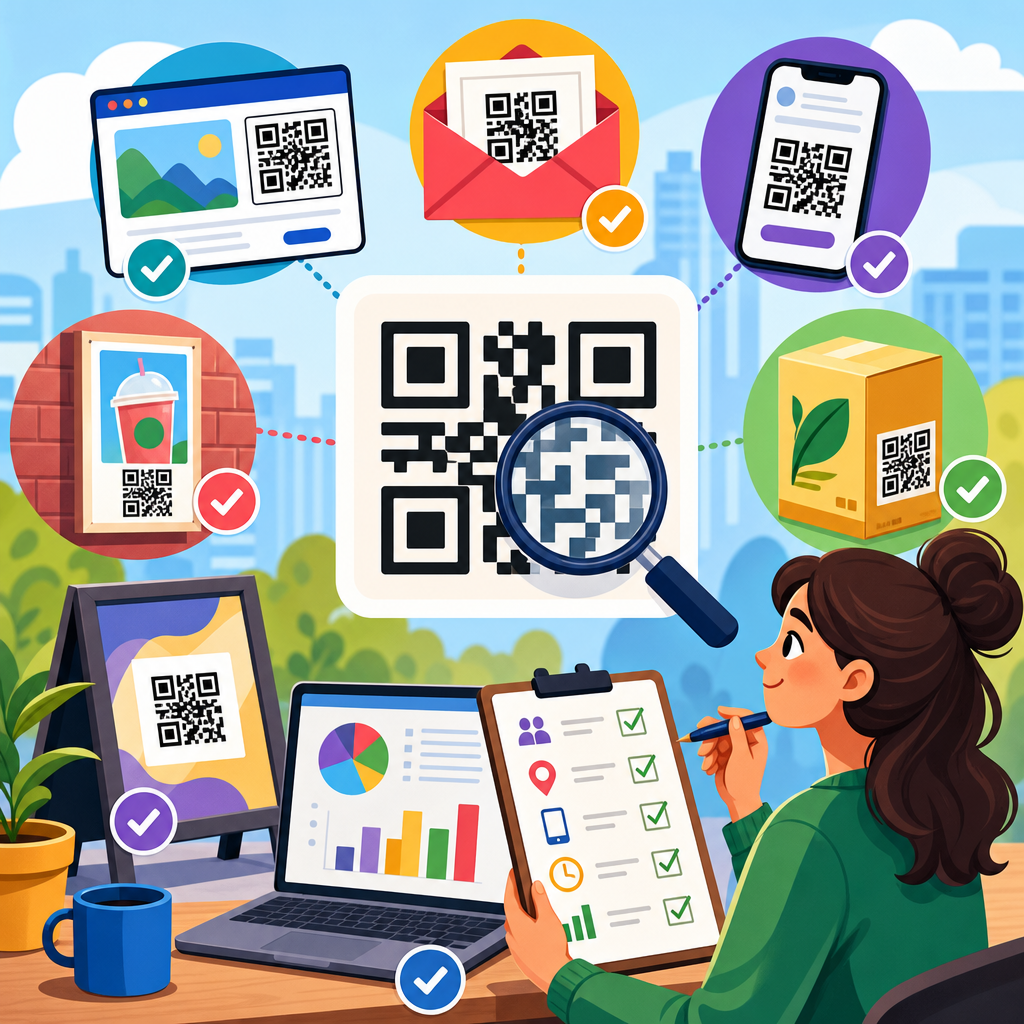
Improving QR code engagement requires more than counting scans. Scans are the top of the funnel, not the outcome. You need to measure each step: impression or exposure estimate, scan rate, landing-page view, engaged session, CTA click, form start, form completion, purchase, redemption, and downstream revenue. Tools like Google Analytics 4, Adobe Analytics, Bitly, QR Code Generator PRO, Uniqode, and CRM platforms such as HubSpot or Salesforce can connect much of this journey when tagging is set up correctly.
At minimum, every QR campaign should use unique destination parameters by placement, asset, audience, and date range. A code on packaging should not share the exact same tagged URL as a code on an in-store sign if you want actionable insights. I also recommend event tracking for key interactions such as coupon reveal, video play, map tap, copy code action, and checkout start. These micro-conversions reveal whether the page is resonating even before final conversion data accumulates.
Segment your analysis. Compare new versus returning users, iPhone versus Android, paid media-supported placements versus organic placements, and locations with different staff instructions or merchandising. Often the problem is not the QR code itself but a mismatch between environment and experience. For example, an event code may show high scans but low form completion because attendees are standing, distracted, and unwilling to type. That suggests a shorter form, passbook-style save option, or instant SMS follow-up.
Test Offers, Calls to Action, and Placement Systematically
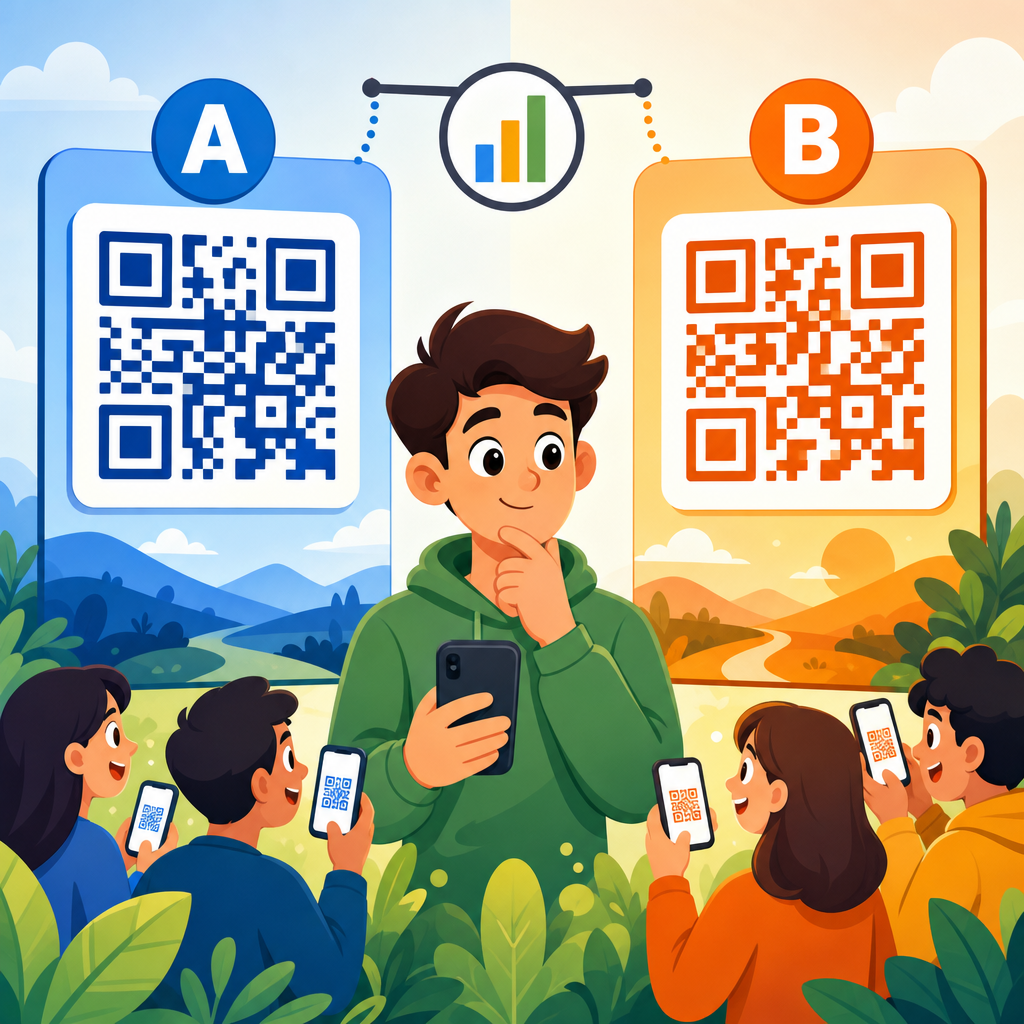
Conversion optimization for QR code marketing works best when teams test one variable at a time and keep records. The biggest lifts usually come from offer strength, CTA wording, and placement visibility. In one retail packaging program I worked on, changing the prompt from “Learn more” to “Scan for setup in 60 seconds” increased scan-through because it translated a vague action into a clear, time-bound benefit. In a restaurant environment, replacing “View menu” with “Scan to order and skip the line” improved both scans and average order value because the benefit addressed immediate context.
Testing should include both the on-object presentation and the post-scan page. Use dynamic QR codes so you can rotate destinations, then compare conversion rates by variant. Keep sample sizes meaningful and define success metrics before launch. If the code appears in multiple physical locations, create distinct variants by site instead of assuming one national average tells the whole story.
| Optimization area | What to test | Primary metric | Typical impact |
|---|---|---|---|
| CTA copy | Benefit-led versus generic prompt | Scan rate | Higher initial engagement when value is explicit |
| Offer | Discount, bonus content, trial, loyalty reward | Conversion rate | Stronger offers lift completion, but may reduce margin |
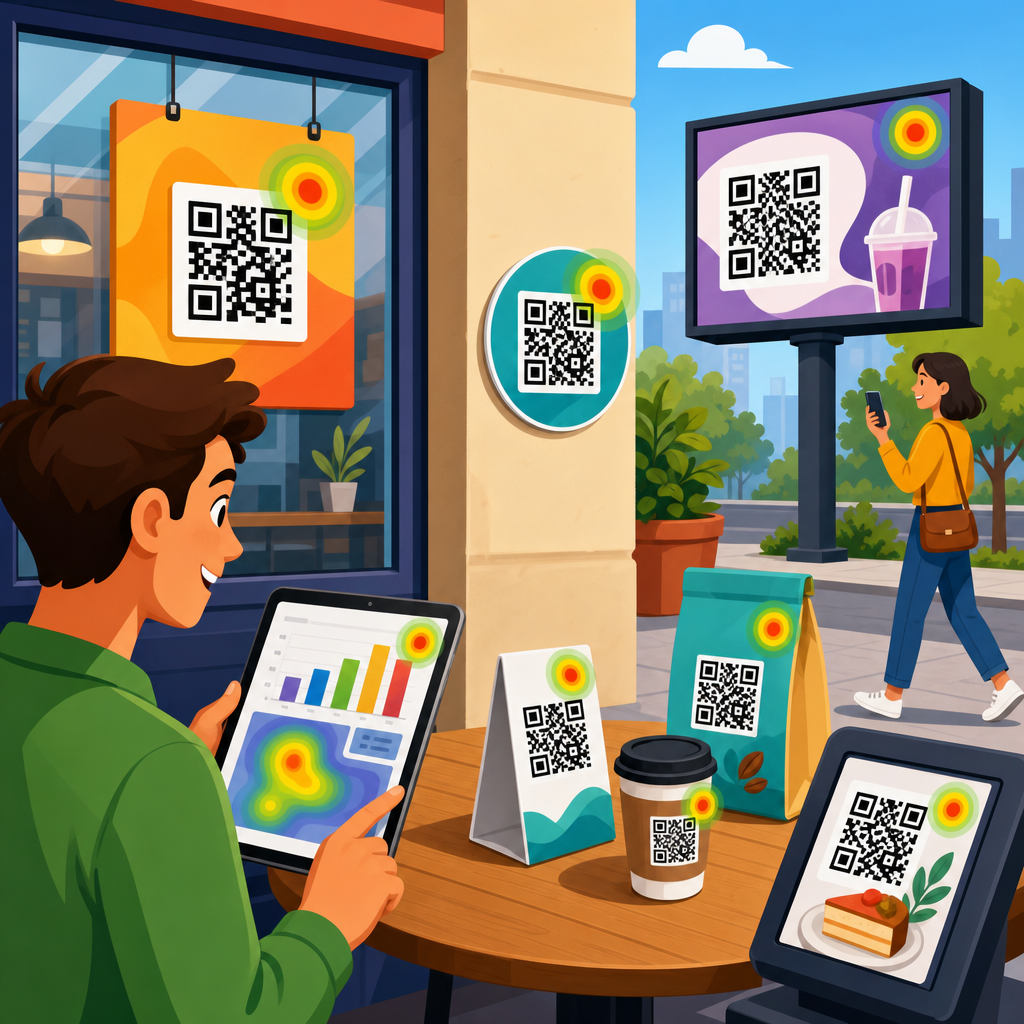
| Placement | Eye-level, checkout, packaging side panel, tabletop | Scans per exposure | Visibility and context often outperform creative tweaks |
| Landing page | Short form versus long form | Lead completion | Less friction usually wins on cold traffic |
| Redemption flow | Auto-applied coupon versus manual code entry | Checkout completion | Reduced steps improve sales and redemptions |
Do not test too many things at once, and do not ignore operational constraints. A “better” offer that staff cannot explain or systems cannot redeem will fail in the real world. The best-performing QR programs are not just persuasive; they are operationally smooth.
Personalize by Audience, Device, and Stage of Journey
Higher engagement often comes from routing different users to different experiences. Dynamic destinations can personalize by device type, language, geography, time of day, or campaign source. A consumer scanning on product packaging after purchase may need onboarding content, while a shopper scanning the same product on shelf may need reviews, comparison charts, or a limited-time incentive. Sending both audiences to one generic page wastes intent.
Journey stage matters. Top-of-funnel QR codes should educate and reduce uncertainty. Mid-funnel codes should compare options and answer objections. Bottom-funnel codes should simplify purchase or booking. This is why the same brand may need separate QR pathways for awareness posters, direct mail retargeting, and owned packaging. In B2B settings, field reps can use account-specific QR codes tied to a CRM campaign so follow-up reflects the prospect’s exact interest and meeting context.
Localization is another underused lever. If a code is placed in a hotel lobby, airport, stadium, or chain store, route users to the nearest inventory, schedule, venue map, or local offer. Relevance improves engagement because it removes the effort of searching after the scan.
Build Trust, Privacy, and Accessibility Into Every QR Journey
People engage more when the experience feels safe and inclusive. Use secure destinations, explain what the scan does, and avoid surprising users with immediate data collection. If a form is necessary, say why you need the information and what the user receives in return. For SMS or email capture, include consent language and make compliance with regulations such as TCPA, GDPR, and CAN-SPAM part of the workflow, not an afterthought.
Accessibility affects conversions too. Landing pages should use readable font sizes, sufficient contrast, descriptive button text, and screen-reader-friendly structure. Videos should have captions. PDFs should be used sparingly because they are often slower and harder to navigate on phones than responsive web pages. In physical spaces, make sure QR codes are placed where users can approach and scan comfortably, including wheelchair users when possible. Better accessibility usually means better usability for everyone.
Finally, prepare for failure states. Include a short URL below the code for users whose camera app struggles, whose lighting is poor, or who simply prefer typing. Redundancy protects conversions.
Connect QR Engagement to Revenue and Lifetime Value
The best QR code strategy does not stop at the first conversion. It connects the scan to retention, repeat purchase, and customer value over time. A coupon redemption can trigger loyalty enrollment. A packaging scan can lead to product registration, how-to content, accessory recommendations, and reorder reminders. A restaurant scan can capture menu preferences and drive future visits through app or SMS programs. These are not side benefits; they are how QR marketing compounds.
To prove value, map QR touchpoints to business outcomes. Look at revenue per scan, cost per acquired lead, redemption rate by location, repeat purchase rate for QR-acquired customers, and assisted conversion paths in your analytics platform. Some campaigns will have lower immediate conversion but stronger downstream retention. Others will excel at short-term revenue. The right decision depends on objective, margin structure, and sales cycle length.
For a conversion optimization hub, this is the central lesson: improve QR code engagement by treating the code, the context, the destination, and the follow-up as one conversion system. Start with intent, make the benefit explicit, remove mobile friction, instrument the funnel, test deliberately, personalize where it matters, and protect trust at every step. If you are building out your QR Code Marketing & Strategy program, use this page as the foundation, then audit your current campaigns against each section and prioritize the leaks with the highest revenue impact first.
Frequently Asked Questions
What does QR code engagement actually mean, and how is it different from simply counting scans?
QR code engagement is broader and more useful than raw scan count. A high number of scans may look impressive at first, but it does not automatically mean the campaign is performing well. Real engagement measures what happens after the scan: whether the page loads quickly, whether the content matches the user’s expectation, whether visitors interact with the page, complete a form, add a product to cart, redeem an offer, install an app, or return later through another channel. In other words, engagement reflects the quality of the user journey, not just the volume of traffic.
From a marketing and conversion optimization perspective, the goal is to reduce friction and increase the percentage of people who take the next desired action. That means evaluating scan-through rate by placement, bounce behavior, time on page, click depth, lead submissions, purchases, coupon redemptions, and even assisted conversions that happen later through email, paid search, or direct visits. A QR code on product packaging, for example, should not be judged by scans alone if its real purpose is to drive repeat purchases or educate buyers in a way that supports future sales.
The most effective way to think about QR engagement is to connect every code to a specific user intent. Someone scanning from a restaurant table expects a menu or ordering flow. Someone scanning from a poster may expect event details or an offer. When the experience is fast, relevant, and easy to complete, engagement improves naturally because the code is helping the user accomplish something immediately useful.
What are the most effective ways to improve QR code engagement rates?
The strongest improvements usually come from aligning the QR code with context, intent, and speed. Start by making sure the destination experience is mobile-first and loads almost instantly. Most QR scans happen on smartphones, often in environments where people are distracted, moving, or on a weak connection. If the landing page is slow, cluttered, or confusing, engagement drops quickly. A fast page with a clear headline, simple design, and one obvious next step will almost always outperform a generic page with too many options.
Placement also matters. A QR code should appear where the audience already has a reason to act. On packaging, receipts, in-store signage, direct mail, event booths, or product inserts, the code should answer an immediate need such as learning more, claiming a discount, registering a warranty, leaving a review, or reordering. The call to action next to the code must be specific. “Scan for 20% off,” “Scan to watch setup instructions,” or “Scan to order in under 1 minute” performs much better than simply saying “Scan me.” Clear value increases motivation.
Low-friction conversion design is another major factor. Reduce form fields, avoid unnecessary steps, prefill data where possible, and keep buttons prominent. If the goal is app installs, send users to the correct app store automatically. If the goal is coupon redemption, show the offer immediately rather than forcing multiple clicks. If the goal is product education, put the key information at the top. Relevance and ease are what turn scans into engagement, and engagement into measurable business outcomes.
Testing is essential as well. Small changes in CTA wording, offer type, placement height, page layout, color contrast, and destination content can significantly affect performance. Brands that improve QR engagement consistently treat QR codes as conversion assets, not static graphics. They monitor user behavior, identify where people drop off, and refine the experience over time.
How important is the landing page experience after someone scans a QR code?
The landing page experience is critical because it determines whether a scan becomes a meaningful interaction or a missed opportunity. A QR code creates a moment of intent. The person has already taken an action to bridge the offline and online experience. If what they see next is slow, irrelevant, difficult to navigate, or mismatched with the promise of the code, engagement usually ends there. In practice, many QR campaigns underperform not because the code itself is bad, but because the destination experience fails to meet user expectations.
An effective post-scan page should immediately confirm that the user is in the right place. The message on the landing page should match the CTA near the code. If the code promises a coupon, the coupon should be visible right away. If it offers setup help, the instructions should appear without forcing a user to search. This message match builds trust and reduces cognitive friction. The visitor should never have to wonder whether they scanned the wrong code.
Performance and usability are just as important. The page should be optimized for mobile screens, compressed for fast loading, and designed with clear spacing, readable text, and prominent action buttons. Avoid intrusive pop-ups, unnecessary navigation, and long forms. Every additional second of load time or every extra step can reduce completion rates. Strong landing pages prioritize one primary conversion goal while still supporting secondary actions for users at different stages of intent.
It is also valuable to personalize the landing page based on where the QR code appears. A code on a package insert can send users to product-specific support content. A code in a store can open inventory, reviews, or instant checkout. A code in an ad can direct users to a time-sensitive campaign page. The better the experience fits the scan context, the stronger the engagement and the higher the chance of conversion.
How can businesses measure QR code engagement and know whether it is improving?
Businesses should measure QR code engagement using a combination of scan data, behavioral metrics, and conversion outcomes. Scan volume is the starting point, but it is only one layer. More useful indicators include scan-through rate by placement, unique versus repeat scans, device type, time of day, geographic patterns, bounce rate, click-through rate on the landing page, scroll depth, form starts, form completions, add-to-cart activity, purchases, coupon redemptions, app installs, and return visits. These metrics reveal not just how many people scanned, but how effectively the experience moved them forward.
To understand performance properly, each QR code should be tied to a distinct campaign, location, or audience segment whenever possible. Using dynamic QR codes, UTM parameters, analytics events, and conversion tracking makes it easier to compare placements and identify high-performing contexts. For example, a QR code on retail shelf signage may drive more scans, while a code on packaging may drive fewer scans but a higher downstream conversion rate. Without segmented tracking, those differences are easy to miss.
Businesses should also evaluate assisted conversions. Not every user converts immediately after a scan. Some scan to learn more, then come back later through search, email, or direct traffic. In those cases, QR still contributed value even if it was not the last click. Looking at multi-channel attribution gives a more realistic picture of how QR codes support the broader customer journey.
Improvement should be measured over time through controlled testing. Compare variations in CTA language, destination pages, design layouts, incentive types, and physical placements. Monitor where users drop off, then remove friction from that step. If scan rates are low, the issue may be visibility or weak value messaging. If scans are high but conversions are low, the problem is often on the landing page. A disciplined measurement framework helps businesses move from guessing to optimizing.
What common mistakes reduce QR code engagement, and how can they be avoided?
One of the most common mistakes is sending all scans to a generic homepage. This creates unnecessary effort for the user and often causes immediate abandonment. People scan because they want a direct path to something specific. A targeted landing page with a clear next step will nearly always outperform a broad destination that forces visitors to hunt for information. The fix is simple: match each QR code to a focused page built for the exact intent behind that scan.
Another frequent mistake is offering no compelling reason to scan. If the only instruction is “Scan here,” many people will ignore it because the value is unclear. Strong engagement requires a visible benefit, such as access to a discount, exclusive content, quick ordering, support resources, loyalty rewards, or product details. The CTA should tell users what they get and why it is worth their time. Specificity drives action.
Poor mobile experience is another major problem. If the landing page loads slowly, displays poorly on smaller screens, or asks users to complete a long form, engagement drops sharply. Businesses should simplify the page, reduce load time, remove unnecessary fields, and ensure the primary action is easy to complete with one hand on a smartphone. Since QR interactions often happen in fast, real-world settings, convenience is a competitive advantage.
Brands also hurt performance when they fail to test code placement, size, contrast, and scannability. A QR code that is too small, placed in low light, printed with weak contrast, or positioned where people cannot comfortably access it will underperform no matter how strong the offer is. Technical execution matters. Finally, many campaigns fail because they are not tracked properly. Without analytics, teams cannot tell whether the problem is awareness, relevance, or conversion friction. Avoiding these mistakes means treating QR codes as part of a full user journey, from motivation to scan to post-scan action and eventual conversion.