Choosing the right durable QR code material starts with one practical question: where will the code live, and what will try to destroy it? In real projects, that answer determines far more than design style. It affects scan reliability, replacement cost, installation method, compliance, and the long-term value of the asset the code is attached to. A QR code printed for a restaurant table tent has a very different job than one mounted on industrial equipment, hospital assets, municipal signage, or outdoor wayfinding posts exposed to sun, rain, solvents, abrasion, and vandalism.
Durable QR code solutions are materials and construction methods designed to keep a code readable over time under specific environmental conditions. Material choice includes the face stock or substrate, protective top layer, adhesive or mounting system, print method, contrast, finish, and size. In my experience specifying codes for factories, campuses, and field assets, failures usually come from mismatched materials rather than bad QR technology. The code itself is simple. The hard part is selecting a material system that survives ultraviolet exposure, chemicals, temperature swings, moisture, impact, and repeated cleaning while preserving enough contrast and quiet zone for a scanner to decode the symbol quickly.
This matters because a QR code only creates value when it scans on demand. If a maintenance technician cannot pull up a service history, if a customer cannot access product details, or if a warehouse worker wastes time rescanning damaged labels, the material has already failed the business case. The right choice improves uptime, supports asset tracking, lowers replacement frequency, and protects brand credibility. This hub explains how to choose durable QR code material, compares common options, and outlines the tradeoffs that determine whether you need laminated polyester, anodized aluminum, laser-marked stainless steel, engraved plastic, or another long-life approach.
Start with the environment, not the material
The most reliable way to choose durable QR code material is to define the operating environment before looking at products. I use a simple sequence on every specification: indoor or outdoor, expected service life, exposure to chemicals, cleaning frequency, abrasion risk, temperature range, mounting surface, and scanning distance. These factors narrow the field quickly. For example, if a code will be placed on a powder-coated machine indoors and cleaned with mild detergents, industrial polyester may be enough. If it will sit on offshore equipment in salt spray and direct sun for ten years, metal plates with permanent marking become the safer choice.
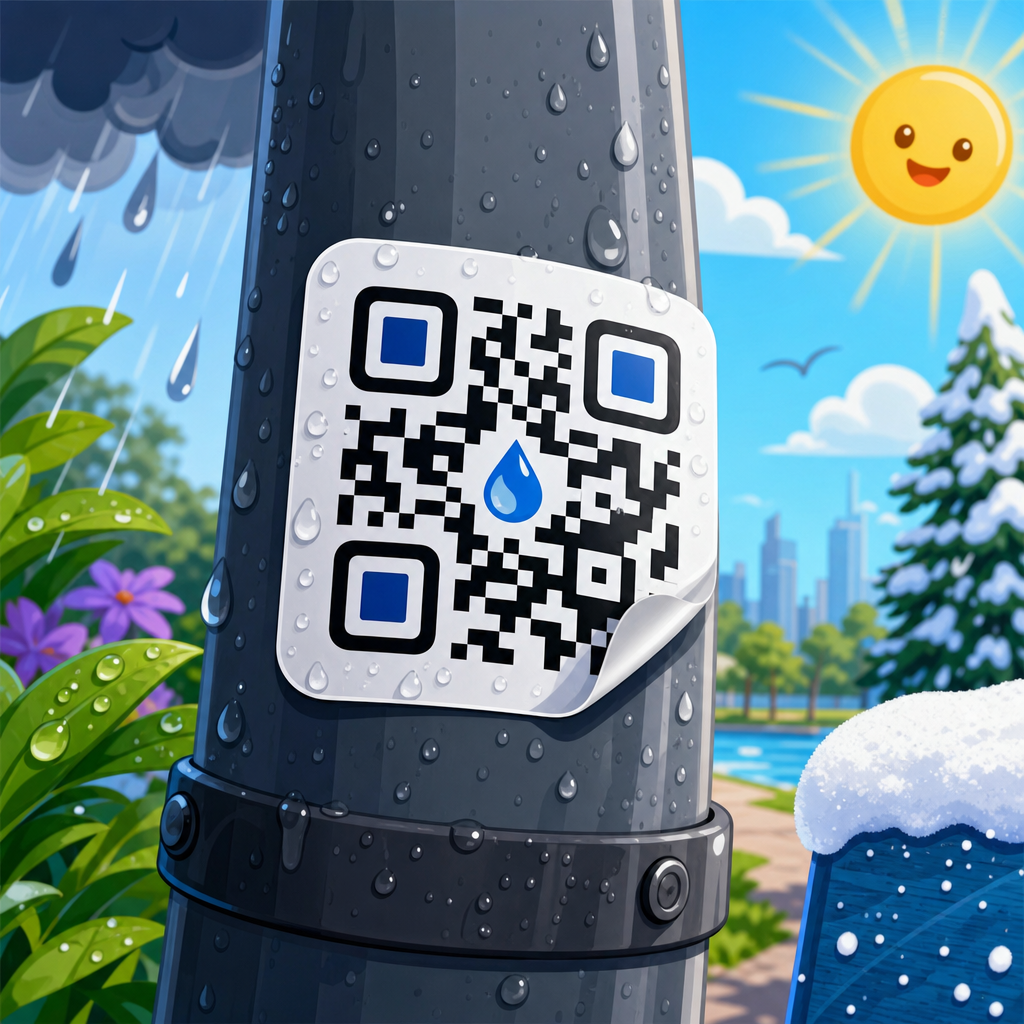
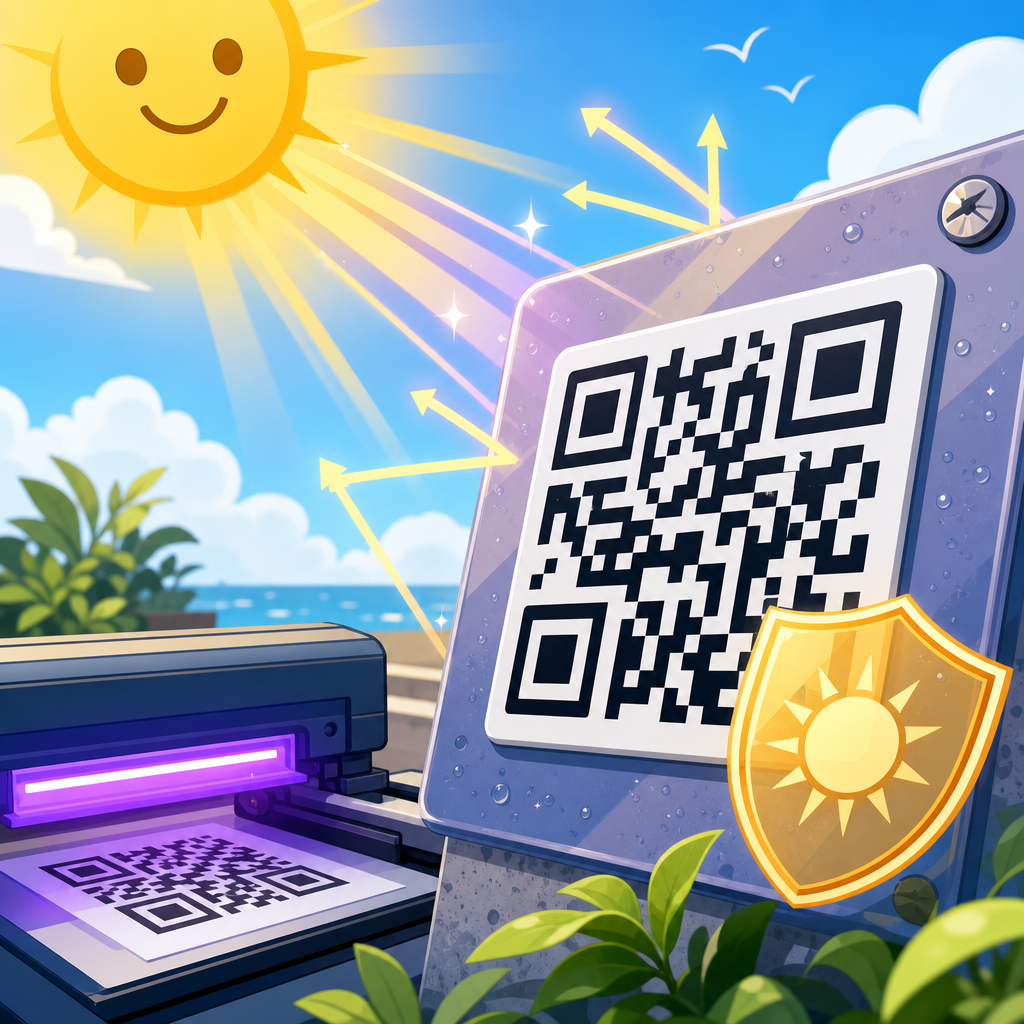
Outdoor use changes the decision immediately because sunlight degrades inks, films, and some plastics. Ultraviolet radiation can fade black modules, yellow clear laminates, and embrittle low-grade substrates. Moisture creates another failure mode by attacking adhesives, creeping under edges, or freezing and thawing in small gaps. In manufacturing and laboratories, chemical resistance matters more than weather. Alcohol, bleach, hydraulic fluids, oils, and aggressive solvents can soften coatings or dissolve printed graphics. In logistics and retail, abrasion is often the main issue. Forklifts, bins, cartons, shoes, and routine handling can polish away a printed code faster than many buyers expect.
The surface receiving the code matters too. Curved pipes, textured plastic housings, and low-surface-energy materials such as polypropylene can defeat standard adhesives. If the substrate expands and contracts significantly with temperature, a rigid plate may shear off while a conformable label stays put. Scanning conditions also affect selection. A tiny label on a tool crib part may scan at close range with a phone, but a gate sign or parking post needs larger modules, stronger contrast, and often a matte finish to control glare. Material choice and symbol design are inseparable.
Understand the main durable QR code material options
Most durable QR code solutions fall into a few categories, each with clear strengths and limitations. Polyester labels are common because they balance cost, print quality, and durability. High-performance polyester with resin thermal transfer printing and a protective laminate works well for indoor asset tags, equipment labels, and moderate outdoor use. Polycarbonate is tougher in some impact scenarios and often used for equipment overlays, but it can be more expensive and is not automatically superior for every QR application. Vinyl is flexible and useful on curved surfaces, though it is generally less dimensionally stable for precision labels over long periods.
For longer service life, metal options dominate. Anodized aluminum nameplates are a proven choice for outdoor and industrial identification because the image can be sealed beneath the anodic layer, protecting it from abrasion better than surface printing. Stainless steel tags are chosen when extreme heat, chemical exposure, or mechanical abuse make aluminum or films risky. Laser marking on stainless steel can create highly durable QR codes, especially for harsh process environments, though contrast must be engineered carefully. Brass appears in decorative or architectural applications, but it is less common when scan performance is the first priority.
Engraved plastics, including phenolic and acrylic laminates, are another category. These work well when tactile permanence is important, such as facility signage, but very fine QR modules can be challenging if engraving depth, fill quality, or edge sharpness are not tightly controlled. Ceramic and enamel-coated metal are niche options for very long outdoor life and vandal resistance, often seen in public infrastructure. Direct part marking is its own class: laser etching, dot peen, and chemical etch can place a QR code directly on metal components. That eliminates label failure but introduces strict requirements for contrast, cell geometry, and scanner capability.
| Material | Best use | Strengths | Limits |
|---|---|---|---|
| Laminated polyester | Indoor assets, light industrial, short to mid outdoor use | Low cost, sharp print, good chemical resistance with resin ribbon | Can fail under heavy UV, abrasion, or poor surface prep |
| Vinyl | Curved surfaces, temporary outdoor labeling | Flexible, easy application | Less stable for long-term precision labels |
| Anodized aluminum | Outdoor equipment, wayfinding, fixed assets | Excellent UV and abrasion performance, long service life | Higher cost, rigid format |
| Stainless steel | Extreme heat, chemicals, heavy abuse | Very durable, corrosion resistant | Costly, contrast requires careful marking |
| Engraved plastic | Facility signage, identification plates | Permanent text and graphics, good appearance | Fine QR detail can be inconsistent if poorly made |
| Direct part marking | Metal components and traceability | No adhesive failure, permanent on part | Needs specialized scanners and process control |
Match print method, finish, and code design to the material
Even the best substrate fails if the print method is wrong. For durable QR labels, thermal transfer with a resin ribbon is a standard industrial choice because it creates a tougher image than direct thermal, which fades and should not be used for long-life applications. UV inkjet, screen printing, and digital presses can work well depending on the coating and expected exposure, but they need compatibility testing. On metal plates, subsurface imaging, laser marking, photo anodizing, or chemical etching often outlast surface-applied inks. When buyers say they need a durable QR code, what they usually need is a durable construction, not just a durable base material.
Finish is equally important. Gloss can make a code look sharp in hand, yet reflections from sunlight, overhead fixtures, or forklift headlights can reduce scan success. In field deployments, I usually favor matte or satin finishes unless there is a strong reason to use gloss. Lamination adds protection, but not all laminates are equal. Polyester overlaminates can boost abrasion and chemical resistance; some polyurethane films add toughness; low-quality clear films may yellow or crack outdoors. Anti-graffiti coatings help on public-facing signs because markers and stickers are common forms of damage, not edge cases.
Code design rules still apply to durable materials. Maintain strong contrast, usually black on white or a very light background. Preserve the quiet zone around the symbol. Avoid shrinking the code to fit a badge or plate if it will be scanned by general-purpose smartphone cameras rather than dedicated imagers. Error correction helps, but it does not excuse poor printing or physical damage. ISO/IEC 18004 defines QR code requirements, and verifier-based grading methods are worth using for production runs. In practical terms, a durable material cannot compensate for low contrast, glare, overcompression, or logos that consume too much data area.
Choose based on use case: assets, outdoor signage, industrial sites, and public spaces
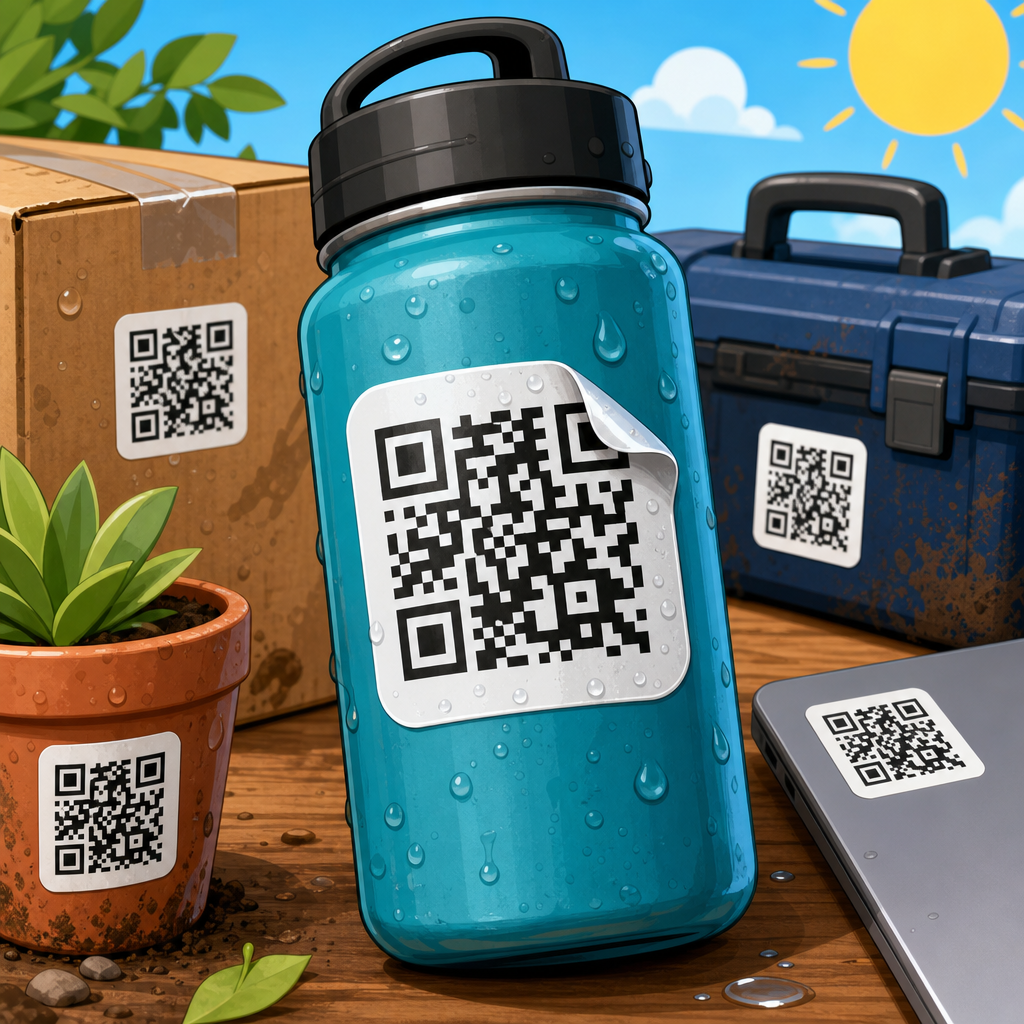
Asset tracking is one of the most common durable QR code applications, and it rewards disciplined specification. For laptops, medical devices, audiovisual gear, and office equipment, laminated polyester or destructible security polyester often works well because the environment is controlled and tamper evidence may matter. In hospitals, however, cleaning protocols change the picture. Isopropyl alcohol, quaternary ammonium compounds, and bleach-based disinfectants can attack weak coatings, so healthcare asset tags need tested chemical resistance, rounded corners to reduce edge lift, and adhesives that survive frequent wipe-downs.
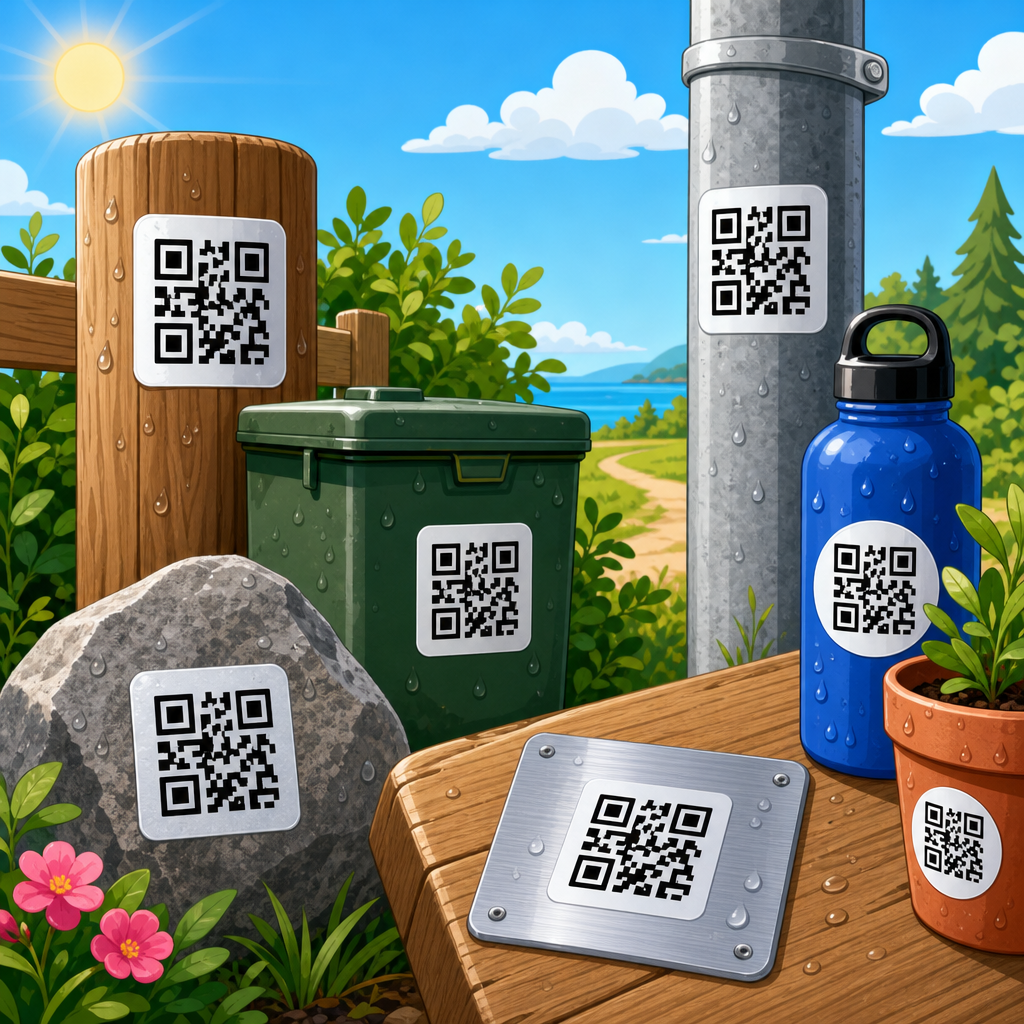
Outdoor signage requires a different mindset. Campus maps, trail markers, utility poles, and parking systems face UV, rain, dirt, and large temperature swings. Anodized aluminum is often the most balanced choice because it resists fading and abrasion while maintaining crisp contrast for years. Municipal and parks projects also need vandal resistance. A thin printed label on a sign post may be inexpensive, but if it is peeled off in weeks, installation labor destroys the savings. In these cases, mechanically fastened plates, tamper-resistant screws, or engraved and coated metal signs often produce lower total cost over the life of the installation.
Industrial sites bring the harshest combinations: oil, heat, washdown, impacts, and solvents. Food processing may require labels that endure caustic cleaning and high-pressure washdown. Manufacturing lines may expose codes to lubricants, metal chips, and repeated abrasion. For these environments, stainless steel tags, thick polyester labels with aggressive acrylic adhesive, or direct part marking are common. Public spaces add accessibility and maintenance concerns. If a QR code supports visitor information or emergency instructions, failure is not just inconvenient. It can become a service issue, so redundancy, larger code sizes, and high-contrast mounting locations are warranted.
Evaluate adhesives, mounting, testing, and lifecycle cost
Adhesive choice is where many durable QR code projects quietly fail. Permanent acrylic adhesives generally outperform rubber-based systems for long-term heat, UV, and chemical resistance, though high-tack rubber can bond quickly to rough or low-energy surfaces. For powder-coated metal, smooth plastics, and painted equipment, a quality acrylic adhesive is usually the baseline. For polyethylene, polypropylene, and textured housings, ask for a formulation designed for low-surface-energy substrates. Surface preparation matters just as much as the adhesive: remove oils, dust, and release agents, and apply within the manufacturer’s recommended temperature range.
Some projects should skip adhesive labels entirely. Riveted, screwed, or welded plates make sense on heavy equipment, public infrastructure, marine environments, and locations where theft or vandalism is likely. Mechanical attachment costs more upfront, but it avoids edge lift, adhesive creep, and premature loss on textured or dirty surfaces. When specifying a plate, include thickness, hole placement, corner radius, and corrosion compatibility of the fasteners. I have seen stainless plates mounted with incompatible hardware corrode around the attachment points even when the plate itself remained perfect.
Testing should be explicit, not assumed. Ask suppliers what standards or in-house protocols they use for UV weathering, salt spray, abrasion, chemical immersion, and adhesion. Common references include ASTM methods for environmental exposure and UL recognition for labeling systems where compliance matters. Request sample labels and run a real-world trial on the actual substrate for at least several weeks if the environment is harsh. Finally, compare lifecycle cost instead of unit cost. A thirty-cent label that must be replaced twice a year is more expensive than a three-dollar plate that lasts seven years and prevents scan failures. Audit replacement labor, downtime, and lost data access when building the business case.
The right durable QR code material is the one that remains readable for the full life of its job, not the one with the lowest purchase price or the most impressive datasheet. Start with the environment, then narrow the field by exposure, service life, mounting surface, and scan conditions. Polyester labels cover many indoor and light industrial needs. Anodized aluminum is often the best answer for outdoor durability and fixed assets. Stainless steel and direct part marking belong in the harshest industrial settings. Adhesive, finish, print method, code size, and contrast are not secondary details; they are part of the material decision.
If you manage QR code design, printing, or asset labeling programs, treat this page as your hub for durable QR code solutions and build a repeatable selection process. Document the environment, test samples on the real surface, verify scan performance under actual lighting, and choose the material system that minimizes lifecycle cost. That approach prevents most failures before they happen. Review your current labels and signs, identify where weather, chemicals, abrasion, or cleaning are shortening service life, and upgrade those applications first. A durable QR code pays for itself when it keeps working exactly when someone needs it.
Frequently Asked Questions
1. What is the most important factor when choosing a durable QR code material?
The most important factor is the real-world environment where the QR code will be used. Before comparing metal, polyester, vinyl, acrylic, or laminated labels, it helps to ask a simple question: what will this code be exposed to every day? Heat, UV sunlight, rain, chemicals, abrasion, pressure washing, frequent handling, and disinfectants all affect material performance differently. A QR code used indoors on office equipment may work well with a durable laminated label, while a code attached to heavy machinery, outdoor signage, or municipal infrastructure may require anodized aluminum, stainless steel, or other industrial-grade materials designed for long service life.
This matters because durability is not just about whether the label stays attached. It also includes whether the printed or engraved code remains readable by scanners over time. A material can look intact but still fail if fading, scratching, glare, or surface wear reduces contrast. In practice, the right choice balances environmental resistance, scan reliability, lifespan, mounting method, and replacement cost. The best material is the one that performs consistently in the conditions the asset will actually face, not the one that simply sounds strongest on paper.
2. Which durable QR code materials are best for outdoor use?
For outdoor applications, the best materials are typically those that can withstand UV exposure, moisture, temperature swings, and physical wear without losing contrast or structural integrity. Anodized aluminum is one of the strongest choices for long-term outdoor use because the image can be embedded beneath the anodized layer, helping protect the QR code from fading, scratching, and corrosion. Stainless steel is another excellent option, especially in harsh industrial or coastal environments where chemical exposure, humidity, or salt air can damage lighter materials. For some mid-range outdoor applications, high-performance polyester or vinyl labels with UV-resistant overlaminates may also work well, but they are usually better suited to less extreme conditions or shorter expected service lives.
The right outdoor material also depends on where and how the code is mounted. A QR code on a utility pole, trail marker, municipal sign, or equipment enclosure may need rigid metal construction and tamper-resistant fastening. A code on a product shipment container or temporary outdoor asset may only need weather-resistant label stock. The key is to think beyond “outdoor” as a single category. A shaded entrance sign, a sun-exposed parking lot placard, and a chemical-exposed industrial panel all create very different demands. The more severe and long-term the environment, the more valuable it becomes to invest in metal-based, industrial-grade QR code materials.
3. How do I know if a QR code material will remain scannable over time?
Long-term scannability depends on a combination of material choice, print or marking method, surface finish, and code design. Even the most durable substrate can fail if the QR code itself is produced with low contrast, poor sizing, or a finish that creates glare. For example, glossy surfaces may reflect light in ways that make scanning inconsistent, especially outdoors or under direct artificial lighting. Likewise, if the module size is too small for the expected scanning distance, users may struggle to read the code even when the material is still physically intact. Durable performance means the code remains easy to scan after months or years of wear, not just when it is first installed.
To evaluate scannability over time, look at how the code is created on the material. Etched, laser-marked, engraved, or subsurface-anodized methods often outlast standard surface printing in demanding environments. It is also wise to test samples under actual lighting and usage conditions before full deployment. Check the code after exposure to cleaning products, abrasion, moisture, heat, and repeated handling if those conditions are relevant. In many cases, material selection should be paired with thoughtful QR code production standards, including sufficient quiet zone, strong contrast, proper size, and error correction. A durable QR code is not only made from the right material; it is engineered to stay readable in the field.
4. Are metal QR code tags always better than durable label materials?
Not always. Metal QR code tags are often the best choice for the harshest and longest-lasting applications, but they are not automatically the right answer for every project. Metal offers major advantages in environments involving heat, impact, weather, chemicals, and long asset life. That makes it ideal for industrial equipment, infrastructure, utilities, oil and gas assets, fleet management, and other applications where replacement is costly or difficult. However, metal also comes with higher material and installation costs, and it may be unnecessary for indoor assets, controlled environments, or shorter-term use cases.
Durable label materials such as industrial polyester or high-performance laminated films can be extremely effective when conditions are less severe. In hospitals, offices, warehouses, retail settings, and many manufacturing environments, a premium label may provide excellent scan performance and durability at a lower cost and with easier application. The smarter question is not whether metal is better in general, but whether metal is justified by the risk, environment, expected lifespan, and value of the asset. If failure would create compliance issues, maintenance inefficiency, or expensive re-labeling, metal may deliver better long-term value. If the use case is lower risk and more controlled, a durable label can be the more efficient solution.
5. What should I consider besides durability when selecting a QR code material?
Durability is essential, but it should never be evaluated in isolation. You also need to consider how the QR code will be mounted, how often it will be scanned, who will scan it, and what standards or regulations may apply to the asset. Adhesive compatibility is a major factor, especially on textured, curved, oily, powder-coated, or low-energy surfaces. A highly durable label can still fail if it does not bond properly to the substrate. In other cases, mechanical attachment such as rivets, screws, or tamper-resistant fasteners may be more appropriate. The installation method should match both the material and the surface conditions.
It is also important to think about lifecycle cost rather than just upfront price. A cheaper material may seem attractive at first, but if it fades, peels, or becomes unreadable, replacement labor and downtime can quickly cost more than choosing a stronger option from the beginning. Appearance, branding, tamper resistance, indoor cleaning protocols, and compliance requirements may also influence the final decision. For example, healthcare environments may require resistance to repeated disinfection, while public-facing assets may need materials that preserve a clean, professional look over time. The most effective QR code material is the one that supports durability, reliable scanning, practical installation, and the long-term purpose of the asset it identifies.