Future AI applications for QR codes are moving the technology from simple link delivery to adaptive, measurable, and context-aware interactions that change based on user intent, environment, and business goals. A QR code is a machine-readable matrix barcode that stores data such as URLs, contact details, payment requests, authentication tokens, or product identifiers. Artificial intelligence refers to systems that learn patterns from data, make predictions, classify content, generate text or images, and automate decisions. When these two technologies combine, the result is not just a smarter barcode. It becomes an entry point into personalized customer journeys, safer authentication flows, better inventory tracking, richer packaging experiences, and more efficient service operations.
I have worked with dynamic QR campaigns for retail, events, and product support, and the biggest shift is already visible: teams no longer ask only where a code should link. They ask what the scan should reveal, how the experience should adapt, and what the data should teach them about the next interaction. That matters because QR codes sit at the boundary between physical and digital channels. AI is especially powerful at that boundary. It can infer location, detect fraud patterns, summarize user behavior, classify scans by intent, and generate tailored landing pages in milliseconds. For marketers, operations leaders, and product teams, QR codes plus AI promise higher conversion rates, stronger traceability, and lower friction for end users.
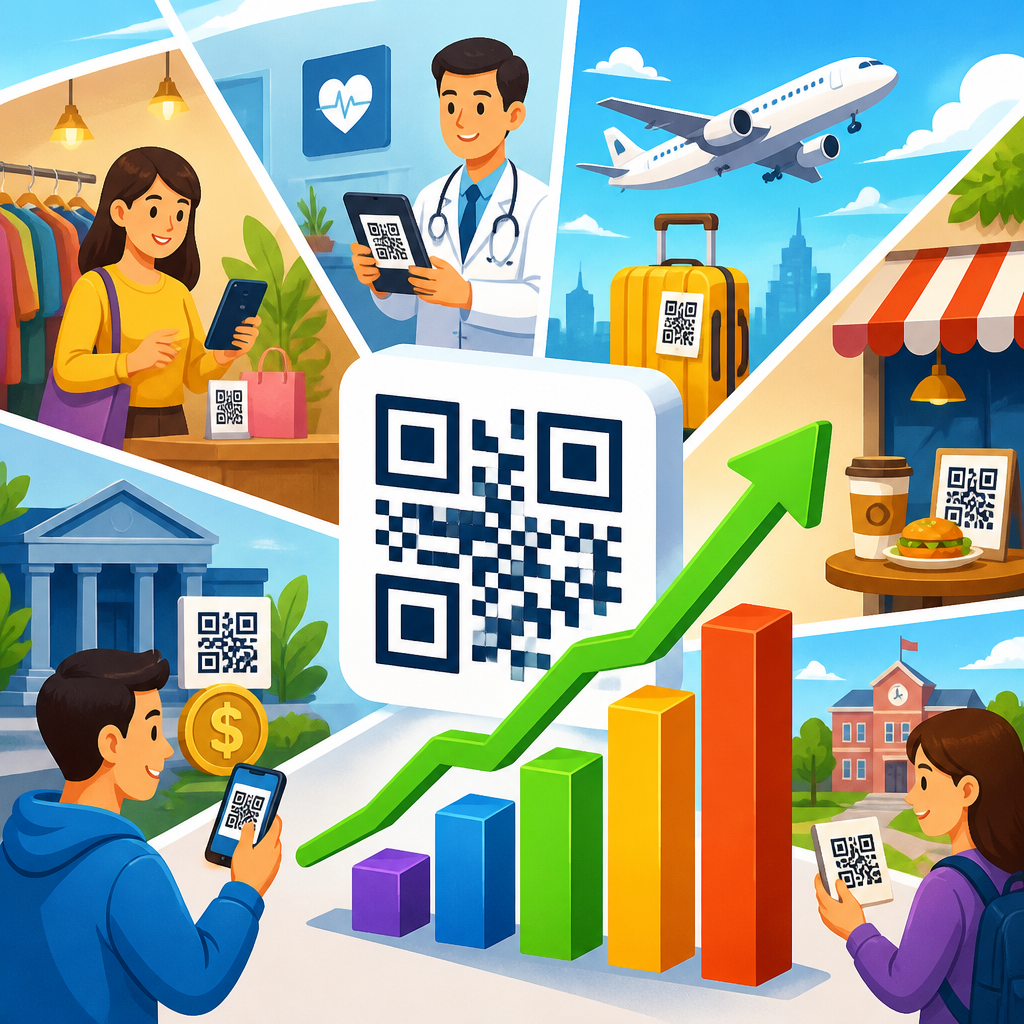
This topic also matters because QR adoption is now broad. Consumers use codes for restaurant menus, event check-in, mobile payments, warranty registration, app downloads, and connected packaging. Businesses use them in warehouses, medical labeling, field service, and omnichannel retail. As deployments expand, static one-size-fits-all experiences become less effective. The future belongs to intelligent QR systems that can route users differently by device type, language, time of day, loyalty status, purchase history, and even detected sentiment from prior support interactions. The sections below explain where AI will have the strongest impact, what practical use cases are emerging, and what limits organizations need to manage carefully.
Personalized customer journeys after the scan
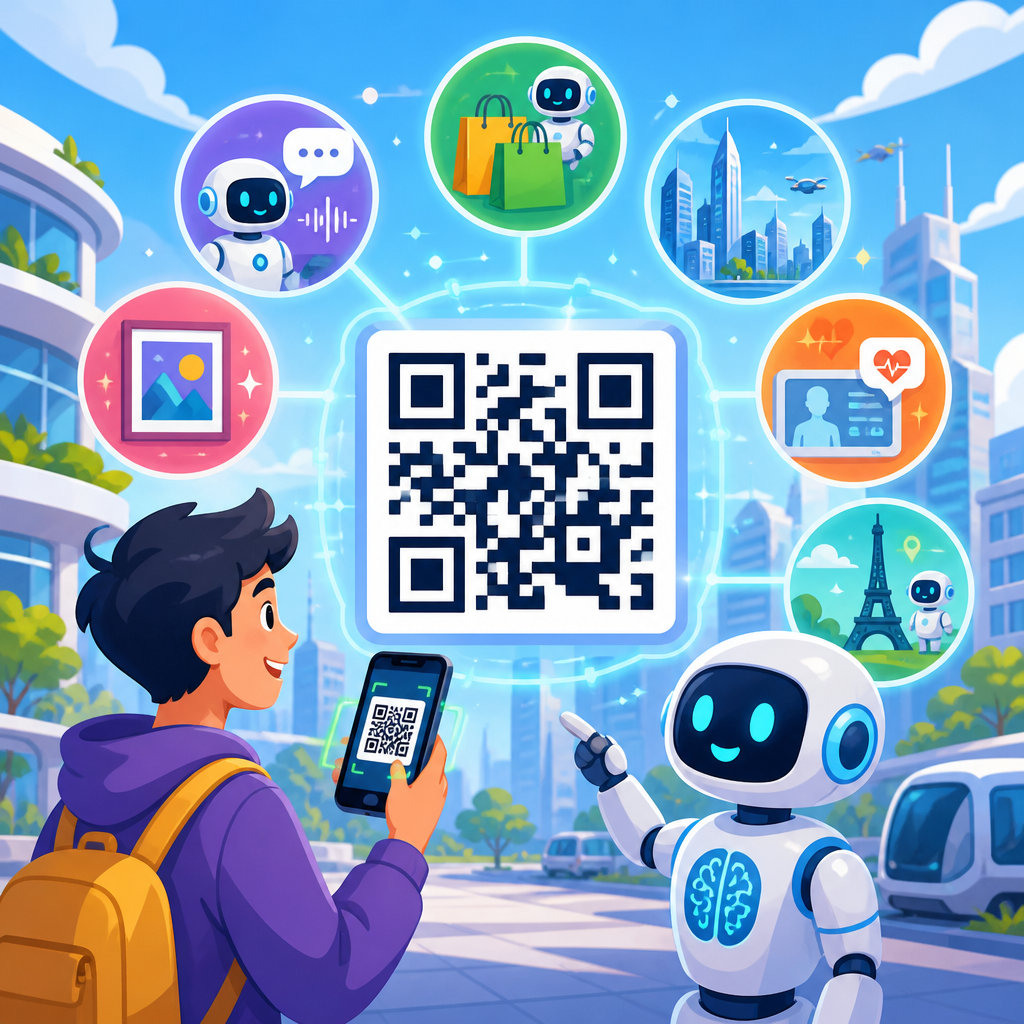
The most immediate AI application for QR codes is post-scan personalization. A conventional dynamic QR code can already redirect users based on predefined rules. AI adds prediction and continuous optimization. Instead of sending every scanner to the same page, an intelligent routing layer can analyze referral context, historical engagement, geolocation, device model, browser language, prior purchases, and campaign timing to predict which destination is most likely to convert. In retail, that might mean showing first-time visitors an explainer video while returning customers receive a loyalty offer. In hospitality, guests scanning a room code might see checkout instructions, spa promotions, or maintenance reporting based on their stay profile.
This is more than convenience. It is a measurable improvement in relevance. In campaigns I have reviewed, the difference between a generic landing page and a segmented post-scan page often shows up in lower bounce rates and stronger completion metrics such as registrations, coupon saves, or add-to-cart actions. AI recommendation systems similar to those used in ecommerce can rank content blocks, suggest products, and tailor calls to action after the scan. Large language models can also generate localized microcopy on demand, reducing the lag between campaign planning and execution. For global brands placing one QR code on packaging distributed across many countries, AI-powered translation and content selection can replace the inefficient practice of printing multiple region-specific codes.
The key operational requirement is strong event data. Personalized QR experiences work best when scan logs, product catalog information, CRM records, and web analytics are connected through clean identifiers and consent-aware data handling. Without that foundation, AI cannot make dependable decisions.
Computer vision and smarter physical interactions
Another major future direction is the use of computer vision alongside QR codes. The code identifies the object or entry point, while AI interprets the surrounding visual context. In manufacturing, a technician can scan a QR code on a machine, then use a phone camera to let a vision model detect the exact component, wear condition, or error state. The system can immediately surface the correct maintenance guide rather than a generic manual. In field service, QR labels on HVAC units, elevators, or telecom cabinets can trigger visual inspections that compare live imagery with historical records and flag anomalies.
In consumer packaging, brands can use visual AI to verify whether a code is being scanned from the actual product or from a copied image online. For example, luxury goods makers already combine serial identifiers, tamper-evident labels, and scan verification to combat counterfeiting. Adding image analysis of packaging texture, print alignment, or holographic features makes fake reproduction harder. The same principle applies to regulated sectors. Pharmaceutical companies can pair serialized QR codes with visual verification of packaging integrity, lot labels, and expiration presentation, helping distributors and inspectors identify suspect inventory faster.
Computer vision also improves accessibility and usability. Camera systems can help users locate a small or damaged code, correct perspective distortion, and recover scans in low-light conditions. This matters in warehouses, hospitals, and transit environments where fast, accurate scanning affects throughput and safety. As mobile processors improve, more of this intelligence will run on-device, reducing latency and preserving privacy.
Security, authentication, and fraud detection
QR code security has become a priority because attackers use malicious redirects, code swaps, and phishing campaigns to exploit user trust. AI can strengthen QR code security in several layers: anomaly detection, behavioral analysis, content classification, and continuous reputation scoring. Instead of relying only on static URL allowlists, a security system can evaluate whether a scan pattern looks normal for that code, whether the destination resembles known phishing infrastructure, and whether user behavior after the scan indicates coercion or confusion.
Financial services offer a clear example. Banks and payment providers increasingly use QR codes for merchant checkout, account linking, and customer support journeys. AI fraud models can compare scan velocity, location consistency, device fingerprint signals, and transaction history to detect suspicious activity. If a payment QR code that normally receives scans from one city suddenly drives high-value transactions from multiple distant regions, the system can require step-up verification. In corporate environments, QR-based login or workstation pairing can be combined with risk-based authentication models similar to those used in identity platforms such as Microsoft Entra ID or Okta.
There are limits. AI does not eliminate basic controls. Secure QR implementations still need HTTPS, short-lived tokens, signed payloads where appropriate, and clear user-facing verification cues. The future is layered defense: machine learning for pattern detection, cryptography for integrity, and good interface design for human trust.
AI-driven analytics and campaign optimization
One reason QR codes remain attractive is their measurability. Every scan can create a data point about time, place, device, source asset, and user action. AI turns that raw telemetry into practical guidance. Instead of manually reviewing dashboards, teams can use predictive models to identify which placements are underperforming, which audience segments are most valuable, and which creative variables most influence scan-to-conversion rates. For brands managing thousands of printed assets across stores, packaging runs, mailers, and displays, this matters enormously.
In practice, AI-driven QR analytics can answer direct business questions. Which shelf talker placement produces the most profitable scans? What time window yields the highest menu order completion? Which event booth code drives the strongest follow-up pipeline? Natural language interfaces can let non-technical teams ask these questions directly. Generative systems can summarize weekly scan behavior, detect anomalies, and suggest changes such as updating landing page copy, altering incentive structure, or retiring ineffective placements. This shortens the optimization cycle from weeks to days.
| AI application | Primary QR use case | Business benefit | Main limitation |
|---|---|---|---|
| Predictive personalization | Retail packaging and promotions | Higher conversion and relevance | Requires strong first-party data |
| Computer vision verification | Service, manufacturing, anti-counterfeit | Better accuracy and trust | Needs quality imagery and model training |
| Anomaly detection | Payments and secure access | Fraud reduction | False positives can add friction |
| Generative content assembly | Localized landing pages and support | Faster deployment at scale | Demands editorial guardrails |
| Predictive analytics | Campaign and placement optimization | Improved ROI | Dependent on clean attribution |
Good analytics also depend on measurement discipline. Use UTM parameters, event schemas, unique asset IDs, and server-side logging where possible. If attribution is weak, AI recommendations will be weak as well. The best-performing programs treat QR scans as a serious data stream, not a novelty metric.
Connected packaging, support, and product lifecycle intelligence
Connected packaging is where QR codes plus AI become a long-term relationship tool rather than a one-time campaign feature. A single code on a product box can support onboarding, troubleshooting, replenishment, warranty, recycling guidance, and loyalty engagement across the product lifecycle. AI makes each stage more useful. After purchase, a customer can scan a code to receive setup instructions tailored to the exact model and region. If they later return for help, the same code can open an AI assistant already aware of the product version, common failure modes, and prior support history.
Consumer electronics brands are especially well positioned here. Instead of printing thick manuals, they can use QR access points that connect to retrieval-based assistants grounded in approved documentation. This reduces support costs and can improve first-contact resolution when implemented carefully. Home appliance manufacturers can go further by linking the QR code to diagnostic data from the device itself. If a washing machine reports a fault, the support experience can combine product telemetry, known issue databases, and AI-guided troubleshooting. The code becomes the bridge into a contextual service session.
Packaging sustainability is another emerging use case. AI can identify the user’s region and provide accurate disposal or recycling instructions based on local rules, material composition, and municipal capabilities. For food and beverage products, QR systems can support freshness education, recipe recommendations, and personalized replenishment reminders. For industrial goods, they can connect buyers to certificates, safety data sheets, and maintenance intervals. In each case, the value comes from context, not the code alone.
Healthcare, logistics, and operational workflows
Outside marketing, future AI applications for QR codes may have the greatest impact in operational environments. In healthcare, QR labeling can support patient identification, medication administration, specimen tracking, and device management. AI can monitor scan behavior for exceptions, such as a medication being scanned in the wrong ward or at an unusual time, and alert staff before an error reaches the patient. This is not a replacement for clinical judgment, but it is a meaningful safety layer. Hospitals already rely on barcode medication administration standards; adding predictive intelligence can improve compliance and workload prioritization.
In logistics and warehousing, QR codes work well because they hold more data than traditional linear barcodes and are easily read by consumer devices. AI can forecast congestion in picking zones based on scan density, optimize routes for workers, and flag mismatches between expected and observed inventory movement. Delivery operations can use QR-linked proof-of-delivery workflows with image verification and automated exception handling. A damaged parcel scan can trigger AI classification of the issue, customer communication, and refund routing without waiting for manual triage.
Education and public services will also benefit. Museums can use QR entry points that adapt explanations by age group or language. Transit operators can connect station codes to multilingual service alerts summarized by AI. Municipal agencies can place QR codes on permits, signage, or infrastructure and use scan data to prioritize maintenance responses. These are practical extensions of existing systems, not speculative gimmicks.
Governance, privacy, and implementation strategy
The promise of AI-enhanced QR codes is real, but success depends on governance. Start with dynamic code infrastructure, clear naming conventions, and destination control. Then define what data is collected at scan time, what consent is required, how long records are retained, and which systems can use the data for modeling. Privacy laws such as GDPR and CCPA do not disappear because a touchpoint begins with a printed code. If personalization uses identifiable data, organizations need lawful basis, disclosure, and appropriate security controls.
Implementation should proceed in stages. First, centralize QR creation and analytics so teams are not scattering unmanaged codes across campaigns and assets. Second, improve landing page performance, localization, and accessibility. Third, layer in AI use cases with high signal and low risk, such as content recommendation, scan anomaly alerts, or support article retrieval. Fourth, evaluate advanced uses such as fraud scoring, vision verification, or generative page assembly. Model quality, governance, and business readiness should advance together.
Vendor selection matters too. Look for platforms that support dynamic redirects, API access, event export, role-based permissions, and integration with analytics, CRM, and consent tools. If AI is involved, ask how models are trained, how prompts and outputs are logged, and whether human review is available for sensitive workflows.
Future AI applications for QR codes will reshape how physical objects connect to digital systems. The code itself remains simple, but the intelligence around it is becoming far more capable. Personalized routing can turn one printed asset into many relevant experiences. Computer vision can verify context, guide service work, and strengthen anti-counterfeit programs. Fraud models can make QR payments and authentication safer. Predictive analytics can improve placement, messaging, and campaign ROI. Connected packaging can extend customer relationships from purchase to support to replenishment. In healthcare, logistics, and public services, QR plus AI can reduce errors and speed decisions.
The central lesson is straightforward: the future value of QR codes will come less from storing information and more from orchestrating context. Organizations that treat QR codes as strategic digital entry points, supported by solid data architecture and disciplined governance, will outperform those that use them as static shortcuts. The best next step is to audit your current QR deployments, identify where scan data already exists, and pilot one AI-enhanced use case with clear success metrics. Start small, measure carefully, and build from proven results.
Frequently Asked Questions
1. How will AI change what QR codes can do in the future?
AI will expand QR codes far beyond their traditional role as static tools for opening a single link. In the future, QR codes are expected to become adaptive entry points that respond to real-world context, user behavior, and business objectives. Instead of every scan leading to the same destination, AI systems can evaluate signals such as device type, location, time of day, language preference, previous interactions, and likely user intent to determine the most relevant experience to deliver. For example, the same QR code on a product package could show first-time buyers an educational landing page, returning customers a loyalty offer, and support-seeking users a troubleshooting guide.
Another major shift is the move from passive tracking to predictive optimization. AI can analyze scan patterns at scale, identify which campaigns are underperforming, and recommend changes automatically. Businesses may use these insights to adjust messaging, personalize offers, refine placement strategies, or predict which audiences are most likely to convert. In retail, hospitality, healthcare, logistics, and smart cities, this means QR codes can become measurable micro-touchpoints within larger intelligent systems rather than isolated links.
AI may also enhance what happens before and after the scan. Before the scan, computer vision systems could decide when and where to surface QR codes in digital signage, packaging, or augmented reality environments for maximum visibility. After the scan, generative AI could create dynamic summaries, answer questions, localize content, or guide users through a task in real time. The result is a more responsive and useful interaction model where QR codes act as flexible gateways into AI-powered experiences.
2. What are adaptive and context-aware QR code experiences?
Adaptive and context-aware QR code experiences are interactions that change based on the conditions surrounding the scan. A standard QR code simply stores data, such as a URL or identifier, but the system behind that code can be designed to interpret context and deliver different outcomes intelligently. AI makes this possible by identifying patterns in user behavior and environment, then matching those patterns to the most appropriate response. This transforms the scan from a one-size-fits-all action into a tailored digital experience.
Context can include many factors. Environmental context might involve location, weather, local inventory, event schedules, or nearby services. User context can include language settings, previous purchases, membership status, accessibility needs, or stage in the customer journey. Situational context might involve whether the scan happened in a store, on transit, at home, during a support issue, or in response to a specific advertisement. AI can process these signals quickly and decide what content, recommendation, or workflow is most useful in that moment.
For instance, a restaurant QR code could show a breakfast menu in the morning, lunch specials at noon, and delivery options late at night. A museum QR code might present beginner-friendly explanations to casual visitors and more technical background to members or researchers. In B2B settings, a code on industrial equipment could direct operators to maintenance instructions while routing managers to analytics dashboards. These experiences feel smarter because the intelligence is not in the printed code itself, but in the AI-enabled platform interpreting the scan and adapting the response.
3. Which industries are most likely to benefit from future AI-powered QR code applications?
Many industries can benefit, but the strongest opportunities are in sectors where physical-to-digital interaction matters and where personalization, efficiency, or traceability create measurable value. Retail is one of the clearest examples. AI-powered QR codes can support dynamic product education, personalized promotions, inventory-aware offers, and post-purchase engagement. A single code on packaging could connect shoppers to usage tips, replenishment reminders, sustainability data, or cross-sell recommendations based on customer behavior and product history.
Healthcare is another major area. QR codes already support patient registration, device tracking, medication identification, and digital records access. With AI layered on top, future applications could include personalized patient instructions, multilingual care guidance, symptom triage after scanning a prescription label, or workflow optimization in hospitals through predictive asset tracking. In these settings, accuracy, speed, and accessibility are especially important, and AI can help tailor information while reducing friction.
Logistics and manufacturing are also strong candidates because they depend heavily on identification, authentication, and operational visibility. AI-enhanced QR systems can improve supply chain tracking, anomaly detection, counterfeit prevention, and maintenance workflows. A scanned code on a shipment or machine component could trigger predictive alerts, verify provenance, or display role-specific instructions. Hospitality, education, events, transportation, real estate, and smart city infrastructure will also benefit. In each case, the common theme is that AI turns QR codes into intelligent access points that connect physical objects and locations with adaptive digital services.
4. Can AI improve QR code security, authentication, and fraud prevention?
Yes, AI has strong potential to improve QR code security, especially as QR codes are increasingly used for payments, authentication, ticketing, identity verification, and product validation. One of the biggest risks with QR codes is that users often cannot visually verify where a scan will lead. Attackers can exploit this by replacing legitimate codes with malicious ones or directing users to deceptive pages. AI can help by detecting unusual redirect patterns, suspicious landing page behavior, scan anomalies, and mismatches between expected and actual code usage.
In authentication and access control, AI can evaluate scan behavior in context to identify signs of misuse. For example, if a QR-based login token is scanned from an unusual geography, at an unusual time, or in combination with abnormal device behavior, the system can trigger additional verification. In ticketing or secure entry scenarios, AI models can detect duplicate scans, replay attempts, and patterns associated with bot activity or organized fraud. For product authentication, QR codes linked to AI-backed verification systems can help identify counterfeit items by comparing scan history, seller information, distribution patterns, and known supply chain records.
AI can also strengthen trust through ongoing monitoring rather than one-time validation. Instead of simply checking whether a code exists, the system can continuously learn what normal scan behavior looks like and flag exceptions in real time. Combined with encrypted payloads, token rotation, secure redirects, and user education, AI adds a critical layer of intelligence to QR code ecosystems. It does not eliminate security risks on its own, but it can significantly improve detection, response, and confidence in high-value use cases.
5. What should businesses do now to prepare for future AI applications for QR codes?
Businesses should start by treating QR codes as strategic digital infrastructure rather than simple campaign accessories. The first step is to build a strong technical foundation: use dynamic QR codes when possible, centralize destination management, implement analytics, and connect scan data to broader systems such as CRM, marketing automation, product databases, support platforms, or inventory tools. Without reliable data and flexible routing, it is difficult to apply AI meaningfully. Companies that already manage QR experiences through connected platforms will be in a far better position to personalize and optimize them later.
The next priority is data quality and governance. AI systems depend on clean, well-structured, permission-aware data. Businesses should define what scan metrics matter, how user consent will be handled, what contextual signals are appropriate to collect, and how privacy regulations will be respected. This is especially important in sectors handling sensitive data, such as healthcare, finance, and education. Preparing for future AI use means designing QR workflows that are measurable, secure, and ethically managed from the beginning.
Finally, organizations should experiment with practical use cases now. That might include localized landing pages, audience segmentation, A/B testing, multilingual support, predictive campaign reporting, or AI-assisted customer service after a scan. These smaller implementations create operational readiness and reveal where adaptive experiences deliver real business value. The future of AI applications for QR codes is not just about adding intelligence for its own sake. It is about making each scan more relevant, efficient, and useful. Businesses that begin with clear goals, strong data practices, and scalable systems will be best positioned to take advantage of that shift.