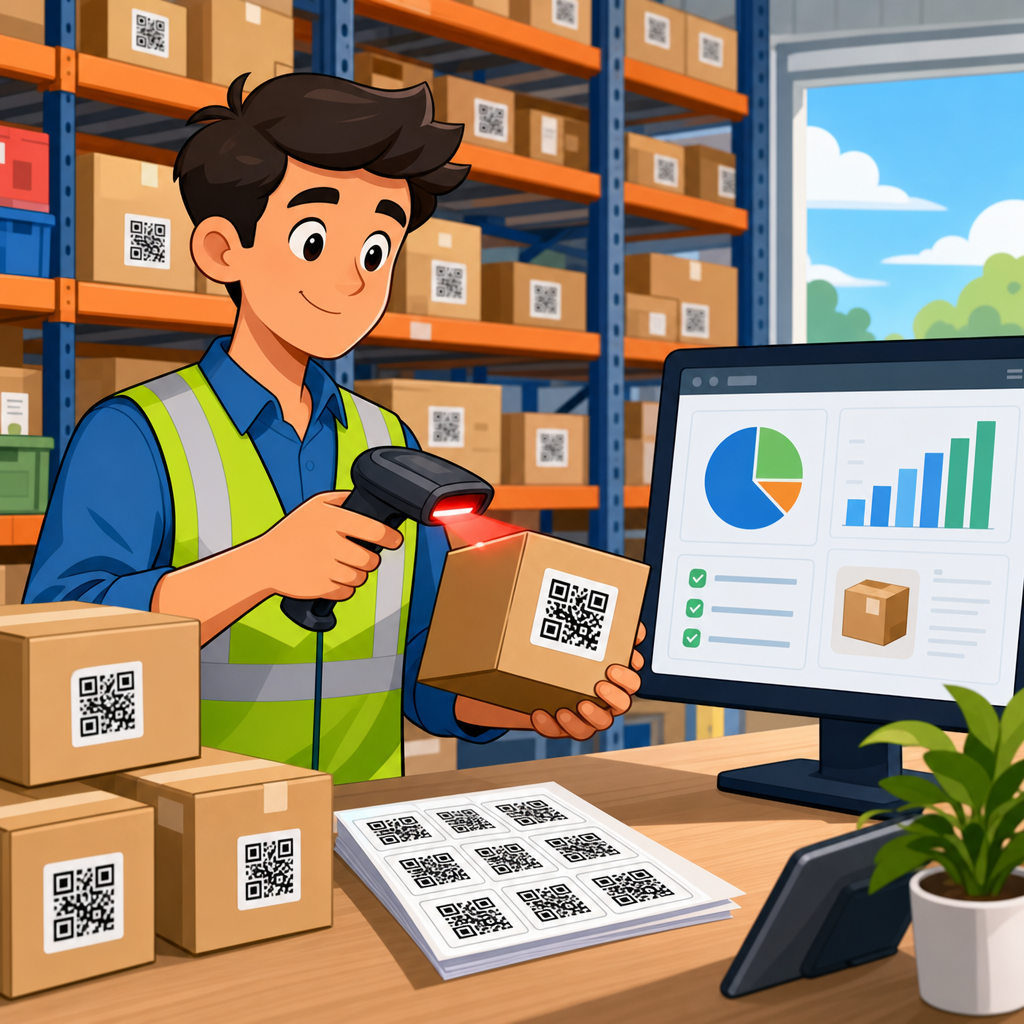
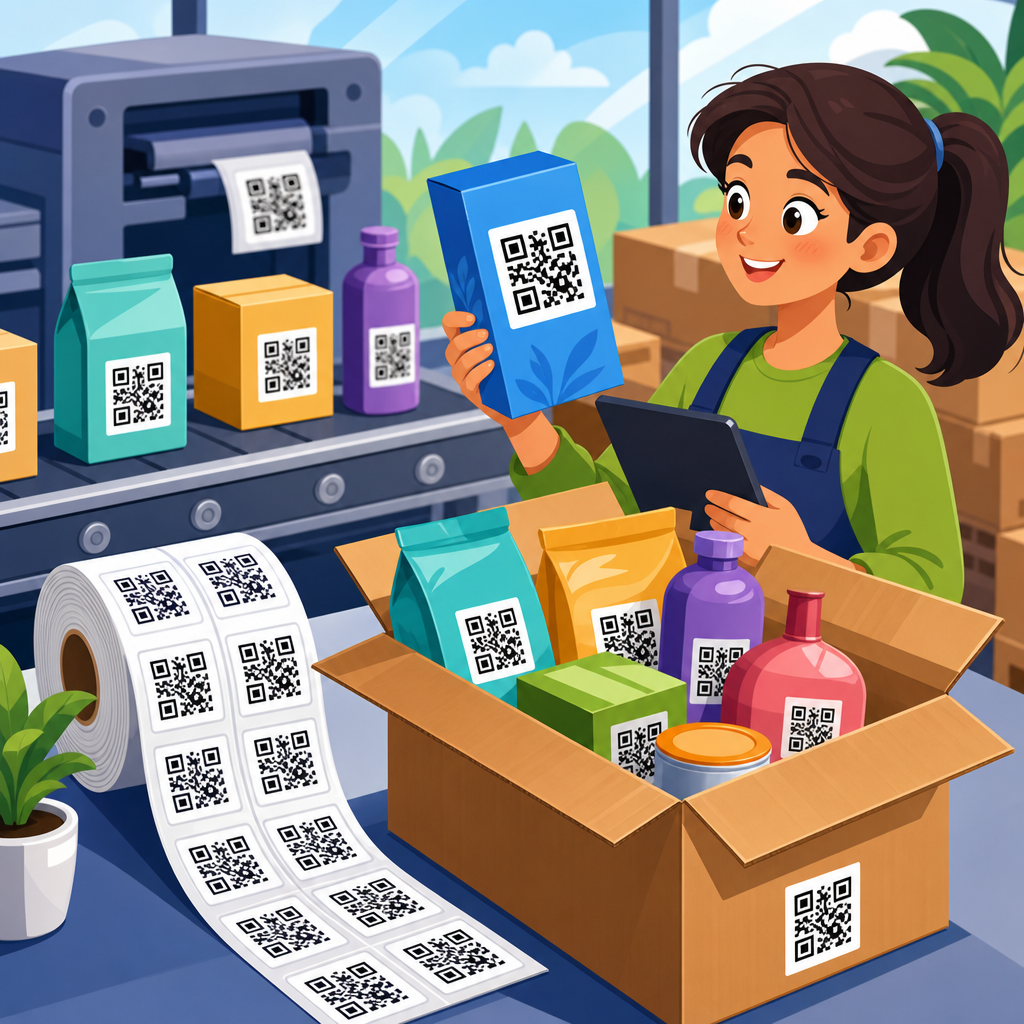
Bulk QR codes for marketing campaigns let teams generate, manage, and measure hundreds or thousands of scannable codes at once, turning what was once a manual design task into a repeatable acquisition, activation, and attribution system. A bulk QR code creation workflow usually starts with a spreadsheet or database that holds destinations, campaign identifiers, location names, product SKUs, coupon codes, or contact records. Software then maps each row to a unique QR code, applies branding rules, exports print-ready files, and often connects scans to analytics platforms. This matters because modern campaigns are fragmented across packaging, direct mail, retail displays, events, out-of-home placements, and local store assets. If every touchpoint needs its own destination or tracking parameter, creating codes one by one is slow, error-prone, and nearly impossible to govern at scale.
In practice, bulk QR code creation solves three recurring marketing problems. First, it protects consistency. When I have managed multi-location campaigns, the biggest risk was never generating the image itself; it was inconsistent naming conventions, broken URLs, duplicate redirects, and files saved in the wrong format for printers. Second, it improves attribution. A unique QR code for each channel, store, rep, or product variant makes scan data useful instead of generic. Third, it accelerates deployment. Launching a campaign with 500 personalized inserts, 300 store posters, or 10,000 serialized product labels becomes feasible when codes are generated from structured data instead of handcrafted one at a time.
To evaluate bulk QR codes well, it helps to define the two main types. Static QR codes encode the final destination directly in the symbol. They are simple and often cheaper, but the destination cannot be changed after printing. Dynamic QR codes point to a short redirect URL controlled by the platform. That allows marketers to edit the destination later, pause campaigns, segment analytics, and rotate offers without reprinting the code image. For marketing campaigns, dynamic bulk QR codes are usually the stronger option because campaigns change, inventory shifts, and landing pages need testing. Static codes still fit long-term uses such as permanent product documentation, Wi-Fi access, or stable public information where edits are unlikely.
The best bulk QR code systems are not just generators; they are campaign infrastructure. They support CSV imports, API-based creation, templated design, folder governance, bulk edits, redirect rules, downloadable vector files, error correction controls, and analytics integrations. They also account for print realities: quiet zone spacing, contrast ratios, minimum physical size, and export formats like SVG, EPS, and PDF. As a hub article, this guide explains how bulk QR code creation works, where it fits in campaign operations, how to choose tools, which implementation mistakes reduce scan rates, and how to build a structure that scales across channels and teams.
How bulk QR code creation works in real marketing operations
Bulk QR code creation is the process of generating many unique QR codes from a data source in a single batch. Most platforms accept a CSV file with columns such as campaign name, target URL, UTM parameters, store ID, region, product code, file name, and optional design settings. The system reads each row and creates a corresponding code. In mature workflows, the generator also creates short links, tags assets by campaign, and stores metadata so each code can be edited, searched, and reported on later. This is the operational difference between creating graphics and building a scalable channel.
A practical example is a franchise campaign with 250 locations. Each store needs a poster QR code that opens a landing page preloaded with its location identifier and localized offer. If the team makes one generic code, they lose local attribution and cannot route scans to the nearest store page. If they create 250 codes manually, errors creep in fast. A bulk workflow lets marketing upload all locations, generate 250 dynamic codes, export SVG files named by store, and distribute them to printers or local managers. The same method works for event badges, personalized mailers, sales kits, table tents, and shelf talkers.
Another common use case is product-level packaging. Consumer brands often need a unique code for every SKU, market, language, or retailer. A beverage company might generate separate QR codes for standard cans, holiday sleeves, variety packs, and retailer-exclusive displays, each sending consumers to the right recipe page, contest entry, or recycling information. When regulations change or an offer ends, dynamic redirects preserve the printed packaging while updating the destination. That flexibility alone can save significant reprint costs.
Static versus dynamic bulk QR codes: what marketers should choose
The most important decision in bulk QR code creation is whether the campaign requires static or dynamic codes. Static codes are direct and durable. Because the final URL is embedded in the pattern, they can remain useful even if the QR platform subscription ends. They are appropriate when the destination is permanent, the code count is low-risk, and analytics are not mission critical. Static bulk generation is often used for internal asset labels, equipment documentation, or evergreen brochures.
Dynamic bulk QR codes are better suited to marketing because they support redirect management and reporting. If a direct mail piece underperforms, the team can test a new landing page without reprinting. If one retailer needs a custom promotion, the destination changes in the dashboard. If a campaign launches before the final page is approved, the code can still be printed and activated later. Dynamic systems also capture scan counts, device type, location approximations, and timestamps, though privacy-safe reporting varies by vendor and region. For serious campaigns, dynamic is the default because it keeps options open after assets leave the printer.
There are tradeoffs. Dynamic QR codes depend on the redirect infrastructure staying live and fast. They also introduce governance requirements: link ownership, folder structure, expiration rules, and user permissions. Marketers should ask who controls domains, whether redirects can use a branded short domain, and how scan logs are retained. A cheap platform that does not support export history, API access, or role-based permissions can become a bottleneck as soon as multiple teams need access.
Core features to look for in a bulk QR code generator
Not all bulk QR code generators are built for campaigns. Some are fine for a few files but weak on governance, while others are designed for enterprise rollout. The essential features start with reliable batch creation from CSV or API, editable dynamic redirects, and high-resolution exports. Without those three, the workflow will break at either production or optimization. Beyond that, serious teams should prioritize custom short domains, naming templates, tags, folders, access controls, and analytics exports.
Design controls matter more than many teams expect. A bulk QR platform should support logo insertion, color settings, frame templates, and error correction levels while preserving scannability. It should also produce vector formats for print and raster formats for digital placement. I generally recommend testing every style variation before approving a large run, especially if the brand team wants light colors, gradients, or decorative frames. QR codes are functional marks first and brand elements second.
Integration is another key differentiator. Useful platforms connect with Google Analytics 4 through UTM parameters, CRM systems for lead capture, marketing automation platforms for follow-up, and APIs for programmatic generation. If a company already manages product data in Shopify, Salesforce, HubSpot, Airtable, or a PIM, the easiest bulk QR workflow often begins there. Teams that skip integration tend to recreate data manually in spreadsheets, which increases version-control problems and slows campaign updates.
| Requirement | Why it matters | Best fit example |
|---|---|---|
| CSV or API batch creation | Generates hundreds or thousands of codes quickly from structured data | Multi-location posters, serialized direct mail |
| Dynamic redirects | Lets marketers change destinations after printing | Seasonal offers, A/B tested landing pages |
| Custom short domain | Improves trust, branding, and deliverability of redirects | Retail packaging, premium campaigns |
| Vector export | Keeps print quality sharp at any size | Packaging, trade show signage, billboards |
| Analytics and tagging | Connects scans to channels, stores, products, and outcomes | Attribution reporting, local marketing |
| Role-based permissions | Prevents accidental edits and supports governance across teams | Enterprise marketing operations |
Campaign use cases: direct mail, retail, events, and packaging
Direct mail is one of the strongest applications for bulk QR codes because every piece can be personalized. A university recruitment team can send prospects a mailer with a QR code tied to program interest, geography, and counselor assignment. A real estate brand can produce farm-area postcards where each agent gets a unique code leading to a custom valuation page. Because scans happen on a mobile device while the mail piece is in hand, the path from interest to conversion is short. Response rates improve further when the landing page mirrors the exact offer shown in print.
Retail signage benefits from localized codes. Window clings, shelf talkers, endcaps, and counter displays can each use their own QR code so marketers know which store, placement, or product category drove engagement. If a promotion changes weekly, the code image can stay constant while the destination changes. This is especially valuable in chains where replacing printed materials across hundreds of stores takes time. Bulk dynamic codes preserve continuity while still letting the campaign evolve.
Events are another natural fit. Trade show booths often use separate QR codes for badge scans, demo booking, content downloads, and contest entries. Generating these in bulk by event, rep, territory, or product line simplifies follow-up and clarifies which asset produced the lead. On the operations side, batch-generated QR codes can also label staff credentials, session check-ins, and sponsor activations, keeping the attendee journey measurable without a complicated app.
Packaging extends the life of a campaign longest. A cosmetics brand can place product-specific codes on cartons that connect buyers to tutorials, ingredient explanations, replenishment offers, or loyalty enrollment. A manufacturer can assign unique codes to installation guides by model number and region. Because packaging remains in homes and warehouses long after shipment, dynamic QR redirects are valuable insurance. They let the brand update discontinued pages, add support notices, and route users to better content over time.
Implementation best practices that improve scan rate and data quality
Good bulk QR campaigns succeed or fail on execution details. Size, contrast, placement, and context all affect scan rate. For print, a practical baseline is at least 2 x 2 centimeters for close-range scans, with larger sizes for posters, windows, and outdoor media. The quiet zone around the code should remain clear, and dark modules on a light background are still the most reliable option. Glossy surfaces, folds, curved packaging, and low-light environments reduce performance, so test on the actual substrate before approving the full run.
The landing page matters as much as the code. If a QR code on a store sign opens a slow desktop page, the campaign is broken even if scans are high. Mobile-first design is essential: fast load times, concise copy, visible CTA buttons, and minimal form friction. UTM consistency also matters. I advise teams to standardize source, medium, campaign, content, and term values before generation so reporting stays clean. Once hundreds of unique links are in market, fixing inconsistent naming is difficult.
Quality assurance should be formal, not casual. Before launch, scan a sample from every batch using both iPhone and Android devices, in bright and low light, at expected distances, and through the final printed material. Confirm redirect behavior, page load, analytics events, and fallback handling. I have seen campaigns fail because codes were exported at the wrong resolution, printers trimmed into the quiet zone, or spreadsheet formulas introduced malformed URLs. A documented QA checklist is cheaper than reprinting.
Measurement, governance, and scaling a bulk QR program
Measurement starts with defining what a scan means in your funnel. Scans are useful leading indicators, but they are not the final KPI for most campaigns. Marketers should track downstream actions such as session quality, form completion, coupon redemption, appointment booking, app install, or purchase. A robust bulk QR setup passes identifiers into analytics and CRM systems so scans can be tied to revenue or qualified pipeline. Without that connection, teams may overvalue novelty and undervalue true conversion.
Governance becomes critical as usage grows. Establish naming conventions, ownership rules, redirect approval processes, archive policies, and short-domain standards. Decide whether old campaign codes should continue redirecting, where destination pages are documented, and who can edit links after launch. For enterprises, role-based permissions and audit logs are not optional. They prevent accidental destination changes and make compliance reviews possible when codes appear on regulated products or customer communications.
As a hub within QR Code Creation and Tools, bulk QR code creation connects naturally to related topics: dynamic QR code platforms, QR code design guidelines, QR code tracking and analytics, QR code API integrations, personalized QR codes, and print testing standards. Teams that master bulk generation gain more than speed. They build a controlled system for linking offline touchpoints to digital outcomes, with enough flexibility to test, localize, and update campaigns without starting over. If you are planning any campaign with repeated placements, variable destinations, or location-level attribution, start with a structured bulk QR workflow, choose dynamic management where edits matter, and test every code in the real world before launch.
Frequently Asked Questions
What are bulk QR codes, and how do they help marketing campaigns scale?
Bulk QR codes are large batches of unique QR codes generated from a spreadsheet, CRM export, product feed, or database instead of being created one by one. In a marketing context, this matters because campaigns often need hundreds or thousands of codes tied to different products, store locations, audience segments, sales reps, coupon offers, packaging variations, or offline placements. Rather than manually designing and assigning each code, a bulk workflow maps each row of data to a unique destination or identifier and generates all codes in a single process.
This approach helps campaigns scale in three major ways. First, it improves operational efficiency. Teams can launch direct mail, retail, event, out-of-home, and product packaging campaigns much faster because code creation becomes a repeatable system instead of a manual design task. Second, it increases accuracy. When every QR code is generated from structured data, there is less risk of mismatched links, duplicated assets, or tracking gaps. Third, it strengthens measurement. Each code can carry campaign IDs, location metadata, product SKUs, coupon values, or contact-level references, which makes it easier to attribute scans, conversions, and downstream performance to the right source.
For marketers, bulk QR codes are not just a design shortcut. They are part of a broader campaign infrastructure for acquisition, activation, and attribution. When implemented well, they connect physical touchpoints to digital actions at scale while preserving consistency in branding, landing-page logic, and analytics.
What data do you need to generate bulk QR codes effectively?
The foundation of a successful bulk QR code campaign is clean, well-structured data. Most workflows begin with a spreadsheet or database where each row represents a unique QR code and each column contains variables that define how that code should behave. Common fields include the destination URL, campaign name, campaign ID, source or medium tags, store or territory name, product SKU, coupon code, event identifier, salesperson, language preference, or customer record reference. In some campaigns, teams also include creative version, print batch, geographic region, expiration date, and internal approval status.
The most important requirement is that every row contains the minimum data needed to create a valid and trackable scan experience. For example, if the code should send users to different landing pages by location, each row needs a correct destination for that location. If the campaign depends on attribution, UTM parameters or equivalent tracking values should be standardized before generation begins. If the codes are tied to offers, expiration windows and coupon logic should be verified upfront so users do not scan into outdated or broken experiences.
Data hygiene is especially important in bulk production. Small errors become large problems when repeated across hundreds of assets. Marketers should check for malformed URLs, duplicate identifiers, missing fields, inconsistent naming conventions, incorrect capitalization in tracking parameters, and encoding issues that could affect scans or redirects. It is also smart to establish naming standards for export files, image folders, and campaign versions so operations, design, and analytics teams can stay aligned. In practice, the better your source data is, the easier it is to generate reliable QR codes, apply branding consistently, and measure campaign results with confidence.
How do bulk QR codes improve tracking, attribution, and campaign measurement?
Bulk QR codes improve measurement because they allow every physical or distributed asset to carry its own unique identity. Instead of sending all scans to one generic URL, marketers can assign each code a distinct tracking structure tied to a placement, audience, product, store, mailer version, or sales motion. That means when someone scans a code on a poster in one city, a product insert in another region, or a direct mail piece tied to a specific segment, the analytics can show exactly where that engagement originated.
This level of granularity supports stronger attribution. Teams can compare scan volume by location, creative, channel, distributor, print run, or rep. They can also connect scans to deeper outcomes such as form submissions, purchases, coupon redemptions, account activations, or app installs. If the QR platform uses dynamic redirects, campaign managers can update destinations without reprinting the code, which preserves continuity in reporting while allowing offers and landing pages to evolve over time. This is especially valuable in long-running campaigns or inventory already in market.
Measurement becomes even more useful when QR scan data is integrated with analytics tools, CRM systems, ecommerce platforms, or marketing automation software. In that setup, a scan is not just a top-of-funnel event. It becomes part of a full performance picture that includes user behavior after the scan, conversion rate, revenue impact, and customer lifecycle actions. The result is better visibility into which offline placements are actually driving outcomes, not just attention. For marketers trying to justify spend across print, retail, packaging, or event channels, bulk QR codes create a practical bridge between physical media and measurable digital performance.
What is the difference between static and dynamic bulk QR codes for marketing use?
Static bulk QR codes encode the final destination directly into the code itself. Once generated and printed, the destination cannot be changed. These are useful when the content is permanent, the use case is simple, and there is no need to update URLs after distribution. For example, a manufacturer may use static codes for evergreen product documentation or a business may use them for a stable contact page. Static codes can work well at scale, but they are less flexible for active campaigns where messaging, landing pages, or offers may need to change.
Dynamic bulk QR codes, by contrast, point to a redirect layer managed through software. That redirect layer can then send users to different destinations based on the campaign settings. This makes dynamic codes the preferred option for most marketing campaigns because teams can edit destinations after printing, fix mistakes without replacing assets, rotate seasonal promotions, pause underperforming experiences, and preserve existing printed inventory. Dynamic codes also support richer analytics because scans are typically captured at the redirect stage, where metadata such as time, device, geography, and campaign identifiers can be recorded more reliably.
For bulk marketing operations, dynamic codes usually provide the strongest long-term value. They reduce risk, extend asset life, and make optimization possible after launch. However, they also require a dependable platform, redirect governance, and clear ownership of campaign settings. The right choice depends on the campaign goals, compliance needs, budget, and expected lifetime of the printed material. In most performance-driven environments, dynamic bulk QR codes are the more strategic option because they combine scale with adaptability and measurement.
What are the best practices for designing and deploying bulk QR codes in a marketing campaign?
Successful bulk QR code deployment depends on getting both the technical setup and the user experience right. Start by ensuring every code has a clear purpose and a relevant destination. A QR code should not send users to a generic homepage if a specific landing page, offer page, event registration form, or product detail page would better match the context of the scan. The destination should load quickly, be fully mobile optimized, and continue the message promised in the surrounding creative. If the printed asset promotes a discount, event, or localized experience, the landing page should reflect that immediately.
On the design side, consistency matters. Brand customization can improve trust and recognition, but it should never compromise scan reliability. Use adequate contrast, maintain proper quiet zones, avoid over-styling the pattern, and test all branded variants before mass production. Size also matters: codes should be large enough for the expected scanning distance and placement environment. A code on product packaging has different physical requirements than one on a billboard or trade show sign. Equally important is the call to action. Users are far more likely to scan when the creative explains what they will get, such as “Scan for 15% off,” “View local inventory,” or “Register in 30 seconds.”
Operationally, always test before full release. Validate a sample across different devices, lighting conditions, print materials, and redirect paths. Confirm that every code maps to the correct row of source data and that campaign tracking parameters appear properly in analytics systems. If the campaign spans multiple teams, create a version-control process for source files, redirect rules, and approved creative. After launch, monitor scan behavior closely so you can identify broken links, low-performing placements, or audience-specific opportunities. The strongest bulk QR code campaigns are not just generated efficiently; they are governed carefully, tested thoroughly, and optimized continuously based on real-world scan and conversion data.