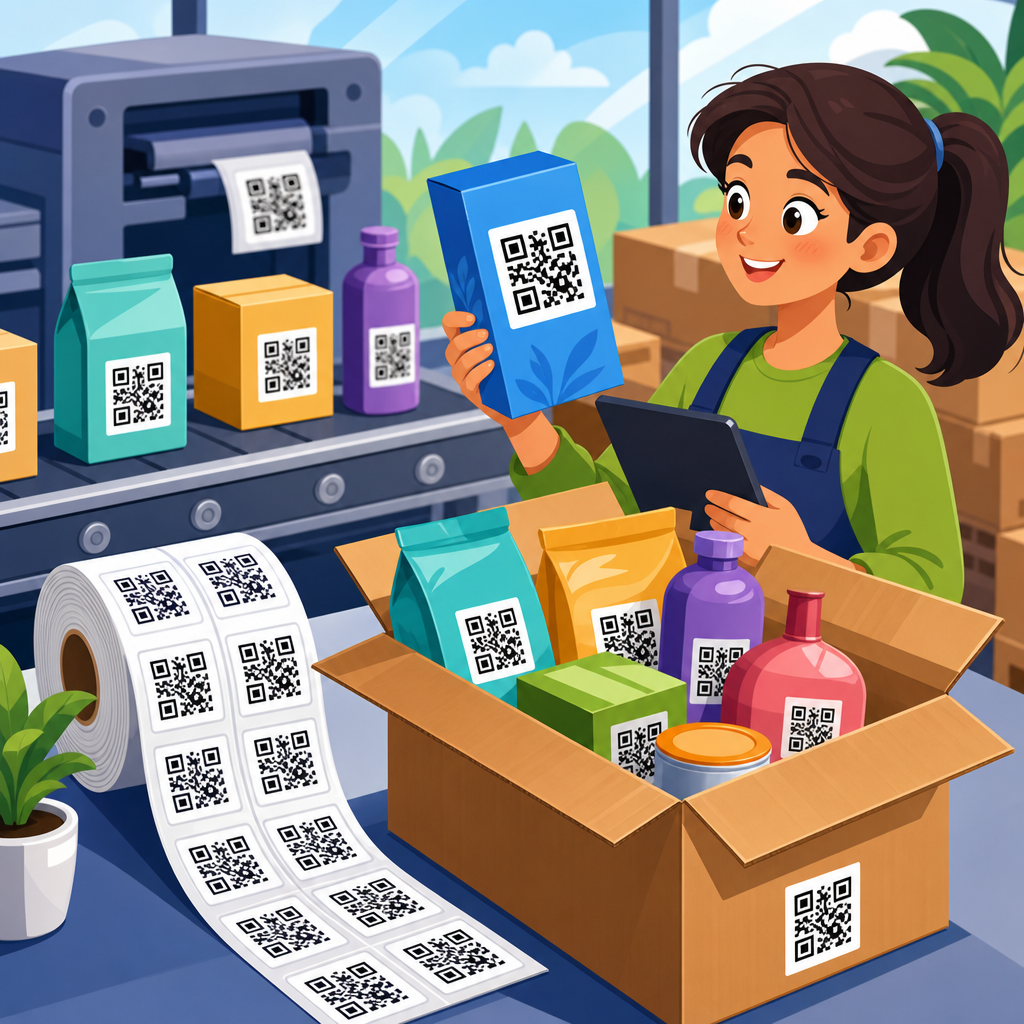
How to generate QR codes using a CSV file is a practical question for any team that needs hundreds or thousands of codes without building each one by hand. In plain terms, a CSV file is a spreadsheet-style text file that stores rows of data, while bulk QR code creation means using those rows to automatically produce a matching set of QR codes at scale. I have used this workflow for retail labels, event badges, product packaging, asset tracking, and direct mail, and the same pattern appears every time: once volume increases, manual creation becomes slow, error-prone, and expensive. A structured CSV-based process solves that problem by connecting data preparation, QR code generation, quality control, and export into one repeatable system. This matters because QR codes often sit at the last mile of a customer journey. If the destination URL is wrong, the print size is unreadable, or the file naming is inconsistent, the operational cost shows up immediately in returns, failed scans, or reprints. A strong bulk workflow protects accuracy, speeds production, and creates a foundation for related tasks such as variable URLs, campaign tracking, inventory mapping, and template-driven design across teams.
What bulk QR code creation with a CSV file actually means
Bulk QR code creation with a CSV file means every row in the file becomes one QR code, and each column supplies the information needed to build, label, and sometimes style that code. The most common setup includes columns such as id, destination_url, filename, folder, campaign_name, and optional design fields like color or frame text. If you are generating static QR codes, the destination_url may be the only required field. If you are using a dynamic QR code platform, the CSV may instead map each row to a redirect record, short link, or campaign identifier inside the provider’s system.
The reason CSV is used so widely is compatibility. Excel, Google Sheets, Airtable exports, ERP systems, e-commerce platforms, warehouse databases, and CRMs can all produce CSV files. That makes the format ideal for connecting business data to QR generation tools such as QR batch generators, design automation platforms, or custom scripts built with Python libraries like qrcode, segno, or pyqrcode. In practice, I recommend treating the CSV as a source-of-truth handoff file. Marketing owns campaign names and URLs, operations owns identifiers and print quantities, and production uses the final validated file to generate assets in PNG, SVG, or PDF formats.
How to structure a CSV file for reliable results
A good CSV structure reduces errors before the first QR code is produced. Start with a unique identifier column. This may be sku, serial_number, attendee_id, or asset_tag. Then include the data encoded into the QR code, usually a full HTTPS URL. Add a filename column if your tool supports custom output names, because that makes downstream print production and record matching much easier. If you need folders by region, product line, or event date, add a grouping column as well.
Formatting discipline matters more than many teams expect. URLs should be absolute, not relative. Use UTF-8 encoding if names or destinations include accented characters. Remove leading and trailing spaces, because hidden whitespace can break links or create inconsistent filenames. Keep one header row only, and make header names simple and machine-friendly. If a field can contain commas, confirm the CSV exporter wraps that value in quotes. Before bulk generation, filter for blank cells, duplicate identifiers, malformed URLs, and unexpected line breaks.
For large projects, create a validation checklist. I typically test ten rows first: the first row, the last row, several random rows, and any rows with unusual characters. If those work, the full batch usually does too. This staged approach is faster than regenerating ten thousand files after discovering one bad formula in the spreadsheet.
Choosing between static and dynamic QR codes in bulk projects
One of the most important decisions in bulk QR code creation is whether to generate static or dynamic codes. Static QR codes encode the final destination directly into the pattern. They are simple, inexpensive, and durable because they do not depend on a third-party redirect service. They work well for permanent content such as product manuals, Wi-Fi credentials, app deep links, or public pages that are unlikely to change.
Dynamic QR codes encode a short redirect URL that can be edited later. This is the better choice for campaigns, rotating offers, regional redirects, A/B tests, and any program where scan analytics matter. In retail, for example, I have used dynamic codes on packaging where the destination changed from launch content to support content after the product shipped. That single capability prevented a costly packaging revision.
| Type | Best use case | Main advantage | Main limitation |
|---|---|---|---|
| Static QR code | Permanent links, simple deployments, low dependency environments | No redirect service required and often lower long-term cost | Encoded destination cannot be changed after printing |
| Dynamic QR code | Campaigns, analytics, editable destinations, regional routing | Destination can be updated without reprinting the QR code | Requires platform management and ongoing service reliability |
The tradeoff is straightforward. Static codes reduce platform dependence, while dynamic codes increase flexibility and measurement. If the print run is large and expensive to replace, dynamic usually wins. If the use case is stable and compliance-sensitive, static is often the safer choice.
Tools and methods for generating QR codes from CSV data
There are three common ways to generate QR codes from a CSV file: browser-based bulk generators, design and labeling software, and custom automation. Browser-based tools are fastest for small to medium jobs. You upload the CSV, map the fields, choose output format, and export. These tools are useful when speed matters and the design requirements are modest. Always verify whether the platform supports vector export, custom filenames, logo overlays, and error correction settings before committing to a high-volume print job.
Design and labeling platforms are better when QR codes must be combined with variable text, barcodes, images, or templates. Adobe InDesign with data merge, Bartender, NiceLabel, and similar variable-data tools can place a QR code alongside names, SKUs, batch numbers, or instructions. This is common in manufacturing labels, event credentials, and serialized product inserts.
Custom automation is best for scale, control, and integration. A Python workflow can read a CSV with pandas, generate QR codes with segno or qrcode, save them with standardized filenames, and produce a manifest for QA. This method is especially useful when the business already has structured data and needs repeatable outputs on schedule. In one packaging project, a script-based workflow reduced a multi-day manual process to less than an hour, including validation and zipped delivery files.
Design, scanability, and print production standards
Generating QR codes in bulk is not only a data task; it is also a production quality task. The most common failure is creating a code that technically exists but does not scan reliably in real conditions. To prevent that, use sufficient contrast, maintain a clear quiet zone around the code, and avoid over-styling the modules. Black on white remains the safest option. Branded colors can work, but low contrast combinations often fail under glare, poor lighting, or small print sizes.
Error correction level matters when logos or design effects are added. Higher error correction can improve resilience, but it also increases pattern density, which may require a larger printed size. For print, SVG is usually preferable because it stays sharp at any scale. PNG can be fine for digital use or simple office printing, but low-resolution raster files can produce fuzzy edges in commercial production. If codes are going onto curved packaging, textured labels, or reflective surfaces, test on the actual material, not only on a screen proof.
A practical rule is to size the QR code based on scanning distance and environmental conditions, then verify with multiple devices. I usually test iPhone and Android native camera scanning, plus at least one older device. If the code must work in warehouses, retail aisles, or outdoor settings, field testing is mandatory. A code that scans in a conference room may fail under sodium lighting or behind shrink wrap.
Quality assurance for bulk QR code creation
Quality assurance is where professional bulk QR code creation separates itself from a rushed export. Start with data QA before generation: validate URL syntax, check duplicates, confirm campaign parameters, and lock the approved CSV version. Then perform generation QA: verify file count matches row count, confirm filenames align with identifiers, and inspect a sample of output files for dimensions, format, and contrast. After that, run scan QA by testing representative samples from every segment of the batch.
For large runs, sampling should be deliberate. Test edge cases such as the longest URLs, the smallest print sizes, rows with special characters, and any codes that include customized styling. If the job feeds into print, also inspect proofs after imposition, because resizing or color conversion can introduce problems. In direct mail and packaging, I have seen otherwise valid QR codes fail because artwork software clipped the quiet zone or because a printer substituted rich black settings that softened the edges.
Documentation helps prevent repeat mistakes. Keep the source CSV, export settings, software version, date, responsible owner, and a scan-tested sample set. That record makes it easier to rerun the batch, audit a campaign, or troubleshoot a support issue months later.
Use cases where CSV-driven QR code generation delivers the most value
Bulk QR code creation is most valuable when every item needs a unique destination or identifier. E-commerce brands use CSV-driven QR codes on inserts to route customers to product-specific guides, registration pages, or review requests. Event teams generate attendee-specific QR codes for check-in and access control. Schools and libraries label inventory so each item links to a catalog record or maintenance history. Real estate agencies create property-specific codes that direct prospects to listing pages, virtual tours, or scheduling forms.
In manufacturing and logistics, the value becomes even clearer. A CSV can hold serial numbers, lot IDs, warehouse locations, or inspection records, and each row can generate a code used on bins, pallets, tools, or finished goods. Healthcare and laboratory environments also use controlled bulk generation for specimen tracking and equipment management, although those settings require stricter data governance and sometimes additional symbologies. The core lesson is consistent: when the data is already tabular, CSV is the fastest bridge between business records and scannable assets.
Building a scalable workflow and content hub around bulk QR code creation
As a hub topic inside QR code creation and tools, bulk QR code creation should connect to the supporting subjects teams need next: static versus dynamic QR codes, QR code sizing, QR code error correction, CSV formatting tips, variable data printing, analytics setup, and testing methods. In practice, the best workflow is modular. One person or team prepares the CSV, another validates destinations, the generator produces assets, and production or marketing applies them to print or digital placements. Clear ownership reduces rework.
Scalability comes from standardization. Create a master CSV template, define approved column names, publish output naming conventions, and document default export settings for PNG, SVG, or PDF. If campaigns use UTM parameters, build formulas or scripts that assemble them consistently. If dynamic codes are used, define who can edit redirects after launch and how changes are logged. These controls turn bulk QR code creation from a one-off task into an operational capability.
The biggest benefit of learning how to generate QR codes using a CSV file is not just speed. It is reliability at scale. A disciplined CSV workflow lets teams create hundreds or thousands of QR codes with consistent data, predictable naming, and production-ready outputs. The process starts with a clean file, moves through the right generation method, and ends with quality checks that confirm every code scans as intended. Along the way, you gain flexibility to support packaging, events, inventory, direct mail, and campaign measurement without rebuilding the system for each project.
If you remember three points, make them these: structure the CSV carefully, choose static or dynamic codes based on the real business requirement, and test before full release. Those steps prevent the majority of failures I see in bulk QR projects. From there, standardize the workflow so future batches are faster and safer. Use this page as your starting point for bulk QR code creation, then build out the related processes that support design, analytics, and print execution. The more disciplined the setup, the more dependable every scan becomes.
Frequently Asked Questions
What does it mean to generate QR codes from a CSV file?
Generating QR codes from a CSV file means taking a spreadsheet-style list of records and turning each row into its own QR code automatically. A CSV, or comma-separated values file, is a simple text file that stores data in columns and rows, such as product names, serial numbers, URLs, contact details, coupon codes, or tracking IDs. Instead of manually creating one QR code at a time, you prepare your data once in the CSV and use a bulk QR code generator to produce a full batch in a single workflow.
This is especially useful when every QR code needs to be slightly different. For example, one row might contain a unique product landing page, another might contain an attendee ID for an event badge, and another might contain a custom tracking link for direct mail. The generator reads the CSV row by row, maps selected columns to the QR code content, and outputs a matching set of QR images. In many systems, you can also use CSV fields to personalize file names, labels, or print layouts, which makes large-scale production much easier to organize.
In practical use, this approach saves time, reduces manual errors, and makes large campaigns manageable. Teams commonly use it for retail labels, product packaging, inventory management, equipment tagging, admissions, and marketing programs where unique codes are required. The core idea is simple: the CSV acts as the data source, and the QR platform converts that data into a scalable set of machine-readable codes.
What kind of data should I include in the CSV for bulk QR code creation?
The right data depends on what the QR code should do after someone scans it. At the most basic level, your CSV needs one column containing the value to encode. That value could be a website URL, plain text, a phone number, an email address, Wi-Fi credentials, a vCard, a payment link, or an internal identifier used in your own systems. If you are generating dynamic QR codes through a platform, the CSV may instead include destination URLs, campaign metadata, or unique record IDs that the system uses behind the scenes.
It is also smart to include supporting columns, even if they are not all directly encoded into the QR code itself. Common examples include product SKU, customer name, event registration number, location code, expiration date, batch number, or asset ID. These fields can help with naming exported files, matching QR codes to printed materials, or filtering records later. For example, a file with columns like “product_name,” “sku,” “landing_page_url,” and “label_id” is much easier to audit and reuse than a file that only contains a single URL column.
Data quality matters a great deal in bulk generation. Keep the formatting consistent, avoid broken URLs, remove extra spaces, and confirm that every row contains the required fields. If your CSV includes special characters, international text, or formulas exported from spreadsheet software, review the final file before upload to make sure the content is clean and readable by the QR generator. A well-structured CSV not only improves output accuracy but also makes testing, printing, and future updates far more reliable.
How do I create QR codes in bulk from a CSV file step by step?
The usual process starts with preparing the CSV carefully. First, decide what each QR code should contain and create a spreadsheet with one row per code. Add clear column headers, such as “url,” “id,” “name,” or “campaign.” Then export the spreadsheet as a CSV file. Before uploading anything, open the CSV in a plain text editor or reimport it into your spreadsheet tool to make sure the formatting stayed intact and no cells were corrupted during export.
Next, upload the CSV into a QR code generator that supports bulk creation. Most platforms will ask you to map the CSV columns to the content you want to encode. In a simple use case, you may choose one column, such as a URL field, and generate one QR code per row. In a more advanced workflow, you may merge multiple fields into a formatted output, such as a custom URL with tracking parameters or a text payload that includes several values. Many tools also let you choose the image format, error correction level, size, naming convention, and whether the QR codes are static or dynamic.
After configuration, generate a small test batch before producing the entire set. Scan several sample codes with different devices to confirm they resolve correctly and match the intended records. This testing step is critical because small data issues can multiply across hundreds or thousands of codes. Once everything checks out, generate the full batch and download the results, often as PNG, SVG, PDF, or a ZIP archive. If the codes are going to print, verify dimensions, quiet zone spacing, contrast, and file resolution before sending them to production. This step-by-step method keeps the process efficient while helping prevent expensive mistakes.
What are the most common mistakes to avoid when generating QR codes from CSV data?
One of the biggest mistakes is assuming the CSV is correct without validating the data first. Broken links, duplicate IDs, missing values, accidental spaces, and inconsistent formatting are all common issues in exported spreadsheet files. A single typo in a URL may create a QR code that technically scans but sends users to the wrong page or nowhere at all. When generating at scale, these small errors can affect an entire print run, so it is important to clean the data before upload and test examples from different parts of the file.
Another frequent problem is choosing the wrong QR code settings for the intended use. If the encoded content is too long, the QR code becomes denser and harder to scan at smaller print sizes. If contrast is poor, logos are oversized, or the quiet zone around the code is too tight, scan performance suffers. Teams also sometimes overlook whether they need static or dynamic QR codes. Static codes permanently store the content in the image, while dynamic codes typically allow you to update destinations later and track scans, which can be valuable for campaigns, packaging, or asset management.
Workflow mistakes are just as important to avoid as technical ones. Failing to name files clearly, skipping sample scans, mixing up row order, or sending unverified codes directly into print can create serious operational problems. The safest approach is to validate the CSV, generate a small proof set, confirm each code maps to the correct record, and only then proceed with the full batch. For high-volume projects, maintaining a version-controlled source file and a simple approval process can prevent confusion and make reprints much easier.
When should I use CSV-based bulk QR code generation instead of creating codes one by one?
You should use CSV-based bulk generation whenever the project involves many codes, repeated workflows, or unique data tied to individual items. If you are producing labels for hundreds of products, badges for event attendees, packaging inserts with serialized links, or tracking tags for equipment, generating codes one by one is slow, error-prone, and difficult to maintain. A CSV-driven process is designed for exactly these cases because it lets you manage the data centrally and automate the output at scale.
It is also the better choice when your QR codes need personalization. For example, direct mail campaigns may use unique URLs for response tracking, retail operations may need one code per SKU or store location, and internal operations may require separate codes for assets, bins, or work orders. In these scenarios, the QR code is not just a generic link; it is connected to a specific record in your business process. A CSV makes that relationship explicit, traceable, and easy to update before generation.
Even for smaller runs, a CSV-based workflow can be worth using if you expect the project to grow or repeat. Building the process once creates a reusable template for future campaigns and reduces dependency on manual work. It also improves consistency across teams because everyone can follow the same structure for data preparation, testing, generation, and printing. In short, if you need speed, accuracy, scalability, and a dependable way to manage many unique QR codes, using a CSV file is usually the most practical and professional approach.