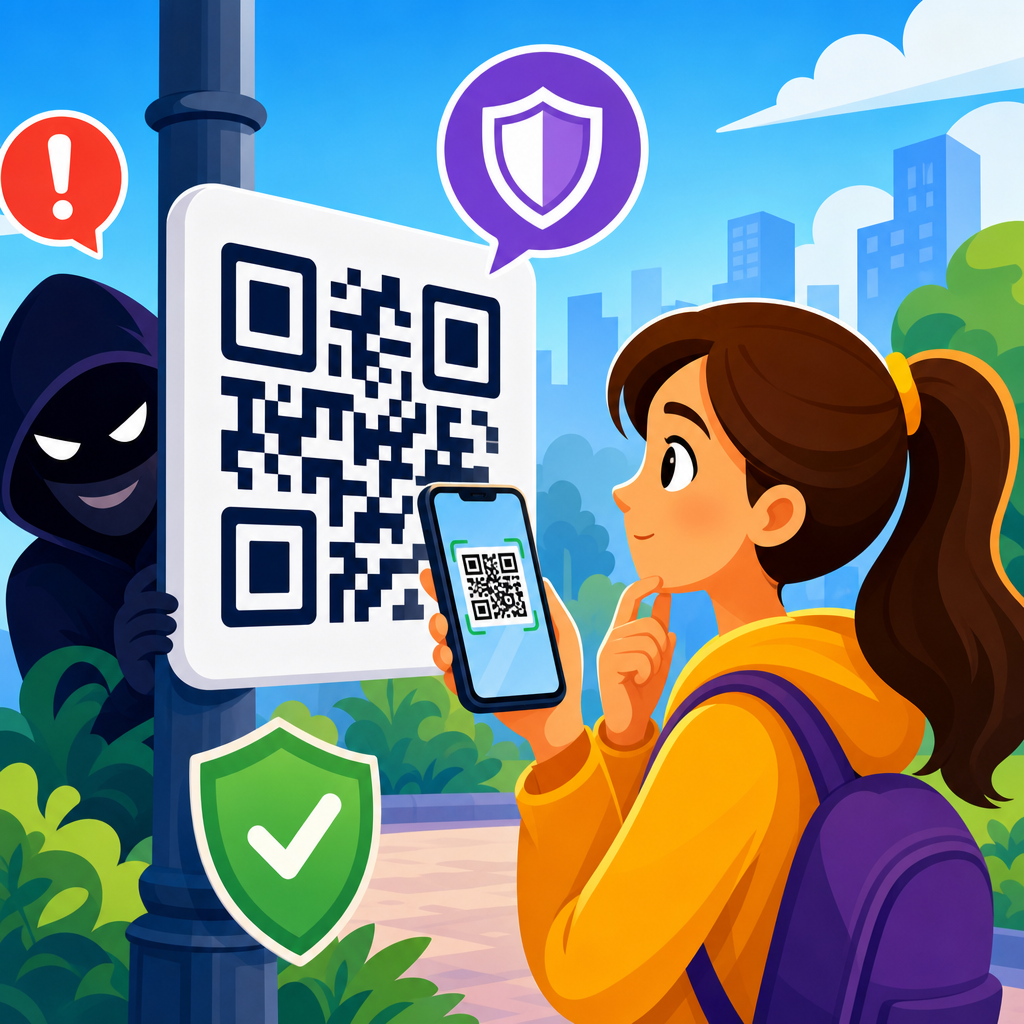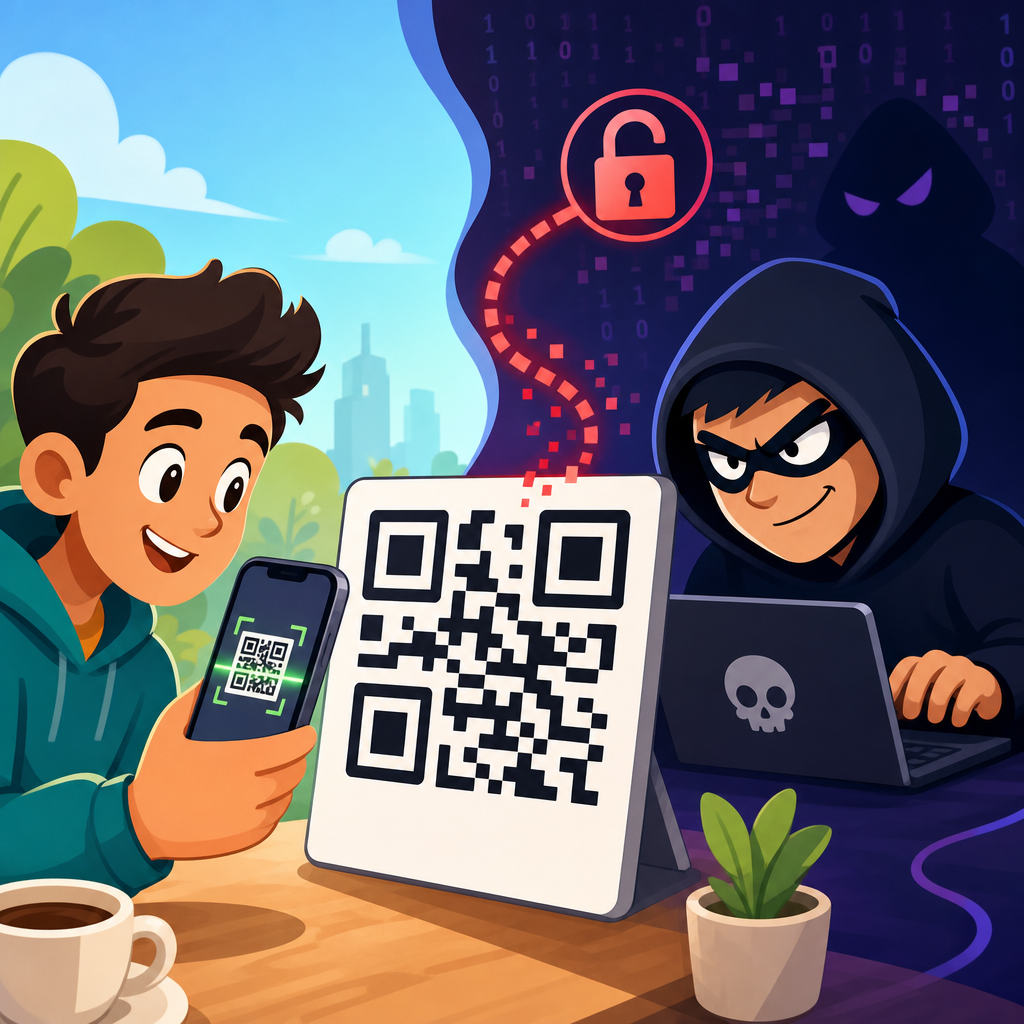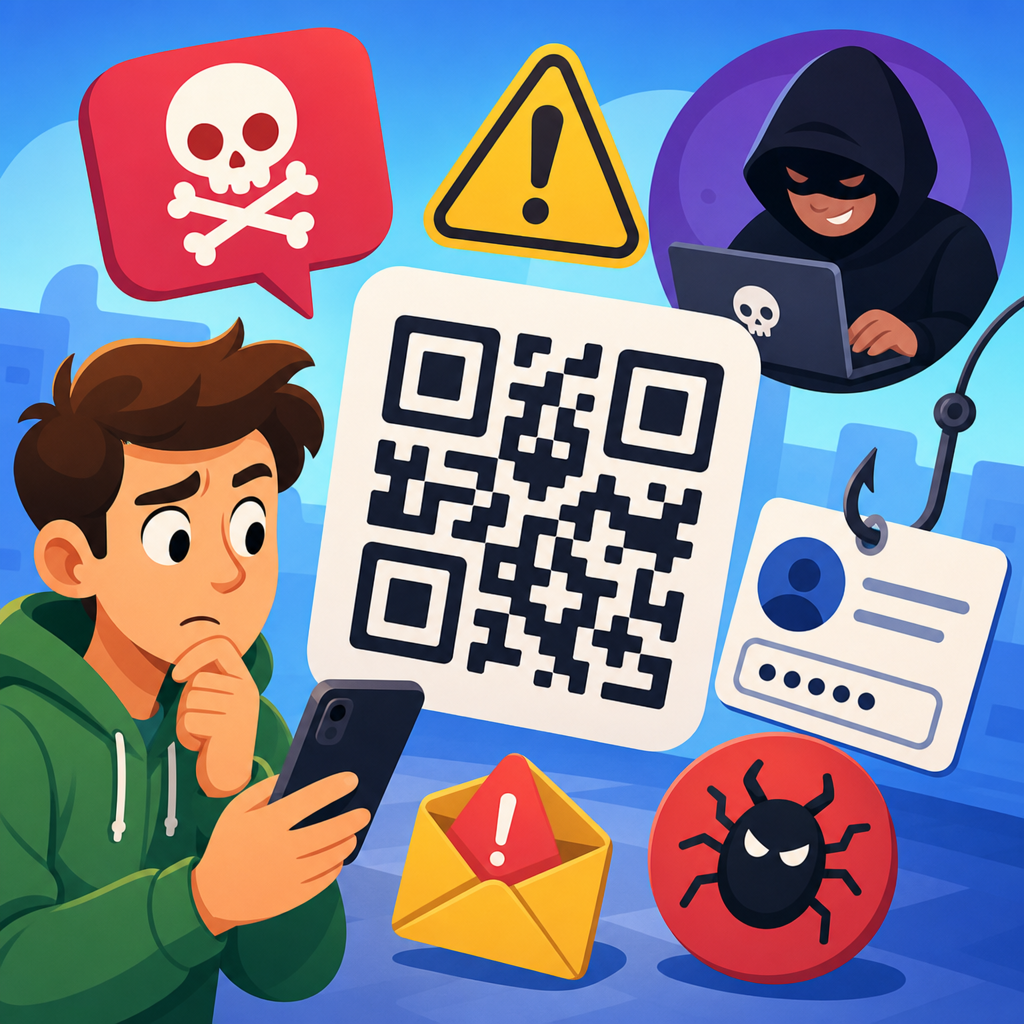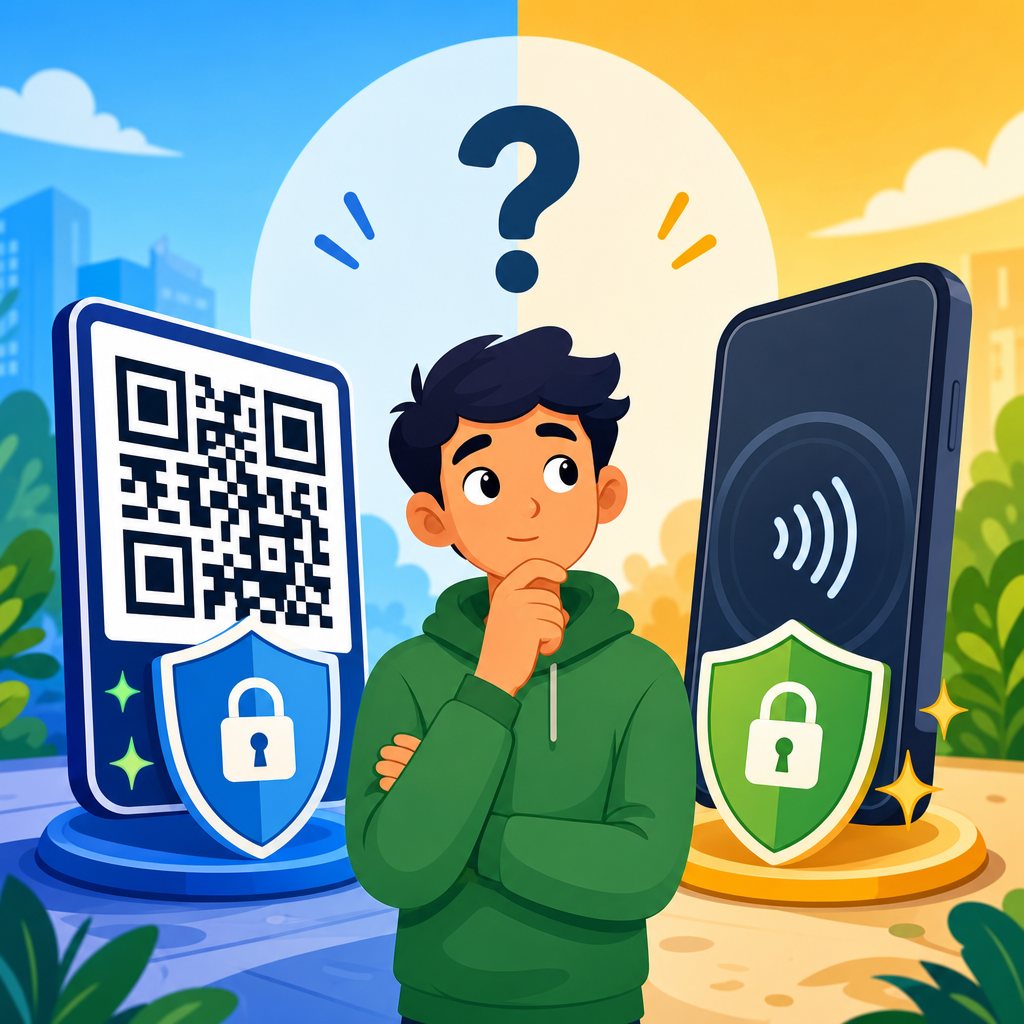
QR codes and NFC tags solve the same basic problem: they let a phone jump from the physical world into a digital action with almost no friction. In security work, I treat both as bridges, and bridges deserve scrutiny because they transfer trust from a printed label, sticker, poster, payment terminal, or product package into a device that may hold banking apps, saved passwords, corporate email, and private messages. The question “Are QR codes safer than NFC?” matters because both technologies are now routine in payments, ticketing, device pairing, marketing, logistics, healthcare, and building access, yet most people still judge them by convenience rather than attack surface.
A QR code is a two-dimensional barcode that stores data such as a URL, payment payload, Wi-Fi credential string, vCard, or deep link. NFC, or Near Field Communication, uses short-range radio communication, usually within about four centimeters, to exchange small amounts of data between a phone and a tag, card, or reader. Neither technology is inherently safe or unsafe. Safety depends on what data is encoded, how the receiving device handles it, whether the destination is authenticated, and how well the broader system resists tampering, spoofing, and user error. That is why a simple comparison based only on “camera scan” versus “tap” misses the real issue.
As a hub page for QR code security and privacy, this article answers the core question directly: QR codes are not automatically safer than NFC, but they are often easier for users to inspect before acting, while NFC can reduce certain visual tampering risks yet introduce others tied to invisible triggers and tag cloning. In practice, the safer option is the one deployed with stronger validation, clearer user prompts, protected destinations, and better operational controls. Understanding that difference helps businesses choose the right channel and helps users recognize where the real danger sits: not the square code or the radio tap itself, but the workflow behind it.
To evaluate safety properly, it helps to separate three terms. Security means protecting systems and users from unauthorized actions such as phishing, malware delivery, credential theft, payment diversion, or unauthorized data modification. Privacy means limiting unnecessary data collection, tracking, and disclosure of personal information. Risk is the likelihood and impact of something going wrong across the full interaction, from the physical label to the app, network, and backend server. With those definitions in place, the comparison between QR codes and NFC becomes much more practical.
How QR codes and NFC actually create risk
Both technologies are delivery mechanisms. A QR code can open a website, launch an app, prefill a payment request, compose an email, or trigger a download. An NFC tag can do many of the same things, often more seamlessly because the user only taps a device near the tag. The core security question is always: what happens next, and how much trust does the user or device assign to that next step? If a QR code points to a fraudulent login page, the code is the lure and the website is the weapon. If an NFC tag launches a malicious or misleading URL, the tag plays the same role.
In incident reviews, I usually map attacks into four stages: placement, trigger, destination, and outcome. Placement covers how the attacker gets a fake QR sticker onto a parking meter or swaps an NFC tag on a display stand. Trigger describes the action that causes the phone to read the code or tag. Destination is the site, app, or payload opened. Outcome is the actual harm, such as stolen credentials, diverted payments, malware installation attempts, or persistent tracking. This framework matters because organizations often defend the wrong layer. They laminate the poster but fail to secure the payment endpoint, or they harden the app but ignore removable tags in public areas.
One key difference is visibility. QR codes are visual and therefore inspectable. A user can at least see that a code exists, notice a sticker placed on top of another code, and often preview a URL before opening it. NFC is less visible. A tag may be hidden under a surface, embedded in a card, or integrated into a smart poster. That invisibility can improve aesthetics and durability, but it also means the triggering object is harder for ordinary users to verify. The user experience can feel more trusted simply because there is less to inspect, and that can be dangerous.
Are QR codes safe for everyday use?
Yes, QR codes are generally safe for everyday use when they come from a trusted source and when the phone or app gives the user enough information to verify the action. Most QR scans lead to ordinary destinations: restaurant menus, event tickets, package tracking, payment screens, support pages, and device setup flows. The majority are not malicious. The problem is that QR codes can encode links or actions that are difficult to judge at a glance, and criminals exploit that ambiguity in phishing campaigns sometimes called quishing.
A typical scam replaces a legitimate code with a counterfeit sticker. The fake code sends users to a domain that looks close to the real brand, such as a misspelled parking provider or utility company. Because the interaction begins in the physical world, users often lower their guard. They may assume a code on a meter, flyer, or tabletop display has already been vetted. Attackers also use QR codes in email attachments and PDFs to bypass URL filters that are better at catching clickable text links than image-embedded links. In enterprise environments, I have seen simulated phishing tests using QR codes achieve strong scan rates precisely because employees think the image looks harmless.
Still, QR codes have a notable safety advantage: the camera scan usually creates a pause. On both iOS and Android, users often see a preview or notification before the site opens. That small friction point provides a chance to inspect the domain, recognize an unfamiliar brand, or stop if the action feels out of place. Well-designed QR workflows build on that pause by using branded short domains, HTTPS, and clear landing pages that explain what will happen next. In other words, QR codes can be safe, but only when the surrounding experience respects user verification instead of rushing past it.
Where NFC is safer, and where it is not
NFC has real security strengths. Its short operating range reduces accidental reads and limits some opportunistic attacks compared with technologies that broadcast farther. For payments, NFC systems such as contactless cards and mobile wallets rely on mature cryptographic protocols, tokenization, secure elements, and issuer controls. A tap-to-pay transaction on Apple Pay or Google Wallet is not equivalent to tapping a writable generic NFC sticker. The payment ecosystem includes layers of defense that many QR implementations lack, especially static QR payment labels that merely redirect users to a webpage.
However, NFC is not automatically safer in every context. Cheap NFC tags can be rewritten, cloned, or replaced unless they are locked or protected with application-level checks. Phones may react to NFC events quickly, and that convenience can reduce the user’s opportunity to assess the destination. An attacker who swaps a tag in a public display can redirect users just as effectively as a fake QR sticker, sometimes with lower visibility. NFC can also be used for unwanted tracking or identification if tags are deployed carelessly in products or environments where people do not expect interaction.
Another nuance is platform behavior. Modern smartphones have improved their handling of NFC and suspicious links, but the exact prompts and restrictions vary by device, operating system version, and app settings. Security decisions therefore cannot rely on assumptions like “the phone will block anything dangerous.” Safer NFC systems explicitly verify signed records, restrict writable tags, and validate every payload server-side. The same principle applies to QR codes, but NFC deployments are more likely to be treated as invisible infrastructure, which can leave simple misconfigurations unnoticed for longer.
Threat comparison: QR codes versus NFC in real deployments
| Risk area | QR codes | NFC |
|---|---|---|
| Visual tampering | High risk from sticker overlays, but often visible on inspection | Lower visual detectability; hidden tag swaps can be harder to notice |
| User verification | Usually better because camera apps often preview a URL first | Can be weaker if the tap triggers quickly with little context |
| Cloning and copying | Trivial to copy an image unless backend checks uniqueness | Many low-cost tags are cloneable unless protected or signed |
| Environmental durability | Print damage can break scans; public labels can be replaced easily | Embedded tags resist wear better, but covert replacement remains possible |
| Privacy exposure | Tracking usually happens after opening the linked service | Can enable silent identification patterns if tags are used badly |
| Best fit | When human review and broad device compatibility matter most | When secure hardware, cryptography, and low-friction repeat use are available |
The table shows why broad claims fail. If the main concern is social engineering, QR codes may be slightly safer because they expose more clues to the user. If the main concern is operational durability and cryptographic verification, NFC can be safer when implemented in a mature system. In retail, for example, static payment QR labels have been abused through sticker replacement, while contactless NFC payments benefit from bank-grade controls. In museums or product packaging, QR codes may be preferable because visitors can see the code, compare branding, and choose whether to scan. In access control, NFC cards usually win because the workflow depends on authenticated readers rather than public website redirects.
The biggest lesson from field deployments is that the attack usually targets the weakest operational link. A business can print tamper-evident QR labels but still lose users to a spoofed destination if it does not control lookalike domains and monitor certificate issuance. It can deploy NFC tags in acrylic signage yet expose customers if it leaves tags writable or fails to sign payloads. Technology choice matters, but governance matters more.
How to use QR codes safely as a business or publisher
If you publish QR codes, start with destination control. Use a short, branded domain that you own, secure it with HTTPS, and keep redirects minimal. Avoid sending users straight into long tracking URLs that look suspicious. If the QR code leads to payments, do not rely on a generic web form alone. Bind the payment request to your account, display business identity clearly, and confirm key details before the transaction completes. Dynamic QR management platforms can help rotate destinations safely, but they also create a new administrative risk, so require multifactor authentication and role-based access for anyone who can edit links.
Next, secure the physical environment. On public assets such as posters, kiosks, parking meters, and tabletop displays, inspect codes regularly and use tamper-evident materials where feasible. If you operate at scale, assign location owners and audit intervals. In several rollouts I have reviewed, the security improvement came not from changing the code format but from introducing a weekly inspection checklist and a process for rapidly deactivating compromised destinations. If a code appears in email or print marketing, place nearby text that states the exact domain users should expect. That simple cue helps people detect mismatches.
Finally, design for verification. A landing page should immediately identify the brand, purpose, and next step. If login is required, explain why. If app download is requested, link only to official app store listings. For tickets, coupons, or one-time access passes, use server-side validation with expiration, replay detection, and unique identifiers rather than trusting the image alone. These measures make QR codes substantially safer and answer the broader question “Are QR codes safe?” with the right qualifier: they are safe when the full journey is controlled and observable.
What users should do before scanning or tapping
For individuals, the safest habit is to verify source, destination, and context. Source means where the code or tag came from: a bank branch, a known merchant, official packaging, or an unsolicited message. Destination means the domain, app, or action your phone shows before you continue. Context means whether the request makes sense right now. A utility bill posted through a trusted portal is normal; a random QR code urging urgent payment on a street sign is not. If any of those three checks fail, stop.
Keep your phone updated, because browser protections, link handling, and app sandboxing improve with current operating system releases. Use a password manager, which helps expose phishing because it will not autofill credentials on the wrong domain. Prefer mobile wallets or official apps over ad hoc payment pages when possible. If you must type sensitive information after scanning a QR code, inspect the URL carefully, especially the registered domain. On NFC, be just as cautious with taps on unknown posters, freebies, or accessories. Convenience is not proof of legitimacy.
If you manage a team, include QR and NFC examples in security awareness training. Show employees what URL previews look like, how fake overlays appear, and why image-based phishing works. The goal is not fear; it is pattern recognition. Once people understand that both QR codes and NFC are merely starting points for a digital transaction, they make better decisions at the moment that matters.
Choosing the safer option for your use case
The right choice depends on the job. For broad public access where nearly every phone must work and users benefit from seeing a preview, QR codes are often the better default. For repeated trusted interactions backed by secure hardware and cryptographic validation, NFC is often stronger. If you are comparing them for payments, contactless NFC generally has the advantage in mature ecosystems. If you are comparing them for marketing, packaging, manuals, or public information, QR codes usually offer better transparency and lower deployment complexity.
The most important takeaway is simple: neither format creates trust on its own. Trust comes from authenticated destinations, protected infrastructure, clear prompts, and disciplined operations. If you want safer customer experiences, audit the full chain from physical placement to backend validation, then choose the method that gives users the right balance of convenience and verification. Review your current QR code and NFC workflows, tighten the weak points, and make every scan or tap earn trust before it asks for action.
Frequently Asked Questions
Are QR codes safer than NFC overall?
Neither technology is automatically safer in every situation. QR codes and NFC tags both act as fast bridges between a physical object and a digital action, and the real security question is how much trust a user gives that bridge before verifying where it leads. A QR code is visible and usually requires a deliberate scan, which can feel safer because the user is consciously initiating the action. NFC, by contrast, can trigger interactions with a simple tap or close proximity, which makes it convenient but also easier for people to move too quickly without checking details. That said, visibility does not equal safety. A printed QR code can be replaced with a malicious sticker, and an NFC tag can be rewritten, cloned, or configured to direct a phone to a harmful destination if the deployment is weak.
In practice, safety depends less on whether the bridge is optical or radio-based and more on the surrounding controls. Important factors include whether the destination is previewed before opening, whether the tag or code is physically protected from tampering, whether the linked system uses HTTPS and strong authentication, and whether the phone’s operating system prompts the user before taking action. For simple public interactions such as menus, posters, and product information, QR codes often give users more opportunity to inspect what is happening. For controlled environments such as access systems, device pairing, and managed workflows, NFC can be very secure when tags, readers, and back-end systems are properly designed. So the honest answer is that QR codes are not inherently safer than NFC, and NFC is not inherently riskier than QR. Both are safe or unsafe depending on implementation, user awareness, and physical security.
What are the biggest security risks with QR codes?
The biggest QR code risk is malicious redirection. A QR code can send a phone to a phishing page, a fake login screen, a malware download, or a fraudulent payment request. Because users often trust what is printed in a restaurant, on a product package, in a parking lot, or on a public sign, attackers can exploit that trust by placing a fake sticker over a legitimate code. This is one of the reasons QR security deserves serious attention: the code itself is usually unreadable to a human, so users cannot visually verify the destination the way they might inspect a typed web address. If the scan opens a browser, payment app, app store, contact card, Wi-Fi connection prompt, or deep link, the attacker may have already gained an opportunity to influence behavior before the user realizes anything is wrong.
Another major issue is speed. Many people scan first and think later, especially when they are in a hurry or expecting a routine action like viewing a menu or confirming a payment. Attackers take advantage of that habit. A malicious QR code might imitate a trusted brand, use a lookalike domain, or trigger a prefilled action that feels normal at a glance. Some risks are also operational rather than purely technical: poorly managed QR campaigns may use link shorteners that hide the destination, outdated landing pages that get compromised, or weak analytics platforms that expose user data. The safest approach is to treat every QR code as an untrusted starting point. Preview the link if possible, inspect the domain carefully, avoid logging in after scanning unless you are certain the site is legitimate, and be especially cautious with QR codes found in public places, payment contexts, and unsolicited messages.
What are the main security concerns with NFC tags?
NFC security concerns usually center on silent trust, weak tag protection, and assumptions about proximity. Because NFC interactions can feel seamless, users may not pause to evaluate what the tag is asking the phone to do. A tag might open a URL, launch an app, transfer contact data, or start a workflow that appears harmless but leads to a malicious destination. If the tag is writable and not locked, an attacker may be able to overwrite it. If the deployment lacks strong back-end validation, a cloned tag may impersonate a legitimate one. In environments such as access control, ticketing, payments, and smart posters, that creates room for fraud, phishing, or misuse.
There is also a persistent misconception that short range automatically means strong security. Short range helps, but it is not a complete defense. Security professionals evaluate not just radio distance but the full trust chain: tag authenticity, reader behavior, device prompts, encryption where applicable, and server-side verification. For example, an NFC workflow that merely directs users to a web page is only as trustworthy as the URL and the site behind it. Meanwhile, more advanced NFC uses such as payments can be highly secure because they rely on secure elements, tokenization, cryptographic protocols, and strict ecosystem controls. So the risk profile of NFC varies widely. A cheap programmable sticker linking to a website is very different from an NFC payment system designed with layered defenses. Users should stay alert to unexpected prompts, and organizations should lock tags, protect them from tampering, validate every transaction on the back end, and avoid assuming that “tap” means “trusted.”
Which is easier for attackers to tamper with in the real world: a QR code or an NFC tag?
In many public settings, QR codes are often easier to tamper with because they are visually simple to cover, replace, or duplicate. An attacker can print a malicious QR code on a sticker and place it on top of a legitimate one in seconds. This type of attack is cheap, low-skill, and difficult for casual users to notice unless they inspect the sign closely. That makes QR replacement especially attractive in places where people expect to scan quickly, such as parking meters, restaurant tables, event posters, utility bills, and product displays. Because the code pattern itself means nothing to most users, tampering can go unnoticed for long periods if the site owner is not actively checking signage.
NFC tags can also be tampered with, but the methods are different. A malicious actor may replace a tag entirely, overwrite it if it is not locked, or clone it if the deployment does not include stronger authenticity checks. Physical replacement can be harder to notice when tags are hidden behind posters, counters, kiosks, or labels, while in other scenarios it may be more difficult than swapping a visible QR sticker. From a defender’s perspective, both technologies require routine inspection and anti-tamper thinking. Use protected mounting, tamper-evident materials, regular audits, and destination validation. If the interaction is high risk, such as payments, account access, or secure entry, do not rely on the presence of a code or tag alone. Build systems so that even if the physical marker is altered, the digital workflow still requires cryptographic verification, trusted app behavior, or secondary user confirmation. That is the difference between cosmetic security and real security.
How can users and businesses make QR codes and NFC interactions safer?
For users, the most effective defense is to slow down just enough to verify before acting. Whether scanning a QR code or tapping an NFC tag, look for a preview of the destination and inspect the domain carefully. Be suspicious of misspellings, strange subdomains, unnecessary login requests, and pressure to act immediately. Avoid entering passwords, payment details, or one-time codes unless you are certain you are interacting with the legitimate service. Keep your phone updated, use mobile security protections provided by the operating system, and disable or restrict automatic actions where possible. If something unexpected happens after a scan or tap, close it and navigate to the service manually through a known app or bookmarked website instead.
For businesses, safety comes from layered controls rather than from choosing one technology and assuming it is secure by default. Protect physical deployment with tamper-evident stickers, secure placement, routine inspections, and rapid replacement procedures. Lock NFC tags against rewriting when appropriate. Use clear branding so users know what interaction to expect. Prefer direct, readable, trustworthy URLs rather than obscured link shorteners. Route actions through secure domains you control, enforce HTTPS, and require strong server-side validation for anything involving identity, payments, or access. If the interaction launches an app or web flow, design it to show meaningful confirmation before sensitive actions occur. Logging, anomaly detection, and periodic security reviews are also essential. The strongest approach is to assume the physical bridge may be copied, covered, or manipulated, and then design the digital system so that tampering does not immediately become compromise. That mindset makes both QR and NFC significantly safer in real-world use.