Free QR code generators look like an easy win: enter a URL, click create, download an image, and move on. In practice, whether they are worth it depends on what “free” includes, what kind of QR code you need, and what risks you can tolerate. A QR code generator is the software that turns a destination such as a website, PDF, menu, Wi-Fi credential, vCard, or payment link into a scannable matrix barcode. The market includes fully free tools, freemium platforms, design-focused apps, and enterprise systems with analytics, access controls, and campaign management. I have used all four categories for restaurant menus, retail shelf tags, event signage, product packaging, and direct-mail campaigns, and the differences matter more than most buyers expect.
The central question is not simply whether a tool costs money. The real question is whether a free QR code generator gives you the right combination of permanence, scan reliability, branding control, security, analytics, and legal clarity for the job. A static QR code points directly to the final destination and usually works indefinitely if the destination stays live. A dynamic QR code points to a short redirect URL controlled by the provider, which enables editing, tracking, retargeting, expiration rules, and device-based routing. That distinction alone changes the value equation. Free static codes can be excellent for many uses. Free dynamic codes are often trial versions with limits that become problems after launch.
This matters because QR codes are no longer niche. They sit on posters, packaging, invoices, restaurant tables, museum labels, classrooms, real estate signs, business cards, and television ads. If a code breaks after a trial expires, resolves through a suspicious domain, or scans poorly because the generator mangled contrast and quiet-zone spacing, the failure is visible to customers immediately. If the use case is internal, a free tool may be perfectly sensible. If the code is customer-facing, printed at scale, or tied to a paid campaign, the total cost of a weak generator usually exceeds the subscription you thought you were saving.
This hub article evaluates free QR code generators the way a practitioner should: by output quality, reliability, features, compliance, and fit for specific scenarios. It also serves as the gateway to the broader topic of QR Code Generators, Reviews, and Comparisons, so the goal is to make the decision framework clear enough that you can quickly choose the right type of tool and know when to dig into specialized reviews.
What free QR code generators usually include
A free QR code generator typically offers static code creation for basic content types: URL, plain text, email, phone number, SMS, or Wi-Fi. Many also allow simple color changes and common export formats such as PNG or SVG. For straightforward use cases, that can be enough. If you need to print a code on a flyer that points to a stable landing page, a static QR code created with a reputable free tool can perform as well as a paid one. The QR standard itself does not require a subscription. Good generators simply encode the data correctly according to ISO/IEC 18004 and output a clean image.
Where free plans start to diverge is around dynamic functionality and production controls. In many tools, “free” means you can create the code, but scan analytics are limited, editing is disabled after a short period, branded short domains are unavailable, and high-resolution exports may be restricted. Some platforms place soft friction around download options or require account creation to retrieve vector files. Others allow free generation but monetize through redirect domains that remain under the provider’s control. If that provider changes policy, closes, or removes inactive accounts, your QR code campaign inherits that risk.
The strongest free tools are transparent about this boundary. They say, in effect, “Here is a permanent static QR code with no tracking and no editability.” That is a fair trade. The weakest free tools imply permanence while burying limits in trial language or vague terms of service. In reviews, I look for plain statements about whether static codes remain active forever, whether dynamic codes expire, whether downloaded assets are watermark-free, and whether commercial use is permitted without additional licensing.
When free QR code generators are genuinely worth it
Free QR code generators are worth it when the destination is stable, the stakes are modest, and you do not need post-launch control. Typical examples include linking a résumé to a portfolio, adding a personal website to a business card, publishing a school project resource page, sharing home Wi-Fi credentials, or printing an in-store sign for a permanent review page. In these cases, a static code is usually the right answer. There is no redirect dependency, no recurring fee, and no analytics requirement. If the landing page changes rarely and you control the URL, the code can serve for years.
They are also worth it for prototyping. I regularly use free tools to test physical size, contrast, placement, and scan distance before committing a campaign to a managed platform. A designer can mock up packaging, verify that smartphone cameras decode the symbol under realistic lighting, and evaluate whether a logo overlay reduces readability. This saves time and avoids overengineering early-stage work. For internal workflows such as equipment labeling or quick links in office documentation, the simplicity of a free static generator is often an advantage rather than a limitation.
Educators, nonprofits, and small community organizations also benefit when budgets are constrained and campaigns are simple. A volunteer team creating a poster for event registration can use a free static code that points to a stable form. A museum can label a temporary exhibit with static links to page-specific audio guides if the exhibit website is already final. In each case, the key is matching the tool to the operational reality: no mid-campaign edits, no need for centralized audit logs, and no dependence on tracking metrics to prove performance.
When free QR code generators are not worth the risk
Free generators are usually not worth it for high-volume print runs, paid media, regulated environments, or any campaign where the destination may change. If you are placing QR codes on product packaging, catalogs, direct mail, outdoor signage, trade-show booths, or restaurant tables, the cost of reprinting can dwarf the cost of software. Dynamic management becomes insurance. Being able to redirect a code from one landing page to another, pause a campaign, fix a broken URL, or route users by device and location is not a luxury in these settings; it is operational resilience.
They are also a poor choice when measurement matters. Marketing teams need scans over time, unique versus repeat scans, device breakdowns, geography, and campaign tagging. While dedicated web analytics can track visits after the click, a managed QR platform captures behavior at the scan layer and often integrates with UTM parameters, Google Analytics, and CRM workflows. If you are comparing creative variants, monitoring store-level performance, or attributing offline media, a basic free tool leaves a blind spot.
Security and reputation risk are another breakpoint. Consumer trust drops when a code resolves to a generic redirect domain that looks unfamiliar, especially after years of phishing awareness campaigns. In sectors like healthcare, finance, education, and government, procurement teams may also require vendor documentation, data processing terms, role-based access, and retention controls. Free generators rarely meet those standards. Even for small businesses, the inability to use a branded domain can reduce confidence and click-through from the landing page itself.
Static versus dynamic QR codes: the decision that drives value
Most confusion around free QR code generators comes from mixing up static and dynamic QR codes. A static QR code embeds the final data directly in the symbol. Once printed, it cannot be edited. Its strength is permanence: no provider needs to stay in business for the code to work, because the scanner reads the destination directly. A dynamic QR code embeds a short URL or identifier that points to a server-side redirect. That redirect can be updated later. Its strength is flexibility: you can change destinations, capture scan data, run A/B tests, expire the code, and control routing logic without changing the printed asset.
For a sub-pillar page covering QR code generator reviews and comparisons, this is the single most important buying criterion. If a review does not state clearly whether the code is static or dynamic, whether dynamic redirects are permanent, and who controls the destination domain, it is not a useful review. I advise teams to start every comparison matrix with five questions: Is the code static or dynamic? Does it expire? Can the destination be edited? Who owns the redirect domain? Can exports be downloaded as SVG or EPS for print? Those answers eliminate most unsuitable tools immediately.
| Requirement | Free Static Generator | Freemium Dynamic Platform | Paid Managed Platform |
|---|---|---|---|
| Destination can be edited after print | No | Usually limited | Yes |
| Works without provider redirect | Yes | No | No |
| Scan analytics | No | Basic or trial | Detailed |
| Best for | Simple permanent links | Small tests | Marketing and operations |
The practical rule is simple. Choose static if the content is stable and the code needs to remain independent of any vendor. Choose dynamic if the campaign is live, measurable, or likely to change. Free tools can be excellent on the static side and unreliable on the dynamic side unless the provider makes unusually generous guarantees.
How to evaluate a free QR code generator before you trust it
Start with scan reliability. A generator should preserve adequate quiet zone, support high contrast, and let you export vector files for print. Test on both iPhone and Android devices, at the actual physical size, under expected lighting, and on the intended material. Glossy packaging, curved bottles, window decals, and textured paper all reduce real-world scan performance. Error correction level matters too. Higher correction can help when a logo partially obscures the code, but it also increases symbol density, which can hurt scanning at small sizes. Good tools expose these controls or at least implement sensible defaults.
Next, inspect the URL behavior. If the code is dynamic, scan it and examine the redirect chain. Does it pass through a branded short domain or a generic one? Is HTTPS used consistently? Are there unnecessary hops that slow resolution? On mobile networks, every redirect adds friction. I have seen free generators insert tracking layers that make scans feel sluggish enough to reduce completion rates on weak connections. A reliable provider minimizes hops and documents the redirect policy clearly.
Then review the business terms. Check whether the company states that static codes never expire, whether commercial use is allowed, whether downloaded assets are royalty-free, and what happens to dormant accounts. Look for a legitimate privacy policy and support documentation. If the platform handles analytics, verify whether IP addresses are stored, how long data is retained, and whether data processing terms are available. For teams, role-based permissions, asset ownership, and export portability matter because QR codes often outlive the employee who created them.
Features that separate hobby tools from serious platforms
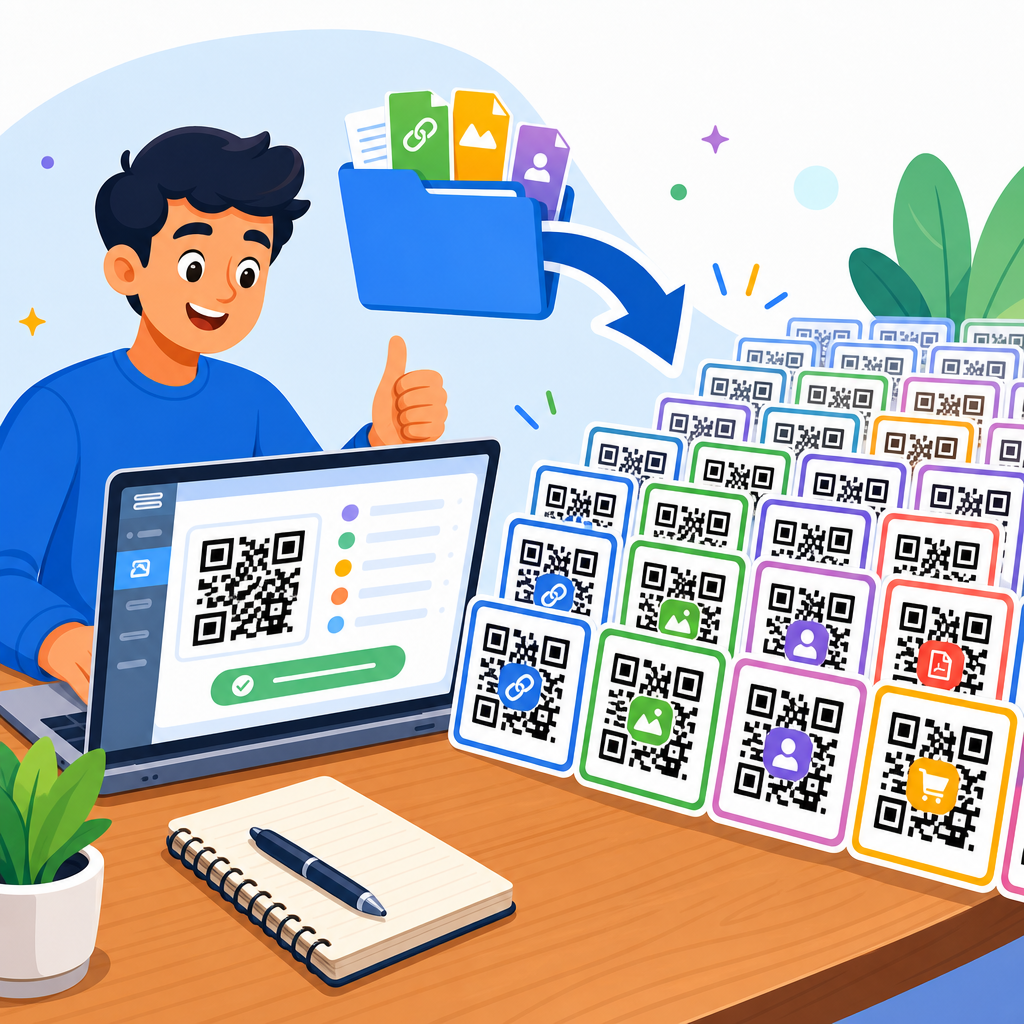
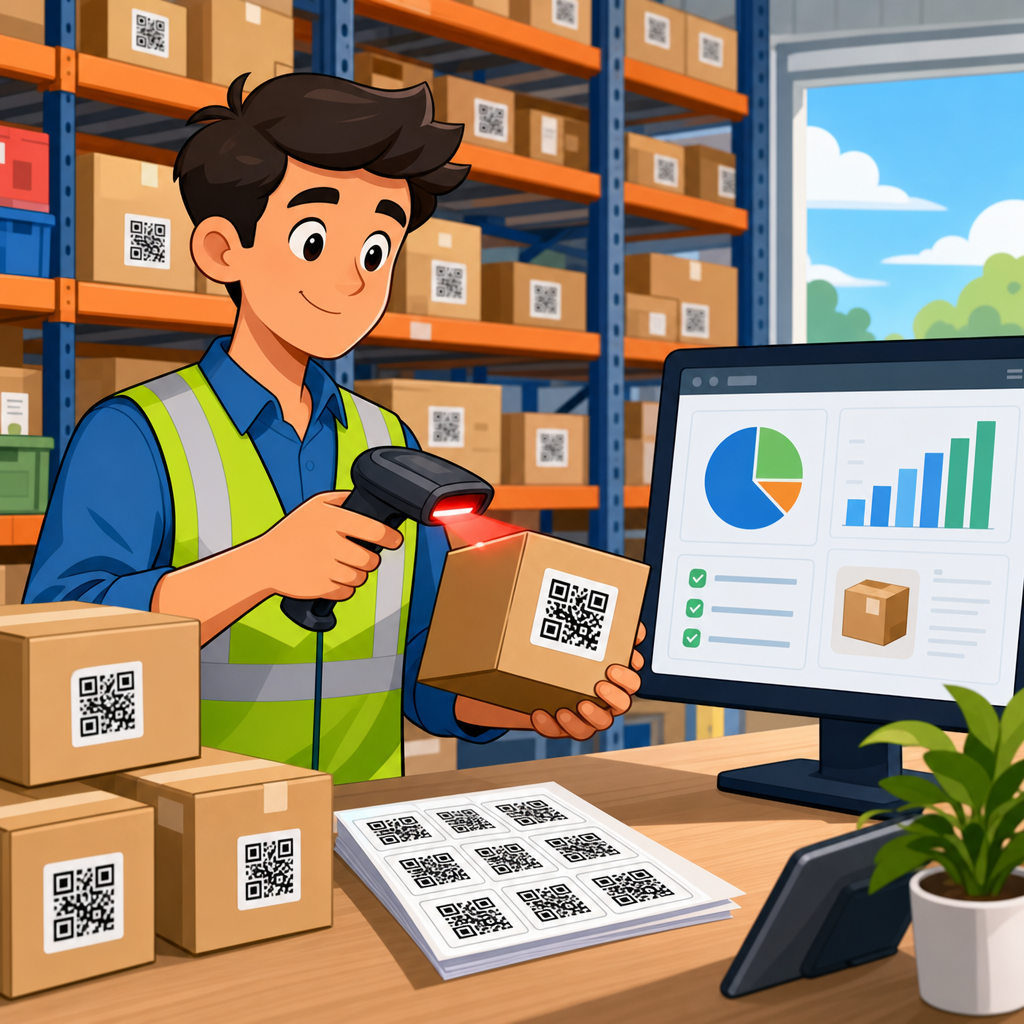
The best QR code generators do more than produce a symbol. They support campaign governance. That includes folders, naming conventions, bulk generation, template management, branded domains, password protection, expiration schedules, conditional redirects, and API access. For a restaurant chain, for example, bulk dynamic generation allows one design template to serve hundreds of locations with location-specific landing pages. For a manufacturer, serial QR codes tied to product IDs support traceability, warranty registration, or post-purchase support at scale.
Design controls are important too, but they should never outrank readability. Rounded modules, custom eyes, gradients, and logo overlays can work when implemented carefully, yet many free generators let users create visually attractive codes that scan poorly in realistic conditions. Professional platforms usually enforce safer limits or provide validation warnings. In my own testing, conservative styling with strong contrast and ample quiet zone consistently outperforms elaborate customization, especially on lower-end Android cameras and in low-light retail environments.
Integrations are another dividing line. Serious platforms connect to analytics suites, tag managers, CRM systems, or marketing automation tools. They may also support downloadable reports, webhook events, and SSO for larger teams. If your organization needs traceability, campaign attribution, or compliance workflows, those features save more time than the subscription costs. Free tools, by contrast, generally optimize for one-off creation, not ongoing asset management.
Common pitfalls in QR code generator reviews and comparisons
Many review roundups rank tools based on surface convenience instead of long-term reliability. A polished interface is not the same as a trustworthy platform. Be skeptical of comparisons that ignore redirect ownership, export formats, or terms around code expiration. Another common problem is testing only on-screen use. A QR code that scans from a laptop display may fail once printed small on matte stock or placed behind reflective acrylic. Reviews should include real-world scan tests, not just screenshots.
Price framing is often misleading as well. “Free forever” may apply only to static codes, while the headline examples in the review showcase dynamic editing and analytics that require payment. Good comparisons separate those modes clearly and identify the threshold where upgrading makes financial sense. In my experience, that threshold arrives quickly for any code attached to print, operations, or paid promotion. One broken code on a poster run can cost more than a year of entry-level software.
Finally, beware of lists that flatten all use cases into one recommendation. The best tool for a freelancer’s digital portfolio is not the best tool for a multi-location retailer, and neither is ideal for a healthcare provider handling patient materials. The right comparison framework is scenario-based: personal use, small business print, event marketing, restaurant menus, packaging, enterprise asset management, and regulated communications.
So, are free QR code generators worth it?
Yes, free QR code generators are worth it when you use them for the right jobs: permanent destinations, low-risk materials, internal workflows, prototypes, and personal projects. In those cases, a reputable free static generator can be efficient, reliable, and genuinely cost-effective. No subscription is required to create a standards-compliant QR code, and many people overpay for capabilities they never use.
No, they are not worth it when your QR code is part of a live campaign, expensive print run, measurable funnel, or compliance-sensitive workflow. Then the missing features are not “extras.” They are controls that protect uptime, trust, data quality, and the ability to fix problems after launch. The smartest approach is to choose based on the asset’s lifespan and business impact, not on whether the first download button says free.
Use this page as your hub for QR code generator reviews and comparisons. Start by deciding whether you need static or dynamic codes, then evaluate reliability, ownership, analytics, export quality, and policy transparency. If the code will live in public, at scale, or for a long time, test harder and budget accordingly. If it is simple and stable, a free tool may be exactly the right tool. Pick the generator that matches the risk, then scan your own materials before publishing anything.
Frequently Asked Questions
Are free QR code generators actually worth using?
Yes, free QR code generators can absolutely be worth using, but only in the right situation. If you need a simple, static QR code for a website, PDF, menu, Wi-Fi login, vCard, or payment link, a reputable free tool can be a practical and cost-effective choice. For one-off projects, personal use, classroom handouts, small events, or low-risk business materials, free tools often provide everything you need: quick creation, a downloadable image, and no upfront cost.
The real issue is that “free” does not always mean the same thing from one platform to another. Some tools are genuinely free for static QR codes with no strings attached. Others are freemium products that let you create a code for free but charge for editing, analytics, higher-resolution downloads, custom branding, dynamic QR functionality, or continued use after a trial period. In some cases, a code may work today but depend on the provider’s hosted redirect system, which means your QR code’s long-term reliability could be tied to whether you keep paying or whether the service stays in business.
So the answer comes down to your goals. If you want something fast, simple, and permanent, and you are comfortable without advanced tracking or editing features, a free generator can be a smart option. If you need campaign analytics, branded customization, team management, editable destinations, or dependable long-term support for printed materials at scale, the free option may look good upfront but become limiting or risky later. In that sense, free QR code generators are worth it when the project is small and straightforward, but not always when the stakes are higher.
What is the difference between a free static QR code and a dynamic QR code?
This is one of the most important things to understand before choosing any QR code generator. A static QR code contains the final destination directly in the code itself. For example, if you create a static QR code for a website URL, that exact URL is encoded into the image. Once it is generated and printed, you usually cannot change where it goes without creating a completely new QR code. The main benefit is simplicity: static codes often work indefinitely because they do not rely on a third-party redirect service.
A dynamic QR code works differently. Instead of encoding the final destination directly, it usually points to a short redirect URL controlled by the QR code platform. That means you can change the destination later without changing the printed QR code. This is useful for marketing campaigns, restaurant menus, product packaging, event signage, and any situation where the link might need updating over time. Dynamic codes are also commonly tied to analytics, such as scan counts, device types, locations, and times of day.
Free generators often focus on static QR codes because they are easier to offer at no cost and do not require ongoing platform support. Dynamic QR codes are more commonly part of a paid plan because the provider has to maintain redirect infrastructure and analytics systems. If your priority is permanence and independence, a static QR code from a trustworthy free generator may be ideal. If your priority is flexibility and measurement, a dynamic QR code is usually more valuable, but often not truly free in the long run.
What are the biggest risks of using a free QR code generator?
The biggest risks are not usually about the QR code image itself, but about hidden limitations, provider dependency, and quality control. One common issue is confusing pricing. A platform may let you generate a QR code for free, but the code may be dynamic and only remain active during a trial period. After that, scans may stop working, redirect to an error page, or require a paid subscription to remain live. That can become a serious problem if the code is printed on packaging, posters, brochures, menus, or business cards.
Another major risk is low output quality or poor testing. Some free tools provide only small PNG files that may not print sharply at larger sizes. Others allow excessive customization that hurts scan reliability, such as low contrast, overdesigned patterns, or logos that cover too much of the code. A QR code must be easy for phone cameras to scan in real-world conditions, not just visually attractive on a screen. If a free tool encourages aesthetics over performance, that is a warning sign.
Privacy and security also matter. If you are generating QR codes for sensitive destinations such as payment links, internal files, contact data, or Wi-Fi credentials, you should understand whether the provider stores that information and how it is handled. Reputable tools are transparent about what they collect, whether they host redirects, and what happens to your data. Less trustworthy sites may be vague, ad-heavy, or designed mainly to funnel users into subscriptions. Before relying on any free generator, check whether the code is static or dynamic, whether there are usage limits, whether export quality is sufficient, and whether the provider appears stable and credible.
When should you pay for a QR code generator instead of using a free one?
You should consider paying when the QR code is tied to business-critical materials, ongoing campaigns, or anything expensive to reprint. If your code appears on product packaging, retail displays, restaurant tables, direct mail, signage, trade show booths, or large print runs, flexibility matters. A paid platform can let you update the destination later, which can save significant time and money if a URL changes, a landing page is revised, or a campaign needs to be redirected.
Paid tools also make sense when analytics are important. If you need to know how many people scanned, where they scanned, what devices they used, or which campaign version performed better, you will usually need a dynamic QR code system with reporting features. That is especially useful for marketers, event teams, franchises, and businesses running multi-location promotions. In those cases, the value is not just in creating a code, but in managing and learning from it over time.
Brand control is another reason to upgrade. Many paid platforms offer higher-resolution exports, vector files like SVG or EPS, custom domains, password protection, bulk generation, team collaboration, folder organization, and stronger support. Those features are not essential for every project, but they become important quickly in professional settings. If a broken or outdated QR code could hurt customer experience, damage trust, or waste print spend, the cost of a paid generator is often minor compared to the cost of getting it wrong.
How can you tell if a free QR code generator is trustworthy and good enough to use?
Start by checking exactly what type of QR code you are creating. A trustworthy generator is clear about whether the code is static or dynamic, whether it expires, and whether it depends on the provider’s redirect system. If the site is vague about those basics, that is a red flag. You should also look for straightforward export options, clear feature descriptions, and no misleading language that suggests “free forever” while hiding trial limitations in fine print.
Next, test the code thoroughly before using it publicly. Scan it with multiple phones, in different lighting conditions, and at the size you plan to print. If possible, print a sample first rather than assuming an on-screen preview is enough. Make sure the destination loads quickly and correctly. If the QR code includes colors, logos, or design changes, verify that those customizations have not reduced scan reliability. A good generator should produce codes that work consistently, not just look polished.
It is also wise to evaluate the provider itself. Look for a professional website, transparent pricing, accessible support information, and a privacy policy that explains how data is handled. If the platform offers dynamic QR codes, confirm what happens if you stop paying. If it offers static QR codes, make sure the final image really encodes your destination directly rather than routing through a branded short link. In general, a free QR code generator is good enough when it is honest about limitations, produces reliable output, and matches the level of risk your project can tolerate. For small, low-stakes uses, that bar is often easy to meet. For larger campaigns, it is worth being far more selective.