AI-powered QR code analytics turns a simple scan into a rich stream of behavioral, operational, and revenue data that businesses can use to improve campaigns, products, and customer journeys. A QR code is a machine-readable matrix barcode that stores a destination such as a URL, file, payment request, app action, or product identifier. Analytics is the practice of collecting, measuring, and interpreting scan activity, while artificial intelligence applies models that detect patterns, predict outcomes, classify users, and automate decisions. Put together, AI-powered QR code analytics means using machine learning and related techniques to understand who scanned, when they scanned, where they scanned, what they did next, and what action is most likely to increase conversion.
I have seen the difference firsthand in retail launches, restaurant menus, and packaging campaigns. Basic QR reporting answers narrow questions like total scans by day. AI expands that into actionable insight: which locations are underperforming, which creative variant will lift engagement, whether repeated scans suggest confusion or loyalty, and how likely a scanner is to purchase after landing on a page. This matters because QR codes now sit at the intersection of offline and digital behavior. They appear on product boxes, direct mail, posters, invoices, event badges, shelf talkers, and connected packaging. Every scan is a measurable intent signal. Organizations that analyze those signals well can cut wasted media spend, refine physical placement, personalize follow-up, and detect fraud or bot traffic before it distorts reporting.
The rise of smartphone cameras with native scanning, mobile wallets, and digital menus has made QR code usage mainstream. During implementation work, the biggest mistake I see is treating a QR code as a static link instead of a dynamic data collection point. Modern platforms support dynamic redirects, campaign tagging, device fingerprinting safeguards, geographic analysis, and event pipelines into analytics stacks. When AI is layered on top, teams can forecast scan volume, segment audiences by behavior, surface anomalies, and recommend next best actions. For marketers, that means better attribution. For operations teams, it means cleaner deployment and faster troubleshooting. For product and customer experience leaders, it creates a feedback loop between physical touchpoints and digital outcomes that was difficult to build even a few years ago.
How AI-powered QR code analytics works
At a practical level, the workflow starts with a dynamic QR code rather than a fixed destination. The code resolves through a management platform that records the scan timestamp, approximate location derived from IP, device type, operating system, language, referral context, and destination URL. It may also append UTM parameters and a unique campaign identifier before routing the visitor to a landing page, app deep link, form, or payment flow. That event can then be joined with downstream data from Google Analytics 4, Adobe Analytics, CRM systems, point-of-sale systems, Shopify, HubSpot, Salesforce, Segment, or a customer data platform. Once those data sources are connected, AI models can work on the full funnel rather than only the scan itself.
Several model types are especially useful. Classification models estimate the probability that a scan will lead to a target action such as sign-up, add-to-cart, or completed purchase. Clustering groups scanners into segments based on time of day, repeat frequency, geography, or path after scan. Time-series forecasting predicts demand spikes by campaign or location, helping teams prepare inventory and support. Anomaly detection flags suspicious activity such as impossible scan velocity, concentrated scans from one address range, or abrupt deviations in regional performance. Natural language processing can also be applied after the scan, for example to analyze feedback forms, chat transcripts, or support tickets triggered by QR journeys.
The data quality standard matters more than the algorithm label. In projects I have audited, poor URL governance and inconsistent campaign naming caused more decision errors than model selection. A useful setup includes standardized naming conventions, consent-aware tracking, server-side event collection where appropriate, and a documented identity strategy for linking anonymous scans to known users after opt-in. Accuracy also depends on separating unique scans from total scans, filtering internal traffic, and defining conversion windows. If a code on product packaging drives purchases weeks later, the attribution model must reflect that reality rather than using an arbitrary one-day cutoff.
What metrics matter most
The most important QR code metrics are not vanity counts. Start with scan volume, unique scanners, repeat scan rate, destination load rate, bounce rate, session depth, conversion rate, revenue per scan, and assisted conversions. Then add physical context: scans by store, scans by asset type, scans by placement height, scans by print batch, and scans by time block. AI becomes valuable when it links those metrics to likely causes. For example, a low load rate paired with older Android devices may indicate a heavy landing page. High repeat scans with low downstream engagement can signal weak instructions, poor signage, or a code that opens the wrong experience for that context.
Location precision should be interpreted carefully. IP-based geography is usually adequate for city or region trends, but it is not reliable for exact in-store positioning. If a business needs fixture-level insight, it should use separate dynamic codes per placement, or pair scans with first-party app events, Wi-Fi analytics, or store identifiers embedded in the URL structure. Another key distinction is between scan intent and business value. Not every high-scan asset is successful. A packaging code that receives fewer scans but produces a higher registration rate may be more valuable than a poster with lots of curious but low-intent traffic.
| Metric | What it measures | Why AI helps |
|---|---|---|
| Unique scans | Distinct scan events within a defined period | Separates true reach from repeated behavior and estimates audience size |
| Repeat scan rate | How often the same user scans again | Distinguishes loyalty, confusion, or operational friction |
| Conversion rate | Share of scans that lead to a target action | Predicts which locations and creatives will convert best |
| Revenue per scan | Monetary value generated by each scan | Ranks campaigns by business impact rather than traffic alone |
| Anomaly score | Likelihood that activity is abnormal | Flags fraud, bot traffic, or deployment errors quickly |
When building dashboards, I recommend reporting metrics at three levels: campaign, asset, and destination. Campaign answers whether the initiative worked. Asset identifies which code, sign, package, or mailer performed best. Destination reveals what happened after the scan. This layered view prevents common attribution mistakes, especially when multiple codes route to the same landing page. It also creates cleaner internal linking across a content program because teams can connect campaign pages, QR strategy guides, packaging resources, and scan troubleshooting articles around shared measurement terms.
High-value use cases across industries
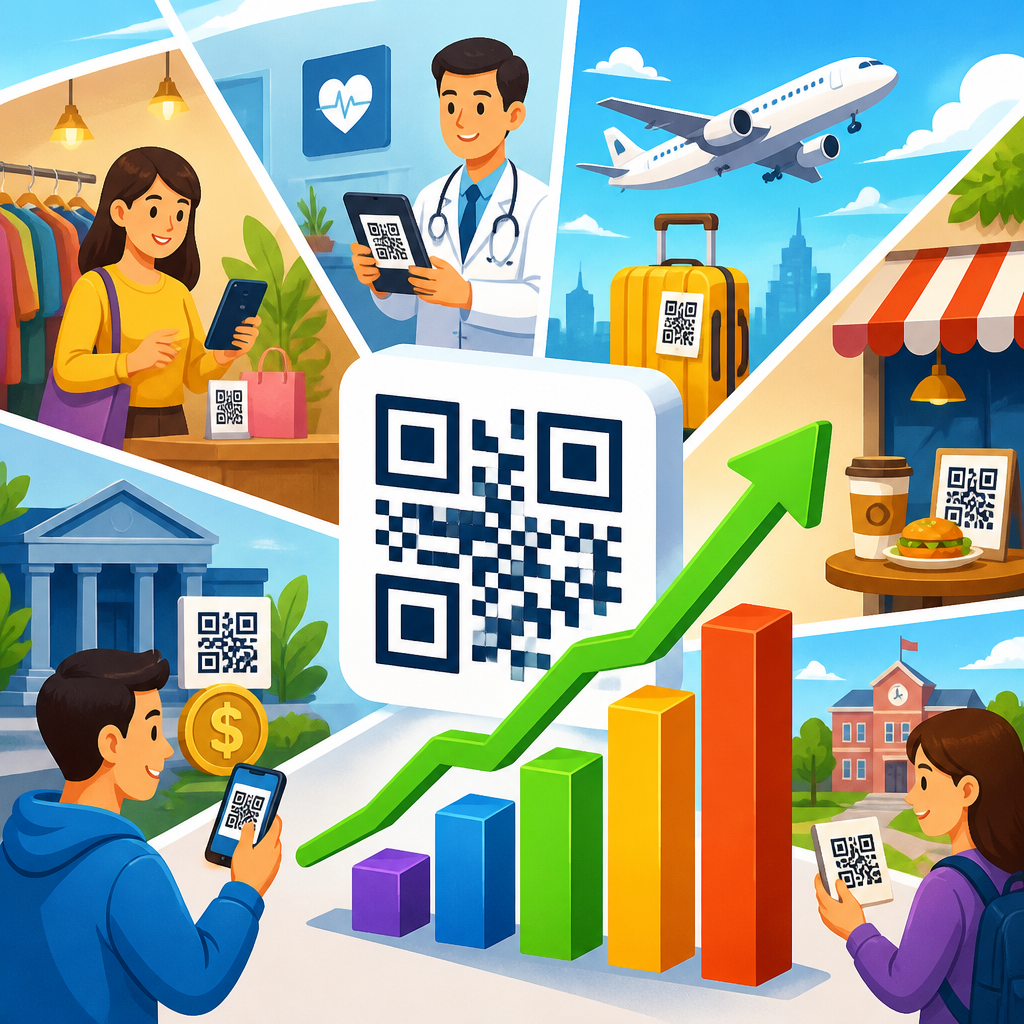
Retailers use AI-powered QR code analytics on shelf tags, endcaps, and packaging to connect in-store browsing with digital conversion. A cosmetics brand, for example, can place different dynamic codes on testers, shelf strips, and cartons. Scan data then reveals which touchpoint drove ingredient lookups, shade matching, or purchase. AI can predict which stores need revised placement based on historical underperformance and local demand patterns. Consumer packaged goods companies use connected packaging to unlock recipes, authenticity checks, warranty registration, and loyalty programs. In those cases, AI helps identify the content sequence most likely to turn first-time scanners into repeat customers.
Restaurants and hospitality brands rely on QR menus, room guides, and feedback links. Here, the operational benefits are immediate. If breakfast menu scans spike but mobile ordering conversion drops on specific devices, a model may detect a layout issue before staff notice complaints. Hotels can compare scan behavior by room type, property, and traveler origin to personalize recommendations. Events and venues use QR badges, wayfinding signs, and sponsor activations. AI is useful for predicting congestion, identifying high-value attendee segments, and measuring which booths or sessions led to strongest post-event pipeline. Healthcare, education, and manufacturing also benefit, though they require stricter governance. A hospital might track patient education handout scans, while a manufacturer can analyze scans on equipment labels to predict service demand and reduce downtime.
Payments and authentication are another major area. QR-based payments generate a dense trail of intent and completion signals. AI can score transaction risk in real time using device consistency, scan frequency, merchant history, and geolocation patterns. Authentication codes on packaging help brands combat counterfeiting by checking whether a product identifier has been scanned unusually often or in geographically inconsistent ways. In field service, technicians scan codes on assets to access manuals, maintenance logs, or parts ordering flows. Analytics then shows which machines trigger the most scans and what support content actually resolves issues. That insight feeds both product design and service documentation.
Implementation, privacy, and data governance
Successful implementation starts with architecture, not artwork. Use dynamic QR codes managed through a platform that supports secure redirects, expiration controls, role-based access, and event exports. Assign a unique code to each meaningful placement instead of reusing one code everywhere. Standardize URL parameters and maintain a naming taxonomy for channel, campaign, asset, region, and creative. Connect scan events to your analytics stack through APIs or warehouse pipelines, then document event definitions so marketing, analytics, and operations interpret numbers the same way. If you expect high scan volumes from packaging or outdoor media, test redirect latency and landing page performance across network conditions before launch.
Privacy and compliance require equal attention. QR scans can create personal data when linked to identifiers, accounts, purchase histories, or precise locations. Teams should minimize data collection, provide clear notices, and obtain consent when required by laws such as GDPR and CCPA. If minors may scan the code, additional safeguards are necessary. Avoid storing raw IP addresses longer than needed, define retention schedules, and ensure vendors provide data processing terms and security controls. In regulated sectors, keep anonymous scan analytics separate from personal records until lawful basis and user permissions are established. I also recommend documenting model logic for sensitive use cases, especially if analytics could influence pricing, access, or eligibility decisions.
Measurement governance includes fraud prevention and quality assurance. Bot traffic, preview crawlers, and repeated scans from internal teams can skew reporting. Good platforms use bot filtering, user-agent analysis, velocity rules, and signed redirect logic to reduce noise. Teams should run periodic audits by scanning every live code, checking redirect status, validating campaign tags, and confirming event ingestion in downstream tools. Governance sounds unglamorous, but it is what makes AI recommendations trustworthy. Without clean inputs and clear definitions, a prediction engine only automates confusion.
How to build a scalable AI-powered QR strategy
A scalable strategy begins with a small number of high-intent journeys. Choose use cases where a scan clearly relates to a measurable outcome, such as product registration, coupon redemption, menu ordering, event check-in, or support deflection. Establish baseline metrics for at least a few weeks, then test one variable at a time: placement, call to action, destination format, or offer. Feed results into a simple model first. In many cases, logistic regression or gradient-boosted trees outperform more complex systems because they are easier to explain and maintain. Once confidence grows, expand into forecasting, personalization, and anomaly detection.
Creative and operational choices matter as much as modeling. The code must be large enough, contrast well, and sit near a strong reason to scan. Landing pages should load fast, match the promise of the physical asset, and reduce friction on mobile. Teams should create playbooks for print vendors, store operators, field reps, and campaign managers so each code is deployed consistently. From there, build a content hub around the topic: strategy guides, dynamic versus static QR comparisons, packaging best practices, QR code security advice, and industry-specific examples. That structure helps users navigate related information and gives every future article a clear place within the broader QR code trends and innovations program.
AI-powered QR code analytics is valuable because it makes physical-to-digital engagement measurable, explainable, and improvable. Instead of treating a scan as a one-off click, organizations can understand intent, predict outcomes, and optimize each touchpoint across packaging, retail, hospitality, events, payments, and service. The essential ingredients are dynamic codes, reliable event tracking, privacy-aware governance, and models applied to business questions that matter. When those pieces are in place, teams can identify high-performing placements, detect problems early, personalize follow-up, and attribute revenue with much greater confidence.
The main benefit is not more data for its own sake. It is better decisions. Businesses can stop guessing which sign, label, menu, or mailer works and start improving the customer journey based on evidence from real scans and real outcomes. If you are building a QR code program under a broader innovation strategy, start with one measurable use case, connect it to your analytics stack, and let the data guide the next expansion. Then create the supporting articles and operational standards that turn isolated QR campaigns into a durable growth channel.
Frequently Asked Questions
What is AI-powered QR code analytics, and how is it different from basic QR code tracking?
AI-powered QR code analytics is the practice of using artificial intelligence to turn QR scan activity into actionable business intelligence. Traditional QR code tracking typically tells you simple metrics such as how many times a code was scanned, when it was scanned, and sometimes where the scan happened or what device was used. That information is useful, but it only describes what already happened at a surface level. AI adds a deeper analytical layer by identifying patterns across scans, predicting likely outcomes, segmenting user behavior, and highlighting which campaign, location, product, or customer journey is producing the best results.
For example, a standard analytics setup might show that one QR code received more scans than another. An AI-powered system can go further by showing why that happened, whether those scans led to purchases or drop-offs, which audience segment was most engaged, and what adjustments are most likely to improve future performance. It can detect anomalies, compare performance across time periods, and uncover hidden relationships between scan behavior and business outcomes such as sales, sign-ups, support requests, or repeat engagement.
In practical terms, AI-powered QR code analytics transforms QR codes from simple access tools into intelligent data collection points. Instead of treating every scan as an isolated event, AI evaluates scan behavior in context, helping businesses optimize campaigns, improve customer experiences, and make more confident decisions based on patterns that would be difficult to detect manually.
What types of insights can businesses gain from AI-powered QR code analytics?
Businesses can gain a wide range of insights from AI-powered QR code analytics, spanning marketing performance, customer behavior, operational efficiency, and revenue impact. At the most basic level, they can see scan volume, time of day, device type, operating system, referral context, geography, and destination performance. AI then expands those data points into richer interpretations, such as which placements drive the highest-quality scans, which user segments are more likely to convert, and which environmental factors affect engagement.
On the marketing side, AI can identify the strongest-performing campaigns, packaging designs, print placements, or calls to action. It can reveal whether scans from in-store displays behave differently from scans on product packaging, direct mail, event signage, or digital screens. It can also measure downstream actions after the scan, including purchases, form submissions, app downloads, video views, or loyalty enrollments, helping businesses understand not just scan activity but actual business value.
Operationally, AI can help detect friction points in the user journey. If a QR code gets a high number of scans but a low completion rate, that may signal poor landing page performance, mismatched messaging, or technical issues. In product and supply chain scenarios, QR codes linked to product identifiers can help businesses analyze post-purchase engagement, service usage, or support trends. In all of these cases, the real advantage is that AI does not just report data; it helps prioritize what matters, forecast what may happen next, and recommend where improvements are likely to produce the biggest return.
How does artificial intelligence improve campaign optimization through QR code data?
Artificial intelligence improves campaign optimization by analyzing large volumes of scan data faster and more accurately than manual reporting methods. When a business runs multiple QR-enabled campaigns across different channels, audiences, and regions, the data becomes complex very quickly. AI can organize that complexity into usable insights by finding trends, clustering similar behavior patterns, and identifying which variables are most strongly associated with successful outcomes.
For instance, AI can determine whether a QR code on product packaging performs better when paired with a discount offer, whether a restaurant table tent drives more repeat scans during certain hours, or whether one landing page version produces stronger conversion rates for mobile users. It can support A/B testing by evaluating scan-to-conversion performance across creative variants, and it can detect underperforming assets before significant budget is wasted. In more advanced environments, AI can even predict campaign outcomes based on early scan behavior and recommend adjustments in real time.
This makes optimization more proactive than reactive. Instead of waiting until a campaign ends to evaluate results, businesses can use AI-powered QR code analytics to monitor performance continuously and refine messaging, placement, targeting, and destination content while the campaign is still live. That level of agility is especially valuable in fast-moving retail, events, hospitality, consumer products, and omnichannel marketing, where small changes can have a meaningful impact on engagement and revenue.
Are AI-powered QR code analytics useful outside of marketing?
Yes, AI-powered QR code analytics are valuable well beyond marketing. While promotional campaigns are one of the most common use cases, the same scan data can support operations, customer service, product management, payments, logistics, and compliance. Because a QR code can point to many types of destinations, including websites, files, payment requests, app actions, or product records, the insights generated from scan behavior can be relevant across many departments.
In operations, businesses can use AI to analyze how employees, partners, or customers interact with QR-linked workflows such as equipment instructions, maintenance logs, onboarding documents, inventory records, or service checklists. In customer support, QR codes can connect users to setup guides, troubleshooting content, or warranty registration pages, while analytics reveal where people encounter confusion or abandon the process. In payments, QR code analytics can help monitor transaction initiation patterns, identify friction in checkout flows, and detect unusual behaviors that may require review.
Manufacturers and retailers can also use AI-powered QR code analytics for product-level intelligence. A QR code on packaging may provide data about post-purchase engagement, authenticity checks, usage instructions, replenishment timing, or location-based demand signals. AI can then connect those scans to broader operational patterns, such as which products generate the most support needs, which regions show the highest engagement after purchase, or which customer journeys are most likely to lead to retention. This makes QR analytics a cross-functional intelligence tool rather than just a campaign reporting feature.
What should businesses consider when implementing AI-powered QR code analytics?
Businesses should start by defining clear objectives, because the value of AI-powered QR code analytics depends heavily on what the organization wants to improve. Some companies are focused on attribution and conversion tracking, while others care more about customer journey analysis, product engagement, payment adoption, or operational visibility. Establishing those goals early helps determine which QR codes to deploy, what destinations to link, which events to measure, and how AI models should evaluate success.
It is also important to ensure strong data quality and system integration. QR code analytics become far more useful when scan data connects to broader platforms such as web analytics tools, CRM systems, e-commerce platforms, point-of-sale systems, customer data platforms, or support systems. That integration allows AI to associate scan activity with downstream outcomes rather than treating scans as disconnected events. Businesses should also think carefully about dynamic QR codes, tagging conventions, campaign naming consistency, and landing page design, since all of these affect the quality of the insights generated.
Finally, companies should pay close attention to privacy, consent, and governance. AI-powered analytics can be extremely powerful, but responsible implementation matters. Businesses should collect only the data they need, disclose tracking practices appropriately, comply with applicable privacy regulations, and establish internal rules for how insights are used. When implemented thoughtfully, AI-powered QR code analytics can provide a reliable framework for understanding user behavior, improving performance, and making better strategic decisions without losing sight of trust and transparency.