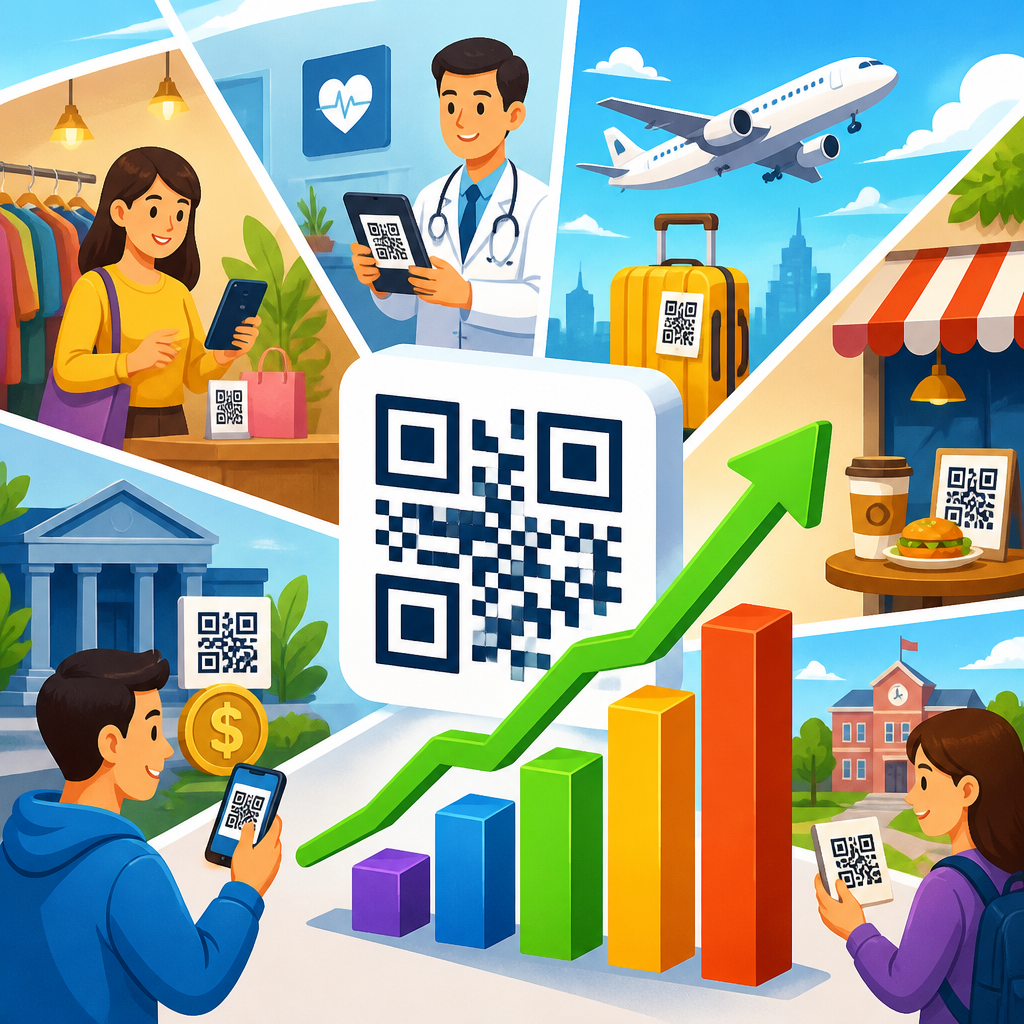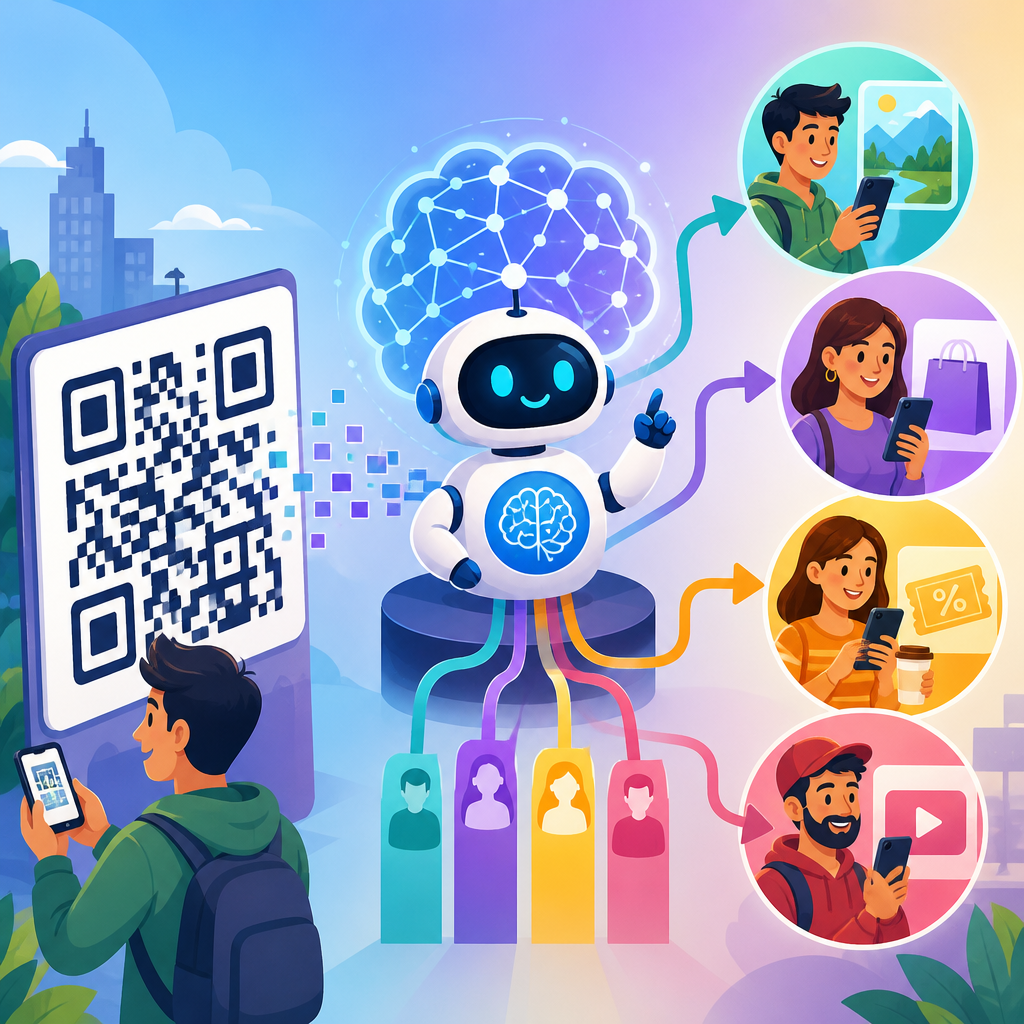
Machine learning is changing how brands use QR codes, turning a simple square graphic into a dynamic targeting channel that adapts to audience behavior, context, and intent. In practical terms, machine learning uses statistical models that learn from data instead of relying only on fixed rules, while QR code targeting means deciding which user sees which destination, offer, message, or experience after a scan. When those two ideas work together, marketers can move beyond static links and create QR campaigns that optimize landing pages, personalize journeys, predict high-value segments, and improve conversion rates over time. I have seen this shift firsthand in campaign audits where a single printed code sent every scanner to the same page, then later evolved into a smart routing system that changed by device type, time of day, geography, referral context, and prior engagement.
This matters because QR code usage has matured. Consumers now expect fast mobile experiences, relevant offers, and seamless paths from offline touchpoints to digital action. A restaurant menu code, product packaging code, event badge code, direct mail code, and retail shelf code do not serve the same user intent. Traditional campaign setup often treats them as identical, which wastes scans and depresses ROI. Machine learning improves QR code targeting by identifying patterns humans miss across thousands of scan events: which creative drives repeat visits, which customer cohorts redeem offers, which locations generate low-quality traffic, and which combinations of context produce the highest probability of purchase. The result is better audience matching, lower acquisition waste, and stronger measurement across channels.
For a hub article on QR codes and AI, the key idea is simple: machine learning does not replace QR strategy; it strengthens every decision after the scan and increasingly informs decisions before the code is printed. It can score scan intent, forecast demand by region, detect fraud, power recommendations, select the best destination URL, optimize incentives, and support attribution models that connect offline media to online outcomes. The strongest programs also combine privacy controls, clean first-party data, and experimentation discipline. If you want QR codes to function as a measurable growth channel instead of a basic shortcut, machine learning is now one of the most effective ways to improve targeting accuracy and campaign performance.
How machine learning changes QR code targeting
Machine learning improves QR code targeting by using historical and real-time data to predict what destination or message is most likely to produce a desired outcome for a specific scanner. Desired outcomes vary by campaign: product education, app install, lead capture, coupon redemption, store visit, checkout completion, or subscription. A model can ingest features such as scan timestamp, GPS-derived region, handset language, operating system, network type, campaign source, product SKU, and whether the user has scanned before. It then estimates the probability of each outcome and triggers the best next action. In one packaging campaign I worked on, routing users to different landing page variants based on region and prior engagement increased completed sign-ups because repeat scanners needed a shorter path than first-time scanners.
Static segmentation usually relies on broad audience buckets defined in advance, such as new versus returning users or urban versus suburban locations. Machine learning goes further by continuously updating its understanding of which patterns matter. For example, a beverage brand may discover that evening scans on convenience-store coolers convert better when sent to a store-locator page, while afternoon scans near college campuses convert better with a mobile wallet offer. Those relationships are not obvious in advance. Classification models, uplift models, recommendation systems, and contextual bandits are all useful here, depending on whether the goal is prediction, persuasion, or adaptive experimentation. The important point is that QR code targeting becomes evidence-based rather than assumption-based.
What data powers smarter QR code decisions
Good targeting depends on data quality more than algorithm complexity. The most useful QR datasets usually combine scan event data, web analytics, CRM records, product information, and campaign metadata. At minimum, brands should capture timestamp, destination URL, campaign identifier, creative version, device family, operating system, approximate location, referrer parameters, and conversion outcomes. Dynamic QR platforms often integrate with Google Analytics 4, Adobe Analytics, CRM systems such as Salesforce or HubSpot, and customer data platforms like Segment or Tealium. When these systems are connected, machine learning can tie offline scans to downstream actions such as qualified leads, repeat purchases, and lifetime value.
Feature engineering is where QR code intelligence often improves dramatically. Raw location coordinates are less useful than derived context such as store type, weather conditions, event attendance, footfall category, or distance from a purchase point. Raw timestamps become more predictive when transformed into daypart, weekend status, or seasonal period. Product packaging scans become stronger signals when paired with SKU margin, inventory level, or promotion status. Clean labeling also matters. If “conversion” is defined inconsistently across channels, the model will optimize toward noise. Teams that document taxonomy, enforce UTM naming standards, and validate event tracking with tools like Google Tag Manager and Mixpanel produce better targeting systems because the learning signal is trustworthy.
High-impact use cases across industries
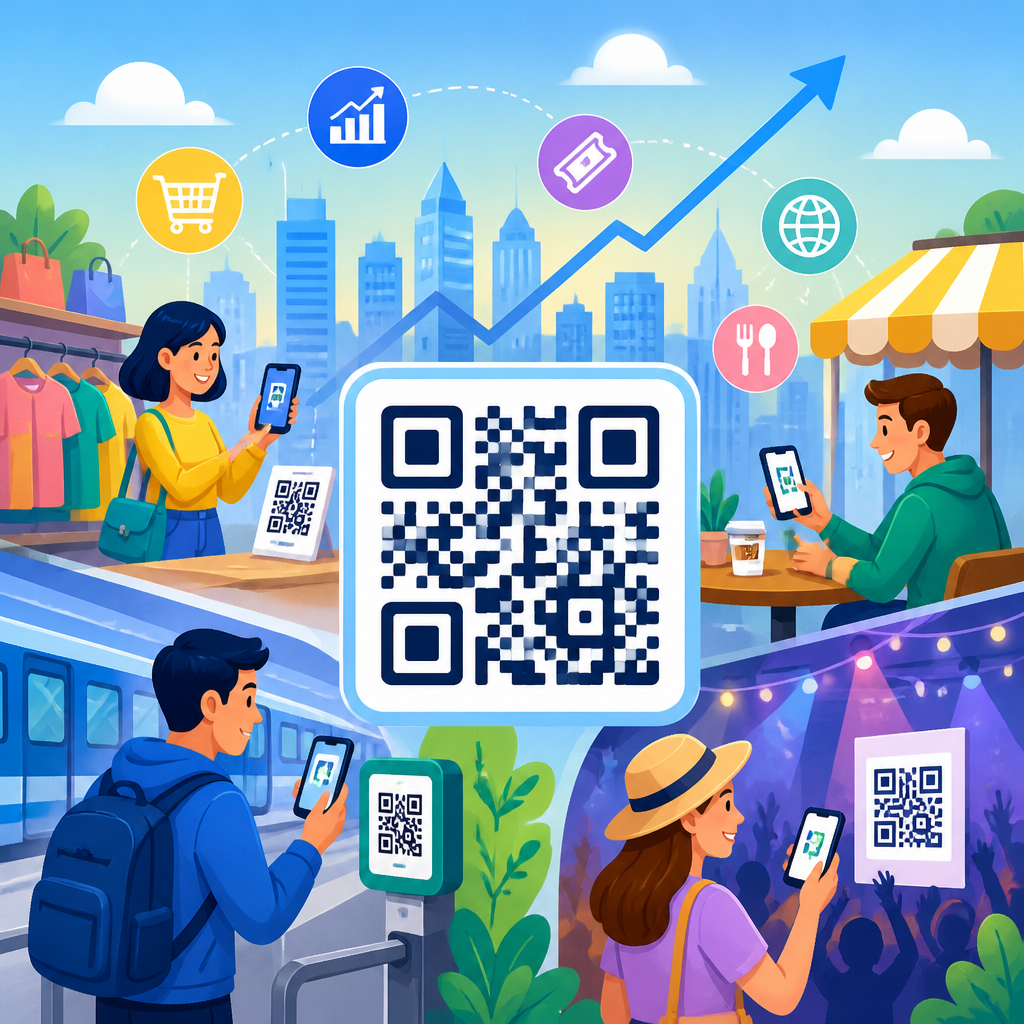
Retail is one of the clearest examples. Shelf-edge QR codes can route shoppers to product comparison pages, reviews, or replenishment offers, but machine learning determines which destination is most likely to convert by store, product category, and audience. If a scanner appears price sensitive based on prior behavior, the system can present a discount bundle; if the scanner is a loyal customer, it may emphasize loyalty rewards or premium variants. Consumer packaged goods brands use package QR codes to personalize recipes, tutorials, warranty activation, or reordering flows. In healthcare, clinic posters and medication packaging codes can guide users to the most appropriate educational content based on language, location, or care stage, provided privacy protections are strict.
Events, hospitality, and out-of-home media also benefit. Conference badges with QR codes can trigger networking suggestions, schedule recommendations, or sponsor offers based on attendee profile similarity. Hotels can use in-room QR codes to prioritize service options that different guest segments prefer, such as late checkout, dining, or spa offers. Transit and billboard campaigns often generate broad traffic with varied intent; machine learning helps separate commuters, tourists, and repeat visitors so each receives a more relevant mobile experience. The underlying rule is consistent: when scan context differs, the destination should differ. Machine learning makes that targeting precise at scale.
| Use case | Key data signals | Machine learning output | Business result |
|---|---|---|---|
| Retail shelf QR | Store, SKU, time, loyalty status | Best offer or content variant | Higher conversion and basket size |
| Packaging QR | Product type, region, repeat scans | Personalized education or reorder path | More retention and repeat purchase |
| Event badge QR | Session history, role, interests | Recommended meetings or sessions | Better engagement and sponsor value |
| Direct mail QR | Household segment, device, response lag | Predicted landing page and incentive | Improved lead quality |
| Restaurant table QR | Daypart, menu behavior, order history | Suggested upsell or reorder prompt | Higher average order value |
Personalization, prediction, and real-time optimization
The most advanced QR code targeting systems combine three capabilities: personalization, prediction, and real-time optimization. Personalization changes the experience based on who the scanner is or appears to be. Prediction estimates the likelihood of outcomes such as purchase, churn, or coupon redemption. Real-time optimization acts immediately on that prediction, choosing the best page, offer, or sequence. For example, a direct mail campaign may use a unique dynamic QR code tied to a household segment. When scanned, a model predicts whether the user is more likely to respond to financing information, product benefits, or a time-limited incentive. The server then redirects the user accordingly in milliseconds.
Recommendation models are especially effective when a scan opens a content-rich environment, such as a product education hub or shopping experience. Rather than sending everyone to the same generic landing page, the system can recommend the next article, video, or product based on similar users’ behavior. Contextual bandits are useful when a team wants to balance learning with performance: they test multiple experiences but increasingly favor the better-performing option for each context. This is superior to a simple A/B test when conditions shift quickly across locations or seasons. In QR campaigns tied to packaging and print, where changing the physical code is expensive or impossible, dynamic destinations controlled by machine learning create flexibility without requiring a reprint.
Measurement, attribution, and model governance
Better targeting only matters if you can measure incremental impact. QR code programs should define primary and secondary metrics before training models. Primary metrics often include conversion rate, revenue per scan, qualified lead rate, or retention. Secondary metrics may include bounce rate, time to action, repeat scans, and assisted conversions. Offline-to-online attribution remains challenging, especially when users scan on one device and purchase later elsewhere, but probabilistic methods and CRM reconciliation can narrow the gap. Multi-touch attribution, media mix modeling, and holdout testing all help determine whether machine learning-driven targeting actually outperforms rule-based routing.
Governance is equally important. Models drift as consumer behavior changes, promotions end, inventories move, and channels evolve. A routing model that worked during holiday retail may perform poorly in February if not retrained. Teams need monitoring for prediction accuracy, conversion lift, latency, and data completeness. They also need guardrails around fairness, consent, and security. Sensitive categories such as healthcare, finance, and children’s products require careful limits on personalization. Privacy regulations including GDPR and CCPA affect what data can be used and how long it can be retained. In practice, the most resilient systems minimize personal data, rely on consented first-party signals, and document decision logic so marketers, analysts, and legal teams can review how targeting is happening.
Implementation roadmap and common mistakes
The best way to implement machine learning for QR code targeting is to start with a narrow use case that has clear data, enough scan volume, and a measurable business outcome. Begin by replacing static QR destinations with dynamic QR infrastructure so URLs can be changed without reprinting assets. Next, standardize campaign taxonomy, connect analytics and CRM systems, and define one high-value optimization goal such as lead qualification or coupon redemption. Only then should you build or deploy a model, often beginning with a baseline logistic regression or gradient boosted tree before moving to more complex systems. Many teams can launch effectively using cloud tools from Google Cloud, AWS, or Azure, paired with CDPs and experimentation platforms.
Common mistakes are predictable. Companies jump to AI language before fixing tracking, so the model learns from incomplete events. They optimize for clicks instead of business outcomes, which sends traffic to flashy but unproductive experiences. They ignore latency, making redirects too slow for mobile users. They fail to create control groups, so they cannot prove lift. They overpersonalize with sparse data, leading to unstable decisions. And they forget the creative layer: a machine learning system cannot rescue a QR code that is poorly placed, hard to scan, or paired with weak copy. Strong targeting starts with a clear value exchange, fast mobile pages, and disciplined experimentation. Then machine learning compounds those strengths.
Machine learning improves QR code targeting by making every scan more informed, more relevant, and more measurable. Instead of treating QR codes as static bridges from offline media to a single webpage, smart brands use data-driven models to choose better destinations, personalize content, predict intent, and optimize campaigns continuously. The benefits are practical: higher conversion rates, stronger lead quality, better customer experiences, and clearer attribution from print, packaging, events, retail, and out-of-home channels. Just as important, the strongest programs do not rely on magic. They rely on clean first-party data, dynamic QR infrastructure, careful model monitoring, and privacy-aware governance.
As a hub for QR codes and AI, the big takeaway is that this topic spans far more than one tactic. It includes predictive routing, recommendation systems, fraud detection, offer optimization, attribution modeling, and real-time experimentation. Each of those areas can support a dedicated article, but they all connect back to the same principle: the value of a QR code depends on what happens after the scan, and machine learning makes that next step smarter. If you manage QR campaigns today, audit your current destinations, data collection, and segmentation logic, then test one machine learning use case with a dynamic QR setup. That single step is often enough to move QR from a convenience feature to a true performance channel.
Frequently Asked Questions
What does machine learning actually do in QR code targeting?
Machine learning helps QR code campaigns move from static, one-size-fits-all destinations to adaptive experiences that respond to real user behavior. Instead of sending every scan to the same landing page, a machine learning system can evaluate patterns in data such as device type, location, time of day, repeat visits, referral source, engagement history, and conversion outcomes. It then uses those patterns to predict which destination, message, or offer is most likely to be relevant for that specific scan.
In practice, this means a single QR code can behave more intelligently. One person might scan and be sent to a product demo, while another might see a discount offer, store locator, video, signup page, or loyalty experience. The decision is not random. It is based on models that learn from previous interactions and improve as more data comes in. Over time, machine learning can identify which combinations of context and user intent lead to stronger results, allowing marketers to continuously refine how each scan is routed.
This makes QR code targeting more effective because it aligns the post-scan experience with the likelihood of action. Rather than guessing what audiences want, brands can use evidence from scan data and downstream performance to deliver content that better matches intent. That often leads to higher engagement, better conversion rates, and more efficient use of campaign traffic.
How is machine learning better than traditional rule-based QR code targeting?
Traditional QR code targeting usually depends on fixed rules created in advance. A marketer might decide that users in one city go to one page, mobile users go to another, and evening scans trigger a special promotion. That approach can work, but it is limited because it relies on human assumptions and simple segmentation logic. Once the rules are set, they typically do not improve unless someone manually reviews performance and updates the campaign.
Machine learning is more powerful because it can detect patterns that are too complex or too subtle for manual rule creation. For example, a model may discover that first-time scanners on certain devices respond best to educational content, while repeat scanners in a different region are more likely to convert after seeing social proof and a shorter checkout path. These insights often emerge from combinations of signals rather than a single obvious condition.
Another major advantage is that machine learning can adapt faster. As user behavior changes, the model can update recommendations based on fresh data instead of waiting for a marketer to rewrite routing logic. That matters in campaigns where timing, context, and audience behavior shift quickly. In short, rule-based targeting is static and predefined, while machine learning targeting is dynamic, predictive, and capable of improving performance over time through ongoing learning.
What kinds of data can be used to improve QR code targeting with machine learning?
Machine learning models for QR code targeting can use many different categories of data, provided they are collected responsibly and in compliance with privacy requirements. Common inputs include scan timestamp, device type, operating system, browser, geolocation at a broad or permitted level, language settings, referral environment, and whether the scan came from packaging, signage, direct mail, in-store displays, or other campaign placements. These contextual signals help estimate what the user may want in that moment.
Behavioral data is also extremely valuable. This includes whether the user has scanned before, what destination they previously visited, how long they stayed, which pages they viewed, whether they clicked through, added a product to cart, completed a form, redeemed an offer, or made a purchase. Engagement depth after the scan gives the model feedback on which routing decisions created meaningful outcomes rather than just raw traffic.
Brands may also layer in campaign-level and audience-level performance data. For instance, machine learning can compare how different messages perform by region, time window, product category, or customer lifecycle stage. Some organizations connect QR scans to CRM, loyalty, or ecommerce systems to understand whether a user is new, returning, inactive, or high value. When used carefully, this broader data foundation helps the model make better predictions about what content, offer, or experience is most likely to resonate with each scan event.
Can machine learning personalize QR code destinations in real time?
Yes, real-time personalization is one of the most valuable applications of machine learning in QR code targeting. When a user scans a code, a machine learning system can evaluate available signals almost instantly and decide which destination or experience is most appropriate. That decision might consider immediate context, such as current location, local inventory availability, time sensitivity of an offer, device constraints, previous scan behavior, or the probability that the user is in a research versus purchase mindset.
For example, a restaurant brand could use one QR code across multiple tables, windows, posters, and delivery inserts, while machine learning determines whether the user should see the menu, a limited-time promotion, the loyalty signup flow, or a reorder page. A retailer could direct some users to nearby store information and others to a mobile product page or personalized bundle recommendation. The destination becomes responsive to context instead of being fixed at the moment the QR code is printed.
Real-time personalization also creates a stronger testing environment. Because the model can compare outcomes continuously, it learns which experiences lead to better engagement or conversion under different conditions. That means optimization is not limited to periodic A/B testing. The system can shift traffic toward higher-performing experiences as evidence accumulates, helping brands deliver more relevant post-scan journeys while improving campaign efficiency at the same time.
What are the biggest business benefits of using machine learning for QR code targeting?
The biggest benefit is improved relevance, which usually leads to better marketing performance. When users land on a destination that matches their context and likely intent, they are more likely to engage, convert, and continue moving through the customer journey. That can increase click-through rates, form completions, purchases, coupon redemptions, app downloads, and other downstream results tied to the scan experience.
Machine learning also helps brands get more value from existing QR code placements. Instead of reprinting materials every time an offer changes or a campaign needs refinement, marketers can keep the same code in market while improving what happens after the scan. The intelligence shifts to the routing and decision layer, allowing campaigns to become more flexible, responsive, and cost efficient. This is especially useful for packaging, out-of-home advertising, product inserts, and retail signage where physical updates can be expensive or slow.
Another important benefit is sharper audience insight. Because machine learning systems learn from outcomes, they reveal which contexts, messages, and experiences drive action across different segments. Those learnings can inform not just QR code strategy, but broader digital marketing, merchandising, and customer experience decisions. Over time, brands gain a more complete understanding of user intent and can use that knowledge to create smarter, more connected campaigns. In that sense, machine learning turns QR codes from simple access points into measurable, optimizable touchpoints within a larger performance marketing system.