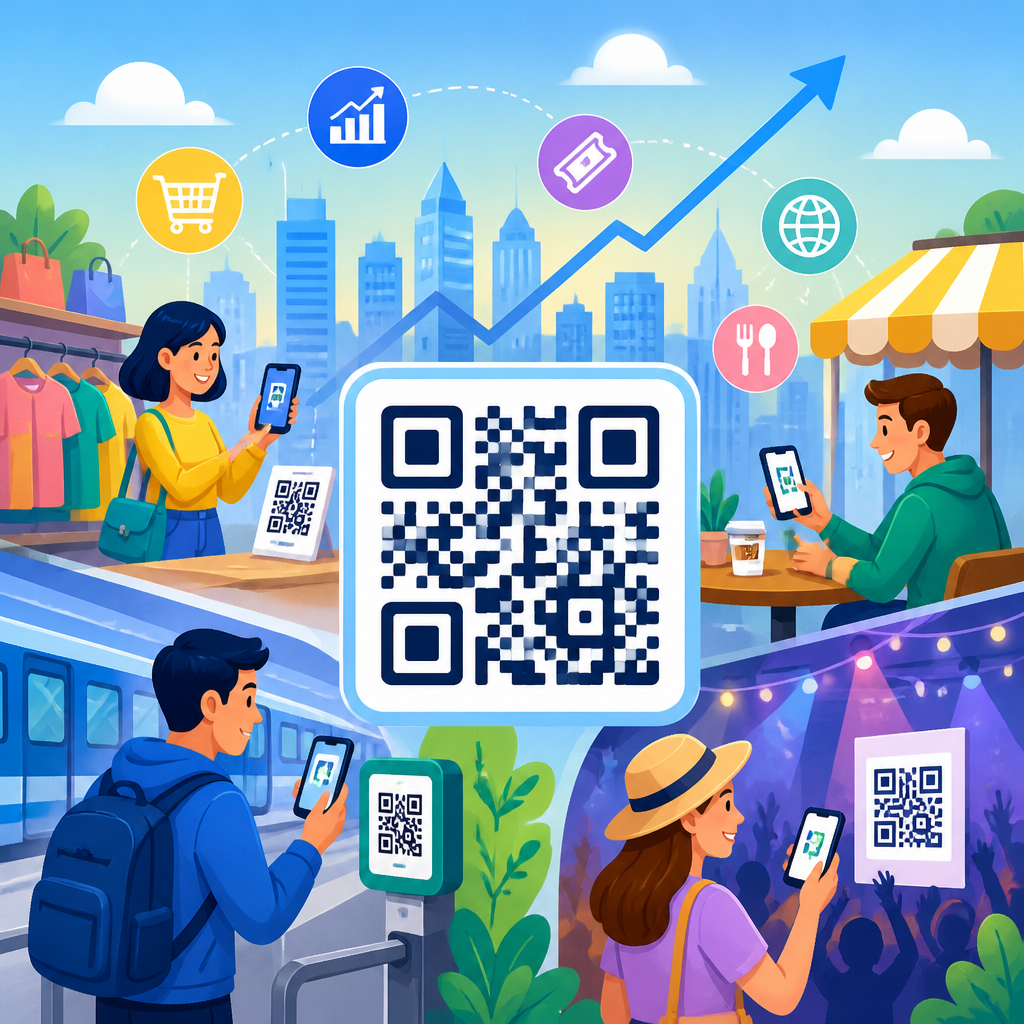
AI-driven QR code campaigns turn a simple scannable square into a responsive marketing system that can personalize content, adapt in real time, and improve results with every interaction. In practical terms, this means a QR code no longer acts only as a static shortcut to a website. It can trigger dynamic landing pages, connect with customer data platforms, segment audiences by behavior, and feed conversion data back into analytics tools that guide the next campaign decision. For brands investing in omnichannel marketing, retail activation, packaging, events, and out-of-home media, that shift matters because the QR code becomes both a bridge and a sensor: a bridge between physical and digital touchpoints, and a sensor that captures intent at the moment of engagement.
To understand AI-driven QR code campaigns, it helps to define the components clearly. A QR code campaign is any planned use of QR codes to prompt an action such as visiting a page, claiming an offer, registering for an event, viewing product information, or completing a purchase. “Dynamic” QR codes point to editable destinations, which allows marketers to change the content after printing without replacing the code itself. “AI-driven” refers to the use of machine learning, predictive models, natural language systems, recommendation engines, and automated decisioning to optimize what happens before, during, and after the scan. That can include predicting the best offer, tailoring content by location or time, identifying high-intent users, generating creative variations, or forecasting which placements will produce the most scans.
I have worked on QR campaigns for packaging, in-store signage, field events, and direct mail, and the pattern is consistent: teams often underestimate how much value sits between the scan and the final conversion. A basic campaign measures total scans. A mature campaign measures unique users, repeat scans, device types, geography, dwell time, add-to-cart rate, assisted revenue, and post-scan retention. AI adds another layer by finding relationships that manual reporting misses. It can detect which creative layout drives more scans in a rainy urban commute, which coupon works better for first-time buyers, or which product education flow lowers return rates after purchase. That is why QR codes plus AI have become a serious part of modern growth strategy rather than a novelty feature.
How AI changes the role of QR codes in marketing
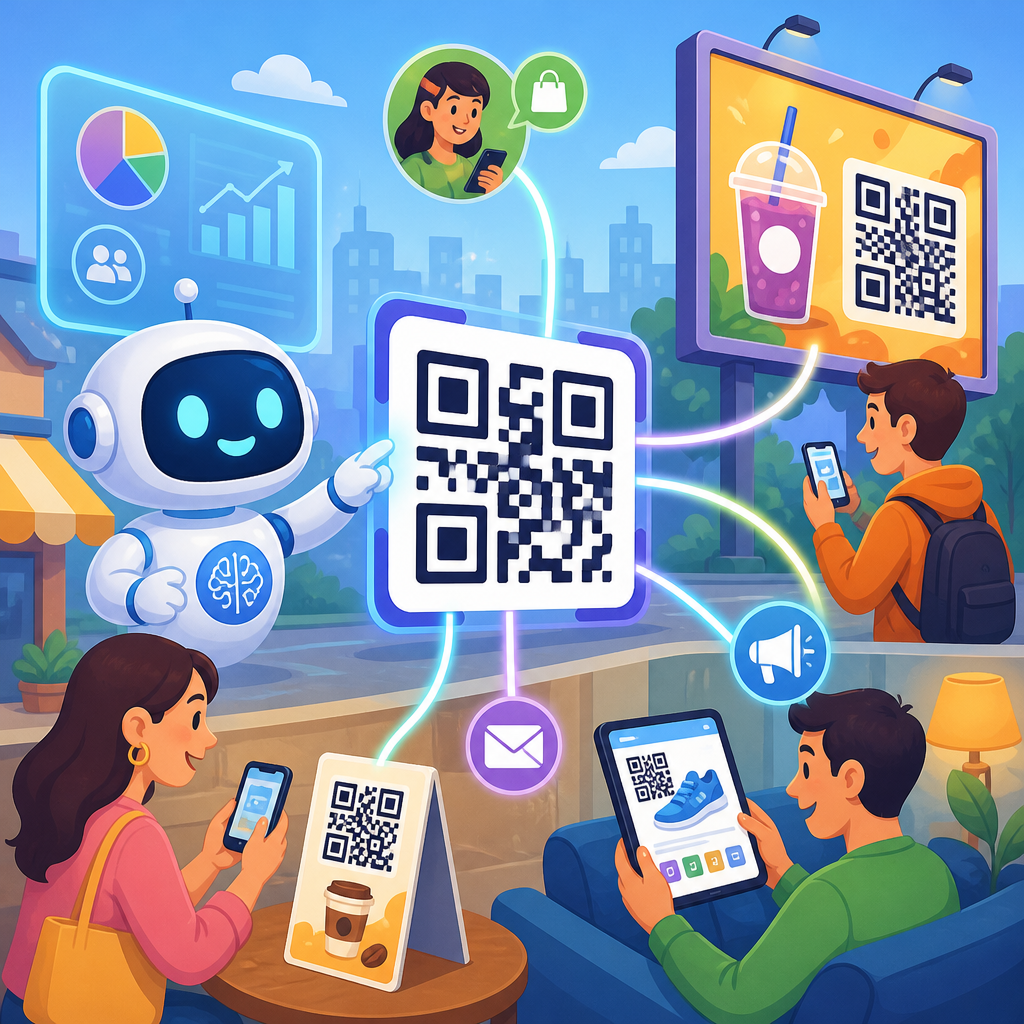
Traditional QR code usage was linear: scan, land, act. AI makes it adaptive. Instead of sending every visitor to the same destination, the campaign can route users based on context signals such as location, operating system, scan time, referral source, loyalty status, weather, or prior purchase behavior. A restaurant chain, for example, can use one dynamic QR code across posters, tray liners, and delivery inserts, then let an AI decision engine present breakfast offers in the morning, family bundles in the evening, and loyalty prompts to returning customers. The printed code remains the same, but the experience changes according to predicted relevance.
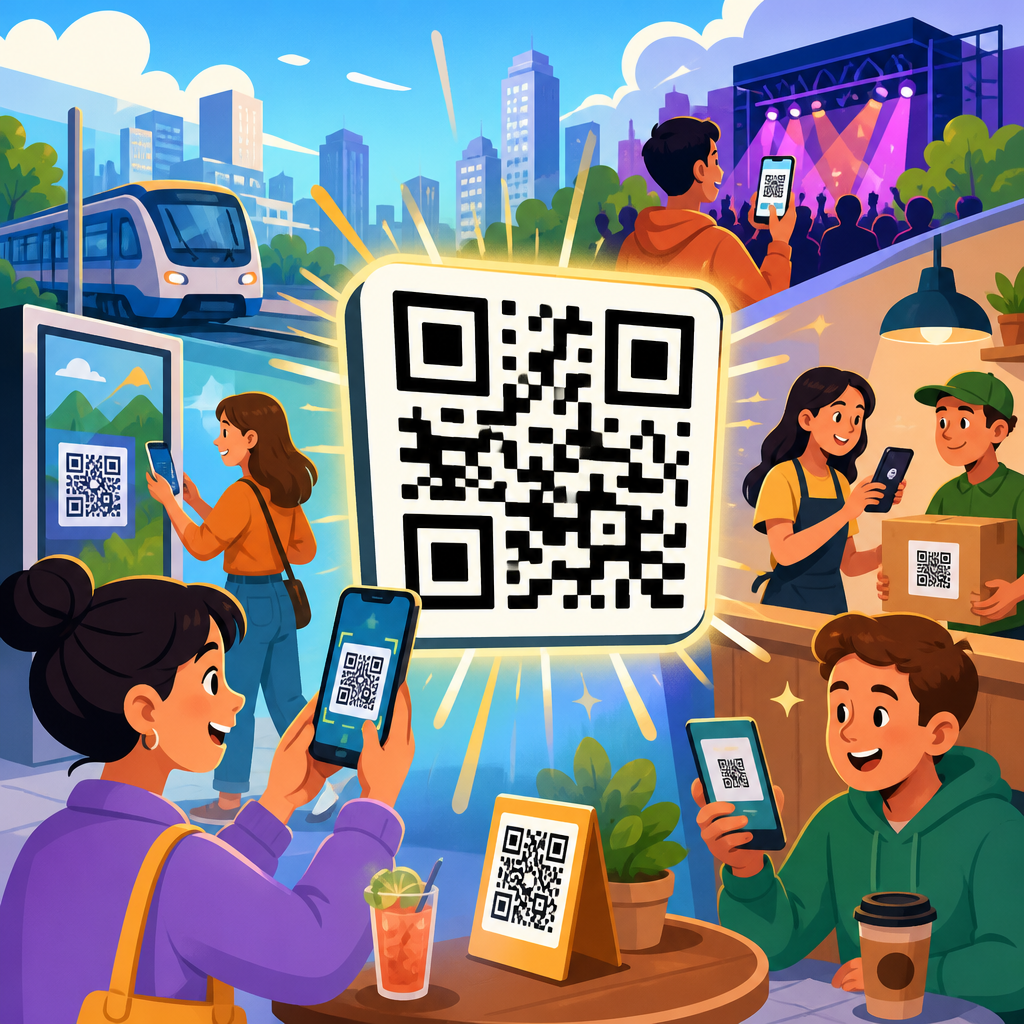
This matters because QR interactions happen in high-variance environments. People scan from shop windows, buses, receipts, packaging, conference booths, and product shelves. Intent differs sharply across those contexts. Someone scanning a QR code on a medicine package wants dosage or safety information, while someone scanning at a music festival may want instant video, social filters, or merchandise access. AI systems help classify likely intent from available signals and map users to the content most likely to satisfy that intent quickly. When brands reduce friction after the scan, scan-to-conversion rates rise.
AI also improves campaign planning before launch. Historical performance data from previous scans, ad impressions, sales regions, customer segments, and creative assets can be used to predict where QR codes will perform best. I have seen placement decisions improve dramatically when teams compare shelf-level scans, footfall estimates, and conversion quality instead of relying only on design instinct. A code near product usage instructions may produce fewer scans than a code near a limited-time offer, but the instructional placement may drive lower support costs and higher customer satisfaction. AI models can optimize for the business objective that actually matters, not just the top-line scan count.
Core components of an AI-driven QR code campaign
An effective campaign usually combines five layers: the QR code format, the destination experience, the data collection framework, the decisioning logic, and the measurement stack. The QR code itself should usually be dynamic so the destination can change. The destination may be a mobile landing page, in-app deep link, chatbot, video, AR experience, store locator, or product detail page. Data collection typically includes UTM parameters, first-party analytics, consent management, and event tracking for actions such as scroll depth, clicks, sign-ups, and purchases. Decisioning logic can be rules-based at first, then expanded with AI recommendations. Measurement depends on analytics and attribution tools such as Google Analytics 4, Adobe Analytics, Segment, Mixpanel, HubSpot, Salesforce, or a retail media dashboard.
The campaign architecture should also reflect operational realities. Many teams start with a QR generator and a landing page builder, but they need governance quickly. Naming conventions, source tagging, destination version control, and content approval workflows prevent reporting chaos later. AI outputs are only as useful as the data they receive. If scans from packaging, direct mail, and point-of-sale displays all flow into one undifferentiated bucket, the model cannot learn which channel is driving quality engagement. Clean taxonomy is not glamorous, but it is the foundation for reliable optimization.
| Campaign Element | Basic QR Setup | AI-Driven QR Setup | Business Impact |
|---|---|---|---|
| Destination | Single static page | Dynamic page tailored by context and audience | Higher relevance and conversion rate |
| Segmentation | Manual audience grouping | Behavioral and predictive segmentation | Better offer matching |
| Creative testing | Occasional A/B tests | Continuous multivariate optimization | Faster performance gains |
| Analytics | Total scans and clicks | Intent, pathing, conversion quality, and retention | Clearer ROI measurement |
| Operations | One-off execution | Automated updates and triggered journeys | Lower manual workload |
Personalization after the scan: where AI delivers the biggest gains
The most immediate value of AI in QR code marketing usually appears after the scan. Once a user lands on a destination, AI can personalize messaging, content blocks, product recommendations, language, pricing display, and calls to action. For an apparel brand, the same QR code on a window poster can send tourists to a store map, returning customers to a loyalty sign-in, and new visitors to a curated best-sellers page. For consumer packaged goods, a code on the box can detect region and surface relevant recipes, replenishment options, or setup videos. The principle is simple: use available context to make the next step feel obvious.
Recommendation engines are especially valuable when product choice is broad. A beauty brand can place a QR code on in-store shelf talkers that launches a skin quiz or shade finder. AI can infer likely fit from quiz responses, prior browsing data, or common patterns across similar users. That reduces choice paralysis and improves confidence. In B2B settings, a QR code on a trade show badge scanner or booth graphic can lead to role-specific assets, such as technical documentation for engineers and ROI calculators for procurement leaders. The same physical code serves distinct needs without forcing visitors through a generic homepage.
Natural language systems can also turn a landing page into a guided conversation. Instead of making users navigate menus, a scan can open a product assistant that answers questions about ingredients, compatibility, maintenance, assembly, or warranty terms. This is particularly useful when the scan happens on packaging or in-store, where users want concise information quickly. The practical benefit is lower abandonment. The strategic benefit is richer intent data, because questions asked during the interaction can reveal objections and purchase readiness far better than simple pageview metrics.
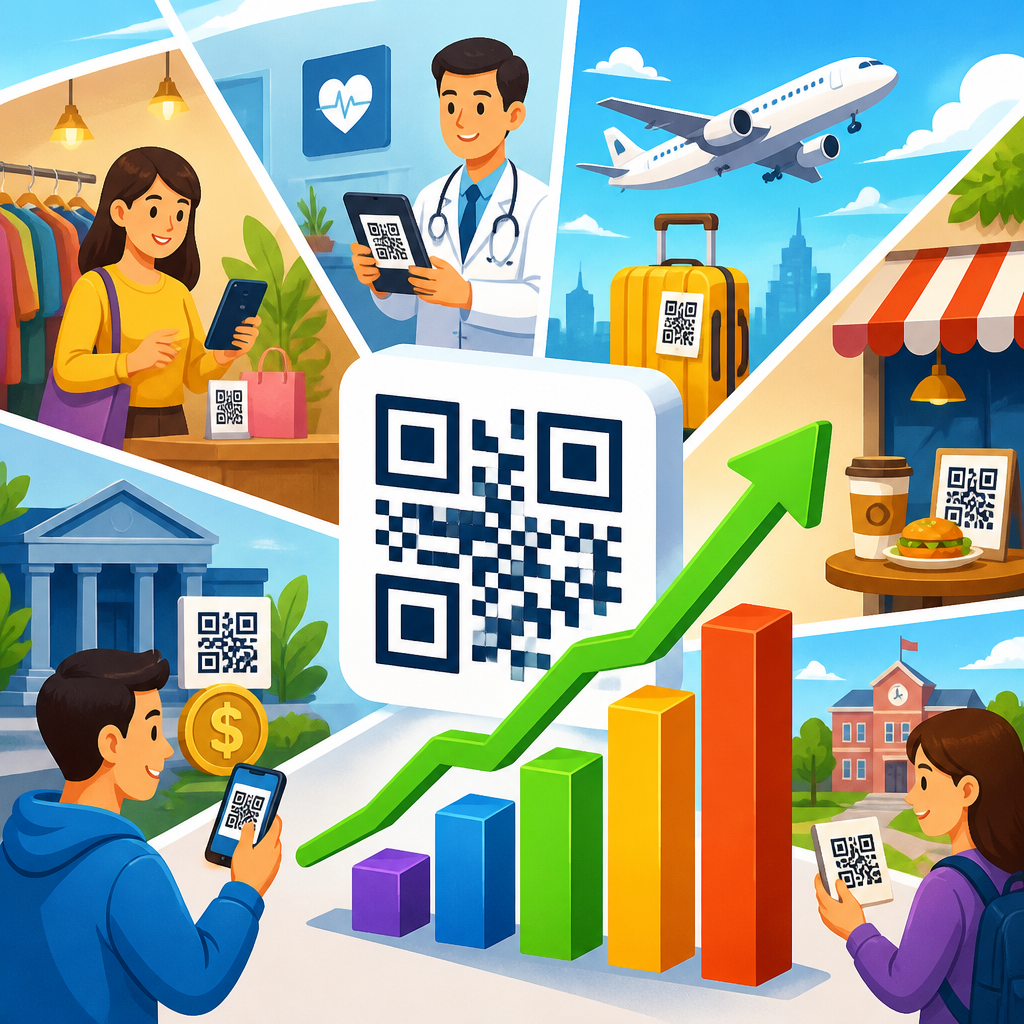
Use cases across retail, events, packaging, and service industries
Retail is the clearest use case because the path from scan to sale is measurable. Shelf-edge QR codes can unlock reviews, how-to content, inventory checks, or mobile checkout. AI helps rank which products deserve QR placement based on margin, complexity, and support burden. In grocery, QR codes tied to AI meal planning can transform a commodity item into a basket-building tool by recommending complementary ingredients and recipes. In fashion, window-display scans can continue the shopping journey after hours, capturing demand even when the store is closed.
Events and experiential campaigns benefit from AI because audience attention is fragmented and timing matters. A conference organizer can use QR codes on signage, badges, and session screens to route attendees to personalized agendas, sponsor offers, or networking recommendations. AI can adapt content based on attendance history, industry, or session interest. At live activations, brands can score scan behavior to identify warm leads for on-site staff follow-up. That is far more useful than collecting a stack of undifferentiated badge scans after the event ends.
Packaging is another major growth area because it reaches consumers at home, where attention is calmer and product context is strongest. QR codes on food packaging can support traceability, recipes, allergen guidance, and sustainability storytelling. AI can determine which content sequence best leads to repeat purchase or subscription enrollment. Electronics brands use packaging QR codes to reduce support friction by directing users to model-specific setup videos and troubleshooting flows. In service industries, QR codes at hotel desks, healthcare settings, or transportation hubs can trigger multilingual support, appointment flows, or issue triage. AI makes these experiences more responsive and less labor intensive, but only when the content design is precise and the compliance requirements are respected.
Measurement, attribution, and optimization
The right way to measure AI-driven QR code campaigns is to separate interaction metrics from business outcomes. Interaction metrics include scans, unique scans, scan rate by placement, bounce rate, dwell time, completion rate, and assisted actions. Business outcomes include revenue, qualified leads, repeat purchase, reduced support contacts, loyalty enrollment, and lifetime value indicators. Many teams stop at scans because they are easy to report. That is a mistake. High scan volume with low post-scan engagement usually signals poor targeting, weak creative alignment, or a destination that fails to answer the user’s immediate question.
Attribution is challenging because QR codes often sit between offline exposure and digital action. Use disciplined tagging, channel-specific codes, and event-level analytics to connect touchpoints. If a retailer prints one QR code on posters, product tags, receipts, and delivery inserts, it loses placement-level insight. Dynamic code platforms such as Bitly, QR Code Generator PRO, Uniqode, or Flowcode can help, but the real value appears when their data is integrated with CRM, commerce, and analytics systems. AI can then identify which combinations of placement, audience, and landing experience correlate with downstream conversion rather than superficial engagement.
Optimization should be continuous and specific. Test scan prompts, surrounding copy, visual contrast, size, placement height, page speed, offer type, and follow-up sequence. On one campaign I worked on, the biggest gain did not come from redesigning the code. It came from changing the nearby call to action from a vague “Learn more” to a concrete value statement tied to setup time. Scans increased, but more importantly, completion rates rose because users knew what they would get. AI can accelerate that learning cycle by modeling which variables are driving meaningful outcomes, but marketers still need sound experimental design.
Privacy, accessibility, and implementation pitfalls
AI-driven QR code campaigns work best when trust is built into the system. Consent handling, data minimization, and transparent disclosures are essential, especially when campaigns connect scan behavior to personal profiles. Regulations vary by market, and sectors such as healthcare, finance, and education require stricter controls. Collect only the data needed for the use case, document retention policies, and ensure vendors meet security standards. A sophisticated recommendation engine is not helpful if the organization cannot defend how user data was collected and processed.
Accessibility is equally important. A QR code should not be the only path to critical information, especially for instructions, safety content, or public services. Provide a short URL or alternative access method near the code. Ensure destination pages load quickly, support screen readers, use readable contrast, and avoid heavy scripts that fail on weak mobile connections. Physical execution matters too: poor print quality, reflective surfaces, awkward placement, or low contrast can cripple scan performance before AI has any chance to help.
Common implementation mistakes are predictable. Teams launch without a clear conversion goal, choose static codes when they need editable destinations, fail to distinguish placements in analytics, over-personalize before they have enough data, or let creative novelty overshadow utility. The best campaigns start with one strong use case, robust tracking, and a clear value exchange for the user. Then they expand. If you are building a QR code strategy under the broader QR Code Trends & Innovations umbrella, this is the right model: treat AI as an optimization layer on top of a frictionless mobile experience, not as a substitute for one.
AI-driven QR code campaigns succeed because they connect physical moments of intent to digital experiences that can learn, adapt, and improve. The strongest programs use dynamic codes, clean tracking, context-aware destinations, and disciplined measurement tied to revenue, retention, or service outcomes. They also respect privacy, accessibility, and operational governance, which is why the best results usually come from cross-functional coordination among marketing, analytics, product, and compliance teams.
For companies exploring QR codes plus AI, the practical path is straightforward. Start with one high-intent use case such as packaging support, in-store product education, event lead capture, or direct mail conversion. Implement dynamic QR codes, define the events you need to measure, connect the campaign to analytics and CRM systems, and test post-scan personalization where it clearly reduces friction. Once the data foundation is reliable, apply AI to prediction, recommendation, and automated optimization. That sequence prevents complexity from outrunning value.
As a hub within QR Code Trends & Innovations, this topic leads naturally into deeper work on dynamic QR infrastructure, QR code analytics, AI personalization, smart packaging, retail media measurement, and privacy-safe first-party data collection. Build the campaign architecture correctly, and a QR code stops being a passive link. It becomes an adaptive customer touchpoint that earns more scans, better engagement, and stronger business results. Review your current QR placements, identify one journey to improve, and turn the next scan into a measurable advantage.
Frequently Asked Questions
What is an AI-driven QR code campaign, and how is it different from a standard QR code campaign?
An AI-driven QR code campaign uses artificial intelligence, dynamic content delivery, and connected analytics to turn a basic scan into an adaptive marketing experience. In a standard QR code campaign, the code usually points every user to the same fixed destination, such as a homepage, menu, product page, or downloadable file. Once printed, that experience often remains unchanged unless the code itself is replaced. By contrast, an AI-driven QR code campaign can route different users to different destinations based on context such as location, device type, time of day, campaign source, previous interactions, or audience segment.
What makes this especially valuable is the feedback loop. AI can analyze scan behavior, page engagement, conversions, and customer attributes in near real time, then help marketers adjust the next interaction automatically. For example, one person might scan a code on retail packaging and be sent to a product tutorial, while another person scanning the same code after clicking a related ad may see a personalized offer or a lead form. Instead of acting as a static link, the QR code becomes part of a responsive system that learns from each interaction and improves campaign performance over time.
How does AI personalize the experience after someone scans a QR code?
AI personalizes the post-scan journey by using available data signals to predict what content, message, or offer is most likely to be relevant to that user. These signals can include referral source, scan location, time, language, device, browsing behavior, purchase history, loyalty status, and prior campaign interactions. Once the scan occurs, the system can assemble a dynamic landing page or direct the visitor to a version of the experience designed for that specific segment.
For instance, a first-time visitor might be shown educational content and a simple call to action, while a returning customer could see a product recommendation, replenishment reminder, or upsell opportunity. AI can also optimize page elements such as headlines, images, product suggestions, and form length based on historical performance data. In more advanced setups, the scan can connect with a customer data platform or CRM so the experience reflects known customer relationships rather than anonymous traffic patterns alone. The result is a smoother, more relevant experience that increases the likelihood of engagement and conversion without requiring marketers to manually build a separate flow for every scenario.
What are the main benefits of using AI-driven QR code campaigns for marketing?
The biggest advantage is adaptability. AI-driven QR code campaigns allow marketers to respond to real behavior instead of relying only on assumptions made before launch. Because the destination experience can be dynamic, teams can update messaging, offers, and page layouts without reprinting physical materials. That is especially useful in packaging, direct mail, out-of-home advertising, events, in-store displays, and product inserts, where physical assets often remain in circulation for weeks or months.
Another major benefit is better targeting and stronger measurement. AI can segment audiences more precisely, identify which contexts produce the best results, and reveal where people drop off in the conversion path. Marketers can then use those insights to improve creative, timing, channel mix, and follow-up actions. These campaigns also support more meaningful attribution because scan data can be connected to downstream actions such as sign-ups, purchases, bookings, or app installs. Over time, this creates a compounding effect: each scan generates data, that data improves decision-making, and those improvements increase future performance. For brands focused on efficiency, relevance, and measurable ROI, AI-driven QR code campaigns offer a practical way to make offline and online touchpoints work together more intelligently.
What kind of data and tools are needed to run an effective AI-driven QR code campaign?
A strong AI-driven QR code campaign typically relies on a combination of dynamic QR code technology, analytics infrastructure, and audience data systems. At a minimum, brands need a QR platform that supports editable destinations, scan tracking, and campaign-level reporting. Beyond that, the most effective campaigns often connect with web analytics tools, customer relationship management platforms, customer data platforms, marketing automation software, and conversion tracking systems. These integrations make it possible to understand not just who scanned, but what happened after the scan and how that behavior fits into the larger customer journey.
Useful data inputs include scan volume, timestamp, device type, geography, traffic source, landing page behavior, form submissions, purchases, and repeat interactions. If privacy-compliant first-party data is available, brands can also use customer status, past purchases, loyalty membership, or engagement history to shape what users see next. AI models can then use these inputs to recommend audience segments, test creative variations, forecast likely outcomes, and optimize for goals such as conversions or retention. The key is not collecting every possible data point, but gathering the signals that are most closely tied to campaign decisions and business outcomes. Clean implementation, clear objectives, and accurate tracking matter far more than complexity for its own sake.
Are AI-driven QR code campaigns suitable for all businesses, and what should brands watch out for?
AI-driven QR code campaigns can benefit many types of organizations, including retailers, restaurants, consumer brands, event marketers, healthcare providers, educators, real estate firms, and B2B companies. Any business that wants to connect physical touchpoints with digital experiences can potentially gain value from a smarter QR strategy. That said, the level of sophistication should match the scale of the business, the available data, and the clarity of the campaign objective. A smaller company might use AI simply to test different landing pages and improve lead capture, while a larger enterprise may connect scans to a broader personalization engine spanning multiple channels.
Brands should be careful about a few common issues. First, personalization should never come at the expense of privacy or trust, so data practices must be transparent and compliant with relevant regulations. Second, the post-scan experience needs to load quickly and work well on mobile devices, since even a highly intelligent campaign will underperform if the landing page is slow or confusing. Third, AI should support strategy, not replace it. Clear offers, useful content, and a compelling reason to scan still matter. Finally, teams should avoid overcomplicating implementation at the start. The most successful campaigns usually begin with a focused use case, establish baseline metrics, and expand as performance data reveals where automation and personalization create the most impact.