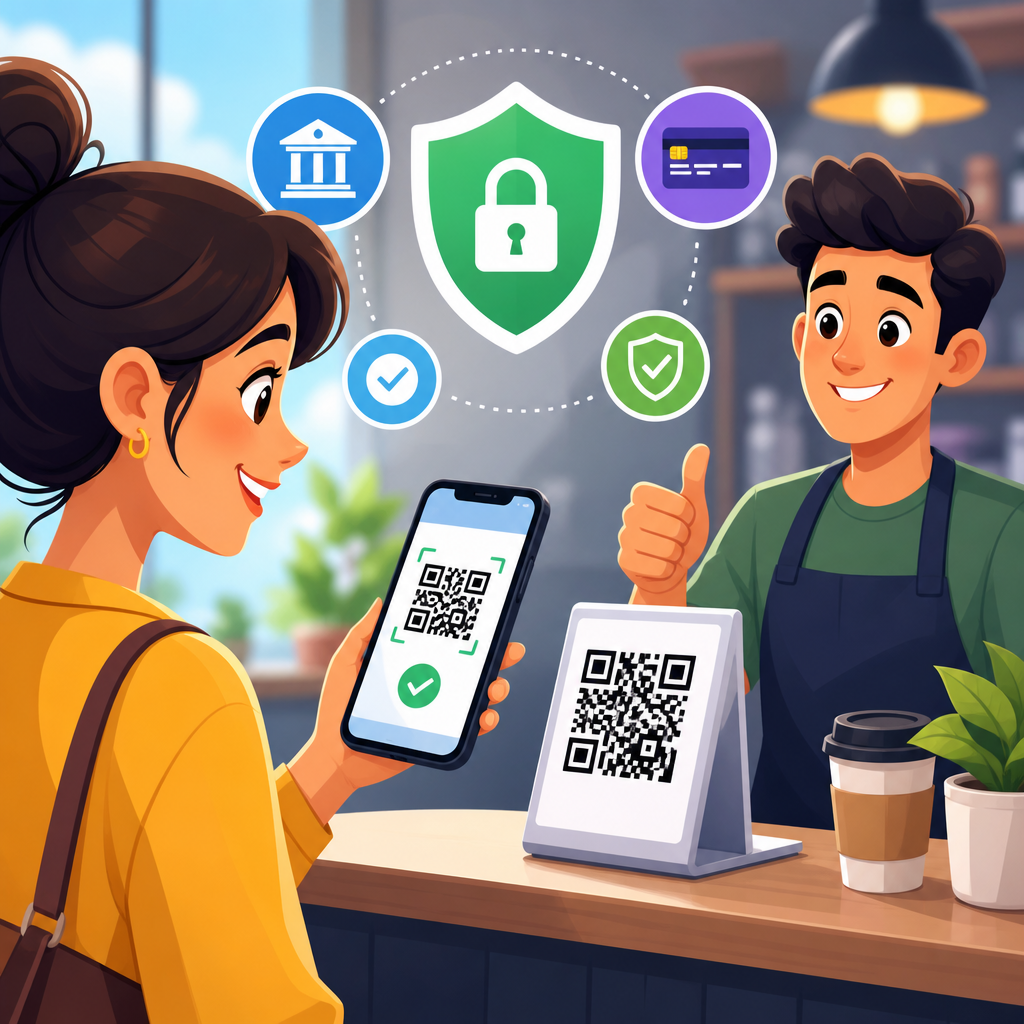
Dynamic QR codes are powerful because the destination can change after printing, but that flexibility also creates security and privacy risks that static codes do not carry. A dynamic QR code usually points to a short redirect URL controlled by a QR platform, which then forwards the scanner to the current destination. That extra layer enables campaign edits, scan analytics, device-based routing, and expiration rules. It also introduces a new attack surface: if the redirect account, destination rules, or analytics settings are misconfigured or compromised, every printed code can become a delivery mechanism for phishing, malware, or data leakage. Securing dynamic QR codes therefore means protecting the full lifecycle of the code, from creation and hosting to scanning, monitoring, and retirement.
In practice, secure QR code practices combine application security, access control, privacy governance, and user communication. I have worked with marketing teams, IT administrators, and compliance reviewers on QR deployments for packaging, payments, event badges, and field service labels, and the same pattern appears every time: teams focus on design and conversion rates first, then discover too late that redirect settings, expired domains, or unreviewed third-party integrations can undermine trust. A secure setup prevents unauthorized destination changes, limits data collection to what is necessary, gives scanners clear expectations, and creates an auditable process for updates. For a sub-pillar hub under QR Code Security & Privacy, the goal is not one tactic but a repeatable operating model.
The most important concept is that a dynamic QR code is not just an image. It is an endpoint, a redirect service, a management console, a set of permissions, and often an analytics pipeline. If any one of those parts is weak, the code is weak. Secure dynamic QR codes should use HTTPS everywhere, managed DNS, strong administrator authentication, approved destination allowlists, logging, and routine link validation. They should also respect privacy laws by minimizing personal data, defining retention periods, and giving users a transparent explanation of what happens after a scan. When organizations treat dynamic QR codes as production digital assets rather than disposable campaign graphics, security improves immediately.
Understand the Threat Model Before You Publish
The first step in securing dynamic QR codes is to identify what can realistically go wrong. The main risks are destination hijacking, malicious redirects, analytics abuse, impersonation, and physical tampering. Destination hijacking occurs when someone gains access to the QR management account and changes the target URL. Malicious redirects can also happen if a redirect rule accepts unsafe parameters or forwards users to unvalidated domains. Analytics abuse appears when a QR platform collects more device or location data than the organization intended, exposing the business to privacy complaints or regulatory scrutiny. Impersonation happens when attackers copy a legitimate code and place it in fake contexts, while physical tampering occurs when stickers are placed over real codes in public locations.
A practical threat model maps assets, attackers, and impact. The asset may be a payment code on a restaurant table, a login code on an employee poster, or a support code on industrial equipment. The attacker may be an opportunistic vandal, a credential thief, a malicious insider, or a compromised vendor account. The impact may include stolen payments, credential harvesting, customer distrust, or incident response costs. For example, if a dynamic QR code on product packaging redirects to warranty registration, an unauthorized change could send thousands of customers to a counterfeit support page. That is not a theoretical issue; it is the same redirect-abuse pattern seen in shortened links and compromised ad accounts.
Threat modeling also clarifies security priorities. A campaign microsite may tolerate limited analytics and a short lifespan, but a payment QR code demands the strictest controls, because one unauthorized redirect can cause immediate financial harm. Teams that skip this step often apply the wrong protections. They may spend time on logo customization while failing to restrict who can edit destinations. Defining the threat model early helps determine account roles, acceptable redirect behavior, retention rules, and the level of monitoring required.
Choose a Secure QR Code Platform and Harden Access
Your QR platform is the control plane for every dynamic code you issue, so vendor selection matters. Choose a provider that supports HTTPS by default, role-based access control, single sign-on through SAML or OpenID Connect, multi-factor authentication, detailed audit logs, exportable scan data, and domain-level governance. Reputable enterprise platforms also document uptime commitments, incident response processes, and data residency options. If a platform cannot show who changed a destination, when it changed, and from which account, it is not suitable for high-trust use cases.
Once the platform is chosen, harden access immediately. Require MFA for all administrators, use least-privilege roles, and separate code creation from destination approval when possible. In teams I have supported, the most effective setup assigns marketers permission to draft codes while IT or a digital governance lead approves publication. That simple separation reduces accidental redirects and creates a second set of eyes before a code goes live. Integrating the platform with single sign-on also makes offboarding safer, because user access is removed centrally instead of relying on someone to update the QR vendor manually.
It is also important to secure the underlying domains and DNS records used by the QR service. If you use a branded short domain, lock registrar access, enable registry lock where available, and protect DNS changes with MFA and change review. Many organizations secure the QR application but overlook the domain that scanners actually visit first. A compromised DNS record can silently reroute legitimate scans to attacker-controlled infrastructure. That is why dynamic QR security must include platform controls and domain security together.
Control Redirects, Destinations, and Content Changes
The strongest defense against abuse is strict redirect governance. Every dynamic QR code should point only to approved destinations, ideally within a maintained allowlist of domains and subdomains. Avoid open redirect logic that accepts arbitrary query parameters or lets nontechnical users paste any destination into a live code. If your use case requires external destinations, route them through a documented review process and test them with safe browsing tools before publication. A short redirect chain is better than a long one, because each additional hop adds failure points, latency, and more opportunity for tampering.
Destination changes should be versioned and reviewed like content releases. In mature deployments, a destination edit creates a log entry, records the previous URL, notes the reason for change, and triggers a notification to code owners. This is especially important for evergreen printed codes on packaging, signage, manuals, and invoices, where a single image may remain in use for years. If a code changes from a support article to an app download page, or from a menu to a payment flow, that should be deliberate, documented, and reversible. Silent edits are where abuse hides.
Teams should also validate destination content after each change. Check TLS certificates, mobile rendering, consent banners, accessibility basics, and whether the final page still matches the context promised by the printed label. A secure redirect that lands on a misleading page is still a trust failure. When the printed text says “Scan for assembly instructions,” the page should not demand unrelated permissions, trigger a file download without warning, or ask for excessive personal data.
Protect User Privacy and Limit Data Collection
Dynamic QR codes are often deployed for analytics, but security and privacy improve when you collect less. The safe baseline is aggregated scan counts, timestamp, rough geography at a nonprecise level, and device class only if there is a legitimate business need. Avoid collecting full IP addresses long term, persistent identifiers, or exact geolocation unless the use case clearly requires it and users are informed. If the QR destination is a form, apply standard web privacy controls there as well: encryption in transit, consent where required, retention limits, and field minimization.
Transparency matters because scanners usually make a split-second trust decision. The physical context should identify the organization, the expected destination, and the purpose of the scan. On high-risk or high-friction journeys, add plain-language notice such as “Opens our support site” or “Leads to secure payment page.” For regulated environments, link to a privacy notice that explains what scan data is recorded and how long it is retained. This is not just a legal step; it reduces abandonment by aligning expectations with the actual experience.
Retention policy is another overlooked control. Scan analytics should not live forever by default. Define a retention period based on operational need, such as 90 days for campaign optimization or 12 months for seasonal trend analysis, then delete or anonymize older records. If your QR platform cannot support defensible retention and deletion, the platform itself becomes a privacy risk. Secure QR code practices are stronger when the organization can explain exactly what data is collected, why it is necessary, who can access it, and when it is removed.
Operational Controls for Publishing, Monitoring, and Response
Security depends on process as much as technology. A reliable operating model covers creation, approval, deployment, monitoring, and retirement. Before publication, verify destination ownership, page integrity, and scan behavior across iOS and Android using current browsers. After publication, monitor uptime, certificate status, redirect changes, and unusual scan spikes. A sudden jump in scans from unexpected geographies may indicate sharing, scraping, or misuse. For public-facing codes, routine field inspection also matters. Store staff or facilities teams should know how to spot sticker overlays, damaged signage, or codes printed with low contrast that force users into unsafe workarounds.
| Control area | Minimum practice | Higher-assurance practice |
|---|---|---|
| Account security | MFA for admins | SSO, least privilege, quarterly access review |
| Redirect governance | Manual destination checks | Approved domain allowlist and change notifications |
| Privacy | Basic analytics disclosure | Data minimization, retention policy, anonymization |
| Monitoring | Periodic spot checks | Automated alerts for edits, TLS issues, and scan anomalies |
| Physical security | Visible branding near code | Scheduled inspections and tamper-evident placement |
Incident response should be planned before there is an incident. Define how to disable or reroute a compromised code, who approves emergency changes, how affected users will be notified, and how evidence will be preserved. In one common scenario, an old branded short domain expires because renewal ownership is unclear. Attackers can acquire the domain and inherit trust from legacy printed codes. The response plan for that situation is different from a simple destination mistake; it may involve registrar support, broad communications, and replacement campaigns. Fast containment depends on knowing exactly where your active codes are deployed and who owns them.
Retirement is part of security too. When a campaign ends, either deactivate the code with a clear end-of-life message or redirect to a maintained archive page. Do not leave abandoned destinations unresolved. Dead links train users to ignore warning signs, and expired redirects are attractive targets for takeover. Maintaining an inventory of live dynamic QR codes, their owners, their printed locations, and their retirement dates is one of the most effective controls a program can adopt.
Build Trust at the Point of Scan
Even a technically secure dynamic QR code can fail if users cannot judge whether it is legitimate. The physical and digital context around the code should reduce ambiguity. Use branded domains rather than generic shorteners when possible, place codes in predictable locations, and pair them with explanatory text. On packaging, include the company name and the action, such as “Scan to verify authenticity” or “Scan for installation guide.” In hospitality or payments, display the final payment domain before checkout. Users are more likely to proceed safely when the destination matches the visible brand and purpose.
Design details help. High contrast and adequate quiet zone spacing improve scan reliability, which reduces repeated scans and frustration. Tamper-evident placement, such as under laminate, behind acrylic, or integrated into original print rather than applied as stickers, makes physical replacement harder. For sensitive use cases like payments or account login, consider supplementary checks: transaction details printed next to the code, confirmation screens that restate merchant identity, or server-side validation that rejects altered parameters. These measures do not replace core security controls, but they help users detect inconsistencies before harm occurs.
Education should be practical, not abstract. Staff should know never to post dynamic QR codes without ownership records, never to reuse a payment code for another purpose, and never to change destinations outside the approved workflow. Customers should be encouraged to verify the visible URL preview on their phone and avoid codes that appear covered, mismatched, or placed in suspicious locations. Small habits at the point of scan often stop the most common attacks.
Securing dynamic QR codes requires disciplined control of the redirect layer, the management platform, the destination content, and the data generated by each scan. The core practices are clear: choose a platform with strong access controls and auditability, protect branded domains and DNS, restrict destinations through allowlists and review, minimize analytics data, publish with transparent user context, and monitor every live code throughout its lifecycle. Dynamic QR codes are not inherently unsafe, but they demand the same governance applied to any customer-facing digital entry point.
As a hub for secure QR code practices, this topic connects naturally to deeper guidance on QR phishing defense, tamper detection, secure branded short domains, QR code privacy compliance, payment QR safeguards, and incident response playbooks. Start by auditing your current dynamic codes: who owns them, where they redirect, what data they collect, and how changes are approved. Then close the obvious gaps first—MFA, domain protection, redirect rules, and inventory. That work delivers the main benefit users care about most: every scan feels trustworthy, consistent, and safe. Review your live QR program this week and treat each code like the production asset it is.
Frequently Asked Questions
What makes dynamic QR codes less secure than static QR codes?
Dynamic QR codes are not inherently unsafe, but they do introduce risks that static QR codes typically do not. A static QR code usually sends the user directly to a fixed destination embedded in the code itself. A dynamic QR code, by contrast, often points to a short redirect URL managed by a QR code platform. That redirect then sends the user to whatever destination is currently configured. The benefit is flexibility: you can change landing pages after printing, run time-based campaigns, collect scan analytics, route users by device or location, and set expiration rules. The tradeoff is that there is now an extra system in the middle that must be secured.
If the QR platform account is compromised, an attacker may be able to swap the destination URL without changing the printed code. If the redirect service is misconfigured, expires, or goes offline, the QR code may stop working entirely. If analytics settings collect too much information, privacy issues can arise. And because users usually cannot tell where a short redirect will lead before they scan it, trust can be easier to abuse. In practical terms, securing a dynamic QR code means securing the entire chain: the QR management account, the redirect infrastructure, the final destination website, and the data policies governing analytics and user tracking.
How can I protect a dynamic QR code from being hijacked or redirected to a malicious site?
The most important step is to lock down the account and platform that control the redirect. Use a reputable QR code provider with strong security practices, including multi-factor authentication, role-based access controls, login alerts, audit logs, and support for least-privilege user permissions. Avoid sharing one admin login across a marketing team. Instead, give each user an individual account with only the permissions they need. If someone only needs to view scan performance, they should not also be able to edit destinations.
Next, secure the destination management workflow. Restrict who can change landing page URLs, require internal approval for edits, and document every update. If your provider offers change history or webhook notifications, enable them so unexpected destination changes are caught immediately. It is also wise to use allowlists for approved domains when possible. That prevents a compromised user account from redirecting traffic to an unknown or malicious site. On the destination side, keep the website itself secure with HTTPS, patched software, strong CMS credentials, and web application protections, because a QR code is only as trustworthy as the page it ultimately sends people to.
You should also monitor the QR code continuously, not just at launch. Periodically scan it from different devices and networks to verify that the redirect and destination still behave as expected. For business-critical codes placed on packaging, signage, or invoices, consider automated URL monitoring to detect status changes, certificate problems, or content alterations. The best defense is layered: strong account security, controlled editing permissions, domain restrictions, active monitoring, and a response plan if something changes unexpectedly.
What security features should I look for in a dynamic QR code platform?
Choose a platform the way you would choose any system that controls customer-facing links and collects user interaction data. At a minimum, it should support HTTPS for both the redirect URL and the management dashboard, multi-factor authentication for all users, and detailed audit trails showing who changed what and when. Single sign-on can be valuable for organizations that want centralized identity management. Role-based access control is another must-have, especially if multiple teams use the same account for marketing, support, operations, or print production.
Look for controls that reduce accidental or malicious destination changes. Useful features include approval workflows, version history, rollback options, domain allowlisting, destination validation, and alerts when redirects are edited. If you operate in a regulated or privacy-sensitive environment, ask how analytics data is stored, what personal information is collected, where data is processed, how long logs are retained, and whether you can minimize or disable tracking. A strong provider should be transparent about data handling and offer settings that align with your compliance obligations.
Operational reliability matters too. Because dynamic QR codes depend on the provider’s redirect infrastructure, uptime, redundancy, and service continuity are part of security. Review service-level commitments, custom domain support, backup options, and what happens if an account is suspended or a subscription lapses. If possible, use a branded custom redirect domain rather than a generic shared shortlink domain. This can improve trust, strengthen brand consistency, and reduce dependence on a provider-owned hostname that may be harder for users to recognize. In short, the right platform should give you visibility, control, resilience, and clear privacy safeguards.
How do privacy and analytics affect the security of dynamic QR codes?
One reason businesses use dynamic QR codes is the ability to measure scans and optimize campaigns. That can include timestamp data, approximate location, device type, operating system, language, referral context, and conversion behavior after the redirect. While this data can be useful, it also raises privacy considerations because every additional data point increases the sensitivity of the system. If scan analytics are not managed carefully, you can create unnecessary compliance, disclosure, and data governance risks.
The safest approach is data minimization. Collect only the information you genuinely need to run or improve the campaign. If broad performance reporting is enough, do not gather more granular data than necessary. Review whether IP addresses are stored, whether analytics are linked to other identifiers, and whether retention periods can be shortened. Make sure your privacy notice accurately explains what is collected when someone scans the code and where that data is processed. If the QR code is used in contexts involving health, finance, employment, education, or minors, the privacy review should be even more rigorous.
Privacy also affects trust. If users believe scanning a code exposes them to hidden tracking or unclear redirects, adoption can suffer. Use secure landing pages, explain why the code is being used, and avoid deceptive routing behavior. For example, device-based redirection can be legitimate when it improves user experience, but it should not be used in ways that confuse users or send them to meaningfully different content without explanation. Good dynamic QR code security is not just about preventing compromise; it is also about limiting unnecessary data collection and maintaining user confidence.
What are the best practices for safely deploying dynamic QR codes in the real world?
Start with governance before you print anything. Define who owns the QR code, who can edit it, what destination domains are approved, and how changes are reviewed. Create a naming convention and inventory so every dynamic QR code can be tied to a campaign, asset, location, and responsible team. This may sound administrative, but it matters. Many QR security problems happen because old codes remain active with no clear owner, or because multiple departments can change redirects without documentation. A maintained inventory makes it easier to audit live codes and retire ones that are no longer needed.
Use a branded, secure landing experience. Whenever possible, direct users to a domain they can recognize, served over HTTPS with a valid certificate and modern web security practices. Keep the destination page lightweight, mobile-friendly, and free from unnecessary scripts or pop-ups that could make users question legitimacy. If a code appears in a public place where tampering is possible, design the physical deployment with that risk in mind. Inspect signage regularly for sticker overlays or replacement labels, especially in high-traffic areas like storefronts, transit stops, events, and payment points.
Finally, plan for the full lifecycle of the code. Test redirects across devices and regions before launch. Monitor scans and link behavior during the campaign. Set expiration or review dates for temporary uses. If the QR code will stay in circulation for years, such as on product packaging or manuals, choose a platform and domain strategy that can support long-term continuity. And if something does go wrong, have an incident response process ready: disable or update the redirect quickly, notify stakeholders, assess whether user data was affected, and communicate clearly with customers if needed. The strongest deployment strategy combines technical controls, operational discipline, and ongoing oversight.