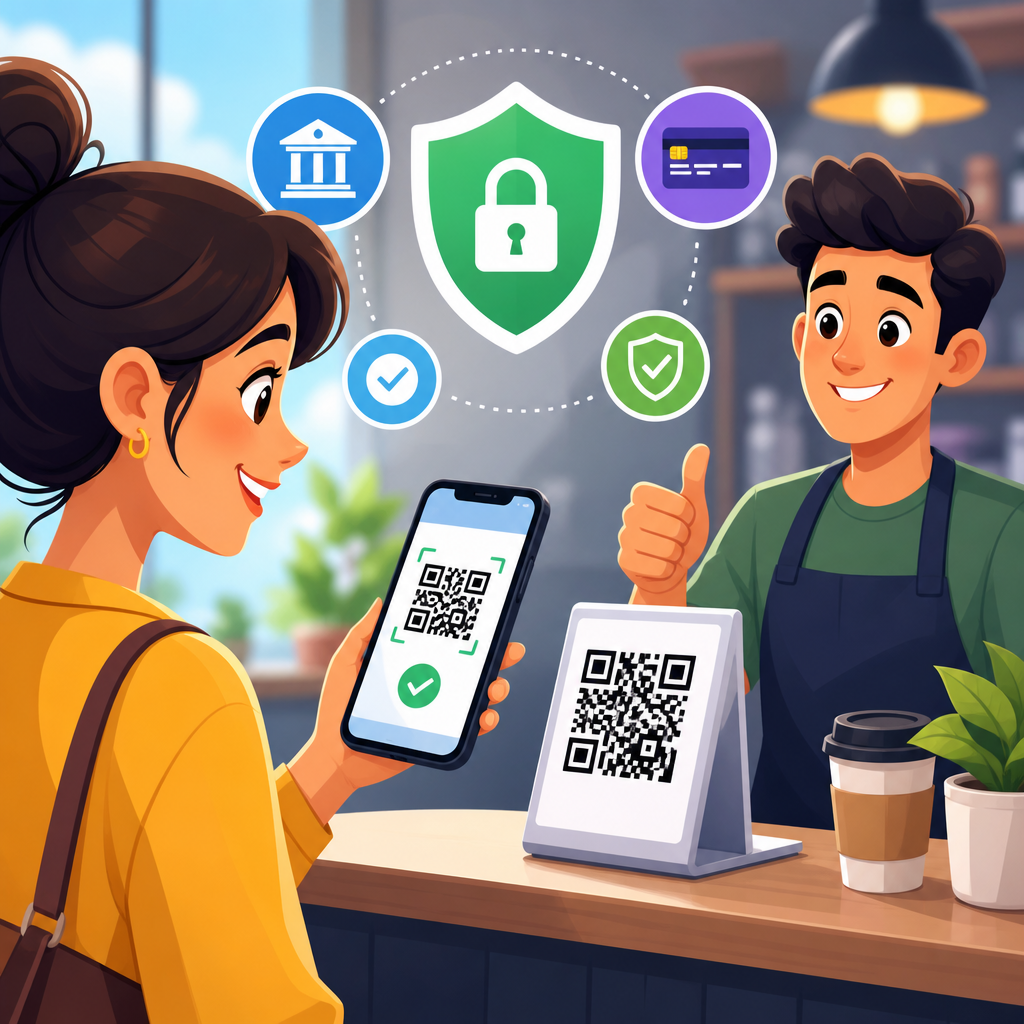
QR codes look simple: a square grid that opens a website, joins a Wi-Fi network, starts a payment flow, or stores contact details. Yet the question “what happens when you scan a malicious QR code?” matters because the code itself is usually just a trigger, while the real risk begins with the action your phone takes after reading it. In security work, I treat QR codes as delivery mechanisms, not magic threats. A safe code may open a restaurant menu; a malicious one may send you to a phishing page, prompt a harmful download, launch a fraudulent payment request, or prefill a message designed to trick you into sending data.
To understand whether QR codes are safe, it helps to define the moving parts. A QR code is an optical encoding format that stores text, usually a URL but sometimes a phone number, email template, calendar event, app deep link, or network configuration. Scanning is the camera or scanner app decoding that text. The danger depends on what the decoded content tells your device to do and whether you verify it before acting. That distinction is important because many people assume the image itself infects the phone. In most common attacks, compromise happens after the scan, when a user taps through to a deceptive page or authorizes an unwanted action.
This topic matters more now because QR codes moved from niche industrial labeling into daily consumer behavior. They are used for parking meters, digital menus, package tracking, ticketing, peer-to-peer payments, two-factor authentication enrollment, and login handoffs between devices. Attackers follow convenience. When people expect to scan quickly in public, they inspect less, and that makes QR code abuse effective. Security teams even use the term “quishing,” short for QR phishing, to describe scams that hide malicious links inside codes. The best defense is not fear of every code; it is understanding how QR risks work, what devices do after a scan, and which habits separate normal use from a preventable incident.
What actually happens when you scan a malicious QR code
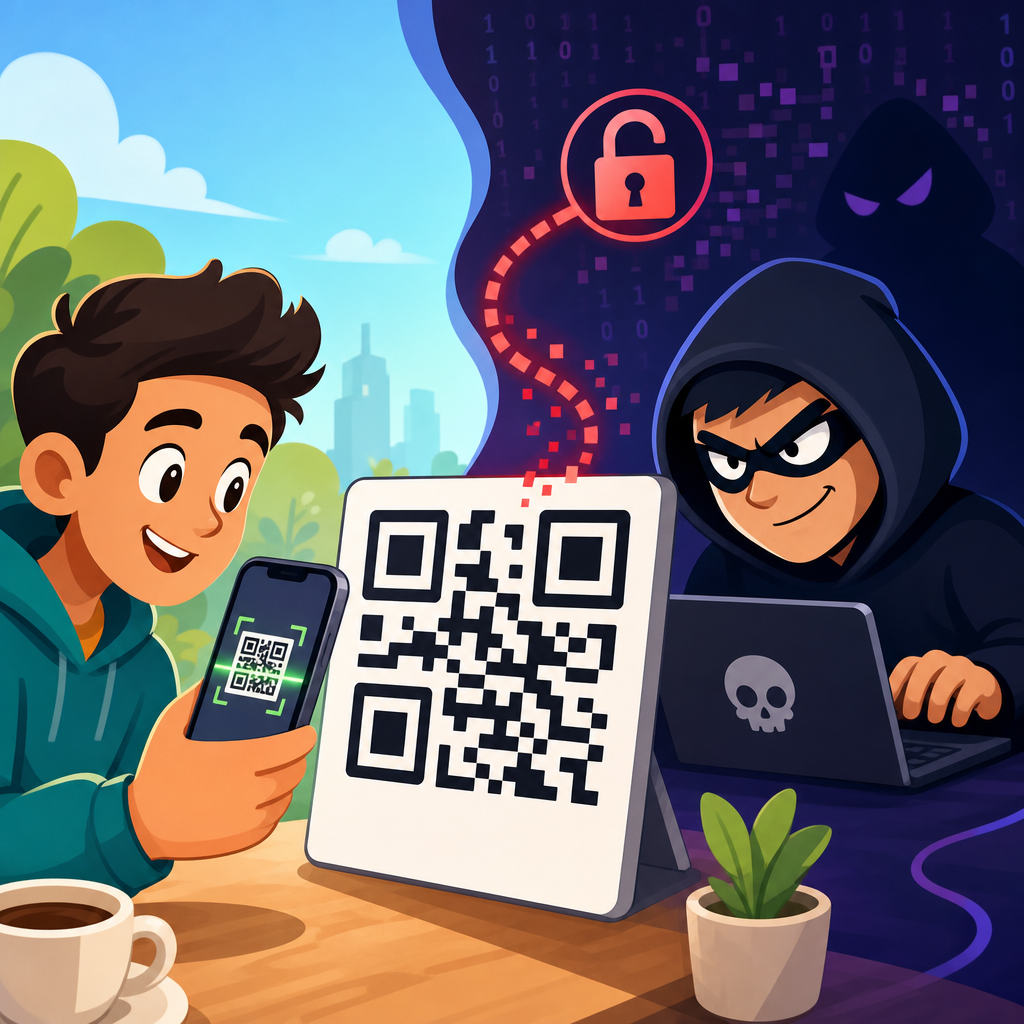
When you scan a malicious QR code, your device decodes the embedded text and presents or performs an action based on the content type. If the code contains a web address, your camera app or scanner shows a preview or opens the browser. If it contains a payment URI, your wallet or banking app may launch a transfer screen. If it contains Wi-Fi configuration details, the phone may offer to join a network. The malicious part is rarely the visual pattern itself. The threat comes from the destination, the requested action, and the trust signal the attacker borrows from the physical environment where the code appears.
In the most common scenario, the code opens a fake website built to capture credentials, card details, or one-time passcodes. I have seen this in audits of fake parking payment stickers placed over legitimate signs. The victim scans, lands on a page that mimics the city or parking operator, enters payment details, and sometimes creates an account with a reused password. In another common pattern, the code triggers a package redelivery or payroll login scam, often sent by email or printed in letters to bypass traditional link suspicion. Because the user is not typing a web address, they may never notice that the domain is slightly wrong.
Some codes aim for secondary effects rather than immediate theft. They may initiate a call to a premium number, draft an email to a scam address, subscribe the victim to a messaging thread, or open an app deep link that requests sign-in. Others lead to pages that ask for mobile device management installation, browser notification permissions, or sideloaded apps on less restricted platforms. Modern phones block many silent actions, which is good, but social engineering fills the gap. The attacker needs only enough friction reduction to make a harmful action feel routine, and QR codes are very good at compressing that moment of trust.
Are QR codes safe? The short answer and the real answer
QR codes are safe as a format, but not automatically safe as a source of truth. That is the short answer. The real answer is that QR code safety depends on provenance, context, device protections, and user verification. A QR code printed by a known company on sealed packaging is lower risk than a sticker placed on a public kiosk. A code rendered inside your bank’s authenticated app is far safer than one sent in an unsolicited text message. The same symbol can represent routine convenience or a phishing lure, so judgment has to focus on where the code came from and what happens next.
Most mainstream smartphone operating systems have reduced the likelihood that a scan alone causes silent compromise. iOS and Android typically show the decoded link, require a tap before opening, and sandbox browser activity. They also use app permission models, Safe Browsing style reputation checks, and signed application stores. Those controls matter, but they do not eliminate risk. If a victim willingly types credentials into a fake Microsoft 365 login page or approves a fraudulent card payment, the operating system did its job and the scam still succeeds. That is why QR security is less about exotic malware and more about phishing resistance and transaction verification.
Organizations should also be realistic about edge cases. Enterprise-managed Android devices, outdated phones, misconfigured scanners, and third-party apps with aggressive permissions can change the risk profile. Some industrial environments use dedicated scanning software that auto-opens URLs or passes data to internal apps. In those cases, testing matters. I advise clients to validate how their standard device fleet handles URL previews, redirects, app links, certificate warnings, and blocked downloads. The answer to “are QR codes safe?” is therefore conditional: safe enough for normal use when controls are in place, unsafe when trust is assumed and verification is skipped.
Common malicious QR code scams and how they work
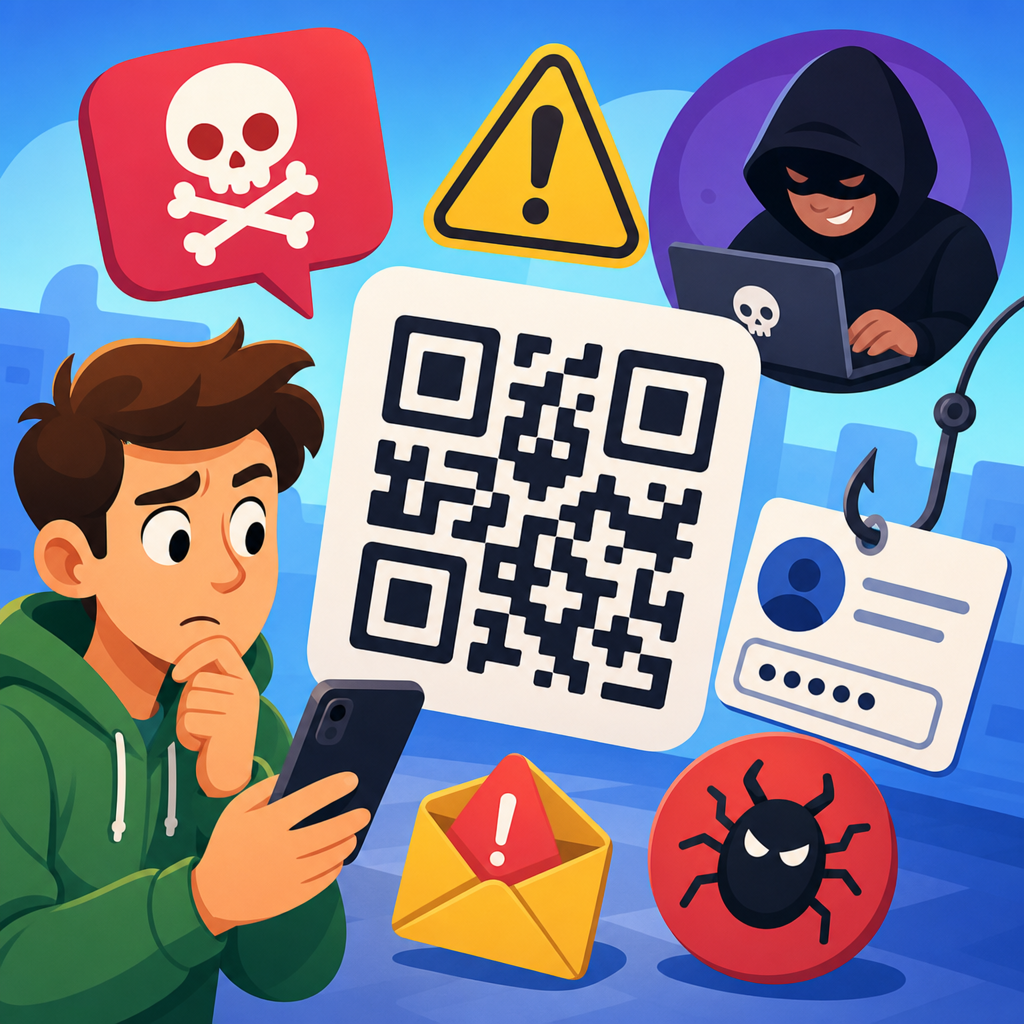
The most widespread malicious QR code scam is credential phishing. Attackers place a code on posters, invoices, emails, or shared documents and route users to a convincing login page. Microsoft, Adobe, Google Workspace, and banking portals are frequent impersonation targets because the stolen access is valuable and the fake pages are familiar. Another major category is payment diversion. Fake parking meters, restaurant table payments, charity collections, and utility bills all exploit the fact that users expect a QR code to speed up checkout. Once the victim enters card data or approves a transfer, recovery can be difficult.
Account takeover often follows. A stolen password may be replayed on email, payroll, cloud storage, or retailer accounts. If the same credentials are reused, one malicious QR scan can become a much larger incident. I have also investigated fake Wi-Fi onboarding codes at events. The code offered “free conference Wi-Fi,” but the landing page asked for an email password under the pretense of captive portal access. Real captive portals may ask for registration details; they should never require your mailbox password. That difference is obvious in hindsight and easy to miss in a crowded venue.
Less common but still important are malware and abuse of mobile features. While modern app stores and platform restrictions limit direct infection, attackers can still coax users into installing configuration profiles, untrusted certificates, remote access tools, or browser extensions on connected desktop sessions. QR codes can also hide shortened URLs, adding another layer of obscurity. The lesson across all scam types is consistent: the code removes the visible link from the decision point, so the victim must recreate that missing scrutiny by checking the preview, the domain, the payment recipient, and the legitimacy of the request.
| Scam type | What the QR code does | Primary risk | Typical warning sign |
|---|---|---|---|
| Credential phishing | Opens a fake login page | Account takeover | Domain does not match the real service |
| Payment diversion | Launches a fraudulent checkout or transfer | Card theft or unauthorized payment | Recipient name or merchant details look unfamiliar |
| Fake Wi-Fi access | Prompts network join or captive portal entry | Data harvesting | Requests passwords unrelated to network access |
| Malicious download | Leads to an app, profile, or file install | Device compromise | Asks to bypass normal app store or security prompts |
| Support or delivery scam | Starts a call, message, or login flow | Social engineering and fraud | Creates urgency around missed package or account issue |
How attackers place and disguise malicious QR codes
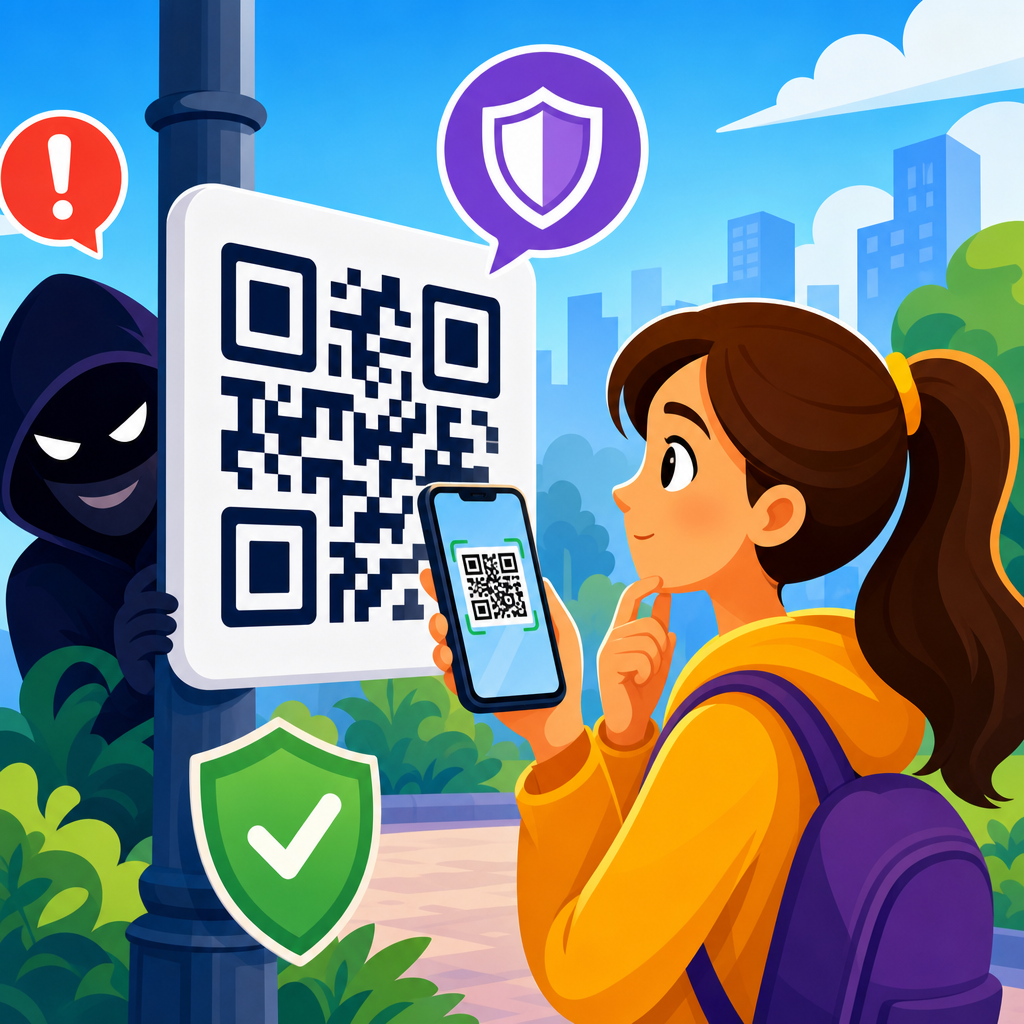
Attackers succeed because QR codes are easy to replace in the physical world and easy to embed in digital communications. In public spaces, a scammer may print a sticker and place it over a legitimate code on a parking terminal, EV charger, transit sign, or restaurant table. Unless staff check regularly, the fake code can remain in place for days. In digital campaigns, the attacker includes a QR code inside a PDF attachment or email body. This can bypass users who know not to click links but feel comfortable scanning with a personal phone, effectively moving the attack outside the monitored desktop environment.
Brand imitation adds credibility. Fraudsters copy logos, colors, and wording from municipal agencies, delivery firms, or payment platforms. They rely on a behavior I see constantly in usability testing: people scan first and evaluate later. Shortened links, redirect chains, and lookalike domains do the rest. A page hosted on a typosquatted domain may still show a padlock because it has a valid TLS certificate, but that does not make it legitimate. Attackers know that many users equate the presence of HTTPS with safety, even though certificates prove encryption, not business identity or intent.
There is also a business-process angle. Codes are increasingly used in invoices, onboarding documents, and authentication setup. If an attacker compromises an email account or vendor workflow, inserting a malicious QR code into an otherwise legitimate message is straightforward. That is why secure organizations pair technical controls with process controls: staff training, vendor verification, and routine inspection of public-facing codes. The attack surface is not just the phone camera. It includes every place a person expects a QR code to represent convenience, authority, or official instruction.
How to tell whether a QR code is safe before you act
The safest habit is simple: inspect before you tap. Most phones show a preview of the destination after scanning. Read the full domain, not just the brand name in the page design. “company-payments.com” is different from “company.com,” and “micr0soft-login.net” is not Microsoft. If the code starts a payment, verify the recipient and amount inside the payment screen before approving. If it joins Wi-Fi, confirm the network name with signage or staff. If it initiates a download, stop unless you expected that exact app or file from a trusted source.
Context matters as much as the link. Ask whether the code is where it should be and whether the request makes sense. A code on an indoor restaurant table that leads to a menu may be normal; a code on an ATM asking you to verify your bank account is not. Physical tampering signs include stickers placed over existing labels, mismatched branding, poor print quality, unusual urgency, and instructions that push you away from standard channels. In digital messages, be wary of unsolicited claims about missed deliveries, expiring payroll access, tax refunds, and account suspension. Those are classic social engineering hooks adapted to QR format.
Use trusted tools. The native camera on current iPhone and Android devices is usually safer than unknown scanner apps loaded with ads or broad permissions. Keep the operating system updated, enable browser protection features, and prefer password managers because they often refuse to autofill on lookalike domains. That single behavior blocks a remarkable number of phishing attempts. For organizations, mobile threat defense tools, domain filtering, DNS protection, and secure web gateways can add coverage. Still, no tool replaces the core check: verify the destination and the action before you continue.
What to do if you scanned a malicious QR code
If you scanned a malicious QR code but did not tap the preview or enter information, your risk is usually low. Close the page, clear the browser tab, and move on. If you visited the site, entered credentials, approved a payment, installed something, or shared sensitive data, respond immediately. Change the affected password from a trusted device, revoke active sessions, and enable or reset multifactor authentication. For financial exposure, contact the bank or card issuer at once and dispute unauthorized transactions. Speed matters because many scams pivot quickly from data capture to account takeover.
Then check the device. Remove unknown profiles, certificates, or apps. Review browser notification permissions, downloaded files, and default app changes. On managed business devices, report the incident to IT or security so logs, mail rules, sign-in records, and conditional access events can be reviewed. If your email was exposed, watch for password reset attempts, forwarding rules, and business email compromise activity. If the scam involved a work account such as Microsoft 365 or Google Workspace, admins should inspect sign-in history, impossible travel alerts, OAuth grants, and newly registered MFA devices.
Finally, preserve evidence. Take screenshots of the QR code, the landing page, the URL, the payment recipient, and any related message or poster. That helps fraud teams, platform abuse teams, and law enforcement if needed. If the malicious code was in a public place, notify the venue so it can be removed before others scan it. Good QR code security is not only personal defense; it is incident containment. A fast report can stop a scam campaign from spreading through a parking lot, event venue, office lobby, or customer email list.
Best practices for safer QR code use at home and at work
For everyday users, the best practices are consistent and practical. Scan with the default camera, read the destination preview, avoid entering passwords after following a QR link, and type the official website manually if the request is sensitive. Use a password manager, keep the phone updated, and never install apps or profiles from a QR code unless you independently verified the source. For payments, rely on official merchant apps or bookmarked sites when possible. In public spaces, treat codes on stickers with skepticism, especially on parking meters, charging stations, and unattended posters.
For organizations, safer QR code use requires governance. Inventory where QR codes are deployed, use tamper-resistant labels for physical placements, and inspect them regularly. Route all official codes through domains the organization controls, ideally with short, readable paths instead of opaque link shorteners. Where internal workflows use QR codes for authentication or onboarding, document the expected user experience so staff can recognize anomalies. Email security training should include QR examples because many users now know to hover over links but do not apply the same caution to scanned images.
This hub page should anchor a broader QR code security and privacy program. Teams often need deeper guidance on phishing-resistant authentication, safe mobile payments, QR code generator choices, dynamic versus static codes, event security, and regulatory concerns around tracking and analytics. The core point remains steady: QR codes are not inherently dangerous, but they concentrate trust into a tiny image that hides critical details. If you verify the source, inspect the destination, and control the follow-up action, QR codes are useful and manageable. Review your current QR habits today and tighten the weak spots before a scammer tests them.
Frequently Asked Questions
What actually happens when you scan a malicious QR code?
When you scan a malicious QR code, the code itself usually does not “infect” your phone just by being viewed. In most cases, the QR code is simply a machine-readable shortcut that tells your device to do something next, such as open a webpage, launch a payment request, connect to a Wi-Fi network, download a file, or save contact information. The danger begins when your phone follows that instruction and you interact with what appears on screen. For example, a malicious code may send you to a fake banking login page, a counterfeit package tracking site, or a lookalike password reset page designed to steal your credentials.
In other situations, the QR code can trigger a more subtle chain of events. It may open a prefilled SMS message, start an email draft, initiate a phone call, or present a prompt to join a rogue wireless network. Some codes are used in payment scams, where the victim believes they are paying a legitimate merchant but is actually sending money to a criminal-controlled destination. On older or poorly secured devices, a malicious destination may also attempt to exploit browser or app vulnerabilities, though this is less common than straightforward phishing. In practice, the most likely outcome is not automatic compromise from the scan itself, but social engineering that persuades you to trust the next step.
Can a QR code install malware on your phone by itself?
Usually, no. A QR code is most often just encoded text, commonly a URL or another type of instruction. By itself, it does not have magical powers to install malware the instant your camera recognizes it. On modern smartphones, scanning a QR code typically results in a prompt or a preview that asks whether you want to open a link or perform an action. That means there is often at least one user decision between the scan and the risky outcome.
That said, “not by itself” does not mean “harmless.” A malicious QR code can still lead you to a site that tricks you into downloading a fake app, installing a malicious configuration profile, enabling unsafe permissions, or entering sensitive information. In rare cases, if a destination exploits an unpatched browser, operating system, or app vulnerability, simply visiting the linked page could create additional risk. Those scenarios are less common than credential theft and payment fraud, but they are possible in the broader threat landscape. The practical takeaway is that the QR code is usually the delivery mechanism, while the real danger comes from the website, file, network, or workflow it pushes you into.
What are the most common scams linked to malicious QR codes?
The most common QR code scams revolve around phishing, payment fraud, and credential harvesting. One classic example is a code that sends you to a counterfeit login page for a bank, email provider, cloud service, or workplace portal. Because people often assume QR codes are convenient and trustworthy, they may be less cautious about the destination than they would be with a suspicious email link. Attackers also place fake QR code stickers over legitimate ones in restaurants, parking meters, event venues, transit stations, and public posters. The victim scans what looks like a normal code but is redirected to a scam payment page or a fake support portal.
Another common scheme involves account verification and multi-factor authentication theft. A victim may be told to scan a code to “re-authenticate” a session, recover an account, or join a corporate service, only to end up on a page that captures usernames, passwords, and one-time codes. There are also fake Wi-Fi onboarding codes, malicious contact-sharing codes, and codes that prefill messages to premium numbers or scam contacts. In business environments, attackers may use QR codes in printed invoices, conference materials, or office notices to route employees to fake vendor payment portals. The pattern is consistent across these scams: the QR code lowers suspicion and speeds the victim into an action they would otherwise examine more carefully.
How can you tell whether a QR code is safe before you open it?
The best way to judge a QR code’s safety is to focus on context and destination rather than the square pattern itself. First, ask whether the code appears where you would reasonably expect it. A QR code on an official bill, product package, or restaurant table may be legitimate, but a sticker placed on top of another code, a printed notice with poor branding, or a code in an unexpected location should raise suspicion immediately. Tampering is common in physical spaces because it is easy for attackers to replace a real code with a malicious one. If the code comes from an email, text message, flyer, or social post, treat it with the same skepticism you would give any unsolicited link.
Second, look at the preview your phone displays before opening the link. Many devices show the full or partial URL. Check the domain carefully for misspellings, odd subdomains, extra characters, or brand impersonation such as a familiar company name embedded inside an unrelated web address. Be cautious if the page uses URL shorteners or redirects you several times. Also watch for pressure tactics once the site loads, such as urgent account warnings, countdown timers, demands for immediate payment, or prompts to install apps or profiles. If anything feels off, stop and navigate manually to the company’s official website or app instead of continuing through the QR code.
What should you do if you scanned a suspicious QR code or entered information after scanning one?
If you scanned a suspicious QR code but did not interact with the resulting page, close the page immediately and avoid granting permissions, downloading files, or joining networks. Clear your browser tab, and if the site asked to open another app, decline unless you are certain it is legitimate. If you connected to a Wi-Fi network through the code, disconnect from that network and forget it from your device settings. If the scan initiated a draft text, email, payment flow, or phone call, cancel it before sending or confirming anything. A brief pause can prevent a minor mistake from becoming a larger security incident.
If you entered a password, payment details, or personal information, act quickly. Change the affected password right away, and if the same password is reused elsewhere, change those accounts too. Enable or review multi-factor authentication on important accounts. Contact your bank or card provider if you submitted financial details or approved a suspicious payment. Review recent account activity for signs of unauthorized access. Run security updates on your phone, browser, and apps, and consider using mobile security tools if you suspect a malicious download occurred. In a workplace setting, report the incident to your IT or security team promptly so they can check for account compromise, block malicious domains, and help contain any follow-on risk. Fast reporting and quick credential resets often make the difference between a close call and a serious breach.