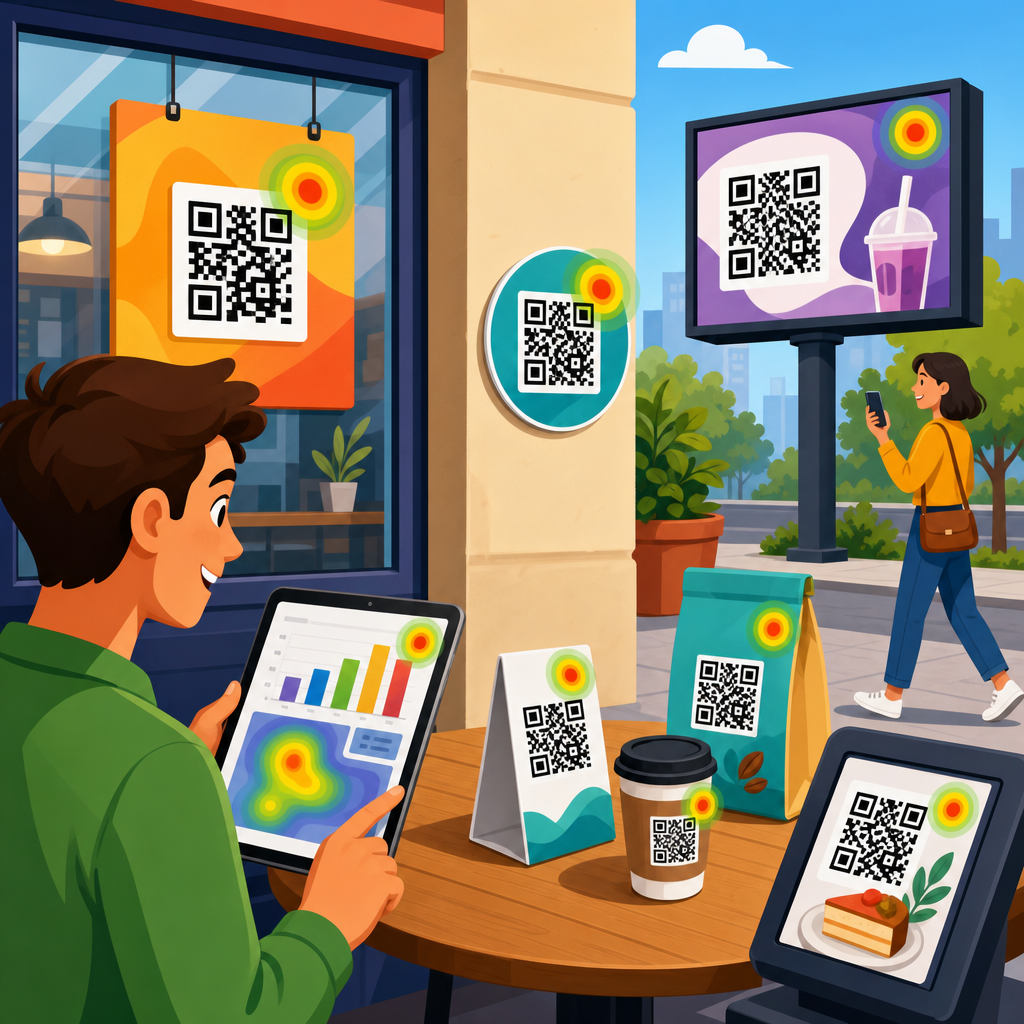
Print advertising still earns attention because it reaches people in focused, tangible moments, but response tracking has always been its weakest link. The most practical way to close that gap is to connect print ads to digital campaigns with QR codes that move readers from a magazine, postcard, flyer, product insert, or billboard directly into a measurable online journey. In this context, offline-to-online integration means designing a printed touchpoint so it triggers a digital action, then tying that action to analytics, attribution, and follow-up marketing. A QR code is simply the bridge: a scannable image that opens a URL, app deep link, form, video, coupon, map listing, or landing page on a smartphone.
I have used QR-driven print campaigns for retail promotions, event registrations, franchise lead generation, and direct mail nurture programs, and the pattern is consistent. When the code, offer, and destination are aligned, print stops being a static awareness channel and becomes a response channel with trackable intent. This matters because budget decisions are increasingly performance-driven. Marketing teams need to know which placements, audiences, creative versions, and offers generate visits, leads, purchases, or booked appointments. QR codes give print ads a digital measurement layer without asking the audience to type a long URL or remember a brand name later.
The hub role of this article is to explain the full system behind offline-to-online integration. That includes strategy, creative, technical setup, measurement, privacy, and optimization. It also means understanding what QR codes can and cannot do. They reduce friction, but they do not fix a weak offer, unreadable design, or irrelevant audience targeting. Success comes from disciplined execution: choosing the right destination, using dynamic codes, building mobile-first landing pages, tagging campaigns correctly, testing scanability in real conditions, and evaluating performance against clear business goals. Done well, QR codes turn print ads into an accountable part of an integrated campaign instead of a disconnected brand exercise.
Start with campaign objectives, audience intent, and the right destination
The first step is not generating a code. It is deciding what action you want a person to take immediately after scanning. Common goals include capturing leads, driving ecommerce purchases, promoting app installs, increasing event registrations, distributing coupons, collecting reviews, and sending prospects to store locators or appointment booking pages. Each goal requires a different destination. If the objective is lead generation, send scanners to a short mobile form with one clear value exchange such as a quote, sample, or consultation. If the objective is local foot traffic, route them to a store locator page with geolocation, hours, inventory, and directions. If the objective is consideration, a comparison page or short explainer video often outperforms a generic homepage.
Audience intent should shape the experience. Someone scanning a QR code on a trade show handout behaves differently from someone scanning a code on a subway poster. The first may be willing to complete a detailed form because the product category is complex and the interest is active. The second usually needs a fast interaction that can be finished while standing up with one hand. I recommend mapping context before creative. Ask where the ad will be seen, how much time the person has, what level of motivation exists, and what the next best action is. This prevents a common mistake: sending every scanner to the homepage and calling it integrated marketing.
Use dynamic QR codes rather than static ones for most campaign work. A static code permanently encodes one destination and is suitable only when the target URL will never change. A dynamic code points to a redirect managed by a QR platform, which means you can update the destination later, attach analytics, pause campaigns, and create different experiences by geography or device. Tools such as Bitly, Flowcode, QR Code Generator Pro, Beaconstac, and Uniqode support dynamic codes, campaign management, and scan reporting. Dynamic infrastructure is especially important for printed materials with long shelf lives, such as catalogs, packaging, in-store signage, and out-of-home placements.
Design print ads that earn scans instead of merely displaying codes
A QR code only performs when the ad explains why someone should scan now. The core rule is simple: pair the code with a strong call to action and a clear benefit. “Scan to save 20% today,” “Scan to compare plans,” “Scan to book a demo,” or “Scan to watch the 30-second product setup” consistently outperform vague prompts such as “Learn more.” The incentive does not always need to be a discount. For B2B campaigns, a product selector, benchmark report, ROI calculator, or case study can be a stronger motivator. For healthcare, education, or public service campaigns, information clarity and trust matter more than urgency language.
Placement and size affect usability. On postcards and flyers, I usually place the code in the lower right or center-right area where it is easy to notice after the headline and offer. On billboards, bus shelters, and window clings, the code must be large enough to scan from the expected distance and angle. A practical guideline is to increase code size relative to viewing distance, then test it on the actual surface under normal lighting. Quiet zones, contrast, and error correction also matter. Use dark code modules on a light background, preserve the required margin around the code, and avoid over-stylizing shapes to the point that smartphone cameras struggle to detect them.
Branding can improve trust, but function comes first. Adding a logo in the center, using brand colors, or framing the code within a campaign visual can increase recognition. However, every customization should be validated with multiple devices, including older phones and different camera apps. I have seen beautiful custom codes fail in sunlight because contrast was too low or because a designer placed the code over a textured image. If a code appears in premium print, test matte and glossy stocks, because reflections can reduce scan success. A short fallback URL near the code is also useful for accessibility and recovery when scanning is inconvenient.
Build a mobile-first digital journey and track every meaningful step
Once a person scans, speed and relevance determine whether the campaign produces value. The landing page should load quickly, match the print ad message, and continue the exact promise made beside the QR code. If the print piece offers a rebate, the page should open directly to rebate instructions, not a general promotions hub. If the ad targets a local market, the page should default to the nearest location. Friction destroys conversion. Remove unnecessary navigation, keep forms short, and make tap targets thumb-friendly. Google’s Core Web Vitals are useful here because poor mobile performance directly hurts completion rates.
Measurement begins with disciplined URL tagging. Use UTM parameters to identify source, medium, campaign, content, and creative variant. For example, a direct mail test may use source=postcard, medium=print, campaign=spring_service, and content=offer_a. In Google Analytics 4, define key events such as form_submit, purchase, click_to_call, store_locator_use, appointment_booked, and video_complete. If sales happen offline, connect CRM and call tracking systems so scans can be matched to qualified leads, revenue, and close rates. HubSpot, Salesforce, CallRail, and Zapier are common pieces in this stack. Without this setup, scan counts can look impressive while business impact remains unclear.
| Print use case | Best QR destination | Primary KPI | Recommended tracking layer |
|---|---|---|---|
| Direct mail offer | Dedicated landing page with coupon or form | Lead rate or redemption rate | UTMs, GA4 events, CRM source field |
| Retail poster | Store locator or mobile coupon page | Store visits or coupon saves | UTMs, location clicks, POS redemption codes |
| Magazine ad | Product comparison or video page | Engaged sessions or assisted conversions | UTMs, scroll depth, video starts, remarketing audience |
| Event brochure | Registration form or agenda page | Registrations | UTMs, form completions, calendar adds |
| Packaging insert | Setup guide, review page, or cross-sell offer | Activation, reviews, repeat purchases | UTMs, customer ID matching, ecommerce events |
Attribution should reflect how print actually influences decisions. A scan may not convert in the same session. Many users will browse, leave, and return later via branded search, email, or direct traffic. That does not mean the print ad failed. Use first-touch, assisted conversion, and time-lag reports to understand contribution. For higher-value purchases, I compare scan cohorts against holdout regions or households when possible. This gives a cleaner view of incremental lift than last-click reporting alone. Offline-to-online integration works best when marketers accept that QR scans are both a response metric and a signal that can seed later digital conversion.
Use segmentation, retargeting, and testing to improve performance over time
After the basic connection is in place, the biggest gains usually come from segmentation. Different print placements deserve different QR destinations and follow-up paths. A catalog insert aimed at existing customers might send users to a loyalty offer, while a newspaper ad for prospects should route to an introductory page with stronger education and trust signals. Region-specific codes can change store information, pricing disclaimers, or inventory messaging automatically. For franchises and multilocation businesses, this is essential. It allows national creative to stay consistent while local landing pages handle operational differences that matter to conversion.
Retargeting extends the value of each scan. When the destination page uses consent-aware analytics and advertising tags, you can build audiences of visitors who scanned but did not complete the primary action. Those users can then receive follow-up messaging through paid social, display, search, or email if they opted in. A furniture retailer, for example, can place a QR code on an in-store display that opens a room planner. Visitors who use the planner but do not purchase can later see ads featuring the exact product category they explored. This turns a single print interaction into a sequence of digital touches tied to observable behavior.
Testing should focus on the variables most likely to change response. In practice, that means the offer, call to action, landing page type, and placement of the code within the layout. I generally start with two or three creative variants rather than many small changes. For instance, compare “Scan for a free estimate” against “Scan to see pricing in 60 seconds,” each leading to a purpose-built page. Measure scans, engagement, lead quality, and downstream sales, not just top-funnel clicks. It is common for the highest-scan variant to produce lower-quality leads, especially when the incentive attracts curiosity rather than genuine purchase intent.
Compliance and trust should be built into optimization work. Be transparent about what happens after a scan, especially when personal data is collected. Link to privacy information, secure forms with HTTPS, and avoid surprise redirects that make users feel tricked. In regulated industries such as finance, healthcare, and legal services, QR campaigns must also respect disclosure requirements, claims substantiation, and record-keeping rules. The safest standard is straightforward communication: identify the brand clearly, state the benefit honestly, and deliver exactly what the print ad promises.
Common mistakes that weaken offline-to-online integration
The most common failure is treating the QR code as the strategy instead of the delivery mechanism. A code by itself does nothing. Weak offers, generic destinations, slow pages, and missing analytics will undermine results even if scan volume appears healthy. Another frequent mistake is using a code that links to a PDF designed for desktop reading. If the next step requires pinching, zooming, or hunting for information, most users leave. I also see brands place codes where they cannot be scanned comfortably, such as on moving vehicles, behind reflective glass, or in locations with poor cellular connectivity and no fallback instructions.
Another mistake is ignoring print-specific context. A QR code on packaging may be scanned after purchase, so the best destination is onboarding, support, warranty registration, review generation, or cross-sell content. A code on a prospecting mailer should instead remove uncertainty and move the person closer to first conversion. Marketers often reuse one landing page for all scenarios, which flattens intent and depresses performance. Finally, many teams stop at scan data. The real goal is business outcome measurement: appointments, opportunities, revenue, retention, and lifetime value. If those metrics are not connected, the program remains interesting but under-managed.
Connecting print ads to digital campaigns with QR codes works because it aligns old strengths with new accountability. Print can still capture attention, establish credibility, and reach audiences that are hard to engage online alone. QR codes add immediacy, measurability, and continuity. The result is not just more convenience for the audience; it is a better operating model for the marketing team. You can identify which placements drive real intent, personalize follow-up, update destinations without reprinting creative, and prove contribution across channels.
The key takeaways are straightforward. Start with a clear objective, then match the QR destination to audience intent and context. Use dynamic codes so campaigns stay flexible. Design the print piece to explain the value of scanning, not merely to display a code. Build fast mobile landing pages that continue the exact promise made in print. Tag everything with consistent analytics, connect scans to CRM or ecommerce outcomes, and evaluate performance beyond last-click conversions. Then segment, retarget, and test so every subsequent print run performs better than the last.
As the hub for offline-to-online integration within QR code marketing strategy, this topic should guide every related tactic you publish next, from direct mail QR campaigns to in-store signage, packaging inserts, out-of-home media, and event materials. Review your current print assets, identify where response friction exists, and replace passive calls to action with a measurable scan path. If you build the bridge carefully, QR codes will turn print from a guessing game into a dependable driver of digital results.
Frequently Asked Questions
1. How do QR codes help connect print ads to digital campaigns?
QR codes act as the bridge between an offline impression and an online action. When someone scans a code on a magazine ad, direct mail piece, flyer, poster, product insert, or packaging, they move instantly from the printed asset into a digital experience you control and can measure. That experience might be a landing page, product page, lead form, coupon, app download, event registration, or video. Instead of relying on guesswork about whether a print ad influenced behavior, marketers can track scans, visits, conversions, engagement time, and downstream actions in analytics platforms.
This is what makes QR codes so practical for offline-to-online integration. They reduce friction by removing the need for someone to manually type a URL, and they allow each print placement to be tied to a specific campaign objective. For example, a postcard can send users to a limited-time offer page, a catalog can direct readers to a product bundle, and a store display can connect shoppers to product demos or reviews. With proper campaign tagging, each scan becomes a measurable touchpoint, helping you understand which print channels, creative variations, locations, and calls to action are actually driving results.
Just as important, QR codes let print advertising participate in the same optimization process as digital media. Once you can see which printed assets generate traffic and conversions, you can test offers, refine messaging, improve landing pages, and compare response rates across audiences. In other words, QR codes do not just make print interactive; they make print accountable.
2. What is the best way to create a QR code campaign for a print ad?
The strongest QR code campaigns start with a clear conversion goal. Before generating the code, decide exactly what you want the reader to do after scanning. That could be claiming a discount, requesting a quote, scheduling a consultation, watching a demo, downloading a guide, joining an email list, or making a purchase. Once the goal is defined, build a landing page that is tightly aligned with the promise made in the print ad. The message, offer, and design should feel consistent so the transition from print to digital is seamless and trustworthy.
From there, use a trackable URL structure. Many marketers create a unique landing page or attach campaign parameters so traffic can be attributed to a specific print source, publication, location, audience segment, or creative version. Dynamic QR codes are often the better choice because they allow you to update the destination URL later without reprinting the code. That flexibility is valuable if you need to correct a link, rotate promotions, or test multiple post-scan experiences over time.
Design also matters. The QR code should be large enough to scan easily, placed where readers naturally look, and accompanied by a clear call to action that explains the benefit of scanning. “Scan to get 20% off,” “Scan to book a demo,” or “Scan to watch the full product walkthrough” will almost always outperform a code with no explanation. Finally, test the full experience before printing at scale. Scan the code on different devices, confirm the landing page loads quickly on mobile, and make sure forms, checkout steps, and analytics tracking all work correctly. A successful campaign depends on the entire journey, not just the code itself.
3. What should a landing page include after someone scans a QR code from a print ad?
A good post-scan landing page should feel like a direct continuation of the print ad. When someone scans, they should immediately recognize that they arrived in the right place. That means carrying over the same offer, headline theme, product imagery, or branding elements from the printed piece. If the ad promises a discount, free sample, guide, or exclusive content, the landing page should present that value clearly above the fold with minimal distractions. The user should not have to search for what they were told they would receive.
Because most QR scans happen on smartphones, mobile usability is critical. The page should load fast, display properly on smaller screens, and make key actions easy to complete with a thumb. Keep forms short, buttons prominent, and copy concise but persuasive. If your goal is lead generation, only ask for the information you truly need. If the goal is ecommerce, reduce steps between arrival and purchase. If the goal is education, make videos or explainer content easy to view without requiring multiple clicks.
It is also smart to build trust into the experience. Include clear branding, privacy reassurance where relevant, testimonials or social proof if appropriate, and transparent details about the offer. On the measurement side, make sure analytics, conversion events, and any CRM or marketing automation integrations are in place so every scan can be tied to meaningful outcomes. The best landing pages do more than capture traffic; they convert attention from a physical ad into measurable business value.
4. How can you track and measure the performance of print ads using QR codes?
Tracking begins with assigning each QR code to a specific campaign, asset, or distribution channel. Rather than using the same destination everywhere, create unique URLs or parameterized links for each print variation. For instance, separate codes can be used for different magazines, mailer versions, store locations, packaging inserts, trade show materials, or billboard placements. This allows you to compare scan volume, website sessions, engagement quality, conversion rate, and revenue by source instead of lumping all print traffic together.
Once the links are structured correctly, measurement should continue in your analytics stack. You can monitor scans, landing page visits, bounce rate, time on site, completed forms, purchases, coupon redemptions, phone calls, and assisted conversions. If your campaign feeds into a CRM, you can go further by tying scans to lead quality, sales pipeline progression, and customer lifetime value. This is especially useful for businesses with longer consideration cycles, where the first scan may not convert immediately but still plays an important role in the buyer journey.
To get a fuller picture, compare QR code data with contextual factors such as print circulation, geography, seasonality, audience segment, and creative format. A lower scan count from one placement may still be more profitable if it drives higher-intent visitors. It is also helpful to test variables like offer type, headline, incentive, landing page design, and CTA wording. Over time, QR-based tracking transforms print from a hard-to-measure awareness channel into a source of actionable performance data, making future media decisions much more informed.
5. What are the most common mistakes to avoid when using QR codes in print advertising?
One of the biggest mistakes is sending users to a generic homepage instead of a dedicated, campaign-specific destination. If a person scans a code because a print ad promised something specific, dropping them into a broad website navigation experience creates friction and weakens conversion potential. Another common issue is failing to explain why someone should scan. A QR code by itself is not a compelling offer. People need a clear reason, whether that is access to a discount, a product demo, exclusive content, appointment booking, or a faster way to learn more.
Poor technical execution is another frequent problem. Codes that are too small, low contrast, distorted by design choices, or placed in awkward locations can be difficult to scan. Likewise, if the landing page is slow, not mobile-friendly, or asks users to complete too many steps, response rates will suffer. Marketers also sometimes forget to test the code after exporting artwork or before mass printing, which can lead to costly errors. Every code should be validated across multiple devices, lighting conditions, and distances that reflect real-world use.
Finally, many campaigns miss the measurement opportunity by not using unique tracking parameters or by failing to connect scans to conversion reporting. If you cannot distinguish between sources or see what happens after the scan, you lose much of the strategic value QR codes provide. The goal is not simply to add a code to a print ad, but to build a reliable path from offline attention to online action. When the code, CTA, landing page, and analytics all work together, print becomes far more measurable, optimizable, and effective.