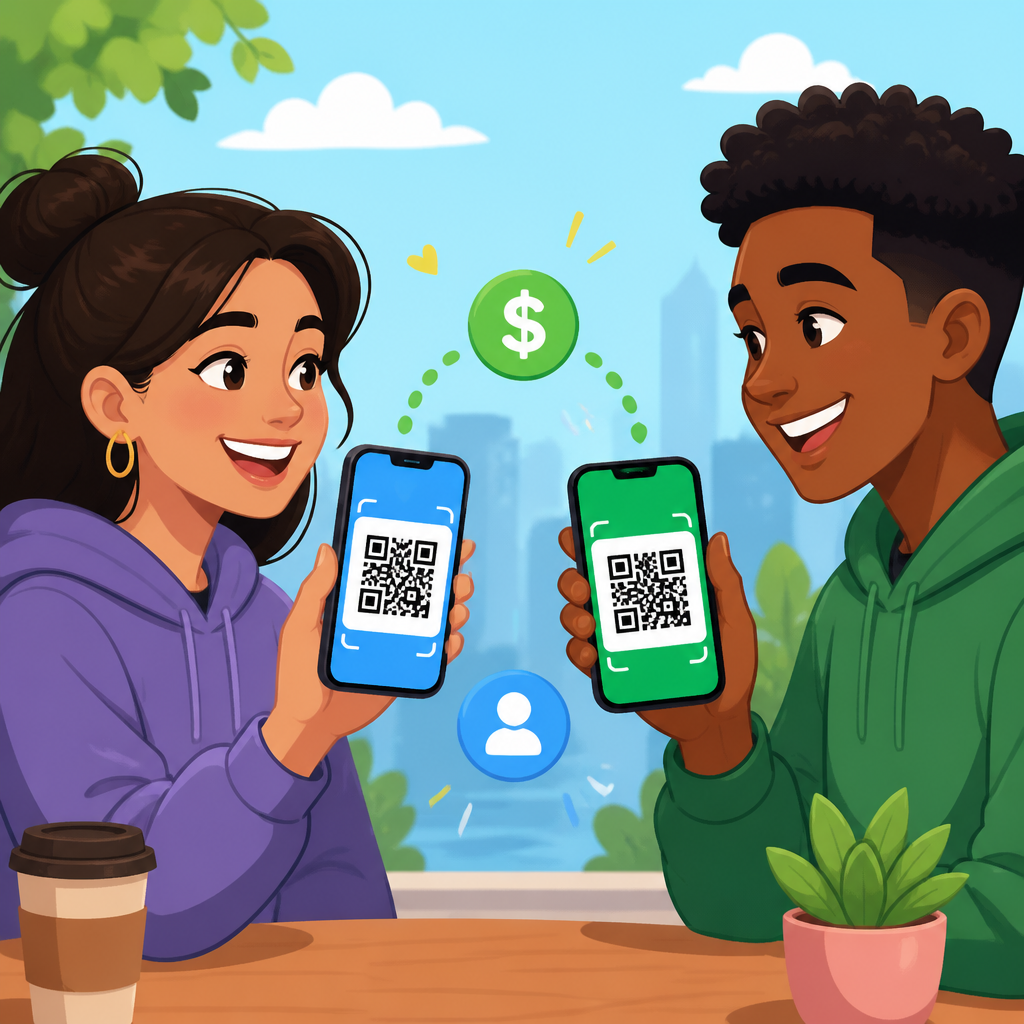
QR codes have become a defining interface for peer-to-peer payments, turning a camera scan into a fast transfer on Venmo, Cash App, and similar wallets. In this context, a QR code is a two-dimensional barcode that stores payment routing information such as a user handle, payment URL, merchant profile, or request details, allowing one person to initiate or complete a transaction without typing usernames, phone numbers, or bank information. For consumers, that removes friction at the exact moment when speed matters most: splitting a dinner bill, paying a roommate for utilities, contributing to a group gift, or reimbursing a seller at a neighborhood pickup. For platforms, the code becomes a low-cost acquisition and retention tool because it simplifies account discovery, reduces input errors, and encourages repeat use.
I have worked on payment onboarding flows where even small reductions in typing and search steps improved completed transactions, and QR codes routinely performed well because they shrink the path from intent to payment. The appeal is simple, but the implications are broader. QR-enabled peer-to-peer payments sit at the intersection of mobile wallets, social payments, identity sharing, and contactless commerce. They also connect consumer habits with adjacent payment categories, including in-person merchant acceptance, invoice collection, tipping, ticketing, and donation campaigns. As a result, understanding QR codes in payments is no longer a niche exercise. It is foundational for anyone tracking how money moves through mobile apps and how payment products bridge online and offline behavior.
This article serves as a hub for QR codes in payments, with a focus on peer-to-peer use cases anchored by Venmo and Cash App. It explains how the technology works, why people adopt it, where it creates risk, and how platforms, small businesses, and everyday users can apply it effectively. It also places peer-to-peer QR payments within the wider payment landscape so readers can connect this topic to merchant checkout, fraud controls, NFC alternatives, compliance requirements, and the future of wallet interoperability. If you want a practical map of the category, this is the place to start.
How QR Codes Power Peer-to-Peer Payments
At the application level, a payment QR code typically encodes a deep link or payment identifier that opens the correct app screen and preloads the recipient account. On Venmo, a personal code can take the form of a user-specific profile marker that other people scan to locate the correct account instantly. On Cash App, a user’s $Cashtag can be represented visually so another person can scan and pay without manually searching. The underlying mechanics vary by platform, but the objective is consistent: reduce ambiguity and shorten the transaction path. Some QR codes are static, always pointing to the same user profile. Others are dynamic, generated for a specific payment request that may include an amount, note, or transaction context.
This distinction matters. Static QR codes are easy to print on signs, stickers, event tables, packaging, or business cards because they do not need to change. Dynamic QR codes are better when the payer should see a specific amount, request, or checkout reference. In my experience, dynamic requests cut disputes because they establish clearer expectations before the payer confirms. The receiving app can display the payee name, profile photo, and amount before the transfer is sent, which creates a verification step that is missing when users rely on memory or hurried typing. For peer-to-peer scenarios, that extra clarity is often the difference between a smooth reimbursement and money sent to the wrong person.
QR payments also benefit from device behavior users already understand. Opening a camera, scanning a code, and following a prompt is now familiar because the same pattern appears in restaurant menus, boarding passes, ticketing, and device setup. Familiarity lowers adoption barriers. That is one reason QR-based payment discovery can outperform manual username entry for first-time interactions. The code acts as a trusted shortcut, especially in noisy environments such as festivals, markets, bars, school events, and apartment lobbies where verbally confirming usernames is inconvenient.
Venmo, Cash App, and the Main Consumer Use Cases
Venmo and Cash App popularized social-style money movement in the United States, and QR codes fit naturally into their mobile-first design. The most common use case remains bill splitting. One person pays a restaurant check, then friends scan that person’s code to reimburse their share. Another frequent use case is household settlement. Roommates scan a posted code on the refrigerator or utility folder to contribute to rent, electricity, or internet bills. In community marketplaces, a buyer scanning a seller’s code at pickup avoids the awkwardness of reading out a handle or waiting while the seller verifies a search result. In school, sports, and nonprofit settings, QR codes support quick contributions for team dues, fundraising, bake sales, and event tickets.
What makes these scenarios succeed is not just speed but confidence. The user scanning the code sees a destination profile before sending funds. When designed well, the payment flow presents the name, avatar, and any relevant note field, reducing uncertainty. On Venmo, where identity can be social and discoverable, this can help distinguish between people with similar names. On Cash App, where $Cashtags are easier than full bank details but still subject to manual entry mistakes, the scan removes a common source of error. In practice, the most successful person-to-person payment experiences combine QR discovery with a final confirmation screen that is obvious and hard to misread.
These apps also blur the line between peer-to-peer and micro-merchant activity. A freelancer collecting payment after a quick design job, a barber renting a chair, a dog walker, or a weekend vendor may prefer a consumer wallet because setup is immediate and hardware is unnecessary. A printed QR code beside a tip jar or checkout tray can generate real revenue. That convenience explains why QR codes in payments deserve hub-level treatment: they begin with peer transfers but quickly extend into side hustles, local commerce, hospitality, and services where formal point-of-sale systems may be excessive.
Why QR Codes Improve Payment Conversion and Accuracy
The strongest business case for QR codes in peer-to-peer payments is reduced friction. Every additional input field, search step, or account verification task lowers conversion. In onboarding and checkout work, I have repeatedly seen that users abandon flows when they must switch apps, copy usernames, or confirm uncertain recipients. A QR code compresses those steps into a single scan. It also minimizes typographical errors, which are expensive in both support time and trust. Unlike a mistyped email that may bounce, a payment sent to the wrong wallet can be difficult to reverse if the recipient accepts or withdraws the funds.
Accuracy improves because QR codes are machine-readable and deterministic. The same destination is encoded every time, and the app can validate formatting before it ever reaches the user. For recurring contexts, such as weekly club dues or shared household expenses, the consistency compounds over time. Users learn that the code reliably points to the same person or request, making repeat behavior more likely. This is one reason QR codes are effective not only for one-time exchanges but also for habit formation. The payment ritual becomes predictable: scan, confirm, pay, done.
Another advantage is cross-channel portability. A code can appear on a phone screen, a printed flyer, a laminated countertop sign, a social profile, or a digital invoice. That flexibility helps payment requests travel across physical and digital environments without changing the underlying destination. For event organizers, creators, and local sellers, portability matters because the same payment identity can support in-person and remote collection. Someone can scan at a booth, save the profile, and pay again later from home.
| Use Case | Why QR Works | Common Risk | Best Practice |
|---|---|---|---|
| Restaurant bill split | Fast recipient discovery in a group setting | Paying the wrong friend with a similar name | Confirm profile photo and amount before sending |
| Roommate utilities | Reusable static code for recurring reimbursements | Outdated code after account change | Replace printed code immediately when details change |
| Neighborhood pickup sale | No need to exchange cash or spell usernames | Fake payment screenshots | Verify payment inside the app, not from an image |
| Tips and small service payments | Low-cost acceptance without card hardware | Code sticker tampering | Inspect posted codes and use branded signage |
Security, Fraud, and What Users Must Check Before Paying
Convenience does not eliminate risk. The core fraud issues in QR-enabled payments are account impersonation, code replacement, social engineering, and irreversibility. A criminal can place a fraudulent sticker over a legitimate QR sign, redirecting funds to another account. In peer marketplaces, a scammer can display a code tied to a lookalike profile and pressure the buyer to pay quickly. Fake payment confirmations are another common tactic: the buyer shows the seller a screenshot claiming payment was sent, while no completed transaction exists in the app. These are not theoretical edge cases. They are routine enough that any serious discussion of QR codes in payments must treat verification as essential, not optional.
The safest rule is simple: never rely on a screenshot, a verbal claim, or a text message alone. Confirm the payment status inside the actual app on the device of the sender and, when receiving, in your own account activity. Before sending money, verify the displayed profile name, avatar, and handle. If the amount is high, ask the recipient to say their exact handle aloud or show the code from inside the official app. For posted signs at counters or booths, visual consistency matters. Branded materials, secure placement, and periodic checks reduce the chance that a code has been swapped.
Platform controls help, but they are not perfect. User education remains the front line. Good payment design makes confirmation screens unmistakable, warns when money may be difficult to recover, and flags unusual recipients or device behavior. Strong account security also matters. Users should enable multifactor authentication where available, maintain device screen locks, and keep wallet apps updated. On the platform side, transaction monitoring, device fingerprinting, behavioral analytics, and sanctions screening all influence whether a payment is permitted, delayed, or reviewed. The visible QR code may seem simple, but the payment stack behind it is sophisticated and should be treated with the same seriousness as any financial interface.
From Personal Transfers to Merchant Payments and Broader Payment Trends
Peer-to-peer QR payments are often a gateway to broader payment acceptance. Once users trust scanning a code to pay a friend, scanning to pay a seller or tip a service provider feels natural. This is why many wallets extend QR functionality into merchant experiences, donations, loyalty prompts, and order-ahead flows. The shift is important because it brings consumer wallet behavior closer to formal commerce. A yoga instructor, food truck operator, craft vendor, or charity volunteer can start with a simple personal payment code and later migrate to business tools, transaction records, and tax reporting workflows as volume grows.
QR payments also coexist with other technologies rather than replacing them outright. Near-field communication remains dominant for tap-to-pay cards and mobile wallets at many established retailers because it is fast and integrated with terminal infrastructure. QR codes, however, excel where hardware costs, operational simplicity, or remote sharing matter more than terminal speed. They are particularly useful in informal environments, temporary locations, social commerce, and printed marketing. In other words, QR and NFC solve overlapping but different problems. The right method depends on context, cost structure, and customer behavior.
Looking ahead, the category will likely become more interoperable, more contextual, and more regulated. We can expect better deep linking, richer payment requests, stronger recipient verification, and expanded use of dynamic codes that include purpose-built metadata. We may also see more links between wallet payments and receipts, accounting exports, customer relationship tools, and identity checks. For readers exploring the wider “QR Codes in Payments” topic, this peer-to-peer hub is the anchor because it explains the consumer behavior that drives adoption across adjacent segments. To build on it, examine merchant QR checkout, anti-fraud controls, QR code design standards, wallet compliance, and the competitive balance between QR, cards, bank transfers, and tap-to-pay.
Conclusion
QR codes in peer-to-peer payments matter because they solve a stubborn real-world problem: moving money quickly and accurately between people who may have only a few seconds to complete a transaction. On Venmo, Cash App, and similar platforms, the scan replaces manual search, lowers input errors, and creates a smoother path from intent to payment. That efficiency is why QR codes now appear in bill splitting, rent sharing, resale meetups, tips, fundraising, and side-business collection. They are no longer a novelty layer on top of mobile wallets. They are part of the core interface.
The practical lesson is equally clear. Use QR codes for speed, but pair convenience with verification. Confirm the recipient inside the app, distrust screenshots, inspect printed codes, and update reusable signs when account details change. If you manage events, services, or local sales, treat your payment code like any other financial asset: brand it clearly, monitor it regularly, and make confirmation easy for payers. If you are mapping the broader payments landscape, start here, because peer-to-peer behavior explains how users learn, trust, and repeat QR transactions.
To go deeper into QR codes in payments, use this hub as your foundation and explore the connected topics that shape the category, from merchant acceptance and fraud prevention to wallet usability and contactless checkout strategy.
Frequently Asked Questions
How do QR codes work in peer-to-peer payment apps like Venmo and Cash App?
In peer-to-peer payment apps, a QR code acts as a shortcut that connects one user directly to another user’s payment profile, payment request, or transaction screen. Instead of manually entering a username, $Cashtag, phone number, or email address, the sender opens the app, scans the recipient’s QR code, and the app automatically fills in the relevant routing information. That information may include a profile link, a payment handle, a request amount, or a merchant payment endpoint, depending on how the code was generated.
This matters because it removes one of the biggest sources of payment friction: human error. A mistyped username or incorrect contact can delay a payment or send money to the wrong person. With a QR code, the app is reading a structured data pattern that was created specifically for that account or request. In practice, that makes the payment flow faster, more accurate, and easier to complete in social, retail, or informal settings, such as splitting a dinner bill, paying a roommate, tipping a service provider, or reimbursing a friend.
On Venmo, Cash App, and similar wallets, the code is usually tied to a public-facing payment identity within the app’s ecosystem. Once scanned, the user still typically reviews the recipient name, enters an amount if needed, and confirms the transfer. In other words, the QR code simplifies discovery and routing, but the payment usually still requires the sender’s approval. That balance of convenience and confirmation is one reason QR codes have become such a central interface for modern person-to-person payments.
Are QR code payments on Venmo and Cash App safe to use?
QR code payments are generally safe when used correctly, but their safety depends more on user behavior than on the code format itself. A QR code is simply a machine-readable way to store payment information. It does not automatically verify that the person displaying it is trustworthy, and it does not guarantee that the linked profile belongs to the person you think it does. That is why the most important security step is always to confirm the recipient identity shown in the app before you tap send.
One common risk is fraudulent redirection. For example, a scammer might place their own QR code sticker over a legitimate one, or send a code in a message claiming to be someone else. If you scan that code and proceed without checking the recipient name, photo, or handle inside the app, you could send money to the wrong account. This is especially important in busy environments such as markets, events, or shared housing situations where multiple codes may be visible.
To stay safe, use the built-in scanner inside the payment app whenever possible rather than a generic camera app, because the app is more likely to present the destination in a familiar and reviewable payment interface. Also enable app security features such as PIN protection, biometrics, and transaction notifications. If a payment request seems unusual, confirm it verbally or through a trusted channel before sending funds. QR codes are secure as a payment tool when paired with basic verification habits, but they should never replace common-sense caution.
What are the main benefits of using QR codes instead of typing payment details manually?
The biggest advantage is speed. In a peer-to-peer payment scenario, people usually want to complete the transaction in the moment, whether they are splitting a meal, paying for shared transportation, contributing to a group gift, or reimbursing someone after an event. Typing a username, searching through contacts, or confirming spelling introduces delay at exactly the point where convenience matters most. A QR scan reduces that process to a few taps and keeps the payment flow moving.
Accuracy is another major benefit. Manual entry creates opportunities for mistakes, particularly when usernames are similar, profile pictures are outdated, or names are common. QR codes reduce ambiguity by linking directly to the intended account or request details. That lowers the odds of sending money to the wrong person and makes the transaction feel more reliable, especially for first-time payments between people who are not already connected in the app.
QR codes also make payments more natural in face-to-face settings. Instead of exchanging phone numbers or spelling out handles across a noisy room, one person can simply display their code and the other can scan it. That interaction feels intuitive because it mirrors how people already use phones in everyday life. For platforms like Venmo and Cash App, this creates a smoother bridge between digital wallets and real-world social behavior. In that sense, QR codes are not just a technical feature; they are a user experience improvement that helps peer-to-peer payments feel immediate, lightweight, and easy to trust.
Can QR codes in payment apps be used for both sending and requesting money?
Yes, and that flexibility is one reason QR codes are so useful in peer-to-peer payment ecosystems. A QR code can represent a static user identity, such as a personal payment profile, or it can represent a more specific action, such as a request for a set amount. When someone scans a profile-based code, they are typically taken to that person’s account page, where they can choose to send money, request money, or view the profile depending on the app’s design. When someone scans a request-based code, the app may prefill the amount or purpose of the transaction.
This distinction is important because it supports different payment contexts. If a roommate regularly collects utility payments, a reusable personal code may be enough. If a seller at a yard sale wants to receive exact amounts from different buyers, a request-specific flow may be more useful. The same is true for social situations: one friend can display a QR code for everyone at the table to reimburse them after paying the restaurant bill, while a host might send a code digitally to collect shared event costs in advance.
From a usability standpoint, this dual function makes QR codes more than just a send button. They become a flexible interface for payment initiation. That helps explain why Venmo, Cash App, and similar platforms treat QR codes as a core part of the experience rather than a secondary feature. They support a broad range of payment behaviors while keeping the interaction simple enough for casual users.
What should users check before completing a QR code payment?
Before sending money through a scanned QR code, users should verify the recipient profile shown inside the payment app. Check the display name, username or handle, profile image, and any other identifying details available. If you are paying someone in person, compare the on-screen profile with the person standing in front of you. If you received the code digitally, confirm through a trusted message thread or direct conversation that the code actually came from that person. A few seconds of review can prevent a costly mistake.
Users should also verify the payment amount, especially if the QR code opens a request screen with prefilled details. Make sure the amount matches what you intend to send and that any memo or description makes sense in context. This is particularly important in environments where codes may be reused or where multiple transactions are happening quickly, such as small events, pop-up shops, or shared group expenses.
Finally, pay attention to the source of the QR code itself. Be cautious with printed codes in public spaces, codes sent by strangers, or codes embedded in suspicious messages. If anything feels off, search for the person manually within the app or ask them to generate a fresh code in real time. QR codes are designed to make peer-to-peer payments effortless, but the smartest users treat the confirmation screen as the real point of trust. The scan starts the process; the review step is what keeps it accurate and secure.