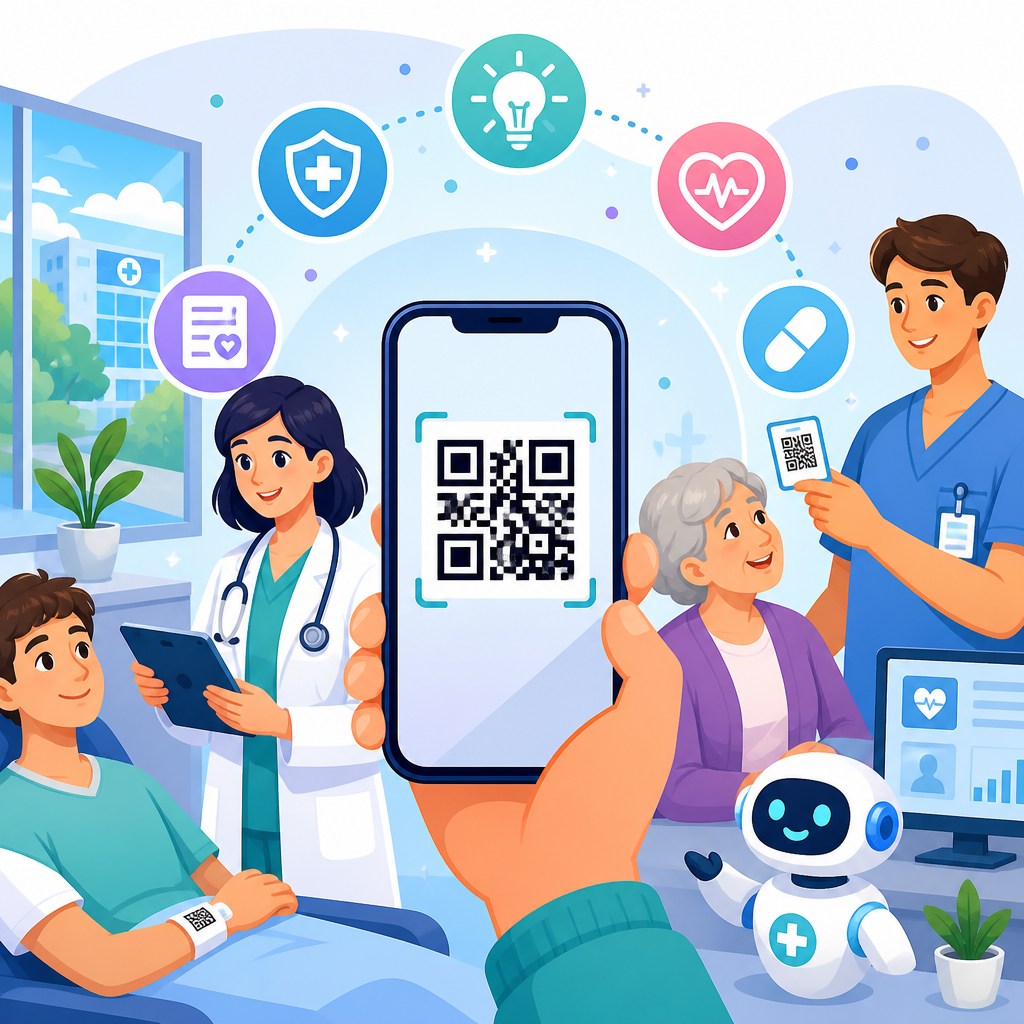
QR codes in healthcare innovation have moved far beyond appointment reminders, becoming a practical bridge between physical care settings, mobile devices, and clinical data. In healthcare, a QR code is a two-dimensional barcode that stores a web link, identifier, or structured data that a smartphone or scanner can read instantly. I have seen adoption accelerate because the technology solves a basic operational problem: patients, clinicians, and administrators all need fast access to accurate information without adding friction. When implemented well, QR codes support patient education, medication safety, asset tracking, telehealth access, contactless intake, and public health outreach. They matter because healthcare systems are under pressure to reduce administrative waste, improve patient experience, and maintain privacy and safety standards at the same time. Unlike many digital health tools, QR codes are inexpensive, familiar to users, and flexible enough to fit hospitals, clinics, pharmacies, laboratories, and home care. Their value comes from linking a simple visual marker to a controlled digital action, whether that action is opening discharge instructions, confirming specimen identity, or launching a secure payment page. As a result, QR codes have become one of the most adaptable emerging use cases in healthcare innovation.
The strongest reason to pay attention now is that QR code use is converging with wider healthcare trends: interoperability, mobile-first patient engagement, decentralized care, and automation at the point of service. A code on a wristband, medication pack, poster, refrigerator box, or lab tube can trigger a digital workflow in seconds. That sounds simple, but in practice it changes how organizations deliver information and collect confirmation. Hospitals are pairing bedside QR codes with patient education libraries; pharmacies are connecting codes to dosage videos and refill tools; device manufacturers are attaching them to durable medical equipment for setup guidance and maintenance logs. Public health teams use QR codes for vaccination campaigns and multilingual resources, while private practices use them to reduce front-desk bottlenecks through digital forms. The emerging use cases are broad, yet the underlying principle stays consistent: place the right information in the right context with minimal effort from the user. This article serves as a hub for that expanding landscape, explaining where QR codes create real clinical and operational value, where they introduce risk, and how healthcare organizations can deploy them responsibly.
Patient engagement and education at the point of care
One of the most effective uses of QR codes in healthcare is patient engagement during moments when attention is high and information needs are immediate. In hospitals, patients often receive paper instructions that are lost, misunderstood, or never revisited. A bedside QR code can link to diagnosis-specific education, care-team contact pathways, dietary guidance, physical therapy exercises, or discharge checklists. I have found that adoption improves when the code is context-specific rather than generic. A code in an orthopedic clinic should open post-operative mobility instructions, not a broad hospital homepage. This matters because health literacy varies widely; the easier the path to clear information, the more likely patients are to follow care plans. Mayo Clinic, Cleveland Clinic, and other major systems have invested heavily in digital patient education libraries, and QR codes provide a simple access layer for that content.
QR codes also help solve the language and accessibility problem. Instead of printing multiple brochures, providers can route scans to translated content, audio instructions, captioned videos, or plain-language summaries. A maternity unit, for example, can place codes in recovery rooms linking to breastfeeding guidance, newborn warning signs, and follow-up scheduling. In outpatient care, a dermatology practice can add a code to after-visit summaries that opens wound-care videos tailored to the procedure performed. The direct answer to the common patient question, “Where do I find trustworthy instructions after I leave?” is increasingly: scan the code provided at the point of care. The benefit is not novelty; it is continuity. Patients get a persistent, mobile-friendly connection to authoritative guidance after the appointment ends, reducing confusion, unnecessary calls, and avoidable readmissions.
Medication safety, packaging, and adherence support
Medication management is another emerging use case where QR codes can provide measurable value. On prescription packaging, QR codes can connect patients to dosing instructions, interaction warnings, administration videos, refill portals, and manufacturer support materials. This is especially useful for complex therapies such as injectables, anticoagulants, oncology drugs, and pediatric medications, where one misunderstanding can lead to harm. In pharmacy operations, the code can represent a verified product identifier, helping pharmacists and technicians confirm the right medication and route users to approved reference content. The U.S. Drug Supply Chain Security Act has already pushed the industry toward stronger product traceability, and QR codes complement that trend by improving visibility at the package level.
Adherence is where the patient-facing impact becomes clearest. A code on a blister pack or pill bottle can open a medication schedule, side-effect monitoring form, or opt-in reminder service. For older adults managing polypharmacy, or caregivers supporting a family member at home, this reduces reliance on memory and paper inserts. Consider an asthma inhaler: a QR code can launch a short demonstration showing proper technique, then link to a symptom tracker and refill request form. For specialty pharmacies, codes can also support prior authorization updates and financial assistance information, two areas that often delay therapy starts. The practical question healthcare teams ask is whether QR codes actually change behavior. They can, but only when linked to narrow, relevant actions rather than a cluttered landing page. In medication safety, precision is more important than volume.
Clinical operations, specimen tracking, and workflow automation
Behind the scenes, QR codes are increasingly valuable in clinical operations. Laboratories, surgical departments, infusion centers, and imaging teams all depend on precise identification and chain-of-custody processes. While one-dimensional barcodes remain common, QR codes can store more data in less space and tolerate damage better, making them useful for labels on specimen containers, surgical kits, and mobile equipment. In a lab workflow, a code on a sample tube can connect accession details, collection time, patient identifier, and processing status to the laboratory information system. That reduces manual lookups and supports faster verification at handoff points. The core operational benefit is fewer transcription steps, which means fewer opportunities for human error.
Workflow automation extends beyond the lab. Clinics use QR codes to let patients check in, verify demographics, pay balances, and sign consent forms from their own phones. That shortens front-desk queues and reduces clipboard-based data entry. In ambulatory settings with staffing shortages, these gains are significant. A rehabilitation center, for example, can place QR codes at therapy stations so patients and staff can pull up exercise protocols, sanitize-equipment checklists, or progress logging forms instantly. Hospitals also use codes on pumps, wheelchairs, monitors, and defibrillators for maintenance tracking and service logs. Scanning the code can reveal location history, inspection dates, and repair tickets, which supports biomedical engineering teams and improves equipment availability. In practice, the most successful implementations are not flashy; they remove seconds from repetitive tasks thousands of times per week.
| Use case | Primary setting | Main benefit | Typical linked action |
|---|---|---|---|
| Bedside education | Hospital inpatient units | Improves understanding after rounds | Open discharge and condition-specific instructions |
| Medication guidance | Pharmacy and home care | Supports safer administration and adherence | Launch dosing video or refill page |
| Specimen tracking | Laboratory | Reduces identification errors | Verify sample status in LIS |
| Contactless intake | Clinics and urgent care | Shortens registration time | Complete forms and insurance verification |
| Device support | Home health and medtech | Reduces setup confusion | View setup guide and troubleshooting steps |
Telehealth, remote monitoring, and home-based care
The shift toward care outside the hospital has created ideal conditions for QR code adoption. Telehealth only works smoothly when access is simple, especially for older adults or patients with limited digital confidence. A QR code printed on an appointment card or discharge sheet can open a virtual visit room, device setup page, or technical support guide without requiring users to type a long URL. I have seen this make a meaningful difference in reducing missed connections for follow-up care. The same principle applies to remote patient monitoring programs. Patients receiving a blood pressure cuff, pulse oximeter, glucometer, or weight scale can scan a code on the box to watch setup instructions, pair the device, consent to data sharing, and review escalation protocols if readings become abnormal.
Home-based care creates many moments when patients need immediate answers. A code on wound-care supplies can link to dressing-change instructions. A code on a home infusion pump can open troubleshooting steps and a nurse callback option. In chronic disease management, QR codes support continuity between episodic clinic visits and daily self-care. For example, a heart failure program can place a code in the patient binder that opens sodium guidance, symptom red flags, and a form for reporting rapid weight gain. Device companies are using similar approaches for CPAP machines, insulin delivery systems, and rehabilitation equipment. The emerging pattern is clear: QR codes reduce the gap between equipment delivery and successful use. They do not replace clinical support, but they make support easier to access at the exact moment a patient needs it.
Public health, wayfinding, and consumer-facing healthcare services
Public health programs have used QR codes effectively because they scale quickly and work across many environments. During vaccination campaigns, codes on posters, mailers, and clinic signage connected people to eligibility rules, appointment booking, consent information, and post-vaccination guidance. Community health organizations still use them for screening programs, sexual health resources, smoking cessation support, and multilingual disease-prevention materials. In these settings, the advantage is speed of distribution. A printed sign in a transit station, school clinic, or community center can direct users to current information without reprinting every time guidance changes. That flexibility is particularly valuable when policies, hours, or eligibility criteria shift rapidly.
Within facilities, QR codes also improve wayfinding and consumer convenience. Large medical campuses are confusing, and missed appointments often begin with navigation problems. A code in appointment confirmations or parking areas can launch maps, walking directions, and department-specific arrival instructions. Retail health clinics and urgent care centers use codes for self-scheduling, waitlist management, insurance checks, and digital payments. For providers competing on convenience, these small workflow improvements influence satisfaction scores and conversion rates. There are limits, of course. Not every patient wants to scan a code, and not every environment has strong connectivity. That is why well-designed programs keep alternative access methods available, including staff assistance, printed instructions, and short URLs. Inclusive deployment matters as much as technical capability in healthcare settings.
Privacy, security, compliance, and implementation best practices
QR codes in healthcare are useful only if organizations manage privacy and security carefully. A QR code itself is not secure or insecure; the risk depends on what it encodes, where it points, and how the destination is controlled. Healthcare organizations should avoid placing protected health information directly inside publicly visible codes. Instead, the code should typically resolve to a secure application layer with authentication, session controls, and audit logging. This distinction is critical for compliance with HIPAA in the United States and with comparable privacy regimes elsewhere. In implementation reviews, I look first at destination governance: Is the URL managed centrally? Are redirects monitored? Can expired campaigns be deactivated immediately? Those controls matter because malicious code substitution, phishing, and outdated links are real operational risks.
Best practice also requires durable governance across content, analytics, and clinical ownership. Every QR code should have a named purpose, a maintained destination, and a fallback path if the digital experience fails. Dynamic QR code platforms are usually better than static ones because they allow destination updates, performance measurement, and campaign retirement without reprinting the symbol. Teams should test scannability under real lighting conditions, verify accessibility on both iOS and Android, and confirm that linked pages load quickly on cellular networks. Clinicians should review educational content for accuracy, while compliance and legal teams validate consent language and data flows. The organizations getting the best results treat QR codes as part of a service design program, not as isolated marketing graphics. If you are building a healthcare innovation roadmap, audit current patient and staff touchpoints, identify repetitive friction, and deploy QR codes where instant access to trusted information will remove it.
QR codes in healthcare innovation deliver the most value when they are tied to specific workflows, trusted content, and measurable outcomes. Across emerging use cases, the pattern is consistent: they reduce friction between a physical healthcare moment and a useful digital action. That can mean a patient scanning for discharge instructions, a pharmacist confirming medication guidance, a lab technician verifying specimen status, or a home-care patient opening device setup support. The technology is simple, but the impact can be significant because healthcare is full of small delays, repeated questions, and preventable errors. QR codes work best when organizations design them around context, accessibility, security, and maintenance rather than novelty.
As a hub within the broader QR Code Trends & Innovations landscape, this topic connects naturally to deeper discussions about patient engagement, medication packaging, telehealth workflows, smart device support, and operational automation. The most successful healthcare teams start with one high-friction use case, define the desired action, and measure completion rates, staff time saved, or error reduction. From there, they expand carefully. The main benefit is straightforward: QR codes make reliable healthcare information and services easier to reach in the exact place they are needed. Review your patient journey and internal workflows, identify the moments where people pause to ask, search, or wait, and use QR codes to remove that friction responsibly.
Frequently Asked Questions
What are QR codes used for in healthcare innovation today?
QR codes in healthcare are now used for much more than simple appointment reminders. They act as a fast access point between physical environments and digital health information, helping patients, clinicians, and administrators reach the right data without unnecessary friction. A single scan can open patient education materials, medication instructions, post-discharge care plans, digital intake forms, telehealth check-in pages, billing portals, consent documents, or location-specific hospital navigation tools. In clinical settings, QR codes may also support equipment tracking, specimen identification workflows, vaccination documentation, and asset management.
The reason QR codes have gained momentum in healthcare innovation is that they solve a practical access problem. Healthcare depends on accurate information being available at the right time, and QR codes create a simple path to that information using devices people already carry. Instead of typing long URLs, downloading multiple apps, or relying on printed packets that quickly become outdated, users can scan and immediately connect to current digital resources. That makes processes faster, reduces administrative burden, and improves the consistency of communication across care teams and patient populations.
How do QR codes improve the patient experience in healthcare settings?
QR codes can make the patient experience smoother, clearer, and more convenient at nearly every stage of care. Before a visit, a patient may scan a code to complete registration forms, verify insurance details, receive appointment instructions, or access pre-visit education. During a visit, QR codes can provide wayfinding in large hospitals, explain procedures in plain language, connect patients to multilingual support resources, or enable contactless check-in. After care, they can link directly to medication schedules, rehabilitation exercises, follow-up booking tools, discharge summaries, and symptom-monitoring guidance.
What makes this especially valuable is speed and simplicity. Patients are often under stress, and healthcare environments can be overwhelming. QR codes reduce the number of steps required to get important information, which can improve understanding and engagement. They also support more personalized communication. For example, a code placed on a discharge document can direct a patient to condition-specific instructions rather than a generic hospital webpage. When implemented well, this helps reduce confusion, improves adherence to treatment plans, and supports better continuity of care once the patient leaves the facility.
Are QR codes secure enough for healthcare and patient information?
QR codes can be secure for healthcare use, but their safety depends entirely on how they are implemented. A QR code itself is simply a machine-readable method of storing a link, identifier, or set of structured data. The real security question is what happens after the scan. If the code directs users to encrypted, authenticated, and access-controlled systems, it can fit well within secure healthcare workflows. If it points to open or poorly managed destinations, then risk increases. In other words, the code is only one part of the larger security architecture.
Healthcare organizations should treat QR code deployments with the same rigor applied to patient portals and clinical software. Best practices include using secure HTTPS destinations, requiring login or identity verification when sensitive data is involved, avoiding the storage of protected health information directly inside the code whenever possible, and monitoring links for misuse or tampering. It is also important to maintain clear labeling so staff and patients know the source is legitimate. In regulated healthcare environments, QR code strategies should align with privacy and compliance requirements, including internal governance, auditability, and vendor security standards. When designed thoughtfully, QR codes can increase efficiency without sacrificing trust or data protection.
What are the operational benefits of using QR codes for healthcare providers and administrators?
For providers and administrators, QR codes can remove a surprising amount of operational friction. They streamline access to digital forms, standardize document distribution, reduce paper dependency, and make it easier to deliver updated information without reprinting physical materials. Staff can use QR codes to speed up intake, direct patients to self-service workflows, support bedside education, and connect clinicians with reference materials or device documentation in seconds. This can save time in high-volume environments where even small inefficiencies create downstream delays.
Administratively, QR codes also support better consistency and scalability. A hospital or clinic can deploy codes across departments for scheduling, payments, surveys, patient instructions, and internal resource access while maintaining centralized control over the destination content. Dynamic QR codes are especially useful because the organization can update the linked information without replacing printed signage, wristband inserts, posters, discharge sheets, or room materials. That flexibility helps healthcare teams keep instructions current, respond quickly to policy changes, and reduce the risk of outdated communication. In a sector where precision matters, QR codes offer a low-cost way to connect people with accurate information at the moment they need it.
What should healthcare organizations consider before implementing QR codes at scale?
Before rolling out QR codes broadly, healthcare organizations should begin with workflow design rather than the technology itself. The key question is not simply where a QR code can be placed, but what problem it will solve and for whom. Leaders should evaluate whether the goal is improving patient education, reducing front-desk burden, accelerating check-in, supporting discharge compliance, enabling contactless processes, or improving internal asset and information access. The best implementations are tied to clear use cases, measurable outcomes, and ownership across clinical, operational, IT, and compliance teams.
Organizations should also think carefully about accessibility, governance, and user trust. Not every patient has the same level of digital comfort, language proficiency, or device access, so QR code workflows should never be the only option. Printed alternatives, staff assistance, and inclusive design remain essential. From a technical perspective, teams should choose secure destinations, mobile-friendly landing pages, and preferably dynamic code management for easier updates and analytics. It is equally important to establish standards for branding, signage placement, testing, and maintenance so users know the code is official and safe to scan. At scale, QR codes work best when they are treated not as a novelty, but as a durable part of healthcare communication infrastructure.