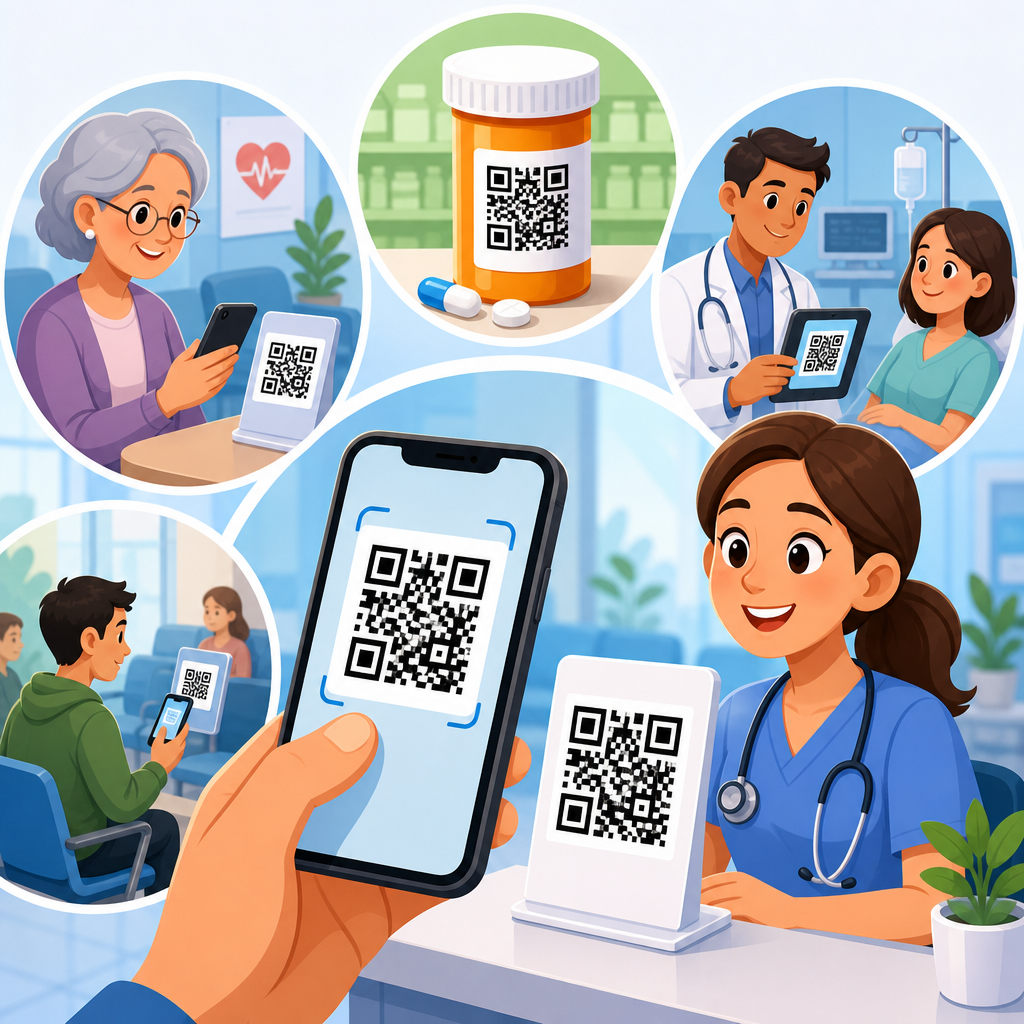
QR codes in healthcare have moved far beyond simple appointment reminders, becoming practical tools for patient engagement, clinical workflows, medication safety, and operational efficiency. In healthcare, a QR code is a two-dimensional barcode that stores information such as a URL, identifier, document link, or authentication token, which can be read instantly with a smartphone or scanner. That simple scan matters because healthcare depends on speed, accuracy, traceability, and secure access to information. When implemented well, QR codes reduce manual data entry, connect patients to the right digital resource at the right moment, and support safer communication across hospitals, clinics, pharmacies, labs, insurers, and public health teams.
I have seen healthcare organizations adopt QR code systems first for small tasks like check-in forms, then expand them into discharge instructions, equipment tracking, specimen labeling, and telehealth access because the return is obvious: fewer bottlenecks and fewer avoidable errors. The appeal is not novelty. It is interoperability at the edge. A printed label, wristband, poster, prescription packet, or bedside card can bridge the physical environment and a digital record without requiring staff to explain every step verbally. For a sector under constant pressure from staffing shortages, privacy obligations, and fragmented technology stacks, that bridge is valuable.
Healthcare leaders evaluating QR codes usually ask the same questions: What problems do they solve, where do they fit in the patient journey, what standards apply, and what risks need mitigation? This hub answers those questions directly. It explains the main benefits of QR codes in healthcare, outlines the most important use cases, and clarifies implementation considerations such as HIPAA compliance, identity verification, accessibility, and integration with electronic health record systems. The core principle is straightforward: the best healthcare QR code programs deliver the minimum friction necessary to give the correct person the correct information or action.
Why QR codes work so well in healthcare settings
Healthcare environments are full of handoffs. A patient moves from scheduling to registration to triage to diagnosis to treatment to discharge to follow-up. A specimen moves from collection to transport to analysis to results reporting. A medication moves from prescribing to dispensing to bedside administration. Every handoff creates opportunities for delay, confusion, or transcription mistakes. QR codes help because they compress access into a single action: scan once and land at the intended destination. That destination might be a patient education video, a mobile consent form, a medication administration record, or a device maintenance log.
The operational benefit is measurable. Reducing keystrokes reduces error rates. Standardizing access points improves consistency. Dynamic QR codes, which point to editable destinations, let health systems update content without reprinting posters or packaging. During respiratory disease surges, many clinics used QR codes on entry signage to route patients to symptom screening and exposure questionnaires before staff interaction. That lowered front-desk congestion and limited unnecessary contact. In outpatient settings, practices use codes in waiting rooms for insurance capture, demographic review, and copay payment. In inpatient settings, codes at the bedside can connect families to care team information, visiting policies, and discharge checklists.
Another reason QR codes fit healthcare is device familiarity. Most patients already know how to open a camera app and scan. Staff are equally comfortable using handheld scanners and mobile devices. Unlike more complex digital transformation projects, QR deployment often starts with existing hardware and low training overhead. The caveat is that success depends on process design. A QR code cannot fix a broken workflow. It works best when the linked experience is mobile-friendly, written in plain language, translated when needed, and tied to a clear operational owner.
Patient access, communication, and engagement use cases
Patient-facing QR codes are often the fastest place to create value because they remove friction from routine communication. Appointment confirmations can include a code for digital check-in, wayfinding instructions, parking maps, and pre-visit forms. At the point of care, clinicians can hand a patient an after-visit summary with a code linking to diagnosis-specific education, medication instructions, and follow-up scheduling. In my experience, uptake improves when the code answers an immediate need rather than serving as a generic portal link. A patient with a new asthma diagnosis is far more likely to scan a code labeled “Watch how to use your inhaler” than one labeled “Learn more.”
Discharge is another high-impact moment. Hospitals frequently overload patients with paper instructions, yet retention is poor, especially after sedation, pain treatment, or stressful events. A QR code on discharge paperwork can provide multilingual videos, wound care checklists, red-flag symptoms, and direct contact options. Because the destination can be updated dynamically, care teams can correct outdated instructions without replacing printed stock. Rehabilitation providers use similar codes on exercise sheets so patients can watch the exact movement pattern prescribed. That reduces nonadherence caused by uncertainty and helps standardize home recovery guidance.
Public health communication also benefits. Posters in pharmacies, emergency departments, and community clinics can link to vaccine eligibility, outbreak guidance, or appointment booking. This approach became common during mass vaccination campaigns because it scaled quickly across locations. The same model works for maternal health resources, smoking cessation programs, behavioral health intake, and social services referrals. Used thoughtfully, QR codes extend communication beyond the visit and meet patients where they already are: on their phones.
Clinical operations, safety, and administration
Behind the scenes, QR codes support safer and more efficient clinical workflows. One major use case is specimen identification. Labels containing a QR code can encode accession numbers and chain-of-custody details, allowing labs to scan rather than manually type identifiers. That improves traceability and reduces mislabeling risk. Medication workflows are another fit. Although many hospitals rely on linear barcodes for bedside medication administration, QR codes can carry more data in less space, which is useful on compact packaging, kits, and compounded products. When tied to a medication management system, a scan can surface dosage information, lot numbers, expiration dates, and administration guidance.
Asset tracking is equally important. Hospitals manage thousands of movable items including infusion pumps, wheelchairs, monitors, and portable ultrasound devices. QR labels on equipment can link staff to maintenance history, cleaning status, location records, and user manuals. Environmental services teams use codes to document room turnover and cleaning verification. Biomedical engineering teams use them for inspection schedules and service logs. In each case, the value comes from faster retrieval of trusted information at the point of need.
Administrative teams also use QR codes to streamline forms and payments. Registration desks can display codes for demographic updates, financial assistance screening, notice of privacy practices acknowledgment, or patient satisfaction surveys. Human resources departments use codes in staff areas for policy access, incident reporting, and training modules. These are not glamorous applications, but they solve daily bottlenecks that consume staff time. In healthcare, efficiency gains accumulate when repetitive low-complexity tasks require fewer clicks, fewer paper handoffs, and fewer phone calls.
| Healthcare use case | How the QR code is used | Main benefit | Example setting |
|---|---|---|---|
| Digital check-in | Patients scan to complete forms, verify insurance, and update demographics | Shorter queues and fewer registration errors | Primary care clinic |
| Discharge education | Printed paperwork links to videos, care instructions, and warning signs | Better patient understanding after the visit | Hospital medical-surgical unit |
| Specimen tracking | Labels encode identifiers for scanning through collection and lab processing | Improved chain of custody and fewer transcription mistakes | Diagnostic laboratory |
| Medication information | Packages or carts link to dosage details, lot data, and instructions | Safer administration and easier verification | Inpatient pharmacy |
| Equipment management | Staff scan devices to view service history and manuals | Faster maintenance and better asset visibility | Acute care hospital |
| Telehealth access | Patients scan a code to join a virtual visit or troubleshoot setup | Reduced no-shows and lower technical friction | Specialty practice |
Telehealth, remote care, and connected health journeys
Telehealth exposed a simple truth: many patients do not miss virtual visits because they reject remote care; they miss them because joining is confusing. QR codes reduce that confusion. A mailed appointment sheet, SMS landing page, or clinic poster can include a code that opens the correct virtual waiting room without requiring patients to search email links or enter meeting IDs. Specialty practices often pair the code with device checks, consent forms, and troubleshooting instructions. For older adults or first-time users, that simplicity can determine whether the visit starts on time.
Remote monitoring programs also benefit. A patient receiving a blood pressure cuff, glucometer, pulse oximeter, or cardiac monitor can scan a setup code that opens a device-specific onboarding guide. Home health agencies use QR codes in welcome packets to connect patients and caregivers with schedules, medication lists, escalation instructions, and contact numbers. Durable medical equipment providers place codes directly on devices so users can access cleaning instructions, replacement part ordering, and support videos without calling a help line.
Connected care journeys matter most after discharge, when readmission risk is highest. QR codes can link patients to symptom checkers, physical therapy exercises, nutrition plans, or secure messaging workflows. In value-based care models, providers need patients to follow through outside the facility. Codes make that follow-through easier because they convert static instructions into guided next steps. The practical lesson is to map the scan to a specific care milestone, not a generic homepage.
Compliance, privacy, accessibility, and implementation best practices
Healthcare QR code programs succeed only when compliance and usability are addressed from the start. Privacy comes first. A QR code should not expose protected health information in the code itself if the label is visible to others. Instead, organizations typically encode a token, identifier, or secure URL that requires authenticated access on the backend. If the destination contains clinical data, it must follow the same safeguards as any other patient-facing or workforce-facing application, including encryption in transit, role-based access controls, audit logging, session management, and business associate oversight where applicable.
Standards and governance matter as well. Teams should define naming conventions, destination ownership, expiration rules, analytics, and print quality controls. In practice, I recommend maintaining a central inventory of all deployed codes, what each one does, who owns it, and how it is tested. Broken links create instant mistrust. So do codes that open nonresponsive pages, force unnecessary app downloads, or present content above a patient’s reading level. Accessibility is not optional. High contrast, clear scan instructions, translated materials, screen-reader compatible landing pages, and non-QR alternatives are essential for equitable use.
Implementation should begin with a narrow workflow that has visible friction and measurable outcomes. Common pilots include check-in, discharge education, or equipment tracking. Define baseline metrics such as form completion time, no-show rate, call volume, or labeling error frequency. Then test placement, staff scripting, and landing page design. The organizations that scale successfully are the ones that treat QR codes as part of service design, not just graphic assets. When healthcare teams pair thoughtful workflow engineering with secure digital destinations, QR codes become reliable infrastructure rather than a temporary convenience.
QR codes in healthcare deliver their strongest results when they remove friction from moments that already matter: registration, education, treatment, discharge, follow-up, and internal operations. Their benefits are concrete. They speed access to information, reduce manual entry, support traceability, improve patient communication, and help staff complete routine tasks with fewer delays. The best use cases are not abstract technology experiments. They are practical solutions for digital check-in, telehealth entry, specimen tracking, medication information, device management, and home care support.
The important limitation is that implementation quality determines value. A secure code tied to a clear action can improve care delivery. A poorly governed code tied to a confusing experience creates the opposite effect. Healthcare organizations should prioritize privacy-safe architecture, mobile-friendly destinations, multilingual content, accessibility, and measurable workflow outcomes. Start with one high-friction process, prove the operational benefit, and expand from there. If your organization is building a broader industry-specific QR strategy, use healthcare as a model for where simple scanning can create safer, faster, more connected experiences for patients and staff alike.
Frequently Asked Questions
What are QR codes in healthcare, and why are they becoming so important?
In healthcare, a QR code is a scannable two-dimensional barcode that can instantly connect a patient, clinician, pharmacist, or staff member to digital information such as appointment details, patient education materials, medication data, device instructions, consent forms, authentication tools, or internal workflow resources. Their importance comes from how well they fit the realities of modern care delivery: healthcare environments need fast access to accurate information, fewer manual errors, clear traceability, and better communication across teams and patients. Instead of asking someone to type a long web address, search for a document, or rely on paper instructions that can be lost or outdated, a QR code creates a direct path to the right resource in seconds.
Healthcare organizations are adopting QR codes more widely because they support both convenience and operational control. For patients, they can simplify check-in, follow-up care, education, and access to service information. For clinicians and administrators, they can improve workflow efficiency by linking physical items, locations, and printed materials to digital systems. This matters in settings where delays, missing information, or documentation mistakes can affect safety and outcomes. As healthcare continues to expand telehealth, digital registration, electronic records, and contactless experiences, QR codes have become a practical bridge between the physical and digital sides of care.
How do QR codes improve patient engagement and the overall patient experience?
QR codes can make healthcare more accessible and less frustrating for patients by reducing unnecessary steps and delivering information at the moment it is needed. A patient might scan a code on an appointment card to confirm a visit, complete intake forms, get parking directions, or access telehealth links. After the visit, that same approach can be used to provide discharge instructions, rehabilitation exercises, post-procedure care guidance, prescription education, or satisfaction surveys. Because the scan experience is familiar to most smartphone users, it lowers friction and helps patients find trusted information without having to navigate complex websites or wait on hold for routine questions.
They also support better communication and understanding, which are core parts of patient engagement. A QR code printed on a handout or displayed in a clinic can link directly to multilingual educational content, condition-specific videos, frequently asked questions, or medication guidance tailored to the patient’s care plan. This can improve comprehension and adherence, especially when patients are managing chronic conditions or recovering at home. In many cases, QR codes can also help healthcare providers measure engagement by tracking which resources are accessed most often, allowing organizations to refine education and outreach efforts. Used thoughtfully, QR codes do more than save time—they help patients feel informed, supported, and connected to their care.
What are the main clinical and operational use cases for QR codes in healthcare?
QR codes have a wide range of practical applications across both clinical care and healthcare operations. On the clinical side, they are commonly used for patient identification workflows, medication administration support, specimen tracking, bedside education, vaccination documentation, and access to digital records or care instructions. For example, a QR code on a wristband, medication package, lab sample, or discharge summary can connect staff to the correct patient record, medication information, or procedural documentation more quickly than manual lookup methods. In environments where time and accuracy matter, that speed can reduce friction and support safer processes.
Operationally, QR codes are valuable for asset tracking, equipment maintenance, room management, inventory control, staff training, visitor guidance, and form access. A code on a medical device can bring up cleaning instructions, maintenance history, or troubleshooting steps. A code in a waiting room can support digital registration, wayfinding, feedback collection, or service updates. Hospitals and clinics also use QR codes for contactless check-in, event management, internal authentication, and linking printed signage to real-time information. What makes QR codes especially useful is their flexibility: a low-cost printed code can unlock a dynamic digital experience, helping organizations streamline tasks without requiring major changes to physical infrastructure.
Can QR codes help improve medication safety and reduce errors in healthcare settings?
Yes, QR codes can play a meaningful role in medication safety when they are integrated into broader verification and administration workflows. Medication processes involve many steps—prescribing, dispensing, administering, documenting, and monitoring—and errors can occur when information is incomplete, hard to access, or entered manually. QR codes can help by linking medications to batch details, dosage information, instructions, expiration data, patient-specific guidance, or electronic verification systems. When scanned by authorized staff, a QR code can quickly confirm that the right medication is being matched to the right patient at the right time, especially when used alongside electronic health records and barcode medication administration tools.
They are also useful for patient-facing medication support. A QR code on packaging or printed instructions can give patients direct access to dosage reminders, side effect information, refill guidance, storage requirements, and educational materials from trusted healthcare sources. This can improve adherence and reduce confusion after discharge or during ongoing treatment. That said, QR codes are not a standalone safety solution. Their value depends on strong system design, staff training, accurate data management, and clear governance around when and how they are used. When implemented correctly, they can reduce manual work, improve traceability, and strengthen medication-related communication across the care continuum.
Are QR codes secure enough for healthcare, and what should organizations consider before using them?
QR codes can be used securely in healthcare, but security depends on what the code contains, how it is managed, and what systems it connects to. A QR code itself is simply a method of encoding information; it is not automatically secure or insecure. In healthcare, best practice is usually to avoid placing sensitive patient data directly inside the code. Instead, the code should point to a secure system, tokenized resource, or authenticated portal where appropriate access controls, encryption, audit logging, and session management are already in place. This approach helps organizations maintain privacy while still benefiting from instant access and workflow efficiency.
Before deploying QR codes, healthcare organizations should evaluate several factors: compliance requirements, user authentication needs, device policies, expiration controls, data governance, and protection against misuse such as code tampering or phishing. For example, a QR code posted in a public area should not expose confidential information if scanned by the wrong person. Printed codes may also need version control so outdated materials do not direct patients or staff to old instructions. It is equally important to train users to scan only trusted codes and to verify the destination if a workflow involves protected systems or critical clinical information. When paired with sound cybersecurity practices and thoughtful implementation, QR codes can support secure, efficient, and highly practical healthcare experiences.