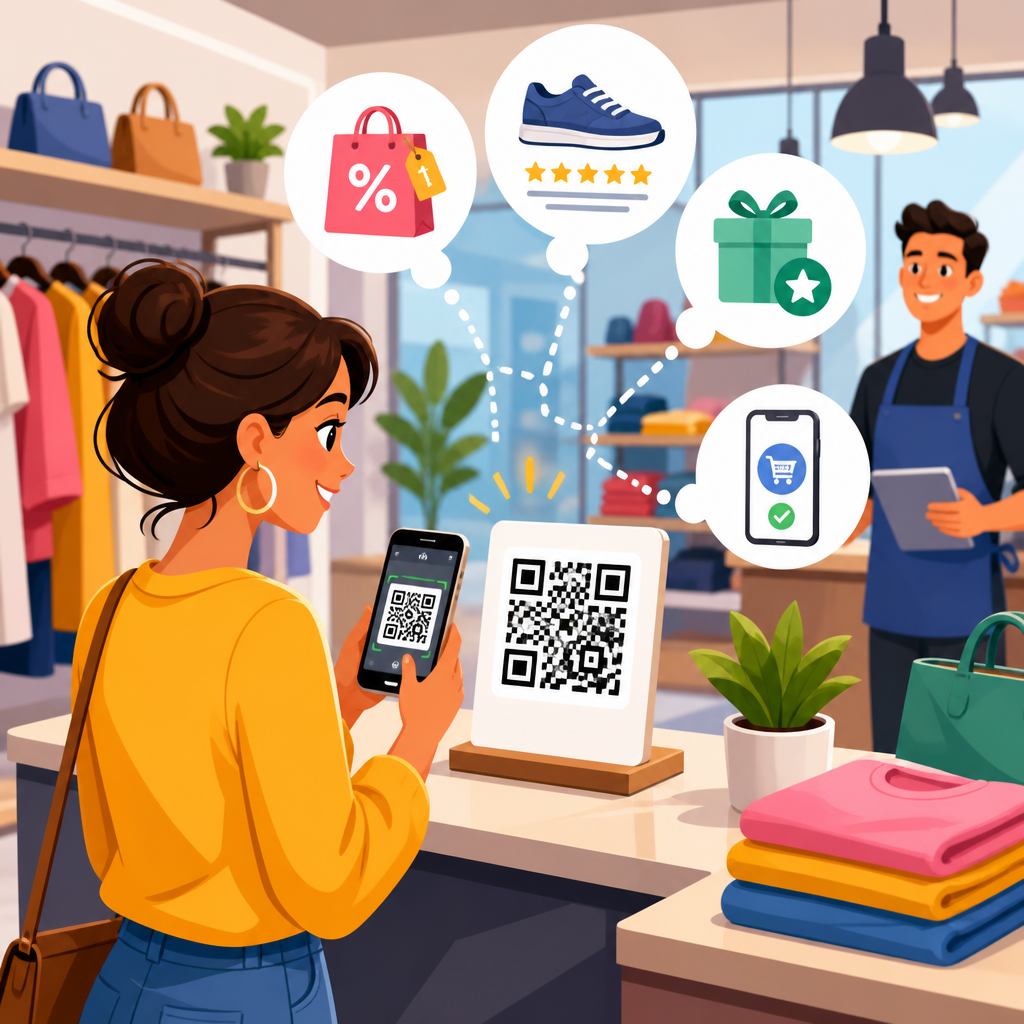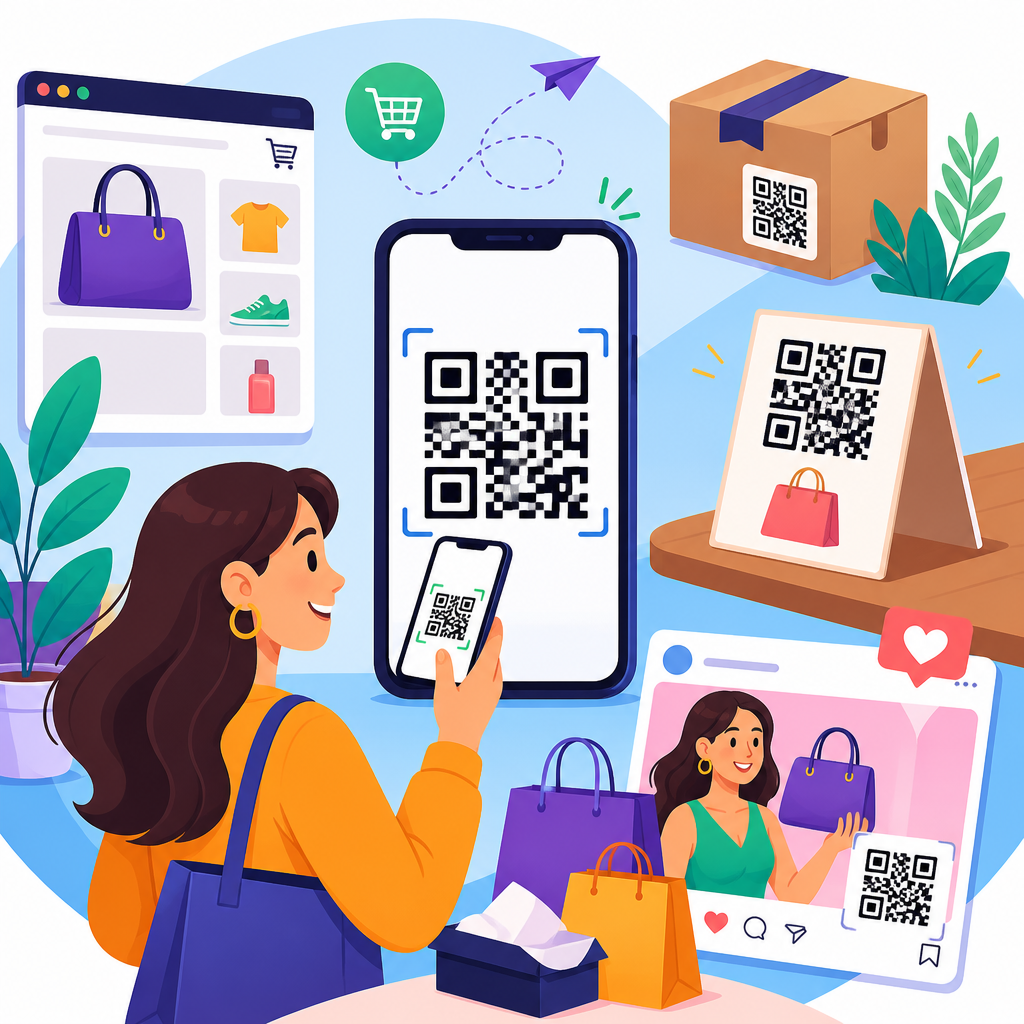
QR codes have become one of the most practical tools in retail and e-commerce marketing because they connect physical moments to digital actions with almost no friction. A QR code, or quick response code, is a scannable two-dimensional barcode that opens a web page, product page, app screen, coupon, video, form, or payment flow when a shopper points a smartphone camera at it. For e-commerce brands, that simple scan can turn packaging into a sales channel, direct mail into a measurable campaign, stores into data sources, and offline attention into online revenue.
In my work with retail campaigns, QR codes moved from novelty to dependable infrastructure once smartphone cameras began supporting native scanning and analytics platforms matured. That shift matters because modern commerce no longer happens in a single place. A customer may discover a product in a store, read reviews on a marketplace, compare prices on social media, and finally purchase on a brand site. QR codes help brands control that journey by inserting a direct, trackable path back to owned digital experiences.
Retail and e-commerce teams use QR codes for marketing because they reduce steps, improve attribution, and support omnichannel strategy. Instead of asking a shopper to remember a URL, search for a product later, or download an app manually, a brand can let them scan and land exactly where intent is strongest. That can mean a product detail page, a replenishment page for a consumable item, a loyalty signup, or a post-purchase cross-sell collection. The best programs are not built around the code itself; they are built around the customer action the code makes easier.
This retail and e-commerce hub explains how e-commerce brands use QR codes for marketing across packaging, stores, direct mail, loyalty, product education, payments, and analytics. It also covers the operational details that decide performance, including dynamic QR codes, UTM parameters, landing page design, scan tracking, compliance, and creative placement. If you manage growth, retention, merchandising, or customer experience, understanding these use cases will help you design campaigns that are easier to measure and more useful to shoppers.
Why QR codes work so well for retail and e-commerce marketing
QR codes perform well in retail because they collapse intent and action into one step. A shopper already holding a product, opening a package, reading a catalog, or standing near a shelf has context and curiosity at the same time. Scanning captures that moment. From a conversion perspective, fewer steps generally mean less drop-off, especially on mobile. A QR code removes the need to type, search, or navigate from a generic homepage, which preserves purchase intent.
They also solve a persistent retail problem: connecting offline exposure to online behavior. Marketers can attribute scans by location, campaign, creative version, date, device type, and destination when they use dynamic QR code platforms and structured URLs. Tools such as Google Analytics 4, Adobe Analytics, Shopify analytics, and customer data platforms can then connect scans to sessions, add-to-cart events, purchases, repeat orders, and lifetime value. In practical terms, a printed insert can be judged by revenue, not guesswork.
Another reason QR codes work is flexibility. The same physical print asset can lead to different destinations over time if the code is dynamic. A brand can place one code on packaging and switch the destination from onboarding content, to refill offers, to seasonal campaigns without changing the box. That matters for inventory-heavy businesses that cannot reprint materials every month. It also makes QR codes useful for long-tail retention programs, not only short promotional bursts.
Core QR code use cases across the customer journey
E-commerce brands use QR codes at nearly every stage of the customer journey. Before purchase, they place codes on window displays, shelf talkers, out-of-home ads, trade show booths, and direct mail to send shoppers to product launches, lookbooks, quiz funnels, or store locators. During purchase, retailers use codes for app downloads, mobile payment, wish lists, and assisted selling, letting staff guide customers to color variants, inventory checks, or ratings and reviews.
After purchase, the strongest opportunities often begin. Packaging inserts and shipping boxes can drive warranty registration, how-to content, referrals, replenishment reminders, loyalty enrollment, and user-generated content campaigns. Beauty brands use QR codes to link customers to shade guides and tutorials. Consumer electronics companies connect buyers to setup videos, support articles, and accessory bundles. Food and beverage subscription brands use them to trigger reorder pages timed around expected consumption windows.
Returns and service are also part of marketing because they influence repeat purchase and brand sentiment. QR codes on packing slips or confirmation emails can route buyers to self-service return portals, exchange flows, care instructions, or customer support. When the post-purchase experience is easy, customer acquisition spending works harder because more first-time buyers become repeat customers. In retail and e-commerce, retention is often the hidden value behind a successful QR code program.
Top retail and e-commerce applications by objective
The most effective QR code campaigns start with a clear business goal. The table below maps common objectives to practical retail and e-commerce uses, along with the metric that usually matters most.
| Objective | QR code placement | Destination | Primary metric |
|---|---|---|---|
| Drive first purchase | Direct mail, packaging, in-store signage | Product page, bundle landing page, limited-time offer | Conversion rate |
| Increase average order value | Packing insert, receipt, shelf display | Cross-sell collection, accessories page, subscribe-and-save | Average order value |
| Improve retention | Product packaging, email, insert card | Reorder page, loyalty signup, usage tips | Repeat purchase rate |
| Boost app adoption | Store counter, box exterior, print ads | App store deep link with incentive | App installs |
| Collect zero-party data | Catalog, thank-you card, event signage | Quiz, preference center, SMS or email form | Form completion rate |
| Reduce support costs | Manual, label, product insert | Setup guide, FAQ, chatbot, return portal | Support ticket deflection |
For example, a home fitness brand can place a QR code on equipment packaging that sends customers to a setup video first, then updates the destination after thirty days to a subscription workout offer. A fashion retailer can add codes to fitting-room signage so shoppers browse sizes unavailable on the floor and check out online. A grocery delivery app can use postcard QR codes for local acquisition, with each neighborhood using a different dynamic destination and offer code for precise attribution.
Packaging, inserts, and unboxing as owned media
Packaging is one of the highest-intent placements because the recipient is already a customer. Many e-commerce brands underuse this moment by limiting printed materials to transactional information. A better approach treats the box, insert, label, and receipt as owned media. In subscription commerce, I have seen QR codes on insert cards outperform email for immediate activation because the customer is already handling the product and can act before attention shifts elsewhere.
Useful destinations include onboarding guides, assembly videos, care instructions, loyalty enrollment, referral programs, review requests, and reorder flows. Consumable brands benefit especially from reorder codes because replenishment timing can be planned. A supplement company, for instance, can place a dynamic QR code on the bottle and schedule the linked landing page to emphasize reorders around day twenty-five, then switch to a bundle or subscription pitch later. That turns packaging into a retention asset with no extra ad spend.
The most effective unboxing QR strategies are helpful before they are promotional. If a customer scans to solve a problem quickly, trust increases. After that, cross-sells feel relevant rather than intrusive. Brands should also think about print durability and context. Codes on glossy curved surfaces, dark materials, or low-contrast labels can fail. Quiet zones, adequate size, and a clear call to action such as “Scan for setup in 60 seconds” usually improve scan rate more than decorative styling does.
In-store retail marketing and omnichannel conversion
Physical stores remain powerful discovery environments even for digital-first brands. QR codes give stores a way to extend assortment, content, and convenience beyond what fits on a shelf. A shopper can scan for extended sizes, alternate colors, comparison charts, ingredient details, or in-stock status at nearby locations. This is especially valuable in categories such as apparel, beauty, furniture, and consumer electronics, where decision support directly affects conversion.
Store teams can also use QR codes in assisted selling. Instead of verbally listing product details, an associate can direct a shopper to a curated landing page with reviews, demos, compatibility information, or financing options. Large retailers have used shelf and display QR codes to blend merchandising with education. Sephora and Ulta have trained customers to expect digital assistance in-store, while IKEA has long demonstrated the value of linking show-floor inspiration to a broader online catalog and planning tools.
For omnichannel brands, the goal is not to force every shopper online; it is to remove friction wherever they decide to buy. Buy online, pick up in store, endless aisle ordering, loyalty login, and app-based checkout all benefit from precise scan destinations. If a code opens a generic homepage, the opportunity is mostly wasted. If it opens the exact product, store inventory view, or saved cart, the code becomes a useful bridge between retail and e-commerce rather than a gimmick.
Direct mail, print advertising, and offline attribution
Direct mail has regained relevance because digital acquisition costs are high and mailbox competition is lower than inbox competition. QR codes make direct mail measurable in ways that older print formats were not. A catalog, postcard, flyer, or package insert can send different audiences to tailored landing pages with personalized offers, local store information, or category-specific merchandising. When the code is dynamic, a team can adjust destination pages after launch based on early performance.
Offline attribution improves further when brands combine QR scans with promo codes, first-party identifiers, and post-purchase survey data. For example, a furniture retailer can mail separate creatives to new movers, past customers, and abandoned-cart audiences, each with unique QR parameters. The analytics team can then compare scan-through rate, assisted conversion, average order value, and time to purchase by segment. That level of visibility helps justify print budgets in the same performance framework used for paid search and social.
Print advertising outside direct mail follows similar principles. Product catalogs, event brochures, magazine placements, and out-of-home posters work best when the scan promise is explicit and the destination is mobile optimized. A poster that says “Scan to browse the full collection and claim 10% off today” sets a clear value exchange. A code with no instruction forces the customer to guess, and guesswork suppresses response.
Measurement, technology, and best practices
Effective QR code marketing depends on disciplined implementation. Dynamic QR codes are usually the right choice because they allow destination changes, scan analytics, and campaign governance. Static codes have a place for permanent links with no tracking requirements, but most retail programs benefit from flexibility. Use consistent naming conventions, UTM parameters, and event mapping in analytics so scans can be tied to business outcomes rather than vanity metrics alone.
Landing page quality matters as much as the code. Pages should load quickly, match the message on the physical asset, and present a single primary action. Deep linking to an app screen is ideal when the app is installed, but fallback behavior must be handled carefully for everyone else. Testing should cover iOS and Android camera behavior, redirects, dark mode rendering, page speed, and scanning distance in real environments. Warehouses, storefront windows, and glossy cartons behave differently than mockups on a laptop.
Brands must also address privacy, security, and customer trust. Use recognizable branded domains, HTTPS, and transparent messaging about what happens after the scan. Avoid sending users through chains of unfamiliar redirects. If a form collects personal data, disclose purpose and consent requirements clearly, especially for SMS marketing under regulations such as TCPA and for personal data processing under GDPR or CCPA where applicable. Trust increases scan rate because shoppers are more willing to engage when the destination feels legitimate and useful.
QR codes are now a mature marketing tool for retail and e-commerce, not a temporary trend. They work because they make customer actions easier, connect offline touchpoints to digital journeys, and give brands measurable control over moments that used to disappear into attribution gaps. When used well, they support acquisition, conversion, retention, service, and loyalty with the same underlying mechanism: a fast path from interest to action.
The most successful programs are deliberate. They start with a clear objective, place codes where customer intent already exists, send scanners to highly specific destinations, and measure results beyond scan volume. Packaging should teach or reorder. Store signage should inform or extend assortment. Direct mail should personalize and track response. Every scan needs a reason, and every destination needs a conversion path designed for mobile behavior.
As this retail and e-commerce hub shows, QR codes can support nearly every major commerce workflow when strategy and execution align. Audit your current customer journey, find the points where people still have to type, search, or wait, and replace that friction with a useful scan. Then test, measure, and expand the placements that create revenue, retention, and a better shopping experience.
Frequently Asked Questions
How do e-commerce brands use QR codes in marketing campaigns?
E-commerce brands use QR codes to bridge offline touchpoints and online actions in a way that feels fast and natural for shoppers. A single scan can send someone to a product page, limited-time promotion, loyalty signup, review form, how-to video, app download, or checkout flow. That makes QR codes especially useful in places where customers already interact with a brand physically, such as product packaging, inserts, shipping boxes, store displays, event materials, catalogs, postcards, and print ads. Instead of asking people to type a long URL or search manually, the brand reduces friction and increases the likelihood of immediate engagement.
In practice, marketers often use QR codes to support specific goals across the customer journey. For acquisition, a QR code on direct mail or outdoor signage might lead to a landing page with a first-purchase offer. For conversion, a code on packaging can promote accessories, replenishment items, subscriptions, or product bundles. For retention, brands place codes inside shipments that link to loyalty rewards, care instructions, user-generated content campaigns, referral programs, or reorder pages. Because the scan creates a direct digital entry point, brands can also track campaign performance more clearly than with many traditional print tactics, especially when each placement uses a unique code and destination.
Why are QR codes so effective for connecting physical marketing to online sales?
QR codes are effective because they remove several layers of effort between interest and action. In marketing, every extra step reduces response rates. If a shopper has to remember a product name, open a browser, search for the brand, and then find the right page, many will drop off before converting. A QR code compresses that process into one quick action using a device people already have in hand. That convenience matters in high-intent moments, such as when someone is unboxing an order, browsing a printed catalog, standing near a shelf display, or reading a promotional insert.
They also create a measurable link between physical media and digital behavior. E-commerce teams can assign different QR codes to packaging, mailers, event booths, ads, or product tags, then compare scan rates, clicks, add-to-cart actions, and purchases by source. This makes offline marketing more accountable and easier to optimize. Beyond convenience and measurement, QR codes support richer experiences that static print alone cannot deliver. A code can open a personalized landing page, launch a video demonstration, prefill a discount code, start a mobile payment flow, or trigger a localized offer. That flexibility helps brands turn otherwise passive materials into interactive, revenue-generating touchpoints.
Where should an e-commerce brand place QR codes for the best marketing results?
The best placement depends on campaign intent, but high-performing placements usually appear where customer attention is already strong and the next action feels relevant. Product packaging is one of the most valuable placements because it reaches confirmed buyers at a moment when engagement is naturally high. A QR code on the box, label, or insert can lead to setup instructions, usage tips, warranty registration, cross-sell recommendations, loyalty enrollment, or a reorder page. Shipping materials also work well because they are opened with intent, giving the brand another chance to deepen the relationship after purchase.
Direct mail, postcards, brochures, and catalogs are also strong options, particularly for campaigns focused on acquisition or reactivation. In these formats, the QR code should lead to a specific landing page that matches the offer or product shown in the printed piece. Event signage, pop-up displays, trade show booths, and retail shelf talkers can drive immediate traffic as well, especially when paired with a clear value proposition such as “Scan to shop,” “Scan for 15% off,” or “Scan to see it in action.” Whatever the placement, visibility and context matter. The code should be large enough to scan easily, positioned where lighting and camera access are practical, and supported by a short call to action that explains exactly what the shopper will get by scanning.
What types of content should a QR code lead to in an e-commerce marketing strategy?
The destination should match the customer’s moment, intent, and stage in the buying journey. For prospects encountering the brand for the first time, QR codes often work best when they lead to a focused landing page with a clear offer, a featured product collection, a quiz, or a first-order discount. For existing customers, post-purchase destinations tend to perform better, such as product tutorials, care guides, setup instructions, referral incentives, VIP membership pages, reorder flows, or personalized recommendations. The goal is not simply to send traffic somewhere, but to make the scan feel useful enough that the customer is glad they did it.
Brands also get strong results from interactive or trust-building destinations. A QR code can open video demonstrations, customer review pages, social proof galleries, user-generated content campaigns, ingredient or sourcing information, or behind-the-scenes brand stories. In categories where education matters, such as beauty, wellness, food, electronics, or home goods, this can significantly improve conversion and satisfaction. The best destinations are mobile-friendly, fast-loading, and tightly aligned with the promise near the code. If the printed message says “Scan for exclusive savings,” the landing page should immediately present that offer. Consistency between the physical prompt and the digital experience is what turns curiosity into action.
How can e-commerce brands measure the success of QR code marketing?
Success starts with defining the goal before the code goes live. Some campaigns are designed for awareness, so the key metric may be scan volume or unique visitors. Others are designed for conversion, in which case brands should track product views, add-to-cart rate, checkout starts, purchases, and revenue. Retention campaigns may focus on repeat orders, subscription signups, referral participation, review submissions, or loyalty enrollments. The most effective approach is to treat each QR code as a trackable campaign asset with its own destination URL, UTM parameters, and placement-specific labeling so results can be segmented by channel, audience, and creative execution.
E-commerce brands should also look beyond raw scans. A high scan count with poor on-page engagement may indicate that the landing page is weak, the offer is unclear, or the page experience is too slow on mobile. By contrast, a lower scan count with a strong conversion rate may show that the placement is highly qualified and worth expanding. Testing is important here. Brands can compare different calls to action, incentive types, landing pages, package insert designs, or destination experiences to improve performance over time. When QR code data is connected to analytics, CRM, and e-commerce reporting, marketers gain a much clearer view of how physical materials contribute to digital growth, customer lifetime value, and overall campaign return.