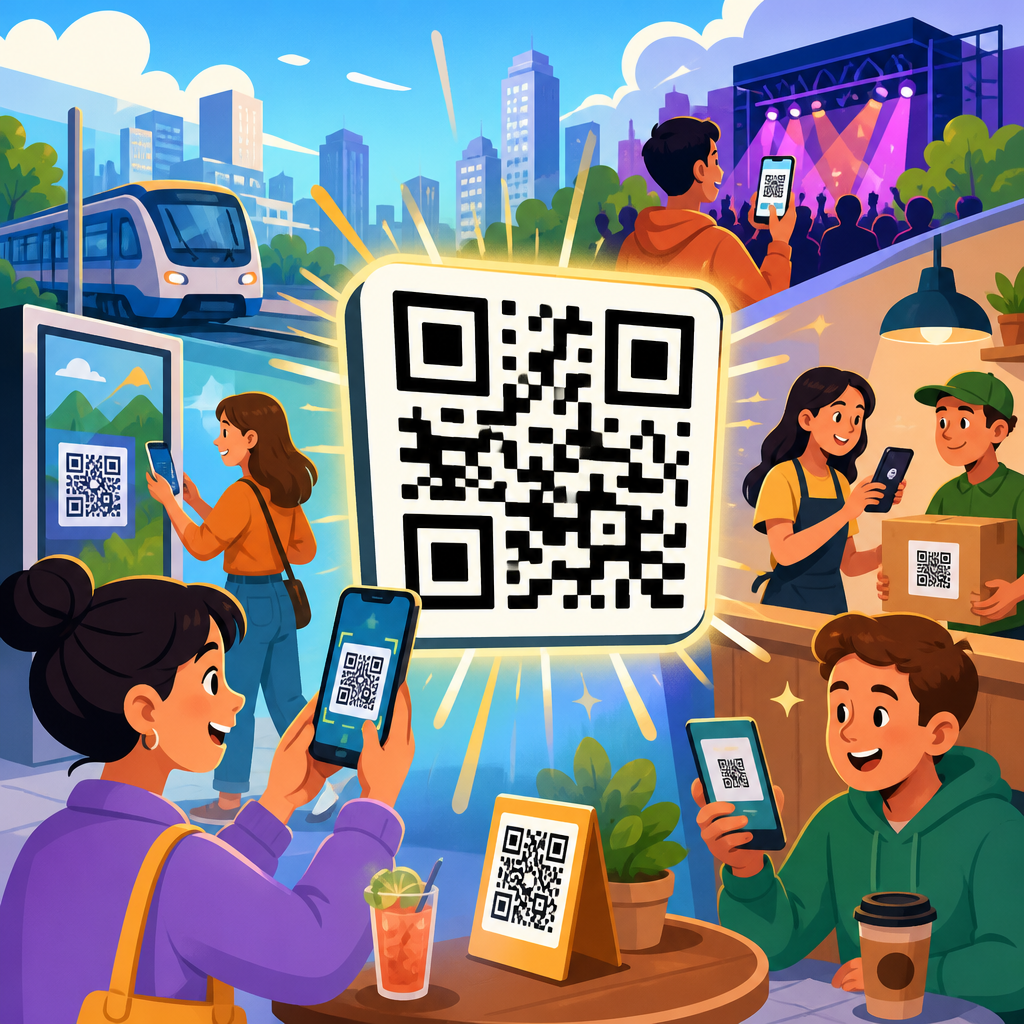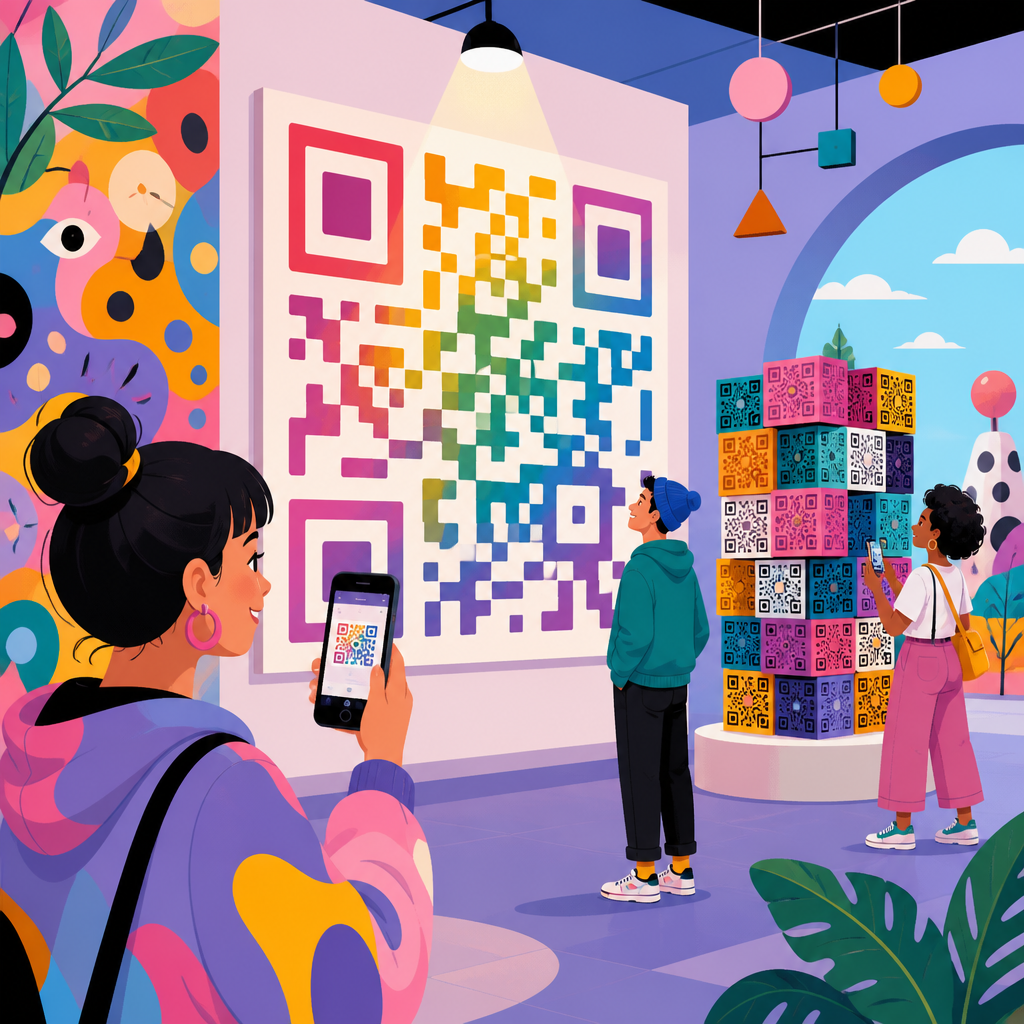
QR codes in art and creative installations have moved from novelty to serious medium, giving artists, curators, brands, and public institutions a flexible way to connect physical spaces with digital experiences. A QR code is a two-dimensional matrix barcode that stores information such as a URL, text string, contact card, payment request, or app trigger. In creative work, that simple square becomes an interface: viewers scan, unlock sound, reveal augmented reality layers, join participatory performances, or leave their own mark on the piece. This matters because audiences now expect art to be interactive, contextual, and shareable, while creators need tools that are low cost, scalable, and easy to update without rebuilding an installation.
I have worked on campaigns and exhibitions where the QR code was treated either as a necessary utility or as part of the composition itself, and the outcomes were very different. When the code is an afterthought, scan rates sag, friction rises, and the digital layer feels disconnected from the work. When the code is planned as a creative and operational element from the start, it can deepen interpretation, extend dwell time, and generate measurable engagement. Museums use it to deliver multilingual interpretation without crowding walls with text. Street artists use it to document ephemeral work before weather, repainting, or removal erases it. Installation designers use it to coordinate lighting cues, audience submissions, and spatial storytelling. The technology is mature, but the use cases are still expanding rapidly.
As a hub topic under QR code trends and innovations, emerging use cases in art deserve close attention because they sit at the intersection of culture, technology, and audience behavior. The key terms are straightforward. A static QR code contains fixed data and cannot be changed after printing. A dynamic QR code points to a redirectable destination, making it far better for exhibitions, campaigns, and public art because the linked experience can be updated after installation. Error correction refers to the code’s ability to remain scannable even when partially obscured or stylized. Scanability depends on contrast, quiet zone, size, placement, and lighting. Those practical details determine whether an ambitious concept works in the real world.
For institutions and creators, the strategic value is clear. QR-enabled art can lower printing costs, support accessibility, capture analytics, personalize journeys, and bridge on-site and remote audiences. It also creates internal linking opportunities across related topics such as dynamic QR code management, branded QR design, museum visitor engagement, event activations, and augmented reality experiences. The strongest projects answer a simple question directly: what extra value does the scan provide that the physical object alone cannot? If the answer is meaningful, QR codes become more than labels. They become part of the artwork’s language, its documentation system, and its distribution channel.
How QR Codes Function as an Artistic Medium
Artists increasingly use QR codes not just to link outward, but to say something within the piece itself. A QR code can symbolize surveillance, frictionless commerce, digital identity, algorithmic culture, or the collapse of boundaries between public and private space. In gallery practice, I have seen artists print oversized codes on canvas, embed them in mosaics, laser-cut them into panels, and project them as shifting light grids that remain machine readable. Because a code is both visual pattern and instruction set, it occupies a rare space: it can be interpreted by a person aesthetically and by a camera computationally.
This dual nature opens several creative models. In one model, the code acts as a portal to complementary content, such as a video statement, field recording, provenance archive, or behind-the-scenes process journal. In another, the code is the artwork, often pointing to a generative webpage, tokenized asset, or evolving dataset. Public murals sometimes use dynamic codes to reveal oral histories from neighborhood residents, turning a painted wall into a living community archive. Performance artists use scan points on costumes, tickets, or stage objects to let audiences choose alternate endings, submit reactions, or trigger synchronized content on their phones.
There is also an important design principle here: a QR code can be customized, but it cannot be customized beyond recognition. ISO/IEC 18004 defines the core standard for QR code symbology, and practical execution still matters more than novelty. High contrast, sufficient size, and a clean quiet zone remain nonnegotiable. If an artist wants to integrate a code into a dense collage or textured surface, testing across multiple phone cameras is essential. Newer devices are forgiving, but not equally forgiving under glare, oblique angles, dim conditions, or motion. In a busy installation, the code must be legible in seconds, not only in controlled photographs.
Museums, Galleries, and Interpretation Without Wall Clutter
One of the most established emerging use cases is interpretive layering in museums and galleries. Instead of placing long labels beside every work, curators can provide a concise title and artist line, then let a QR code open expanded essays, conservation notes, audio descriptions, translations, and related works. This is particularly valuable in temporary shows where wall text often changes late in the production schedule. A dynamic code avoids reprinting if a lender updates a credit line or a curator adds context after opening weekend. It also supports accessibility more effectively than many static labels, because linked content can include screen-reader-friendly structure, captions, transcripts, and adjustable type.
For smaller institutions, the economics are compelling. Printing multilingual wall text at exhibition scale is expensive and spatially disruptive. A single code can route visitors by language preference and even adapt content based on ticket type, membership status, or educational program. Major museums have normalized mobile interpretation, but regional institutions and artist-run spaces can implement it with inexpensive tools such as Bitly, Beaconstac, Flowcode, QR Code Generator Pro, or in-house redirects managed through a content management system. The technology barrier is low; the curatorial challenge is editorial discipline. Linked material must be genuinely useful, not a dumping ground for every possible note.
Analytics also matter. With dynamic QR systems, institutions can track scan volume, time, device type, and sometimes coarse location by code placement. That data helps answer practical questions: which works generate curiosity, which labels are ignored, which family stations succeed, and when gallery traffic peaks. Used responsibly and with clear privacy disclosures, these signals improve exhibition design. They should not replace qualitative evaluation, but they can reveal friction points quickly. If a prominent artwork gets very few scans, the cause may be poor placement, weak call-to-action language, or mobile pages that load too slowly on museum Wi-Fi.
Public Art, Murals, and Citywide Cultural Trails
QR codes are especially effective in public art because they add context where staffing is limited and audiences arrive asynchronously. A mural can include a discreet code that leads to the artist’s statement, a making-of time-lapse, neighborhood history, sponsor disclosures, and restoration updates. When I have helped plan city activations, this has been one of the clearest wins: people want quick answers on the sidewalk. Who made this, why is it here, and what should I notice? A well-placed code answers those questions immediately without requiring a docent or a nearby plaque filled with small text.
Municipal arts programs also use QR codes to connect multiple sites into cultural trails. Visitors scan at each stop, collect digital badges, hear local voices, and navigate to the next location through embedded maps. This model supports tourism, education, and equitable storytelling because each site can host layered content that would never fit on a sign. It is also resilient. If a mural is restored, moved, or partially repainted, the destination can be updated while the printed marker remains in place. For temporary festivals, organizers can redirect the same code from pre-event information to live schedules and then to post-event archives.
| Use Case | What the Viewer Unlocks | Operational Benefit |
|---|---|---|
| Museum label | Audio guide, translations, provenance | Less wall clutter, easy updates |
| Public mural | Artist interview, neighborhood history | Context without staffing |
| Festival installation | Maps, schedules, participatory prompts | Real-time changes through one code |
| Retail art activation | AR filter, product story, social share | Attribution and campaign analytics |
| Performance piece | Voting, alternate scenes, soundtrack | Audience interaction at scale |
There are tradeoffs. Outdoor codes must survive weather, vandalism, and inconsistent connectivity. Materials should resist UV fading and moisture, and placement should consider wheelchair access, pedestrian flow, and line of sight. A code mounted too high or behind reflective acrylic will underperform. Public agencies should also think about link permanence. Dead links damage trust faster in public art than in commercial marketing because the audience may have only one chance to engage. Permanent redirects, domain ownership, and archival planning are not glamorous, but they are essential to preserving cultural value.
Immersive Installations, AR Layers, and Participatory Experiences
The most dynamic growth area is immersive work. Here, QR codes act as entry points into augmented reality, synchronized media, live polls, collaborative drawing walls, game mechanics, or responsive soundscapes. A scan can launch a WebAR experience without requiring an app, lowering friction dramatically. That matters in installations where every extra step reduces participation. Retail pop-ups, biennials, music festivals, and experiential brand spaces increasingly use browser-based 3D overlays, spatial audio, or camera effects triggered through a code. The viewer does not just observe the installation; the viewer activates part of it.
Participatory art benefits in two specific ways. First, QR codes distribute contribution tools at scale. Visitors can submit text, images, voice notes, or votes to a shared piece using their own devices, avoiding the sanitation, maintenance, and queue issues of communal touchscreens. Second, dynamic destinations make moderation practical. Organizers can change prompts, close submissions, or switch from collection mode to showcase mode instantly. I have seen installations where morning participants answered a question about memory, afternoon visitors listened to selected responses, and evening guests watched a projection built from that day’s contributions. The code remained the same while the experience evolved hourly.
AR also solves a common exhibition problem: how to add motion, explanation, or historical reconstruction without physically overwhelming the space. A sculpture park can use QR scans to show a model of an unrealized phase. A heritage installation can overlay archival imagery onto a current streetscape. A gallery can reveal underdrawings, material studies, or conservation stages. The best examples are restrained and purposeful. If the digital layer merely repeats what the visitor can already see, it feels gimmicky. If it reveals process, comparison, or participation that the physical format cannot provide alone, it adds real interpretive depth.
Commercial Creative Activations and Artist Revenue Opportunities
Brands and artists are using QR codes together more often because the format supports both storytelling and commerce. In storefront windows, product packaging, limited-edition posters, and event merchandise, a code can connect a visual campaign to a soundtrack, artist collaboration page, collectible drop, or time-limited offer. This is not inherently reductive. Many successful activations give the artist control over narrative while also creating a measurable path from impression to engagement to sale. For independent creators, that path can lead to print sales, commissions, newsletter signups, patron memberships, or direct support links.
Artists also use QR codes to solve attribution and discovery problems. In shared studios, fairs, or public installations, viewers often see work before they know the creator’s name. A discreet code can link to a portfolio, CV, contact form, press kit, and available works list. Dynamic management is important here because destinations change frequently. A static code printed on a sculpture base may outlast several website redesigns, gallery moves, or inventory systems. Routing through a durable owned domain keeps the object functional over time. That single decision often determines whether the code remains useful years later.
Rights management deserves attention too. Codes can lead to licensing terms, edition verification, care instructions, and certificates of authenticity. For digital and hybrid works, they can point to provenance records or blockchain references while still presenting plain-language explanations for general audiences. The goal is not to force every viewer into a commercial funnel. It is to make the artwork easier to understand, acquire, and preserve. When the creator owns the data infrastructure instead of relying solely on a social platform link in bio, the code becomes a long-term asset rather than a campaign accessory.
Best Practices, Risks, and What Makes a QR Art Project Successful
A successful QR art project balances concept, usability, and maintenance. Start with the audience task. Are people scanning to learn, play, contribute, buy, or navigate? That answer determines placement, wording, and destination design. The landing experience must load fast, fit mobile screens, and respect attention span. In testing, I aim for a viewer to understand the benefit of scanning in under three seconds and reach the main content in under ten. Explicit prompts help: “Scan to hear the soundscape,” “Scan to see the mural before restoration,” or “Scan to add your memory to the archive.” Generic “scan me” labels usually underperform.
Security and trust are equally important. Because QR codes can hide destinations, users are rightly cautious. Use recognizable domains, HTTPS, and visible branding. In institutional settings, include a short URL beneath the code for transparency and fallback access. Maintain privacy notices if analytics or user submissions are involved. Accessibility should be planned, not bolted on. Provide transcripts for audio, captions for video, alt text where relevant, and physical placement reachable by diverse users. If cellular service is weak, consider local Wi-Fi or lightweight pages. If the installation targets school groups, ensure content works on managed devices and does not require account creation.
Finally, measure outcomes beyond raw scans. High scan counts can still signal poor design if visitors bounce immediately. Look at completion rates, dwell time, contribution quality, repeat visits, and staff observations. Ask whether the QR layer changed understanding or behavior. Did more visitors finish the trail, stay longer, donate, share, or return? The strongest projects use those answers to refine future work. QR codes in art and creative installations succeed when they are treated as part interface, part editorial system, and part design material. Used with discipline, they expand what a physical artwork can do without diminishing what makes it physical in the first place.
QR codes in art and creative installations are no longer peripheral tools. They are practical, expressive infrastructure for emerging use cases across museums, public art, immersive experiences, performances, and commercial collaborations. The core lesson is simple: the value of the code is not the code itself, but the experience, context, and participation it unlocks. When creators use dynamic links, maintain scanability, plan accessibility, and give viewers a clear reason to engage, the technology strengthens both interpretation and reach.
This hub topic matters because it connects several fast-growing areas under QR code trends and innovations. Museums need flexible interpretation. Cities need scalable storytelling for murals and trails. Installations need low-friction interactivity. Artists need durable pathways to documentation, revenue, attribution, and audience relationships. In each case, QR codes solve a real problem while opening creative possibilities that static signage, printed catalogs, or social posts alone cannot match. They are especially effective because they can be updated after launch, measured over time, and adapted to different audiences without changing the physical object.
The best results come from treating the QR layer as part of the concept from day one. Define the user benefit, choose durable infrastructure, test in realistic conditions, and maintain the destination as carefully as the object in the room. If you are building a sub-pillar strategy around emerging use cases, start here, then explore deeper topics such as museum QR implementation, WebAR activations, dynamic code management, and public art engagement design. Scan behavior is now part of cultural behavior. Use it intentionally, and your next creative installation can become more informative, participatory, and memorable.
Frequently Asked Questions
How are QR codes used in art and creative installations?
QR codes are used in art and creative installations as interactive bridges between a physical work and a digital layer of content. Instead of functioning only as a utility tool, the code becomes part of the audience experience. When scanned, it can open audio tracks, artist statements, behind-the-scenes videos, augmented reality overlays, digital archives, interactive maps, ticketing flows, donation pages, or participatory prompts that invite the viewer to respond in real time. In galleries, museums, and public art settings, this lets creators expand beyond what can be physically displayed on a wall, pedestal, or site.
Artists also use QR codes conceptually. Some integrate them directly into the visual composition, treating the code as a graphic element, while others use them as hidden portals that reward curiosity. In installation work, a code may trigger a sequence of events, such as changing light, activating sound, unlocking a web-based performance, or connecting visitors to a shared digital canvas. For brands and public institutions, QR codes are especially useful because they scale easily, work across many environments, and allow content to be updated without altering the physical installation. That flexibility makes them a practical and creative medium at the same time.
Why have QR codes become such an important medium for interactive art?
QR codes have become important in interactive art because they solve a basic challenge that many artists and curators face: how to connect audiences to rich digital experiences without adding friction. Most visitors already carry smartphones, and scanning a code is now familiar behavior. That means creators can offer layered content without requiring specialized equipment, complicated downloads, or staff mediation. A simple scan can transform a static encounter into an evolving one, making the artwork more participatory, more accessible, and often more memorable.
They are also valuable because they are flexible across formats and budgets. A large museum exhibition, a temporary street installation, a live performance, or a guerrilla art intervention can all use the same underlying mechanism. QR codes can link to dynamic destinations, so the experience can change over time, respond to location, or support multiple languages and audience types. From a creative standpoint, that makes them more than a technical shortcut; they become a modular interface for storytelling, immersion, audience feedback, and digital extension. In many cases, they help shift the audience from passive viewing to active exploration, which is a major reason they have become central to contemporary installation practice.
What makes a QR code experience successful in a gallery, museum, or public installation?
A successful QR code experience begins with relevance. The scan should lead to something that genuinely deepens the artwork or the visitor journey, not just duplicate information that could have been printed on the wall. The best outcomes give the audience access to something meaningful: a hidden narrative, an artist voice note, a site-specific soundscape, archival context, a live interaction, or a visual layer that changes how the work is understood. If the digital content feels like an afterthought, audiences notice quickly. If it feels essential, the code becomes part of the artwork’s logic.
Design and usability matter just as much. The code has to be easy to find, easy to scan, and clearly introduced so visitors know why it is worth using. Placement, lighting, size, contrast, and mobile connectivity all affect whether people engage. The destination should load quickly, work well on phones, and avoid unnecessary steps. In public settings, durability is also important, because weather, vandalism, glare, and changing foot traffic can affect performance. Strong installations often include a short call to action, accessible language options, and fallback information for visitors who cannot or prefer not to scan. When the physical and digital components feel seamlessly connected, the experience feels intentional rather than promotional.
Can QR codes be integrated into the artwork itself without disrupting the visual aesthetic?
Yes, and that is one of the most interesting developments in this space. QR codes do not have to appear as awkward add-ons. Artists and designers increasingly integrate them into murals, sculpture bases, printed surfaces, projections, textiles, packaging, and environmental graphics in ways that feel deliberate and visually coherent. The code can be embedded subtly within a composition, repeated rhythmically as pattern, color-matched to a palette, or framed as a recognizable but intentional visual signal. In some works, the contrast between the machine-readable structure and the surrounding artistic language is itself part of the concept.
That said, visual integration has to be balanced with technical readability. A code that is overly stylized, distorted, obscured, or low-contrast may fail to scan consistently, which undermines the experience. The strongest creative executions respect both aesthetics and function. Artists often test the code across different devices, viewing angles, and lighting conditions before final production. It is also smart to think about scale and distance: a code meant to be scanned from across a plaza needs different design choices than one placed beside a framed work indoors. When handled thoughtfully, the QR code does not interrupt the artwork; it becomes another material, another symbol, and another access point within the piece.
What are the practical and curatorial considerations when using QR codes in creative installations?
There are several important considerations, especially when the goal is to create an experience that is both inspiring and reliable. First is content strategy. Curators and artists should decide what the scan delivers and why that digital layer matters to the work. That might include interpretive text, multimedia, audience participation, or commerce-related functions such as ticket upgrades, merchandise, or donations. Next comes technical planning: whether the code points to a static or dynamic URL, whether the destination is mobile-optimized, how the content will be hosted, and how updates will be managed over the life of the exhibition or installation.
Accessibility and privacy should also be taken seriously. Not every visitor wants to use a phone, and not every space has strong mobile service, so alternative ways to access key information are important. If the experience collects responses, location data, or analytics, institutions should be transparent about that and align with relevant privacy standards. Maintenance is another often overlooked factor. Public-facing codes need regular testing to ensure they still work, load quickly, and lead to secure destinations. From a curatorial perspective, it is also worth thinking about how the code affects attention. The digital layer should enhance presence rather than pull visitors completely out of the physical environment. The most effective QR-based installations are not just technically functional; they are carefully staged so the digital interaction supports the artistic intention, the audience journey, and the broader goals of the space.