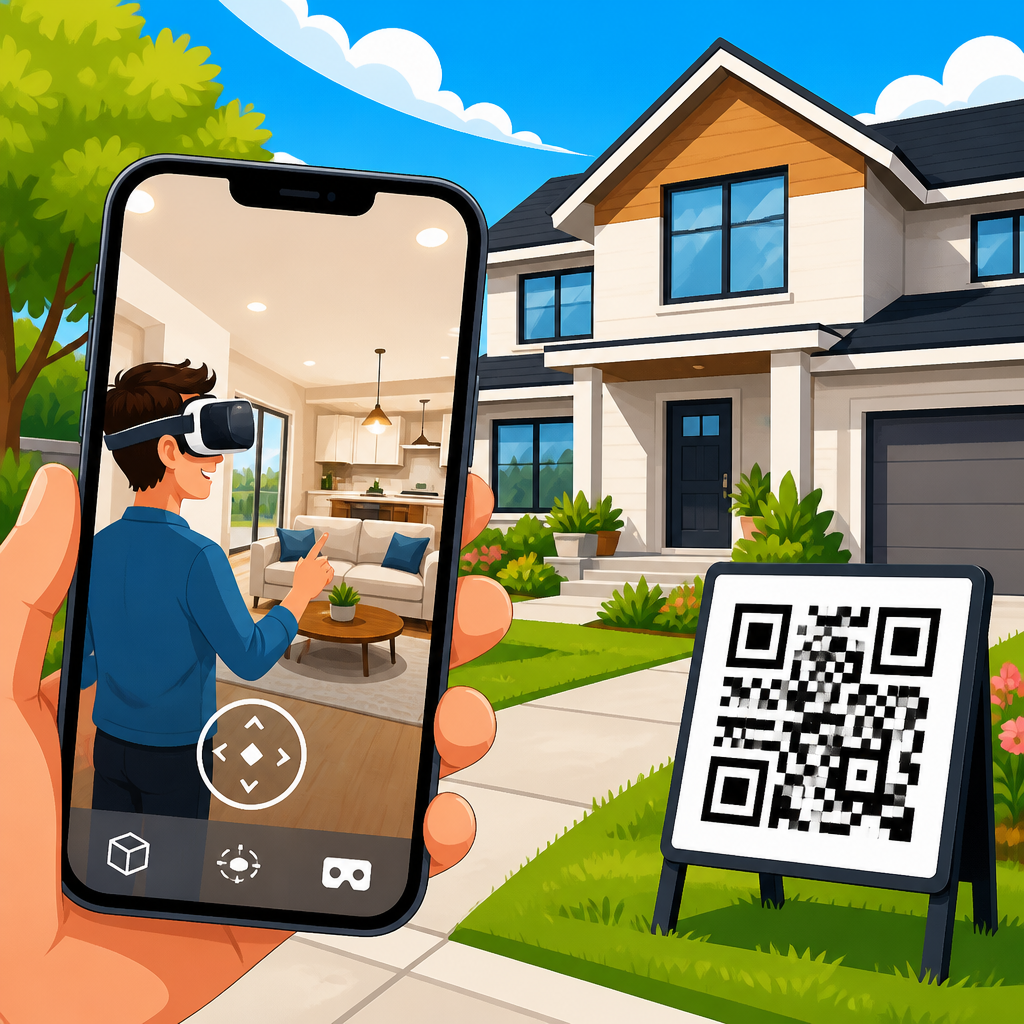
QR codes for virtual property tours have moved from a novelty to a practical real estate marketing tool because they connect offline signs, print materials, and in-person visits directly to digital experiences that help buyers act faster. In real estate, a virtual property tour usually means a guided digital walkthrough delivered through video, 3D scanning, interactive floor plans, or a dedicated listing page. A QR code is the scannable bridge that takes someone from a yard sign, brochure, window display, business card, open house sheet, or direct mail piece to that tour in seconds. I have used QR-based campaigns across residential listings, multifamily leasing, and commercial marketing, and the pattern is consistent: when the destination is useful and mobile-friendly, scans turn passive interest into measurable engagement. That matters because buyers now research properties across channels, often after hours, while agents need better attribution than “someone saw the sign.” This article explains how QR codes for virtual property tours work, why they fit modern real estate behavior, what assets they should connect to, how to measure performance, and where they fit within a broader real estate lead generation system.
Why QR Codes Fit Real Estate Buyer Behavior
Real estate decisions begin long before a showing request. Buyers notice a sign while driving, renters walk past a leasing office after business hours, investors review offering memorandums, and relocation clients share listings with family across devices. In each case, the friction point is the same: interest exists in a physical setting, but the detailed information lives online. QR codes reduce that gap to a single camera scan. According to the National Association of Realtors, most homebuyers use the internet during their search, and mobile usage remains central throughout the process. That makes speed critical. If a prospect must type a long URL from a sign panel, many simply will not bother. A QR code turns a fleeting moment into an immediate session on a listing microsite, Matterport tour, YouTube walkthrough, or calendar booking page.
The strongest use case is not convenience alone; it is continuity. A buyer standing outside a property can scan and instantly compare room flow, lot boundaries, school information, renovation details, and financing prompts without waiting for an agent callback. For multifamily teams, QR codes on banners can route prospects to model unit tours, amenity videos, availability pages, and self-scheduling forms. Commercial brokers can place codes on site boards that open drone flyovers, stacking plans, zoning summaries, and tenant packages. In practice, this creates a continuous path from awareness to evaluation. That path is valuable because real estate is a high-consideration purchase where every extra step causes drop-off. QR codes work best when they match that reality: simple to access, immediate in value, and tied to the exact questions people ask at the property itself.
What a QR Code Should Link To in a Virtual Property Tour Strategy
A QR code for virtual property tours should not send users to a generic homepage unless the campaign goal is broad brand awareness. The destination needs to answer the next question the scanner has at that moment. For a residential listing, that usually means a mobile-optimized property landing page with hero photos, a short property summary, price, square footage, location map, core features, and a clearly visible button for the full virtual tour. If the property already has a strong 3D experience through Matterport, Zillow 3D Home, iGUIDE, or Kuula, the code can link directly there, but I usually recommend a landing page first. A landing page allows tracking, lead capture, legal disclosures, financing widgets, and links to schedule a showing. It also gives the agent control if the listing status changes.
For different property types, the content should shift. Luxury listings often benefit from a polished branded microsite that includes cinematic video, architect notes, premium finishes, and neighborhood lifestyle content. Multifamily assets need quick access to floor plans, pricing ranges, lease specials, amenity tours, and availability feeds. Commercial properties may require downloadable brochures, cap rate context, traffic counts, and site plans. A vacant lot may need boundary overlays, utility notes, survey excerpts, and conceptual renderings rather than an interior walkthrough. The practical rule is direct: the code must open the most decision-useful asset for the exact audience scanning it. A commuter scanning from a sign at a stoplight wants speed and highlights. An investor scanning from a printed brochure wants documentation. An open house visitor wants room-by-room context, renovation dates, and a fast route to offer instructions.
Best Placement for QR Codes Across Real Estate Marketing
Placement influences scan volume as much as code quality. The highest-performing placements I have seen are property signs, directional signs near open houses, brochure boxes, window displays for urban storefront offices, direct mail postcards, feature sheets, and listing presentation materials. Each location captures a different intent level. A yard sign reaches drive-by buyers with immediate geographic relevance. A brochure in the home reaches visitors already inside and comparing details after the agent conversation ends. A postcard supports geographic farming and lets recipients preview nearby listings from the kitchen table. Window posters work well for brokerages in walkable neighborhoods where foot traffic is high and prospects browse listings outside office hours.
Good placement depends on readability and context. The code must be large enough to scan from the expected distance, surrounded by white space, and paired with a clear instruction such as “Scan for 3D tour,” “Scan to view floor plan and price,” or “Scan for leasing availability.” Codes buried among logos and compliance text underperform. Contrast matters too: dark code on a light background is safest, especially outdoors where glare affects cameras. I also recommend testing for environmental wear. Signage lamination, window reflections, and low-light hallways can reduce scan success. In commercial real estate, I have seen excellent results from placing separate codes on brochures for virtual tour, OM download, and contact form because the intent differs by stakeholder. In residential marketing, one primary code is usually better because too many choices can slow action.
Design, Tracking, and Conversion Setup
Real estate teams should treat QR codes as trackable campaign assets, not decorative add-ons. Use dynamic QR codes whenever possible so the destination can be updated without reprinting signs and flyers. This matters when a property changes from coming soon to active, then to pending, or when a leasing promotion changes weekly. Dynamic platforms also provide scan analytics such as total scans, time of day, device type, and approximate location. For deeper attribution, append UTM parameters and connect landing pages to Google Analytics 4, CRM forms, Meta Pixel where appropriate, and call tracking. If a code on a yard sign sends traffic to a landing page, you should be able to distinguish that traffic from portal visits, email clicks, and social campaigns.
| Placement | Best Destination | Primary Goal | Key Metric |
|---|---|---|---|
| Yard sign | Mobile listing page with tour | Capture local buyer interest | Scans to showing requests |
| Brochure box | Full property microsite | Deepen on-site engagement | Time on page |
| Open house sheet | Disclosure packet and offer steps | Move warm leads forward | Form completions |
| Leasing banner | Floor plans and availability | Generate renter inquiries | Lead submissions |
| Commercial signboard | Virtual tour plus OM download | Qualify investors or tenants | Downloads and calls |
Conversion setup must match the stage of interest. A cold prospect scanning from the street should not face a mandatory long form before viewing the tour. Let them access value first, then place next steps where they naturally fit: schedule a showing, request disclosures, ask about financing, join an email alert, or text the agent. I have repeatedly seen better conversion rates when the first screen delivers property substance immediately. Forms still matter, especially for high-value listings and multifamily lead capture, but they should be selective. Ask for only the information needed at that stage. Name, email, and preferred showing time often beat a ten-field form. Also ensure the page loads quickly. Heavy video files, uncompressed images, and intrusive pop-ups can waste the very momentum the QR code created.
Virtual Tour Formats That Work Best With QR Codes
Not every virtual experience performs equally well after a scan. The best format depends on the property, budget, and buyer intent. 3D walkthroughs are excellent when layout comprehension matters, such as single-family homes, condos, and model apartments. Matterport remains the most recognized platform for immersive scans, and its dollhouse view helps users understand room relationships quickly. Video walkthroughs work well for emotionally driven marketing, especially luxury homes or lifestyle-heavy communities where pacing, music, and narration can frame the story of the property. Interactive floor plans add value for practical buyers who want dimensions and furniture flow. Drone tours support acreage, estates, development land, and commercial sites where surroundings are part of the investment case.
The strongest campaigns often combine formats instead of relying on one. A scan can open a landing page where the visitor sees a short summary, then chooses between “Watch video tour,” “Explore 3D walkthrough,” and “See floor plan.” That structure serves different decision styles without forcing a single path. For example, a relocating family may begin with a narrated tour to get a feel for the house, then switch to the floor plan to evaluate bedroom separation and office space. An investor may skip the lifestyle video and go straight to the rent roll summary and 3D tour. In leasing, a prospect may compare two unit types through interactive floor plans before scheduling an in-person visit. The guiding principle is utility. A QR code is effective when the destination resolves uncertainty faster than a standard listing portal page.
Use Cases by Real Estate Segment
Residential resale is the most obvious segment, but it is not the only one. In resale, QR codes support coming-soon campaigns, sign riders, open houses, and neighborhood mailers. Agents can use them to present renovation histories, school district information, and inspection summaries alongside the virtual tour. In new construction, builders can place codes at model homes, lot markers, and community maps that link to interactive site plans, design center previews, and staged model walkthroughs. This is particularly useful when inventory is incomplete or under construction, because buyers can understand the final product before completion. In multifamily leasing, QR codes placed on monument signs, elevators, clubhouse displays, and unit doors can route prospects to self-guided tour instructions, pricing updates, and amenity videos.
Commercial real estate benefits in different ways. Office listings can use QR codes to show stacking plans, virtual suite tours, and neighborhood access data for tenant reps. Retail properties can connect to co-tenancy maps, traffic counts, and storefront visibility videos. Industrial sites can link to clear-height specs, truck court diagrams, and drone footage showing highway connectivity. Hospitality and mixed-use projects can present phased development visuals and investor decks. In each segment, the code acts as a controlled gateway to information that is too detailed for physical signage but essential for serious evaluation. That is why this topic serves well as a hub within real estate QR code use cases: the same scanning mechanic applies broadly, but the destination content, compliance needs, and success metrics vary significantly by asset class.
Common Mistakes, Compliance Issues, and Practical Recommendations
The most common mistake is sending every scan to the same generic page. Buyers do not scan for a brand overview; they scan for immediate property answers. Another frequent problem is poor mobile experience. If the tour requires a desktop plugin, loads slowly on cellular data, or hides the contact button below multiple full-screen elements, conversion drops. I also see agents print static QR codes tied to temporary URLs, then lose performance when listings change or domains expire. Use managed links, maintain redirects, and document campaign ownership so marketing assets remain functional. From a design standpoint, over-stylized codes can become unreadable. Branded frames are fine, but scan reliability must come first. Test on multiple phones, under daylight and low light, before printing hundreds of pieces.
Compliance deserves careful attention. Fair housing standards apply to the destination content just as they do to any listing advertisement. Property facts must be accurate, price changes should update promptly, and brokerage disclosures must appear where required by state law. If lead forms collect personal data, privacy disclosures and CRM handling practices should be clear. In multifamily and commercial contexts, availability and rates can change rapidly, so timestamps or “subject to change” language may be appropriate. Accessibility matters as well. Videos should use captions, images need readable layout, and landing pages should function with standard mobile browsers. The practical recommendation is simple: build one repeatable workflow. Standardize code creation, landing page templates, analytics tagging, legal review, and performance reporting. When the system is consistent, agents and marketers can scale QR codes for virtual property tours across listings without losing accuracy or lead quality.
QR codes for virtual property tours work because they solve a real real estate problem: how to turn physical curiosity into immediate digital engagement without friction. They are most effective when the scan opens a page built for the property, the audience, and the decision stage rather than a generic homepage. Residential agents can use them on signs, brochures, and open house materials to drive buyers into 3D tours, videos, disclosures, and showing requests. Builders can use them to explain communities still under construction. Leasing teams can connect foot traffic to floor plans and availability. Commercial brokers can deliver complex documents and site visuals from a signboard. Across all segments, the operational essentials remain the same: dynamic links, mobile-first destinations, clear calls to action, reliable analytics, and compliance review.
The main benefit is measurable momentum. Instead of hoping an interested prospect remembers a property address or agent name later, you create an instant path to the exact information that helps them move forward now. That improves user experience, sharpens attribution, and often increases qualified inquiries because scanners self-select based on genuine interest. As this real estate hub expands, related articles should go deeper into sign design, open house QR workflows, Matterport integration, multifamily leasing campaigns, and commercial brochure strategy. Start with one listing or community, track scans and conversions for thirty days, and refine the destination experience based on actual behavior. In real estate marketing, the winning QR code is not the fanciest one. It is the one that gets a prospect from curiosity to clarity fast.
Frequently Asked Questions
What are QR codes for virtual property tours, and why are they useful in real estate?
QR codes for virtual property tours are scannable codes placed on physical marketing materials that instantly take a buyer to a digital property experience. In real estate, that experience might be a video walkthrough, a 3D home tour, an interactive floor plan, a photo gallery, or a full listing page with agent contact details and showing information. Their value comes from how effectively they connect offline attention to online action. A person standing in front of a yard sign, flipping through a brochure, or visiting an open house can scan the code and immediately explore the property in more depth without typing a long URL or searching manually.
This matters because speed and convenience influence buyer behavior. The easier it is for someone to access a tour, the more likely they are to stay engaged, share the listing with others, and take the next step. QR codes also help agents and brokers make print marketing more interactive and measurable. Instead of relying only on static flyers and signage, they can offer an instant digital experience that meets modern expectations. In practice, QR codes turn traditional marketing touchpoints into lead-generation opportunities by giving buyers a fast path from curiosity to deeper property research.
Where should real estate professionals place QR codes for virtual property tours?
The strongest placements are the places where buyers naturally pause and want more information. Yard signs are one of the most effective because they capture drive-by traffic and neighborhood interest at the exact moment someone is viewing the property in person. Brochures, flyers, direct mail pieces, window displays, open house signage, business cards, and property feature sheets are also strong options. In multifamily, commercial, or new development settings, QR codes can be added to lobby displays, leasing office materials, and printed maps. The goal is to place the code where a potential buyer can easily scan it without friction.
Placement should also consider visibility and usability. The code needs enough space around it, a clear call to action, and a surface that is easy to scan from a phone. For example, “Scan to take the virtual tour” performs better than placing a code with no explanation. It is also smart to match the destination to the context. A code on a yard sign might lead directly to the full tour, while a code in a brochure might go to a branded landing page with the tour, floor plan, photo gallery, and agent contact form. Well-placed QR codes improve engagement because they meet buyers at moments of high intent and give them immediate access to the digital content most likely to move them toward a showing or inquiry.
What should a QR code link to for the best virtual property tour experience?
The best destination is usually a mobile-friendly page built specifically for the buyer’s next step. That could be a dedicated listing page containing the virtual tour, property highlights, pricing, location details, and a clear way to contact the listing agent. In some cases, linking directly to a 3D walkthrough or video tour makes sense if the objective is fast access with minimal clicks. However, many real estate professionals get better results from a landing page that combines the tour with supporting information, because buyers often want context such as square footage, bedroom count, amenities, neighborhood notes, and scheduling options.
The destination should load quickly, look clean on a smartphone, and make the tour easy to start. It should also include obvious next actions like “Schedule a showing,” “Call the agent,” “Request pricing,” or “Save this listing.” If the page asks too much of the user or hides the most important content below clutter, the scan loses value. For higher-end listings or competitive markets, adding interactive floor plans, room-by-room details, and financing or neighborhood resources can further improve engagement. The key principle is simple: the QR code should not just send people somewhere digital; it should send them to a focused, useful experience that helps them evaluate the property and act confidently.
Do QR codes for virtual property tours help generate more leads and faster buyer action?
They can, especially when they are part of a thoughtful real estate marketing strategy. QR codes reduce friction at a critical moment. Instead of asking buyers to remember an address, search for the property later, or manually enter a web link, the scan delivers immediate access while interest is still high. That immediacy can increase time spent with the listing, encourage repeat visits to the tour, and prompt faster follow-up. Buyers who scan from a sign or brochure are often showing strong intent because they are already engaging with the property in a physical setting.
QR codes also create better tracking opportunities than traditional print materials alone. With the right setup, agents can measure scans, compare campaign performance across signs and brochures, and identify which properties or placements generate the most engagement. If the destination page includes a contact form, scheduling tool, or call button, those scans can translate directly into inquiries and appointments. While a QR code itself is not a magic solution, it can improve conversion performance by making information easier to access and by supporting a more responsive buyer journey. In competitive markets, that speed can be a meaningful advantage because buyers often move quickly once they find a home that meets their needs.
What are the best practices for creating effective QR codes for virtual property tours?
Start with clarity, functionality, and mobile usability. The QR code should be high contrast, large enough to scan easily, and tested across different phones and lighting conditions. Avoid placing it over busy backgrounds or in cramped designs where users may not immediately recognize it. Include a direct call to action such as “Scan for 3D Tour,” “View Virtual Walkthrough,” or “Take the Tour Now.” That small instruction helps people understand exactly what they will get, which improves scan rates. It is also wise to use a short, branded destination experience that feels professional and trustworthy.
Beyond design, the destination content matters just as much. Make sure the linked page loads quickly, displays well on mobile devices, and puts the tour front and center. If possible, use dynamic QR codes so the destination can be updated without reprinting materials. This is useful if the listing page changes, if additional media is added, or if the property moves from active to under contract and the destination needs to be redirected. Tracking analytics, maintaining brand consistency, and keeping contact options visible are all important. Finally, think about the buyer journey from start to finish. A strong QR code strategy does not stop at the scan; it guides the user from physical interest to virtual exploration to a clear next action, which is exactly what makes QR codes such a practical tool for virtual property tours in real estate.