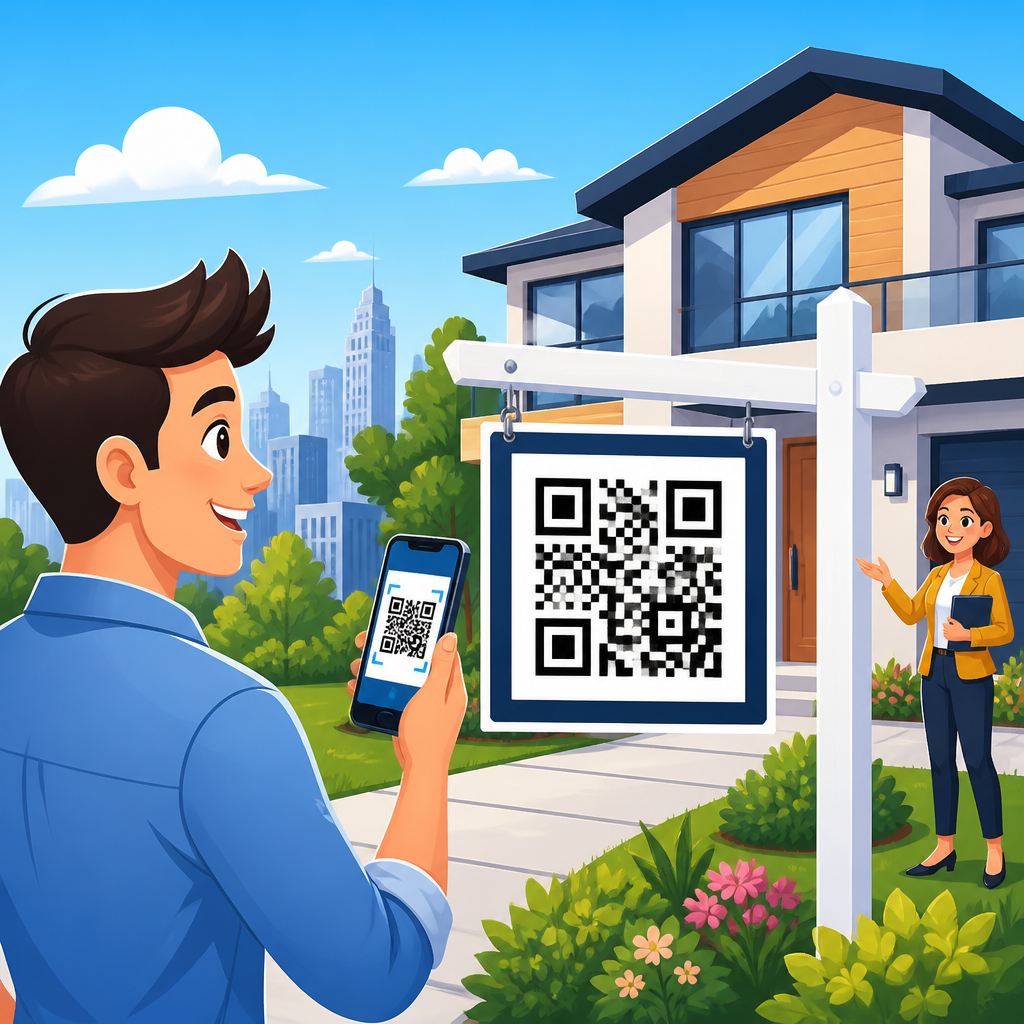
QR codes for real estate lead generation turn physical marketing into measurable digital intent, giving agents, brokers, and property marketers a fast way to capture inquiries from signs, print ads, open houses, direct mail, and neighborhood campaigns. In real estate, a QR code is a scannable two-dimensional barcode that sends a prospect to a landing page, listing gallery, virtual tour, contact form, calendar booking tool, or saved search the moment they point a smartphone camera at it. Lead generation means collecting enough verified information and context to move a potential buyer, seller, renter, or investor into follow-up. When these two ideas are combined well, every brochure box, window display, rider sign, and postcard becomes a response channel that can be tracked, tested, and improved.
I have implemented QR-driven campaigns for listings, recruiting, and local brand awareness, and the difference between random scans and qualified leads always comes down to structure. A code alone does not create demand. The destination, the offer, the placement, and the follow-up sequence determine whether a scan becomes a conversation. That matters because real estate marketing still relies heavily on offline attention: yard signs, door hangers, event materials, newspaper inserts, community sponsorships, and printed brochures. Without a bridge to digital behavior, agents lose attribution and often miss people who are interested but not ready to call. QR codes solve that gap by lowering friction at the exact moment curiosity peaks.
The business value is practical. Buyers want instant listing details. Sellers want evidence that an agent uses modern marketing. Renters want photos, pricing, and availability without waiting for office hours. Investors want cap rate summaries and location data before speaking with anyone. A well-built QR code workflow answers those needs immediately while capturing source data, time of scan, device type, and conversion actions in analytics platforms such as Google Analytics 4, CRM systems, and marketing automation tools. For a real estate business trying to improve cost per lead, speed to lead, and campaign attribution, QR codes are not a novelty. They are an operational tool.
Why QR codes work in real estate marketing
QR codes work in real estate because they meet prospects where attention naturally happens: in front of a property, at a community event, inside a leasing office, or while browsing printed material at home. Real estate decisions are location sensitive and emotionally driven. People often notice a property first in the physical world, then research it on their phones. A QR code removes the extra step of typing a long URL, searching an address, or trying to remember an agent’s name later. In campaigns I have run, the highest scan rates typically came from “for sale” signs on active streets, open house entry materials, and oversized postcard calls to action offering price updates or neighborhood guides.
The format also supports the full funnel. At the top of the funnel, a code can send users to a local market report, first-time buyer checklist, or home valuation tool. In the middle, it can open a specific listing page with media, disclosures, school data, and financing information. At the bottom, it can prefill a showing request form, launch a text message, or trigger a calendar booking page. This flexibility lets a brokerage use one technology across residential sales, commercial leasing, new developments, property management, and agent recruiting while maintaining consistent measurement.
Most important, QR codes create attribution for offline media. A postcard may generate leads, but without trackable destinations, many teams cannot prove it. Dynamic QR codes tied to campaign-specific URLs fix that problem. You can distinguish scans from a luxury farming postcard versus a condo open house sign, then compare conversion rates by audience, zip code, agent, or property type. That insight makes budgeting smarter and reduces guesswork.
Best real estate lead generation use cases
The strongest use cases align the scan with immediate intent. Yard signs are the classic example. Someone passing a property wants price, photos, and showing details right away. A sign rider that says “Scan for photos, price, and tour times” sets a clear expectation and usually performs better than a generic “Scan me.” Window displays for brokerage offices and leasing centers work similarly, especially after hours when staff are unavailable. Prospects can scan to see active listings, floor plans, application requirements, or a self-scheduling link.
Open houses are another high-value channel. Instead of a paper sign-in sheet, a QR code can direct visitors to a mobile form that captures name, email, phone, buying timeline, and whether they need to sell first. This improves data quality and compliance while triggering immediate follow-up. I have seen agents increase actual post-event conversations simply by pairing the sign-in code with an incentive such as a neighborhood comps report or renovation cost guide. Direct mail is equally effective when the offer is specific: “Scan for your home’s estimated value,” “Scan for this month’s off-market opportunities,” or “Scan to compare recent sales on your street.”
Commercial real estate adds more options. A building flyer can link to a downloadable offering memorandum, stack plan, drone video, and broker contact form. Multifamily marketers often use QR codes on banners, elevator signage, and print ads to route renters to unit availability and virtual tours. Developers can place site signage with codes linking to project timelines, floor plans, financing updates, and investor registration pages.
| Placement | Best destination | Primary lead goal |
|---|---|---|
| Yard sign | Listing page with photos, map, and showing request | Buyer inquiry |
| Open house sign-in | Mobile lead form with qualifying questions | Contact capture |
| Postcard | Home valuation or neighborhood report landing page | Seller lead |
| Office window | Listings gallery or leasing availability page | After-hours inquiry |
| Property flyer | Virtual tour and brochure download | Engaged prospect follow-up |
| Community event banner | Local guide or giveaway entry page | Top-of-funnel database growth |
How to design QR code campaigns that actually convert
Effective QR code design starts with the landing experience, not the graphic itself. The destination must match the promise on the sign or print piece exactly. If the call to action says “Scan for price and photos,” the page should open fast and display price, gallery, and key facts above the fold. Sending traffic to a generic homepage is one of the most common mistakes in real estate marketing. It increases bounce rate and wastes high-intent scans. Each campaign should have its own landing page, message, and conversion goal.
Use dynamic QR codes whenever possible so you can update the destination without reprinting materials. This is essential in real estate, where listings change status, prices shift, and open house times move. A dynamic code on a brochure box can send to an active listing today, then be redirected to a backup property, a “similar homes” page, or a home search if the listing goes under contract. That preserves the value of installed signage and printed inventory. Platforms such as Bitly, Beaconstac, QR Code Generator Pro, and marketing suites with campaign tagging make this easy to manage.
The visual treatment matters too. Contrast must be high enough for fast scanning, especially outdoors. Keep quiet space around the code, avoid over-stylizing the pattern, and test at real viewing distances before printing. On sign riders, I recommend pairing the code with a short benefit statement and a fallback short URL. The code should be large enough to scan from a comfortable standing position, not only from inches away. For direct mail, place it where the eye lands naturally and give one clear action, not five. Real estate audiences respond best when the value is immediate, concrete, and local.
Lead capture, CRM integration, and speed to lead
A scan is not the goal; a qualified lead is. To convert interest into pipeline, the landing page should collect only the information needed for the next step. For a buyer inquiry, that may be name, email, phone, timeframe, and financing status. For a seller valuation campaign, address, contact details, and selling timeline are usually enough. Long forms reduce completion rates, particularly on mobile devices in outdoor settings. Progressive profiling works better: gather the minimum first, then enrich the record over time through follow-up forms, calls, and property alerts.
CRM integration is where many real estate teams either gain efficiency or create chaos. Every QR campaign should pass source, medium, campaign, property ID, and agent assignment into the CRM automatically. Systems like Follow Up Boss, HubSpot, Salesforce, kvCORE, BoomTown, and LionDesk can route these leads based on geography, price band, listing ownership, or stage. If an open house sign-in comes in, the assigned agent should receive an instant alert and an automated thank-you message should go out within minutes. Speed matters. Industry data consistently shows that responding within the first few minutes materially improves contact rates compared with delayed outreach.
Automation should support, not replace, personal follow-up. A good sequence starts with a confirmation email or text containing the promised asset, then a human touchpoint referencing the exact property or offer scanned. For example: “Thanks for scanning the Maple Street open house code. If you want the seller disclosure package or a private second showing, reply here.” That level of specificity feels relevant because it is relevant, and it moves the interaction beyond generic drip marketing.
Measurement, testing, and compliance in real estate
Measuring QR codes for real estate lead generation requires both scan analytics and downstream conversion tracking. At minimum, monitor total scans, unique scans, landing page sessions, bounce rate, form completions, call clicks, booked showings, and closed transactions by source. In GA4, use campaign-tagged URLs and event tracking for form starts, submissions, brochure downloads, and click-to-call actions. In the CRM, track lead-to-appointment, appointment-to-client, and client-to-close rates so you can judge quality, not just volume. A postcard campaign that generates fewer leads than a sign campaign may still win if the seller appointments are stronger.
Testing should be systematic. Change one major variable at a time: call to action, landing page headline, incentive, form length, or placement. On listing signs, compare “Scan for price and photos” against “Scan for instant access to the full tour.” On mailers, compare a valuation offer with a neighborhood report. On open houses, compare a simple sign-in page with one that offers a downloadable buyer worksheet after submission. Small wording changes can materially alter scan and conversion rates because they affect clarity and perceived value.
Real estate compliance cannot be ignored. Marketing must follow fair housing rules, state advertising regulations, MLS rules, and privacy requirements. If a QR code leads to a form collecting personal data, the page should include clear consent language and a privacy notice. If property information changes frequently, make sure destination pages are updated so scanned materials do not display stale pricing or inaccurate status. Accessibility also matters. Provide readable text alternatives, fast-loading pages, and straightforward navigation for users on slower connections or older devices. Trust is easy to lose in property transactions, so accuracy and transparency are part of performance.
Common mistakes and what high-performing teams do differently
The most common mistake is sending every scan to the brokerage homepage. That forces prospects to hunt for the information they expected, and many leave. Another frequent error is using static codes on time-sensitive assets, then discovering that printed signs and flyers point to sold listings. I also see teams use QR codes without any surrounding instruction, assuming people will scan out of curiosity alone. In reality, response rises when the code explains the benefit in plain language and reduces uncertainty about what happens next.
High-performing real estate teams take the opposite approach. They map each code to a specific audience and moment, create a dedicated mobile page, connect the flow to the CRM, and review performance weekly. They treat QR placements as inventory that deserves optimization, not decoration. They also build continuity across channels. A prospect who scans a yard sign may later receive retargeting ads, listing alerts, or a follow-up text referencing the exact home they viewed. That connected experience is why QR codes can outperform traditional print response methods when implemented with discipline. For a real estate business building a durable lead engine, the next step is simple: audit every offline touchpoint, add a clear QR-driven offer, and measure what happens.
Frequently Asked Questions
How do QR codes help with real estate lead generation?
QR codes help real estate professionals bridge the gap between offline marketing and online conversion. When someone scans a code on a yard sign, flyer, postcard, brochure, open house display, or neighborhood mailer, they are taken directly to a digital destination that matches their immediate interest. That destination might be a property landing page, virtual tour, listing photos, mortgage calculator, booking form, saved search, or a contact form for requesting more information. Because the action happens instantly on a smartphone, QR codes reduce friction and make it easier for interested buyers and sellers to respond while attention is highest.
From a lead generation standpoint, this matters because scans represent measurable intent. Instead of hoping a prospect remembers an agent’s name or manually types in a URL later, the QR code creates a fast, trackable pathway to engagement. Agents and brokers can monitor scan volume, campaign performance, and visitor behavior to understand which signs, print pieces, and local promotions are producing inquiries. That visibility supports better marketing decisions, stronger follow-up, and more efficient spending. In short, QR codes turn traditional real estate advertising into a more interactive, data-driven lead capture system.
Where should real estate agents place QR codes to get the best results?
The best placements are high-visibility touchpoints where prospects already show curiosity or intent. For most agents, that starts with yard signs, directional signs, property feature sheets, open house signage, window displays, print ads, direct mail postcards, door hangers, neighborhood newsletters, and brochures. A QR code on a for-sale sign can take a passerby straight to the listing gallery or virtual tour. A code on an open house sign-in sheet can direct visitors to disclosures, financing resources, or a next-step consultation page. A code in a postcard campaign can send homeowners to an instant valuation form or neighborhood market update.
Strong results usually come from matching the QR code destination to the context in which it appears. A buyer-focused code should lead to listing details, showing requests, or a home search experience. A seller-focused code might connect to a home value page, recent local sales, or a listing presentation request. Placement should also consider usability: codes need to be large enough to scan easily, printed with strong contrast, and positioned where people can access them safely and comfortably. In real estate, relevance and convenience matter more than simply placing a QR code everywhere. The most effective campaigns use strategic placement, a clear call to action, and a landing page designed specifically for the audience scanning it.
What should a real estate QR code link to in order to capture more leads?
A real estate QR code should link to a page that aligns with the prospect’s immediate question and encourages a clear next step. For active buyers, that often means a mobile-friendly listing page with photos, price, property details, map, neighborhood highlights, and a fast way to schedule a showing or ask a question. For luxury listings or unique homes, a virtual tour or video walkthrough can be especially effective because it extends engagement and qualifies interest. For open houses, a QR code might lead to a digital sign-in form, property disclosures, or a page where visitors can request updates about similar homes.
For seller lead generation, the best destination is usually a focused landing page offering a home valuation, market report, consultation request, or guide on preparing a home for sale. The key is to avoid sending traffic to a generic homepage if a more specific landing page would better match the campaign. A person scanning a code from a postcard about selling in a specific neighborhood should arrive on a page that speaks directly to that neighborhood and offer. To improve conversions, include a strong headline, concise property or market information, social proof, and a short form with a compelling reason to submit contact details. The more closely the landing page reflects the message on the print piece or sign, the stronger the lead capture performance tends to be.
Can QR codes track performance for real estate marketing campaigns?
Yes, and that is one of their biggest advantages in real estate marketing. QR codes can be used to measure how many people interact with a specific sign, mailer, flyer, magazine ad, or event display. When paired with campaign-specific URLs, analytics tools, or dynamic QR code platforms, agents can see which placements generate scans, when those scans happen, what devices are being used, and what visitors do after landing on the page. This helps answer practical questions such as whether a postcard campaign outperformed a print ad, whether one listing sign attracted more attention than another, or whether open house materials generated post-visit follow-up.
That data is valuable because it turns physical advertising into something more accountable and optimizable. Rather than relying only on anecdotal feedback, agents can identify which campaigns produce quality leads and adjust messaging, offers, destinations, or placement accordingly. Tracking also supports better follow-up workflows. If a QR code sends users to a form, booking calendar, or registration page, those interactions can feed directly into a CRM or lead nurturing system. Over time, this creates a more complete view of marketing ROI, making QR codes useful not just for convenience, but for strategic decision-making across buyer and seller campaigns.
What are the best practices for creating high-converting QR codes in real estate?
High-converting real estate QR codes start with a clear purpose. Every code should be tied to a specific campaign, audience, and desired action. Before creating one, decide whether the goal is to book showings, capture seller leads, increase open house registrations, promote a virtual tour, or drive saved search signups. Once that goal is defined, create a mobile-optimized landing page that loads quickly and makes the next step obvious. Use a direct call to action near the code, such as “Scan to view price and photos,” “Scan for instant home value,” or “Scan to book a private showing.” Without that instruction, many prospects will not know why they should scan.
Design and execution also matter. Use high contrast, adequate sizing, and enough white space around the code so it scans reliably in different lighting conditions and at different distances. Test the code across multiple smartphones before printing at scale. Avoid linking to cluttered pages or forcing users through too many steps after the scan. In most cases, shorter forms and stronger relevance produce better conversion rates. It is also smart to use unique QR codes for different marketing assets so results can be tracked separately. Finally, keep branding consistent and make sure the landing page reinforces trust with agent contact information, brokerage details, testimonials, and accurate listing or market content. The best real estate QR code campaigns feel seamless: a prospect sees an offer, scans instantly, gets useful information right away, and has an easy path to become a lead.