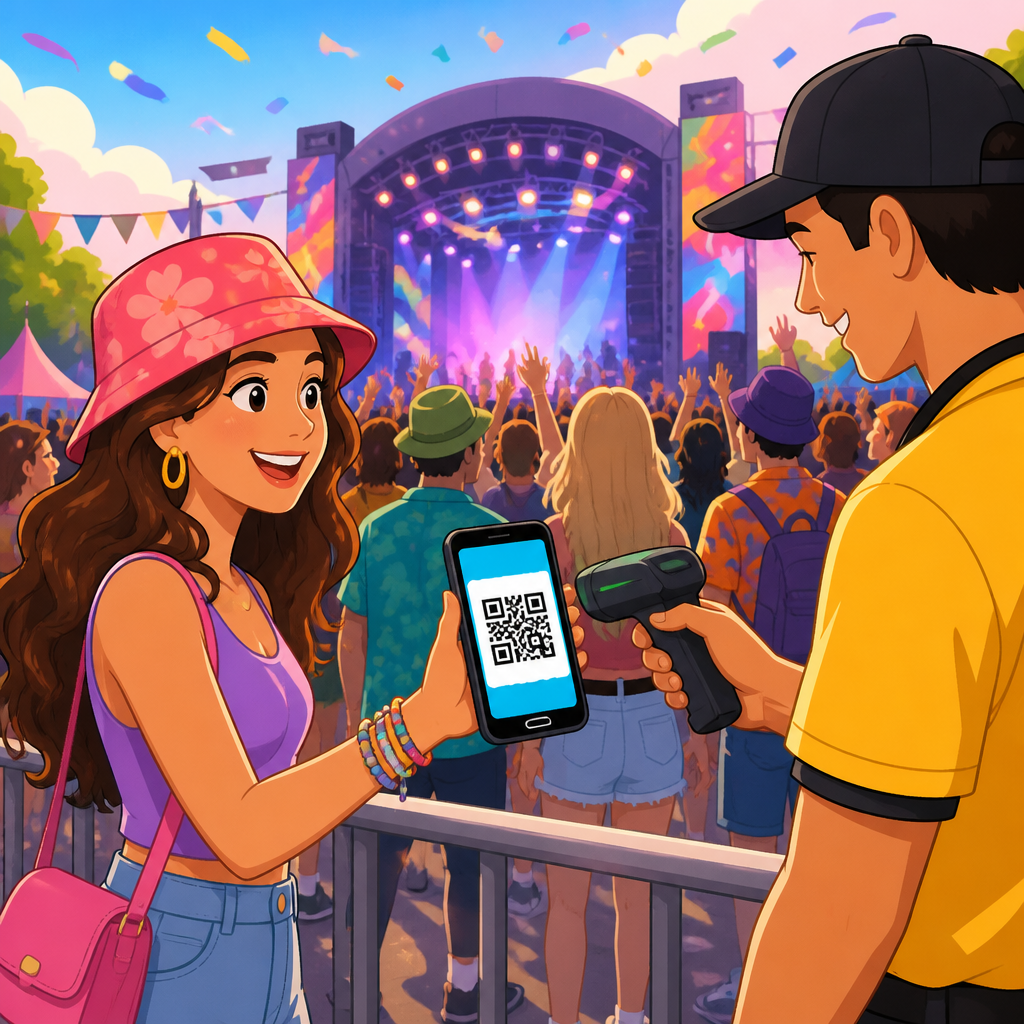
QR codes for concert and festival tickets have become the operational backbone of modern live events, replacing slow paper validation with fast, trackable, fraud-resistant entry systems. In events and ticketing, a QR code is a machine-readable image that stores a unique ticket identifier, then links that identifier to a database record containing admission rights, seat details, purchaser information, and status fields such as issued, transferred, scanned, or voided. I have implemented these systems for high-volume check-in environments, and the practical value is immediate: shorter queues, better visibility for organizers, and a cleaner attendee experience from purchase to gate. This matters because concerts and festivals combine narrow entry windows, thousands of arrivals, mobile-first buyers, and constant fraud pressure. A weak ticketing flow damages revenue, security, and brand trust at the same time. A strong QR ticketing setup supports access control, staffing decisions, analytics, resale rules, VIP segmentation, and emergency response planning. As a hub topic within events and ticketing, this article explains how QR ticketing works, why venues rely on it, what event teams must configure, and where it fits alongside admissions, box office operations, mobile wallets, and post-event reporting. Whether the event is a seated arena concert, a multi-day camping festival, or a club show with timed entry, the same core principle applies: every ticket needs a unique, verifiable, quickly scannable identity that can be checked in real time or, when necessary, with a controlled offline fallback.
How QR codes work in concert and festival ticketing
At its simplest, a QR code on a ticket represents a unique token, not the full ticket logic. The code may embed a random string, encrypted payload, signed JSON object, or short URL that resolves to the ticket record when scanned. In mature systems, the QR code is generated at issuance, bound to a specific order or attendee, and validated against rules set by the organizer. Those rules can include event date, gate eligibility, section access, age-restricted zones, package entitlements, and whether the ticket has already been redeemed. When a scanner reads the code, the software checks the identifier against the ticketing platform and immediately returns a status such as valid, duplicate, invalid, refunded, or transferred.
Concerts and festivals need this architecture because visual inspection fails at scale. A PDF attachment can be copied endlessly, and a screenshot alone does not prove authenticity. The database status does. That is why leading platforms such as Ticketmaster, Eventbrite, AXS, Universe, DICE, and access-control systems integrated with Zebra, Honeywell, or Socket Mobile scanners depend on server-side validation. In my own deployments, the most important design choice was not the image itself but the validation model behind it: one-time use, instant state updates, and clear scanner feedback with audible and color-coded responses. If gate staff cannot recognize a duplicate in under one second, queue congestion spreads fast.
Dynamic QR codes are especially useful for high-risk events. Instead of presenting a permanently valid image, the attendee sees a refreshed code inside the app or wallet-linked pass, reducing screenshot abuse and unauthorized resale circulation. Static QR codes still work well for lower-risk events, especially reserved-seating performances with strong identity checks, but they require tighter transfer controls and anti-duplication monitoring. The right choice depends on audience size, event profile, gate network reliability, and fraud history.
Why event organizers use QR ticketing systems
The main benefits of QR codes for event tickets are speed, accuracy, and control. Speed matters because entry is where demand peaks. A festival with 40,000 attendees may process most arrivals in a two- to three-hour window. Scanning a QR code is materially faster than checking printed lists, tearing stubs, or manually confirming order numbers. Accuracy matters because each scan writes a transaction to the event record, creating a precise log of when and where a ticket entered. Control matters because organizers can revoke, reissue, transfer, upgrade, or audit tickets without recalling paper stock.
Fraud prevention is the second major reason. Ticket fraud usually appears in three forms: counterfeit tickets, duplicated legitimate tickets, and invalidated tickets resold after refund or chargeback. QR systems counter all three when they use unique identifiers, real-time validation, and immediate redemption locking. If the same code appears at two gates, the first accepted scan updates the ticket status; later attempts trigger a duplicate warning. Organizers can also blacklist batches associated with bot purchases, suspicious reseller activity, or compromised promotions.
Operationally, QR ticketing supports event segmentation. A single event can issue general admission, early entry, VIP lounge, artist meet-and-greet, camping, parking, shuttle, and beverage package credentials, each with separate access rules. The code does not just grant entry to the venue; it can unlock location-specific permissions. At festivals, this is critical because access rights are layered across days, stages, campgrounds, backstage zones, and cashless redemption points. QR tickets also improve reporting. Organizers can compare sales to actual attendance, identify no-show rates by ticket class, and adjust staffing, security, concessions, and sponsor activation plans accordingly.
Best practices for setup, security, and gate operations
A reliable QR ticketing operation starts long before doors open. Ticket records should include a unique immutable ID, purchaser and attendee fields where appropriate, product type, access windows, scan limits, and an audit trail of changes. Codes should be generated using cryptographically strong randomness or signed payloads, not sequential numbers that can be guessed. If screenshots are accepted, the event should use additional controls such as rotating barcodes in-app, identity matching for premium tiers, and restricted transfer policies. For mobile delivery, Apple Wallet and Google Wallet passes are valuable because they improve scan brightness, reduce search time at the gate, and allow updates if the event changes time or entrance instructions.
Scanner performance depends on hardware, staffing, and venue network design. Consumer smartphone cameras can work for small venues, but larger concerts benefit from dedicated handheld scanners or sled-based systems with better battery life and faster decode performance in glare, dust, and low light. Every entrance plan should include lane design, queue marshals, exception handling staff, and a documented offline mode. I have seen events fail not because the ticket platform was bad, but because devices were uncharged, Wi-Fi was oversubscribed, and staff had no protocol for invalid scans. A good gate plan treats admissions like a production system, not a casual front-of-house task.
| Operational area | Recommended practice | Why it matters |
|---|---|---|
| Code generation | Use unique random or signed tokens | Prevents predictable duplication and spoofing |
| Delivery method | Support app, wallet pass, and printable backup | Reduces entry friction across device preferences |
| Validation | Enable one-time real-time redemption | Stops reused or transferred invalid tickets at the gate |
| Offline resilience | Cache ticket batches and sync later | Keeps gates moving during connectivity loss |
| Staff training | Use scripted responses for invalid and duplicate scans | Protects throughput and reduces confrontation |
| Analytics | Track scans by time, gate, and ticket type | Improves staffing, security, and revenue planning |
Security should balance fraud resistance with attendee convenience. Requiring government ID for every general admission entry slows throughput and often creates unnecessary friction. Requiring identity checks for VIP, will-call, age-gated wristband exchange, or suspicious duplicate exceptions is more realistic. Organizers should also define exactly how transfers, resale, refunds, and re-entry work. If re-entry is allowed, the validation logic must support controlled exit and re-scan states rather than simple one-and-done redemption.
Use cases across concerts, festivals, and related event formats
Different event formats apply QR ticketing differently. In reserved-seating concerts, the QR code usually maps to a specific seat and door recommendation. The priority is preventing duplicate use while directing guests efficiently. Arena venues often combine this with mobile wallet delivery and parking passes, each carrying its own QR or linked credential. In club shows or theater performances, QR tickets help manage timed entry, guest lists, and quick upsells at the door when inventory remains. These venues benefit from compact check-in interfaces and clear exception workflows because staffing is lean.
Festivals are more complex. A multi-day music festival may issue one credential for admission, another for camping, and additional entitlements for showers, lockers, shuttle transport, VIP decks, and afterparties. Some events convert the initial QR ticket into an RFID wristband at first arrival, then use the wristband for subsequent access and cashless payments. Even in that model, the QR code remains essential because it anchors the first identity and entitlement check. It is the bridge between online purchase and physical credential issuance. That makes QR ticketing a foundational hub within events and ticketing, connecting to admissions, credentialing, sponsorship, merchandising, and on-site customer service.
There are also edge cases. Family festivals may need child and guardian linkage. Corporate-sponsored concerts may require invitation-only guest management with limited transferability. International festivals may support multilingual instructions and regional wallet behavior differences. Accessible seating attendees may need companion ticket rules linked to one primary order. The ticketing system should model these realities directly instead of forcing manual workarounds at the entrance. Good QR implementations reduce exception volume by encoding business rules before event day.
Common problems, metrics, and how to choose the right platform
The most common QR ticketing problems are duplicate scans, unreadable screens, poor connectivity, mismatched access permissions, and weak customer communication. Duplicate scans are not always fraud; sometimes a guest opens an old email after transferring the ticket to a friend. Unreadable screens usually come from cracked displays, low brightness, or PDFs buried in inboxes. Connectivity failures matter most at temporary festival sites where cellular congestion spikes near gates. Mismatched permissions happen when inventory, seating maps, or add-on products are configured incorrectly. Many support issues disappear when confirmation emails clearly explain where the live ticket appears, whether screenshots are accepted, and what to do if a phone battery dies.
Key metrics tell organizers whether the system is working. Scan success rate, average scans per minute per lane, exception rate, duplicate attempt count, first-hour throughput, no-show percentage, and gate-specific arrival curves are more useful than raw attendance alone. If one entrance consistently shows higher exception rates, the issue may be staffing, signage, network quality, or audience type rather than fraud. After several event cycles, these numbers become planning tools. They influence how many lanes to open, how early doors should start, and whether premium products need separate ingress.
Choosing a platform requires looking beyond checkout features. Organizers should evaluate API availability, wallet pass support, offline scanning, transfer and resale controls, role-based staff permissions, audit logs, CRM and marketing integrations, webhook events, hardware compatibility, and post-event reporting depth. Venues with existing access-control infrastructure should confirm whether the ticketing provider supports their scanners and turnstiles. Festivals should test operation under low-bandwidth conditions, because a polished desktop dashboard means little if gate devices stall in the field. The best system is the one that matches event complexity, scales reliably, and gives operations staff clear control on show day.
QR codes for concert and festival tickets are more than a convenient entry tool; they are the control layer that connects sales, security, guest experience, and event intelligence. When implemented well, they shorten queues, reduce fraud, support flexible access rules, and give organizers accurate attendance data they can act on. They also create a consistent framework across the broader events and ticketing category, from small club shows to multi-day festivals with camping, VIP zones, and credential exchanges. The central lesson is straightforward: the image matters less than the system behind it. Unique identifiers, real-time validation, offline resilience, strong staff training, and clear attendee instructions determine whether QR ticketing feels effortless or chaotic.
For teams building an events and ticketing strategy, this hub topic should guide related decisions around mobile delivery, admissions staffing, transfer policies, access control hardware, and post-event analytics. Start by mapping your attendee journey from purchase to entry, then test every exception path, not just the happy path. Review fraud risk, venue connectivity, and credential complexity before choosing a platform. If your event already uses QR codes, audit scan rates, duplicate patterns, and gate bottlenecks after each show and refine the workflow. The payoff is practical and immediate: faster entry, fewer disputes, better data, and a more professional event operation. Use this page as the foundation for deeper planning across the full events and ticketing ecosystem.
Frequently Asked Questions
How do QR codes improve concert and festival ticketing compared with traditional paper tickets?
QR codes make live event entry faster, more accurate, and far easier to manage than paper-based ticket validation. Instead of relying on visual inspection, manual tearing, or barcode systems with limited data capacity, a QR code links each ticket to a specific database record in real time. That record can contain the attendee’s admission rights, seating or zone information, event date, purchaser details, transfer history, and current status such as issued, scanned, voided, refunded, or reissued. At the gate, staff can scan the code in seconds and instantly confirm whether the ticket is valid, whether it has already been used, and whether it belongs at that specific entrance, day, or ticket tier.
For concert promoters, festival operators, and venue teams, this creates a major operational advantage. It reduces bottlenecks at entry points, lowers the chance of human error, and improves visibility into attendance patterns as they happen. Organizers can see scan volumes by gate, identify peak arrival windows, and reassign staff if lines begin to form. QR-based systems also support contactless entry, mobile ticket delivery, and last-minute ticket transfers, all of which align with how modern audiences expect ticketing to work. In short, QR codes are not just a replacement for paper tickets; they are the infrastructure that supports secure, trackable, and scalable event access control.
Are QR code concert and festival tickets secure against fraud and duplication?
Yes, when implemented properly, QR code ticketing is significantly more secure than static paper tickets, but the real security comes from the validation system behind the code rather than the image itself. A QR code typically contains or references a unique ticket identifier, and that identifier is checked against a central database during scanning. If the ticket has already been redeemed, transferred, canceled, refunded, or flagged for review, the system can reject it immediately. This is what makes the approach so effective against common forms of fraud such as duplicated screenshots, copied PDFs, or unauthorized resales.
That said, a QR code alone is not automatically fraud-proof. Strong ticket security depends on controls such as one-time scan logic, status-based validation, encrypted or tokenized identifiers, secure ticket delivery, device authentication for staff scanners, and synchronized databases across entry points. Many ticketing systems also rotate QR codes dynamically in mobile wallets or apps to make screenshot sharing less useful. For festivals and high-demand concerts, platforms may add identity checks, transfer restrictions, resale controls, and anomaly monitoring to detect suspicious behavior before doors open. The best way to think about QR security is this: the code is the access key, but the database rules and event operations determine whether that key can actually unlock entry.
What happens when a ticket holder transfers, resells, or loses a QR code ticket?
One of the biggest strengths of QR code ticketing is that ticket ownership and validity can be updated without reprinting or physically exchanging anything. When a ticket is transferred, the underlying record in the ticketing platform can be reassigned to a new recipient, and the system can invalidate the original access credentials if needed. In a controlled resale environment, this is especially valuable because the organizer or authorized marketplace can preserve a verified chain of custody. The ticket remains the same admission asset from an event operations perspective, but its ownership, delivery destination, and active status can all be changed cleanly in the database.
If a ticket holder loses access to the QR code, such as by deleting an email, changing phones, or misplacing a printed copy, customer support or self-service tools can usually reissue access without creating admission confusion. The old code can be voided, and a new code or delivery method can be generated. This is important because it prevents multiple versions of the same ticket from circulating unchecked. For organizers, the result is tighter control over inventory and fewer disputes at the gate. For attendees, it means that a lost ticket does not automatically become a lost purchase. As long as the event uses a well-designed ticket management system, transfers, account updates, and reissues can be handled quickly while preserving scan integrity and preventing duplicate entry attempts.
Do QR code tickets work without internet access at the venue?
They can, but the answer depends on how the ticketing and scanning system has been designed. In an ideal setup, scanners validate tickets against a live database connection so they can check the most current status of every ticket in real time. This is especially important for large concerts and multi-day festivals where transfers, refunds, voids, and upgrades may continue right up to showtime. Real-time connectivity allows staff to catch duplicate use instantly and maintain a synchronized record across all entrances.
However, experienced event operators know that connectivity can be unreliable in crowded venues, remote festival grounds, or temporary event sites. To handle that, many systems support offline or hybrid scanning modes. In those environments, scanning devices may preload encrypted ticket batches or cached validation lists before gates open. They can continue admitting guests even if the network drops, then sync scan records back to the central system once connectivity returns. This approach helps preserve throughput, but it must be engineered carefully to avoid conflicts such as the same ticket being accepted at multiple gates before synchronization occurs. The most robust event operations plans combine redundant network infrastructure, segmented entry controls, pre-event device provisioning, and clear exception handling so QR ticketing remains dependable even under difficult field conditions.
Why are QR codes especially useful for large festivals, multi-day passes, and VIP access management?
Large-scale events involve far more complexity than simply deciding whether a ticket is valid. A single attendee may have access to specific days, camping areas, VIP lounges, parking zones, merchandise pickup, premium viewing sections, after-parties, or age-restricted spaces. QR code ticketing makes it possible to manage all of those entitlements through one structured access framework. Instead of issuing separate paper credentials for every privilege, organizers can connect one ticket identifier to a detailed rights profile in the system. When scanned, that code can tell staff not only whether the guest is allowed in, but also where, when, and under what conditions.
This becomes even more valuable at multi-day festivals, where admission status may need to change over time. A three-day pass can be tracked across each day’s entry cycle, a VIP upgrade can be activated after purchase, and a camping credential can be linked to the same attendee record for smoother check-in. Organizers can also monitor usage patterns, identify underused premium areas, and tighten restricted-access enforcement. From a guest experience standpoint, this reduces confusion and minimizes the need to carry multiple documents or wristbands for every service level. From an operations standpoint, it creates a far more unified and auditable system for access control, revenue protection, and crowd management. That is why QR codes have become so central to modern concert and festival ticketing: they scale well, adapt quickly, and support the layered realities of live event access.