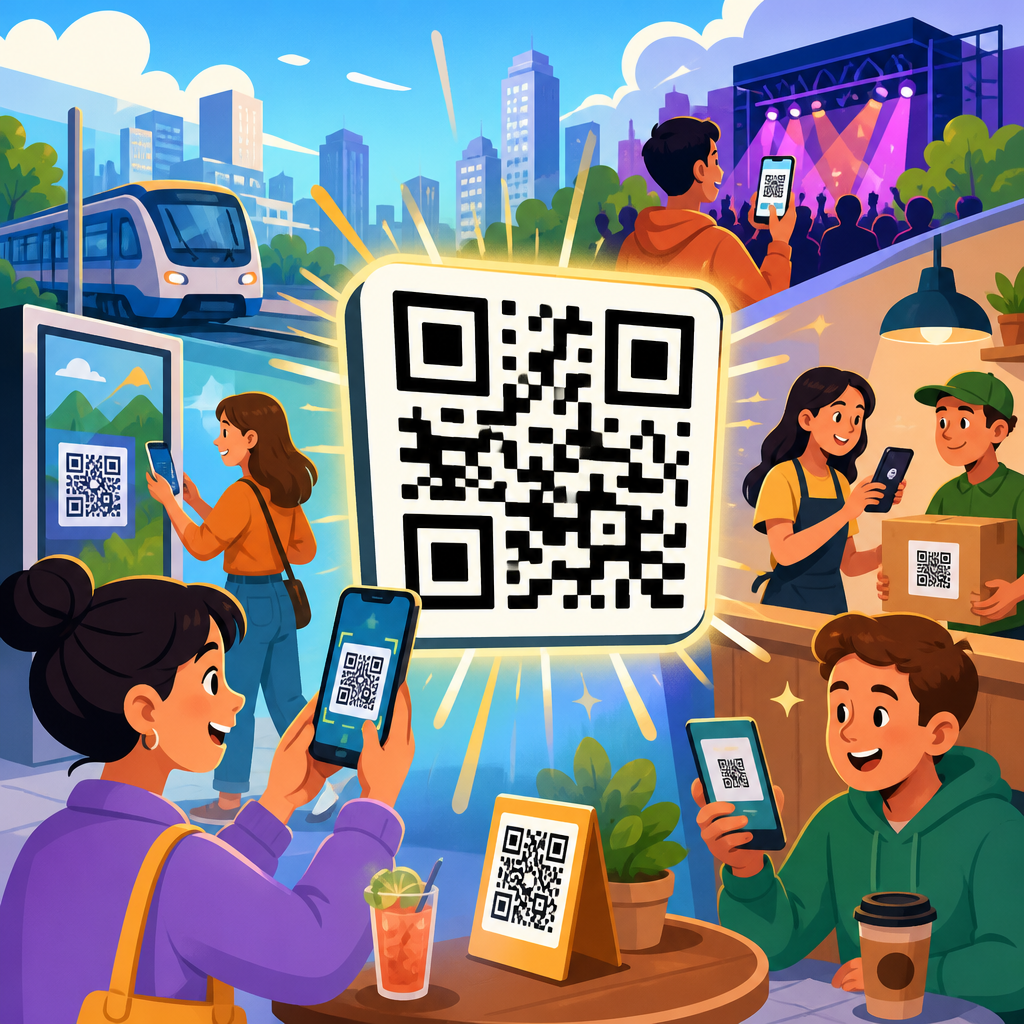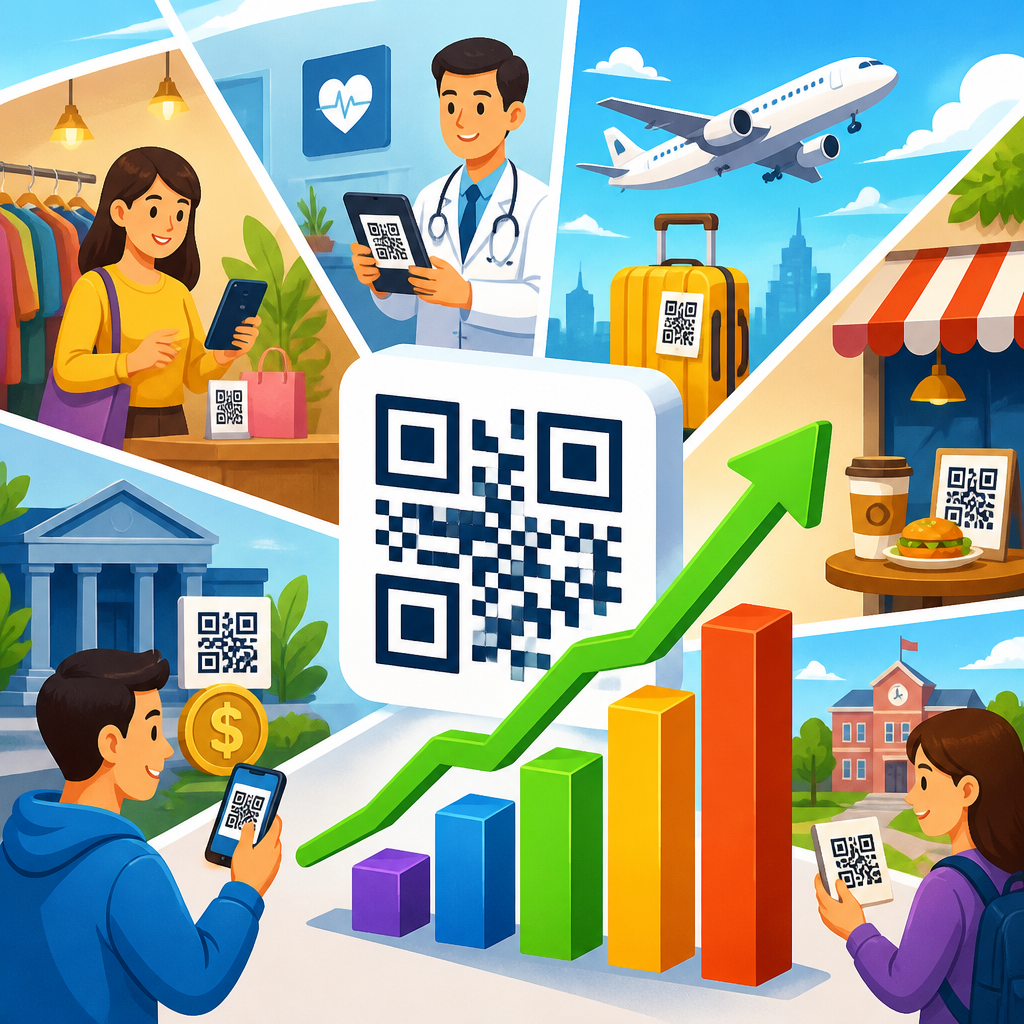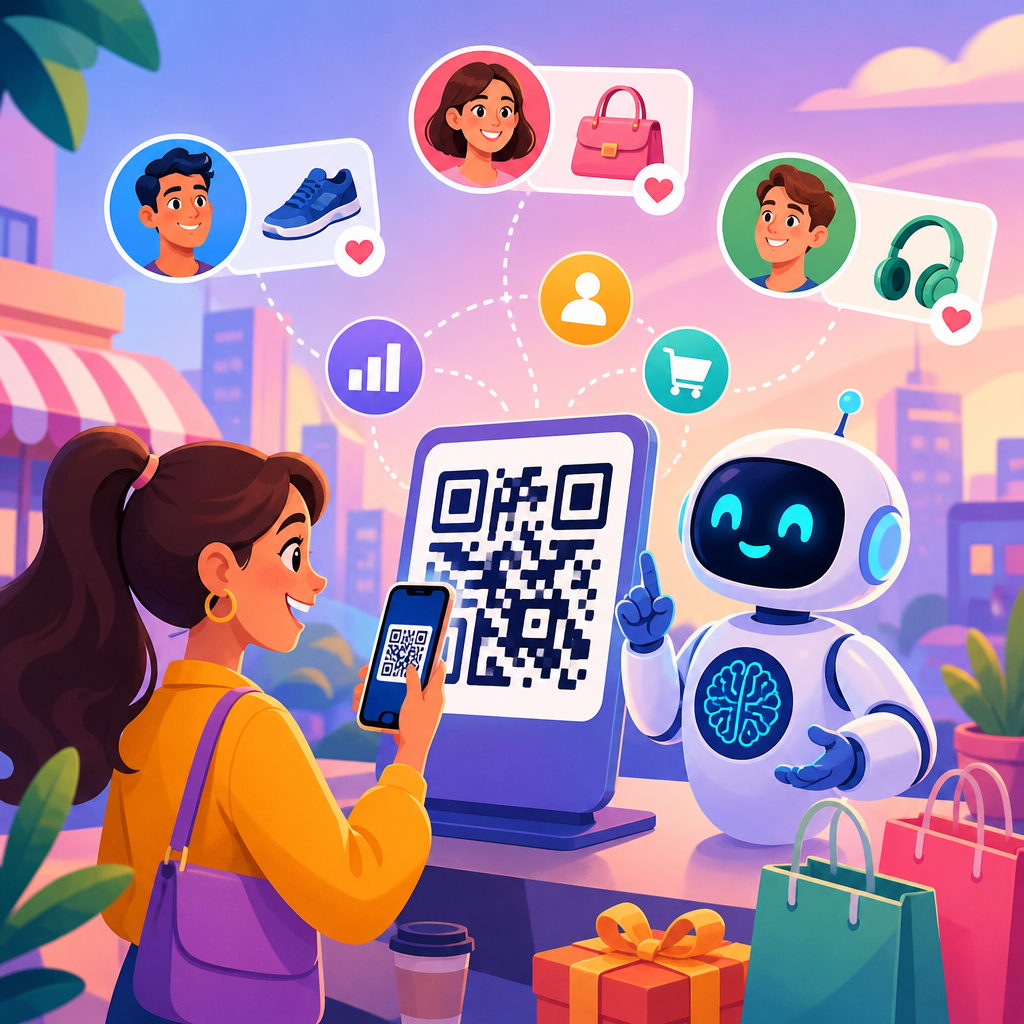
QR codes and artificial intelligence are converging into one of the most practical shifts in modern marketing: turning a static square image into a dynamic, personalized customer touchpoint. A QR code, or Quick Response code, is a machine-readable matrix barcode that stores a destination such as a URL, product record, coupon, payment request, or app action. Artificial intelligence, in this context, refers to systems that analyze data, predict intent, generate content, automate decisions, and optimize campaigns in real time. When these technologies work together, brands can connect offline and online behavior, personalize experiences after the scan, and learn from every interaction.
I have seen this change firsthand in campaign planning. A few years ago, many teams treated QR codes as simple bridges from packaging or posters to a landing page. Today, marketers use dynamic QR platforms, customer data tools, recommendation engines, and predictive models to tailor what each scanner sees based on location, device type, referral source, purchase history, and behavior during the visit. The code itself may look identical to every customer, but the experience after the scan can be individualized within milliseconds. That combination matters because consumers now expect relevance, speed, and convenience without friction.
The business case is strong. Smartphone camera adoption made scanning effortless, and the pandemic normalized touchless interactions in restaurants, retail, healthcare, and events. At the same time, acquisition costs rose across paid channels, making first-party data and conversion efficiency more valuable. QR codes help collect direct engagement signals in physical environments, while AI helps interpret those signals and act on them intelligently. For a retailer, that may mean showing different offers to a loyal customer than to a first-time visitor. For a manufacturer, it may mean using the same package code to deliver setup instructions, warranty registration, and replenishment prompts matched to the buyer’s likely needs.
Personalized marketing means adapting messages, offers, timing, and content to the characteristics of a specific audience segment or individual user. The future of personalized marketing depends on making that adaptation scalable across channels, not just in email or paid media. QR codes extend personalization into stores, direct mail, out-of-home advertising, product packaging, menus, receipts, and even television. AI supplies the decision layer that determines what should happen after the scan. Together, they create a measurable system that links attention in the physical world to responsive digital journeys. For brands building omnichannel strategies, that is not a novelty; it is becoming foundational infrastructure.
How QR codes and AI work together in personalized marketing
The key idea is simple: the QR code initiates the interaction, and AI shapes the response. Most advanced campaigns use dynamic QR codes rather than static ones. A static code points permanently to one destination, while a dynamic code routes through a management layer that can update the destination, append tracking parameters, log scan metadata, and trigger rules. Once a user scans, AI can evaluate available inputs such as geographic region, time of day, device language, weather, historical purchases, customer lifetime value, loyalty status, and browsing behavior. The system then selects the best next step, often through a recommendation engine or rules blended with machine learning.
In practice, this can be highly specific. A beverage brand can place one code on every bottle but send athletes to hydration tips, parents to family pack discounts, and repeat purchasers to subscription offers. A cosmetics company can use a package scan to identify a shopper as new or returning, then present either ingredient education or refill reminders. A B2B manufacturer can place QR codes on trade show signage and let AI score lead quality based on company domain, session depth, and requested assets before routing hot leads to sales. The code remains the entry point, but the post-scan path changes according to intent signals.
Natural language systems add another layer. Instead of landing on a fixed page, users can scan into a conversational interface trained on product documentation, FAQs, support articles, and policy content. That makes the scan useful beyond promotion. For example, a home appliance brand can place a code on the product itself; after scanning, buyers can ask setup questions, troubleshoot error codes, order replacement parts, or receive maintenance reminders. This reduces support friction and also creates opportunities for cross-sell recommendations grounded in actual usage patterns. The best implementations keep the exchange narrow, brand-safe, and anchored to verified content rather than relying on open-ended generation alone.
Measurement improves as well. Traditional print or packaging analytics often stop at impressions or rough distribution estimates. QR scans generate direct engagement events. AI can cluster these events into meaningful segments, predict conversion probability, detect anomalies such as bot or test traffic, and estimate which combinations of creative, placement, and audience lead to the best outcomes. Marketers should think of QR plus AI not as a gimmick but as a closed-loop system: attract attention, capture intent, personalize the response, and learn from the result.
Core use cases across retail, packaging, events, and service industries
Retail is the clearest example because it combines shelf presence, mobile behavior, and loyalty data. In stores, QR codes on shelf talkers or endcaps can unlock reviews, comparison guides, styling ideas, and instant coupons. AI can decide which asset to show based on inventory, shopper profile, and margin priorities. If a store needs to move seasonal stock, the scanned experience can emphasize available sizes and nearby pickup. If an item is trending on social media, the landing flow can surface user-generated content to increase confidence. I have seen retailers improve conversion simply by matching the post-scan content to whether the shopper is browsing, comparing, or ready to buy.
Product packaging is another high-value surface because it reaches customers after purchase, when attention is often strongest. Food brands use QR codes to deliver recipes, sourcing details, allergy information, and loyalty enrollment. AI can infer household preferences from prior interactions and feature vegetarian, quick-prep, or budget-focused recipes accordingly. Consumer electronics brands can connect scans to onboarding checklists, accessory bundles, and firmware updates. Pharmaceutical and healthcare organizations use codes for patient education, refill prompts, dosage instructions, and authentication checks, though those implementations require stronger compliance controls and clear medical disclaimers.
Events and experiential marketing benefit because QR codes reduce friction at every stage. A conference organizer can place codes on badges, booths, session doors, and printed agendas. AI can tailor recommendations for sessions, networking matches, and sponsor content based on prior scans and agenda choices. Museums can use one code system across exhibits, then personalize language level, reading depth, or accessibility support according to user preference. Restaurants already use menu QR codes; with AI, the same flow can suggest dishes from dietary signals, weather, group size, and time of day while also forecasting demand for the kitchen.
| Industry | Typical QR Placement | AI Personalization Layer | Primary Outcome |
|---|---|---|---|
| Retail | Shelf tags, signage, receipts | Offers by loyalty status, stock level, location | Higher conversion and basket size |
| CPG Packaging | Labels, cartons, inserts | Recipes, education, reorder prompts by behavior | Retention and first-party data capture |
| Events | Badges, booths, session boards | Agenda and sponsor recommendations | Lead quality and attendee engagement |
| Hospitality | Menus, room cards, lobby displays | Upsells by timing, preferences, party type | Revenue per guest |
| Healthcare | Packaging, discharge papers, posters | Education and reminders by patient context | Adherence and support efficiency |
Data, privacy, and trust: what makes personalization sustainable
Personalized marketing only works long term if customers understand the value exchange and trust the process. QR codes can collect useful metadata, including timestamp, approximate location, operating system, campaign source, and downstream actions. AI can combine that information with CRM records, purchase history, or loyalty identifiers. However, marketers should avoid assuming that more data is always better. The best systems use data minimization, clear consent language, and defined retention policies. If a scan opens a personalized experience, the landing page should explain why the user is seeing certain recommendations and offer a simple way to manage preferences.
Compliance requirements vary by region and industry, but the direction is consistent: first-party consent, legitimate processing purposes, and stronger governance. Teams running QR plus AI campaigns should work with privacy counsel on disclosures, cookie frameworks, and data transfer rules where applicable. In regulated sectors, they should also verify that generated content cannot cross into misleading claims or unsafe guidance. For authentication use cases, especially in luxury goods, pharmaceuticals, and tickets, secure QR implementation matters. Tokenized URLs, expiration rules, rate limiting, and backend verification help prevent cloning, fraud, or unauthorized redirects.
Trust also depends on usability. If a code leads to a generic page, a broken link, or a slow experience, customers learn not to scan. If the AI recommendations are obviously wrong, overly invasive, or impossible to dismiss, the brand loses credibility. Marketers should set conservative personalization boundaries early. Start with context that feels natural to the user, such as location-specific store info, language detection, recent purchase category, or known loyalty status. More sensitive inferences should require stronger consent and a clearer user benefit. Personalization should feel helpful, not surveillance-driven.
Technology stack, measurement, and optimization best practices
Executing QR plus AI well requires coordination across several systems. At minimum, brands need a dynamic QR code platform, analytics, a destination experience such as a mobile web page or app deep link, and some source of customer or campaign data. More mature programs add a customer data platform, product recommendation engine, experimentation tool, and marketing automation platform. Common vendors differ by budget and complexity, but the functional pattern is stable: issue the code, capture the event, resolve the context, decide the next best action, and measure the outcome.
Campaign design should begin with a narrow objective. Do not start by asking where to place QR codes everywhere. Start by asking which customer moment has enough intent and enough friction reduction potential to justify the scan. Then define the success metric. For packaging, it may be repeat purchase rate or registration completion. For in-store signage, it may be assisted conversion, coupon redemption, or dwell time on comparison content. For events, it may be qualified pipeline generated. Good measurement distinguishes scans from engaged sessions, and engaged sessions from conversions. A high scan rate with a low completion rate often signals mismatch between the promise on the physical creative and the digital experience that follows.
Optimization is where AI compounds returns. Multi-armed bandit models can shift traffic toward better-performing offers faster than traditional fixed A/B tests in volatile campaigns. Propensity scoring can suppress unnecessary discounts for users likely to convert anyway. Computer vision can analyze in-store placement images to correlate scan rates with visibility and compliance. Large language models can summarize open-text feedback after scan interactions, revealing reasons for hesitation or confusion. Still, human oversight remains essential. Marketers need guardrails for brand tone, pricing logic, fairness, and factual accuracy, especially when generative outputs appear customer-facing.
The most effective teams document operational standards. Use UTM conventions consistently. Keep landing pages lightweight for mobile networks. Test across iOS and Android camera behaviors. Create fallback content when customer identity cannot be resolved. Monitor redirect latency and uptime. Audit QR codes before printing at production scale, because a single destination error can waste media spend across an entire run. In my experience, small execution details determine whether a campaign feels seamless or brittle.
What the future looks like for QR codes and AI
The future of personalized marketing with QR codes will be less about the code itself and more about the intelligence behind the destination. Visual redesigns, branded codes, and better placement will continue, but the bigger shift is contextual orchestration. A scan will increasingly act like a signal to an adaptive system that understands product, customer, environment, and business goals at once. As identity resolution improves within privacy limits, a single packaging code could support discovery before purchase, activation on day one, support in month three, and replenishment in month six.
Several developments are especially important. First, multimodal AI will make scanned experiences richer by combining text, image, and voice. A customer could scan a furniture tag, upload a room photo, and receive placement suggestions or complementary product recommendations instantly. Second, on-device intelligence will support faster, more privacy-preserving personalization by processing some signals locally. Third, interoperability with wallets, loyalty apps, and connected packaging standards will make scans more action-oriented, enabling instant registration, reorder flows, and verifiable product histories. Fourth, synthetic content generation will let brands localize and update post-scan experiences at scale, though approval workflows will need to stay rigorous.
For marketers, the takeaway is straightforward. Treat QR codes as durable gateways into measurable, individualized journeys, not as isolated campaign accessories. Build around real customer moments, use AI to make the next step more relevant, and protect trust with disciplined data practices. Brands that do this well will gain better attribution, stronger first-party relationships, and more useful physical-to-digital touchpoints across the customer lifecycle. If you are building a roadmap for QR code trends and innovations, start auditing your highest-intent scan opportunities now and design one personalized experience worth repeating.
Frequently Asked Questions
1. How do QR codes and AI work together in personalized marketing?
QR codes and AI complement each other by combining a simple access point with intelligent decision-making behind the scenes. On their own, QR codes are highly effective because they reduce friction: a customer scans a code and is instantly taken to a digital destination such as a landing page, product page, form, payment screen, loyalty offer, or app experience. When AI is added to that flow, the destination no longer has to be the same for every person. Instead, AI can analyze context such as device type, time of day, scan location, past browsing behavior, purchase history, audience segment, and engagement patterns to determine what experience is most relevant for that individual user.
For example, two customers might scan the same QR code on identical product packaging, but AI can serve each of them a different experience. One customer might see a first-time buyer discount, while another sees a replenishment reminder or premium product recommendation. AI can also optimize the content itself, generating personalized messaging, product bundles, FAQs, follow-up offers, or chatbot responses in real time. This turns the QR code from a static gateway into a dynamic customer touchpoint that adapts based on intent and predicted needs.
In practical marketing terms, this convergence improves conversion rates, reduces wasted traffic, and creates more meaningful interactions. It allows brands to move beyond “scan here for more information” into “scan here for the next best experience for you.” That is the core value of using QR codes with AI: simple entry, smarter routing, and highly personalized engagement at scale.
2. What are the biggest benefits of using AI-powered QR code campaigns for businesses?
The biggest advantage is relevance. Traditional campaigns often send every customer to the same page, regardless of where they are in the buying journey. AI-powered QR code campaigns solve that by helping businesses tailor content, offers, and next steps to each scan. When a customer encounters a message that feels timely and useful, they are more likely to engage, convert, and return. This makes personalized QR experiences especially powerful in retail, hospitality, events, packaging, direct mail, healthcare, and omnichannel commerce.
Another major benefit is better data utilization. A QR code creates a measurable interaction point, and AI helps interpret what that interaction means. Instead of only tracking scan volume, marketers can evaluate patterns such as which locations produce the highest-value users, which offers perform best by audience segment, what time windows lead to stronger conversions, and what content paths lead to a sale or sign-up. AI can then use those insights to continuously improve campaign performance through automation, predictive modeling, and real-time optimization.
Efficiency is also a significant gain. AI can automate audience segmentation, content testing, recommendations, and even post-scan engagement. That means marketers can run more sophisticated campaigns without manually building dozens of separate landing pages or decision trees. A single dynamic QR code can support multiple scenarios, while AI handles the logic. The result is a more scalable, cost-effective marketing system that feels more personal to the customer and more accountable to the business.
Finally, AI-powered QR campaigns strengthen the connection between physical and digital channels. A printed code on packaging, signage, menus, catalogs, or storefront displays becomes a direct bridge into a personalized digital environment. That makes it easier for businesses to capture first-party data, improve attribution, and maintain continuity across channels in a privacy-conscious, customer-friendly way.
3. What are some real-world examples of personalized marketing with QR codes and AI?
One strong example is product packaging. A food, beverage, beauty, or consumer goods brand can place a QR code on the package and use AI to personalize the post-scan journey. A new customer might be shown educational content, ingredient details, or a welcome discount, while a repeat buyer could be offered complementary products, subscription options, or loyalty rewards. AI can also adjust recommendations based on purchase patterns, geography, language preferences, or seasonal demand, making the packaging itself an active part of the customer lifecycle.
Retail environments offer another excellent use case. A shopper scanning a QR code on a shelf tag, display, or fitting room sign can be directed to size availability, style suggestions, reviews, or personalized promotions. AI can interpret the shopper’s likely intent and present the most helpful next step. For example, someone browsing high-end products might receive premium comparisons and concierge support, while a value-focused shopper might see bundles or limited-time savings. This helps brands replicate some of the intelligence of e-commerce inside physical spaces.
Restaurants and hospitality businesses can also benefit. A hotel lobby, room card, table tent, or in-room placard can include QR codes that connect guests to services, upgrades, recommendations, or support. AI can personalize those experiences based on trip type, booking history, stay duration, dining preferences, or local behavior patterns. A guest arriving late might see room service options first, while a family on a weekend stay might be shown nearby attractions and kid-friendly amenities. The same principle applies to restaurants using QR codes for menus, promotions, and loyalty programs.
Events and B2B marketing provide further opportunities. A conference badge, booth display, brochure, or presentation slide can contain a QR code that routes different visitors to tailored content. AI can use job role, industry, company size, prior interactions, or behavioral signals to show the most relevant demo, case study, lead form, or follow-up sequence. This improves lead quality and makes outreach feel more informed rather than generic. Across industries, the common pattern is the same: the QR code starts the interaction, and AI personalizes the experience based on context and likely intent.
4. Are there privacy or security concerns when using QR codes and AI for marketing?
Yes, and responsible marketers should address them directly. Because AI-powered QR campaigns often rely on behavioral data, contextual signals, or customer profiles, privacy must be built into the strategy from the beginning. Businesses need to be transparent about what data is being collected, why it is being used, and how it improves the customer experience. If personal data is involved, consent mechanisms, clear disclosures, and compliance with regulations such as GDPR, CCPA, and other applicable standards are essential. Personalization should feel helpful, not intrusive.
Security is equally important. QR codes themselves are convenient, but users cannot always see where a code will lead before scanning. That creates potential risk if malicious actors replace legitimate codes or redirect users to harmful destinations. Brands should protect their campaigns by using secure QR code management platforms, monitoring links, applying domain verification, and ensuring that post-scan destinations use HTTPS and trusted infrastructure. In physical environments, businesses should also routinely inspect printed materials and signage for tampering.
There is also an ethical dimension to AI use. Marketers should avoid overpersonalization that creates discomfort or gives the impression of excessive surveillance. Just because a system can infer intent does not mean every prediction should be surfaced in a customer-facing message. Best practice is to use AI to reduce friction and increase usefulness while keeping the experience respectful and proportionate. Data minimization, explainable decision logic, secure storage, and human oversight all help maintain trust.
When implemented thoughtfully, QR codes and AI can absolutely be used in a privacy-conscious and secure way. In fact, they can support stronger first-party data strategies by encouraging customers to interact directly with branded channels. The key is to prioritize transparency, consent, security controls, and customer value at every stage of the campaign.
5. How can a brand get started with QR codes and AI without overcomplicating the process?
The best approach is to start with a focused use case rather than trying to transform every touchpoint at once. Identify one high-intent moment where a QR code already makes sense, such as product packaging, in-store displays, direct mail, receipts, menus, event materials, or post-purchase inserts. Then define a clear goal for that interaction: increasing sign-ups, driving repeat purchases, improving customer education, capturing leads, or boosting conversions. Starting with one measurable objective makes it much easier to design an effective AI-enhanced experience.
Next, use dynamic QR codes rather than static ones. Dynamic codes allow the destination and campaign logic to be updated without changing the printed asset, which is critical for testing and optimization. Once the QR infrastructure is in place, AI can be layered in gradually. A brand might begin with simple audience segmentation and personalized landing pages, then expand into recommendation engines, predictive offers, AI-generated content variations, chatbot assistance, or automated follow-up journeys. This staged approach keeps implementation practical while still delivering meaningful personalization.
Measurement should be part of the setup from day one. Track not only scans, but also post-scan behavior: bounce rate, time on page, conversions, repeat visits, assisted revenue, and downstream actions. AI becomes most useful when it has enough data to identify which experiences actually drive results. Over time, brands can test different messages, incentives, layouts, and routing rules to improve performance. Even relatively small campaigns can produce strong insights when the scan journey is properly instrumented.
Most importantly, keep the customer experience simple. The scan should lead to something immediately useful, fast-loading, and relevant. If the first interaction is confusing or generic, the value of both the QR code and the AI layer is diminished. Brands that succeed in this space usually begin with convenience, then add intelligence. In other words