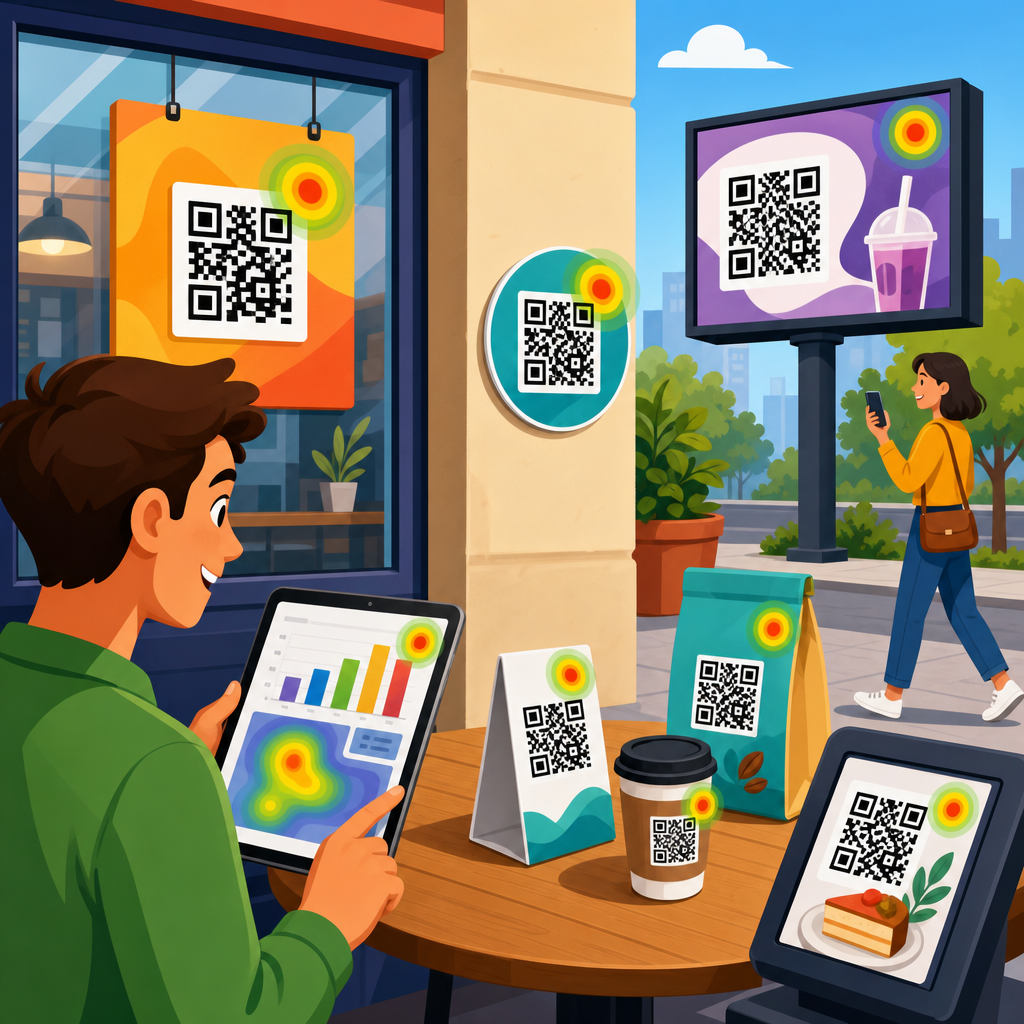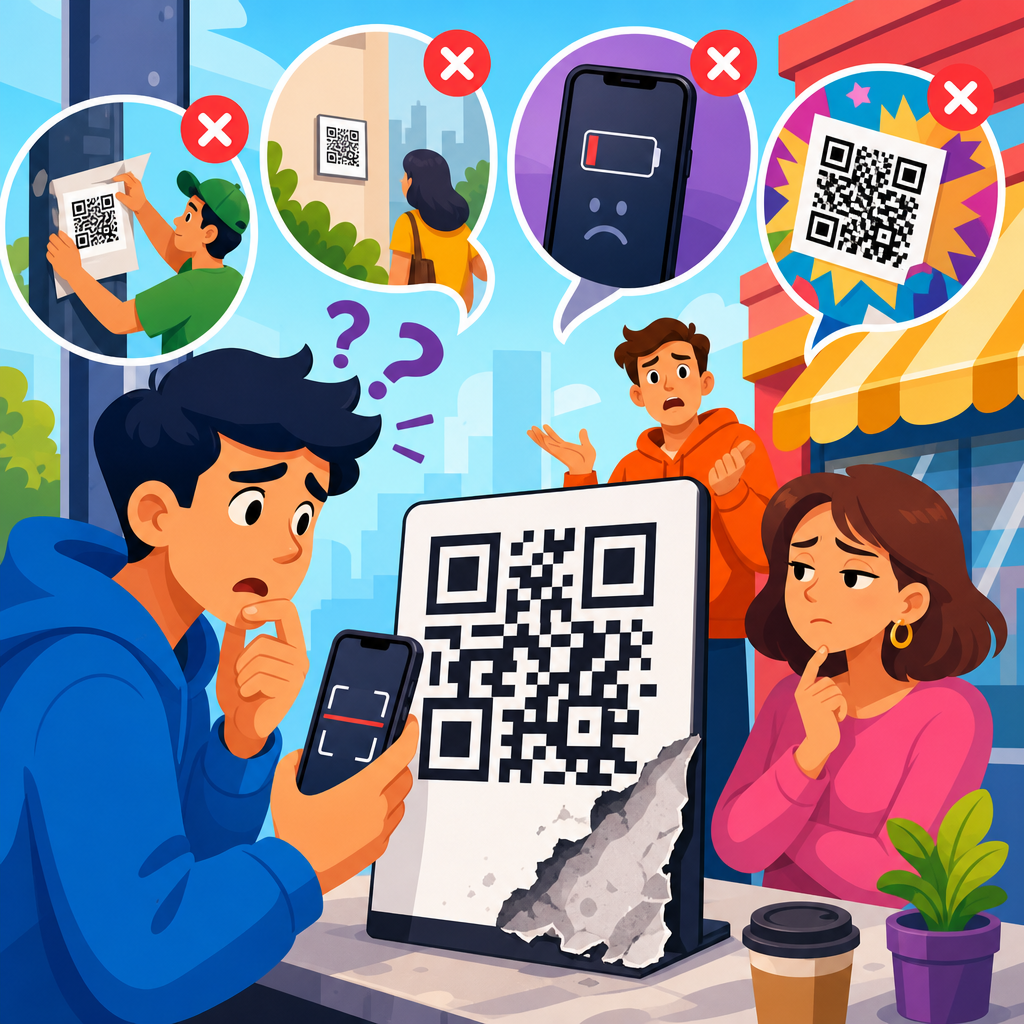
QR code marketing looks simple on the surface: place a scannable square on a package, poster, menu, mailer, or screen, and send people to a digital experience. In practice, effective QR code marketing strategies require far more than generating a code and hoping for scans. A QR code is only the access point. The real work is deciding what action you want, where the code appears, what happens after the scan, how you measure performance, and which common mistakes quietly kill response rates.
A QR code, short for Quick Response code, is a two-dimensional barcode that stores data such as a URL, contact card, coupon, app link, payment request, or authentication token. Smartphone cameras and built-in scanning tools made QR adoption mainstream, and that changed the economics of offline-to-online marketing. I have seen campaigns jump from negligible engagement to measurable lead flow simply by fixing scan placement, landing-page speed, and the call to action next to the code. I have also seen beautifully designed campaigns fail because the QR code pointed to a desktop page, expired promotion, or generic homepage with no next step.
This matters because QR codes now sit at the intersection of packaging, retail, events, direct mail, out-of-home advertising, restaurants, field sales, and customer retention. They can connect a physical impression to a first-party data capture moment faster than almost any other channel. Unlike vanity URLs that people must type, QR codes remove friction. Unlike NFC, they require no special hardware beyond a phone camera. But low friction does not guarantee results. The mistakes are usually strategic, not technical, and they are predictable enough to avoid with the right framework.
This hub article explains the biggest QR code marketing mistakes to avoid while also laying out the core QR code marketing strategies businesses should use. It covers campaign planning, creative execution, landing-page design, analytics, governance, channel-specific use cases, and measurement standards. Treat it as a foundation page for your broader QR Code Marketing & Strategy program, because every specialized tactic, from product packaging to event lead capture, depends on getting these fundamentals right first.
Starting with the wrong objective
The most common mistake in QR code marketing is launching without a single, explicit objective. Teams say they want “engagement,” but engagement is not a business outcome. A QR campaign should be built around one primary action: claim an offer, watch a product demo, register for an event, download an app, join SMS, leave a review, access support, or complete a purchase. When the objective is vague, the destination becomes vague, and scan rates may look acceptable while conversion rates collapse.
Strong QR code marketing strategies match the code to funnel stage. A retail shelf talker may aim to educate and compare products. A direct mail postcard may drive appointment bookings. Packaging inserts often work best for onboarding, reviews, warranty registration, or replenishment reminders. In B2B trade shows, the code should capture lead details or route prospects to a tightly relevant case study, not a broad corporate homepage. If you cannot finish the sentence “After scanning, the user should ___,” the campaign is not ready.
I recommend defining success with one primary KPI and two supporting metrics. For example, a restaurant table tent might optimize for menu item upsells, while tracking scans and average order value. A real estate sign rider might optimize for scheduled tours, while tracking scans and property-page dwell time. This keeps teams from mistaking curiosity for performance.
Poor placement, sizing, and scanning conditions
A QR code can be technically correct and still fail in the real world. Placement errors are everywhere: codes printed too small on store windows, positioned too high on posters, wrapped around curved bottles, buried in cluttered packaging, or displayed on screens with glare. Scanning is a physical behavior. The user needs enough time, distance, contrast, and motivation to complete it comfortably.
As a rule, printed QR codes need sufficient size for expected viewing distance. A practical field guideline many print teams use is roughly one inch of code size for every ten inches of scanning distance, then validate through testing. High contrast matters more than decorative styling. Black on white remains reliable. Inverse or low-contrast color combinations often break under poor lighting. Quiet zone spacing around the code is not optional; trimming it to fit a layout is a classic design mistake.
Environment matters too. A code on a subway ad must scan quickly from a standing position with intermittent motion. A code on product packaging may be scanned under store lighting and through glossy film. A code on a conference badge should remain readable while worn at an angle. Before approving any campaign, test scans across iPhone and Android devices, multiple camera apps, and realistic conditions, not just a bright office desk.
| Placement Scenario | Common Mistake | Better Strategy | Why It Performs Better |
|---|---|---|---|
| Storefront window | Code placed at eye level with glare from glass | Move lower, increase contrast, add matte decal | Reduces reflections and improves scan speed from sidewalk traffic |
| Product packaging | Code printed on a curved edge | Place on flat panel near product instructions | Prevents distortion and aligns with user intent after purchase |
| Trade show booth | One generic code for every visitor | Separate codes for demo, pricing, and case studies | Improves message match and lead qualification |
| Direct mail | No CTA next to the code | Use a benefit-led instruction such as “Scan to book your estimate” | Clarifies the reward and lifts response rate |
Sending scanners to the wrong destination
The second major mistake is linking the QR code to a generic or badly matched destination. The destination should continue the exact promise made in the physical context. If a flyer says “Scan for 20% off your first order,” the landing page must open directly to that offer, pre-applied if possible, and optimized for mobile checkout. Sending users to a homepage forces them to hunt, and every extra tap cuts conversion.
Mobile-first design is mandatory. Pages should load fast on cellular connections, avoid intrusive pop-ups, and present one obvious next step above the fold. Google’s Core Web Vitals are useful here because slow Largest Contentful Paint and layout shifts directly hurt mobile landing-page completion. QR scans are intent-rich but fragile; users abandon quickly when pages stutter or ask for too much information.
Deep linking is often underused. If your app is installed, a QR code can open a product page, reward wallet, or support flow inside the app. If not, a fallback web page can handle the same action. Platforms such as Branch, AppsFlyer, and Firebase Dynamic Links have been widely used for this type of routing, though implementation details vary. For ecommerce, UTM parameters, discount code persistence, and cart prefill can materially improve revenue attribution and conversion.
Missing context, trust, and a clear call to action
People do not scan QR codes because they exist. They scan because they understand what they will get and trust the source. One of the most damaging QR code marketing mistakes is presenting a code with no instruction, no value proposition, and no brand signal. A naked code says nothing. A high-performing code is paired with copy that answers three questions immediately: What is this, why should I scan, and what happens next?
Effective calls to action are specific and benefit-led. “Scan to see today’s lunch specials” outperforms “Scan here.” “Scan for assembly video and setup guide” is better than “Learn more.” In healthcare, education, and finance, trust cues matter even more. Adding the brand name, a short destination preview, and privacy language where appropriate can reduce hesitation. In regulated contexts, compliance review should cover both the printed prompt and the landing experience.
I have seen local service businesses improve direct mail performance simply by replacing a generic QR block with a stronger CTA, a customer testimonial, and a short line explaining the landing page: “Scan to get a fixed-price quote in under 60 seconds.” That combination reduces ambiguity. It also filters for higher-intent users who are ready to act, not just browse.
Using static codes when campaigns need flexibility
Another avoidable mistake is choosing static QR codes for campaigns that may change. Static codes permanently encode the destination. If the URL changes, the printed asset becomes obsolete. Dynamic QR codes route through a managed short link so the destination can be updated without reprinting materials. For ongoing marketing programs, dynamic codes are usually the correct choice because they support analytics, A/B testing, regional routing, and lifecycle updates.
That does not mean static codes are wrong in every case. For permanent uses such as Wi-Fi access in a small office, vCard sharing, or fixed documentation pages with stable URLs, static codes can be perfectly acceptable. But for promotional campaigns, event materials, seasonal packaging, franchise networks, and field marketing, dynamic codes reduce waste and let teams respond quickly. If inventory remains in circulation for months, flexibility is essential.
Governance matters here. Use naming conventions, ownership records, expiration rules, and destination audits. I have inherited QR libraries where no one knew which code appeared on which collateral, which made updates risky and reporting unreliable. A simple registry with campaign name, channel, destination, owner, launch date, and archival status prevents expensive confusion later.
Weak measurement and no testing discipline
Many organizations track scans and stop there. That is a measurement mistake. Scans are top-of-funnel interactions, not proof of business impact. To evaluate QR code marketing strategies properly, connect the scan to downstream events such as form submissions, purchases, app registrations, coupon redemptions, repeat visits, or support deflection. Google Analytics 4, Adobe Analytics, CRM event tracking, POS redemption data, and marketing automation platforms can all contribute to a more complete view.
Use campaign parameters consistently. Separate codes by channel, placement, audience, and creative variant so you can compare performance cleanly. A single QR code reused across posters, packaging, receipts, and social screenshots destroys attribution. Distinct links allow you to answer practical questions: Did the in-store shelf sign outperform the aisle endcap? Did the event handout drive more qualified leads than the booth backdrop? Did the Spanish-language version convert better in specific regions?
Testing should cover more than the landing page. Test CTA copy, incentive type, code placement, size, color contrast, and destination format. For example, a home services brand might compare “Scan for a free estimate” against “Scan to see instant pricing.” A CPG brand might test recipe content versus loyalty signup on packaging. The point is not to optimize for curiosity scans; it is to increase completion of the intended action.
Ignoring channel-specific strategy
QR code marketing is not one tactic. It is a collection of channel-specific plays, and mistakes happen when teams use the same template everywhere. On product packaging, the code should align with the post-purchase journey: onboarding, recipes, replenishment, community, warranty, or review capture. In restaurants, QR codes can support menus, table ordering, loyalty enrollment, allergen information, and feedback, but the experience must remain fast and low-friction. In retail signage, codes work best when they help shoppers overcome an in-aisle barrier such as uncertainty about fit, ingredients, installation, or availability.
Events require a different approach. Booth traffic is noisy and time-limited, so visitors need quick paths to demos, brochures, session signups, or lead capture. Real estate uses codes well on signs, flyers, and open house materials when the destination opens to a specific listing with photos, price, and tour scheduling. Direct mail often performs best when the code continues a personalized offer or appointment flow. B2B field sales teams can use QR-enabled leave-behinds to deliver tailored case studies and track account engagement after meetings.
The hub-level strategy is simple: match code, message, and destination to the moment. Every strong use case starts with user intent in that exact environment, then removes the fewest possible steps between scan and outcome.
Conclusion: building QR campaigns that actually convert
The biggest QR code marketing mistakes to avoid are clear: vague objectives, poor physical execution, weak calls to action, mismatched destinations, inflexible code choices, shallow measurement, and one-size-fits-all deployment across channels. When teams correct those issues, QR codes become far more than a convenience feature. They become a measurable bridge between physical media and digital conversion.
The best QR code marketing strategies are disciplined. They start with one defined action, place the code where scanning is easy, give users a compelling reason to scan, open a fast mobile experience, and track outcomes beyond the scan itself. They also respect context. A package insert, a trade show banner, a retail display, and a postcard should not behave the same way because the user’s needs are different in each setting.
If you are building out a broader QR Code Marketing & Strategy program, use this page as your foundation. Audit every active code, document ownership, test the real-world scan experience, and map each code to a measurable business goal. Then expand into specialized tactics by channel with the fundamentals already in place. That is how QR marketing stops being a novelty and starts producing reliable, attributable growth.
Frequently Asked Questions
What is the biggest QR code marketing mistake businesses make?
The most common mistake is treating the QR code itself as the strategy instead of seeing it as just the entry point to a larger customer journey. Many brands assume that if they place a code on packaging, signage, direct mail, or a menu, people will naturally scan it. In reality, users need a clear reason to act. If the code does not answer an obvious question such as “What do I get if I scan this?” response rates usually stay low.
Another major issue is sending users to a weak destination. A QR code can work perfectly from a technical standpoint and still fail as a marketing tool if it leads to a generic homepage, a confusing landing page, or content that is not relevant to the context where the code appears. For example, someone scanning a code on a product package may expect setup instructions, product registration, reviews, or a special offer. If they land on a broad website navigation page, the experience feels disconnected and unnecessary.
Strong QR code marketing starts with a defined objective. The campaign should be built around one primary action, such as claiming a discount, viewing a product demo, joining a loyalty program, leaving a review, downloading an app, or making a purchase. Once that action is clear, everything else becomes easier to align, including placement, design, call to action, landing page content, and performance tracking. The biggest mistake is not lack of technology. It is lack of strategic intent.
Why do some QR codes get very few scans even when they are highly visible?
Visibility alone does not guarantee engagement. A QR code can be large, centered, and placed in a high-traffic location but still receive minimal scans if people do not understand the value of interacting with it. Users make fast decisions. If the code appears without context or without a compelling call to action, many will ignore it because they do not want to risk wasting time on an unknown outcome.
Poor placement also plays a big role. A code may be visible but not practically scannable. If it is on a moving vehicle, too high on a wall, behind reflective glass, in a dark environment, or shown only briefly on a screen, people may notice it but be unable to scan it easily. Similarly, if someone would need to stand too close, too far away, or in an awkward position, friction increases and response drops. Effective placement means designing for real-world scanning behavior, not just aesthetics.
Low scan rates can also stem from trust and relevance problems. If a code appears in a place where users do not expect a digital interaction, they may hesitate. If the surrounding message is vague, they may worry about spam, security, or low-value content. The solution is to give people confidence and motivation: explain exactly what happens after the scan, make the code easy to access, and connect the offer to the moment. “Scan to see today’s menu,” “Scan for 15% off your first order,” or “Scan for installation instructions” performs far better than an unexplained code standing alone.
What should marketers avoid on the landing page after someone scans a QR code?
The biggest post-scan mistake is creating a disconnect between expectation and experience. When a person scans a QR code, they expect immediate relevance. If the destination is slow, cluttered, poorly designed for mobile, or unrelated to the message that prompted the scan, the campaign loses momentum instantly. The landing page should feel like a direct continuation of the promise made next to the code.
Marketers should avoid sending scanners to a homepage unless that homepage has been intentionally tailored for the campaign. Most homepages contain too many options, too much navigation, and too little focus. QR traffic generally performs best when directed to a dedicated mobile-friendly landing page built around a single conversion goal. That page should load quickly, explain the offer clearly, minimize distractions, and make the next step obvious. If a user has to search, pinch-zoom, hunt through menus, or complete too many fields, abandonment rises quickly.
It is also important to avoid overcomplicating the conversion process. If the goal is to collect leads, ask only for the information you truly need. If the goal is to drive purchases, reduce the number of taps required. If the goal is to provide information, present it immediately instead of placing it behind unnecessary gates. QR code users are often acting in the moment, in a store aisle, at a restaurant table, at an event, or while holding a product. That context demands speed and simplicity. A polished code cannot rescue a poor landing experience, so post-scan optimization is one of the most important parts of QR code marketing success.
How important is tracking and analytics in QR code marketing campaigns?
Tracking is essential because without it, marketers are left guessing which placements, messages, and offers are actually working. One of the quietest but most damaging QR code marketing mistakes is launching codes into the world without a measurement plan. If all scans point to the same generic URL with no campaign tagging, no location differentiation, and no downstream conversion tracking, it becomes nearly impossible to understand performance beyond a rough sense of activity.
Effective analytics should go beyond scan counts. A scan is only the first interaction. Marketers should also track what happens after the scan: page views, time on page, form completions, purchases, coupon redemptions, app downloads, video plays, review submissions, or any other action tied to campaign goals. This helps distinguish curiosity from actual business results. A placement with fewer scans but more conversions may be more valuable than one generating higher volume and low intent traffic.
It is also wise to segment performance by channel, location, device, audience, or creative version. A code on packaging may behave differently from a code on a poster, in-store display, direct mail piece, or event booth. Using dynamic QR codes, unique URLs, UTM parameters, and analytics integrations allows you to compare results accurately and improve future campaigns. In short, measurement turns QR code marketing from a guessing game into an optimization process. Without tracking, brands repeat mistakes they cannot clearly see.
Should businesses use static or dynamic QR codes, and what mistakes happen when they choose the wrong type?
Choosing between static and dynamic QR codes matters more than many businesses realize. A static QR code sends users to a fixed destination that cannot be changed after printing or publishing. That can be fine for permanent information, but it becomes a serious limitation in marketing campaigns where offers, landing pages, tracking needs, and calls to action often evolve. One common mistake is using static codes for campaigns that may need updates later. If the URL changes, the offer expires, or the page needs to be redirected, the business may have to reprint everything.
Dynamic QR codes offer much more flexibility because they allow the destination URL to be edited after the code is already in circulation. They also typically support better analytics, including scan volume, time, location, and device-level insights depending on the platform. For marketers, this means a direct mail piece, poster, package insert, or table tent can continue working even if the underlying campaign changes. This flexibility is especially useful for testing offers, updating seasonal content, correcting landing page issues, or redirecting traffic to new promotions without replacing printed materials.
The mistake is not that static codes are always wrong. It is using them without considering future needs. If a campaign is time-sensitive, likely to change, or important enough to measure in detail, dynamic codes are usually the better choice. Businesses should also avoid relying on low-quality QR tools that provide limited control, weak analytics, or unstable redirects. The right code type should support the marketing strategy, not restrict it. A practical, measurable, editable setup gives businesses more room to improve performance and avoid expensive do-overs.