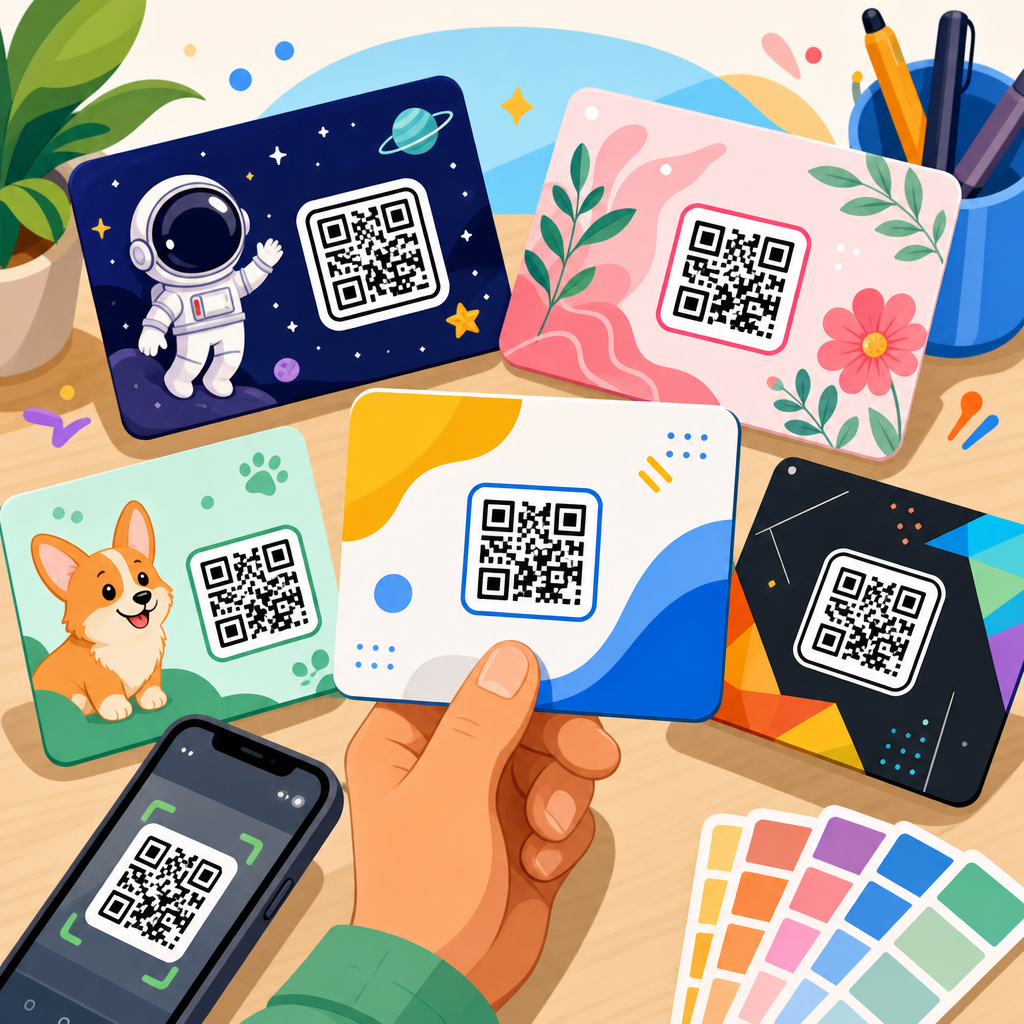
QR codes have moved from niche industrial labels to everyday tools for payments, menus, event check-ins, product authentication, support portals, and classroom handouts. A beginner who searches for a QR code learning hub usually does not need a sales pitch; they need a reliable place to understand the vocabulary, the core mechanics, the practical uses, and the common mistakes before they choose a generator, print a label, or launch a campaign. This guide serves that purpose by acting as a reference center for glossary terms and foundational concepts within the broader world of QR code resources, templates, and tools.
A QR code, short for Quick Response code, is a two-dimensional matrix barcode that stores data in a grid of black and white modules. Unlike a traditional one-dimensional barcode that holds a small amount of information in horizontal lines, a QR code can encode URLs, plain text, contact cards, Wi-Fi credentials, app links, payment data, and more. Modern smartphone cameras can read these codes instantly, which is why they have become such a durable bridge between physical and digital experiences. If you have ever scanned a restaurant menu, joined a guest network without typing a password, or opened a mobile payment screen, you have already used this system.
As someone who has created QR code systems for retail signage, packaging inserts, event badges, and support documentation, I have seen one recurring issue: beginners often skip the reference basics and jump straight into generation. That leads to blurry prints, dead links, incompatible formats, weak tracking, or codes that look attractive but scan poorly under real conditions. A strong glossary and reference guide prevents those avoidable failures. It helps you understand what “dynamic” means before you pay for a platform, what “error correction” changes in design flexibility, and why file format choice matters when a code moves from a social post to a storefront window.
This hub article explains the language and decision points that appear across QR code reference content. It is designed to answer beginner questions directly while also giving enough technical precision to support better choices later. You will learn the essential terminology, the main QR code types, the production standards that affect readability, the tools commonly used to create and test codes, and the safety and measurement checks that matter before publishing. Treat this page as a starting map. When you understand the terms here, every template, tutorial, and tool comparison in the QR code resources section becomes easier to evaluate and apply with confidence.
Core QR Code Terms Every Beginner Should Know
The fastest way to get comfortable with QR codes is to learn the handful of terms that appear in almost every guide. The first is static QR code. A static code contains fixed data that cannot be changed after creation. If it points to a web address and that page moves, the code itself becomes outdated. A dynamic QR code, by contrast, uses a short redirect URL controlled through a platform. You can change the destination later without reprinting the code. In practice, static works well for permanent information such as a published homepage, while dynamic is usually better for marketing campaigns, packaging, menus, and time-sensitive promotions.
Another key term is error correction. QR codes include built-in redundancy so they can still scan even if part of the symbol is smudged, wrinkled, or obscured. The standard levels are L, M, Q, and H, with H allowing the greatest damage recovery but requiring more modules and often producing a denser symbol. I typically raise error correction when a client wants to place a logo in the center or expects rough handling on boxes or outdoor signs. Beginners should know that more error correction is helpful, but it also increases complexity, so it is not a free upgrade in every design.
You should also recognize the quiet zone, finder patterns, alignment patterns, modules, and version. The quiet zone is the blank margin around the code; without it, scanners struggle to isolate the symbol from nearby graphics. Finder patterns are the three large square markers usually visible in the corners, and they help devices detect orientation quickly. Alignment patterns improve decoding accuracy, especially in larger versions. Modules are the tiny squares that make up the grid itself. Version refers to the QR code size specification, from Version 1 at 21 by 21 modules up to Version 40 at 177 by 177 modules. More data usually means a higher version.
Finally, understand payload, scan rate, destination URL, and redirect. Payload means the actual information encoded in the symbol. Scan rate measures how often people successfully scan a code in a real campaign or environment. The destination URL is the landing page or resource opened after scanning. A redirect is the intermediate address used by many dynamic platforms to route users and collect analytics such as scans by date, device type, or location. These terms may sound simple, but they drive important decisions about usability, reporting, and maintenance. Once you know them, most beginner documentation becomes much easier to read accurately.
Main QR Code Types and What They Are Used For
Not every QR code serves the same purpose. URL QR codes are the most common because they send users to websites, menus, forms, videos, landing pages, or app stores. For most businesses, this is the default use case. However, reference guides should also cover text QR codes, vCard QR codes, email QR codes, SMS QR codes, phone QR codes, file download QR codes, and social media landing page codes. Each one changes the scan experience. A phone QR code opens the dialer with a prefilled number, while a vCard code can create a new contact record directly on the device.
Wi-Fi QR codes are especially useful for beginners because they solve a familiar pain point: manually entering network names and passwords. A properly formatted Wi-Fi code includes the SSID, encryption type, and password so users can join quickly on supported devices. Payment QR codes are another major category, but they vary by country and provider. In some markets, payment schemes are tied to banking standards or wallet ecosystems, so what works in one region may not be universal. That is why local compatibility should always be verified before printing payment codes on receipts, counters, or product packaging.
There are also format-specific differences between general-purpose consumer QR codes and specialized industrial or logistics symbols. A manufacturer might use QR codes for traceability, linking batch numbers to internal records, while a museum might use them for exhibit audio guides. In education, teachers often use codes for assignment portals, classroom slides, attendance forms, or differentiated learning stations. In support operations, codes on hardware labels can send users directly to a product manual, warranty page, or troubleshooting flow. The symbol looks similar in each case, but the payload, platform, and success metric are different.
| QR code type | What it does | Best beginner use case |
|---|---|---|
| URL | Opens a webpage or landing page | Menus, forms, product pages, campaigns |
| vCard | Saves contact information | Business cards, event networking |
| Wi-Fi | Connects to a wireless network | Offices, classrooms, guest areas |
| PDF or file | Downloads or displays a document | Manuals, spec sheets, handouts |
| Payment | Launches a payment workflow | Counters, invoices, market stalls |
| SMS or email | Prefills a message action | Support requests, quick contact |
For beginners building a reference library, the most useful habit is to match the QR code type to the desired user action, not just to the available tool. If the goal is lead capture, sending traffic to a mobile-optimized form is stronger than embedding too much plain text in the code. If the goal is simple device connection, a Wi-Fi payload is better than a printed password. If the goal is future flexibility, dynamic URL routing often beats direct file linking. Understanding these differences lets you choose with intent rather than copying whichever format another brand happened to use.
How QR Codes Work, Scan, and Store Data
QR codes work by encoding data into a matrix of modules that can be interpreted by image sensors and decoding software. When a smartphone camera sees the three finder patterns, it identifies the symbol, determines orientation, samples the grid, and reconstructs the encoded payload. Reed-Solomon error correction helps recover information if part of the symbol is damaged. This is why a QR code can still scan with a torn corner or a small logo overlay, assuming the damaged area stays within the selected error correction tolerance. The process feels instant to users, but the underlying logic is highly structured.
Capacity depends on content type, character set, and error correction level. Numeric data is the most efficient, while binary and mixed content can require more space. A short URL usually produces a cleaner, less dense code than a long one full of tracking parameters. This matters in design because dense codes need larger print sizes and better contrast to scan reliably. I regularly shorten or reroute campaign links before generating final artwork because readability in real environments matters more than preserving a messy raw URL. Cleaner payloads almost always lead to more forgiving output.
Scanning success also depends on environmental factors. Low contrast, glare, curved surfaces, distance, motion, poor lighting, and low-resolution printing all reduce performance. A code that scans easily on a laptop screen may fail when reduced on a bottle neck label or printed on reflective packaging film. Device differences matter too. Newer phones have stronger autofocus and better native scanning support than older budget models. That is why field testing with multiple devices remains a nonnegotiable step. The code is not truly ready when the generator says it is valid; it is ready when real users can scan it fast.
Design, Print, and Testing Rules That Prevent Failures
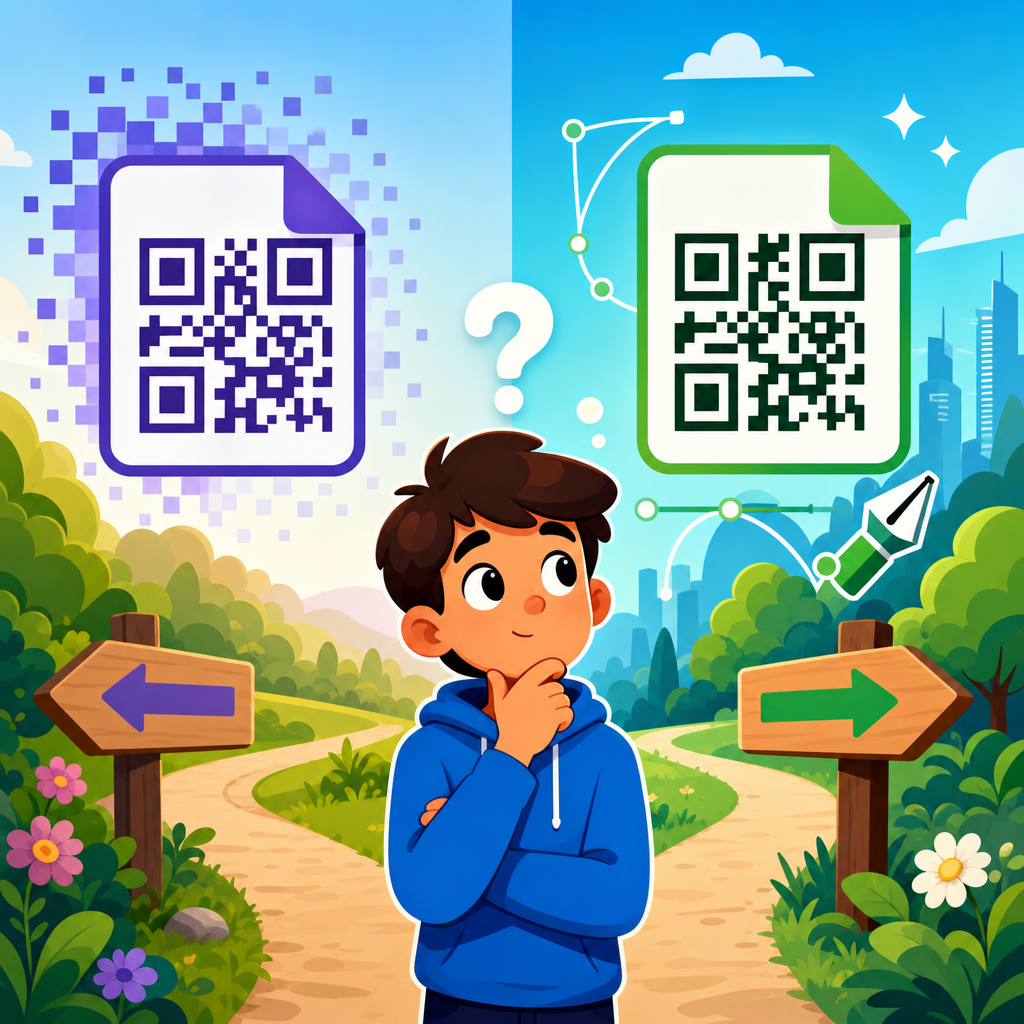
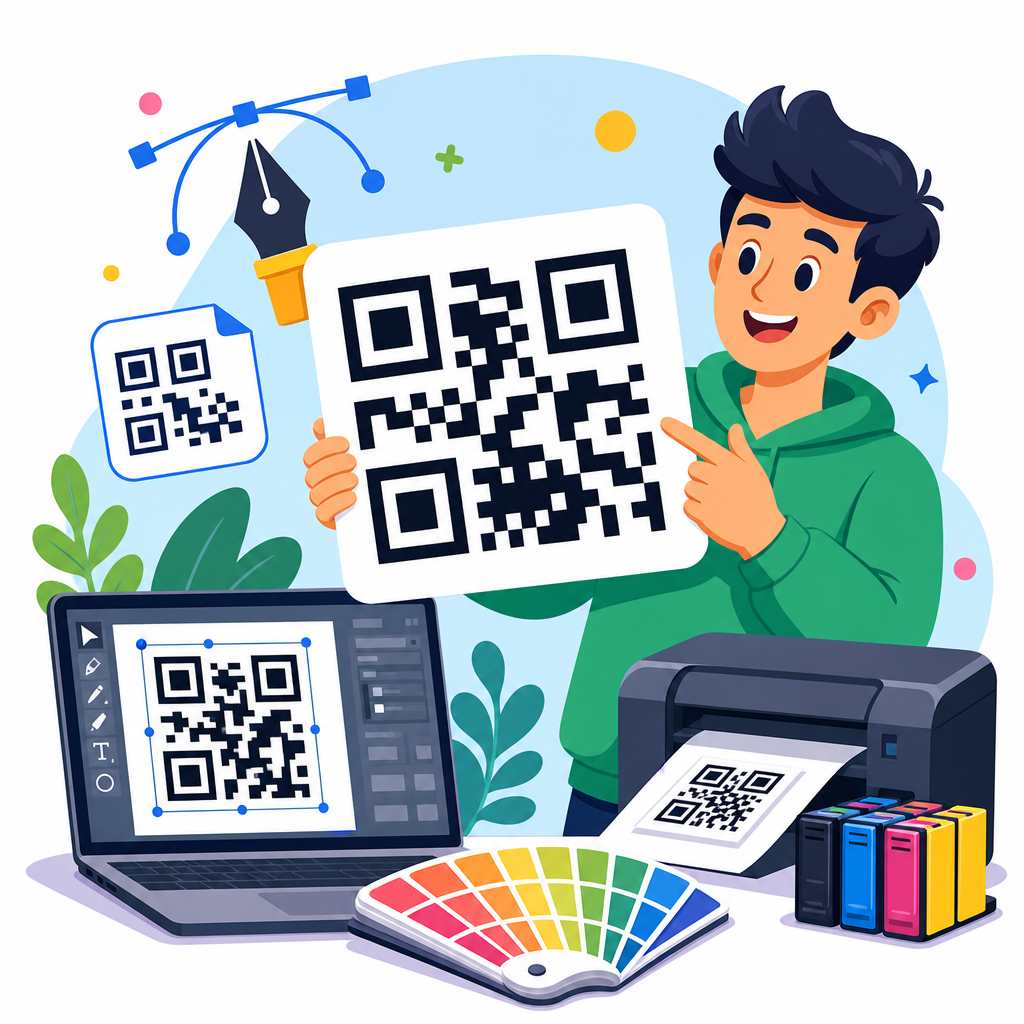
The safest beginner rule is simple: prioritize scan reliability over decoration. High contrast, usually black modules on a white background, still performs best across devices. Inverted color schemes, gradients, patterned fills, and busy backgrounds can work, but each one increases risk. If you add a logo, keep it modest and raise error correction appropriately. Preserve the quiet zone on all sides. Avoid stretching the symbol nonproportionally. Export vector formats such as SVG, EPS, or PDF for print whenever possible, because raster files like PNG can degrade when scaled beyond their intended resolution.
Print size should match scanning distance. A common rule of thumb is that the minimum code size should be about one tenth of the intended scan distance, though practical testing is better than relying on any single formula. A code scanned from one foot away can be fairly small; a poster viewed from several feet away needs much larger dimensions. Surface shape matters too. Flat labels are easier than curved cans, narrow tubes, or folded cardboard seams. When I place codes on packaging, I avoid edges, creases, and reflective laminates because those variables cause more failed scans than most beginners expect.
Testing should happen in context, not just in the design file. Print prototypes at final size, place them under normal lighting, and test with iPhone and Android devices using both native camera apps and a secondary scanner if needed. Check loading speed after scan, because a perfect code still fails if the destination page is slow, blocked, or not mobile friendly. Review redirects, analytics tags, and URL status codes. If a dynamic platform adds a branded interstitial or requires permissions, confirm that experience feels trustworthy to users. Technical validity is only one part of successful deployment.
Tools, Standards, and Reference Practices for Beginners
Beginners should know that QR code quality depends as much on workflow as on the generator itself. Reliable platforms typically support static and dynamic creation, editable destinations, analytics dashboards, bulk generation, custom domains, and export options suited for web and print. Popular commercial tools include Bitly, QR Code Generator, Beaconstac, Flowcode, and Uniqode, while many design teams also generate basic codes inside Canva or Adobe Express for simple use cases. For advanced validation, teams often test with multiple smartphone cameras, browser-based link checkers, and analytics platforms such as Google Analytics to confirm scan traffic arrives correctly.
The technical foundation behind QR codes comes from the ISO/IEC 18004 standard, which defines symbol structure, encoding, and error correction behavior. Beginners do not need to memorize the specification, but they should respect the fact that QR codes are governed by a mature technical standard, not by whatever styling trend appears on social media. Good reference practice means documenting the payload type, destination owner, creation date, print location, and update policy for each code used in an organization. This simple governance step prevents abandoned redirects, duplicate symbols, and mystery labels that no one can maintain six months later.
Security and trust deserve equal attention. Users have learned to scan quickly, which means they can also be exposed to phishing pages or misleading redirects. The safest practice is to use recognizable branded domains, explain the purpose of the code nearby, and avoid hiding the destination behind vague calls to action. If a code opens a download, say so. If it triggers payment, identify the provider. If it collects form data, disclose the context. For beginners building a glossary and reference library, this is the lasting lesson: the best QR code is not the flashiest one. It is the one people can understand, scan, and trust.
A strong QR code foundation saves time, reduces errors, and improves every later decision about templates, tools, printing, and campaign tracking. The essential ideas are straightforward: learn the core terminology, choose the right code type for the user action, understand how payload and error correction affect complexity, and follow practical design and testing rules before publishing. When you treat QR codes as part of a system rather than as isolated images, results improve quickly.
Use this QR Code Learning Hub for Beginners as your reference starting point for glossary terms, standards, examples, and implementation checks across the wider QR code resources section. Revisit it when comparing generators, planning signage, creating packaging, or documenting internal best practices. The more fluent you become in the language of QR codes, the easier it is to build experiences that scan reliably and serve users well. Start by auditing one existing code today and improve it using the principles outlined here.
Frequently Asked Questions
1. What should beginners learn first in a QR code learning hub?
Beginners should start with the basics: what a QR code is, what it does, and why it is different from a traditional barcode. A QR code is a two-dimensional code that stores information in a pattern of black and white squares. When scanned with a smartphone or other camera-equipped device, it quickly directs the user to content such as a website, payment page, PDF, menu, form, contact card, support portal, or app download. The first goal is not mastering every technical detail, but understanding the vocabulary and the workflow behind how QR codes are created, shared, scanned, and maintained.
A good QR code learning hub should explain core terms clearly, including static QR codes, dynamic QR codes, destination URL, error correction, scan rate, call to action, and print contrast. It should also help beginners understand that a QR code is not useful on its own; it is only as effective as the destination behind it and the context in which it appears. For example, a code on a classroom handout may link to assignments, while a code on packaging may support product authentication or setup instructions.
It also helps to learn practical fundamentals early: how large a QR code should be, where to place it, how to test it on multiple devices, and how to avoid linking to a poor mobile experience. Beginners benefit most from a learning hub that explains not just how to generate a code, but how to make it usable, trustworthy, and relevant in real-world situations such as payments, event check-ins, customer support, and educational materials.
2. How do QR codes actually work when someone scans them?
At a practical level, a QR code works by encoding information into a machine-readable visual pattern. That pattern contains data in a grid format, along with structural elements that help scanning devices recognize orientation and decode the content accurately. When a user opens a phone camera or scanning app and points it at the code, the software identifies the square markers, interprets the encoded data, and then offers the intended action, such as opening a web page or saving contact details.
For most beginners, the important takeaway is that the QR code itself usually does not “do” anything active; it stores or points to information. In many common cases, the code contains a URL. Once the scanner decodes that URL, the device opens it in a browser. In other cases, the code may contain plain text, Wi-Fi credentials, payment information, calendar events, or a vCard for contact sharing. This is why two QR codes can look similar but behave very differently depending on the content encoded inside them.
Another important part of how QR codes work is error correction. QR codes are designed so that even if part of the code is smudged, scratched, or slightly obstructed, it can often still be scanned successfully. That is one reason they are useful on printed labels, posters, menus, and packaging. However, error correction does not solve every problem. If the code is too small, too low-contrast, distorted, badly printed, or placed in glare-heavy lighting, the scan experience can still fail. A reliable learning hub should help beginners connect the technical mechanics of scanning with practical design choices that affect real-world usability.
3. What are the most common uses of QR codes for everyday users and organizations?
QR codes are now used in a wide range of everyday situations because they provide a fast bridge between physical objects and digital content. For individuals, common uses include making payments, joining Wi-Fi networks, saving contact information, accessing event tickets, and opening restaurant menus without typing a web address. For businesses and institutions, QR codes can support product packaging, customer service, surveys, support documentation, authentication workflows, classroom handouts, attendance tracking, and promotional campaigns.
One reason QR codes have become so widespread is flexibility. A single printed code on a brochure can send users to a video, booking page, form, product manual, or FAQ center. In schools and training settings, a QR code can help students access assignments, tutorials, slides, or supplemental resources instantly. In event settings, QR codes simplify check-ins and reduce friction at registration desks. In retail and logistics, they can help customers verify products, trace inventory, or reach after-sales support quickly.
That said, the best use cases are usually the ones that remove effort for the user. If scanning the QR code is faster and easier than typing, searching, or waiting, it adds clear value. If it simply duplicates information already visible and offers no convenience, it may not help much. A beginner-friendly learning hub should make this distinction clear: QR codes are most effective when they solve a simple access problem, reduce friction, and guide users directly to the next useful action.
4. What mistakes do beginners make when creating or printing QR codes?
One of the most common beginner mistakes is focusing only on generating the QR code and not on the full user experience. People often create a code, print it, and assume it will work everywhere without testing. In reality, a QR code should always be scanned on multiple devices and in realistic conditions before being widely distributed. A code that scans perfectly on a desktop screen may fail when printed too small on a label or placed under reflective lighting.
Another major mistake is poor design and placement. QR codes need strong contrast, enough white space around them, and a size appropriate for the viewing distance. If the code is stretched, heavily stylized, crowded by surrounding graphics, or printed on a busy background, scan reliability can drop sharply. Beginners also sometimes place codes in awkward or unsafe locations, such as behind glass with glare, too high on a poster, on curved packaging where the pattern distorts, or in places with weak internet connectivity that make the destination frustrating to load.
Destination quality is another overlooked issue. A QR code that leads to a broken link, slow mobile page, irrelevant content, or confusing form will create a poor experience even if the scan itself works. Some users also forget to include a clear call to action, leaving people unsure why they should scan in the first place. “Scan to view setup guide,” “Scan to pay,” or “Scan for event check-in” performs much better than displaying a code with no context. A strong QR code learning hub should teach that success depends on both technical accuracy and thoughtful execution from creation through scanning and final destination.
5. How can beginners choose the right QR code generator or tool?
Beginners should choose a QR code generator based on reliability, clarity, and suitability for the intended use case rather than flashy features alone. The first question is simple: what does the QR code need to do? If the goal is a basic one-time link to a webpage, a straightforward static QR code tool may be enough. If the user expects to update the destination later, track scans, run a campaign, or manage many codes over time, a dynamic QR code platform may be more appropriate. Understanding that difference is one of the most important early decisions.
It is also wise to evaluate practical details. A good tool should generate high-quality export formats for print and digital use, support common content types, and make testing easy. If analytics matter, beginners should look at what data is available and whether it is presented clearly. If the codes will be used in education, support, packaging, or payments, the tool should fit that workflow rather than forcing unnecessary complexity. Ease of use matters, but so do transparency, documentation, and long-term dependability.
Finally, beginners should be cautious about choosing a generator without understanding the service model. Some platforms may limit edits, attach branding, restrict downloads, or disable dynamic codes if a subscription changes. Others may offer useful support, campaign controls, and better management options. A trustworthy QR code learning hub should help readers compare tools based on real operational needs: permanence of the code, editability of the destination, mobile friendliness, print quality, analytics, testing options, and overall trust. The best choice is usually the one that matches the user’s goals while minimizing avoidable risk and confusion.