QR code adoption in emerging markets has moved from a niche payment experiment to a foundational layer of digital commerce, public services, and everyday customer engagement. A QR code, or Quick Response code, is a two-dimensional matrix barcode that stores data such as a URL, payment request, identity token, or product record and can be scanned by a smartphone camera or dedicated reader. In emerging markets, that simple square pattern solves a practical problem: it creates a low-cost digital bridge in places where card terminals are scarce, cash remains dominant, and small businesses need tools that work on ordinary phones. I have worked with retailers, payment teams, and campaign managers rolling out QR programs across mixed urban and rural environments, and the pattern is consistent: adoption accelerates when the code reduces friction immediately for merchants and consumers. This matters because the technology touches financial inclusion, small business digitization, remittances, transport, healthcare, and trust in commerce. Understanding global QR code adoption trends through the lens of emerging markets reveals where growth is strongest, what infrastructure supports it, and which barriers still limit scale.
The current expansion is not a single trend but a cluster of overlapping shifts. Smartphone penetration has improved sharply across Asia, Africa, Latin America, and parts of Eastern Europe, even where broadband quality remains uneven. Mobile wallets and banking apps increasingly support account-to-account transfers triggered by static or dynamic QR codes, lowering acceptance costs compared with point-of-sale terminals. Governments and central banks are also shaping the market through interoperable payment frameworks, instant payment rails, and digital identity programs. At the same time, businesses outside payments use QR codes for onboarding, loyalty, traceability, ticketing, cross-border tourism, and product authentication. The result is a broad operational tool rather than a one-purpose symbol. For a hub article on global QR code adoption trends, emerging markets are central because they often leapfrog legacy infrastructure. In many developed markets, QR codes compete with entrenched cards, NFC wallets, and barcode ecosystems. In emerging markets, they frequently become the first scalable digital interface for millions of users, making their adoption patterns faster, more diverse, and more economically significant.
Why emerging markets are leading QR code growth
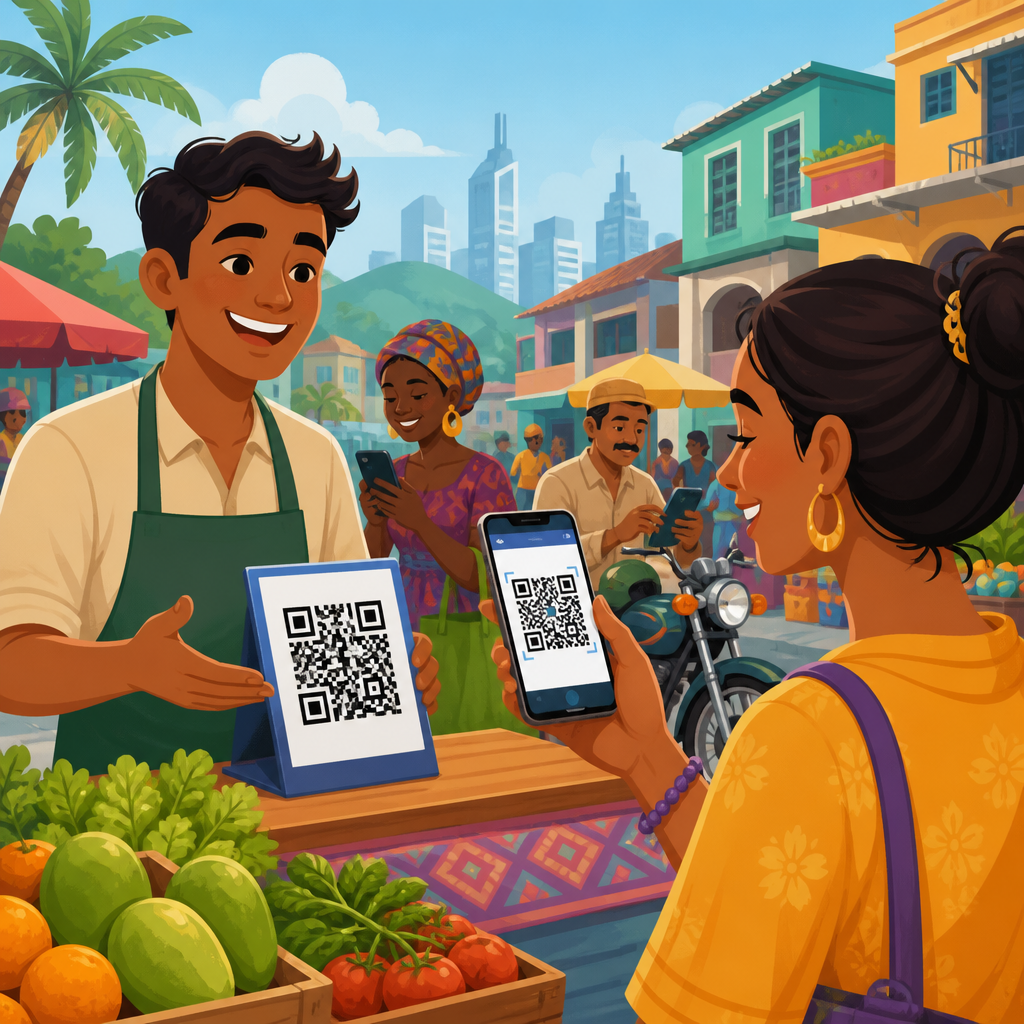
Emerging markets are leading QR code growth because the economics are unusually favorable. A merchant can print a static payment QR code on paper, display it on a plastic stand, or generate a dynamic code within a low-cost app without purchasing expensive acceptance hardware. For micro-merchants, street vendors, pharmacies, informal transport operators, and neighborhood grocers, that matters more than elegant user experience design. The lower setup cost also shortens sales cycles for banks and payment service providers. During deployments I have seen onboarding teams register merchants in minutes, issue a QR placard, and activate settlement to a wallet or bank account the same day. That speed is difficult to match with traditional card acquiring.
Consumer behavior also supports adoption. In many markets, users are already comfortable with chat apps, super apps, and camera-based interactions, so scanning a code feels natural. The code can launch a payment flow, a coupon, a menu, a customer service form, or a government portal without requiring a long URL entry or app search. The same symbol can serve literacy-constrained environments because a user follows a familiar visual action rather than navigating complex interfaces. QR codes also fit fragmented retail landscapes where merchants range from formal chains to cash-only kiosks. A single standard can connect both ends of that spectrum.
Policy and infrastructure amplify these market forces. India’s Unified Payments Interface made QR payments mainstream by combining instant bank transfers with broad app participation. Brazil’s Pix system did something similar by normalizing instant transfers and QR-based collections for consumers and businesses. In Southeast Asia, national specifications such as Thailand’s PromptPay QR and Singapore’s SGQR improved interoperability and merchant acceptance. These examples show that QR code adoption scales fastest when a country aligns three pieces: low-cost merchant onboarding, real-time settlement, and cross-provider standards. Without interoperability, growth remains fragmented inside closed wallet ecosystems.
Core use cases driving adoption across sectors
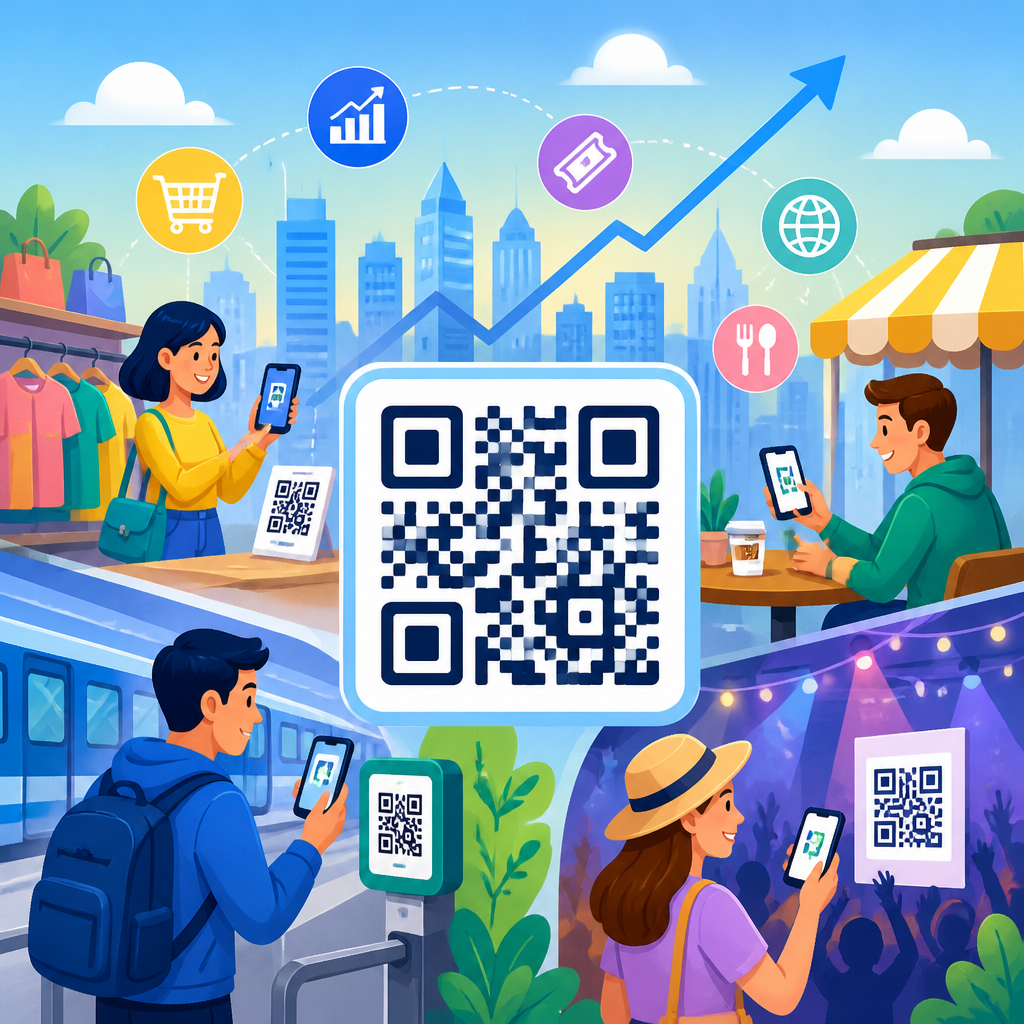
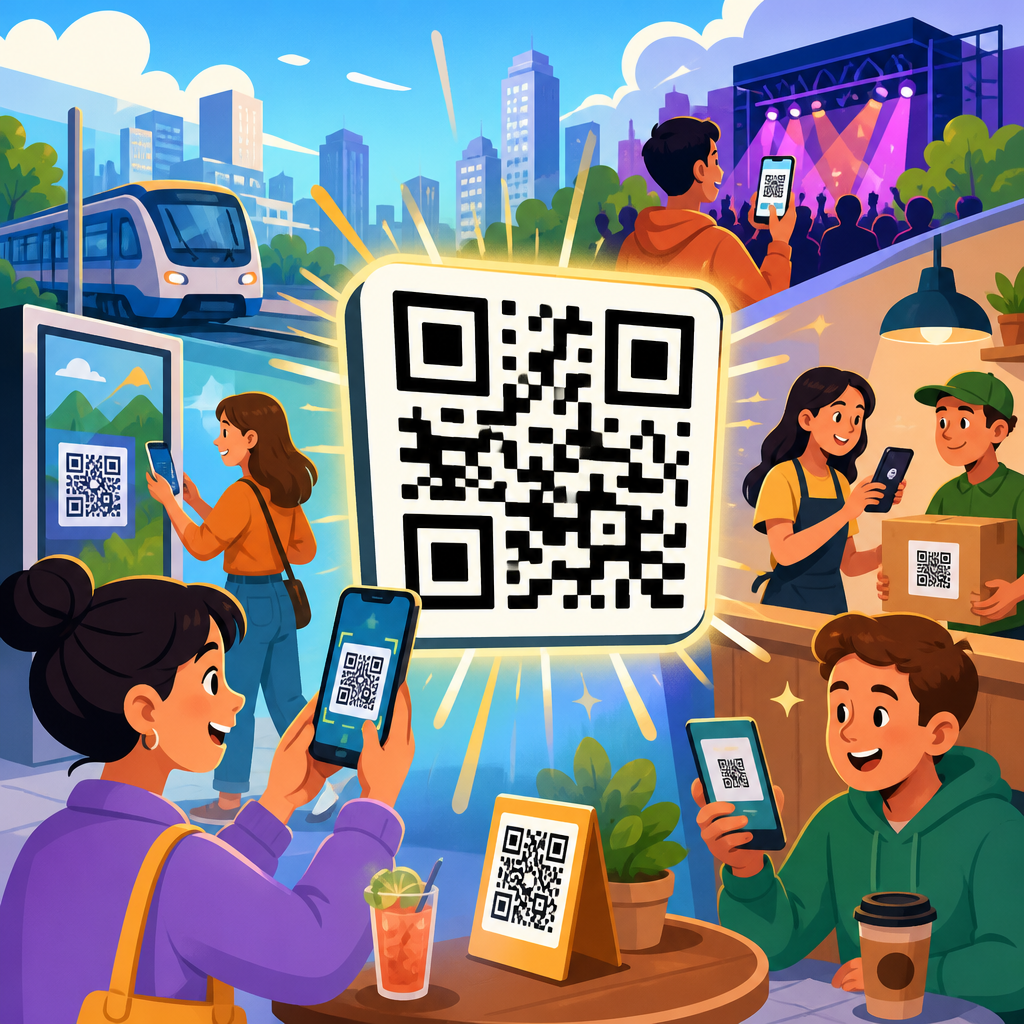
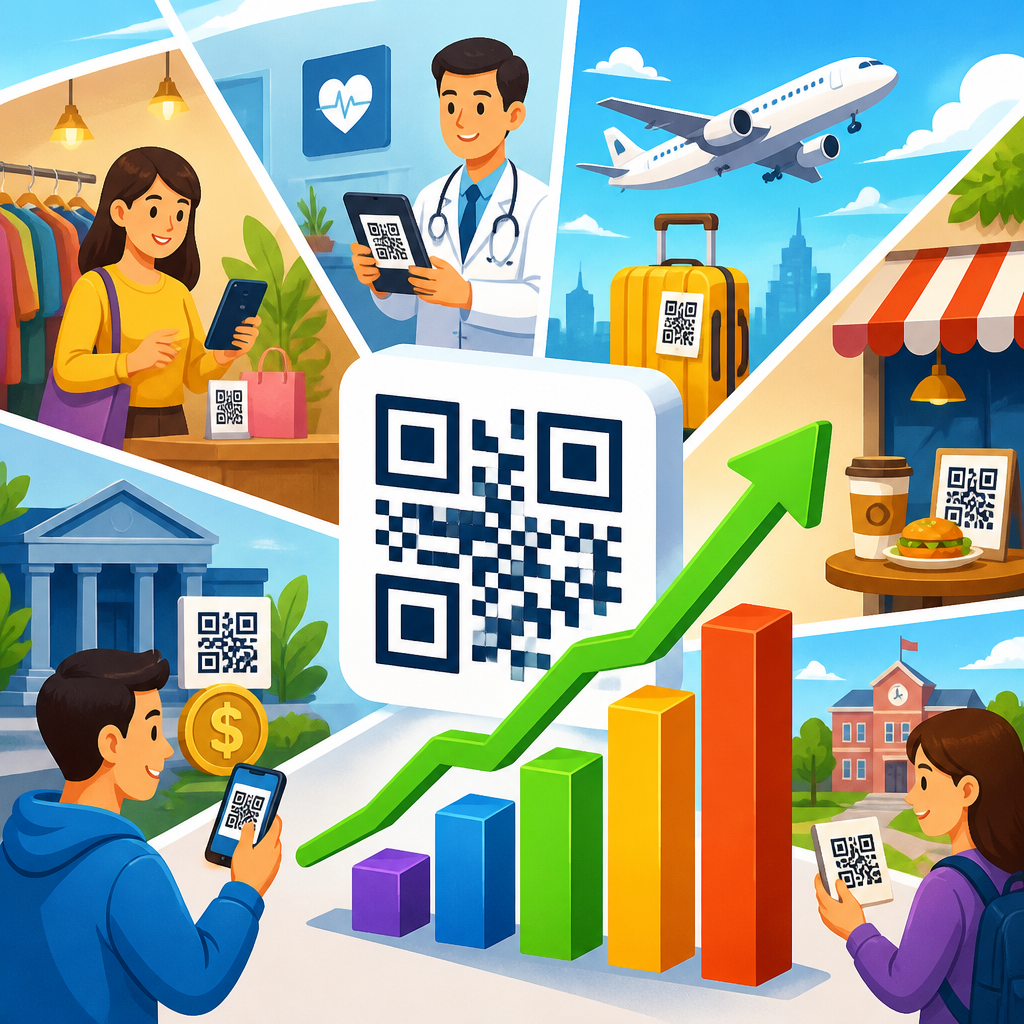
Payments remain the most visible use case, but they are not the only one. Merchant-presented QR codes support person-to-merchant transactions in food stalls, open-air markets, fuel stations, clinics, schools, and utility counters. Customer-presented QR codes appear in transit gates, event ticketing, and digital wallets. In logistics, operators use codes for parcel tracking, proof of delivery, and warehouse inventory because they are cheaper to create and easier to update than specialized labels tied to proprietary systems. Governments use them on tax documents, licenses, health forms, and aid distribution workflows. Brands place them on packaging to route buyers to authenticity checks, usage instructions, and localized promotions.
Healthcare offers a particularly useful example in emerging markets. Hospitals and pharmacies can use QR codes for appointment confirmations, mobile bill payment, lab-result retrieval, and medication verification. During public health campaigns, authorities have linked printed posters and paper slips to vaccine registration or awareness content, allowing a low-bandwidth path from offline outreach to digital action. Agriculture is another growing area. Exporters can tag produce batches with QR codes that connect to traceability records, helping suppliers meet the documentation expectations of global buyers. For farmers and cooperatives, that can mean better access to formal supply chains and premium markets.
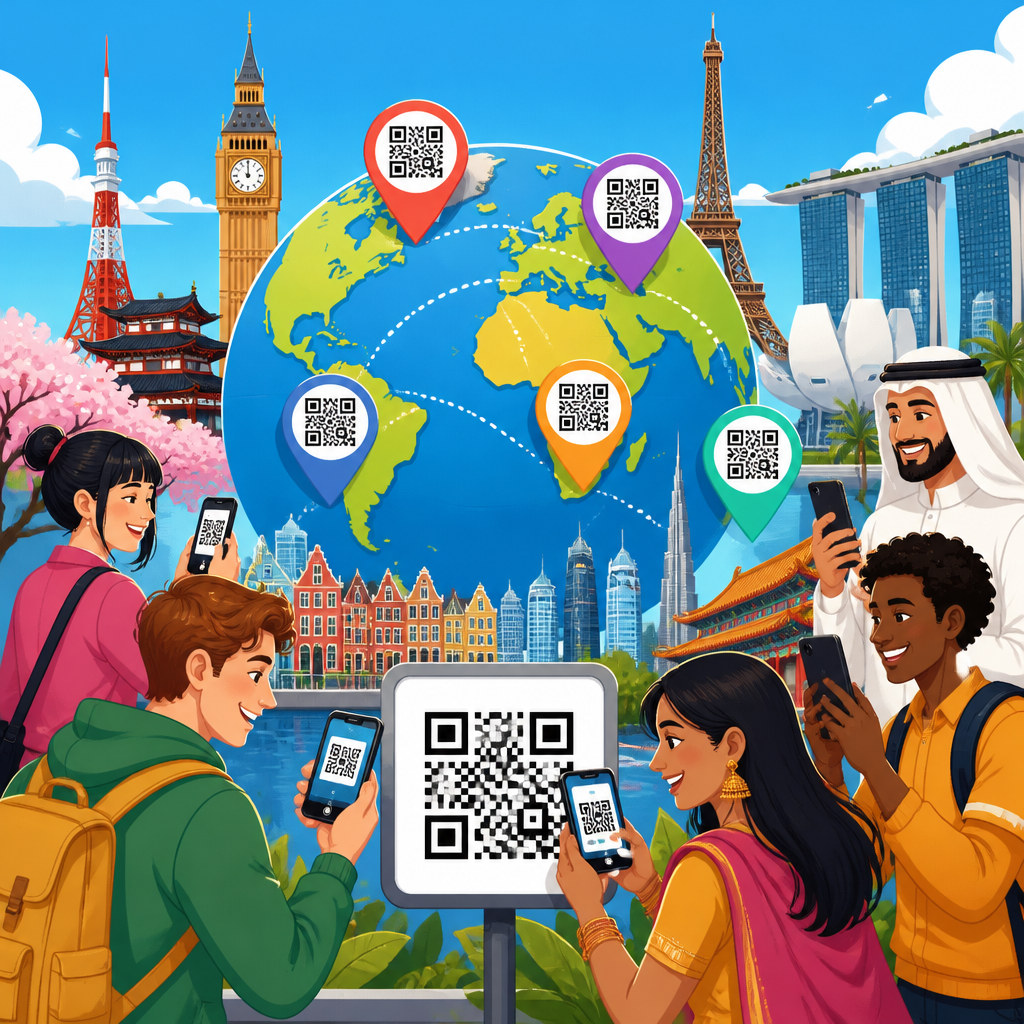
Education and public transport are similarly important. Schools use codes for fee collection, digital ID validation, and parent communication. Bus systems and informal shared transport can replace cash handling with QR ticketing, reducing leakage and improving reporting. In tourism, multilingual QR menus, payment links, and attraction passes are especially effective because they do not require local card issuance. Each use case reinforces the next: when consumers already trust QR codes for payments, they are more likely to scan one for customer support or product verification.
Regional patterns in global QR code adoption trends
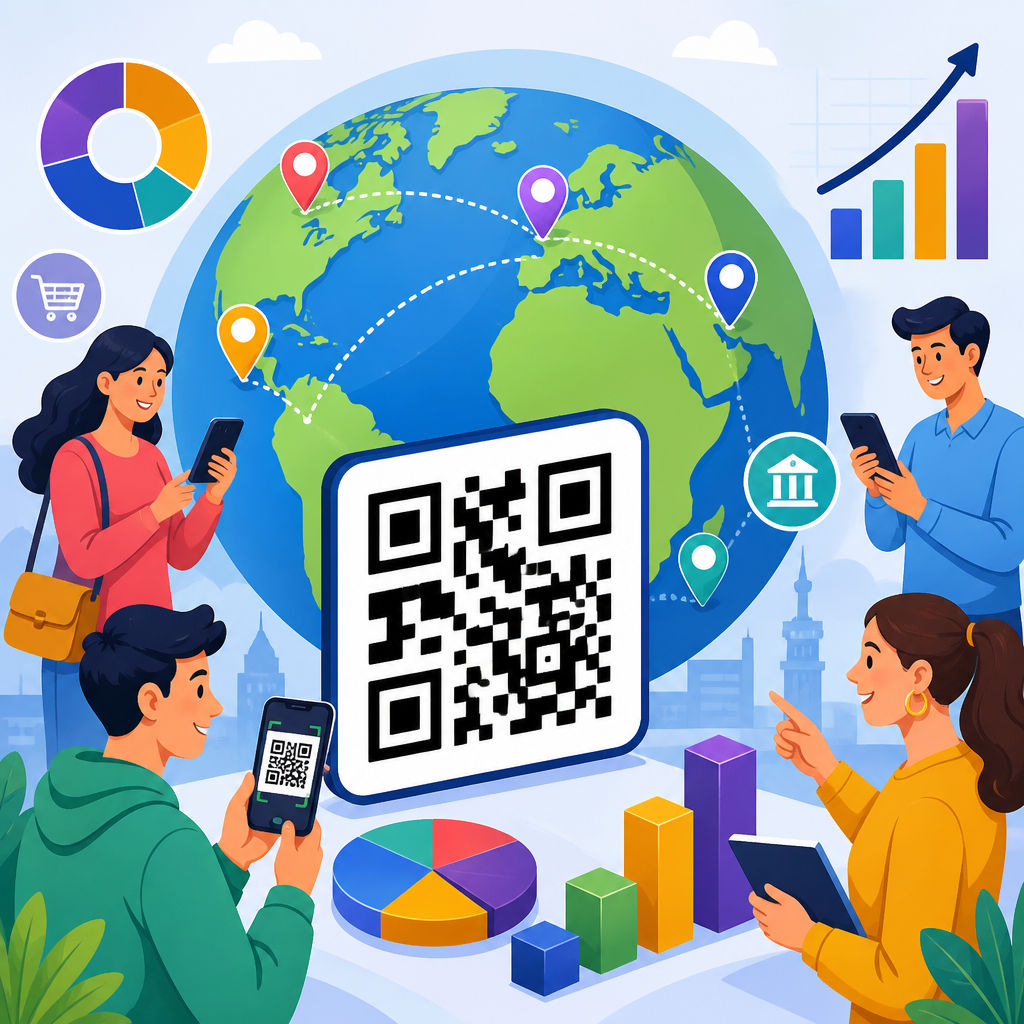
Global QR code adoption trends look different by region, and emerging markets do not move in a uniform way. Asia remains the most mature zone for everyday scanning behavior. China normalized QR-based payments years ago through Alipay and WeChat Pay, creating merchant habits that influenced the broader region. India then demonstrated how open public digital infrastructure could scale QR payments across banks and apps, from major chains to vegetable vendors. Indonesia, Vietnam, the Philippines, and Malaysia have all seen strong uptake through wallet growth, bank-led transfers, and merchant digitization programs.
Latin America has become one of the most important growth regions because instant payment systems changed merchant economics. Brazil’s Pix rapidly expanded person-to-person and business payments, with QR requests becoming common in stores and service businesses. Mexico’s CoDi had a more mixed rollout, illustrating that infrastructure alone does not guarantee behavior change; merchant incentives and user education still matter. Argentina, Colombia, and Peru have also seen QR activity tied to wallet competition, cash displacement efforts, and the need for inexpensive acceptance among small merchants.
Africa presents a different adoption path. Mobile money ecosystems in Kenya, Ghana, Tanzania, Uganda, and other markets built trust in phone-based transactions before smartphones were widespread. As affordable Android devices spread, QR codes became a logical extension for merchant acceptance, bill payment, and digital collections. However, rollout quality varies because interoperability, smartphone affordability, and network reliability differ sharply by country. In parts of the Middle East and North Africa, QR uptake has benefited from state digitization agendas, tourism flows, and demand for contactless services after the pandemic. Eastern Europe shows selective growth, especially where fintechs and banks are using QR codes for invoices, peer transfers, and e-commerce-to-offline conversion.
| Region | Main adoption driver | Typical leading use case | Key constraint |
|---|---|---|---|
| South and Southeast Asia | Instant payments and wallet ecosystems | Merchant payments | Fragmentation across providers in some markets |
| Latin America | Real-time payment rails | Retail and bill collection | Merchant education and habit change |
| Sub-Saharan Africa | Mobile money expansion | Small merchant acceptance | Smartphone access and connectivity |
| MENA | Government digitization and tourism | Services, payments, ticketing | Varying interoperability |
| Eastern Europe | Fintech-led innovation | Invoices and commerce links | Competition from cards and bank transfers |
What enables successful QR code ecosystems
Successful QR code ecosystems depend on more than a scannable image. The strongest programs combine technical standards, trusted settlement, merchant support, consumer incentives, and clear fraud controls. Static QR codes are easy to deploy and suitable for low-volume merchants, but dynamic QR codes provide better reconciliation, amount binding, and transaction-level analytics. In sectors like transit, utilities, and healthcare, dynamic codes also reduce error rates because the payment request or customer record is prefilled. Standardization matters just as much. EMVCo specifications for merchant-presented and consumer-presented QR codes provide a common structure for payment data, while domestic schemes often build local rules on top.
Merchant experience is a decisive factor. If onboarding requires too many documents, settlement is delayed, or support channels are weak, adoption stalls even when consumers are willing. The best operators design around practical merchant needs: printed collateral, local language instructions, instant confirmation, low dispute friction, and dashboard reporting that makes cashflow visible. For informal merchants, training often matters more than incentives. I have seen activation rates improve simply by showing a seller how to verify a successful payment and what to do when a customer’s screenshot does not match a settled transaction. That sounds basic, but these details determine trust.
Consumer trust rests on speed and clarity. A good QR flow confirms the merchant name, amount, and completion status without ambiguity. Interoperability expands trust because users can pay from their preferred app rather than being forced into a single wallet. This is why public digital infrastructure has had such impact in countries where banks, fintechs, and merchants all participate. A code becomes more valuable when it works across institutions, geographies, and use cases.
Challenges, risks, and the next phase of growth
Despite strong momentum, QR code adoption in emerging markets faces clear constraints. Fraud is the most discussed risk. Criminals can replace a legitimate static code with a malicious one, trick users into scanning phishing links, or exploit weak merchant verification. Dynamic codes and in-app merchant validation reduce these threats, but they do not eliminate them. Regulators and providers need consistent consumer education, transaction monitoring, and takedown procedures. Connectivity is another issue. A scan experience fails quickly when mobile data is expensive, confirmation messages are delayed, or devices have poor cameras. Offline-capable workflows and lightweight app design help, but infrastructure gaps remain real.
There are also business-model challenges. Providers often subsidize acquisition and incentives early on, then struggle to convert activity into sustainable revenue. Merchant discount rates may be lower than cards, which is attractive for adoption but thinner for providers. Some markets also face a patchwork of wallet standards that confuses merchants and slows network effects. Cross-border interoperability is promising, especially in tourism-heavy corridors across Southeast Asia and parts of Africa, yet settlement, FX, compliance, and dispute handling still require careful coordination.
The next phase of growth will come from deeper integration rather than simple code proliferation. QR codes will increasingly connect payments with identity, loyalty, financing, receipts, and supply-chain records. A merchant scan could trigger a payment, issue points, register a warranty, and update accounting in one flow. Governments will continue to use codes in service delivery because they are inexpensive, printable, and easy to deploy at national scale. For businesses building under the broader QR Code Trends & Innovations topic, the lesson is straightforward: treat QR not as a tactical label but as an interface layer. Study your market’s payment rails, interoperability rules, and user habits, then design around real constraints. The opportunity in emerging markets is substantial, but success belongs to programs that make scanning useful, trusted, and routine every day.
Frequently Asked Questions
Why have QR codes gained so much traction in emerging markets?
QR codes have expanded quickly in emerging markets because they solve several infrastructure and cost challenges at once. Unlike card terminals, specialized point-of-sale hardware, or expensive software integrations, a QR code can be generated and displayed at very low cost. A merchant can print one on paper, place it at a checkout counter, add it to packaging, or show it on a phone screen. For consumers, the only real requirement is access to a smartphone camera and a mobile app that can read the code, which fits well with mobile-first digital adoption patterns seen across many developing economies.
They are also highly adaptable. A single QR code can initiate a payment, open a government form, verify identity, connect a customer to a messaging channel, register attendance, or link to product information. That flexibility is especially valuable in markets where digital systems are developing unevenly and organizations need tools that work across retail, banking, logistics, education, and public services. Instead of building separate access methods for every task, institutions can use QR codes as a simple bridge between offline environments and online systems.
Another reason for adoption is that QR codes reduce friction in informal and semi-formal economies. Small merchants, market sellers, transport operators, and service providers often need a digital acceptance method that does not require high setup costs or deep technical knowledge. QR-based payments and interactions allow these businesses to join digital commerce quickly, which supports broader financial inclusion and improves transaction records, customer reach, and operational visibility.
How are QR codes being used beyond mobile payments in emerging markets?
Although payments are the most visible use case, QR codes now support a much wider range of digital interactions in emerging markets. In public services, they can connect citizens to utility bill payment portals, health registration systems, school enrollment pages, tax forms, or subsidy verification tools. Because a code can be printed on notices, receipts, ID cards, or posters, it becomes an accessible entry point for people who may not know a long web address or navigate complex digital platforms easily.
In retail and supply chains, QR codes are commonly used to share product details, verify authenticity, track inventory, and improve traceability. This is especially important in sectors such as agriculture, pharmaceuticals, consumer goods, and cross-border trade, where transparency can help reduce fraud and improve trust. A customer might scan a code to confirm where a product came from, while a distributor may use the same product-level identifier for stock control and delivery confirmation.
QR codes also play a growing role in customer engagement. Businesses use them to connect users to loyalty programs, coupons, digital menus, support chats, onboarding flows, and localized marketing campaigns. In transport and events, QR codes can serve as tickets, boarding passes, or access credentials. The broader pattern is that the code acts as a universal gateway: it translates a physical touchpoint into a digital action with minimal effort, which is precisely why it has become so valuable in rapidly digitizing markets.
What makes QR codes especially effective for small businesses and informal merchants?
For small businesses, QR codes offer one of the easiest ways to participate in digital commerce without taking on the cost and complexity associated with traditional payment infrastructure. A street vendor, neighborhood shop, salon, repair service, or food stall can begin accepting digital payments with little more than a printed code linked to a bank account or mobile wallet. That removes a major barrier to entry and helps smaller merchants serve customers who increasingly prefer cashless options.
QR codes are also effective because they fit naturally into everyday workflows. Merchants do not need to learn a complicated system or install bulky devices. They can use static or dynamic codes depending on their operational needs, and many platforms provide transaction confirmation, simple reporting, and settlement tracking through a mobile app. This ease of use matters in environments where time, training, and technical support may be limited.
Perhaps most importantly, QR-based transactions can help informal businesses become more visible and financially integrated. Digital records may support bookkeeping, credit assessment, supplier relationships, and participation in larger marketplaces. Over time, this can improve access to loans, insurance, and formal business services. In that sense, QR code adoption is not just about convenience at the point of sale; it can be a practical stepping stone toward broader economic inclusion and business growth.
Are there any risks or barriers to QR code adoption in emerging markets?
Yes, and understanding those barriers is essential for sustainable adoption. One of the biggest challenges is user trust and security awareness. Malicious actors can replace legitimate QR codes with fraudulent ones, direct users to phishing sites, or manipulate payment flows. If consumers and merchants are not educated about safe scanning practices, even a simple tool can become a channel for scams. That makes fraud prevention, trusted app ecosystems, and clear verification cues extremely important.
Infrastructure limitations can also slow adoption. While QR codes are low cost, they still depend on a broader digital environment that includes smartphones, app availability, mobile connectivity, and in many cases access to transaction accounts or wallets. In some regions, patchy internet access, low smartphone penetration among certain demographics, or limited interoperability between payment providers can create friction. Adoption may rise quickly in urban centers while remaining uneven in rural or underserved areas.
There are also operational and regulatory concerns. Businesses and public agencies need standards for code formats, identity verification, data handling, and system integration. If QR ecosystems become fragmented, users may face confusion about which apps work where. If privacy protections are weak, people may hesitate to engage. The most successful QR implementations usually combine affordability with strong governance, interoperability, consumer education, and user experience design that makes digital actions feel safe and predictable.
What does the future of QR code adoption in emerging markets look like?
The future appears strong because QR codes have already proven themselves as a practical digital access layer rather than a short-term trend. As emerging markets continue to digitize commerce, banking, public administration, transport, healthcare, and education, QR codes are likely to remain one of the simplest ways to connect physical environments to digital services. Their value lies in their versatility: the same scanning behavior can support payments, authentication, records access, service requests, and customer engagement across many sectors.
We are also likely to see deeper integration with interoperable payment rails, digital identity systems, and sector-specific platforms. That means QR codes may become part of broader national and regional digital infrastructure, not just isolated apps or campaigns. For example, a code might help a consumer pay a merchant, verify a medicine, access a warranty, and join a loyalty program within the same customer journey. This type of convergence is particularly compelling in markets looking for efficient, scalable tools that work across formal and informal channels.
At the same time, future growth will depend on thoughtful execution. The next phase is less about proving that QR codes work and more about making them secure, inclusive, and standardized. If governments, banks, fintech companies, telecom providers, and merchants continue improving interoperability and trust, QR codes can remain a foundational layer of digital commerce and public service delivery in emerging markets for years to come.