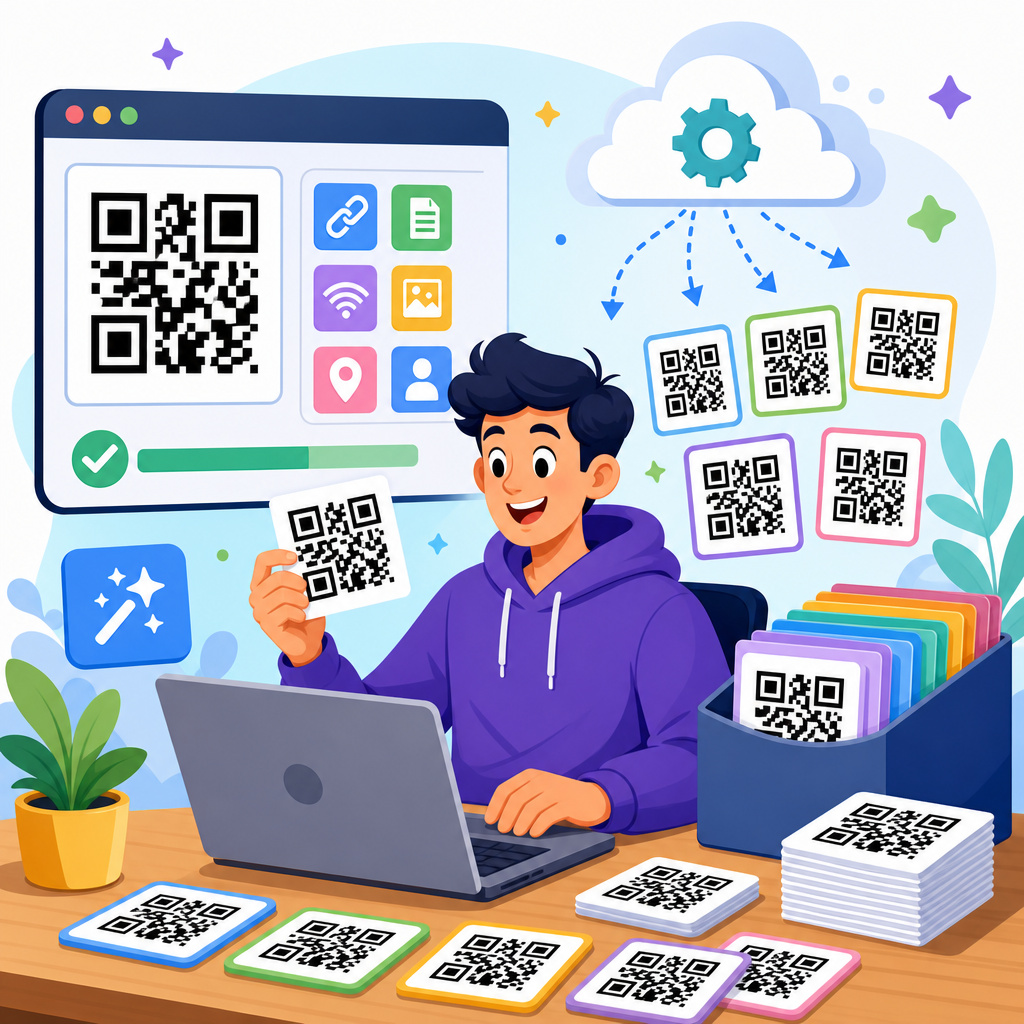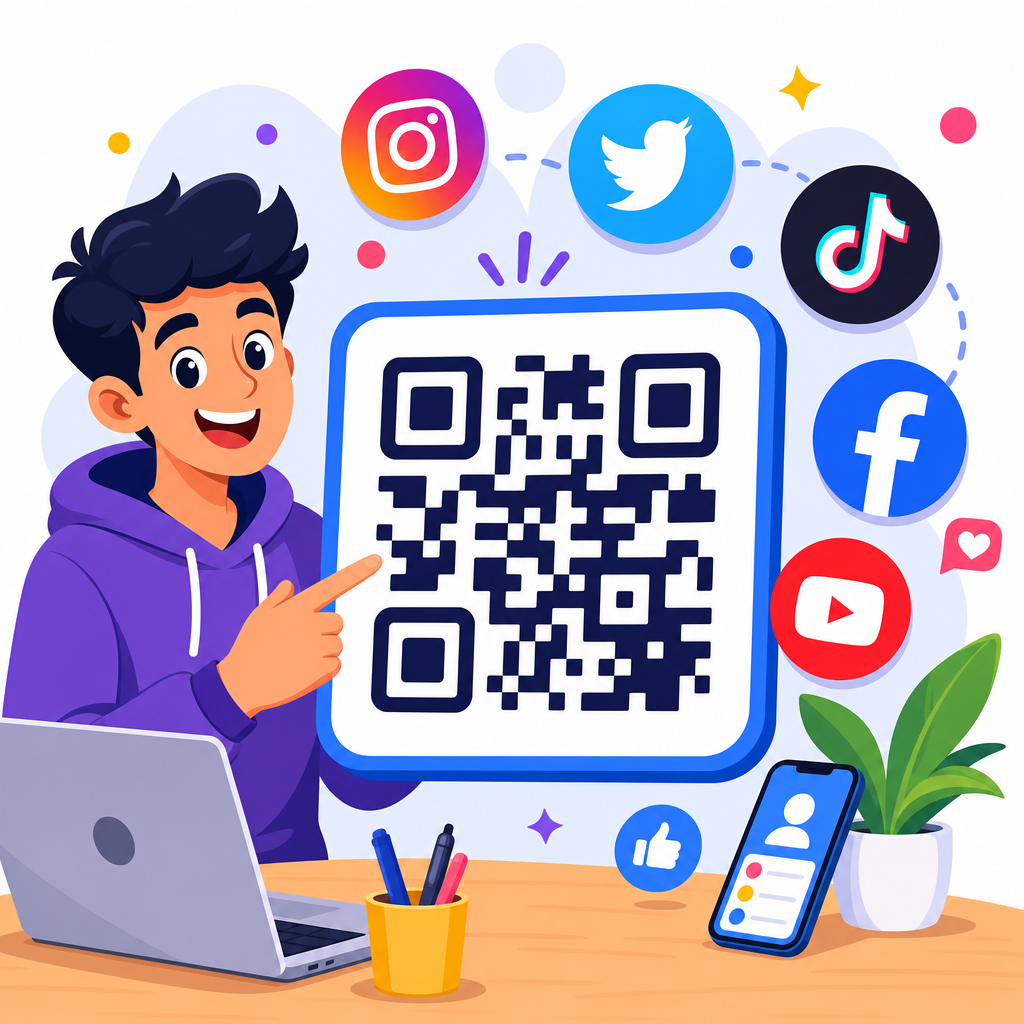
A social media QR code turns a physical touchpoint into a digital follow, click, message, or conversion by sending people from print, packaging, signage, or screens directly to your social profiles or a landing page that lists them all. If you want a practical answer to how to create a QR code for social media, the process is simple in principle: choose the destination, generate the code, customize it for branding, test it on multiple devices, and track scans after launch. In practice, doing it well matters because small setup choices affect scan speed, user trust, campaign measurement, and even whether a platform link opens correctly inside mobile apps. I have built QR campaigns for store windows, event booths, restaurant tables, direct mail, and product inserts, and the highest-performing codes always shared the same traits: a clear destination, strong contrast, enough quiet space, and a reason to scan stated right next to the code.
Before getting into steps, define the key terms. A static QR code stores a fixed destination, such as a single Instagram URL, and cannot be edited after printing. A dynamic QR code uses a short redirect URL managed through a QR platform, so you can change the destination later and collect analytics such as scan count, device type, time, and location. A social media QR code may point to one profile, like TikTok or LinkedIn, or to a mobile landing page that displays several icons so users can choose Instagram, Facebook, YouTube, X, Pinterest, WhatsApp, or a website. That second format is often better for brands because it avoids forcing every user into one channel and gives you one code that works across packaging, posters, business cards, menus, and presentations.
This topic matters because social discovery increasingly starts offline. Someone sees your booth at a trade show, your product on a shelf, your menu at a table, or your flyer in a mailbox, and the fastest path to a social action is scanning rather than typing a long username. The difference is measurable. Typing introduces friction, typos, and drop-off; a good QR code shortens the path to one action in seconds. For a sub-pillar on QR Code Creation & Tools, social media QR codes are a central use case because they combine design, technical setup, mobile UX, and performance tracking in one workflow.
Choose the right social media destination first
The first decision is not the generator; it is the destination. If your goal is audience growth on one primary platform, link directly to that profile. A creator focused on reels may use Instagram; a recruiter may use LinkedIn; a local restaurant might prioritize Google Business Profile or TikTok. If your audience spans several networks, use a multi-link social landing page. In campaigns I have managed, direct links usually win when the call to action is highly specific, such as “Follow us on Instagram for weekly drops,” while multi-link pages win when brand discovery is broader, such as packaging inserts, event signage, or speaker slides.
Use native profile URLs where possible. Examples include instagram.com/yourhandle, tiktok.com/@yourhandle, youtube.com/@channelname, linkedin.com/company/yourcompany, facebook.com/yourpage, and wa.me for WhatsApp chat links. Verify that each destination loads cleanly in mobile browsers and, ideally, deep-links into the app if installed. Some social apps handle redirects better than others, so always test from both iPhone and Android. If your profile requires login before content is visible, expect lower conversion. For some campaigns, a lightweight mobile landing page with your logo, one sentence of value, and large buttons outperforms a raw social URL because users immediately understand their choices.
Decide between static and dynamic QR codes
If you need flexibility, choose dynamic. Dynamic QR codes are better for most social media campaigns because they let you change the destination without reprinting assets. That matters when usernames change, seasonal promotions end, or a campaign shifts from Instagram to TikTok. Dynamic platforms also provide analytics that help you answer practical questions: Which posters drive scans, what time of day do people engage, and which city converts best? For retail, events, and out-of-home placements, that visibility is valuable.
Static codes still have a place. If you are printing a personal business card with a permanent LinkedIn URL and you do not need tracking, a static code is simpler and often free. It also removes dependence on a third-party redirect service. The tradeoff is zero editability after distribution. I generally recommend static only when the destination is stable, the print run is small, and failure risk is low. For hubs, product packaging, conference collateral, franchise materials, and anything distributed at scale, dynamic is the safer choice.
| Option | Best for | Main advantage | Main limitation |
|---|---|---|---|
| Static QR code | Simple personal links, short-term materials | Free and permanent without platform dependency | Destination cannot be changed after printing |
| Dynamic QR code | Marketing campaigns, packaging, events, multi-location use | Editable destination plus scan analytics | Usually requires a paid tool or subscription |
| Direct social profile link | One clear call to action | Fastest path to one platform | Does not serve users who prefer another network |
| Social landing page | Brands active on multiple platforms | One code supports several channels | Adds one extra tap before reaching a profile |
Generate the QR code with a reliable tool
To create the code, use a generator that supports high-resolution export, error correction, and if needed, dynamic redirects with analytics. Recognized options include QR Code Generator Pro, Bitly Codes, Uniqode, Flowcode, Beaconstac, Canva, Adobe Express, and some CRM or event platforms with built-in QR features. The tool itself matters less than the output settings and the redirect reliability. For print, export SVG, EPS, or high-resolution PNG so the code stays sharp at different sizes. For digital displays, PNG is usually fine if it remains crisp on the final screen.
Enter the exact destination URL, then set the error correction level. In plain language, error correction allows the code to remain scannable if part of it is obscured or stylized. A moderate or high setting is useful when adding a logo in the center, but avoid excessive decoration that compromises readability. Most reliable generators automate this well. If you are using a social landing page, keep it lightweight, mobile-first, and fast. Large hero images, cookie banners, and pop-ups can hurt the experience immediately after the scan.
Customize for branding without hurting scanability
Branding helps people trust the code, but scannability comes first. Keep strong contrast, ideally dark modules on a light background. Black on white remains the benchmark because it scans consistently across older cameras, low light, and damaged print surfaces. You can use brand colors if contrast stays high; for example, navy on white often works well, while pastel gradients usually fail. Maintain the quiet zone, which is the blank margin around the code. Remove it and scan performance drops quickly, especially on busy posters or patterned packaging.
Add a logo only if the code still tests cleanly at the final production size. I have seen teams shrink the code too much after placing a large logo in the center, then wonder why warehouse labels and flyers stop scanning. A practical rule is to prioritize size and contrast over ornament. Rounded modules, custom eyes, and gradient fills can work, but they increase risk. If your audience includes older devices or dim environments, use a conservative design. Also add a plain-language call to action next to the code. “Scan to follow us on Instagram” or “Scan to choose your social channel” consistently beats a standalone code with no explanation.
Size, placement, and testing determine results
A technically correct code can still underperform because of placement. The minimum useful size depends on distance. For business cards, around 0.8 to 1 inch can work if printed sharply. For posters or retail signage viewed from farther away, make it significantly larger. A common rule is a scanning distance ratio of roughly 10:1, meaning a code meant to scan from 10 feet away should be about 1 foot wide, though environment and camera quality affect this. In practice, I test from the actual user position rather than relying only on formulas.
Placement should support the moment of intent. On packaging, put the code where the hand naturally pauses, such as the side panel near instructions or on an insert card. On restaurant tables, place it upright where glare is low. On event booths, avoid mounting it too high; chest height often performs better than overhead banners because phones can frame it quickly. On screens, prevent moire and motion issues by keeping the code still and large enough for the display resolution. Always test under realistic conditions: iPhone and Android, bright and dim light, in-app camera and native camera, with cracked screens, weak connectivity, and social apps installed or not installed.
Track scans and improve the campaign over time
A social media QR code should be measurable. Dynamic QR platforms report scans, but you can improve attribution by combining them with UTM parameters in the destination URL. For example, add source, medium, and campaign tags so analytics tools can separate scans from packaging, flyers, checkout counters, or trade shows. If the QR redirects to your website or social landing page first, Google Analytics 4 can show engaged sessions, geography, device category, and downstream actions. Social platforms themselves may also reveal follower spikes, profile visits, or message starts after a campaign launch.
Use the data to iterate. If one store poster gets scans but few follows, the issue may be the CTA or the destination page, not the code. If scans cluster at certain times, adjust staffing or posting schedules to match interest. A/B testing is practical here: compare “Scan to follow for deals” against “Scan for weekly drops,” or compare a direct Instagram link versus a landing page with four social options. In my experience, the best gains usually come from clearer messaging and better placement rather than from cosmetic QR redesigns. Measure completion, not just scans.
Common mistakes and the best use cases
The biggest mistakes are avoidable: linking to the wrong URL, printing low-resolution files, reducing contrast, omitting a CTA, and skipping final device testing. Another frequent error is sending users to a desktop-style page packed with links and banners. The post-scan experience must feel native to mobile. Also avoid placing codes where scanning is awkward, such as behind reflective glass, on curved bottles without enough flat area, or in locations with poor signal. If connectivity is uncertain, use signage that tells users what they will get once the page loads, so the wait feels worthwhile.
Best use cases are easy to spot. Social media QR codes work well on product packaging that encourages community, on business cards that support networking, on in-store displays tied to launches, on menus promoting reviews and follows, on event badges and booth graphics, on real estate signs linking to agent profiles, and on direct mail that invites viewers to watch a video or send a message. The hub takeaway is straightforward: create the code around user intent, choose dynamic when flexibility matters, preserve scanability over design flair, and test in the real world before rollout. If you are building your broader QR Code Creation & Tools strategy, start with one social campaign, measure scans and conversions, then expand to packaging, print, and in-person experiences with the same disciplined setup.
Frequently Asked Questions
What is a social media QR code, and where should it send people?
A social media QR code is a scannable code that takes someone from an offline touchpoint, such as product packaging, a flyer, a poster, a receipt, a business card, a storefront sign, or even a presentation slide, to an online social destination. That destination can be a single profile like Instagram, TikTok, Facebook, LinkedIn, or YouTube, or it can be a mobile-friendly landing page that lists all of your social platforms in one place. In most cases, the best destination depends on your goal. If you want more followers on one specific platform, send users directly to that profile. If you want to give people options, such as follow, message, watch, shop, or visit your website, a social landing page is usually the smarter choice.
Choosing the destination is the most important part of creating a social media QR code because it determines what happens after the scan. For example, a restaurant might send users to Instagram for visual discovery, while a service business might send them to a page with Facebook, WhatsApp, and website links so customers can choose how to contact the brand. A creator may prefer a page that includes TikTok, YouTube, and newsletter signup links. The destination should match user intent, be easy to navigate on mobile, and provide a clear next step. A good social media QR code does not just open a page; it helps convert attention into an action such as a follow, click, inquiry, or purchase.
How do I create a QR code for social media step by step?
The process is straightforward. First, decide exactly where the code should lead. That could be one social profile or a dedicated landing page that lists all your social accounts. Next, copy the final URL you want people to visit. Then use a QR code generator to create the code from that URL. If the platform offers a dynamic QR code option, that is often the better choice because it allows you to update the destination later without reprinting the code. After generation, customize the design with your brand colors, frame, logo, and call to action, but keep the code highly scannable and avoid overdesigning it.
Once the code is designed, test it thoroughly before publishing. Scan it with multiple devices, both iPhone and Android if possible, and test it in different lighting conditions and from realistic distances. Make sure the destination page loads quickly, displays properly on mobile, and makes it easy for users to follow or engage. After testing, export the code in a suitable format. PNG can work for basic digital use, but SVG or other vector formats are better for print because they preserve quality at larger sizes. Finally, place the QR code where people can actually notice and scan it, and track performance after launch to see how many scans it gets and whether users are taking the actions you want.
Should I use a direct link to one social profile or a landing page with multiple social links?
Both approaches can work well, but they serve different purposes. A direct link is best when you want one clear action and minimal friction. If your campaign is specifically about growing Instagram followers, promoting a TikTok challenge, driving YouTube subscribers, or starting WhatsApp conversations, linking straight to that platform keeps the experience simple. It reduces decision-making and can improve conversions because users are not asked to choose among several options. This is especially effective when the audience already understands the context, such as a sign that says “Follow us on Instagram for daily updates.”
A landing page with multiple social links is more flexible and often better for general brand visibility. It allows users to choose the channel they prefer, whether that is Instagram, Facebook, LinkedIn, YouTube, TikTok, X, Pinterest, Messenger, or your website. This approach is especially useful for brands with audiences spread across several platforms or for campaigns where different users have different intents. It also creates opportunities beyond follows, such as directing visitors to a store, booking page, contact form, or product catalog. The main requirement is that the landing page must be fast, mobile-optimized, visually clean, and designed around a few clear actions. If it feels cluttered or slow, you may lose the benefit of giving users more options.
How can I make sure my social media QR code actually gets scanned and works properly?
Scannability depends on both technical quality and real-world placement. Start with a high-resolution or vector file so the code remains sharp at any size. Keep strong contrast between the code and the background, typically dark code on a light background, and leave enough quiet space around the edges so phone cameras can detect it. Do not make the code too small, especially for posters, packaging, signage, or displays that will be viewed from a distance. If you add branding elements like a logo or custom colors, keep them within best-practice limits so the code remains easy to read. A well-branded QR code is helpful, but function must always come first.
Placement and context matter just as much. People are more likely to scan when they know what they will get, so include a short call to action such as “Follow us for offers,” “Scan to watch tutorials,” “Scan to message us,” or “Find all our social channels.” Put the code where scanning is physically convenient, at a realistic height, distance, and angle. Avoid placing it on curved surfaces, reflective materials, or areas with poor lighting. Most importantly, test the code in the exact environment where it will appear. Scan it from the intended distance, under expected lighting, and using different phones and camera apps. Then confirm that the destination page loads quickly and that the next action is obvious. A QR code that scans perfectly but leads to a confusing or slow page will still underperform.
Can I track scans and update my social media QR code after it is printed?
Yes, and this is one of the biggest reasons marketers prefer dynamic QR codes for social media campaigns. A dynamic QR code uses a short redirect URL behind the scenes, which means you can change the final destination later without changing the printed code itself. For example, if you initially send people to your Instagram page but later want to direct them to a social hub page, campaign landing page, or seasonal promotion, you can update the destination inside your QR code platform instead of reprinting posters, menus, labels, or cards. This flexibility is especially valuable for ongoing campaigns, multi-location businesses, and brands that frequently change promotions or platform priorities.
Tracking is equally important because it helps you measure whether the QR code is actually driving attention and results. Depending on the tool you use, you may be able to see total scans, unique scans, dates and times, device types, and approximate locations. You can also combine QR code tracking with analytics tags on the destination URL to understand what users do after the scan, such as following a profile, clicking a store link, submitting a form, or making a purchase. This data helps you optimize placement, creative, calls to action, and destination pages over time. Instead of treating your QR code as a static graphic, treat it like a measurable campaign asset. That mindset makes it much easier to improve performance and get more value from every print or display placement.