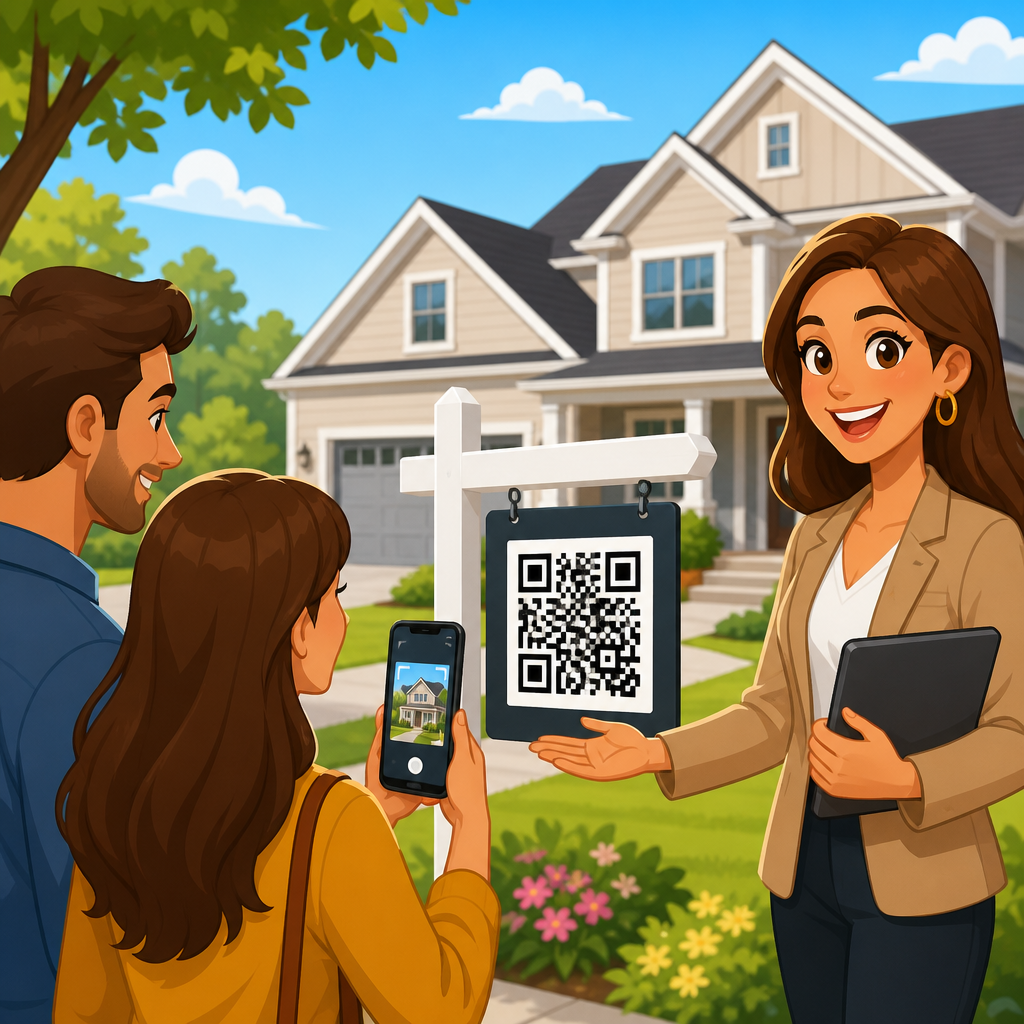
Real estate agents use QR codes to shorten the distance between a passerby’s curiosity and a serious home inquiry. A quick scan on a yard sign, brochure, window display, or open house flyer can send buyers to a listing page, video walkthrough, mortgage calculator, agent contact form, or neighborhood guide in seconds. In practical terms, a QR code is a scannable two-dimensional barcode that stores a destination such as a URL, phone number, SMS prompt, Wi-Fi login, PDF, or map pin. In real estate, that simple bridge matters because buyers often make decisions in motion: while driving a neighborhood, attending a weekend open house, comparing condos from a lobby flyer, or sharing a listing with a spouse from the sidewalk.
I have seen the difference firsthand on active listings. Properties with well-placed, well-tracked QR codes generate more measurable engagement than print materials alone because the code turns offline attention into digital intent. Instead of hoping someone remembers an address later, agents can deliver the exact next step immediately. That reduces friction, increases lead capture, and reveals what marketing is actually working. For brokerages managing dozens of listings at once, QR codes also create a scalable way to standardize sign riders, feature sheets, and agent marketing while preserving local flexibility.
This matters beyond convenience. Home searches are now mobile-first, buyers expect instant access to information, and sellers want proof that marketing spend is producing activity. A real estate QR code strategy helps meet all three demands. It can improve response time, extend the life of print collateral, support compliance by linking to disclosures, and connect prospects with richer content than a sign ever could. As the hub for real estate within broader QR code use cases by industry, this guide explains where agents use QR codes, what they link to, how to track performance, common mistakes, and the specific workflows that help convert scans into appointments and offers.
Where Real Estate Agents Use QR Codes Across the Sales Funnel
Real estate agents use QR codes at every stage of the property marketing and client acquisition process. On the awareness end, the most common placement is the yard sign. A code on a sign rider can link directly to the listing gallery, a property-specific landing page, or a branded virtual tour. In urban markets, agents also place codes on building lobby displays, storefront windows, direct mail postcards, newspaper ads, and neighborhood farming materials. During consideration, codes appear on printed brochures, open house registration signs, in-home feature cards, staging notes, and digital screens at broker tours. After an inquiry, agents use QR codes in follow-up packets, buyer guides, comparative market analysis presentations, and closing gifts that link to review pages or referral forms.
The best use depends on context. A drive-by buyer needs speed, so the destination should open fast and work one-handed on a phone. An open house visitor has more time, so the code can support a richer experience, such as a room-by-room video tour, floor plan download, or financing prequalification form. For luxury listings, agents often use QR codes to deliver high-production video, drone footage, and interactive maps of schools, golf clubs, marinas, or cultural amenities. For multifamily or new development, the code may connect to unit availability, leasing details, and self-guided tour scheduling. In each case, the code should answer the most likely question at the moment it is scanned.
One of the most effective applications is neighborhood prospecting. Agents mail a market update postcard to local homeowners with a code labeled “See recent sales on your street.” That scan can open a dynamic page with nearby comps, active listings, average days on market, and a home valuation lead form. Because many would-be sellers are not ready to call an agent immediately, the QR code creates a low-pressure entry point. Over time, those scans become one of the clearest signals that a homeowner is moving from general awareness toward potential listing intent.
What a Real Estate QR Code Should Link To
A real estate QR code should never point to a generic homepage unless brand discovery is the only goal. In most campaigns, the destination needs to match the user’s intent with precision. For a for-sale sign, that usually means a mobile-optimized property page containing price, photos, square footage, key features, map, showing request option, and agent contact details. For a brochure, the code may link to a downloadable brochure PDF plus an interactive gallery. For an open house, it often works best to send users to a registration form integrated with a CRM such as Follow Up Boss, kvCORE, BoomTown, HubSpot, or Salesforce.
There are also strong supporting destinations. A QR code can open a Matterport 3D tour, a YouTube or Vimeo walkthrough, a Calendly booking page, a rate quote request, or a Google Maps route to the property. Buyer agents sometimes place codes in first-time buyer packets that lead to financing education, inspection checklists, or a saved-search signup. Listing agents can use codes in seller presentations that open case studies, marketing plans, testimonials, and before-and-after staging examples. The destination is not just content; it is the next conversion event.
Dynamic QR codes are usually the better choice because they let agents update the destination without reprinting the code. If a property goes under contract, the same yard sign code can redirect to a backup offer page, similar active listings, or a home valuation form for nearby sellers. That preserves marketing value and avoids dead ends. Static codes still have a place for permanent destinations such as a brokerage review page or vCard contact card, but campaign-based real estate marketing benefits from dynamic control, UTM tagging, and scan analytics.
Best Practices for Design, Placement, and Tracking
For a real estate QR code to perform, it must be easy to notice, easy to scan, and worth scanning. Size matters. On yard signs, a code generally needs to be large enough to scan from a practical standing distance, with strong contrast and a quiet zone around it. Tiny codes on glossy flyers often fail because glare, shadows, and camera autofocus interfere. I recommend testing every print piece outdoors before distribution. If scanning takes more than a second or two under normal conditions, the design needs work.
The call to action matters just as much as the code itself. “Scan for price and photos” will usually outperform “Scan me” because it tells users exactly what they get. Direct, benefit-led language works best: “Scan for 3D tour,” “Scan to book a private showing,” or “Scan to see all neighborhood sales.” Agents should also place a short fallback URL near the code for accessibility and for users whose cameras are restricted. From a branding standpoint, custom colors and logos can help, but readability takes priority over decoration. A code that matches brand colors but scans poorly is a failed asset.
Tracking is where many agents miss the opportunity. Every meaningful campaign should use unique destinations or UTM parameters so scans can be attributed by source, property, and date range in Google Analytics 4, CRM reports, or a QR platform dashboard. If three postcards, two sign riders, and one open house poster all use the same code, the data loses decision-making value. Clean naming conventions solve this problem. A broker can label assets by listing address, channel, version, and campaign date, then compare scan volume with showing requests and eventual contracts. That makes QR code marketing accountable rather than anecdotal.
| Placement | Best Destination | Main Goal | Key Metric |
|---|---|---|---|
| Yard sign | Mobile listing page or virtual tour | Capture drive-by interest | Scans to showing requests |
| Open house sign-in | Registration form tied to CRM | Lead capture | Completed forms |
| Postcard mailer | Neighborhood sales or valuation page | Generate seller leads | Scans to valuation submissions |
| Brochure or feature sheet | Property details PDF and gallery | Deepen engagement | Time on page |
| Window display | Listing hub or schedule-tour page | After-hours inquiries | Scans by hour |
Open Houses, Lead Capture, and Follow-Up Workflows
Open houses are one of the clearest examples of QR codes improving both convenience and data quality. Instead of a paper sign-in sheet with hard-to-read handwriting and incomplete contact details, agents can use a QR code at the entry that opens a mobile form. Visitors enter their name, email, phone, buyer status, timing, financing position, and whether they already have representation. The responses can flow directly into a CRM, trigger an automated thank-you email, and assign a follow-up task. That is faster for guests and more reliable for the team.
The strongest open house workflows do more than collect contact information. After sign-in, the landing page can present the property brochure, disclosures where appropriate, utility cost summaries, school information, and links to similar listings. Some agents add a short survey asking what visitors liked most, whether price feels aligned with the market, and what concerns they have. Those answers help shape follow-up calls and seller feedback reports. If a visitor is not right for the property, the same workflow can invite them to save a custom search or book a buyer consultation.
Speed after the scan is critical. In my experience, leads from QR sign-ins cool quickly if there is no relevant response within a few hours. A useful sequence includes an immediate confirmation message, a same-day text offering a private tour, and a next-day email with comparable homes. Brokerages that build these automations into Follow Up Boss, kvCORE, or BoomTown generally outperform teams that treat QR scans as passive traffic. The code creates the lead, but the workflow creates the opportunity.
How QR Codes Help Listings Stand Out and Win More Seller Business
QR codes do not just market homes to buyers; they also help agents win listings. In listing presentations, an agent can show sellers exactly how each marketing channel will connect prospects to measurable actions. A printed marketing plan with QR codes linking to sample property videos, past listing pages, testimonial reels, and neighborhood reports makes the strategy tangible. Sellers respond well to evidence, and scan-based reporting provides it. Instead of saying, “We will market aggressively,” the agent can explain, “Our sign campaign on similar homes produced forty-eight scans, nine showing requests, and two offers.”
This reporting becomes especially powerful in competitive listing appointments. Many homeowners hear similar promises from multiple agents. The difference is often operational credibility. An agent who explains dynamic QR codes, destination-specific landing pages, UTM tracking, and lead routing demonstrates a more modern, accountable process. That does not replace pricing strategy, staging, photography, or negotiation skill, but it strengthens the overall value proposition. For developers and high-volume listing teams, QR-enabled reporting can also support monthly client updates with hard numbers rather than broad impressions.
There is another seller benefit: adaptability. Markets change fast. If interest rates move, inventory rises, or buyer demand softens, agents can revise messaging without replacing every printed asset. A sign code that once emphasized “tour this home” can redirect to “price improvement and updated photos” or “ask about seller concessions.” That flexibility preserves print spend and lets agents react to market conditions in real time while maintaining a consistent offline presence.
Common Mistakes, Legal Considerations, and Practical Limits
The most common mistake is linking a real estate QR code to a page that is slow, cluttered, or impossible to use on mobile. A scan earned in the field is fragile. If the page takes too long to load, requires multiple pinch-and-zoom steps, or hides the contact button below intrusive pop-ups, many prospects will leave. Another frequent error is sending users to portals or generic listing feeds where the original property is hard to find. The destination should keep the promise made by the call to action with no confusion.
Compliance and privacy deserve equal attention. If a QR code collects personal data, the form should disclose how the information will be used and should comply with applicable privacy rules and communications consent requirements. Agents also need to consider brokerage branding rules, Fair Housing compliance, MLS display rules, and local advertising regulations. If disclosures are required, a QR code can help surface them, but it does not remove the obligation to present mandatory information correctly in the original advertising context.
Finally, QR codes are effective, not magical. Some audiences still prefer texting, calling, or typing a simple URL. Rural properties may have weak mobile reception. Older print pieces can become outdated if they use static destinations. And not every scan means buying intent; curiosity traffic is real. The practical approach is to treat QR codes as one layer in a broader real estate marketing system that includes quality photography, accurate pricing, strong copy, fast follow-up, and consistent CRM discipline. When used that way, they reliably improve the path from attention to action.
Real estate agents use QR codes because they turn physical marketing into measurable digital engagement at the exact moment interest appears. A sign becomes a listing page, an open house flyer becomes a lead form, a postcard becomes a seller inquiry, and a brochure becomes a guided property experience. The core principle is simple: match the scan destination to the user’s immediate question, reduce friction, and track what happens next. When agents do that well, QR codes support faster response times, better attribution, stronger listing presentations, and a smoother experience for buyers and sellers alike.
The biggest advantage is not the code itself but the system behind it. Dynamic destinations, mobile-first pages, CRM integration, UTM tracking, and clear calls to action are what make real estate QR codes effective. Agents who test placement, monitor scan data, and refine follow-up workflows gain a practical edge because they can see which offline assets create real conversations. They also waste less print budget, since underperforming materials become easier to identify and improve. In a market where attention is brief and competition is constant, that operational clarity matters.
If you market homes, start with one high-intent use case: a yard sign code to a fast property page or an open house sign-in code tied to your CRM. Measure scans, form fills, and appointments for thirty days, then expand to brochures, mailers, and seller presentations. Done thoughtfully, QR codes become one of the simplest ways to make real estate marketing more useful, more trackable, and more likely to convert.
Frequently Asked Questions
How do real estate agents use QR codes to help sell homes faster?
Real estate agents use QR codes to remove friction from the home search process. Instead of asking a potential buyer to remember an address, type in a long URL, or search for a listing later, the agent can place a QR code directly on a yard sign, brochure, window display, direct mail piece, open house flyer, or business card. When someone scans the code with a smartphone, they can be taken instantly to a mobile-friendly listing page with photos, pricing, property details, school information, neighborhood highlights, and next-step options.
This speed matters because buyer interest is often highest in the moment. A person driving through a neighborhood, walking past a listing, or attending an open house may be curious for only a short window of time. A QR code lets the agent capture that interest immediately by sending the buyer to a virtual tour, video walkthrough, mortgage calculator, map location, or inquiry form without delay. That shortened path from curiosity to action can increase the chances that a casual passerby becomes a serious lead.
Agents also use QR codes to guide buyers deeper into the sales funnel. For example, one code may lead to the property page, another may open a prefilled text message to the agent, and another may link to a downloadable brochure or financing resource. In this way, QR codes are not just a convenience feature. They are a practical lead-generation and engagement tool that helps buyers get information fast while helping agents respond faster and qualify interest more effectively.
What can a real estate QR code link to besides a home listing?
A real estate QR code can link to much more than a standard listing page. While property details are the most common destination, agents often use QR codes to connect buyers with video walkthroughs, 3D virtual tours, appointment scheduling pages, mortgage calculators, neighborhood guides, school district information, and interactive maps. These links help buyers explore the home and its surrounding area in a more informed way, often before they ever contact the agent directly.
QR codes can also be configured to trigger actions beyond websites. For instance, they can open a phone dialer to call the listing agent, launch an SMS prompt with a prewritten message such as “I’d like more information about this home,” or save contact details directly to a buyer’s phone. At open houses, agents may use a QR code for digital sign-in, making it easy to capture visitor information and follow up afterward. In printed brochures, a QR code can link to a PDF feature sheet or disclosure packet, giving buyers access to more in-depth documentation on demand.
More advanced uses include linking to Wi-Fi login details for an open house, map pins for driving directions, landing pages tailored to specific buyer segments, or forms where visitors can request a private showing. Because QR codes can store or trigger many types of digital destinations, they give real estate agents flexibility to match the code’s purpose to the stage of the buyer journey. That makes them especially valuable in marketing campaigns designed to educate, engage, and convert.
Where should real estate agents place QR codes for the best results?
The best QR code placement depends on where buyers are most likely to encounter the property and what action the agent wants them to take. Yard signs are one of the strongest placements because they catch attention from people who are already physically near the home. A buyer scanning from the sidewalk or from a parked car can instantly access the listing page or contact the agent. Open house signs and directional signs can serve a similar purpose, especially when they are paired with a clear call to action such as “Scan for price, photos, and tour times.”
Printed marketing materials are another strong option. Brochures, flyers, postcards, door hangers, print ads, and property feature sheets can all include QR codes that drive traffic to digital content. This is especially useful because printed materials have limited space, while a QR code can unlock much more information than can fit on the page. Office windows and storefront displays can also benefit from QR codes by turning passive foot traffic into active inquiries, even outside business hours.
Agents also use QR codes in digital-to-physical touchpoints at events and showings. At an open house, a code at the entrance can handle sign-ins, another can link to financing tools, and another can provide disclosures or renovation details. The key is strategic placement: the code should be easy to see, simple to scan, and paired with a clear reason to use it. A QR code without context may be ignored, but one that promises immediate value can significantly increase engagement.
What makes a real estate QR code effective and easy for buyers to use?
An effective real estate QR code does more than simply function correctly. It should lead to a fast, mobile-friendly experience that matches the buyer’s expectation. If the code appears on a yard sign and promises home details, the destination page should load quickly and show the most important information right away, including price, photos, property highlights, and a clear way to contact the agent. If the page is slow, cluttered, or not optimized for mobile devices, buyers may abandon it before taking the next step.
Design and usability matter just as much as the link destination. The code should be large enough to scan from a reasonable distance, printed clearly, and placed on a surface with enough contrast for smartphone cameras to recognize it. It should also include a direct call to action, such as “Scan for virtual tour,” “Scan for instant property details,” or “Scan to book a showing.” Buyers are more likely to scan when they understand exactly what they will get. In many cases, adding a short branded URL beneath the code is also helpful for people who prefer typing the link manually.
Agents should also think about trust and relevance. A branded landing page, recognizable brokerage information, and current listing data help reassure users that they are scanning a legitimate source. In addition, the destination should align with the context. A code on a luxury listing may work best when it opens a cinematic video tour, while a code on an investment property flyer may be more effective when it leads to cash-flow figures and market data. The strongest QR code campaigns are simple, useful, and built around what buyers want in that exact moment.
Can QR codes help real estate agents track leads and improve their marketing?
Yes, QR codes can be very useful for tracking engagement and improving real estate marketing decisions. When agents use unique QR codes for different placements, such as one for the yard sign, one for the brochure, and one for the open house flyer, they can see which source generates the most scans and inquiries. This helps them understand where buyer interest is coming from and which marketing channels are delivering the best return.
Tracking data can reveal practical insights such as scan volume, time of day, geographic activity, and which calls to action perform best. For example, an agent may discover that the QR code on the yard sign gets far more activity than the one in a print ad, or that a “Scan for video tour” message outperforms a generic “Scan here” instruction. These insights allow the agent to refine future campaigns, improve sign and flyer design, and prioritize the content that buyers engage with most often.
QR codes can also support better follow-up. If a scan leads to a contact form, showing request, open house registration, or text prompt, the agent can begin a conversation while the property is still top of mind for the buyer. Over time, this creates a more measurable marketing system where offline materials contribute directly to digital lead capture. For real estate professionals, that combination of convenience, attribution, and responsiveness makes QR codes a smart tool not only for promoting homes, but also for learning what actually helps them sell.