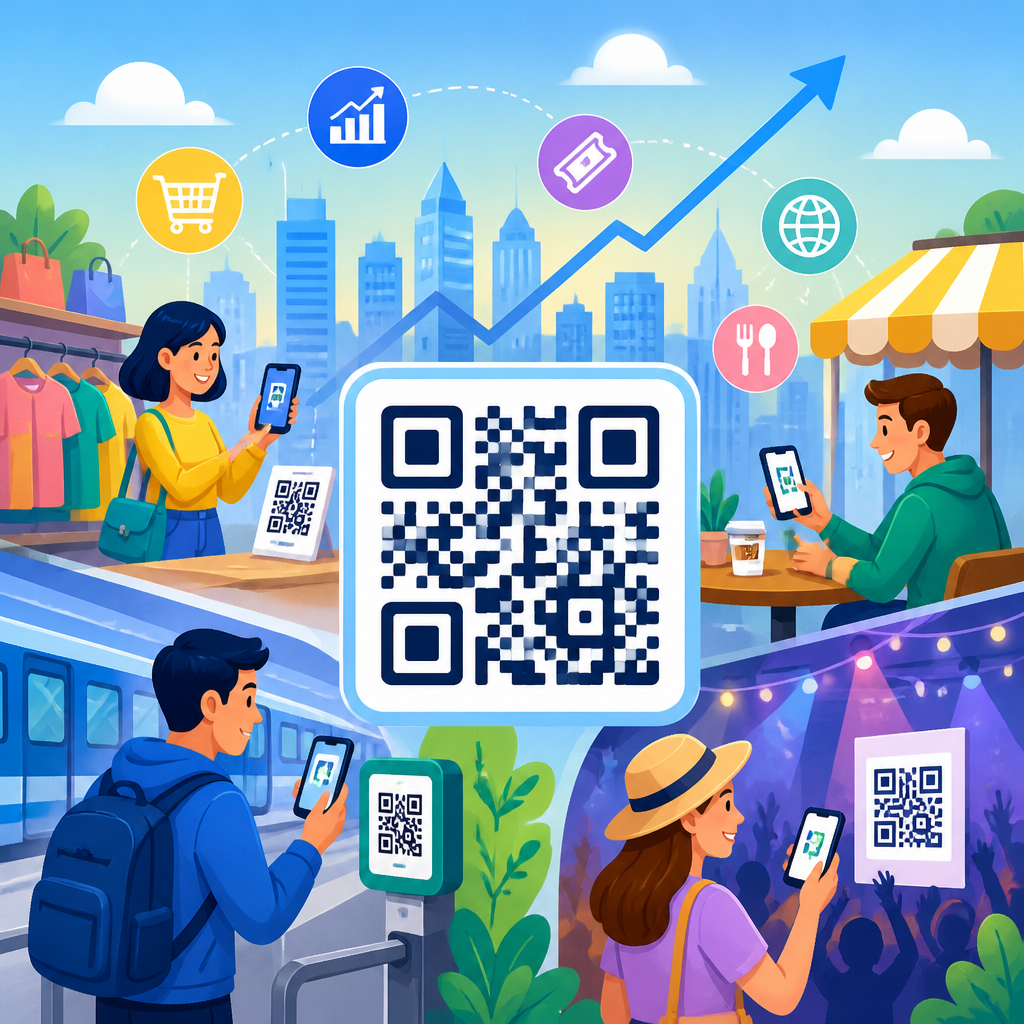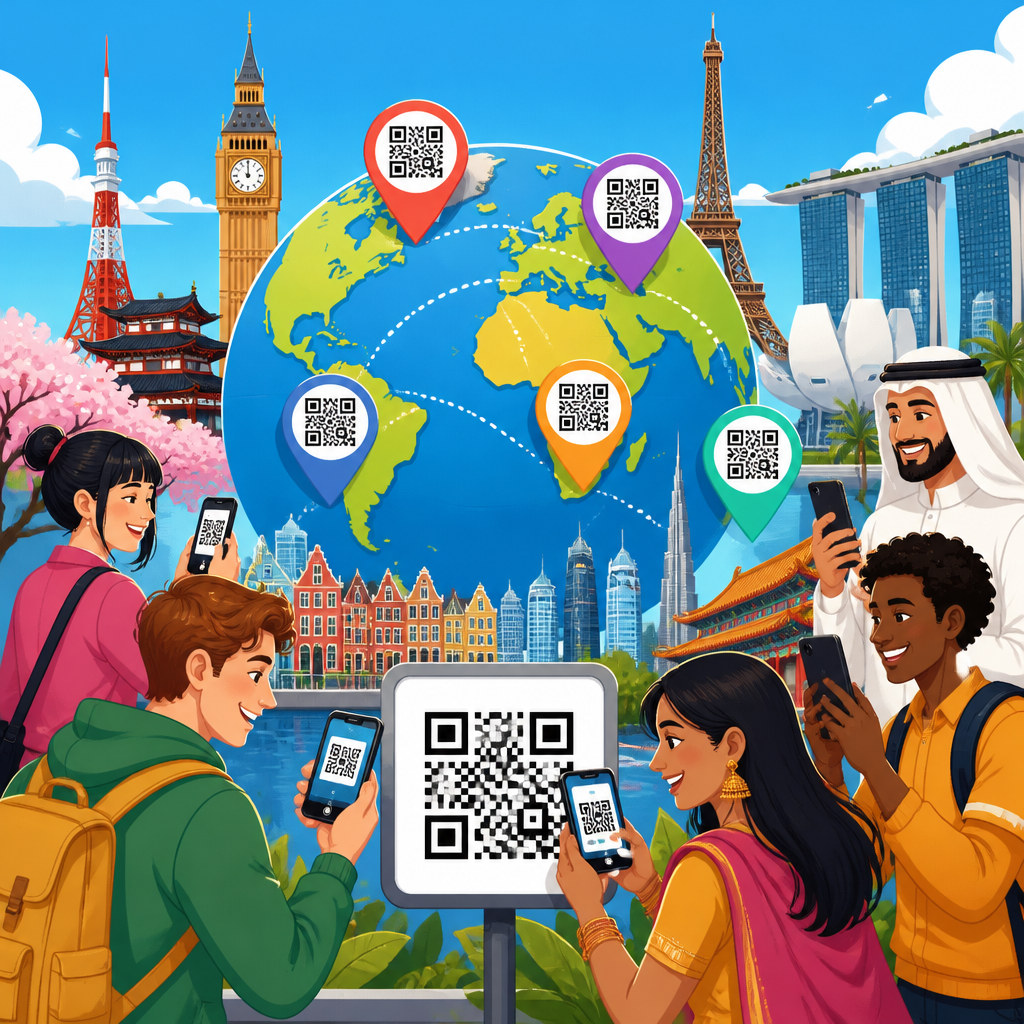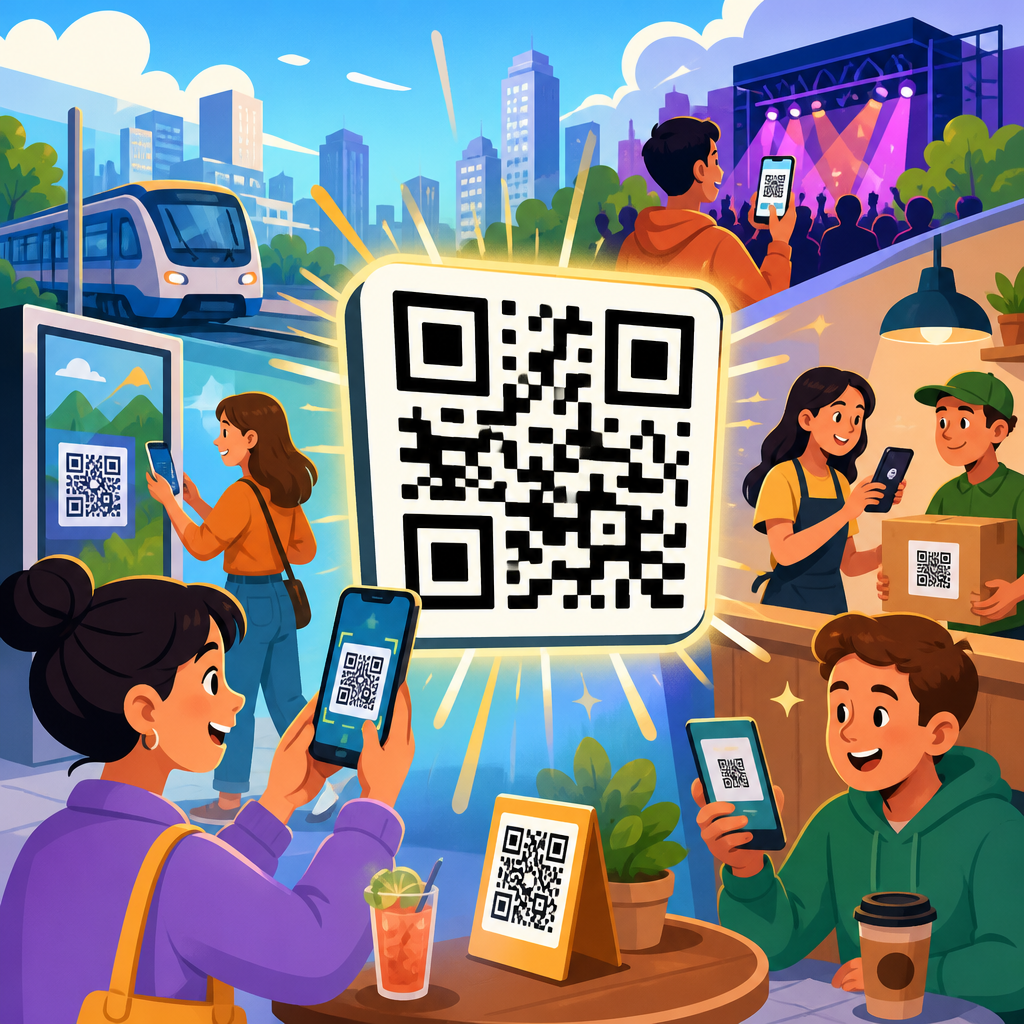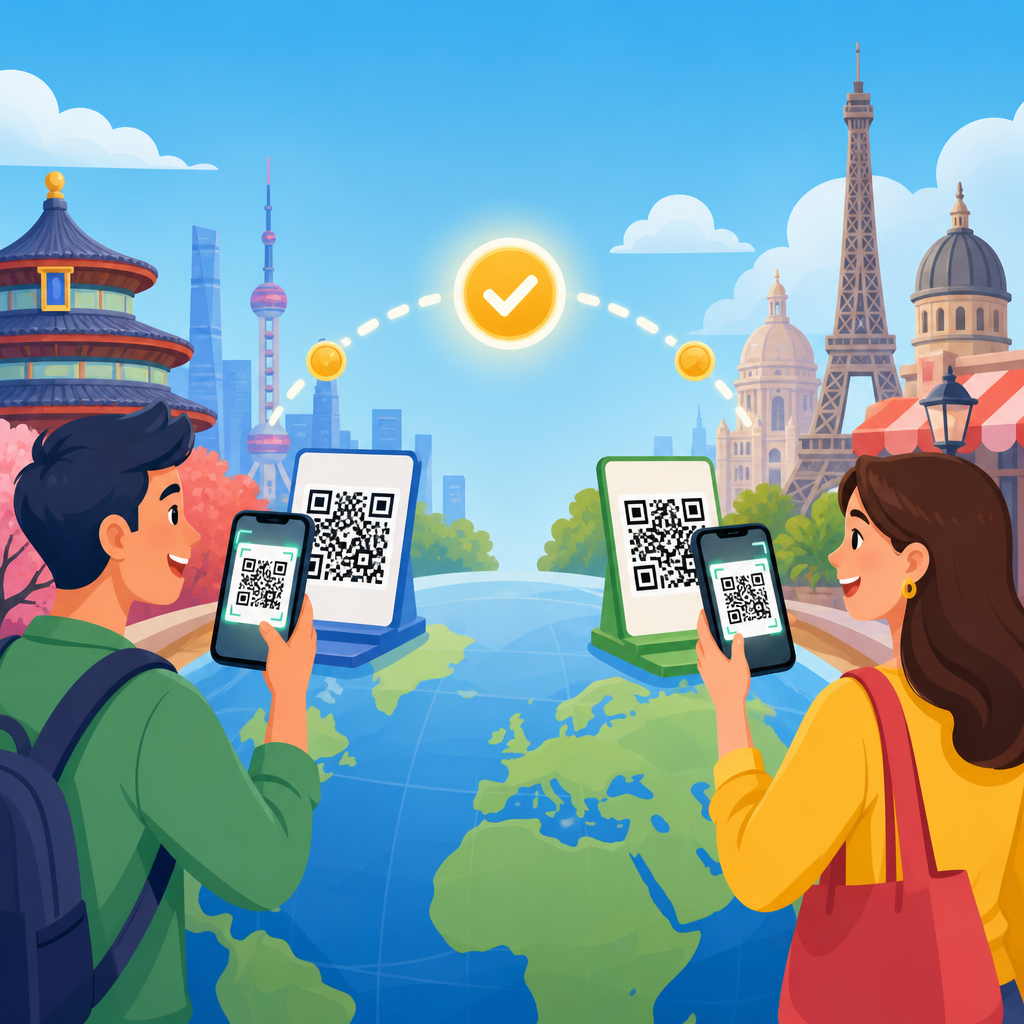
QR codes have become one of the most practical tools for moving money across borders because they turn a smartphone camera into a payment terminal, lower acceptance costs for merchants, and connect consumers to digital wallets they already use every day. In payments, a QR code is a machine-readable image that stores transaction data such as a merchant identifier, account details, amount, currency, and reference number. When the payer scans the code, their banking app or wallet interprets those fields and initiates the transfer through the relevant payment rail. Cross-border payments are transactions where the sender and recipient are in different countries, often involving currency conversion, compliance screening, and settlement between separate financial systems.
This matters because traditional international payments are still slow, expensive, and unevenly accessible. Card acceptance can be costly for small merchants, remittance fees remain high in many corridors, and point-of-sale hardware is a barrier in markets where informal commerce dominates. I have worked with payment teams evaluating QR acceptance for merchants in Southeast Asia and the Middle East, and the same pattern appears repeatedly: when a merchant can display a printed code instead of buying a terminal, digital acceptance expands quickly. That simple change has implications far beyond convenience. It can bring tourists, migrant workers, online sellers, transport operators, and market vendors into the same payment ecosystem.
As a hub for QR codes in payments, this article explains how QR-based cross-border payments work, why they are expanding, which standards and networks matter, and where the limits still are. It covers merchant-presented and consumer-presented QR models, wallet interoperability, settlement mechanics, foreign exchange handling, compliance, security, user experience, and adoption challenges. It also highlights major schemes and live market examples, including EMVCo QR specifications, domestic instant payment systems, and regional linkages such as those built in Asia. If you want a clear map of how QR codes enable cross-border payments in practice, this page provides the essential framework.
How QR payment flows work across borders
There are two basic QR payment models. In a merchant-presented mode, the merchant displays a static or dynamic QR code and the customer scans it. In a consumer-presented mode, the customer shows a QR code generated by their wallet or banking app and the merchant scans it. For cross-border payments, merchant-presented QR is currently more common because it fits tourism, food service, taxis, attractions, and small retail. A traveler can open a wallet from their home country, scan a merchant code abroad, confirm the amount in their own currency or the local currency, and authorize the payment with a PIN or biometric check.
Behind that simple action is a structured message flow. The code contains payment data formatted to an agreed specification. The acquiring side identifies the merchant and the domestic payment network. The issuing side identifies the payer wallet or bank. A switch, scheme, gateway, or bilateral connection routes the request, validates the message, and applies rules for exchange rates, fees, limits, and fraud controls. Settlement may occur in local currency, through a prefunded account, through correspondent arrangements, or via linked instant payment systems. Confirmation usually returns within seconds, which is why QR payments feel immediate even when final reconciliation happens later.
Static and dynamic codes serve different business needs. A static QR generally stores only merchant identity, so the customer enters the amount manually. That works well for street vendors, tips, and low-cost acceptance. A dynamic QR is generated for a specific purchase and usually includes amount, merchant details, invoice reference, and sometimes tax data. Dynamic codes reduce input errors and improve reconciliation, making them more suitable for supermarkets, hospitality, fuel stations, and ecommerce checkouts that bridge online and offline journeys.
Why QR codes are well suited to international payments
QR codes solve a hardware and cost problem that has long limited digital payment acceptance. A merchant does not need a card terminal with certification, maintenance, chargeback tooling, and communications setup just to accept a foreign tourist payment. In many deployments, a printed standee or a low-cost display is enough. That changes the unit economics for microbusinesses, pop-up sellers, local transport, and seasonal merchants. Where smartphone penetration is high but terminal penetration is low, QR acceptance can grow much faster than card acquiring.
They also fit the rise of account-to-account and wallet-based payments. Around the world, domestic instant payment systems have trained consumers to use banking apps for everyday transfers. QR codes extend that behavior into physical commerce by giving the app something standardized to scan. When domestic schemes in two countries are linked, the same habit can support cross-border spending. This is one reason regional QR initiatives have gained traction in Asia: they build on systems consumers already trust at home rather than asking them to adopt a new payment behavior abroad.
Another advantage is flexibility. A QR payload can carry not only account and merchant data but also metadata for invoices, loyalty programs, tax receipts, order identifiers, and payer notes. That makes QR useful in travel, transit, education fees, healthcare billing, and person-to-business remittances. For small-value international payments, that richness often matters more than the prestige or ubiquity of a card brand. The merchant wants low cost and fast confirmation; the customer wants clarity on amount and exchange rate; both want a record they can find later.
Standards, interoperability, and the networks that matter
QR payments only scale internationally when different apps can understand the same code structure and route the payment reliably. EMVCo has published QR specifications for merchant-presented and consumer-presented payments, and many schemes use those rules as a baseline. Domestic systems then add local tags, merchant category conventions, and routing logic. Interoperability depends on clear field definitions, mandatory data elements, error handling, and certification testing. Without that discipline, a code that works perfectly for a local wallet may fail when scanned by a foreign app.
In practice, cross-border QR success usually comes from linking domestic fast payment ecosystems. Thailand’s PromptPay, Singapore’s PayNow, Malaysia’s DuitNow, India’s UPI, and Indonesia’s QRIS are widely cited because they show how national rails can become regional building blocks. Some links focus first on person-to-person transfers, while others target merchant acceptance for travelers. The important point is that the QR code itself is only the front-end trigger. The real enabler is the combination of standardization, directory services, foreign exchange processes, compliance rules, and settlement arrangements connecting the underlying systems.
| Element | What it does | Why it matters cross-border |
|---|---|---|
| QR specification | Defines data fields, formatting, and encoding | Lets foreign wallets parse codes consistently |
| Merchant/acquirer identifier | Routes the payment to the correct receiving institution | Prevents failed or misdirected payments |
| FX engine | Calculates exchange rate and payer amount | Gives price transparency before authorization |
| Compliance screening | Checks sanctions, AML rules, and transaction limits | Keeps the payment legal and monitorable |
| Settlement rail | Moves funds between participating institutions | Determines speed, cost, and liquidity needs |
Well-governed schemes also publish operational rules for dispute management, refunds, reversals, merchant onboarding, and service-level targets. Those details are less visible than a QR code at the checkout counter, but they determine whether a network can support real commerce at scale. Payment teams know that interoperability is not a logo-sharing exercise. It is a rules, data, and liquidity problem solved through standards.
Foreign exchange, settlement, and compliance behind the scan
Foreign exchange is the point where many cross-border payment experiences succeed or fail. A good QR flow shows the payer exactly what they will be charged, which currency the merchant will receive, and which rate is being applied. The rate may be locked at authorization or estimated and finalized at settlement, depending on network rules. For consumer trust, locked rates are generally better. Hidden spreads create support complaints and reduce repeat usage, especially among travelers comparing wallet payments to cash exchange or card acceptance.
Settlement models vary. Some networks use prefunded balances held by participating institutions to support immediate confirmation. Others settle on a deferred net basis through partner banks or central infrastructure. In linked instant payment systems, the consumer often experiences the transfer as real time even though treasury and nostro management occur in scheduled cycles. None of this is unusual in payments; what matters is that the operational model supports low-value, high-frequency transactions efficiently. Cross-border QR is strongest when fees are predictable and liquidity requirements are manageable for banks and wallet providers.
Compliance cannot be treated as a back-office afterthought. Cross-border payments must address anti-money laundering obligations, sanctions screening, fraud monitoring, customer due diligence, and local licensing requirements. Rules differ by jurisdiction, transaction value, and participant type. A tourist buying coffee poses a different risk profile from a business making repeated high-value transfers. Providers therefore set limits, velocity controls, merchant category restrictions, and screening thresholds. The best implementations keep those protections mostly invisible to legitimate users while preserving a complete audit trail for regulators and internal risk teams.
Security, fraud control, and user trust
QR payments are convenient, but they are not risk free. The best-known threat is code substitution, where a fraudster replaces a legitimate merchant code with one pointing to a different account. Static QR displays are particularly vulnerable if merchants do not monitor them. Dynamic QR codes generated from a point-of-sale system reduce that risk because the code is tied to a specific transaction and often includes amount and invoice data. Merchant education matters too: display tamper checks, protected signage, and regular staff review are simple controls that prevent avoidable losses.
Application security is equally important. Wallets should verify code structure, display merchant identity clearly before payment, require strong customer authentication, and warn users when the payee name does not match expectations. Device binding, tokenization, encryption in transit, and secure API design all contribute to resilience. On the network side, anomaly detection can flag unusual geographies, values, merchant behavior, or transaction velocity. Many providers now use machine learning models for fraud scoring, but basic controls such as transaction caps and confirmation screens still stop a large share of errors and scams.
User trust also depends on reversibility and support. Consumers want to know what happens if they pay the wrong merchant, if a duplicate transaction occurs, or if a service is canceled. Schemes that publish clear rules on refunds and error handling are easier for banks and merchants to promote. In my experience, adoption rises when customer support teams can explain disputes in plain language: when funds left, who received them, whether the payment was irrevocable, and how a refund is initiated. Transparent operations are part of security, not separate from it.
Real-world adoption patterns and where QR payments go next
The strongest use cases for cross-border QR payments are easy to identify. Tourism is first: restaurants, taxis, hotels, convenience stores, attractions, and duty-free retail all benefit from accepting visiting customers without specialized hardware. Transit is another promising category because speed matters more than rich card features for many tickets and top-ups. Cross-border ecommerce can also use QR at checkout, especially where consumers prefer to pay from bank accounts instead of cards. For migrant communities, wallet-based QR acceptance lets relatives abroad pay merchants directly for school fees, groceries, or medical expenses.
Adoption is not uniform, however. Markets with mature card acceptance and generous interchange incentives may see slower merchant migration to QR. Consumer behavior also matters: if travelers already rely on globally accepted cards with rewards and zero foreign transaction fees, QR must compete on convenience, acceptance breadth, or price. Regulatory fragmentation remains a constraint. Licensing, data localization, tax rules, and consumer protection obligations can complicate network expansion. Offline functionality is another challenge, particularly in transport or rural environments with unreliable connectivity.
Even with those limitations, the direction is clear. Cross-border QR payments align with the broader shift toward instant payments, wallet interoperability, and lower-cost merchant acceptance. They give small merchants digital reach, give travelers familiar payment experiences, and give payment providers a scalable way to extend domestic rails internationally. For businesses building in this space, the priorities are straightforward: adopt recognized standards, design transparent FX and refund flows, invest in security controls, and choose partners with real settlement and compliance capability. For readers exploring QR codes in payments, use this hub as your starting point, then map each subtopic—interoperability, security, merchant onboarding, and regional schemes—to your market and customer needs.
Frequently Asked Questions
1. How do QR codes make cross-border payments easier than traditional payment methods?
QR codes simplify cross-border payments by turning a printed code or smartphone screen into a fast, low-cost way to initiate a transaction. Instead of manually entering long account numbers, international bank details, or card information, the payer simply scans the QR code with a banking app or digital wallet. The code can contain key transaction data such as the merchant identifier, destination account, payment amount, currency, and a reference number, which reduces friction and lowers the chance of human error.
This matters even more in international transactions, where traditional payment methods often involve multiple intermediaries, higher processing costs, longer settlement times, and more opportunities for data entry mistakes. QR-based payments streamline the front-end experience for both customers and merchants. A traveler can pay a merchant abroad using a familiar wallet app, and a small business can accept digital payments without investing in expensive point-of-sale hardware. In practical terms, QR codes help bridge the gap between local payment systems and international use cases, making cross-border commerce more accessible, especially for small merchants, mobile-first consumers, and regions with limited card infrastructure.
2. What information is stored in a payment QR code for cross-border transactions?
A payment QR code typically stores structured transaction data that allows a wallet or banking app to understand exactly where the money should go and under what terms. Depending on the payment standard being used, the code may include the merchant or recipient identifier, account or wallet information, transaction amount, currency, country-related routing details, invoice or order reference numbers, and sometimes a short payment description. In some cases, the QR code is static and contains only the merchant identity, while the payer enters the amount manually. In other cases, it is dynamic and includes the exact amount due for a specific transaction.
For cross-border payments, this data becomes especially important because the transaction may need to be interpreted across different payment networks, currencies, and compliance environments. The wallet or banking app reads the encoded information, checks whether it can support that payment route, displays the amount and currency to the user, and then initiates the payment through the appropriate rails. The QR code itself does not necessarily “move” the money; instead, it serves as the instruction set that helps digital systems process the payment accurately and efficiently across borders.
3. Are QR code cross-border payments secure?
Yes, QR code cross-border payments can be highly secure when they are supported by regulated payment providers, trusted banking apps, and established wallet platforms. The QR code is primarily a way to package and transmit payment instructions, but the actual security comes from the payment app, the authentication method, and the underlying financial network. Most legitimate payment apps require user verification such as biometrics, a PIN, device authentication, or multi-factor approval before the transaction is completed. This means a scan alone does not automatically send funds without the payer’s authorization.
That said, security depends heavily on implementation and user awareness. Consumers should always confirm the merchant name, payment amount, and currency before authorizing a transaction, especially in another country where exchange rates and merchant labels may be unfamiliar. Merchants and payment providers should also use standardized QR formats, encryption where applicable, fraud monitoring, and strong compliance controls to reduce the risk of tampered codes, account substitution, or social engineering. In short, QR payments can be very secure, but best practices on both the technology side and the user side are essential to maintaining trust in cross-border transactions.
4. Why are QR codes especially useful for merchants and travelers in international payments?
For merchants, QR codes lower the barrier to accepting digital payments from international customers. A business often does not need a full card terminal or complex point-of-sale setup to start taking payments. In many cases, a merchant can display a printed QR code or generate one digitally, allowing customers to pay using their phones. This reduces hardware costs, onboarding complexity, and maintenance needs, which is particularly valuable for small businesses, market vendors, restaurants, tourism operators, and merchants in emerging markets.
For travelers, the experience is equally compelling because QR code payments align with how many people already use mobile banking and digital wallets at home. Rather than exchanging cash, dealing with unfamiliar card acceptance, or worrying about whether a foreign terminal supports their payment method, they can scan and pay using an app they already trust. This can make purchases faster, improve transparency around the amount and currency being charged, and reduce dependency on physical payment instruments. As more countries and payment systems develop interoperable QR standards, the value for both merchants and travelers grows, creating a more connected international payment experience.
5. What challenges still need to be solved for QR-based cross-border payments to scale globally?
While QR code payments offer major advantages, global scale depends on solving several important challenges. One of the biggest is interoperability. Different countries, banks, and wallet providers may use different QR standards, domestic payment systems, and settlement arrangements. For a seamless cross-border experience, those systems must be able to recognize one another’s formats, validate payment data consistently, and route transactions reliably. Without that interoperability, a QR code that works perfectly in one market may not be readable or payable through a foreign wallet.
Other important issues include foreign exchange transparency, regulatory compliance, fraud prevention, and user education. Cross-border payments must account for exchange rates, fees, transaction limits, and anti-money laundering requirements, all while keeping the customer experience simple. Providers also need to ensure that consumers clearly understand what they are paying, in which currency, and under what conversion terms. As infrastructure matures and more payment networks collaborate on common standards, QR codes are likely to play an even larger role in international commerce. Their real strength lies in combining simplicity at the user level with increasing sophistication in the payment systems behind the scan.