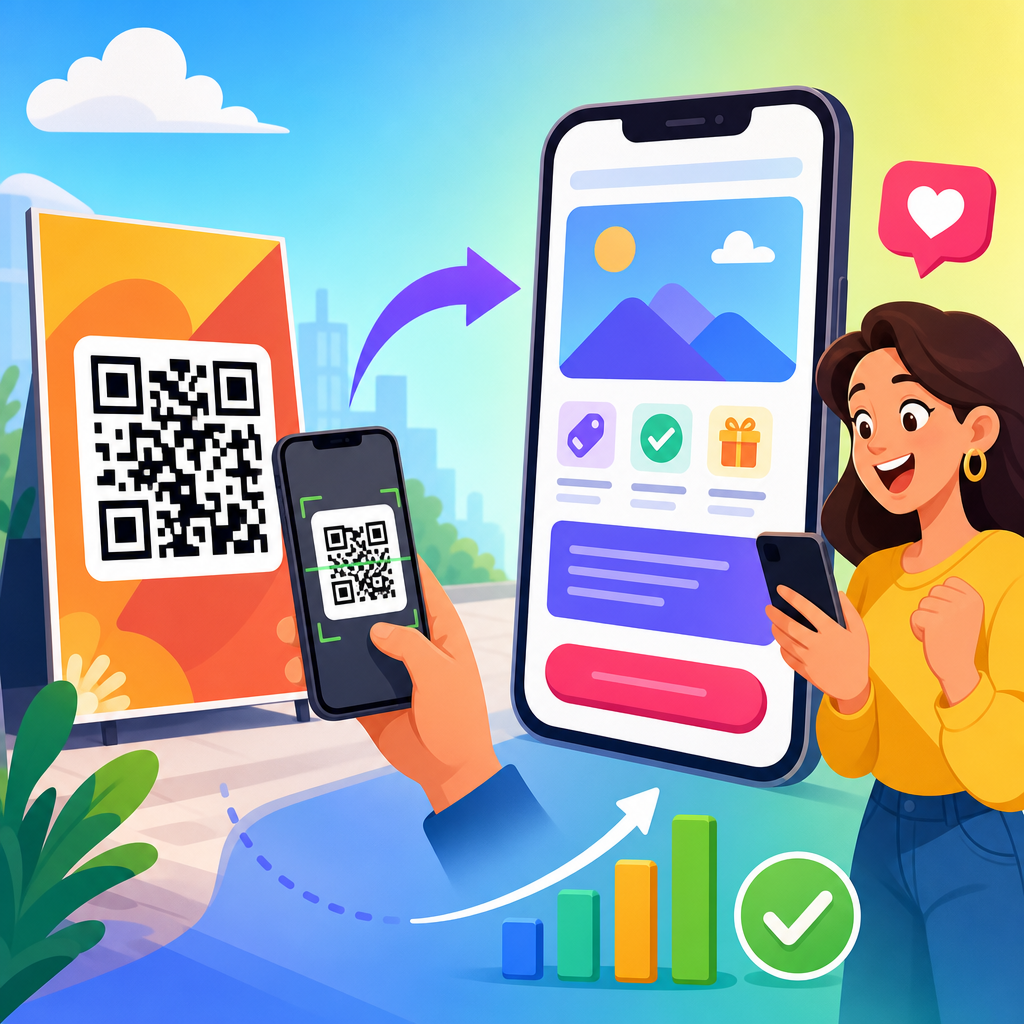
QR code campaigns rarely fail because the code itself is unreadable; they fail because the landing page does not convert the attention the scan creates. In QR code marketing, a conversion is the action you want after the scan: a purchase, form submission, app download, coupon redemption, reservation, call, or store visit. The landing page is the destination that appears after a user scans, and it determines whether curiosity becomes measurable revenue. I have audited QR programs for retailers, restaurants, healthcare groups, and event brands, and the same pattern shows up repeatedly: scan rates can look healthy while business results remain weak because the post-scan experience is slow, confusing, irrelevant, or misaligned with the promise printed next to the code.
That is why landing pages sit at the center of QR code conversion optimization. A QR code compresses the path from offline exposure to online action, but it also removes the safety net users have on traditional websites. They do not browse through menus, compare multiple pages, or spend time learning your offer. They scan with intent and expect immediate clarity. If the page loads in more than a few seconds, asks for too much too soon, or sends them to a generic homepage, you waste the moment. Mobile behavior makes the stakes even higher. Most scans happen on phones, often in distracting environments such as packaging aisles, restaurant tables, transit stations, posters, direct mail pieces, or product displays. In those settings, every extra tap, field, and second of load time reduces completion rates.
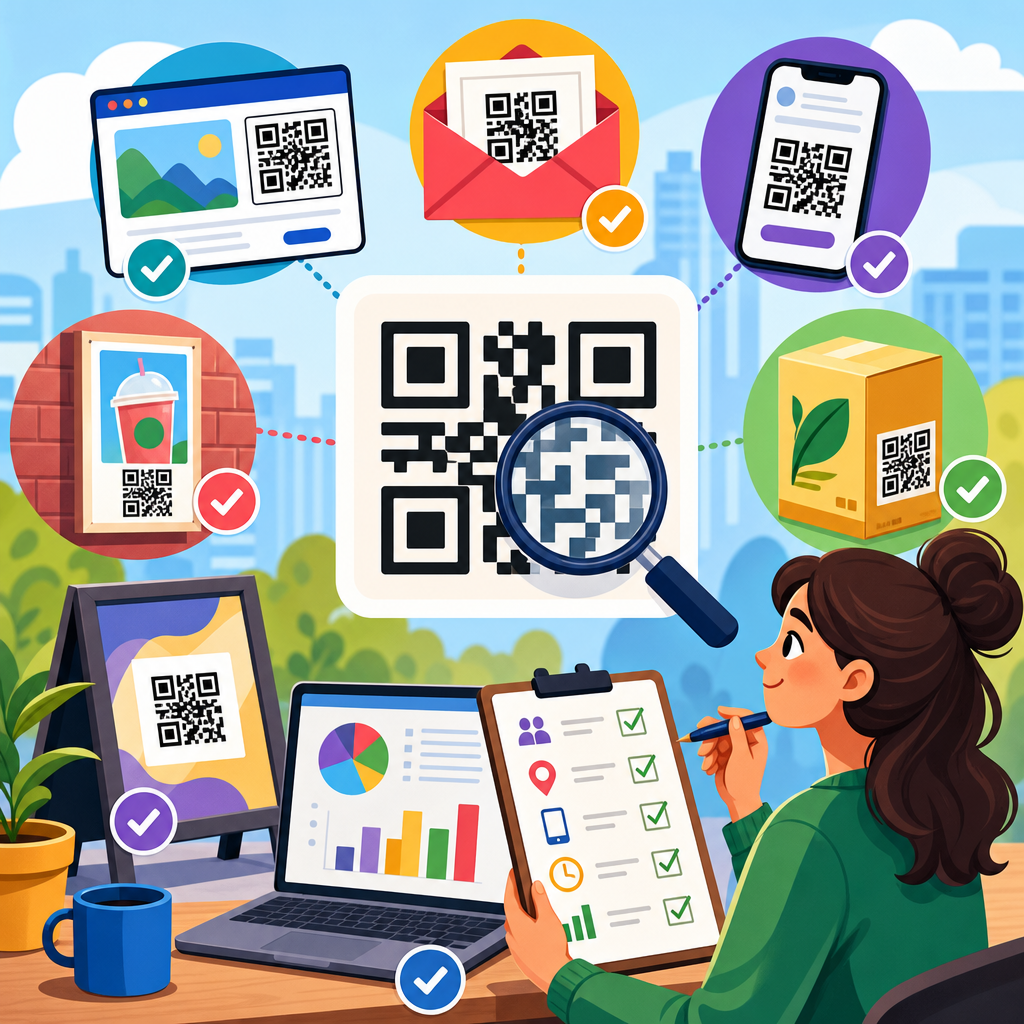
Effective QR landing pages are built for intent matching, friction reduction, and measurement. Intent matching means the page reflects exactly what the user expected when they scanned. Friction reduction means the path to the desired action is obvious, short, and mobile friendly. Measurement means every scan and every downstream action can be tied back to source, creative, placement, audience, and offer so performance improves over time. As the conversion hub within a broader QR Code Marketing & Strategy program, this article explains how landing pages influence QR code conversions, what elements matter most, how to structure pages by use case, and which metrics reveal whether the experience is actually working.
Why landing page relevance determines QR code performance
The first job of a QR landing page is message match. If a flyer says “Scan for 20% off today,” the landing page must immediately confirm that discount, show the product or category it applies to, and present a direct redemption path. When brands instead route traffic to a homepage, category page, or app store listing without context, users have to reconstruct the path themselves. That extra cognitive work causes drop-off. In practical terms, every QR code should have a destination tailored to the placement, audience segment, and call to action that triggered the scan. A code on product packaging should not lead to the same page as a code on an in-store endcap or a direct mail card.
Relevance also includes environmental context. A customer scanning from a restaurant table has different needs than someone scanning a billboard. At the table, they are ready to view a menu, order, pay, or join loyalty. On a billboard, they may only be willing to save an offer, request a callback, or get directions. High-converting QR pages respect that context by adjusting content depth, form length, and action type. In my experience, campaigns improve fastest when marketers stop treating the QR code as the asset and start treating the landing page plus placement as a single conversion system.
Mobile-first design and speed are nonnegotiable
Because QR scans are predominantly mobile, the landing page must be designed for thumb use, small screens, and variable network quality. This is not simply responsive design. A mobile-first QR page prioritizes a fast Largest Contentful Paint, compressed imagery, minimal scripts, readable typography, sticky calls to action when appropriate, and form elements that support autofill and native keyboards. Google’s Core Web Vitals are useful benchmarks here because they reflect the exact issues that interfere with post-scan momentum: delayed rendering, layout shifts, and lagging interaction.
Page speed directly affects conversions. If the destination takes too long to load, the user often abandons before they even see the offer. I have seen restaurant menu pages lose scans because oversized PDF menus loaded slowly on cellular connections. Replacing those PDFs with lightweight HTML menus reduced abandonment and increased completed orders. The lesson applies across sectors. QR landing pages should avoid heavy carousels, autoplay video, pop-ups that block the screen, and unnecessary consent friction before the value proposition appears. Fast pages win because they respect the urgency inherent in the scan.
Essential landing page elements that increase QR code conversions
A converting QR landing page answers five questions immediately: What is this? Why should I care? What should I do next? How hard will that be? Can I trust it? The strongest pages make those answers visible above the fold. That usually means a headline that repeats the scan promise, a short supporting line, one primary call to action, concise proof or reassurance, and a layout that does not force zooming or hunting. If the conversion requires multiple steps, the page should reveal the first step clearly and show that the process is brief.
Trust signals matter more on QR pages than many teams expect. Users often scan from physical objects, but the destination still feels like a sudden digital handoff. Clear branding, HTTPS security, recognizable payment badges, customer ratings, concise privacy language, and visible contact information reduce hesitation. For lead generation, fewer form fields almost always perform better unless qualification is critical. For commerce, guest checkout and wallet payments like Apple Pay and Google Pay remove friction. For local actions, embedded maps, tap-to-call buttons, and store hours convert better than long descriptive copy.
| Element | Why it affects conversions | Practical example |
|---|---|---|
| Message-matched headline | Confirms the promise made beside the QR code | A shelf tag says “Scan for installation guide,” and the page headline repeats it verbatim |
| Single primary CTA | Reduces decision fatigue on mobile | “Start order” performs better than presenting five equal buttons |
| Fast load time | Prevents abandonment during the transition from scan to page | Replacing a PDF coupon with an optimized mobile page increases redemptions |
| Minimal form fields | Lowers effort and increases completion rate | Email-only signup often outperforms name, phone, company, and title |
| Trust indicators | Addresses uncertainty about security and legitimacy | Brand logo, SSL, reviews, and privacy reassurance beside the CTA |
How page structure changes by QR campaign type
Different QR use cases require different landing page structures. For ecommerce, the best destination is usually a product detail page or curated collection with the offer preapplied, inventory visible, and checkout shortened. For restaurants, a menu or order page should prioritize category navigation, item imagery, modifiers, and reorder simplicity. For events, the page should surface schedule details, ticket tiers, venue information, and wallet-friendly checkout. For B2B lead generation, the page needs a stronger explanation of value, a concise form, and proof points such as client logos, case studies, or certification standards.
Service businesses often benefit from pages built around one immediate action: book, call, or request a quote. Healthcare and regulated industries need extra care with privacy, disclosures, and accessibility, but the same conversion principles still apply. Education campaigns may need a content-first page that answers common questions before presenting enrollment or inquiry actions. The hub principle is simple: do not force one landing page template across every QR campaign. Conversion optimization improves when the page architecture mirrors the decision the user is ready to make in that exact offline context.
Measurement, attribution, and testing frameworks
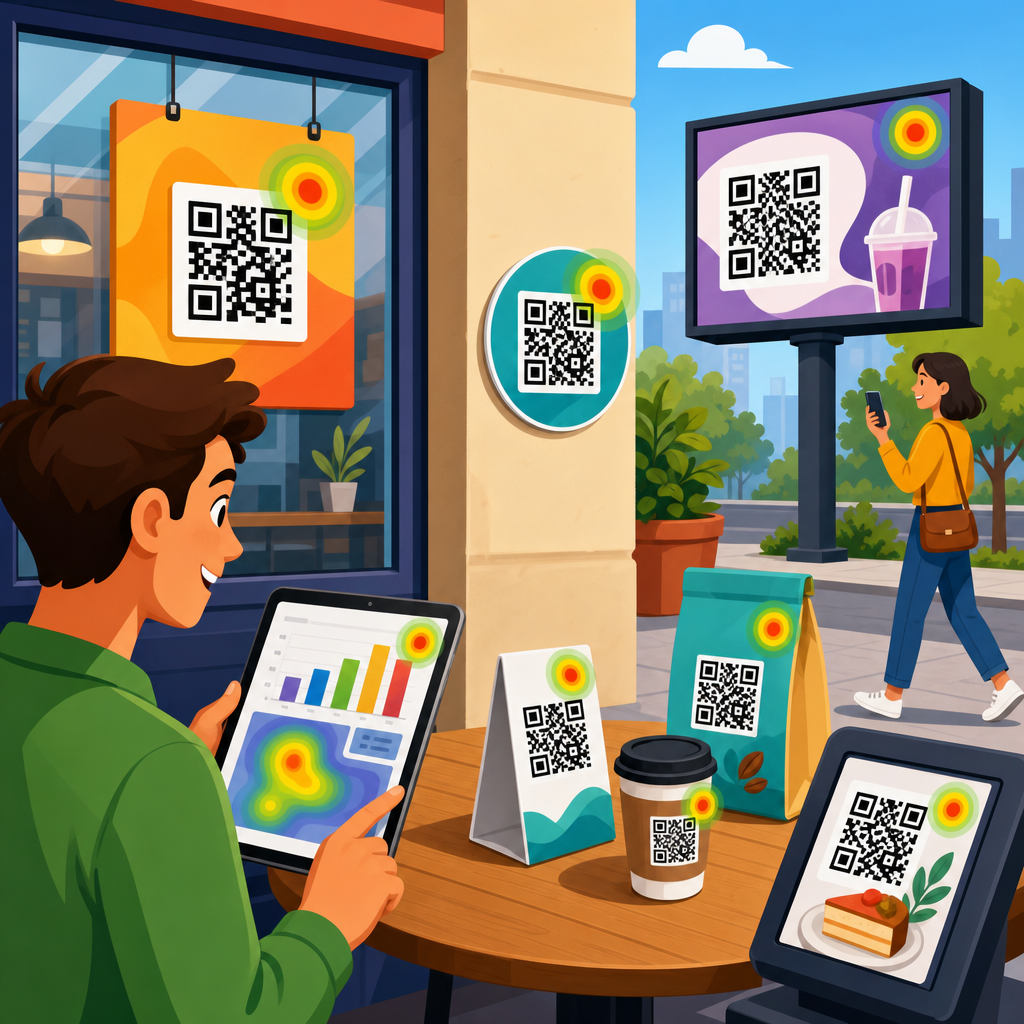
You cannot improve QR code conversions consistently without clean attribution. Every landing page URL should include structured tracking parameters tied to channel, placement, campaign, creative, location, and date range. Dynamic QR codes make this manageable because the destination can be updated without reprinting the code, and scan data can be segmented by source. Analytics platforms such as Google Analytics 4, Adobe Analytics, and server-side event pipelines help connect scans to sessions, micro-conversions, and revenue. When privacy or browser limitations affect measurement, first-party event tracking and CRM integration become especially important.
The metrics that matter depend on campaign goals, but a reliable optimization stack includes scan-to-session rate, bounce rate, engagement time, CTA click-through rate, form completion rate, checkout completion rate, coupon redemption rate, and revenue per scan. For local campaigns, direction requests, calls, and in-store redemption may matter more than online purchases. Testing should focus on variables with direct behavioral impact: headline wording, CTA labels, page length, trust elements, offer framing, and checkout steps. A/B testing tools such as Optimizely, VWO, or native experimentation within your platform can work, but even disciplined sequential testing is valuable if traffic volume is low. The key is to change one meaningful variable at a time and read results by placement, not just in aggregate.
Common mistakes that suppress conversions after the scan
The most common QR conversion mistake is sending users to a homepage. A homepage asks people to navigate, interpret, and search, which is the opposite of what a scan-driven interaction needs. Another frequent error is presenting a desktop-style layout on mobile, with tiny buttons, long paragraphs, and difficult forms. Brands also undermine performance by using generic CTAs such as “Learn more” when the intended action is actually “Claim discount,” “View menu,” or “Book now.” Weak CTA specificity lowers confidence because users cannot tell what happens next.
Other problems are more technical but just as damaging. Broken redirects, expired offers, app-only destinations, cookie banners that hide the CTA, geotargeting mistakes, and pages blocked by poor connectivity all cause silent loss. I have also seen brands neglect accessibility, which directly hurts conversion. Pages need sufficient color contrast, descriptive button text, screen-reader-friendly labels, and tap targets large enough for mobile use. Finally, many teams stop at scan volume and assume success. Scans are interest, not outcomes. Unless the landing page converts that interest into a business result, the campaign is unfinished.
Building a conversion-focused QR landing page strategy
A strong strategy starts with mapping each QR code to one audience, one context, and one primary action. From there, build dedicated landing pages or dynamic variants aligned to that use case. Keep the promise tight, load the page fast, place the CTA early, remove unnecessary choices, and track every meaningful step. Then review performance by segment. The same offer may perform differently on packaging, direct mail, in-store signage, and event materials because user intent is different in each setting. Conversion optimization is therefore iterative, not one-time production.
Teams that perform best usually create a repeatable workflow: define the offline trigger, write the exact callout near the QR code, design the destination for mobile, instrument tracking, test one variable at a time, and feed learnings into the next campaign. They also maintain governance. Dynamic links are documented, redirects are monitored, UTMs are standardized, and pages are reviewed regularly for speed, compliance, and offer accuracy. That operational discipline is what turns QR marketing from a novelty into a dependable acquisition and retention channel.
Landing pages have the greatest influence on QR code conversions because they control the moment after intent is expressed. The scan earns attention, but the page earns action. When the destination matches the promise, loads quickly, reduces friction, and guides the user toward one clear next step, conversion rates rise across ecommerce, lead generation, local promotion, hospitality, events, and service campaigns. When the page is generic, slow, cluttered, or hard to trust, even a heavily scanned code underperforms. That is the central lesson of conversion optimization in QR marketing.
As the hub for this topic, the most useful takeaway is to treat every QR landing page as a purpose-built conversion asset, not a generic destination. Start by auditing your current campaigns: where each code appears, what promise it makes, what page it opens, how fast it loads, and which action users actually complete. Then prioritize fixes with the biggest impact: tighter message match, faster mobile performance, shorter paths to action, stronger trust cues, and cleaner measurement. Small improvements compound quickly when scans happen at scale.
If you are building a broader QR Code Marketing & Strategy program, make landing page optimization one of your first operating standards. It will improve campaign efficiency, sharpen attribution, and help every future QR initiative perform better. Review your top QR destinations this week, identify the pages that leak intent, and rebuild them around the user’s immediate goal.
Frequently Asked Questions
1. Why does the landing page matter so much in a QR code campaign?
The landing page is where the real conversion decision happens. A QR code can successfully earn a scan, but the scan itself is not the business outcome. What matters is whether the person who scanned takes the next step, such as making a purchase, filling out a form, downloading an app, redeeming an offer, calling a location, or booking an appointment. In practice, most QR code campaigns underperform not because the code is broken, but because the destination after the scan creates friction, confusion, or delay. The landing page is the bridge between momentary curiosity and measurable action.
QR interactions are also highly intent-driven and highly fragile. People often scan in fast, distracted contexts: in a store aisle, on product packaging, at a restaurant table, on a poster, or while walking past signage. That means the page has to immediately confirm they are in the right place, explain the value of continuing, and make the next action obvious. If the page loads slowly, looks generic, asks for too much, or fails to match the promise of the QR code, users drop off quickly. A strong landing page improves trust, reduces cognitive effort, and turns passive attention into results. In other words, the QR code gets the visit, but the landing page earns the conversion.
2. What makes a landing page convert better after someone scans a QR code?
A high-converting QR landing page is built around speed, relevance, clarity, and simplicity. First, it should load fast on mobile, because the overwhelming majority of QR scans happen on phones. Every extra second of delay increases abandonment risk, especially when the scan happens in a real-world environment where the user is already multitasking. Second, the page should match the user’s expectation from the QR code’s placement and message. If someone scans a code on a menu, product shelf tag, flyer, or event sign, the page should instantly reflect that context with a clear headline, familiar offer, and visible next step.
Strong converting pages also focus on a single primary action. If the goal is coupon redemption, the page should center the coupon. If the goal is appointment booking, the booking path should be immediate and prominent. If the goal is a store visit, location, hours, and directions should appear without forcing extra clicks. The best pages remove unnecessary navigation, limit distractions, use large tap-friendly buttons, and present concise copy that answers the user’s most practical questions. Social proof, trust indicators, pricing transparency, and local details can also improve performance, but only if they support the main action rather than competing with it. The page should feel like a continuation of the scan, not the beginning of a new search.
3. How should a QR code landing page differ from a regular website page?
A QR code landing page should usually be more focused and more context-aware than a general website page. Regular website pages are often designed for broad exploration. They may include full navigation, multiple paths, long explanations, and content for users at different stages of the buyer journey. A QR landing page serves a narrower purpose. The visitor has already taken a deliberate action by scanning, which means they are entering with a specific expectation. The destination should respect that intent by reducing choice overload and guiding them toward one clear outcome.
That often means designing the page around the scan environment. Someone scanning from product packaging may need product details, reviews, setup instructions, or a purchase option. Someone scanning in a storefront window may need business hours, inventory highlights, and tap-to-call directions. Someone scanning from a direct mail piece may need a personalized offer or campaign-specific form. In each case, the page should be mobile-first, short enough to act on quickly, and structured so the primary call to action is visible without excessive scrolling. It should also use tracking parameters, analytics events, and campaign-specific messaging so performance can be measured accurately. A regular page can inform; a QR landing page should convert.
4. What are the most common landing page mistakes that hurt QR code conversions?
The most common mistake is sending users to a homepage instead of a purpose-built destination. Homepages force visitors to figure out what to do next, which introduces friction at the exact moment when momentum is highest. Another major issue is message mismatch. If the QR code promises a discount, menu, video, giveaway, instructions, or exclusive offer, the landing page should deliver that immediately. When users have to search for the promised content, trust falls and abandonment rises. Slow load speed is another frequent problem, especially when campaigns use heavy images, unoptimized scripts, or pages not built for mobile performance.
Other conversion-killing mistakes include long forms, too many required fields, small buttons, cluttered layouts, pop-ups that interrupt the first interaction, and calls to action that are vague or buried. Businesses also often fail to adapt the page to the user’s location or device context. For example, a local campaign should make directions, click-to-call, map access, and store availability easy to use. Finally, many brands neglect measurement. If you are not tracking scans, page behavior, form completion, purchases, calls, and other downstream actions, you cannot identify where the funnel is leaking. The best QR programs treat the landing page as a conversion asset to test and optimize, not just a place to send traffic.
5. How can businesses measure whether their landing pages are improving QR code conversions?
Measurement starts by defining the conversion before the campaign launches. In QR code marketing, a conversion might be a sale, lead form submission, app install, coupon use, reservation, phone call, or in-store visit. Once that primary outcome is clear, the landing page should be instrumented to track both the final result and the smaller behaviors that lead to it. That includes scan volume, landing page visits, bounce rate, time on page, button clicks, form starts, form completions, add-to-cart actions, checkout starts, click-to-call taps, map opens, and coupon redemptions. These metrics help reveal whether the page is successfully moving users from scan to action.
To improve performance over time, businesses should compare campaign variants and test page elements systematically. That can include testing headlines, offer placement, CTA wording, form length, imagery, page structure, page speed improvements, and localized content. It is also valuable to segment results by scan source, device type, time of day, location, and audience. A QR code on packaging may convert differently than one on in-store signage or print mailers, and those differences often point to landing page improvements. The strongest programs connect QR scans to CRM data, ecommerce outcomes, or offline redemption data so teams can evaluate true revenue impact rather than surface metrics alone. When businesses measure the entire post-scan journey, the landing page becomes an optimization lever instead of a blind spot.