Hotels use QR codes to remove friction at nearly every stage of the guest journey, from pre-arrival planning to post-stay feedback, while giving operators a faster, cleaner way to deliver service. In hospitality, a QR code is a scannable two-dimensional barcode that opens digital content such as menus, check-in forms, spa bookings, Wi-Fi instructions, maps, payment links, or messaging channels. When used well, QR codes do not replace hospitality; they support it by shortening wait times, reducing repetitive questions, and making information available exactly when guests need it. I have seen adoption accelerate most in full-service hotels, resorts, serviced apartments, and boutique properties where staff need to serve many guest types without adding complexity at the front desk.
This matters because guest expectations have changed. Travelers now assume they can access room details, dining hours, transportation options, and local recommendations from a phone in seconds. At the same time, hotels face labor pressure, multilingual communication needs, and rising expectations for personalization. QR codes help bridge those realities. A single dynamic code can direct one guest to a breakfast menu, another to an airport transfer form, and a third to a late checkout request page. For hotels building a stronger Restaurants & Hospitality operation, QR codes have become a practical service layer that connects physical spaces to digital experiences. This hub article explains the core hotel use cases, the operational benefits, the implementation details that matter, and how this topic connects to broader hospitality workflows.
Where QR Codes Fit Across the Hotel Guest Journey
The strongest hotel QR code programs map to the full guest lifecycle instead of treating codes as isolated marketing add-ons. Before arrival, hotels place QR codes in booking confirmation emails, digital itineraries, and pre-stay messages to collect arrival times, upsell airport transfers, confirm restaurant reservations, and share mobile check-in options. During arrival, codes at the entrance, parking area, and reception can open express check-in forms, property maps, loyalty enrollment pages, and queue-free identity verification steps. In-room, the most common applications are digital room service menus, housekeeping requests, spa booking pages, TV channel guides, minibar pricing, local attraction guides, and maintenance reporting forms.
After checkout, the same system can trigger a feedback survey, loyalty sign-up, receipt retrieval page, or direct review request. This lifecycle approach matters because each touchpoint has a different guest intent. A traveler scanning a lobby code likely wants speed; a guest scanning a bedside code often wants convenience or privacy; someone scanning after checkout is more willing to provide detailed feedback. In my experience, hotels that align QR destinations with these specific moments get far better scan-through and completion rates than properties that link every code to a generic homepage. For a sub-pillar focused on Restaurants & Hospitality, this is the core principle: QR codes work best when every code answers a precise question in a precise place.
Front Desk, Check-In, and Guest Communication
One of the clearest benefits of hotel QR codes is reduced friction at check-in. Instead of handing over printed packets, guests can scan a code to access welcome information, identification instructions, a registration form, and digital payment authorization. Many properties combine this with a property management system such as Oracle OPERA Cloud, Cloudbeds, or Mews, allowing details entered through a form to flow into the reservation record. This shortens desk interactions and cuts transcription errors. It also helps when several arrivals occur at once, especially at city hotels with concentrated evening demand or resorts with bus and shuttle arrivals.
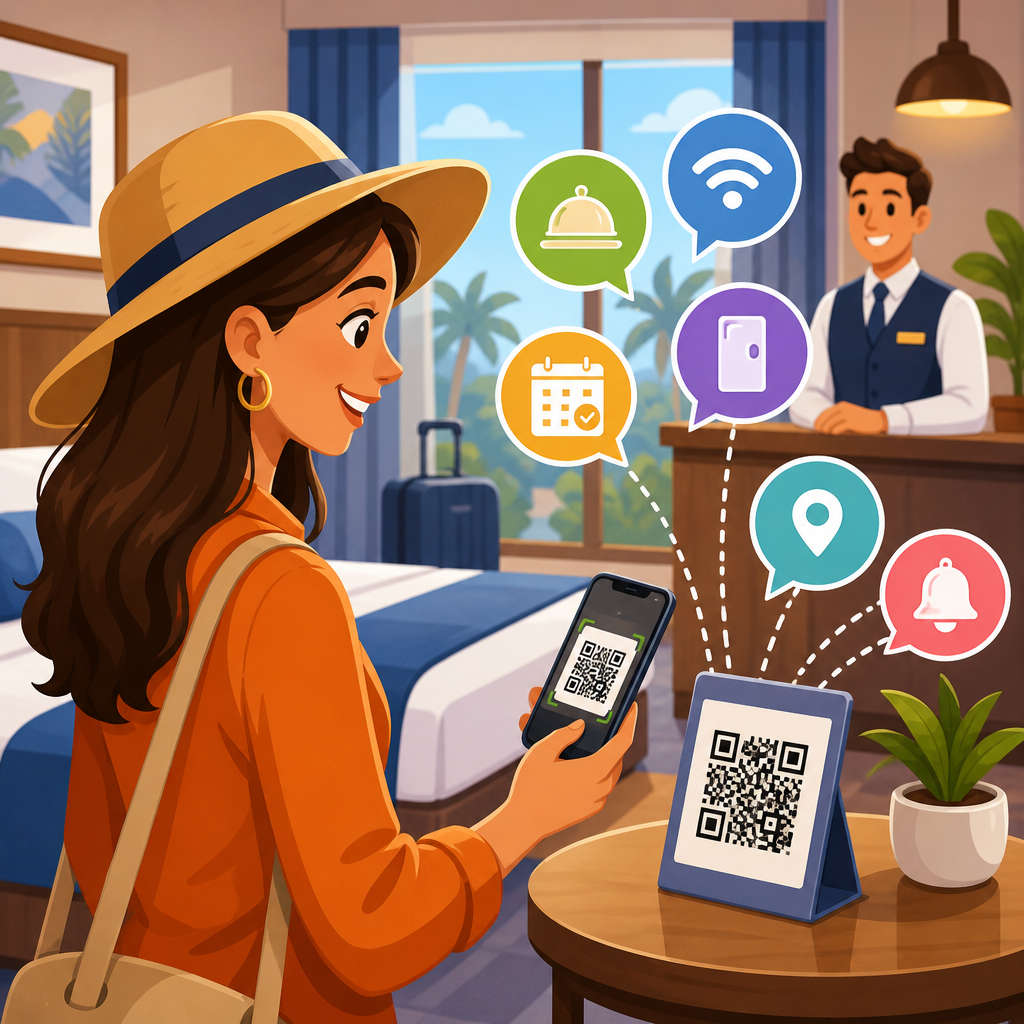
QR codes also improve communication after check-in. A code on the key sleeve or in-room tent card can open a WhatsApp chat, web chat, or guest service portal where travelers request extra towels, report a noisy air conditioner, ask for a crib, or confirm breakfast hours. That is especially useful for multilingual hospitality teams, because digital requests can be translated, categorized, and routed more accurately than hurried phone calls. Hotels using platforms such as Canary Technologies, Akia, Duve, or Revinate often pair codes with automated guest messaging, making service both faster and more trackable. The operational gain is not just convenience. It is visibility. Managers can see recurring questions, slow response categories, and frequent maintenance issues, then adjust staffing and training accordingly.
Restaurants, Bars, Room Service, and F&B Operations
Within Restaurants & Hospitality, food and beverage is where QR codes are most visible to guests. In hotel restaurants, pool bars, lounges, and guest rooms, a code can open a live digital menu that updates instantly when items sell out, prices change, or breakfast service ends and all-day dining begins. That is materially better than printed collateral, which is costly to replace and often out of date. A strong digital menu includes dish descriptions, allergens, dietary icons, modifier choices, preparation times, and beverage pairing suggestions. For room service, the code can connect directly to a mobile ordering flow that links back to the guest room number, reducing call volume and order mistakes.
Hotels also use QR codes to support banquet and event operations. At conference coffee stations, a code can display event agendas, catering notes, and dietary labeling. At wedding receptions or rooftop bars, a code can capture beverage orders or promote premium add-ons. The operational advantage is speed, but the commercial advantage is conversion. Guests are more likely to browse desserts, wine flights, or breakfast bundles when the menu is easy to revisit from a phone. That said, successful hotels do not force digital ordering in every context. Fine-dining outlets, luxury resorts, and older demographics often still benefit from printed menus and personal tableside explanation. The best practice is optionality: offer QR convenience without removing human service, because hospitality value comes from both efficiency and attention.
Housekeeping, Maintenance, and In-Room Information
Many hotel teams first think of QR codes as a marketing tool, but in practice they often deliver the highest value in operations. In-room codes can centralize practical information that guests repeatedly ask for: Wi-Fi login instructions, checkout time, gym hours, pillow menu choices, emergency procedures, local transport options, and do-not-disturb or make-up-room preferences. This reduces calls to the front desk while making information easier to update. A digital compendium is particularly useful for extended-stay hotels and resort properties where facilities, restaurant schedules, and activity timetables change daily.
For housekeeping and engineering, QR codes can be attached discreetly to rooms, appliances, or back-of-house areas to support internal workflows. A guest-facing code might open a simple request form for linens or amenities, while a staff-only code on an HVAC unit can open a maintenance log, troubleshooting checklist, or work-order page in a platform such as HotSOS, ALICE, or a computerized maintenance management system. I have seen this reduce response time because engineers arrive with context instead of discovering the issue from scratch. It also improves recordkeeping. If room 514 repeatedly reports low water pressure through a scannable maintenance form, the chief engineer has a clean history to diagnose a larger plumbing issue rather than treating each complaint as an isolated incident.
Best Use Cases by Goal in Restaurants & Hospitality
Hotels should choose QR code deployments based on a clear operational or commercial objective. The table below summarizes the most effective use cases across Restaurants & Hospitality and the reason each one works.
| Goal | QR code use case | Primary benefit | Example |
|---|---|---|---|
| Speed up arrival | Mobile check-in form | Shorter lines and fewer manual errors | Airport hotel sends scan link before evening rush |
| Increase F&B revenue | Digital menu with upsells | Higher average order value | Pool bar promotes pitchers and snack bundles |
| Reduce call volume | In-room digital guide | Fewer repetitive front desk questions | Guest scans bedside card for Wi-Fi and breakfast hours |
| Improve service recovery | Instant messaging or issue form | Faster problem reporting and routing | Guest reports broken lamp without waiting on hold |
| Drive reviews | Post-stay feedback page | More first-party data and public reviews | Boutique hotel adds code to digital folio email |
| Support events | Banquet agenda and dietary page | Better guest information access | Conference venue shares live catering updates |
Implementation: Design, Placement, Tracking, and Accessibility
A hotel QR code strategy succeeds or fails on execution details. The destination page must load quickly, display correctly on mobile devices, and present one clear next step. If a guest scans a room service code and lands on a cluttered homepage, the code has failed. Dynamic QR codes are usually the right choice because they allow hotels to change the destination URL without reprinting the code, track scans by time and device, and run A/B tests on calls to action. Platforms such as QR Code Generator, Bitly, Beaconstac, and Uniqode are commonly used for management and analytics, though some hospitality systems generate native codes inside their own workflow.
Placement also matters. Codes should appear where the need naturally occurs: reception for check-in help, elevators for spa promotion, nightstands for room information, restaurant tables for menus, and conference signage for agendas. Size, contrast, and instruction text are crucial. A code should be large enough to scan from the expected distance and paired with a simple label such as “Scan for room service menu” rather than a vague “Learn more.” Accessibility cannot be an afterthought. Hotels should provide alternative access for guests without smartphones, maintain readable font sizes on linked pages, and ensure translated content is available for core information. Tracking should focus on outcomes, not just scans. Measure form completion, order conversion, service response time, review generation, and revenue per outlet to understand whether the QR program is actually improving the guest experience.
Risks, Limitations, and What Good Hotels Do Differently
QR codes are not automatically guest friendly. Overuse creates visual clutter, weak placement confuses users, and poor connectivity can make a simple scan feel like a service failure. There is also a trust issue: travelers are more cautious about scanning unknown codes because of phishing and payment fraud. Good hotels address this by branding printed materials clearly, using secure HTTPS destinations, and avoiding unnecessary redirects. Staff should also be trained to explain what a code does and to offer an immediate alternative. A guest should never feel trapped into using a phone to get basic service.
Another limitation is integration. If the menu platform, messaging tool, payment page, and maintenance system are disconnected, teams can end up managing scattered data and inconsistent branding. The better approach is to define a small set of high-value journeys and integrate them properly with the PMS, POS, CRM, and service platforms already in use. This is where hub planning within Restaurants & Hospitality becomes important. Hotels can branch from this core topic into related content areas such as QR codes for restaurant menus, contactless ordering, event management, hotel guest messaging, digital feedback collection, and hospitality payments. Start with the journeys that affect guest satisfaction and staff workload most directly, then expand. If your property has not audited its current touchpoints, now is the time to map every repetitive guest question and every avoidable queue, then deploy QR codes where they deliver measurable value.
Frequently Asked Questions
How do hotels use QR codes throughout the guest journey?
Hotels use QR codes at almost every touchpoint to make the guest experience faster, simpler, and more convenient. Before arrival, a hotel may place a QR code in a booking confirmation email or text message so guests can access directions, parking details, digital check-in forms, upgrade options, or local recommendations in one tap. At arrival, QR codes can speed up check-in by linking to registration pages, ID submission tools, or contactless concierge services. This helps reduce front desk congestion and shortens waiting times during busy periods.
Once guests are on property, QR codes often appear in guest rooms, elevators, lobbies, pool areas, restaurants, and spa facilities. A code in the room might open the Wi-Fi login page, room service menu, TV guide, housekeeping requests, or a maintenance reporting form. In dining areas, QR codes commonly replace or supplement printed menus and can also connect guests to allergen information, beverage lists, and mobile ordering. Around the property, they may link to event schedules, digital maps, amenity hours, transportation details, or activity bookings.
After the stay, hotels often continue using QR codes to encourage feedback, reviews, loyalty enrollment, and future bookings. For example, a QR code at checkout or in a follow-up card can direct guests to a survey, a rebooking offer, or a review platform. The biggest advantage is that QR codes remove friction without removing service. They help guests get information instantly while allowing hotel staff to focus more on personal interactions that matter most.
What are the main benefits of QR codes for hotel guests?
For guests, the biggest benefit of QR codes is convenience. Instead of calling the front desk for simple questions or searching through printed materials, guests can scan a code and immediately find what they need. That might include check-in instructions, spa availability, restaurant hours, valet details, emergency contacts, or local area guides. The result is a smoother experience with fewer delays and less confusion, especially for travelers who value speed and self-service.
QR codes also improve clarity and accessibility. Printed materials can become outdated, damaged, or misplaced, but digital content linked through a QR code can be updated in real time. If a breakfast schedule changes, a promotion is added, or a menu item becomes unavailable, the hotel can adjust the information instantly without reprinting anything. This gives guests more accurate, reliable details during their stay. Many hotels also use QR codes to provide multilingual content, which is especially helpful for international travelers who may prefer to read instructions, menus, or service information in their own language.
Another important benefit is flexibility. Guests can choose how they want to engage with the hotel. Some may prefer scanning a QR code to request extra towels, reserve a massage, or pay a bill, while others may still want to speak with staff directly. Well-designed QR systems support both preferences. They do not force technology into the experience; they simply create a fast option for routine tasks. When implemented thoughtfully, QR codes make a stay feel more responsive, modern, and guest-centered.
Do QR codes replace hotel staff or reduce personal service?
No, QR codes do not have to replace hotel staff, and in the best hospitality environments, they should not. Their role is to support service, not substitute for it. Hospitality is still built on human warmth, attentiveness, and problem-solving. QR codes are most effective when they handle repetitive, low-complexity tasks such as opening a digital menu, connecting to Wi-Fi, viewing property information, or submitting a basic request. By making these routine interactions faster, staff have more time and energy to focus on meaningful guest needs.
For example, if guests can quickly scan a code to see pool hours, book a dinner reservation, or request fresh towels, the front desk and service teams spend less time answering the same simple questions repeatedly. That allows them to give more attention to special requests, issue resolution, personalized recommendations, and high-touch service moments. In other words, QR codes can improve the quality of personal service by reducing operational friction behind the scenes.
It is also important for hotels to offer choice. Not every guest wants to use their phone for every interaction, and some may need additional assistance. A strong hotel strategy keeps staff visible and available while offering QR codes as a convenient alternative. When this balance is handled well, guests do not feel that hospitality has become impersonal. Instead, they experience a more seamless stay where technology removes small obstacles and staff remain available for the moments that truly require a human touch.
What types of hotel services work best with QR codes?
QR codes work best for services that guests need quickly, frequently, or independently. One of the strongest use cases is information delivery. Hotels can place QR codes where questions naturally arise, such as in rooms for Wi-Fi instructions, at the front desk for digital check-in, in elevators for amenity hours, or near meeting spaces for event schedules. They are also highly effective for food and beverage operations, where guests may want instant access to menus, wine lists, ingredient details, promotions, or mobile ordering options.
Booking and request-based services are another excellent fit. A QR code can lead guests to spa reservations, restaurant bookings, late checkout requests, airport transfer forms, housekeeping preferences, maintenance reporting, or concierge messaging. These interactions benefit from speed and convenience because guests often want to act in the moment without waiting on hold or walking to another part of the property. Payment links are also a common application, allowing guests to settle dining bills, activity charges, or service fees securely from their phones.
Hotels also use QR codes effectively for wayfinding and destination support. A scan can open a property map, local sightseeing guide, shuttle schedule, parking instructions, or curated neighborhood recommendations. This is especially useful in large resorts, urban hotels, and mixed-use properties where guests are navigating multiple venues. The best services for QR codes are the ones that benefit from instant access, real-time updates, and easy self-service, while more complex or emotional interactions are still better handled by attentive staff members.
What should hotels consider to make QR codes effective and guest-friendly?
For QR codes to genuinely enhance the guest experience, hotels need to focus on usability, placement, and content quality. A QR code should lead to something clearly useful, not force guests through unnecessary steps. If a guest scans a code for room service, the menu should load quickly, display well on mobile, and be easy to understand. If the code is for concierge support, it should open a straightforward messaging tool or service page rather than a confusing website menu. The destination matters just as much as the code itself.
Placement is another major factor. Hotels should position QR codes exactly where the need occurs: on key cards for Wi-Fi or digital services, in rooms for amenities and requests, at restaurant tables for menus, near the pool for towel policies and drink ordering, or in the lobby for maps and event information. Clear labeling is essential because guests are more likely to scan when they know what they will get. Instead of displaying an unexplained code, hotels should use prompts such as “Scan for spa bookings,” “Scan for checkout,” or “Scan for local dining recommendations.”
Hotels should also think about accessibility, trust, and fallback options. Pages linked to QR codes should be mobile-optimized, secure, and fast-loading. Content should be kept current, available in multiple languages where appropriate, and simple to navigate. Staff should still be ready to help guests who prefer traditional service or who have trouble scanning. When hotels treat QR codes as part of a broader service design strategy rather than a novelty, they become much more effective. Done well, they reduce friction, improve communication, and create a more polished, modern hospitality experience without sacrificing the personal side of service.